



Phenylpiracetam

Based on 1 Customer Validation
Phenylpiracetam (Carphedon) is a positive allosteric modulator of nicotinic acetylcholine receptors (nAChR) with an IC50 of 5.86 μM. Phenylpiracetam is applicable to studies on scopolamine (Scopolamine) (HY-N0296)-induced amnesia, depression and immune stress.
For research use only. We do not sell to patients.
- Purity : 99.83%
- CAS No.: 77472-70-9
- Formula: C12H14N2O2
- Molecular Weight:218.25
-
Storage:Powder -20°C, 3 years , 4°C, 2 years ; In solvent -80°C, 2 years , -20°C, 1 year


To place orders, for customer services and technical support, please contact: MedChemExpress USA
Tel: 609-228-6898 E-mail: [email protected] [email protected]


-
 Biological Activity
-
Chemical Information
-
Solvent & Solubility
- Purity & Documentation
- References
-
 Help & FAQs


-
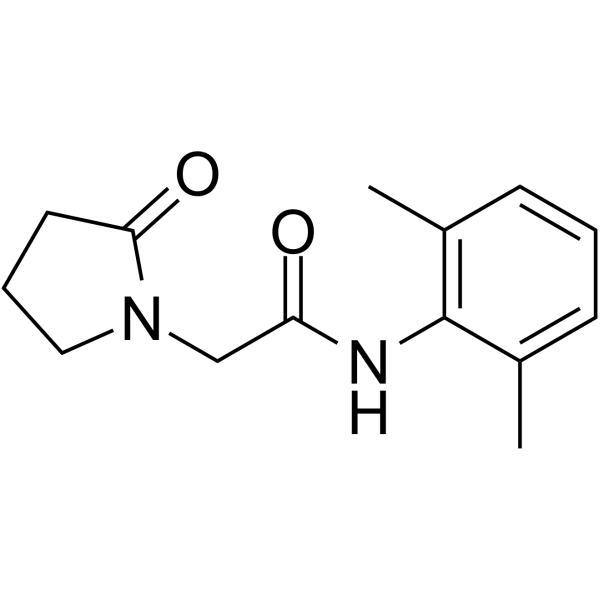
HY-B0340
NefiracetamCognition-enhancing Agent -
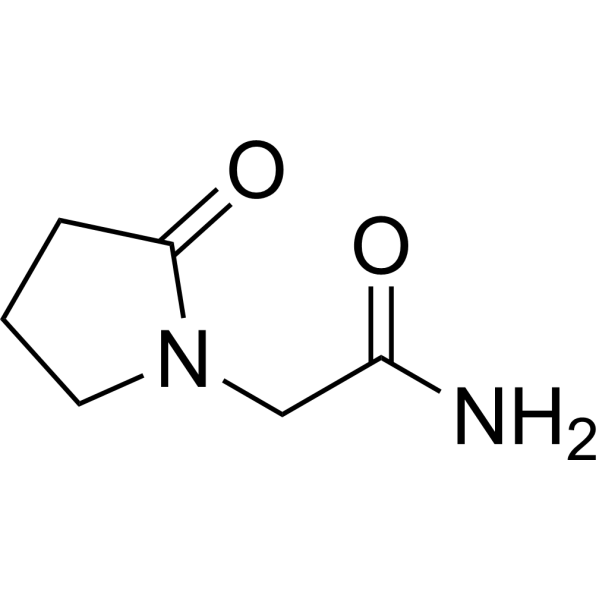
HY-B0585
PiracetamiGluR Modulator -
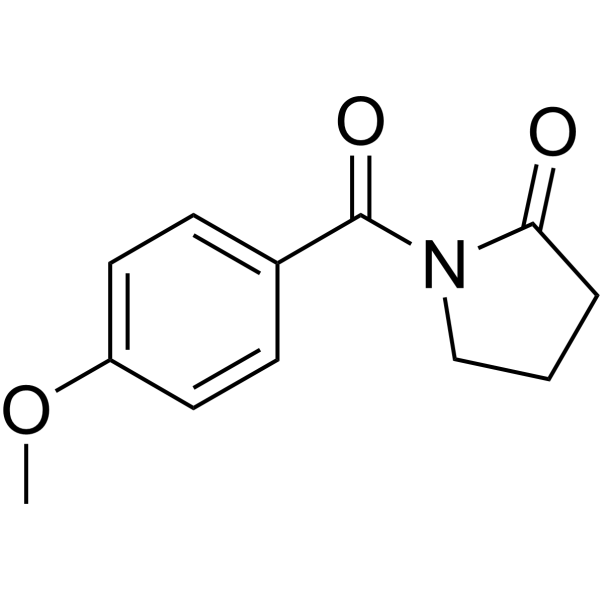
HY-10932
AniracetamNootropics and Neuroprotective Agent -
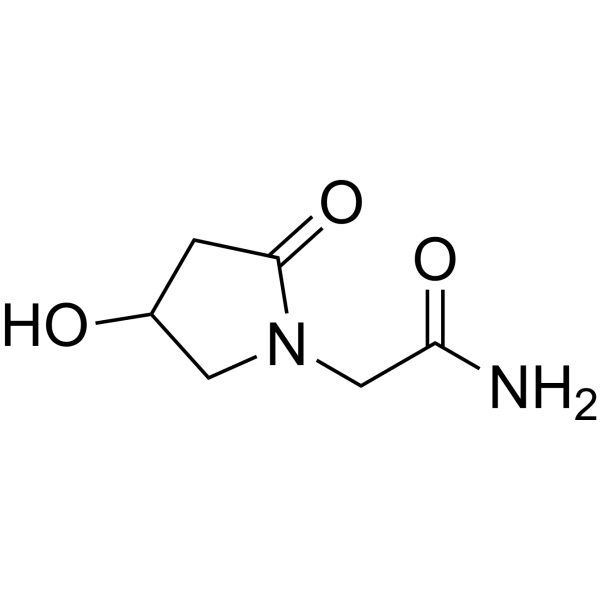
HY-B1715
OxiracetamNootropic Agent -
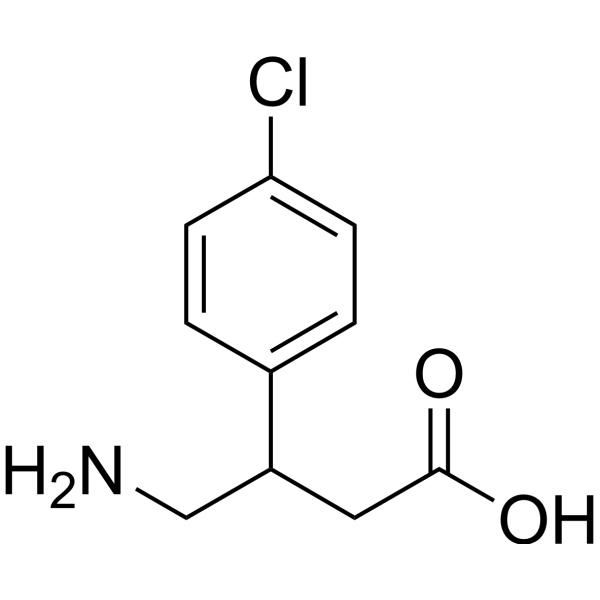
HY-B0007
BaclofenGABABR Agonist -
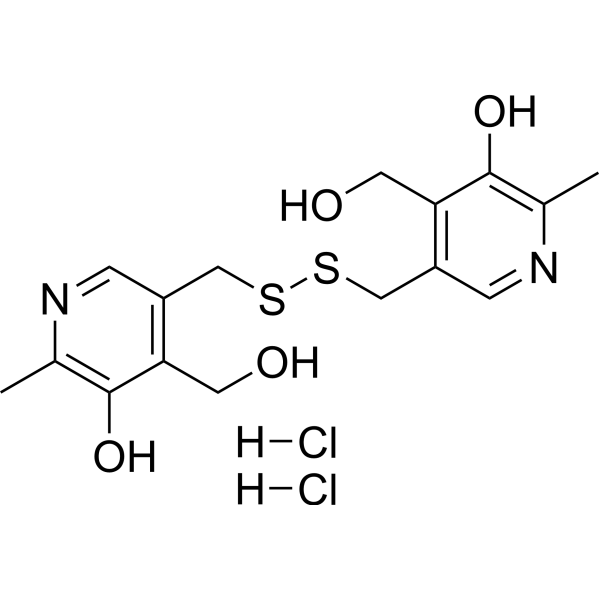
HY-B0910A
Pyrithioxin dihydrochlorideNeurodynamic Compound -
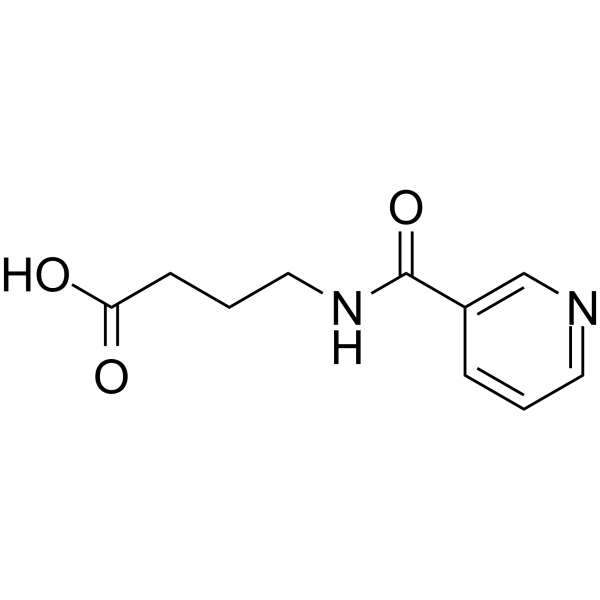
HY-107482
PicamilonGABA Receptor Agonist -
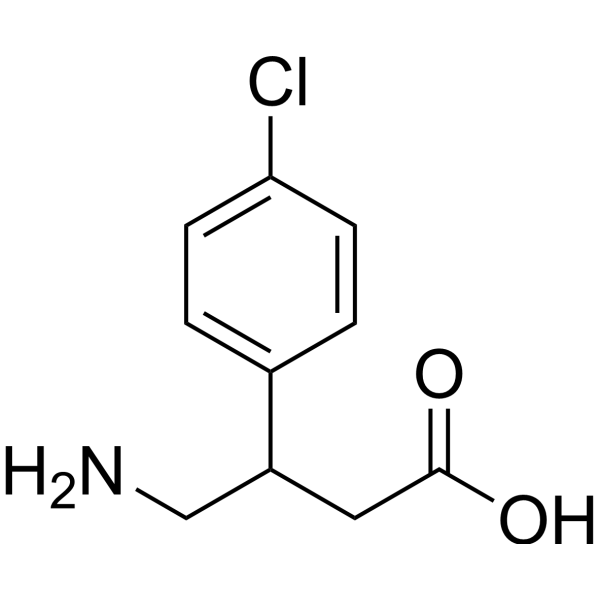
HY-B0007R
Baclofen (Standard)GABABR Agonist -

HY-B1715R
Oxiracetam (Standard)Nootropic Agent -

HY-B0340R
Nefiracetam (Standard)GABA Receptor Activator
All iGluR Isoforms
More

Biological Activity
Description
In Vitro
Phenylpiracetam directly interacts with mouse brain cortex α4β2 nicotinic acetylcholine receptors with an IC50 of 5.86 μM[1].
MedChemExpress (MCE) has not independently confirmed the accuracy of these methods. They are for reference only. .
In Vivo
Phenotropil (25 mg/kg; i.p.; daily; 5 days) exerts a strong psychoimmunomodulatory effect in LPS-induced immune stress in Wistar rats, normalizing key cellular and innate immune parameters while improving locomotor, exploratory, and anxiety-related behaviors without altering antibody production[2].
MedChemExpress (MCE) has not independently confirmed the accuracy of these methods. They are for reference only.
-
Animal Model:Wistar (male, 180-220 g, scopolamine-induced amnesia)[1]
-
Dosage:100 mg/kg
-
Administration:i.p.; single dose
-
Result:Increased 24-hour post-training latency to enter the dark compartment to 78.0 seconds, attenuating scopolamine-induced amnesia.
Normalized striatal dopamine D1 receptor density to 264.8 fmol/mg protein, abolishing scopolamine-induced reduction.
Increased striatal dopamine D2 receptor density to 367.9 fmol/mg protein, a 29% increase vs.
control.
Increased striatal dopamine D3 receptor density to 70.15 fmol/mg protein.
Reduced hippocampal NMDA receptor density to 4002 fmol/mg protein, a 24% reduction vs.
scopolamine-treated rats.
Normalized cortical nicotinic acetylcholine receptor density to 278 ± 73 fmol/mg protein, abolishing scopolamine-induced elevation.
Normalized cortical benzodiazepine receptor density to 2.62 fmol/mg protein, abolishing scopolamine-induced reduction.
Caused no changes in serotonin 5-HT2 receptor density.
-
Animal Model:Wistar rats (male and female, 250-300 g, LPS-induced immune stress)[2]
-
Dosage:25 mg/kg
-
Administration:i.p.; daily; 5 days
-
Result:Restored cellular immunity and nonspecific resistance.
Reduced delayed-type hypersensitivity reaction index, phagocytic index, and phagocytic number to levels not significantly different from normal control rats.
Left anti-erythrocyte antibody titer elevated (no effect on antibody production observed).
Prevented anxiety, fear, and sluggishness.
Increased horizontal locomotion, vertical rearing postures, crossing of the open field central area, maze arm transitions, hole exploration, hanging out from open maze arms, and exploration episodes of looking out from closed maze arms.


Chemical Information
-
CAS No. 77472-70-9
-
Appearance Solid
-
Molecular Weight 218.25
-
Formula C12H14N2O2
-
Color White to off-white
-
SMILES
O=C(N)CN1C(CC(C2=CC=CC=C2)C1)=O
-
Synonyms
Carphedon; Fonturacetam; (rac)-MRZ 9547
-
Shipping
Room temperature in continental US; may vary elsewhere.
-
Storage
Powder -20°C 3 years 4°C 2 years In solvent -80°C 2 years -20°C 1 year


Solvent & Solubility
In Vitro:
DMSO : ≥ 100 mg/mL (458.19 mM; Hygroscopic DMSO has a significant impact on the solubility of product, please use newly opened DMSO)
* "≥" means soluble, but saturation unknown.
Please refer to the solubility information to select the appropriate solvent. Once prepared, please aliquot and store the solution to prevent product inactivation from repeated freeze-thaw cycles.
Storage method and period of stock solution: -80°C, 2 years; -20°C, 1 year. When stored at -80°C, please use it within 2 years. When stored at -20°C, please use it within 1 year.
Please refer to the solubility information to select the appropriate solvent. Once prepared, please aliquot and store the solution to prevent product inactivation from repeated freeze-thaw cycles.
Storage method and period of stock solution: -80°C, 2 years; -20°C, 1 year. When stored at -80°C, please use it within 2 years. When stored at -20°C, please use it within 1 year.
Concentration (start) × Volume (start) = Concentration (final) × Volume (final)
In Vivo:
Select the appropriate dissolution method based on your experimental animal and administration route.
- For the following dissolution methods, please ensure to first prepare a clear stock solution using an In Vitro approach and then sequentially add co-solvents:
- To ensure reliable experimental results, the clarified stock solution can be appropriately stored based on storage conditions. As for the working solution for In Vivo experiments, it is recommended to prepare freshly and use it on the same day.
- The percentages shown for the solvents indicate their volumetric ratio in the final prepared solution. If precipitation or phase separation occurs during preparation, heat and/or sonication can be used to aid dissolution.
Add each solvent one by one: 10% DMSO 40% PEG300 5% Tween-80 45% Saline
Solubility: ≥ 2.5 mg/mL (11.45 mM); Clear solution
This protocol yields a clear solution of ≥ 2.5 mg/mL (saturation unknown).
Taking 1 mL working solution as an example, add 100 μL DMSO stock solution (25.0 mg/mL) to 400 μL PEG300, and mix evenly; then add 50 μL Tween-80 and mix evenly; then add 450 μL Saline to adjust the volume to 1 mL.
Preparation of Saline: Dissolve 0.9 g sodium chloride in ddH₂O and dilute to 100 mL to obtain a clear Saline solution.
Add each solvent one by one: 10% DMSO 90% (20% SBE-β-CD in Saline)
Solubility: ≥ 2.5 mg/mL (11.45 mM); Clear solution
This protocol yields a clear solution of ≥ 2.5 mg/mL (saturation unknown).
Taking 1 mL working solution as an example, add 100 μL DMSO stock solution (25.0 mg/mL) to 900 μL 20% SBE-β-CD in Saline, and mix evenly.
Preparation of 20% SBE-β-CD in Saline (4°C, storage for one week): 2 g SBE-β-CD powder is dissolved in 10 mL Saline, completely dissolve until clear.
In Vivo Dissolution Calculator
Please enter the basic information of animal experiments:
-
-
-
-
Recommended: Prepare an additional quantity of animals to account for potential losses during experiments.
Please enter your animal formula composition:
-
%DMSO +
Recommended: Keep the proportion of DMSO in working solution below 2% if your animal is weak.
-
%+
-
+%Tween-80 + +
-
%Saline +
The co-solvents required include: DMSO, . All of co-solvents are available by MedChemExpress (MCE). , Tween 80. All of co-solvents are available by MedChemExpress (MCE).
Working solution concentration: 0.22 mg/mL
Method for preparing stock solution: mg drug dissolved in μL DMSO. Stock solution concentration: mg/mL.
1. Take μL DMSO stock solution;
2. Add μL .
μL , mix evenly;
3. Then add μL Tween 80, mix evenly;
4. Then add μL
Please ensure that the stock solution in the first step is dissolved to a clear state, and add co-solvents in sequence. You can use ultrasonic heating (ultrasonic cleaner, recommended frequency 20-40 kHz), vortexing, etc. to assist dissolution.


Purity & Documentation
-
Data Sheet (292 KB)
-
SDS (394 KB)
- English - EN (394 KB)
- Français - FR (394 KB)
- Deutsch - DE (394 KB)
- Norwegian - NO (394 KB)
- Español - ES (394 KB)
- Swedish - SV (394 KB)
- Italian - IT (394 KB)
- Korean - KR (394 KB)
- Portuguese - PT (394 KB)
-
Handling Instructions (2659 KB)
References


Complete Stock Solution Preparation Table
Please refer to the solubility information to select the appropriate solvent. Once prepared, please aliquot and store the solution to prevent product inactivation from repeated freeze-thaw cycles.
Storage method and period of stock solution: -80°C, 2 years; -20°C, 1 year. When stored at -80°C, please use it within 2 years. When stored at -20°C, please use it within 1 year.
| Optional Solvent | Concentration Solvent Mass | 1 mg | 5 mg | 10 mg | 25 mg |
|---|---|---|---|---|---|
| DMSO | 1 mM | 4.5819 mL | 22.9095 mL | 45.8190 mL | 114.5475 mL |
| 5 mM | 0.9164 mL | 4.5819 mL | 9.1638 mL | 22.9095 mL | |
| 10 mM | 0.4582 mL | 2.2910 mL | 4.5819 mL | 11.4548 mL | |
| 15 mM | 0.3055 mL | 1.5273 mL | 3.0546 mL | 7.6365 mL | |
| 20 mM | 0.2291 mL | 1.1455 mL | 2.2910 mL | 5.7274 mL | |
| 25 mM | 0.1833 mL | 0.9164 mL | 1.8328 mL | 4.5819 mL | |
| 30 mM | 0.1527 mL | 0.7637 mL | 1.5273 mL | 3.8183 mL | |
| 40 mM | 0.1145 mL | 0.5727 mL | 1.1455 mL | 2.8637 mL | |
| 50 mM | 0.0916 mL | 0.4582 mL | 0.9164 mL | 2.2910 mL | |
| 60 mM | 0.0764 mL | 0.3818 mL | 0.7637 mL | 1.9091 mL | |
| 80 mM | 0.0573 mL | 0.2864 mL | 0.5727 mL | 1.4318 mL | |
| 100 mM | 0.0458 mL | 0.2291 mL | 0.4582 mL | 1.1455 mL |


Phenylpiracetam Related Classifications
HY-14840 Related Classifications
 Powered by Bioz
Keywords
- Phenylpiracetam
- 77472-70-9
- Carphedon
- Fonturacetam
- (rac)-MRZ 9547
- nAChR
- Dopamine Transporter
- GABA Receptor
- iGluR
- GABA-A receptor benzodiazepine site
- immune stress
- dopamine D3 receptors
- mouse brain cortex α4β2 nicotinic acetylcholine receptors
- dopamine D2 receptors
- glutamate NMDA receptors
- dopamine D1 receptors
- scopolamine-induced amnesia
- rat brain regions
- mouse nicotinic acetylcholine receptors
- Inhibitor
- inhibitor
- inhibit