



Leonurine hydrochloride
Based on 13 publication(s) in Google Scholar
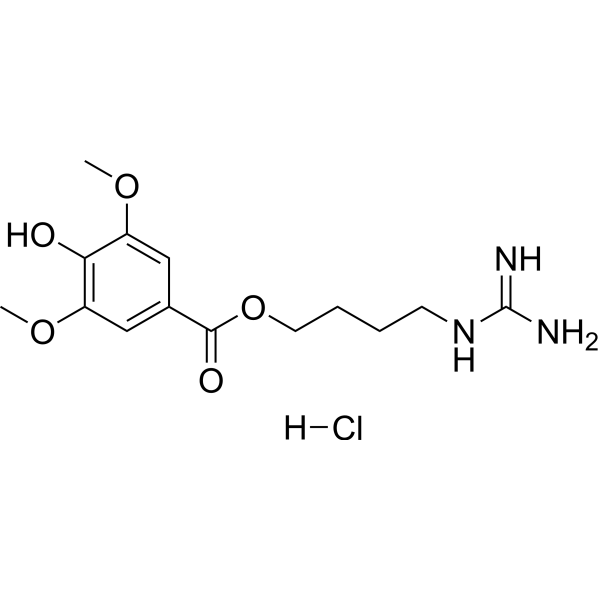
Leonurine hydrochloride is an alkaloid isolated from Leonurus artemisia, with anti-oxidative and anti-inflammatory.
For research use only. We do not sell to patients.
- Purity : 99.43%
- CAS No.: 24735-18-0
- Formula: C14H22ClN3O5
- Molecular Weight:347.79
-
Storage:
4°C, sealed storage, away from moisture
* In solvent : -80°C, 6 months; -20°C, 1 month (sealed storage, away from moisture)

To place orders, for customer services and technical support, please contact: MedChemExpress USA
Tel: 609-228-6898 E-mail: [email protected] [email protected]


-
 Biological Activity
-
Chemical Information
-
Solvent & Solubility
- Protocol
- Purity & Documentation
- References
-
 Help & FAQs




Publications Citing Use of MedChemExpress (MCE) Leonurine hydrochloride
More- PLoS Biol. 2024 Jun 27;22(6):e3002672. [Abstract]
- J Endocrinol. 2026 Jan 19;268(1):e250298. [Abstract]
- J Nutr Biochem. 2026 Jun:152:110302. [Abstract]
- Molecules. 2025 May 2;30(9):2025. [Abstract]
- Toxicol Appl Pharmacol. 2025 Oct 25.
- Exp Cell Res. 2023 May 1;426(1):113556. [Abstract]
- Neuropsychiatr Dis Treat. 2023 Jun 1:19:1347-1357. [Abstract]
- Biochem Biophys Res Commun. 2024 Jan 22:693:149375. [Abstract]
- Med Sci Monit. 2020 Apr 14:26:e922149. [Abstract]
- Reprod Domest Anim. 2024 Mar;59(3):e14546. [Abstract]
- Eur J Inflamm. August 8, 2021.
- bioRxiv. 2024 Apr 3:2023.06.02.542933. [Abstract]
- The EuroBiotech Journal. 21 Oct 2021.
 Customer Validation & Images

-
Histological Imaging/Staining
-
In Vivo Efficacy Study
-
IF
-
Cell Proliferation/Viability Assay
-
Histological Imaging/Staining


Biological Activity
Description
In Vitro
Leonurine (0, 5, 10, 20, 40, 80 μM) causes diminution in lipid accumulation, cellular cholesterol content, including total cholesterol (TC), free cholesterol (FC) and cholesteryl ester (CE), and increase in apoA-I- or HDL-mediated cholesterol efflux after treatment for 24 h. Leonurine also significantly and dose-dependently increases the expressions of ABCA1 and ABCG1 at the mRNA and protein levels in human THP-1 macrophages, and such effect is involved in PPARγ[1]. Leonurine hydrochloride (LH) shows protective effect on cell viability of HepG2 and HL-7702 cells incubated with palmitic acid (PA) of free fatty acid (FFA) for 24 h. Leonurine hydrochloride (125, 250, 500 μM) improves cellular lipid accumulation in HepG2 and HL-7702 cells via activating AMPK/SREBP1 pathway[2]. Leonurine (5, 10, 20 μM) inhibits the expression of iNOS, COX-2, PGE2, NO, TNF-α, and IL-6 in IL-1β-induced human chondrocytes, suppresses ECM degradation in human OA chondrocytes, and blocks IL-1β-induced PI3K and Akt phosphorylation in a dose-dependent manner[3].
MedChemExpress (MCE) has not independently confirmed the accuracy of these methods. They are for reference only.
In Vivo
MedChemExpress (MCE) has not independently confirmed the accuracy of these methods. They are for reference only.


Chemical Information
-
CAS No. 24735-18-0
-
Appearance Solid
-
Molecular Weight 347.79
-
Formula C14H22ClN3O5
-
Color White to off-white
-
SMILES
O=C(OCCCCNC(N)=N)C1=CC(OC)=C(O)C(OC)=C1.[H]Cl
-
Synonyms
SCM-198 hydrochloride
-
Structure Classification
-
Initial Source
-
Shipping
Room temperature in continental US; may vary elsewhere.
-
Storage
4°C, sealed storage, away from moisture
* In solvent : -80°C, 6 months; -20°C, 1 month (sealed storage, away from moisture)


Publications (13)
-
Journal Impact Factor
-
Most Recent
-
PLoS Biol
2024 Jun 27;22(6):e3002672. PMID: 38935621 -
J Endocrinol
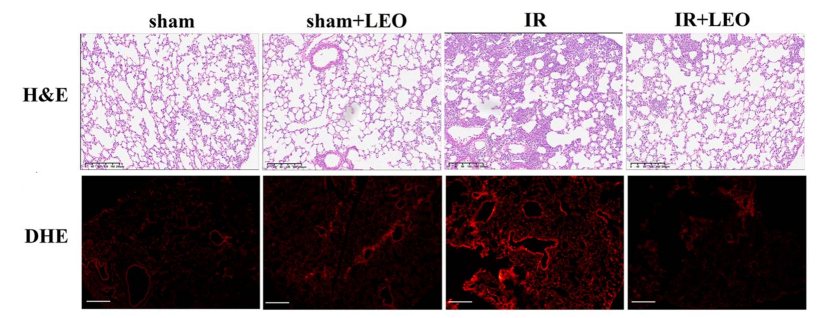
Leonurine alleviates lung ischemia-reperfusion injury through suppression of ferroptosis via RORα in male mice. [Abstract]2026 Jan 19;268(1):e250298. PMID: 41498500
Leonurine hydrochloride purchased from MedChemExpress. Usage Cited in: J Endocrinol. 2026 Jan 19;268(1):e250298. [Abstract]
Leonurine (LEO, 30 mg/kg; i.g.; once daily for 3 days) pretreatment significantly ameliorated various pathological changes in LIRI mice, including lung histopathology and superoxide accumulation.
Leonurine hydrochloride purchased from MedChemExpress. Usage Cited in: J Endocrinol. 2026 Jan 19;268(1):e250298. [Abstract]
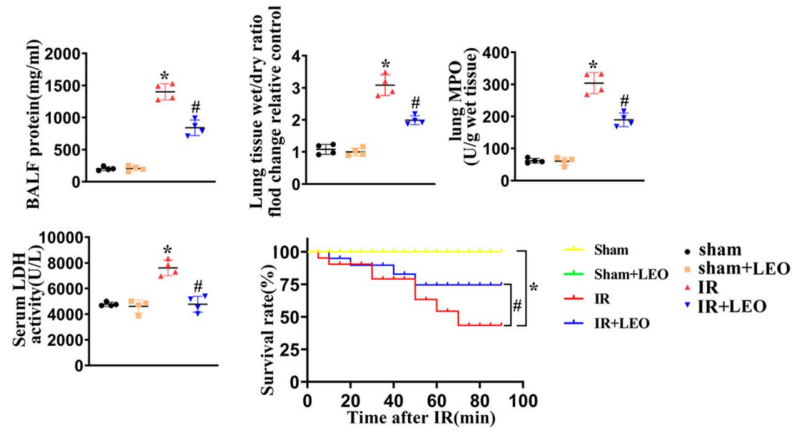
Leonurine (LEO, 30 mg/kg; i.g.; once daily for 3 days) pretreatment significantly ameliorated various pathological changes in LIRI mice, including vascular permeability (BALF protein content), W/D ratio, neutrophil infiltration (MPO activity), overall tissue damage (LDH release), and survival rate.
Leonurine hydrochloride purchased from MedChemExpress. Usage Cited in: J Endocrinol. 2026 Jan 19;268(1):e250298. [Abstract]
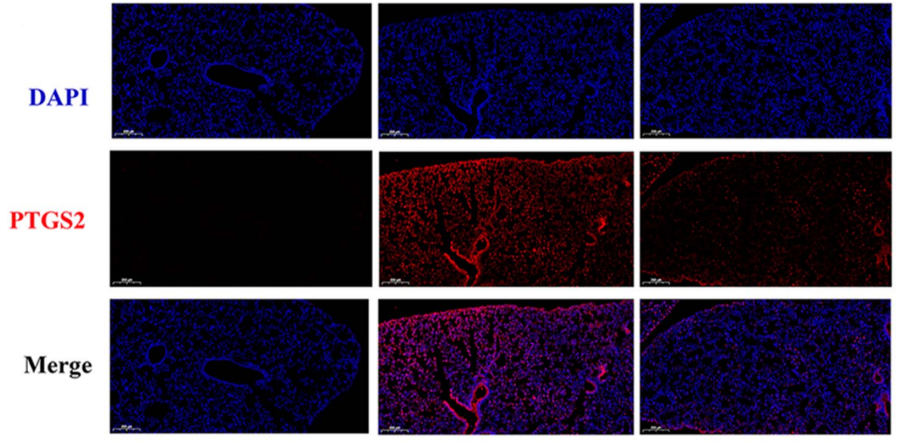
Representative immunofluorescence of PTGS2 and DAPI in the lung of sham, IR, and IR + Leonurine (LEO, 30 mg/kg; i.g.; once daily for 6 days) . Scale bar = 200 μm.
Leonurine hydrochloride purchased from MedChemExpress. Usage Cited in: J Endocrinol. 2026 Jan 19;268(1):e250298. [Abstract]
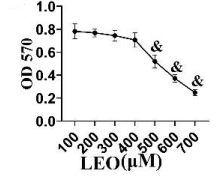
MLE-12 cells viability was quantified in different concentration of Leonurine (LEO,100-700 μM; 24 h) by MTT assay.
-
J Nutr Biochem
Leonurine alleviates HFD-induced inflammation and dyslipidemia via modulating gut microbiota-derived indole-3-propionic acid signaling. [Abstract]2026 Jun:152:110302. PMID: 41655865 -
Molecules
Investigating Natural Product Inhibitors of IKKα: Insights from Integrative In Silico and Experimental Validation. [Abstract]2025 May 2;30(9):2025. PMID: 40363830 -
Leonurine hydrochloride purchased from MedChemExpress. Usage Cited in: Toxicol Appl Pharmacol. 2025 Oct 25.
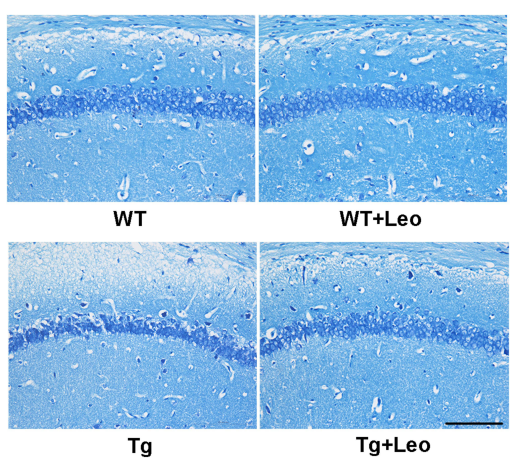
Leonurine (Leo, 150 mg/kg; i.g.; once daily for 2 months) reduced neuronal damage in the hippocampal CA1 region of APP/PS1 mice, as evidenced by representative Nissl staining sections of the same region. Scale bar: 100 μm.
Leonurine hydrochloride purchased from MedChemExpress. Usage Cited in: Toxicol Appl Pharmacol. 2025 Oct 25.
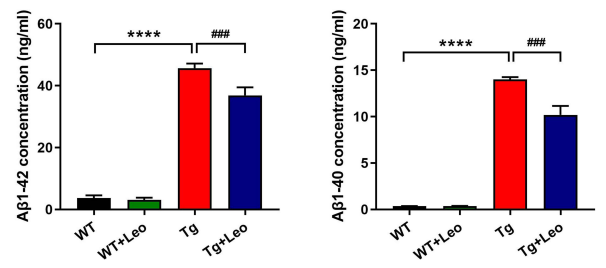
Leonurine (Leo, 150 mg/kg; i.g.; once daily for 2 months) significantly reduced the levels of Aβ1-42 and Aβ1-40 in Tg mice.
Leonurine hydrochloride purchased from MedChemExpress. Usage Cited in: Toxicol Appl Pharmacol. 2025 Oct 25.
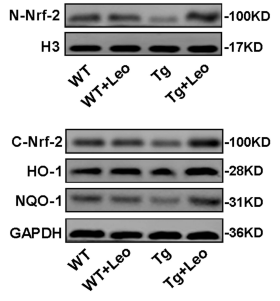
Leonurine (Leo, 150 mg/kg; i.g.; once daily for 2 months) treatment elevated the protein expression of the Nrf-2 pathway in APP/PS1 mice.
-
Exp Cell Res
The p53/miR-29a-3p axis mediates the antifibrotic effect of leonurine on angiotensin II-stimulated rat cardiac fibroblasts. [Abstract]2023 May 1;426(1):113556. PMID: 36933858 -
Neuropsychiatr Dis Treat
Leonurine Alleviates Cognitive Dysfunction and Reduces Oxidative Stress by Activating Nrf-2 Pathway in Alzheimer's Disease Mouse Model. [Abstract]2023 Jun 1:19:1347-1357. PMID: 37284249 -
Biochem Biophys Res Commun
The inhibition of FTO attenuates the antifibrotic effect of leonurine in rat cardiac fibroblasts. [Abstract]2024 Jan 22:693:149375. PMID: 38128243 -
Med Sci Monit
CYP2A13 Acts as the Main Metabolic CYP450s Enzyme for Activating Leonurine in Human Bronchial Epithelial Cells. [Abstract]2020 Apr 14:26:e922149. PMID: 32284524 -
Reprod Domest Anim
Effects of Leonurine on oocyte maturation and parthenogenetic embryo development in sheep. [Abstract]2024 Mar;59(3):e14546. PMID: 38439683 -
-
bioRxiv
An efficient behavioral screening platform classifies natural products and other chemical cues according to their chemosensory valence in C. elegans. [Abstract]2024 Apr 3:2023.06.02.542933. PMID: 37333363 -


Solvent & Solubility
In Vitro:
DMSO : ≥ 100 mg/mL (287.53 mM; Hygroscopic DMSO has a significant impact on the solubility of product, please use newly opened DMSO)
H2O : 5 mg/mL (14.38 mM; Need ultrasonic)
* "≥" means soluble, but saturation unknown.
Please refer to the solubility information to select the appropriate solvent. Once prepared, please aliquot and store the solution to prevent product inactivation from repeated freeze-thaw cycles.
Storage method and period of stock solution: -80°C, 6 months; -20°C, 1 month (sealed storage, away from moisture). When stored at -80°C, please use it within 6 months. When stored at -20°C, please use it within 1 month.
* Note: If you choose water as the stock solution, please dilute it to the working solution, then filter and sterilize it with a 0.22 μm filter before use.
Please refer to the solubility information to select the appropriate solvent. Once prepared, please aliquot and store the solution to prevent product inactivation from repeated freeze-thaw cycles.
Storage method and period of stock solution: -80°C, 6 months; -20°C, 1 month (sealed storage, away from moisture). When stored at -80°C, please use it within 6 months. When stored at -20°C, please use it within 1 month.
* Note: If you choose water as the stock solution, please dilute it to the working solution, then filter and sterilize it with a 0.22 μm filter before use.
Concentration (start) × Volume (start) = Concentration (final) × Volume (final)
In Vivo:
Select the appropriate dissolution method based on your experimental animal and administration route.
- For the following dissolution methods, please ensure to first prepare a clear stock solution using an In Vitro approach and then sequentially add co-solvents:
- To ensure reliable experimental results, the clarified stock solution can be appropriately stored based on storage conditions. As for the working solution for In Vivo experiments, it is recommended to prepare freshly and use it on the same day.
- The percentages shown for the solvents indicate their volumetric ratio in the final prepared solution. If precipitation or phase separation occurs during preparation, heat and/or sonication can be used to aid dissolution.
Add each solvent one by one: 10% DMSO 40% PEG300 5% Tween-80 45% Saline
Solubility: ≥ 2.5 mg/mL (7.19 mM); Clear solution
This protocol yields a clear solution of ≥ 2.5 mg/mL (saturation unknown).
Taking 1 mL working solution as an example, add 100 μL DMSO stock solution (25.0 mg/mL) to 400 μL PEG300, and mix evenly; then add 50 μL Tween-80 and mix evenly; then add 450 μL Saline to adjust the volume to 1 mL.
Preparation of Saline: Dissolve 0.9 g sodium chloride in ddH₂O and dilute to 100 mL to obtain a clear Saline solution.
Add each solvent one by one: 10% DMSO 90% (20% SBE-β-CD in Saline)
Solubility: ≥ 2.5 mg/mL (7.19 mM); Clear solution
This protocol yields a clear solution of ≥ 2.5 mg/mL (saturation unknown).
Taking 1 mL working solution as an example, add 100 μL DMSO stock solution (25.0 mg/mL) to 900 μL 20% SBE-β-CD in Saline, and mix evenly.
Preparation of 20% SBE-β-CD in Saline (4°C, storage for one week): 2 g SBE-β-CD powder is dissolved in 10 mL Saline, completely dissolve until clear.
In Vivo Dissolution Calculator
Please enter the basic information of animal experiments:
-
-
-
-
Recommended: Prepare an additional quantity of animals to account for potential losses during experiments.
Please enter your animal formula composition:
-
%DMSO +
Recommended: Keep the proportion of DMSO in working solution below 2% if your animal is weak.
-
%+
-
+%Tween-80 + +
-
%Saline +
The co-solvents required include: DMSO, . All of co-solvents are available by MedChemExpress (MCE). , Tween 80. All of co-solvents are available by MedChemExpress (MCE).
Working solution concentration: 0.22 mg/mL
Method for preparing stock solution: mg drug dissolved in μL DMSO. Stock solution concentration: mg/mL. * In solvent : -80°C, 6 months; -20°C, 1 month (sealed storage, away from moisture)
1. Take μL DMSO stock solution;
2. Add μL .
μL , mix evenly;
3. Then add μL Tween 80, mix evenly;
4. Then add μL
Please ensure that the stock solution in the first step is dissolved to a clear state, and add co-solvents in sequence. You can use ultrasonic heating (ultrasonic cleaner, recommended frequency 20-40 kHz), vortexing, etc. to assist dissolution.

Protocol
Cell Assay[2]
MTT assay is performed to study the cytotoxic effects of Leonurinein HepG2 and HL-7702 cells. Briefly, HepG2 and HL-7702 cells are seeded for 24 h at the density of 3 × 10⁴ cells/well in 96-well plates. After 24 h incubation, cells are treated with different concentrations of Leonurine (0-1000 μM) and the control group is treated with only DMEM for 24 h at 37°C in 5% CO2 incubator. Then, these cells are treated with MTT solution (5 mg/mL) for further 4 h. After 4 h incubation, DMEM containing MTT solution is discarded. Cells are then dissolved by adding DMSO (200 μL) to each well and the solutions are mixed thoroughly for 5 min. Finally, the absorbance is determined at 570 nm with a microplate reader[2].
MedChemExpress (MCE) has not independently confirmed the accuracy of these methods. They are for reference only.
Animal Administration[1]
Mice ApoE-/- mice (male, eight-week old) are fed a chow diet for 2 weeks, apoE-/- mice are randomly divided into several groups (n=15/group). Mice in the Leonurine group are intragastrically administered with Leonurine (10 mg/kg/d) every day and continued for 8 weeks. The control group is fed with an equal volume of PBS. At week 16, mice are euthanized, followed by collecting the blood and tissue samples for further analyses[1].
MedChemExpress (MCE) has not independently confirmed the accuracy of these methods. They are for reference only.


Purity & Documentation
-
Data Sheet (278 KB)
-
SDS (393 KB)
- English - EN (393 KB)
- Français - FR (393 KB)
- Deutsch - DE (393 KB)
- Norwegian - NO (393 KB)
- Español - ES (393 KB)
- Swedish - SV (393 KB)
- Italian - IT (393 KB)
- Korean - KR (393 KB)
- Portuguese - PT (393 KB)
-
Handling Instructions (2659 KB)
References
[1]. Jiang T, et al. Leonurine Prevents Atherosclerosis Via Promoting the Expression of ABCA1 and ABCG1 in a Pparγ/Lxrα Signaling Pathway-Dependent Manner. Cell Physiol Biochem. 2017;43(4):1703-1717. [Content Brief]
[2]. Zhang L, et al. Novel hepatoprotective role of Leonurine hydrochloride against experimental non-alcoholic steatohepatitis mediated via AMPK/SREBP1 signaling pathway. Biomed Pharmacother. 2018 Dec 7;110:571-581. [Content Brief]
[3]. Hu ZC, et al. Inhibition of PI3K/Akt/NF-κB signaling with leonurine for ameliorating the progression of osteoarthritis: In vitro and in vivo studies. J Cell Physiol. 2018 Nov 11. [Content Brief]


Complete Stock Solution Preparation Table
Please refer to the solubility information to select the appropriate solvent. Once prepared, please aliquot and store the solution to prevent product inactivation from repeated freeze-thaw cycles.
Storage method and period of stock solution: -80°C, 6 months; -20°C, 1 month (sealed storage, away from moisture). When stored at -80°C, please use it within 6 months. When stored at -20°C, please use it within 1 month.
| Optional Solvent | Concentration Solvent Mass | 1 mg | 5 mg | 10 mg | 25 mg |
|---|---|---|---|---|---|
| H2O / DMSO | 1 mM | 2.8753 mL | 14.3765 mL | 28.7530 mL | 71.8825 mL |
| 5 mM | 0.5751 mL | 2.8753 mL | 5.7506 mL | 14.3765 mL | |
| 10 mM | 0.2875 mL | 1.4376 mL | 2.8753 mL | 7.1882 mL | |
| DMSO | 15 mM | 0.1917 mL | 0.9584 mL | 1.9169 mL | 4.7922 mL |
| 20 mM | 0.1438 mL | 0.7188 mL | 1.4376 mL | 3.5941 mL | |
| 25 mM | 0.1150 mL | 0.5751 mL | 1.1501 mL | 2.8753 mL | |
| 30 mM | 0.0958 mL | 0.4792 mL | 0.9584 mL | 2.3961 mL | |
| 40 mM | 0.0719 mL | 0.3594 mL | 0.7188 mL | 1.7971 mL | |
| 50 mM | 0.0575 mL | 0.2875 mL | 0.5751 mL | 1.4376 mL | |
| 60 mM | 0.0479 mL | 0.2396 mL | 0.4792 mL | 1.1980 mL | |
| 80 mM | 0.0359 mL | 0.1797 mL | 0.3594 mL | 0.8985 mL | |
| 100 mM | 0.0288 mL | 0.1438 mL | 0.2875 mL | 0.7188 mL |
* Note: If you choose water as the stock solution, please dilute it to the working solution, then filter and sterilize it with a 0.22 μm filter before use.


Leonurine hydrochloride Related Classifications
HY-N0741A Related Classifications
 Powered by Bioz