



HDAC
Histone deacetylases
HDAC (Histone deacetylases) are a class of enzymes that remove acetyl groups (O=C-CH3) from an ε-N-acetyl lysine amino acid on ahistone, allowing the histones to wrap the DNA more tightly. This is important because DNA is wrapped around histones, and DNA expression is regulated by acetylation and de-acetylation. Its action is opposite to that of histone acetyltransferase. HDAC proteins are now also called lysine deacetylases (KDAC), to describe their function rather than their target, which also includes non-histone proteins. Together with the acetylpolyamine amidohydrolases and the acetoin utilization proteins, the histone deacetylases form an ancient protein superfamily known as the histone deacetylase superfamily.
HDAC Isoform Specific Products
-
HDAC
(391)
View all products
-
HDAC1
(317)
View all products
-
HDAC2
(211)
View all products
-
HDAC3
(204)
View all products
-
HDAC4
(72)
View all products
-
HDAC5
(56)
View all products
-
HDAC6
(335)
View all products
-
HDAC7
(53)
View all products
-
HDAC8
(188)
View all products
-
HDAC9
(41)
View all products
-
HDAC10
(67)
View all products
-
HDAC11
(71)
View all products
-
HD1
(3)
View all products
-
HD2
(4)
View all products
All Product Categories
-
HDAC Inhibitors
(780)
View all products
-
HDAC Antagonists
(3)
View all products
-
HDAC Activators
(14)
View all products
-
HDAC Modulators
(4)
View all products
-
HDAC MDM2 Inhibitor
(1)
View all products
-
HDAC Degraders
(44)
View all products
-
HDAC Controls
(4)
View all products
-
HDAC Substrates
(3)
View all products
-
HDAC Ligands
(14)
View all products
-
HDAC Related Products (915)
Related Products (915)

-
Antibodies (16)
-
HDAC Signaling Pathway
-
HDAC Isoform Comparison


-
HDAC degrader-1
 0 ImagesCat. No.: HY-176207HDAC6 degrader-6 (compound 10c) is a ByeTAC protein degrader targeting HDAC6, with IC50 values of 0.034 μM, 0.166 μM, 0.703 μM, and 0.293 μM for HDAC6, HDAC1, HDAC2, and HDAC3, respectively. HDAC6 degrader-6 induces cell apoptosis and can be used for the study of multiple myeloma(Blue: USP14 ligand HY-159808; Pink: HDAC ligand HY-176209; Black: linker HY-W016871)

-
SJY26
 0 ImagesCat. No.: HY-178485SJY26 is a PI3K/HDAC dual-target inhibitor with IC50s of 0.59 nM (PI3Kα and PI3Kδ), 2.02 nM (PI3Kγ), 12.69 nM (PI3Kβ) and 114 nM (HDAC1). SJY26 exhibits potent broad-spectrum anti-proliferative activity, and is particularly sensitive to Jurkat and PC9R cells. SJY26 inhibited the migration of PC9R cells, arrested the cell cycle and induced cell apoptosis. SJY26 reduces AKT phosphorylation, and decreases histone H3 deacetylation (Ac-H3). SJY26 can be used for the studies of non-small cell lung cancer and leukemia.
-
HDAC1/3-IN-1
 0 ImagesHDAC1/3-IN-1 is a selective HDAC1/3 inhibitor, with IC50 values of 256 nM and 340.3 nM against HDAC1 and HDAC3, respectively. HDAC1/3-IN-1 increases the SubG1 cell population and promotes apoptosis of glioma cells and glioblastoma stem cells. HDAC1/3-IN-1 can be used in studies related to glioblastoma.
-
HDAC6/ERα ligand-1
 0 ImagesCat. No.: HY-187388HDAC6/ERα ligand-1 is a dual-target ligand with inhibitory activity against both estrogen receptor α (ERα) and histone deacetylase 6 (HDAC6). HDAC6/ERα ligand-1 can be used to synthesize PROTACs, such as PROTAC HDAC6/ERα degrader 1 (HY-187387). HDAC6/ERα ligand-1 binds to the ligand-binding pocket of ERα and forms hydrogen bonds with specific residues in helices 10, 11 and 12. HDAC6/ERα ligand-1 binds stably to HDAC6 and forms hydrogen bonds with specific residues of this protein. HDAC6/ERα ligand-1 can be used in breast cancer research.
-
Quisinostat hydrochloride
 0 ImagesCat. No.: HY-15433BCAS No.: 1083078-98-1Synonyms: JNJ26481585 hydrochlorideQuisinostat (JNJ-26481585) hydrochloride is a potent and orally active pan-HDAC inhibitor (HDACi), with IC50 values ranging from 0.11 nM to 0.64 nM for HDAC1, HDAC2, HDAC4, HDAC10 and HDAC11. Quisinostat hydrochloride has a broad spectrum antitumoral activity. Quisinostat hydrochloride can induce autophagy in neuroblastoma cells.
-
HDAC6-IN-16
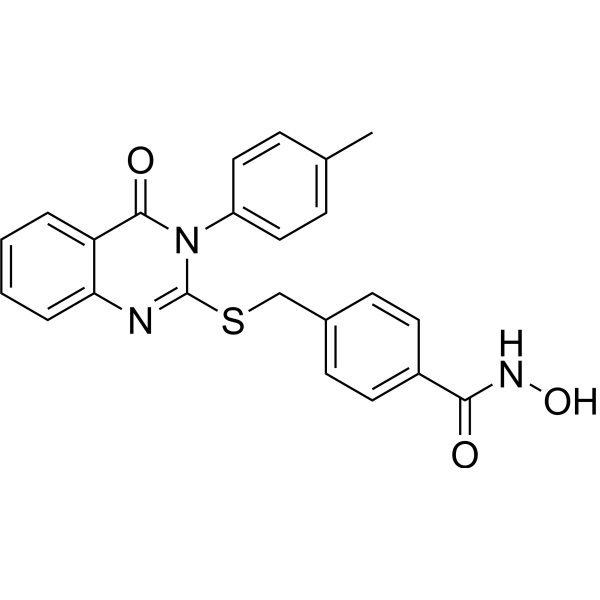 0 ImagesCat. No.: HY-149371HDAC6-IN-16 (compound 5c) is a histone deacetylase 6 (HDAC6) inhibitor, based on Quinazolin-4(3H)-One. HDAC6-IN-16 exhibits anticancer effect, inhibits colony-forming. And HDAC6-IN-16 arrests cell cycle at G2 phase and induces apoptosis.
-
Rodin-A
 0 ImagesCat. No.: HY-176866CAS No.: 2222756-46-7Rodin-A is an orally active, brain-penetrant and selective histone deacetylase (HDAC)-co-repressor of repressor element-1 silencing transcription factor (CoREST) complex inhibitor with an IC50 value of 1.80 μM for the CoREST complex, 0.15 μM for HDAC1, and 0.43 μM for HDAC2. Rodin-A increases the acetylation level of histone H3K9, upregulates the expression of neuron-related genes, thereby promoting the increase in dendritic spine density, the colocalization of synaptic proteins (SV2A and PSD95), and the improvement of hippocampal long-term potentiation (LTP), exerting synaptic protection and repair activity. Rodin-A is promising for research of neurodegenerative diseases related to synaptic dysfunction, especially Alzheimer’s disease.
-
HDAC-IN-47
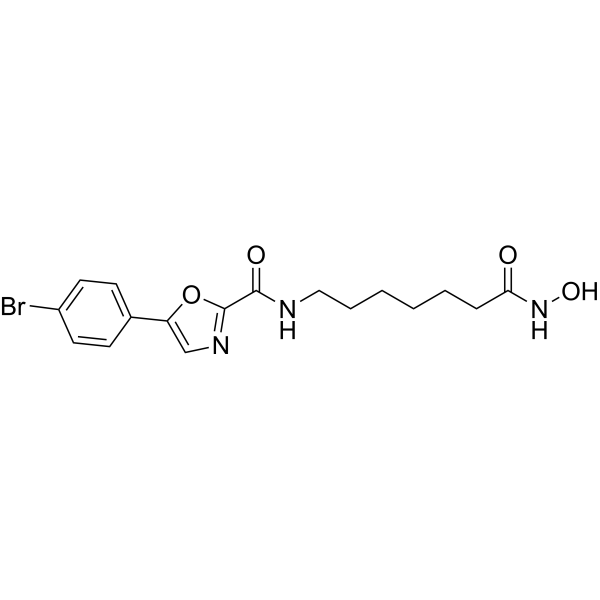 0 ImagesCat. No.: HY-151443CAS No.: 3033608-94-2HDAC-IN-47 is an orally active inhibitor of histone deacetylase (HDAC), with IC50s of 19.75 nM (HDAC1), 5.63 nM (HDAC2), 40.27 nM (HDAC3), 57.8 nM (HDAC2), 302.73 nM (HDAC8), respectively. HDAC-IN-47 inhibits autophagy and induces apoptosis via the Bax/Bcl-2 and caspase-3 pathways. HDAC-IN-47 arrests cell cycle at G2/M phase, and shows anti-tumor efficacy in vivo.
-
HDAC6-IN-67
 0 ImagesCat. No.: HY-178351CAS No.: 2196247-20-6HDAC6-IN-67 is a selective HDAC6 inhibitor (IC50 = 17.15 nM) that exhibits 19-fold selectivity over HDAC1. HDAC6-IN-67 selectively inhibits HDAC6 by interacting with Ser531 and His614. HDAC6-IN-67 induces apoptosis by inducing the cleavage of caspases 9, 8, 3, and PARP, upregulating Bax expression, and downregulating Bcl-2 expression. HDAC6-IN-67 effectively induces the acetylation of α-tubulin, without affecting histone H3 acetylation in MCF-7/ADR cells. HDAC6-IN-67 can be used for the study of breast cancer.
-
YPX-C-05
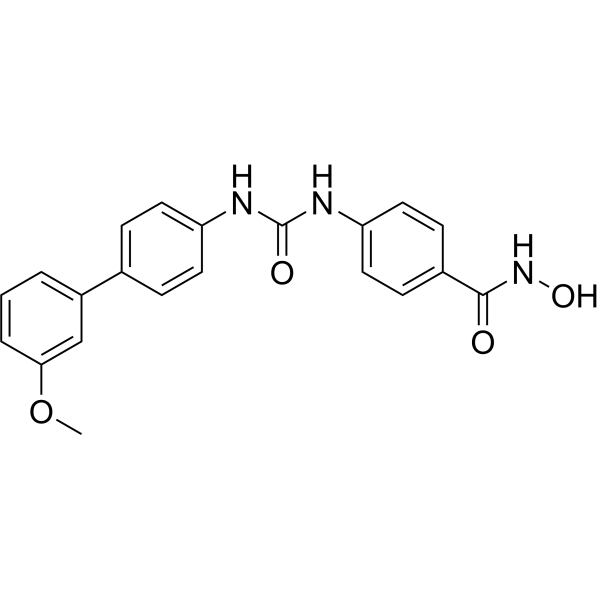 0 ImagesYPX-C-05 is an orally active HDAC inhibitor and vasodilator. YPX-C-05 inhibits HDAC enzymatic activity, increases histone H4 acetylation, activates the PI3K/Akt pathway, promotes Akt and eNOS phosphorylation, enhances eNOS activity, and boosts nitric oxide production. YPX-C-05 increases Tetrahydrobiopterin (HY-107383) levels, restores serum nitric oxide levels, reduces endothelin-1 levels, and improves endothelial function. YPX-C-05 reduces vascular remodeling and exerts antihypertensive effects in hypertensive Mus musculus mice. YPX-C-05 can be used for the research of hypertension.
-
Ac-QPKK(Ac)-AMC
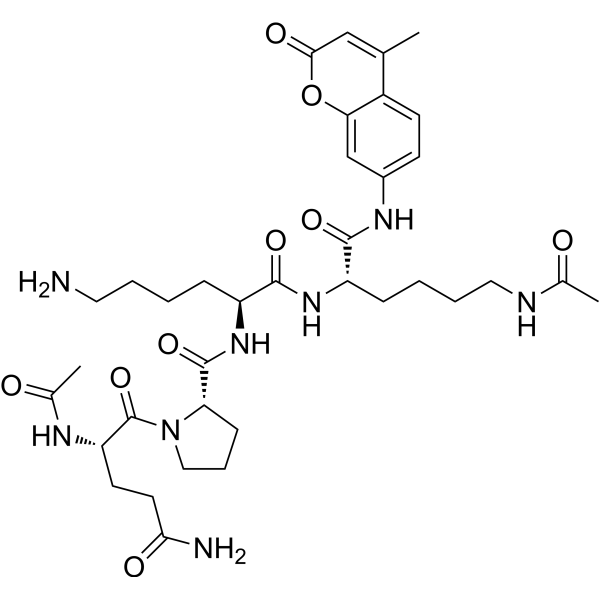 0 ImagesCat. No.: HY-P3364CAS No.: 1387005-23-3Ac-QPKK(Ac)-AMC is a p53-derived peptide conjugated with a fluorophore, which serves as a fluorescent peptide substrate for detecting the deacylase activity of zinc-dependent HDACs and sirtuins (Ex = 360 nm; Em = 460 nm).
-
HDAC-IN-28
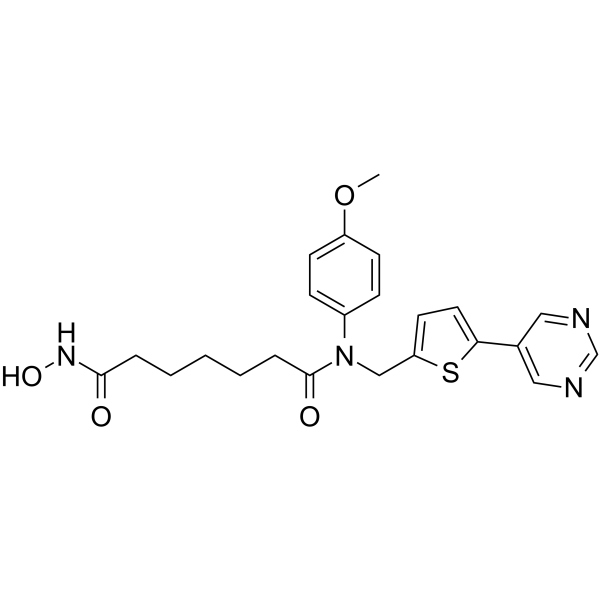 0 ImagesCat. No.: HY-142965CAS No.: 1621154-88-8HDAC-IN-28, a novel HDAC inhibitor, shows potent activities against tumor growth and metastasis
-
MRLB-223
 0 ImagesCat. No.: HY-124792CAS No.: 937727-03-2MRLB-223 is a preferential HDAC1 and HDAC2 inhibitor with activity against tumor cells.MRLB-223 induces histone hyperacetylation, intrinsic apoptotic pathway activation, tumor cell apoptosis, Hsp90 hyperacetylation, and caspase-dependent Bcr-Abl degradation.MRLB-223 mediates p53-independent tumor cell death, with activity suppressed by Bcl-2 overexpression, and kills Bcr-Abl-expressing myeloid cells.MRLB-223 exerts effects in mice bearing Eμ-myc lymphomas.MRLB-223 can be used for the research of Eμ-myc lymphoma.
-
Ac-ETDK(myr)-AMC
 0 ImagesCat. No.: HY-P12010CAS No.: 1857308-95-2Ac-ETDK(myr)-AMC is a DLAT-derived ε-N-myristoyllysine peptide substrate for fatty-acid deacylase HDAC11, used in fluorescence-based HDAC11 activity assays. Ac-ETDK(myr)-AMC undergoes cleavage of ε-N-myristoyllysine by HDAC11, followed by trypsin-mediated cleavage of C-terminal lysine to release measurable fluorophore AMC.
-
Santacruzamate A (Standard)
 0 ImagesSynonyms: CAY-10683 (Standard)Santacruzamate A (Standard) is the analytical standard of Santacruzamate A. This product is intended for research and analytical applications. Santacruzamate A (CAY-10683, STA) is a potent and selective HDAC2 inhibitor with an IC50 of 119 pM. STA also exerts neuroprotective property against amyloid-β protein fragment 25–35. STA can be used for cancer and neurological disease research[1][2].
-
HDAC/PSMD14-IN-1
 0 ImagesCat. No.: HY-172878CAS No.: 3062141-62-9HDAC/PSMD14-IN-1 (Compound 8B) is a thiolutin derivative. HDAC/PSMD14-IN-1 is a orally active dual-target inhibitor of PSMD14/HDAC1 (IC50 238.7 nM/141.2 nM, respectively). HDAC/PSMD14-IN-1 has good cytotoxicity against ESCC cell lines (IC50: 30-250 nM) and effectively reverses epithelial-mesenchymal transition (EMT). HDAC/PSMD14-IN-1 can induce apoptosis. HDAC/PSMD14-IN-1 has anti-tumor activity in a KYSE30 cell mouse xenograft model. HDAC/PSMD14-IN-1 can be used in anti-esophageal cancer research.




