



PKC
Protein kinase C
PKC (Protein kinase C) is a family of protein kinase enzymes that are involved in controlling the function of otherproteins through the phosphorylation of hydroxyl groups of serine and threonine amino acid residues on these proteins. PKC enzymes in turn are activated by signals such as increases in the concentration of diacylglycerol (DAG) or calcium ions (Ca2+). Hence PKC enzymes play important roles in several signal transduction cascades. The PKC family consists of 15 isozymes in humans: PKC-α (PRKCA), PKC-β1 (PRKCB), PKC-β2 (PRKCB), PKC-γ (PRKCG), PKC-δ (PRKCD), PKC-δ1 (PRKD1), PKC-δ2 (PRKD2), PKC-δ3 (PRKD3), PKC-ε (PRKCE), PKC-η (PRKCH), PKC-θ (PRKCQ), PKC-ι (PRKCI), PKC-ζ (PRKCZ), PK-N1 (PKN1), PK-N2 (PKN2), PK-N3 (PKN3). PKC is involved in receptor desensitization, in modulating membrane structure events, in regulating transcription, in mediating immune responses, in regulating cell growth, and in learning and memory. These functions are achieved by PKC-mediated phosphorylation of other proteins.
PKC Isoform Specific Products
-
PKC
(385)
View all products
-
PKCα
(47)
View all products
-
PKCβ
(40)
View all products
-
PKCγ
(26)
View all products
-
PKCδ
(26)
View all products
-
PKCε
(30)
View all products
-
PKCη
(15)
View all products
-
PKCζ
(14)
View all products
-
PKCθ
(21)
View all products
-
PKCμ
(4)
View all products
-
PKC-ι ℩
(2)
View all products
-
PKCι
(7)
View all products
All Product Categories
-
PKC Related Products (503)
Related Products (503)

-
Antibodies (21)
-
PKC Isoform Comparison
-
Enzastaurin (Standard)
 0 ImagesSynonyms: LY317615 (Standard)Enzastaurin (Standard) is the analytical standard of Enzastaurin. This product is intended for research and analytical applications. Enzastaurin (LY317615) is a potent and selective PKCβ inhibitor with an IC50 of 6 nM, showing 6- to 20-fold selectivity over PKCα, PKCγ and PKCε.
-
MT477
 0 ImagesCat. No.: HY-122241CAS No.: 328069-91-6
-
CGP-53353 (Standard)
 0 ImagesCat. No.: HY-108600RCAS No.: 145915-60-2Synonyms: DAPH-7 (Standard)CGP-53353 (Standard) is the analytical standard of CGP-53353 (HY-108600). This product is intended for research and analytical applications. CGP-53353 (DAPH-7) is an potent PKC inhibitor with IC50s of 0.41 μM and 3.8 μM for PKCβII and PKCβI, respectively. CGP-53353 can inhibit glucose-induced cell proliferation and DNA synthesis in AoSMC and A10 cells. CGP-53353 can be used for researching atherosclerosis of diabetic patients.
-
Tazanolast (Standard)
 0 ImagesSynonyms: TO 188 (Standard); Tazalest (Standard); Tazanol (Standard)Tazanolast (Standard) (TO 188 (Standard)) is the analytical standard of Tazanolast (HY-101810). This product is intended for research and analytical applications. Tazanolast (TO 188) is an orally active selective mast cell stabilizer. Tazanolast prevents the elevation of intracellular calcium concentration, inhibits calcium uptake and Protein kinase C translocation, without directly inhibiting phospholipase C. Tazanolast inhibits ozone-induced airway hyperresponsiveness to Methacholine in guinea pigs, as well as passive cutaneous anaphylaxis, Schultz-Dale reaction, experimental asthma, passive cutaneous anaphylaxis in rats, and increased cutaneous vascular permeability in rats. Tazanolast does not alter airway responsiveness in sham-exposed guinea pigs, cell distribution in bronchoalveolar lavage fluid after ozone exposure, type II-IV allergic reactions, or histamine release from atopic leukocytes. Tazanolast can be used in research related to allergic diseases.
-
Bisindolylmaleimide IV (Standard)
 0 ImagesSynonyms: Arcyriarubin A (Standard)Bisindolylmaleimide IV (Standard) is the analytical standard of Bisindolylmaleimide IV. This product is intended for research and analytical applications. Bisindolylmaleimide IV (Arcyriarubin A) is a potent protein kinase C (PKC) inhibitor, with IC50s ranging from 0.1 to 0.55 μM. Bisindolylmaleimide IV also inhibits PKA (IC50=3.1-11.8μM). Bisindolylmaleimide IV is a potent, selective inhibitor of human cytomegalovirus (HCMV) replication in cell culture with an IC50 of 0.2 μM.
-
RK-286D
 0 ImagesCat. No.: HY-116060CAS No.: 140429-37-4RK-286D is an antibiotic and a PKC inhibitor with antimicrobial activity. RK-286D shows inhibitory activities against bleb formation induced by PDBu (HY-18985) and in vitro PKC activity.
-
Stearoyl-L-carnitine-d9 chloride
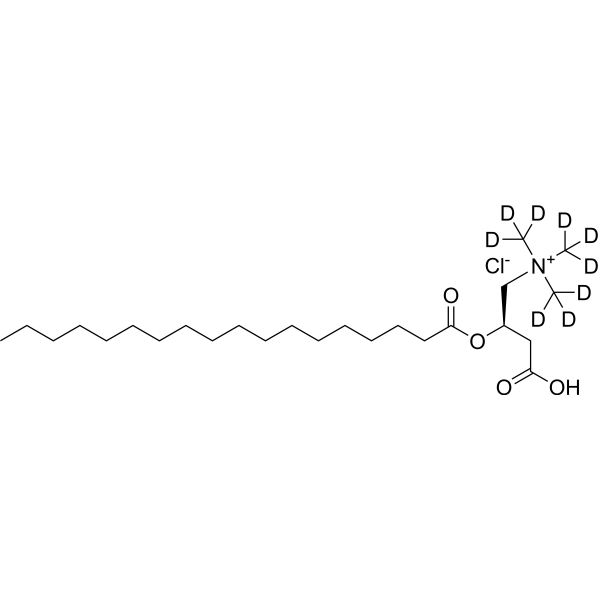 0 ImagesCat. No.: HY-113202S1CAS No.: 2936622-19-2Stearoyl-L-carnitine-d9 chloride is the deuterium labeled Stearoyl-L-carnitine chloride. Stearoyl-L-carnitine chloride, a fatty ester lipid molecule, is an endogenous metabolite. Stearoyl-L-carnitine chloride can be used as PKC inhibitor. Stearoyl-L-carnitine chloride accumulates in β cells, leading to arrest of insulin synthesis and energy deficiency in type 2 diabetes mouse. Stearoyl-L-carnitine chloride inhibits lecithin cholesterol acyltransferase (LCAT) in rat and rabbits plasma. Stearoyl-L-carnitine chloride acts as a metabolomics biomarker for Parkinson’s disease. Stearoyl-L-carnitine chloride is a less potent inhibitor of GlyT2.
-
Fasudil mesylate
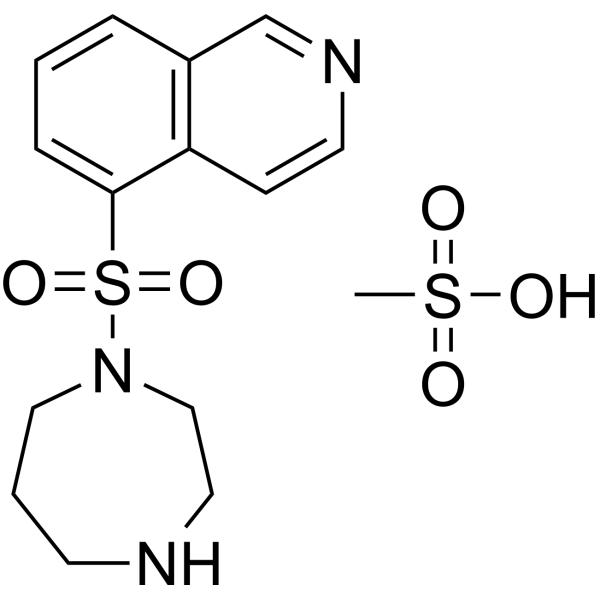 0 ImagesCat. No.: HY-10341DCAS No.: 1001206-62-7Synonyms: HA-1077 mesylate; AT-877 mesylateFasudil (HA-1077; AT877) mesylate is a nonspecific and orally active RhoA/ROCK inhibitor and also has inhibitory effect on protein kinases, with an Ki of 0.33 μM for ROCK1, IC50s of 0.158 μM and 4.58 μM, 12.30 μM, 1.650 μM for ROCK2 and PKA, PKC, PKG, respectively. Fasudil mesylate is also a potent Ca2+ channel antagonist and vasodilator.
-
LY 379196
 0 ImagesCat. No.: HY-119112A
-
PKC-IN-5
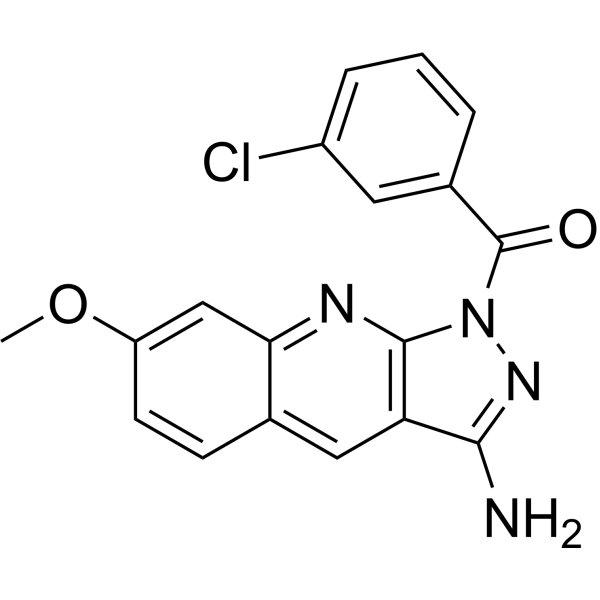 0 ImagesCat. No.: HY-169578CAS No.: 904458-98-6PKC-IN-5 (Compound PKCe2054) is a PKC inhibitor. PKC-IN-5 prevents the interaction between PKCe and its adaptor protein RACK2.
-
Xaliproden free base
 0 ImagesCat. No.: HY-119820CAS No.: 135354-02-8Synonyms: SR57746A free baseXaliproden (SR57746) free base is an orally active, highly selective 5-HT1A receptor agonist. Xaliproden free base activates pertussis toxin-sensitive G protein-coupled signaling cascades, as well as the PKC, ERK1/ERK2, Akt and p21 Ras/MEK-1 pathways. Xaliproden free base also downregulates the JNK/p66/c-Jun signaling pathway, induces phosphorylation of the shc adaptor protein, regulates extracellular dopamine and 5-HT levels, and induces [35S]GTPγS labeling in rat brain structures rich in 5-HT1A receptors. Xaliproden free base exerts neurotrophic, neuroprotective, renoprotective, anti-inflammatory, anti-apoptotic, anti-fibrotic and analgesic effects. Xaliproden free base also enhances NGF-induced neurite outgrowth, promotes motor neuron survival, attenuates renal tubular injury and inhibits chemotherapy-induced mechanical allodynia, without activating or altering NGF-induced TrkA receptor activation. Xaliproden free base can be used in the research of motor neuron disease, diabetic nephropathy, chemotherapy-induced peripheral neuropathy, amyotrophic lateral sclerosis, Alzheimer's disease, acute tonic nociceptive pain, inflammatory pain, depression and anxiety.
-
Procyanidin A1 (Standard)
 0 ImagesCat. No.: HY-N2344RCAS No.: 103883-03-0Synonyms: Proanthocyanidin A1 (Standard)Procyanidin A1 (Standard) is the analytical standard of Procyanidin A1. This product is intended for research and analytical applications. Procyanidin A1 (Proanthocyanidin A1) is a procyanidin dimer, which inhibits degranulation downstream of protein kinase C activation or Ca2+ influx from an internal store in RBL-213 cells. Procyanidin A1 has antiallergic effects.
-
SB2960
 0 ImagesCat. No.: HY-181165CAS No.: 3111225-79-4SB2960 is a receptor for activated protein C kinase 1 (RACK1) binder with a human KD of 5.65 μM. SB2960 can promote stress granule (SG) formation and exhibit potent antiviral activity across diverse viral species. SB2960 suppresses viral replication with minimal cytotoxicity by modulating host antiviral immune responses. SB2960 increases the thermal stability of RACK1 and reduces SARS-CoV-2 N protein levels. SB2960 enhances type I interferon (IFN-β) expression and inhibits RIG-I, ISG56, and RANTES expression. SB2960 can be used for the research of virus infection.
-
Isosalvianolic acid C
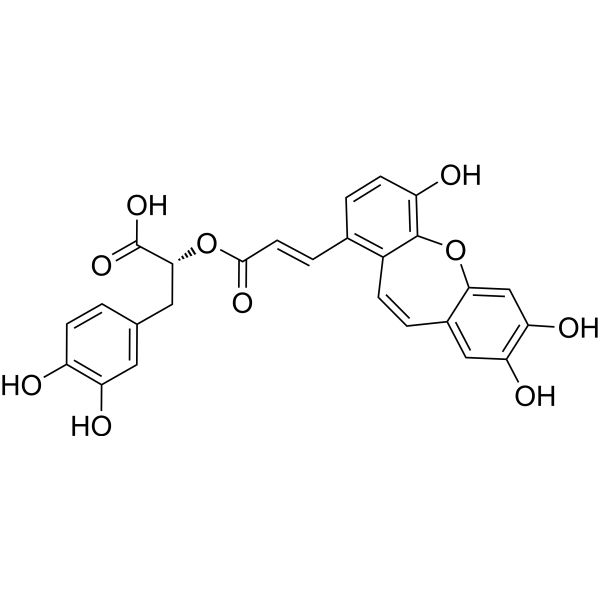 0 ImagesCat. No.: HY-122967CAS No.: 142115-17-1Isosalvianolic acid C is a naturally derived phenolic compound that acts as a signal modulator, antioxidant, and enzyme inhibitor. Isosalvianolic acid C induces the phosphorylation of PLC-γ, IP3R, PKC, and P38, triggering Ca2+ mobilization, degranulation, and chemokine release. Isosalvianolic acid C activates MRGPRX2 and its murine homolog MrgprB2, leading to pseudo-allergic reactions in vivo. Isosalvianolic acid C inhibits Cu2+-induced LDL peroxidation. Isosalvianolic acid C can be used in studies related to pseudo-allergy, diabetes, and atherosclerosis.
-
R 59-022 hydrochloride (Standard)
 0 ImagesCat. No.: HY-107613ARCAS No.: 93076-98-3Synonyms: DKGI-I hydrochloride (Standard); Diacylglycerol kinase inhibitor I hydrochloride (Standard)R 59-022 hydrochloride (Standard) is the analytical standard of R 59-022 (hydrochloride) (HY-107613A). This product is intended for research and analytical applications. R 59-022 (DKGI-I) hydrochloride is a DGK inhibitor (IC50: 2.8 µM). R 59-022 hydrochloride inhibits the phosphorylation of OAG to OAPA. R 59-022 hydrochloride is a 5-HT Receptor antagonist, and activates protein Kinase C (PKC). R 59-022 hydrochloride potentiates thrombin-induced diacylglycerol production in platelets and inhibits phosphatidic acid production in neutrophils.
-
Sotrastaurin (Standard)
 0 ImagesSynonyms: AEB071 (Standard)Sotrastaurin (Standard) is the analytical standard of Sotrastaurin. This product is intended for research and analytical applications. Sotrastaurin (AEB071) is a potent and orally-active pan-PKC inhibitor, with Kis of 0.22 nM, 0.64 nM, 0.95 nM, 1.8 nM, 2.1 nM and 3.2 nM for PKCθ, PKCβ, PKCα, PKCη, PKCδ and PKCε, respectively.
-
Ro 31-8830
 0 ImagesCat. No.: HY-117610CAS No.: 131848-98-1Synonyms: Ro 32-0432 free base; Bisindolylmaleimide XIRo 31-8830 is an orally active, potent and selective inhibitor of protein kinase C with anti-inflammatory activity. Ro 31-8830 is promising for research of inflammatory disorders.
-
Ro 31-8220 mesylate (Standard)
 0 ImagesCat. No.: HY-13866RCAS No.: 138489-18-6Synonyms: Ro 31-8220 methanesulfonate (Standard); Bisindolylmaleimide IX mesylate (Standard)Ro 31-8220 mesylate (Standard) is the analytical standard of Ro 31-8220 mesylate (HY-13866). This product is intended for research and analytical applications. Ro 31-8220 mesylate is a potent PKC inhibitor, with IC50s of 5, 24, 14, 27, 24 and 23 nM for PKCα, PKCβI, PKCβII, PKCγ, PKCε and rat brain PKC, respectively. Ro 31-8220 also significantly inhibits MAPKAP-K1b, MSK1, S6K1 and GSK3β (IC50s, 3, 8, 15, and 38 nM, respectively), with no effect on MKK3, MKK4, MKK6 and MKK7. Ro 31-8220 mesylate can also inhibit the expression of MKP-1, induce the expression of c-Jun, and activate JNK, and these effects possess pharmacological properties independent of PKC.
-
Dioleyl phosphatidylserine
 0 ImagesCat. No.: HY-141613ACAS No.: 6811-55-8Dioleyl phosphatidylserine is a phospholipid that can be used to form the cochlea. Dioleyl phosphatidylserine (100 μM) can activate PKC-γ under Ca2+ concentrations < 0.5 μM.
-
CMPD101 (Standard)
 0 ImagesCat. No.: HY-103045RCAS No.: 865608-11-3CMPD101 (Standard) is the analytical standard of CMPD101 (HY-103045). This product is intended for research and analytical applications. CMPD101 is a potent, highly selective and membrane-permeable small-molecule inhibitor of GRK2/3 with IC50 of 18 nM and 5.4 nM, respectively. CMPD101 exhibits less selectively against GRK1, GRK5, ROCK-2 and PKCα with IC50s of 3.1 μM , 2.3 μM, 1.4 μM and 8.1 μM, respectively. CMPD101 can be used for the study of heart failure.




