



Trigonelline chloride
Based on 10 publication(s) in Google Scholar
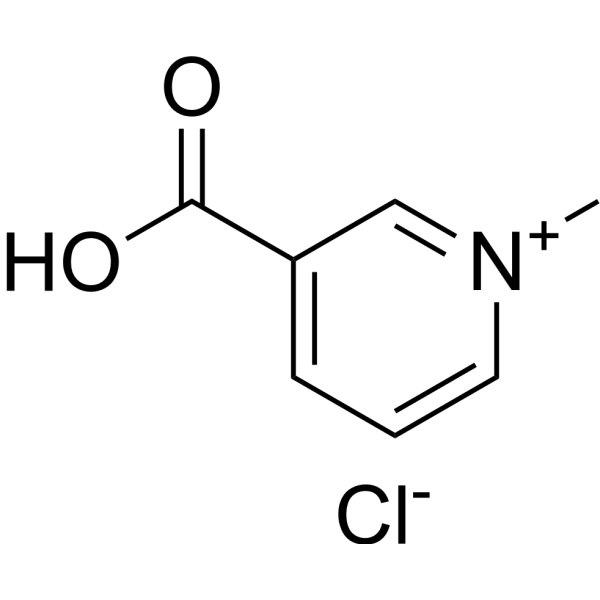
Trigonelline chloride is an alkaloid with potential antidiabetic activity that can be isolated from Trigonella foenum-graecum L or Leonurus artemisia. Trigonelline chloride is a potent Nrf2 inhibitor that blocks Nrf2-dependent proteasome activity, thereby enhancing apoptosis in pancreatic cancer cells. Trigonelline chloride also has anti-HSV-1, antibacterial, and antifungal activity, and induces ferroptosis.
For research use only. We do not sell to patients.
- Purity : 99.88%
- CAS No.: 6138-41-6
- Formula: C7H8ClNO2
- Molecular Weight:173.60
-
Storage:
4°C, sealed storage, away from moisture
* In solvent : -80°C, 6 months; -20°C, 1 month (sealed storage, away from moisture)

To place orders, for customer services and technical support, please contact: MedChemExpress USA
Tel: 609-228-6898 E-mail: [email protected] [email protected]


-
 Biological Activity
-
Chemical Information
-
Solvent & Solubility
- Protocols
- Purity & Documentation
- References
-
 Help & FAQs


-
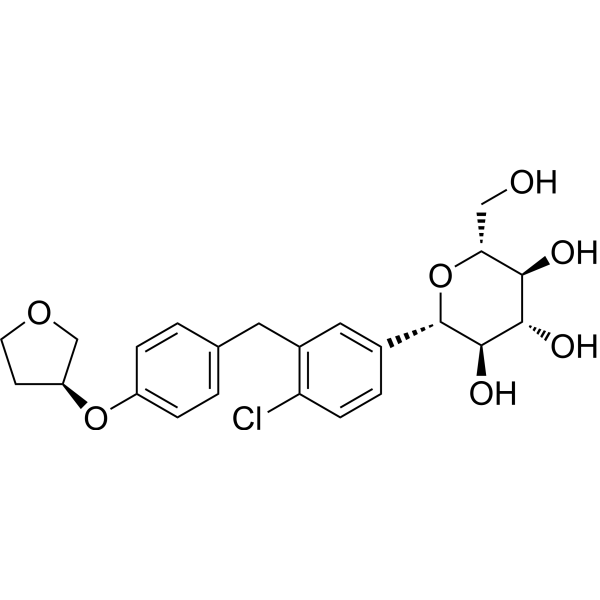
HY-15409
EmpagliflozinSGLT2 Inhibitor -
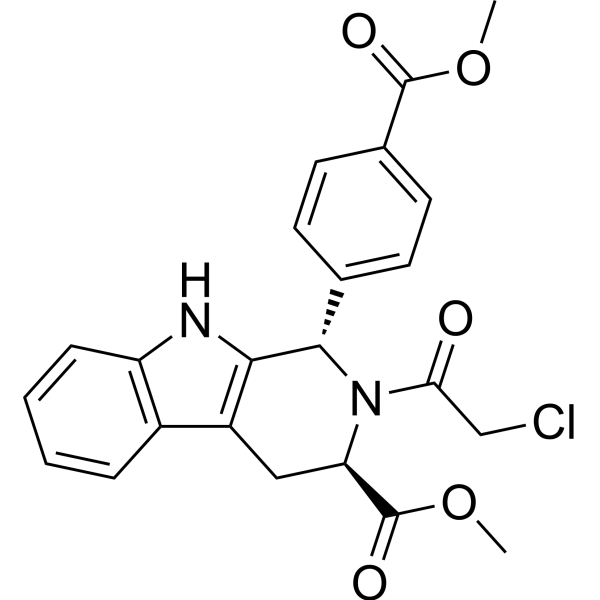
HY-100218A
RSL3GPX4 Inhibitor -
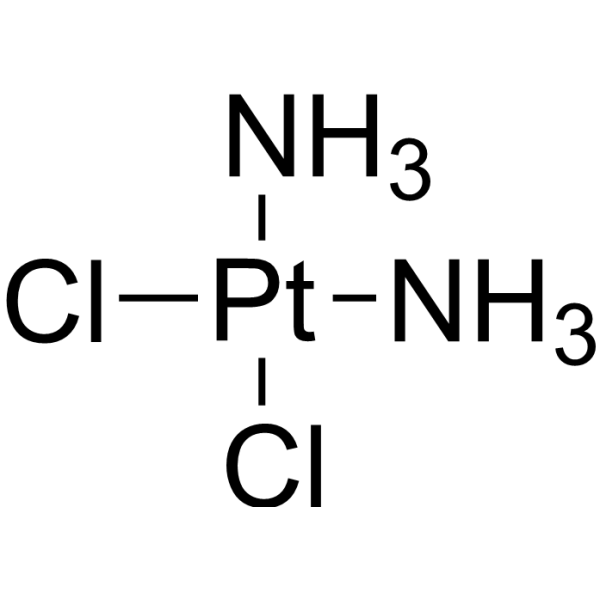
HY-17394
CisplatinDNA Alkylator -
HY-B1337
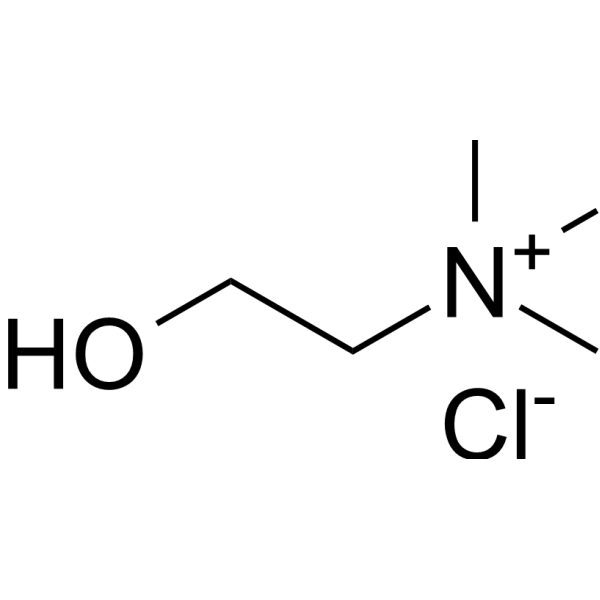
Choline chlorideBronchodilator -
HY-N0738
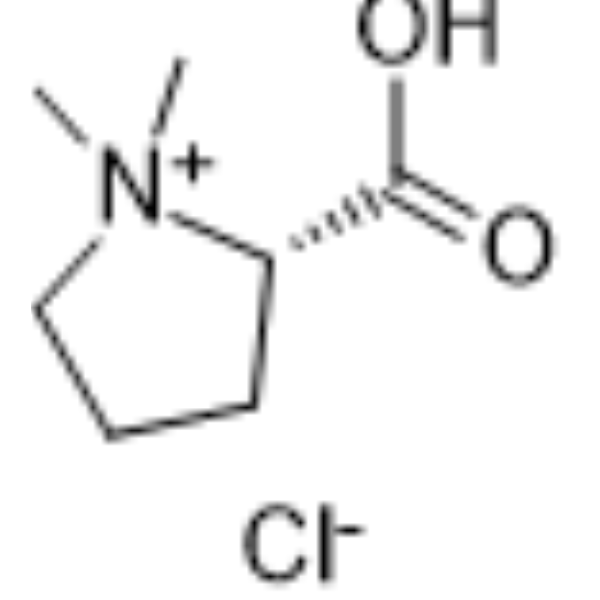
Stachydrine hydrochlorideEndogenous Metabolite -

HY-N0415R
Trigonelline chloride (Standard)Nrf2 Inhibitor -
HY-N0440
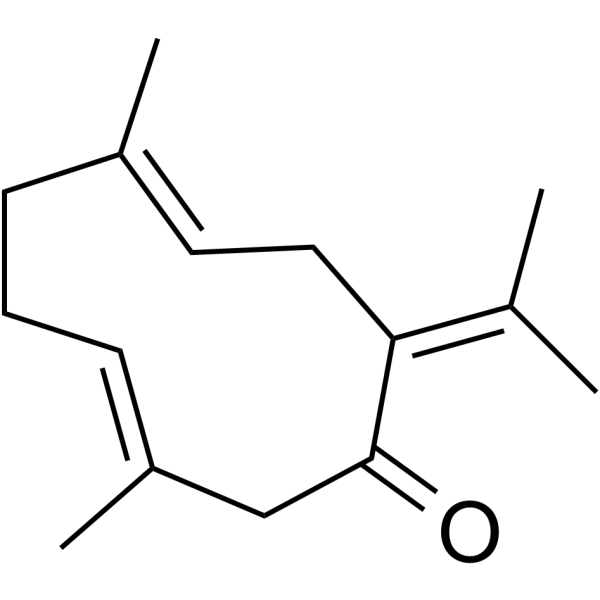
GermacroneAnti-viral/Cancer/Inflammatory Agent -
HY-14860
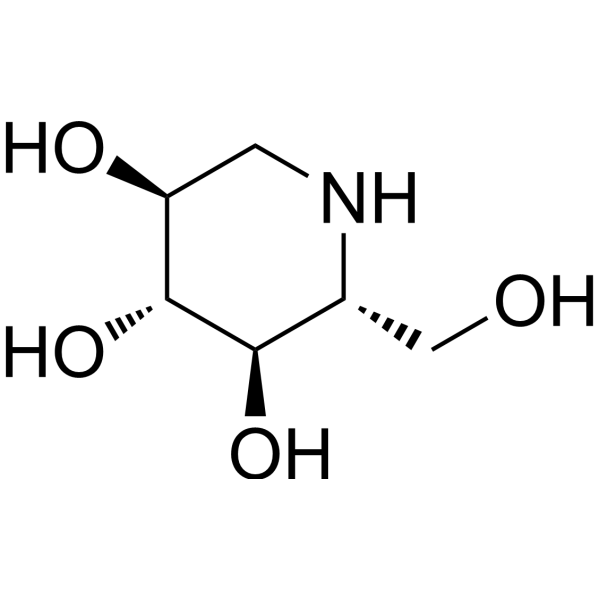
1-Deoxynojirimycinα-glucosidase Inhibitor -
HY-N0337
Eugenol,98% (stabilized with TBC)Antioxidant -

HY-N0440R
Germacrone (Standard)Standard of Germacrone -
HY-N2329
PiperlongumineAnticancer Agent -

HY-N0337R
Eugenol (Standard)Antioxidant
Publications Citing Use of MedChemExpress (MCE) Trigonelline chloride
More- Autophagy. 2026 Feb 15:1-19. [Abstract]
- Adv Sci (Weinh). 2025 Nov 5:e13956. [Abstract]
- Adv Sci (Weinh). 2024 Mar;11(10):e2305563. [Abstract]
- Cell Rep. 2026 Mar 24;45(3):117086. [Abstract]
- J Ginseng Res. 2023 Jan;47(1):106-116. [Abstract]
- J Agric Food Chem. 2022 Jun 22;70(24):7420-7440. [Abstract]
- Int J Mol Sci. 2023 Feb 7;24(4):3257. [Abstract]
- Microchem J. 2026 Mar 19.
- Vet Microbiol. 2026 May:316:110992. [Abstract]
- SSRN. 2025 Jul 9.
 Customer Validation & Images

-
WB
-
Bio/Physico-chemical Assay
-
WB
-
WB
-
Cell Imaging/Staining
All Endogenous Metabolite Isoforms
More

Biological Activity
Description
IC50 & Target
|
HSV-1 |
Cellular Effect
|
Cell Line

|
Type | Value | Description | References |
|---|---|---|---|---|
| Vero | IC50 |
>50 μg/mL
Compound: 10
|
Cytotoxicity against african green monkey Vero cells
Cytotoxicity against african green monkey Vero cells
|
[PMID: 21985060] |
In Vitro
It is found that Trigonelline chloride (TG) significantly rescues the morphology of the H9c2 cells. Treatment of cells with Trigonelline chloride attenuates H2O2 induced cell deaths and improves the antioxidant activity. In addition, Trigonelline chloride regulates the apoptotic gene caspase-3, caspase-9 and anti-apoptotic gene Bcl-2, Bcl-XL during H2O2 induced oxidative stress in H9c2 cells. For evident, flow cytometer results also confirm that Trigonelline chloride significantly reduces the H2O2 induced necrosis and apoptosis in H9c2 cells[1].
MedChemExpress (MCE) has not independently confirmed the accuracy of these methods. They are for reference only.
In Vivo
MedChemExpress (MCE) has not independently confirmed the accuracy of these methods. They are for reference only.


Chemical Information
-
CAS No. 6138-41-6
-
Appearance Solid
-
Molecular Weight 173.60
-
Formula C7H8ClNO2
-
Color White to off-white
-
SMILES
C[N+]1=CC(C(O)=O)=CC=C1.[Cl-]
-
Synonyms
Trigonelline hydrochloride
-
Structure Classification
-
Initial Source
-
Shipping
Room temperature in continental US; may vary elsewhere.
-
Storage
4°C, sealed storage, away from moisture
* In solvent : -80°C, 6 months; -20°C, 1 month (sealed storage, away from moisture)


Publications (10)
-
Journal Impact Factor
-
Most Recent
-
Autophagy
Kitasamycin overcomes ferroptosis and immunotherapy resistance by targeting the HUWE1-NCOA4-FTH1 axis. [Abstract]2026 Feb 15:1-19. PMID: 41612599 -
Adv Sci (Weinh)
Trigonelline Improves Metabolism and Cardiac Function of HFpEF Mice Via Gut Microbiome Alterations-Mediated AMPK Activation. [Abstract]2025 Nov 5:e13956. PMID: 41194405 -
Adv Sci (Weinh)
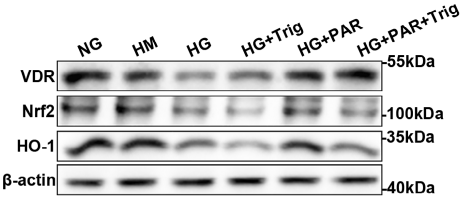
VDR Activation Attenuates Renal Tubular Epithelial Cell Ferroptosis by Regulating Nrf2/HO-1 Signaling Pathway in Diabetic Nephropathy. [Abstract]2024 Mar;11(10):e2305563. PMID: 38145959
Trigonelline chloride purchased from MedChemExpress. Usage Cited in: Adv Sci (Weinh). 2024 Mar;11(10):e2305563. [Abstract]
Nrf2 deficiency eliminated the antiferroptotic effect of VDR. Trigonelline (Trig, 100 μM) was pretreated to HG‐cultured HK‐2 cells for 30 min. Western blotting and related densitometric analysis were applied to detect the expression levels of VDR, Nrf2, and HO‐1. β‐actin served as a loading control.
-
Cell Rep
2026 Mar 24;45(3):117086. PMID: 41831232 -
J Ginseng Res
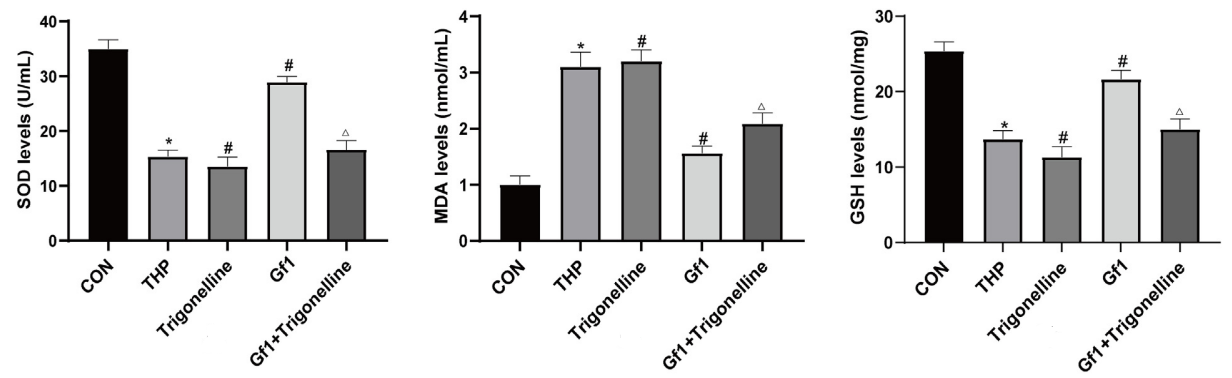
Ginsenoside F1 attenuates pirarubicin-induced cardiotoxicity by modulating Nrf2 and AKT/Bcl-2 signaling pathways. [Abstract]2023 Jan;47(1):106-116. PMID: 36644383
Trigonelline chloride purchased from MedChemExpress. Usage Cited in: J Ginseng Res. 2023 Jan;47(1):106-116. [Abstract]
Trigonelline (150 μM, 24 h). THP-induced oxidative stress in H9c2 cells and the effects of GF1. Representative levels of superoxide dismutase (SOD), malondialdehyde (MDA) and glutathione (GSH).
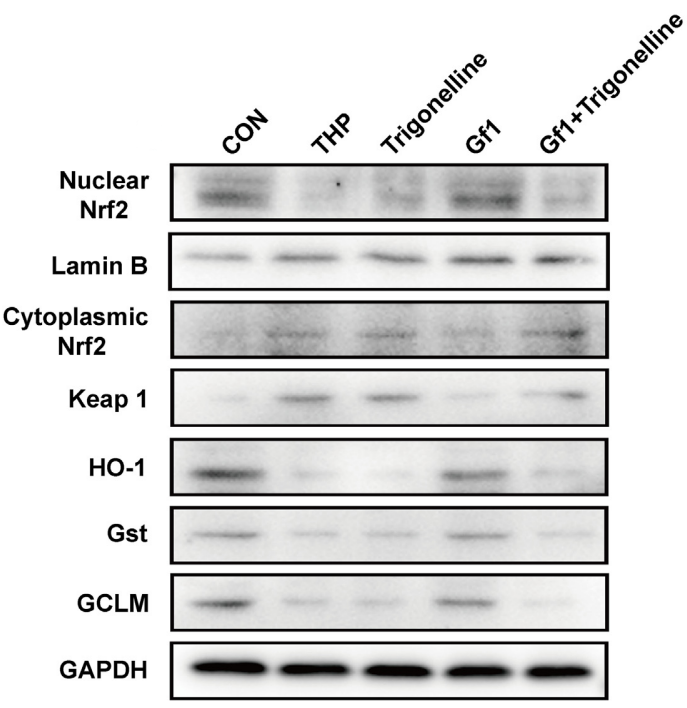
Trigonelline chloride purchased from MedChemExpress. Usage Cited in: J Ginseng Res. 2023 Jan;47(1):106-116. [Abstract]
Trigonelline (150 μM, 24 h). Representative Nrf2 levels in nucleus; Lamin B was used as an internal control in nucleus; Nrf2, keap1, HO-1, Gst, and GCLM protein expression in cytoplasm; GAPDH was utilized as an internal control in cytoplasm.
-
J Agric Food Chem
Rosmarinic Acid Inhibits Platelet Aggregation and Neointimal Hyperplasia In Vivo and Vascular Smooth Muscle Cell Dedifferentiation, Proliferation, and Migration In Vitro via Activation of the Keap1-Nrf2-ARE Antioxidant System. [Abstract]2022 Jun 22;70(24):7420-7440. PMID: 35687823 -
Int J Mol Sci
Berberine Alleviates Doxorubicin-Induced Myocardial Injury and Fibrosis by Eliminating Oxidative Stress and Mitochondrial Damage via Promoting Nrf-2 Pathway Activation. [Abstract]2023 Feb 7;24(4):3257. PMID: 36834687
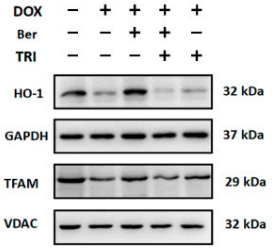
Trigonelline chloride purchased from MedChemExpress. Usage Cited in: Int J Mol Sci. 2023 Feb 7;24(4):3257. [Abstract]
The inhibitor of NRF2 suppressed the protective effect of Ber on cardiomyocytes. Cardiomyocytes were treated with the NRF2 inhibitor trigonelline (TRI) 30 min prior to DOX and Ber stimulation. The levels of cytoplasmic HO-1 and mitochondrial TFAM in cardiomyocytes were measured by Western blotting. Quantitative analysis of the relative protein levels is shown on the right-hand side of the images.
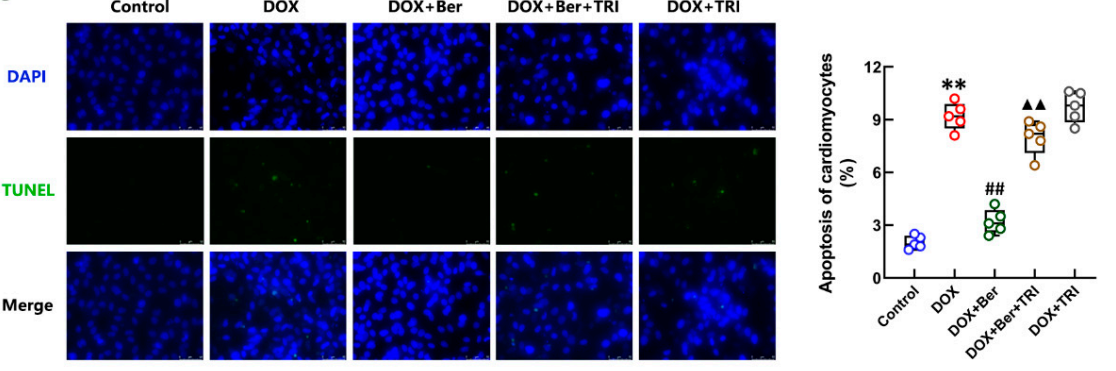
Trigonelline chloride purchased from MedChemExpress. Usage Cited in: Int J Mol Sci. 2023 Feb 7;24(4):3257. [Abstract]
The inhibitor of NRF2 suppressed the protective effect of Ber on cardiomyocytes. Cardiomyocytes were treated with the NRF2 inhibitor trigonelline (TRI) 30 min prior to DOX and Ber stimulation. Representative photomicrographs TUNEL-stained sections (left). The rate of apoptosis was expressed as the ratio of TUNEL-positive cardiomyocyte nuclei (green) to total number of cardiomyocyte nuclei (blue). The numbers of apoptotic cells were counted in five randomly selected fields for each sample (right). The scale bar represents 50 μm.
-
-
Vet Microbiol
The Chinese medicine monomer Schisandrin C inhibits PRRSV infection by regulating the OGT-PI3K/AKT/mTOR signaling pathway. [Abstract]2026 May:316:110992. PMID: 41865607 -


Solvent & Solubility
In Vitro:
H2O : 100 mg/mL (576.04 mM; Need ultrasonic)
DMSO : 20.83 mg/mL (119.99 mM; ultrasonic and warming and heat to 60°C; Hygroscopic DMSO has a significant impact on the solubility of product, please use newly opened DMSO)
Please refer to the solubility information to select the appropriate solvent. Once prepared, please aliquot and store the solution to prevent product inactivation from repeated freeze-thaw cycles.
Storage method and period of stock solution: -80°C, 6 months; -20°C, 1 month (sealed storage, away from moisture). When stored at -80°C, please use it within 6 months. When stored at -20°C, please use it within 1 month.
* Note: If you choose water as the stock solution, please dilute it to the working solution, then filter and sterilize it with a 0.22 μm filter before use.
Please refer to the solubility information to select the appropriate solvent. Once prepared, please aliquot and store the solution to prevent product inactivation from repeated freeze-thaw cycles.
Storage method and period of stock solution: -80°C, 6 months; -20°C, 1 month (sealed storage, away from moisture). When stored at -80°C, please use it within 6 months. When stored at -20°C, please use it within 1 month.
* Note: If you choose water as the stock solution, please dilute it to the working solution, then filter and sterilize it with a 0.22 μm filter before use.
Concentration (start) × Volume (start) = Concentration (final) × Volume (final)
In Vivo:
Select the appropriate dissolution method based on your experimental animal and administration route.
- For the following dissolution methods, please ensure to first prepare a clear stock solution using an In Vitro approach and then sequentially add co-solvents:
- To ensure reliable experimental results, the clarified stock solution can be appropriately stored based on storage conditions. As for the working solution for In Vivo experiments, it is recommended to prepare freshly and use it on the same day.
- The percentages shown for the solvents indicate their volumetric ratio in the final prepared solution. If precipitation or phase separation occurs during preparation, heat and/or sonication can be used to aid dissolution.
Add each solvent one by one: 10% DMSO 40% PEG300 5% Tween-80 45% Saline
Solubility: ≥ 2.08 mg/mL (11.98 mM); Clear solution
This protocol yields a clear solution of ≥ 2.08 mg/mL (saturation unknown).
Taking 1 mL working solution as an example, add 100 μL DMSO stock solution (20.8 mg/mL) to 400 μL PEG300, and mix evenly; then add 50 μL Tween-80 and mix evenly; then add 450 μL Saline to adjust the volume to 1 mL.
Preparation of Saline: Dissolve 0.9 g sodium chloride in ddH₂O and dilute to 100 mL to obtain a clear Saline solution.
Add each solvent one by one: 10% DMSO 90% (20% SBE-β-CD in Saline)
Solubility: ≥ 2.08 mg/mL (11.98 mM); Clear solution
This protocol yields a clear solution of ≥ 2.08 mg/mL (saturation unknown).
Taking 1 mL working solution as an example, add 100 μL DMSO stock solution (20.8 mg/mL) to 900 μL 20% SBE-β-CD in Saline, and mix evenly.
Preparation of 20% SBE-β-CD in Saline (4°C, storage for one week): 2 g SBE-β-CD powder is dissolved in 10 mL Saline, completely dissolve until clear.
For the following dissolution methods, please prepare the working solution directly:
It is recommended to prepare fresh solutions and use them promptly within a short period of time.
The percentages shown for the solvents indicate their volumetric ratio in the final prepared solution. If precipitation or phase separation occurs during preparation, heat and/or sonication can be used to aid dissolution.
Add each solvent one by one: PBS
Solubility: 100 mg/mL (576.04 mM); Clear solution; Need ultrasonic
In Vivo Dissolution Calculator
Please enter the basic information of animal experiments:
-
-
-
-
Recommended: Prepare an additional quantity of animals to account for potential losses during experiments.
Working solution concentration: 0.22 mg/mL
This product has good water solubility, please refer to the measured solubility data in water/PBS/Saline for details.


Purity & Documentation
-
Data Sheet (280 KB)
-
SDS (394 KB)
- English - EN (394 KB)
- Français - FR (394 KB)
- Deutsch - DE (394 KB)
- Norwegian - NO (394 KB)
- Español - ES (394 KB)
- Swedish - SV (394 KB)
- Italian - IT (394 KB)
- Korean - KR (394 KB)
- Portuguese - PT (394 KB)
-
Handling Instructions (2659 KB)
References
[1]. Ilavenil S, et al. Trigonelline protects the cardiocyte from hydrogen peroxide induced apoptosis in H9c2 cells. Asian Pac J Trop Med. 2015 Apr;8(4):263-8. [Content Brief]
[2]. Joanna Folwarczna, et al. Effects of Trigonelline, an Alkaloid Present in Coffee, on Diabetes-Induced Disorders in the Rat Skeletal System. Nutrients. 2016 Mar; 8(3): 133. [Content Brief]
[3]. A Arlt, et al. Inhibition of the Nrf2 transcription factor by the alkaloid trigonelline renders pancreatic cancer cells more susceptible to apoptosis through decreased proteasomal gene expression and proteasome activity. Oncogene. 2013 Oct;32(40):4825-35. [Content Brief]
[4]. Ozçelik B, et al. Cytotoxicity, antiviral and antimicrobial activities of alkaloids, flavonoids, and phenolic acids. Pharm Biol. 2011 Apr;49(4):396-402. [Content Brief]
[5]. Su Y, et al. Ferroptosis, a novel pharmacological mechanism of anti-cancer drugs. Cancer Lett. 2020 Jul 28;483:127-136. [Content Brief]


Complete Stock Solution Preparation Table
Please refer to the solubility information to select the appropriate solvent. Once prepared, please aliquot and store the solution to prevent product inactivation from repeated freeze-thaw cycles.
Storage method and period of stock solution: -80°C, 6 months; -20°C, 1 month (sealed storage, away from moisture). When stored at -80°C, please use it within 6 months. When stored at -20°C, please use it within 1 month.
| Optional Solvent | Concentration Solvent Mass | 1 mg | 5 mg | 10 mg | 25 mg |
|---|---|---|---|---|---|
| DMSO / H2O | 1 mM | 5.7604 mL | 28.8018 mL | 57.6037 mL | 144.0092 mL |
| 5 mM | 1.1521 mL | 5.7604 mL | 11.5207 mL | 28.8018 mL | |
| 10 mM | 0.5760 mL | 2.8802 mL | 5.7604 mL | 14.4009 mL | |
| 15 mM | 0.3840 mL | 1.9201 mL | 3.8402 mL | 9.6006 mL | |
| 20 mM | 0.2880 mL | 1.4401 mL | 2.8802 mL | 7.2005 mL | |
| 25 mM | 0.2304 mL | 1.1521 mL | 2.3041 mL | 5.7604 mL | |
| 30 mM | 0.1920 mL | 0.9601 mL | 1.9201 mL | 4.8003 mL | |
| 40 mM | 0.1440 mL | 0.7200 mL | 1.4401 mL | 3.6002 mL | |
| 50 mM | 0.1152 mL | 0.5760 mL | 1.1521 mL | 2.8802 mL | |
| 60 mM | 0.0960 mL | 0.4800 mL | 0.9601 mL | 2.4002 mL | |
| 80 mM | 0.0720 mL | 0.3600 mL | 0.7200 mL | 1.8001 mL | |
| 100 mM | 0.0576 mL | 0.2880 mL | 0.5760 mL | 1.4401 mL |
* Note: If you choose water as the stock solution, please dilute it to the working solution, then filter and sterilize it with a 0.22 μm filter before use.


Trigonelline chloride Related Classifications
HY-N0415 Related Classifications
 Powered by Bioz