



Protein kinase inhibitor H-7

Based on 1 Customer Validation
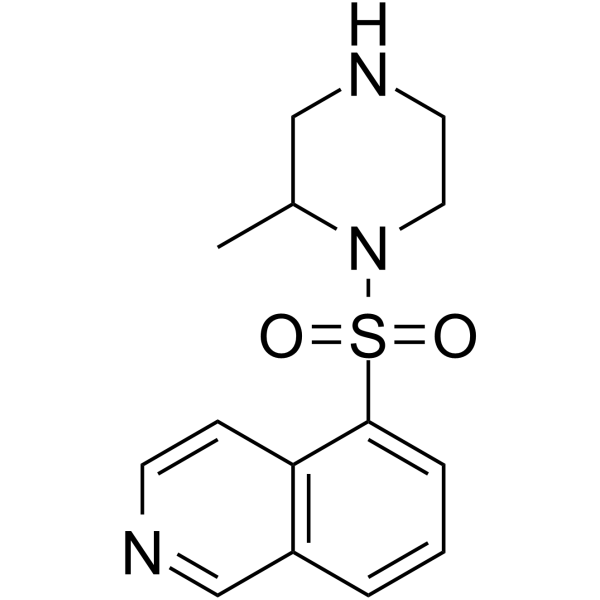
Protein kinase inhibitor H-7 is a selective inhibitor of PKC and cyclic nucleotide-dependent protein kinases, with a Ki value of 6.0 μM for rabbit protein kinase C, a Ki value of 3.0 μM for rabbit cAMP-dependent protein kinase, and a Ki value of 5.8 μM for porcine cGMP-dependent protein kinase. Protein kinase inhibitor H-7 has no effect on Ca2+-calmodulin-dependent enzymes. Protein kinase inhibitor H-7 regulates the Actin cytoskeleton, inhibits contractility, disrupts stress fibers, induces protrusive activity, stabilizes intercellular junctions, and triggers rapid and reversible cytoskeletal reorganization. Protein kinase inhibitor H-7 serves as a research tool for elucidating the functions of protein kinase C-mediated signaling systems.
For research use only. We do not sell to patients.
- Purity : 99.96%
- CAS No.: 84477-87-2
- Formula: C14H17N3O2S
- Molecular Weight:291.38
-
Storage:
4°C, protect from light
* In solvent : -80°C, 6 months; -20°C, 1 month (protect from light)

To place orders, for customer services and technical support, please contact: MedChemExpress USA
Tel: 609-228-6898 E-mail: [email protected] [email protected]


-
 Biological Activity
-
Chemical Information
-
Solvent & Solubility
- Purity & Documentation
- References
-
 Help & FAQs


-

HY-131900R
Protein kinase inhibitor H-7 (Standard) -
HY-18985
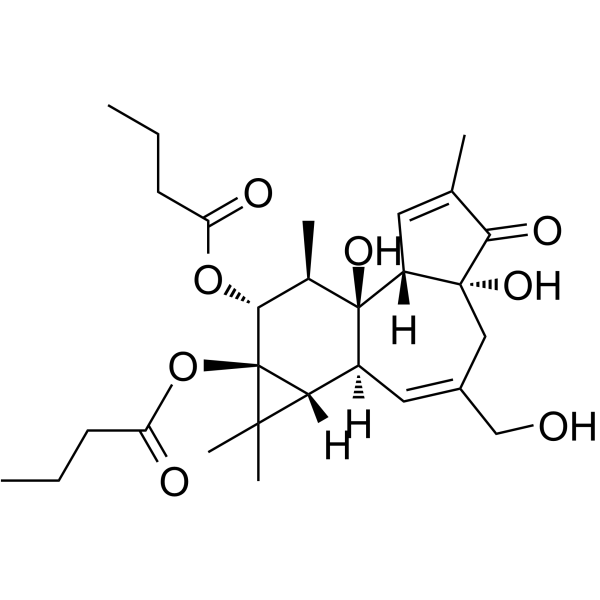
Phorbol 12,13-dibutyrate -
HY-12359
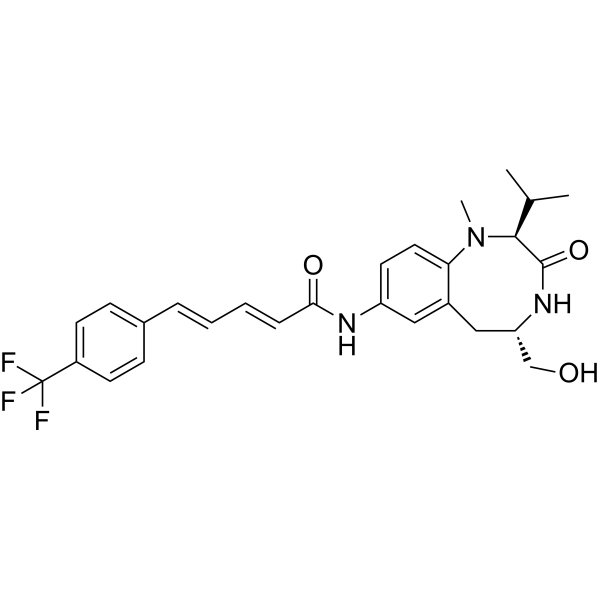
TPPB -
HY-10195
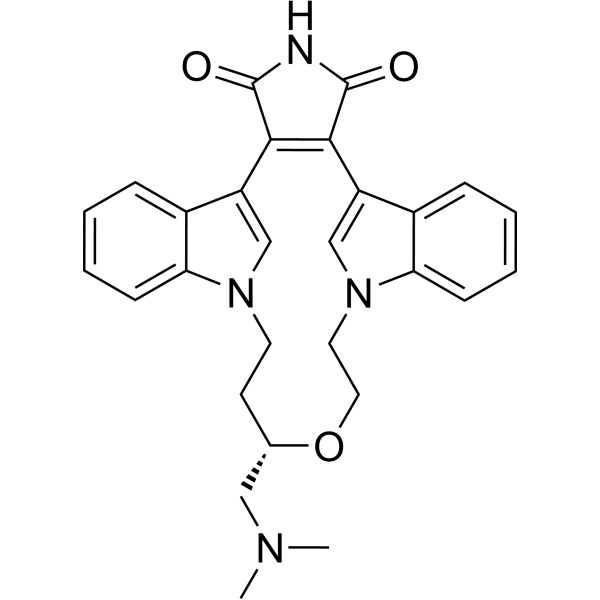
Ruboxistaurin -
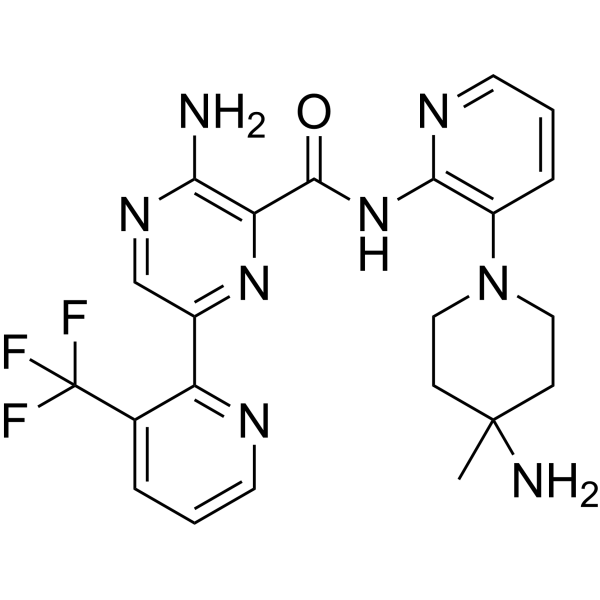
HY-101569
Darovasertib -
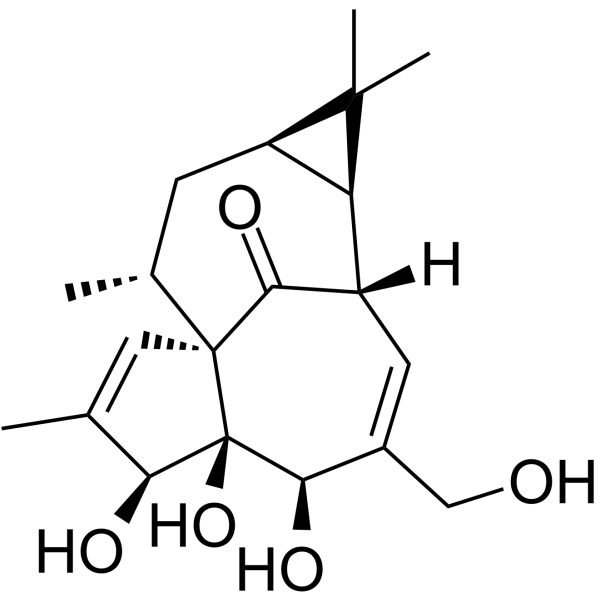
HY-N0865
Ingenol -
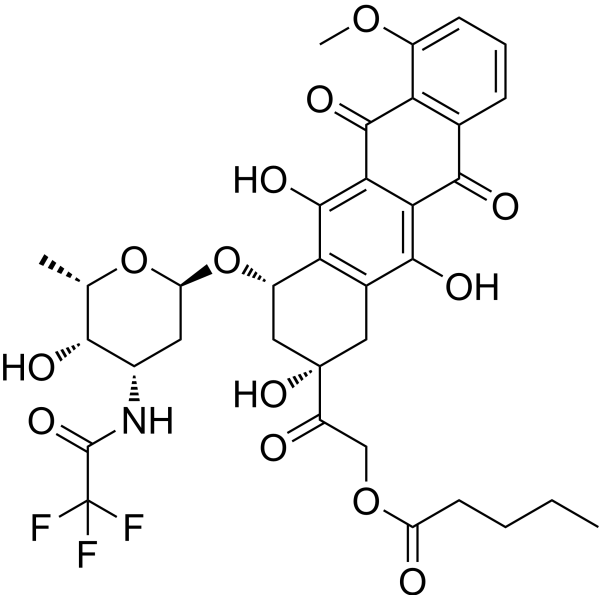
HY-13772
Valrubicin -
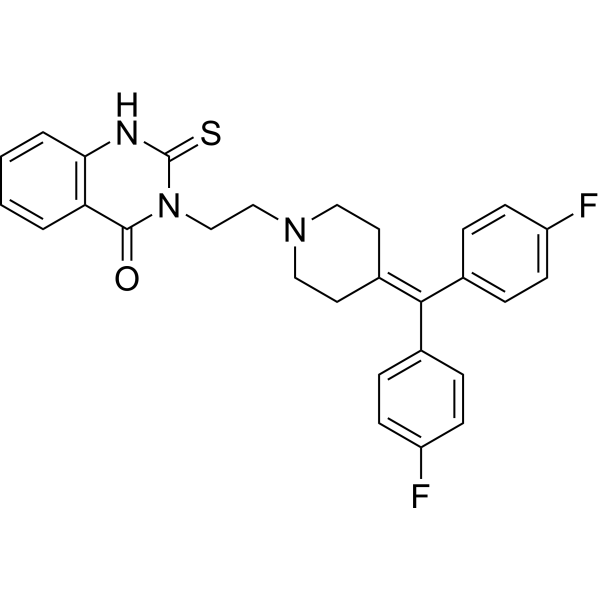
HY-108355
R59949 -
HY-112681
PKC-theta inhibitor 2 -
HY-10195B
Ruboxistaurin hydrochloride -
HY-112782
VTX-27 -
HY-13335
PKCβ inhibitor 1


Biological Activity
Description
IC50 & Target
[1]|
PKC 6 μM (Ki) |
PKA 3 μM (Ki) |
PKG 5.8 μM (Ki) |
In Vitro
The protein kinase inhibitor H-7 potently and directly inhibits rabbit brain protein kinase C (Ki = 6.0 μM) and rabbit skeletal muscle cAMP-dependent protein kinase (Ki = 3.0 μM), but exhibits weak activity against other purified protein kinases and ATPases from multiple species and tissues[1].
Protein kinase inhibitor H-7 (10-50 μM; 2 min preincubation) dose-dependently inhibits protein kinase C-mediated phosphorylation of the 40K protein in intact washed rabbit platelets, but does not inhibit Ca2+-calmodulin-mediated phosphorylation of the 20K protein in the same cellular system even at a concentration of 50 μM[2].
The protein kinase inhibitor H-7 (100-300 μM) enhances lamellipodial protrusive activity and reduces cell polarity in Swiss 3T3 fibroblasts and SVT2 transformed fibroblasts, which is manifested by a significant increase in dispersion value and a significant decrease in elongation value[3].
The protein kinase inhibitor H-7 (300 μM; 10-30 min) disrupts stress fibers and focal adhesion-related proteins (myosin, vinculin, talin) in chicken lens cells, while preserving intercellular adherens junctions, and these cytoskeletal changes are fully reversible after removal of H-7[3].
When used as a pretreatment, the protein kinase inhibitor H-7 (300 μM; 10-15 min pretreatment, or added during permeabilization/contraction) potently inhibits ATP-induced contraction in Saponin (HY-100597)-permeabilized Swiss 3T3 fibroblasts, chicken lens cells and chicken embryo fibroblasts, but only weakly inhibits contraction when added to permeabilized cells[3].
MedChemExpress (MCE) has not independently confirmed the accuracy of these methods. They are for reference only.
-
Cell Line:chick lens cells, Swiss 3T3 fibroblasts, chicken embryo fibroblasts
-
Concentration:300 μM
-
Incubation Time:10 min, 30 min; 30 min incubation followed by 3-60 min recovery
-
Result:Caused rapid deterioration of actin-containing stress fibers and associated myosin, vinculin, and talin in focal contact sites within 10-30 min.
Reorganized actin into short cytoplasmic bundles and lamellipodial protrusions.
Retained actin, vinculin, and N-cadherin associated with cell-cell adherens junctions, with only minor increases in diffuse cytoplasmic N-cadherin staining.
Reversed these effects upon removal: stress fibers reassembled within 3-10 min, with actin labeling augmented near adhesion sites, and the subcellular distribution of actin, myosin, vinculin, talin, and N-cadherin was restored within 60 min.


Chemical Information
-
CAS No. 84477-87-2
-
Appearance Solid
-
Molecular Weight 291.38
-
Formula C14H17N3O2S
-
Color White to light yellow
-
SMILES
O=S(C1=CC=CC2=C1C=CN=C2)(N3C(C)CNCC3)=O
-
Shipping
Room temperature in continental US; may vary elsewhere.
-
Storage
4°C, protect from light
* In solvent : -80°C, 6 months; -20°C, 1 month (protect from light)


Solvent & Solubility
In Vitro:
DMSO : 100 mg/mL (343.19 mM; ultrasonic and warming and heat to 60°C; Hygroscopic DMSO has a significant impact on the solubility of product, please use newly opened DMSO)
Please refer to the solubility information to select the appropriate solvent. Once prepared, please aliquot and store the solution to prevent product inactivation from repeated freeze-thaw cycles.
Storage method and period of stock solution: -80°C, 6 months; -20°C, 1 month (protect from light). When stored at -80°C, please use it within 6 months. When stored at -20°C, please use it within 1 month.
Please refer to the solubility information to select the appropriate solvent. Once prepared, please aliquot and store the solution to prevent product inactivation from repeated freeze-thaw cycles.
Storage method and period of stock solution: -80°C, 6 months; -20°C, 1 month (protect from light). When stored at -80°C, please use it within 6 months. When stored at -20°C, please use it within 1 month.
Concentration (start) × Volume (start) = Concentration (final) × Volume (final)


Purity & Documentation
-
Data Sheet (277 KB)
-
SDS (252 KB)
- English - EN (252 KB)
- Français - FR (252 KB)
- Deutsch - DE (252 KB)
- Norwegian - NO (252 KB)
- Español - ES (252 KB)
- Swedish - SV (252 KB)
- Italian - IT (252 KB)
- Korean - KR (252 KB)
- Portuguese - PT (252 KB)
-
Handling Instructions (2659 KB)
References
[1]. Hidaka H, et al. Isoquinolinesulfonamides, novel and potent inhibitors of cyclic nucleotide dependent protein kinase and protein kinase C. Biochemistry. 1984 Oct 9;23(21):5036-41. [Content Brief]
[2]. Kawamoto S, et al. 1-(5-Isoquinolinesulfonyl)-2-methylpiperazine (H-7) is a selective inhibitor of protein kinase C in rabbit platelets. Biochem Biophys Res Commun. 1984;125(1):258-264. [Content Brief]
[3]. Volberg T, et al. Effect of protein kinase inhibitor H-7 on the contractility, integrity, and membrane anchorage of the microfilament system. Cell Motil Cytoskeleton. 1994;29(4):321-338. [Content Brief]


Complete Stock Solution Preparation Table
Please refer to the solubility information to select the appropriate solvent. Once prepared, please aliquot and store the solution to prevent product inactivation from repeated freeze-thaw cycles.
Storage method and period of stock solution: -80°C, 6 months; -20°C, 1 month (protect from light). When stored at -80°C, please use it within 6 months. When stored at -20°C, please use it within 1 month.
| Optional Solvent | Concentration Solvent Mass | 1 mg | 5 mg | 10 mg | 25 mg |
|---|---|---|---|---|---|
| DMSO | 1 mM | 3.4319 mL | 17.1597 mL | 34.3194 mL | 85.7986 mL |
| 5 mM | 0.6864 mL | 3.4319 mL | 6.8639 mL | 17.1597 mL | |
| 10 mM | 0.3432 mL | 1.7160 mL | 3.4319 mL | 8.5799 mL | |
| 15 mM | 0.2288 mL | 1.1440 mL | 2.2880 mL | 5.7199 mL | |
| 20 mM | 0.1716 mL | 0.8580 mL | 1.7160 mL | 4.2899 mL | |
| 25 mM | 0.1373 mL | 0.6864 mL | 1.3728 mL | 3.4319 mL | |
| 30 mM | 0.1144 mL | 0.5720 mL | 1.1440 mL | 2.8600 mL | |
| 40 mM | 0.0858 mL | 0.4290 mL | 0.8580 mL | 2.1450 mL | |
| 50 mM | 0.0686 mL | 0.3432 mL | 0.6864 mL | 1.7160 mL | |
| 60 mM | 0.0572 mL | 0.2860 mL | 0.5720 mL | 1.4300 mL | |
| 80 mM | 0.0429 mL | 0.2145 mL | 0.4290 mL | 1.0725 mL | |
| 100 mM | 0.0343 mL | 0.1716 mL | 0.3432 mL | 0.8580 mL |


Protein kinase inhibitor H-7 Related Classifications
HY-131900 Related Classifications
 Powered by Bioz
Keywords
- Protein kinase inhibitor H-7
- 84477-87-2
- Protein kinase inhibitor H7
- Protein kinase inhibitor H 7
- PKC
- PKA
- PKG
- Arp2/3 Complex
- SVT2 transformed fibroblasts
- protein kinase C
- Swiss 3T3 fibroblasts
- cAMP-dependent protein kinase
- rabbit platelets
- cGMP-dependent protein kinase
- chick lens cells
- myosin light chain kinase
- casein kinases I/II
- actomyosin ATPase
- Inhibitor
- inhibitor
- inhibit