



サポニン
Based on 7 publication(s) in Google Scholar
Saponins (Saponin) is a class of chemical compound of glycosides found in particular abundance in various plant species. In plants, Saponins may serve as anti-feedants, and to protect the plant against microbes and fungi.
商品は「研究用試薬」です。人や動物の医療用・臨床診断用・食品用の製品ではありません。
研究用途以外に使用した場合、当社は一切の責任を負いかねます。
- Assay : 98.36%
- CAS 番号: 8047-15-2
-
保管条件:Powder -20°C, 3 years , 4°C, 2 years ; In solvent -80°C, 6 months , -20°C, 1 month


To place orders, for customer services and technical support, please contact: MedChemExpress USA
Tel: 609-228-6898 E-mail: [email protected] [email protected]


-
 生物活性
生物活性
-
化学情報
-
溶剤 & 溶解度
- 純度とドキュメンテーション
- 参考文献
-
 Help & FAQs


-
HY-N4000
DigitoninDetergent -
HY-100558
Bafilomycin A1V-ATPase Inhibitor -
HY-13259
MG-132Proteasome Inhibitor -
HY-Y0316
Sodium dodecyl sulfatePharmaceutical Excipient -

HY-116282C
Dextran sulfate sodium salt (MW 35000-45000)Colitis Inducer -

HY-116282
Dextran sulfate sodium salt (MW 5000)Complement Inhibitor -
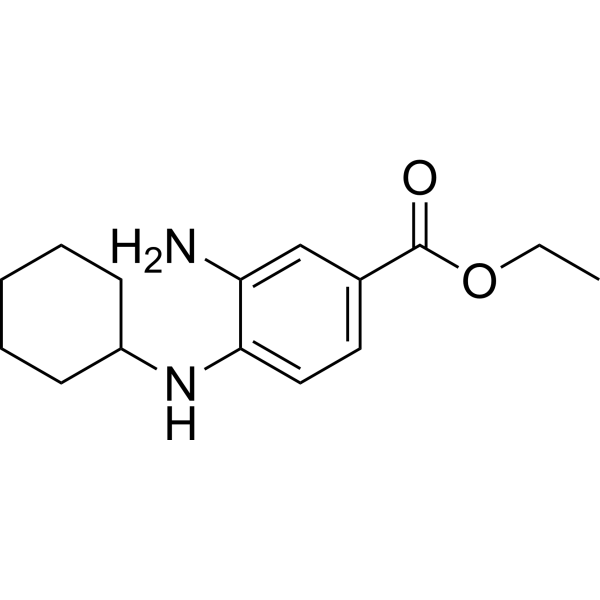
HY-100579
Ferrostatin-1Ferroptosis Inhibitor -
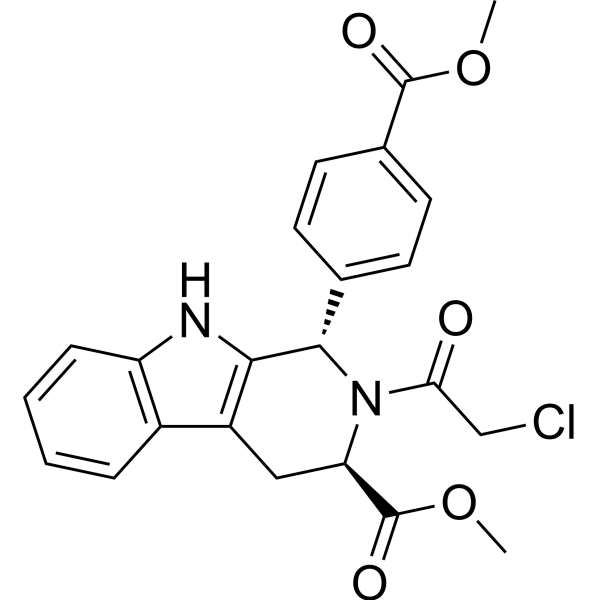
HY-100218A
RSL3GPX4 Inhibitor -
HY-116282D
Dextran sulfate sodium salt (MW 450000-550000)Antiviral Agent -
HY-116282A
Dextran sulfate sodium salt (MW 4500-5500)Complement Inhibtior -
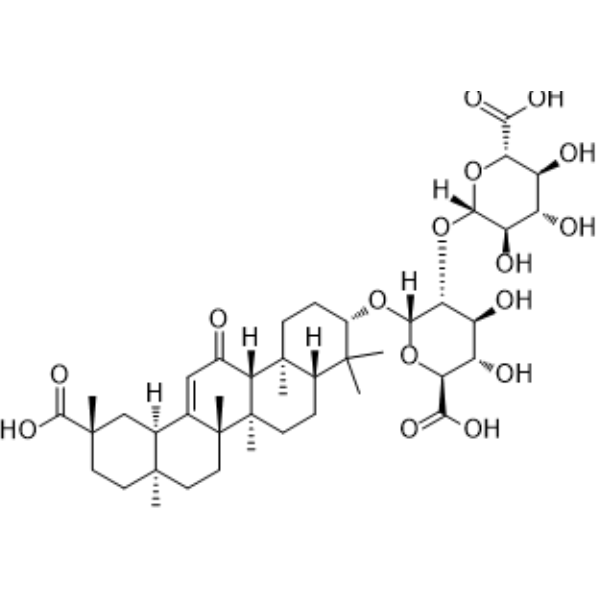
HY-N0184
Glycyrrhizic acidHMGB1 Antagonist -
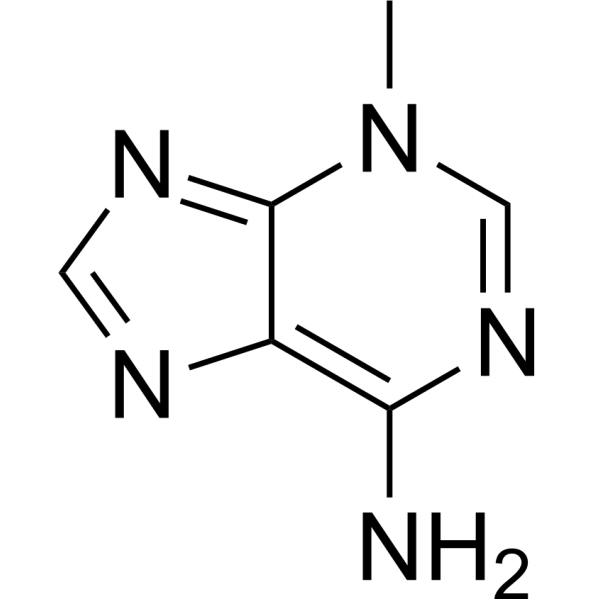
HY-19312
3-MethyladenineAutophagy/PI3K Inhibitor
MedChemExpress(MCE)の使用を引用している文献 Saponins
More- Cell Stem Cell. 2024 Oct 3;31(10):1484-1500.e9. [Abstract]
- Autophagy. 2025 May 31:1-21. [Abstract]
- Cell Death Dis. 2026 Jul 27.
- Cell Death Dis. 2021 Nov 29;12(12):1115. [Abstract]
- Alzheimers Res Ther. 2025 Dec 1;17(1):253. [Abstract]
- Cell Rep. 2026 Jul 28;45(7):117694.
- J Med Entomol. 2021 May 15;58(3):1202-1209. [Abstract]
 Customer Validation & Images

-
Cell Imaging/Staining
-
Bio/Physico-chemical Assay
-
In Vivo Imaging
-
In Vivo Efficacy Study


生物活性
製品説明
体外実験
Saponins are glycosides with a distinctive foaming characteristic. Saponins consist of a polycyclic aglycone that is either a choline steroid or triterpenoid attached via C3 and an ether bond to a sugar side chain. The ability of a saponin to foam is caused by the combination of the nonpolar sapogenin and the water soluble side chain. Saponins are bitter and reduce the palatability of livestock feeds. Some saponins reduce the feed intake and growth rate of nonruminant animals while others are not very harmful. For example, the saponins found in oats and spinach increase and accelerate the body's ability to absorb calcium and silicon, thus assisting in digestion. Certain pasture weeds contain substantial quantities of dangerous saponins and result in life threatening toxicities for certain animal species[1].
MedChemExpress (MCE) has not independently confirmed the accuracy of these methods. They are for reference only.
臨床実験
| NCT Number | Sponsor | Condition | Start Date |
Phase

|
|---|---|---|---|---|
| NCT01329991 | 2011-05 | PHASE1 |


化学情報
-
CAS 番号 8047-15-2
-
性状 Solid
-
Color Light yellow to yellow
-
SMILES
[Saponins]
-
別名
Saponins; Saponin
-
Structure Classification
-
Initial Source
-
輸送条件
Room temperature in continental US; may vary elsewhere.
-
保管条件
Powder -20°C 3 years 4°C 2 years In solvent -80°C 6 months -20°C 1 month


Publications (7)
-
Journal Impact Factor
-
Most Recent
-
Cell Stem Cell
Mitochondrial serine catabolism safeguards maintenance of the hematopoietic stem cell pool in homeostasis and injury. [Abstract]2024 Oct 3;31(10):1484-1500.e9. PMID: 39181130 -
Autophagy
2025 May 31:1-21. PMID: 40394978 -
-
Cell Death Dis
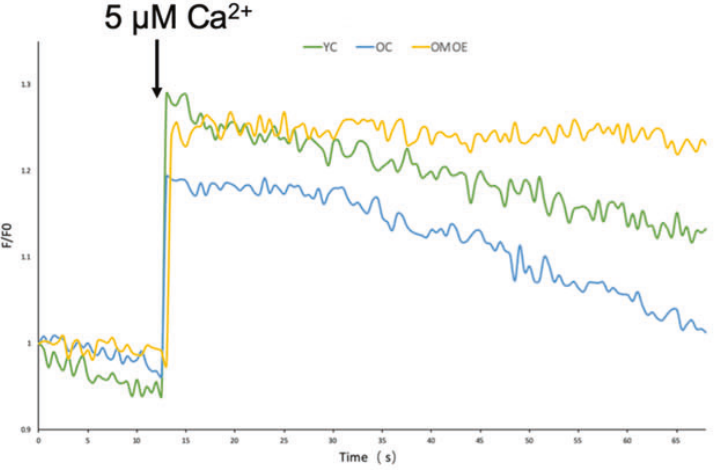
MICU3 regulates mitochondrial Ca2+-dependent antioxidant response in skeletal muscle aging. [Abstract]2021 Nov 29;12(12):1115. PMID: 34845191
Saponins purchased from MedChemExpress. Usage Cited in: Cell Death Dis. 2021 Nov 29;12(12):1115. [Abstract]
The mitochondrial calcium uptake assay in primary myoblasts from mice gastrocnemius muscle. The fluorescent dye Rhod-2/AM and Mito-Tracker Green were used to measure primary myoblasts mitochondrial Ca2+ uptake, Briefly, primary myoblasts were loaded with Rhod-2/AM and Mito-Tracker Green following the protocol, permeabilized with 0.005% Saponins for ~1 min, then incubated in Ca2+-free HBSS. Images were acquired at 2 frames/s using a spinning-disk confocal super-resolution microscope (excitation 549 nm, emission 578 nm). After 15 s, the buffer was switched to 5 μmol/L CaCl₂ solution, and imaging continued for an additional 50 s.
-
Alzheimers Res Ther
Ceftriaxone alleviates mitochondrial damage through the inhibition of extrasynaptic NMDA receptor-mediated changes in intracellular calcium levels to improve cognitive deficits in APP/PS1 mice. [Abstract]2025 Dec 1;17(1):253. PMID: 41327376
Saponins purchased from MedChemExpress. Usage Cited in: Alzheimers Res Ther. 2025 Dec 1;17(1):253. [Abstract]
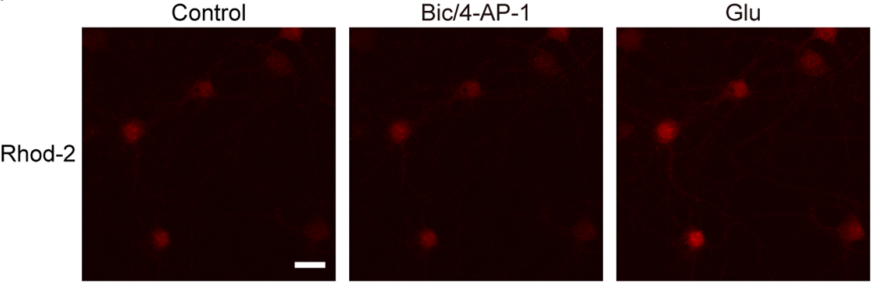
Glutamate (20 μM) exposure significantly increased neuronal mitochondrial Ca²⁺ levels (shown by Rhod-2 fluorescence, representative graph scale bar: 20 μm). Detection: Neurons cultured 12–14 DIV were loaded with 2 μM Rhod-2-AM + 0.02% Pluronic F-127 (dark, RT, 30 min), washed, then incubated at 37°C for 30 min. Cells were permeabilized with 0.005% Saponins (1 min), rinsed with Ca²⁺-free HBSS, and finally bathed in extracellular buffer.
-
-
J Med Entomol
ReMOT Control Delivery of CRISPR-Cas9 Ribonucleoprotein Complex to Induce Germline Mutagenesis in the Disease Vector Mosquitoes Culex pipiens pallens (Diptera: Culicidae). [Abstract]2021 May 15;58(3):1202-1209. PMID: 33590868
Saponins purchased from MedChemExpress. Usage Cited in: J Med Entomol. 2021 May 15;58(3):1202-1209. [Abstract]
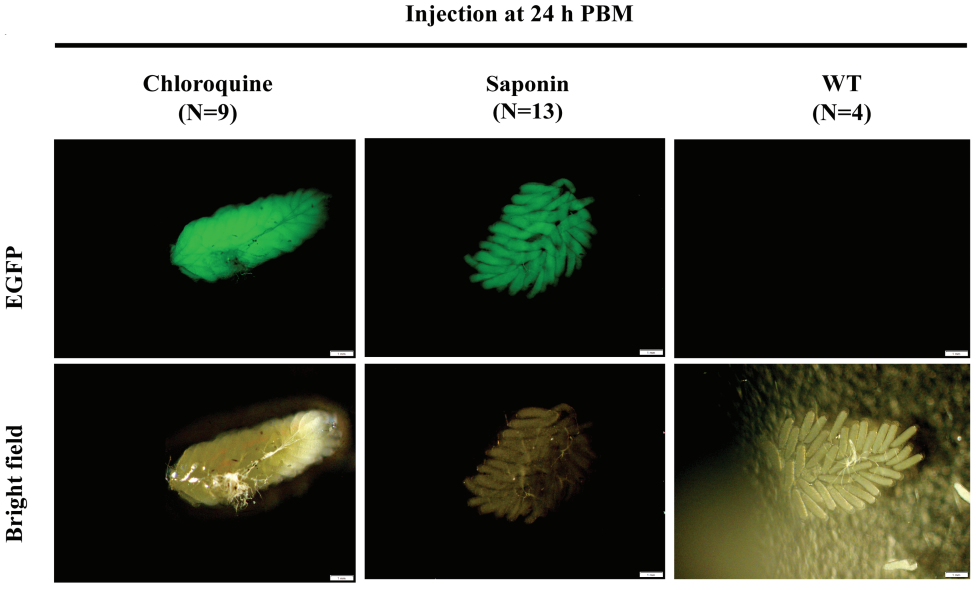
Transduction of P2C-EGFP-Cas9 RNP complex into Culex pipiens pallens ovaries. From left to right: P2C-EGFP-Cas9 + sgRNAs + chloroquine (n = 9); P2C-EGFP-Cas9 + sgRNAs + Saponins (n = 13); Wild-type (WT; n = 4). Scale bar: 1 mm. RNP, ribonucleoprotein; sgRNAs, single-guide RNAs.
Saponins purchased from MedChemExpress. Usage Cited in: J Med Entomol. 2021 May 15;58(3):1202-1209. [Abstract]
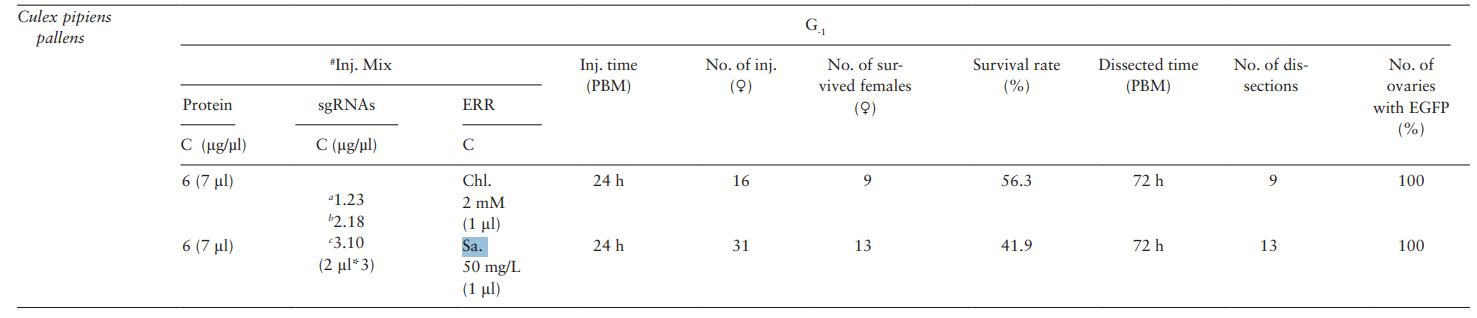
Delivery efficiency of P2C-enhanced green fluorescent protein (EGFP)-Cas9 ribonucleoprotein with single-guide RNA and ERR.Chl., Chloroquine; Sa., Saponins (50 mg/L; 1 μL); ERR, endosomal release reagent; PBM, post-bloodmeal#Injection mixture (Inj. Mix) = P2C-Cas9+sgRNAs+ERR (Chloroquine or Saponin).asgRNA935; bsgRNA936; csgRNA938.


溶剤 & 溶解度
体外:
H2O : 33.33 mg/mL (Need ultrasonic)
DMSO : 5 mg/mL (ultrasonic and warming and heat to 60°C; Hygroscopic DMSO has a significant impact on the solubility of product, please use newly opened DMSO)
体内:
For the following dissolution methods, please prepare the working solution directly:
It is recommended to prepare fresh solutions and use them promptly within a short period of time.
The percentages shown for the solvents indicate their volumetric ratio in the final prepared solution. If precipitation or phase separation occurs during preparation, heat and/or sonication can be used to aid dissolution.
Add each solvent one by one: PBS
Solubility: 6.25 mg/mL; Clear solution; Need ultrasonic and warming and heat to 60°C


純度とドキュメンテーション
-
データシート (270 KB)
-
SDS (393 KB)
- English - EN (393 KB)
- Français - FR (393 KB)
- Deutsch - DE (393 KB)
- Norwegian - NO (393 KB)
- Español - ES (393 KB)
- Swedish - SV (393 KB)
- Italian - IT (393 KB)
- Korean - KR (393 KB)
- Portuguese - PT (393 KB)
-
取扱説明書 (2659 KB)
参考文献

Calculators
濃度 (開始) × 体積 (開始) = 濃度 (終了) × 体積 (終了)


Saponins 関連分類
HY-100597 関連分類
 Powered by Bioz