



Dextran sulfate sodium salt (MW 35000-45000)
Based on 10 publication(s) in Google Scholar
Dextran sulfate sodium salt (DSS) (MW 35000-45000) is a polymer of dehydrated glucose with a molecular weight of approximately 35000-45000. DSS with different molecular weights exhibits different biological activities. Dextran sulfate sodium salt (DSS) (MW 35000-45000) is a potent inducer of colitis. Dextran sulfate sodium salt (DSS) (MW 35000-45000) can be used to induce model acute colitis, chronic colitis, and colitis-related colon cancer. Dextran sulfate sodium salt (DSS) (MW 35000-45000) may be related to macrophage dysfunction, intestinal flora dysbiosis, and is particularly toxic to the colonic epithelium.
For research use only. We do not sell to patients.
- CAS No.: 9011-18-1
- Molecular Weight:35000-45000
-
Storage:Powder -20°C, 3 years , 4°C, 2 years ; In solvent -80°C, 6 months , -20°C, 1 month

To place orders, for customer services and technical support, please contact: MedChemExpress USA
Tel: 609-228-6898 E-mail: [email protected] [email protected]


-
 Biological Activity
-
Chemical Information
-
Solvent & Solubility
- Purity & Documentation
- References
-
 Help & FAQs


-
HY-116282
Dextran sulfate sodium salt (MW 5000) -
HY-116282B
Dextran sulfate sodium salt (MW 16000-24000) -
HY-116282D
Dextran sulfate sodium salt (MW 450000-550000) -

HY-E0264
Rodent Gnawing Blocks -

HY-116282I
Dextran sulfate sodium salt (MW>500000) -

HY-116282M
Dextran sulfate, low sulfate (MW 40000) -
HY-111375
Azoxymethane -
HY-116282A
Dextran sulfate sodium salt (MW 4500-5500) -
HY-15371
Forskolin -
HY-B0166
L-Ascorbic acid -
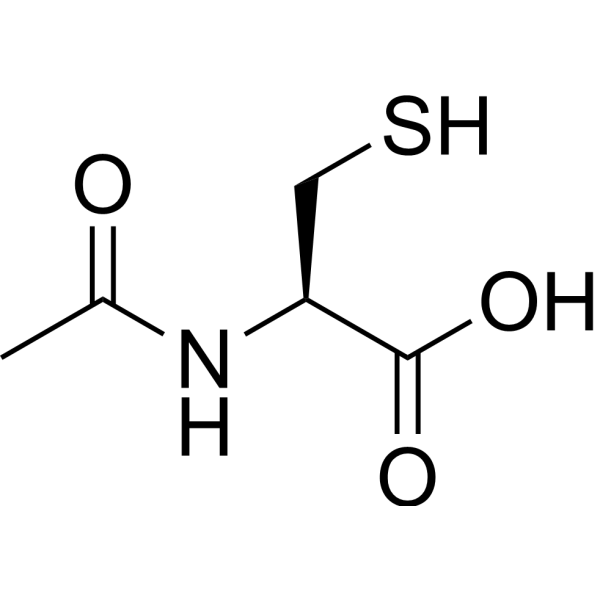
HY-B0215
Acetylcysteine -
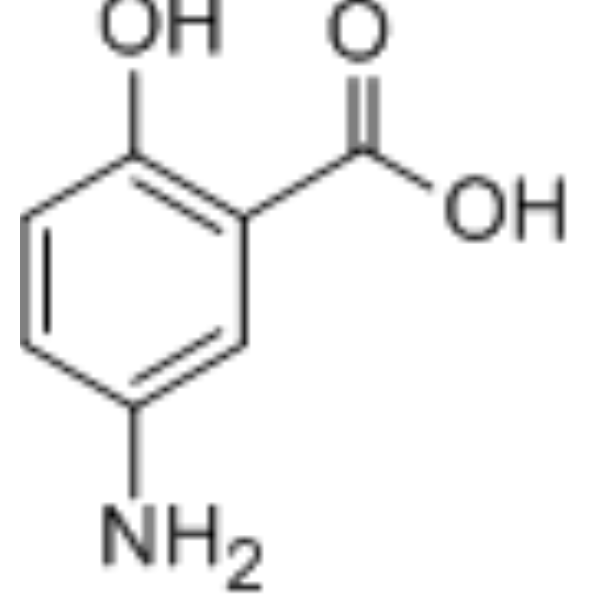
HY-15027
5-Aminosalicylic Acid
Publications Citing Use of MedChemExpress (MCE) Dextran sulfate sodium salt (MW 35000-45000)
More- Chem Eng J. 2025 Sep 15.
- Front Immunol. 2022 Oct 18:13:1013686. [Abstract]
- Biochem Pharmacol. 2026 Mar:245:117654. [Abstract]
- Int J Mol Sci. 2026 Jan 30;27(3):1405. [Abstract]
- Ann Med. 2026 Dec;58(1):2624211. [Abstract]
- Sci Rep. 2024 Aug 5;14(1):18094. [Abstract]
- Phytochemistry. 2026 Aug:248:114929. [Abstract]
- Biochem Biophys Res Commun. 2026 Jan 1:794:153091. [Abstract]
- Biochem Biophys Res Commun. 2025 Sep 8:778:152396. [Abstract]
- J Med Food. 2025 Jun 13. [Abstract]
 Customer Validation & Images

-
Histological Imaging/Staining
-
In Vivo Efficacy Study
-
ELISA
-
IF
-
Histological Imaging/Staining


Biological Activity
Description
Induced Disease Models
Please do not refer to only one article to determine the experimental conditions. It is recommended to determine the optimal experimental conditions (animal strain, age, dosage, frequency and cycle, detection time and indicators, etc.) through preliminary experiments before the formal experiment.
Dextran sulfate sodium salt (MW 35000-45000) can be used to induce acute/chronic colitis and colitis-associated colon cancer models[6][7][8][9][10].
Administration: 1.75%-5% (w/v) DSS in drinking water • 7 days
(2) Record the water intake, body weight, and disease phenotype every day. For pathological sections, it is recommended to take a 1-2 cm segment near the anus.
(3) The concentration of the DSS solution, the species and strain of the animals may all affect the effect of model establishment. The optimal age range for successfully and easily repeating the DSS colitis is 6 to 8 weeks, and male mice may be more sensitive than female mice.
(4) In order to reduce the difference in water intake and observe the progress of model establishment more clearly, it is recommended to house 2-3 animals in each cage, and no more than 5 animals per cage.
(5) Some studies have shown that 36000-50000 (36-50 kda) is the optimal molecular weight range of DSS for establishing a colitis model. If the molecular weight of DSS is too low, it will lead to a weak inflammatory effect, while an excessively large molecular weight will make absorption more difficult.
Administration: 2%-3% (w/v) DSS in drinking water (A cycle consists of 7 days of DSS in the drinking water and 14 days with normal water, and this cycle is repeated three times.)
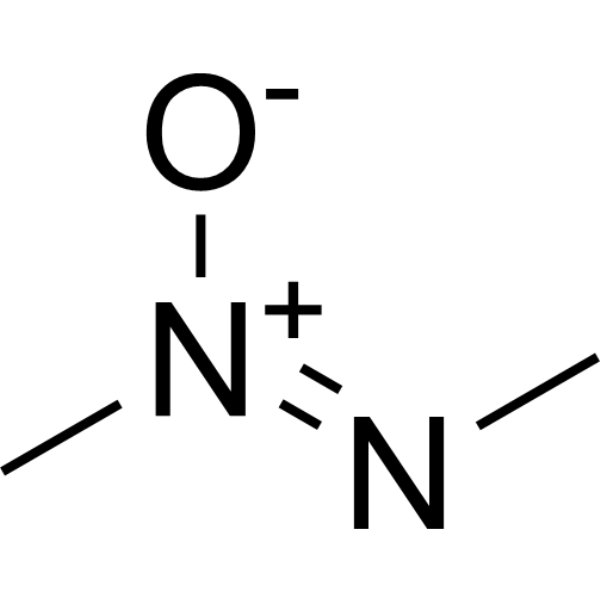
Administration: Intraperitoneally inject the carcinogen Azoxymethane (AOM, HY-111375) at a dose of 10 mg/kg. One week later, provide drinking water containing 2%-2.5% (w/v) of DSS (A cycle consists of 7 days with DSS in the drinking water and 14 days with normal water, and this cycle is repeated three times).
MedChemExpress (MCE) has not independently confirmed the accuracy of these methods. They are for reference only.


Chemical Information
-
CAS No. 9011-18-1
-
Appearance Solid
-
Molecular Weight 35000-45000
-
Color White to off-white
-
SMILES
[Dextran sulfate sodium salt (MW 35000-45000)]
-
Synonyms
DSS (MW 35000-45000); DXS (MW 35000-45000)
-
Shipping
Room temperature in continental US; may vary elsewhere.
-
Storage
Powder -20°C 3 years 4°C 2 years In solvent -80°C 6 months -20°C 1 month


Publications (10)
-
Journal Impact Factor
-
Most Recent
-
-
Front Immunol
Lactate-driven macrophage polarization in the inflammatory microenvironment alleviates intestinal inflammation. [Abstract]2022 Oct 18:13:1013686. PMID: 36330516
Dextran sulfate sodium salt (MW 35000-45000) purchased from MedChemExpress. Usage Cited in: Front Immunol. 2022 Oct 18:13:1013686. [Abstract]
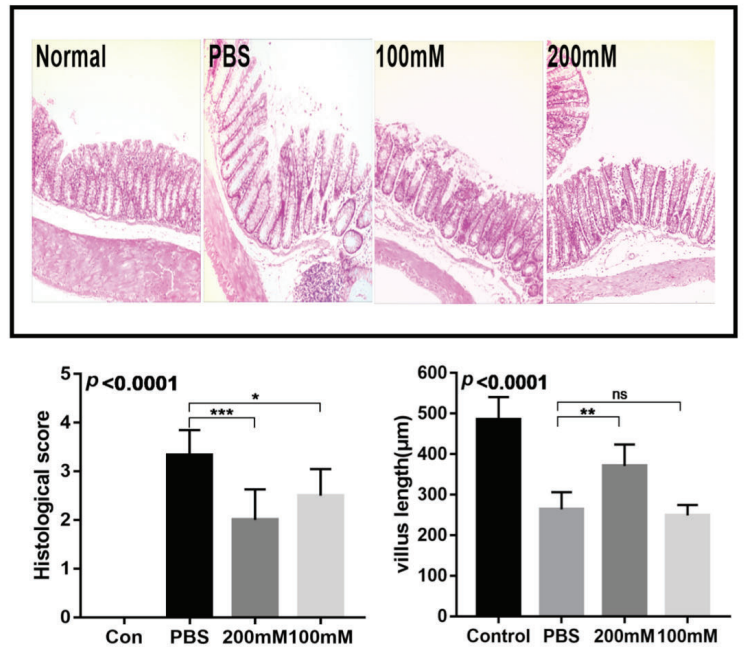
To investigate the in vivo effects of lactic acid, an acute colitis mouse model induced by Dextran sulfate sodium salt (MW 35,000–45,000) (DSS, 3% in drinking water for 10 days) was established. Representative images of HE staining of colon tissues and histological scores in different groups (n = 6). Scale bar, 100μm. The length of intestinal villi of mice after different treatments (n = 6).
Dextran sulfate sodium salt (MW 35000-45000) purchased from MedChemExpress. Usage Cited in: Front Immunol. 2022 Oct 18:13:1013686. [Abstract]
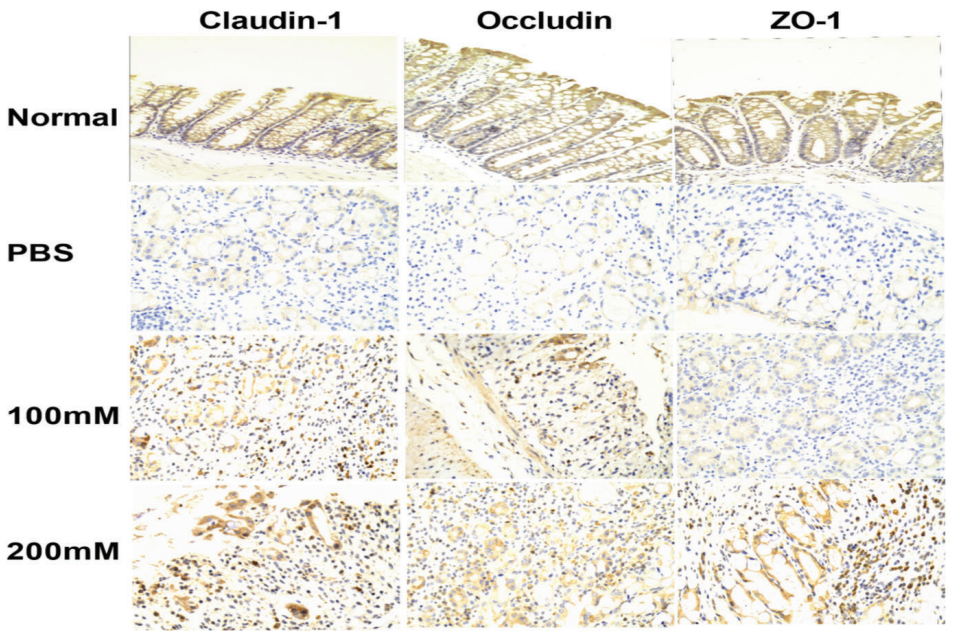
To investigate the in vivo effects of lactic acid, an acute colitis mouse model induced by Dextran sulfate sodium salt (MW 35,000–45,000) (DSS, 3% in drinking water for 10 days) was established. Immunohistochemistry images showing the level of tight junction proteins in colon tissues in different groups (n = 6). Scale bar, 100μm.
-
Biochem Pharmacol
Activation of IL-17/CEBPB/PFKFB3 triggers energy metabolic switching and goblet cell differentiation in ulcerative colitis. [Abstract]2026 Mar:245:117654. PMID: 41418940
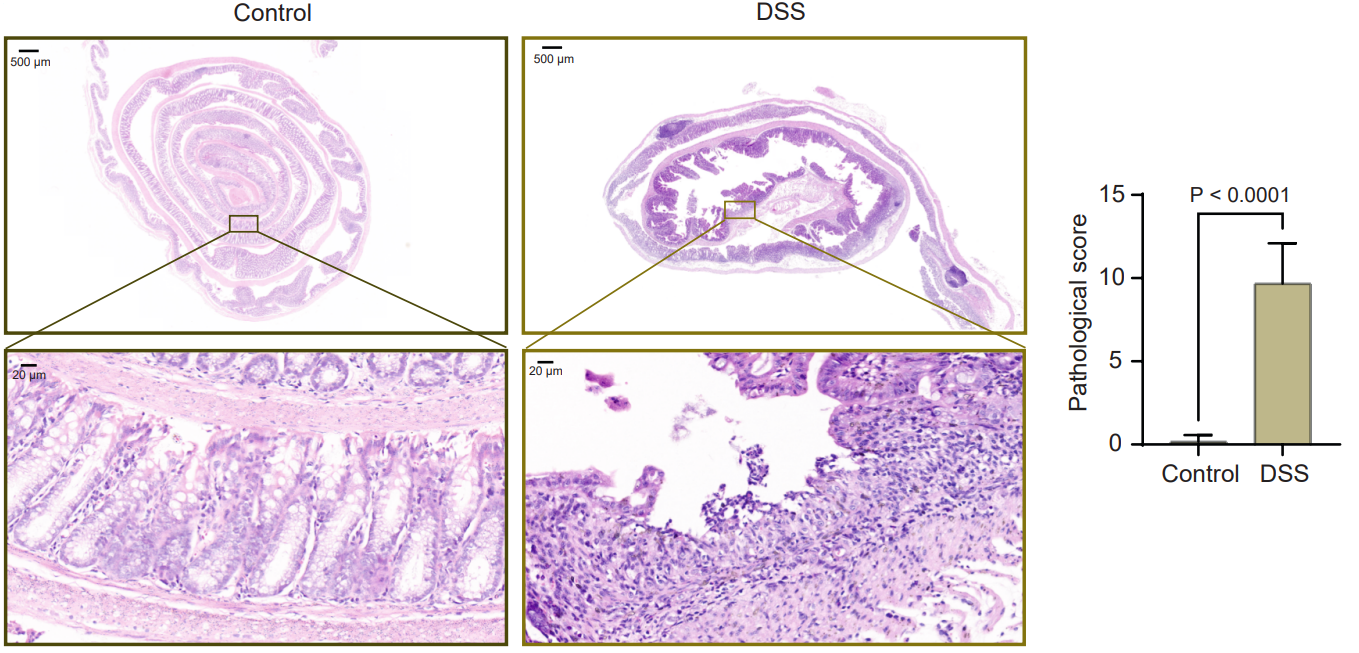
Dextran sulfate sodium salt (MW 35000-45000) purchased from MedChemExpress. Usage Cited in: Biochem Pharmacol. 2026 Mar:245:117654. [Abstract]
Pathological structural changes in the colon were examined using HE staining. HE staining detected that Dextran sulfate sodium salt (MW 35,000–45,000) (DSS, 2.5% in drinking water)-induced mouse colon exhibited significant pathological changes of epithelial detachment, crypt disappearance, and inflammatory cell infiltration.
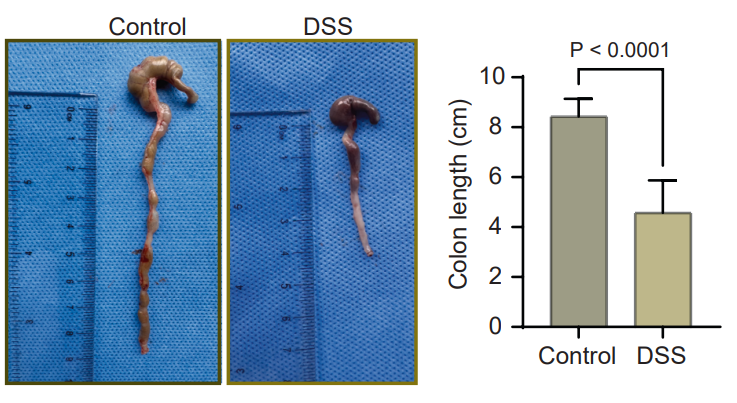
Dextran sulfate sodium salt (MW 35000-45000) purchased from MedChemExpress. Usage Cited in: Biochem Pharmacol. 2026 Mar:245:117654. [Abstract]
The effect of Dextran sulfate sodium salt (MW 35,000–45,000) (DSS, 2.5% in drinking water)-induced colitis on the length of the mouse colon.
Dextran sulfate sodium salt (MW 35000-45000) purchased from MedChemExpress. Usage Cited in: Biochem Pharmacol. 2026 Mar:245:117654. [Abstract]
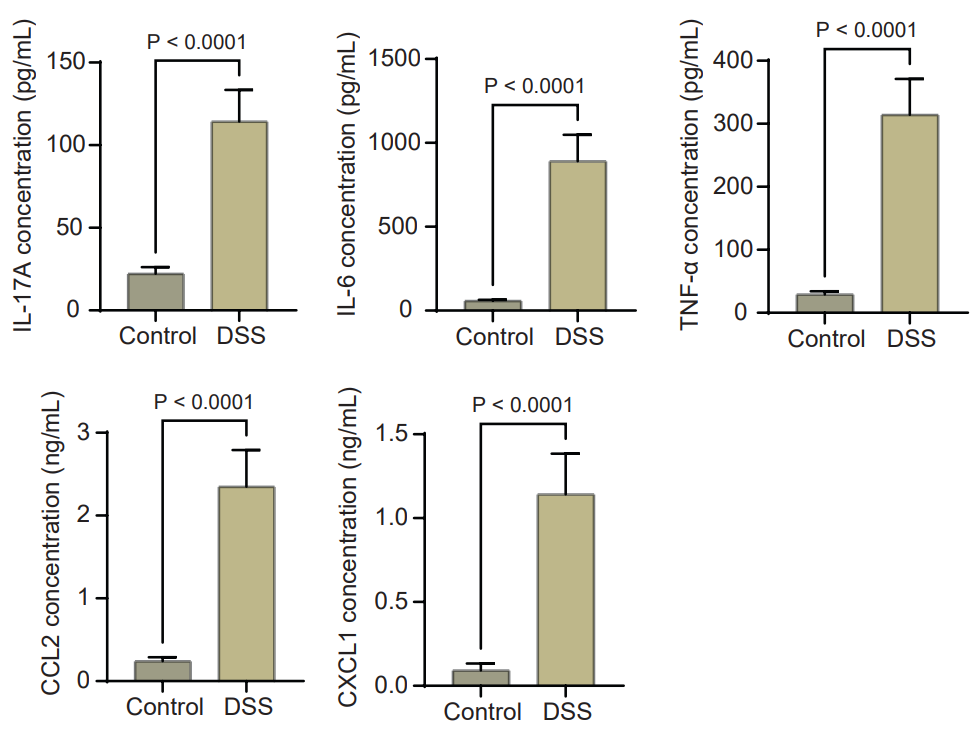
Evaluation of proinflammatory cytokines in mouse colon tissues was conducted using ELISA. The results revealed elevated levels of IL-17A in the colonic tissues of mice in the Dextran sulfate sodium salt (MW 35,000–45,000) (DSS, 2.5% in drinking water) group, accompanied by the simultaneous upregulation of downstream cytokine signaling molecules (such as IL-6, TNF-α, CCL2, and CXCL1).
Dextran sulfate sodium salt (MW 35000-45000) purchased from MedChemExpress. Usage Cited in: Biochem Pharmacol. 2026 Mar:245:117654. [Abstract]
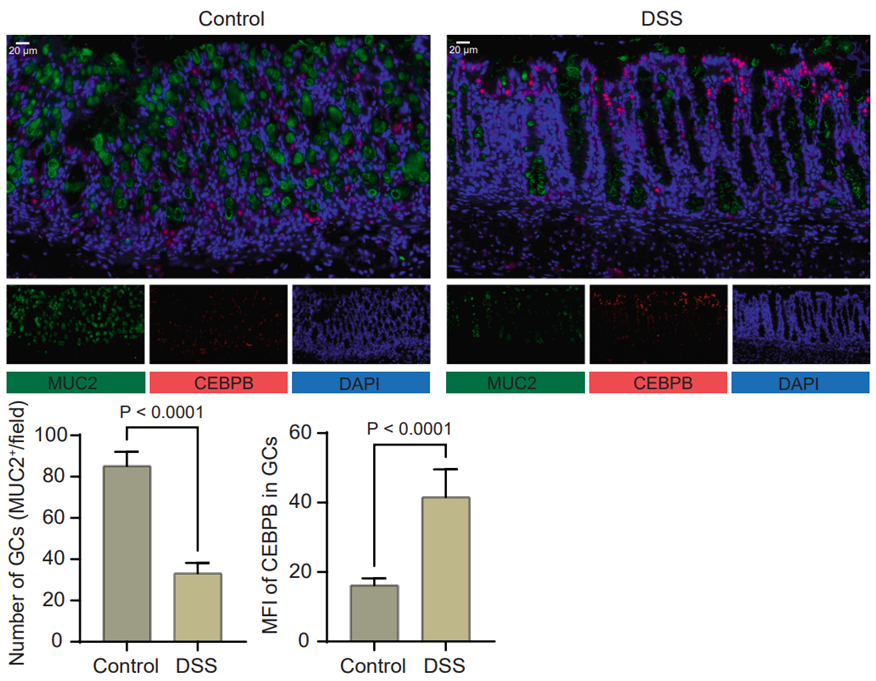
The effect of Dextran sulfate sodium salt (MW 35,000–45,000) (DSS, 2.5% in drinking water) induction on the number of MUC2+ goblet cells and the expression of CEBPB in goblet cells was detected by dual-labeling immunofluorescence. Dual-labeling immunofluorescence staining confirmed the DSS-induced loss of MUC2 expression, representing a decrease in goblet cells, but a significant enhancement of the MFI of CEBPB in the remaining goblet cells (MUC2+)
-
Int J Mol Sci
Alleviating Effects of Zophobas morio and Tenebrio molitor Larvae Protein Powder on Dextran Sodium Sulfate-Induced Inflammatory Bowel Disease in Mice. [Abstract]2026 Jan 30;27(3):1405. PMID: 41683826 -
Ann Med
Apoptotic body-encapsulated nanoparticles regulate inflammation through macrophage polarization mediated by lactic acid. [Abstract]2026 Dec;58(1):2624211. PMID: 41664606 -
Sci Rep
Identifying polyamine related biomarkers in diagnosis and treatment of ulcerative colitis by integrating bulk and single-cell sequencing data. [Abstract]2024 Aug 5;14(1):18094. PMID: 39103474 -
Phytochemistry
Discovery of GABA-containing cyclic peptides from the cold-seep-derived fungus Aspergillus unguis SCSIO 41322 for the treatment of inflammatory bowel disease. [Abstract]2026 Aug:248:114929. PMID: 41997396 -
Biochem Biophys Res Commun
Establishment of γ-secretase-deficient goblet-like cells: A novel in vitro platform to dissect regulatory mechanisms of mucus production in the intestinal epithelium. [Abstract]2026 Jan 1:794:153091. PMID: 41344214 -
Biochem Biophys Res Commun
2025 Sep 8:778:152396. PMID: 40706248 -
J Med Food
An Optimized Probiotic Formulation Achieves Sustained Gut Microbiota Modulation and Attenuates Dextran Sulfate Sodium-Induced Colitis in Mice. [Abstract]2025 Jun 13. PMID: 40512571


Solvent & Solubility
In Vitro:
H2O : ≥ 100 mg/mL
* "≥" means soluble, but saturation unknown.
In Vivo:
For the following dissolution methods, please prepare the working solution directly:
It is recommended to prepare fresh solutions and use them promptly within a short period of time.
The percentages shown for the solvents indicate their volumetric ratio in the final prepared solution. If precipitation or phase separation occurs during preparation, heat and/or sonication can be used to aid dissolution.
Add each solvent one by one: PBS
Solubility: 25 mg/mL; Clear solution; Need ultrasonic


Purity & Documentation
-
Data Sheet (282 KB)
-
SDS (393 KB)
- English - EN (393 KB)
- Français - FR (393 KB)
- Deutsch - DE (393 KB)
- Norwegian - NO (393 KB)
- Español - ES (393 KB)
- Swedish - SV (393 KB)
- Italian - IT (393 KB)
- Korean - KR (393 KB)
- Portuguese - PT (393 KB)
-
Handling Instructions (2659 KB)
References
[1]. Lee KC, et al. Using Dextran-encapsulated gold nanoparticles as insulin carriers to prolong insulin activity. Nanomedicine (Lond). 2017 Aug;12(15):1823-1834. [Content Brief]
[2]. Shen B, et al. Dextran Sulfate Sodium Salt-Induced Colitis Aggravates Gut Microbiota Dysbiosis and Liver Injury in Mice With Non-alcoholic Steatohepatitis. Front Microbiol. 2021 Nov 2;12:756299. [Content Brief]
[3]. Li H, et al. Rabdosia serra alleviates dextran sulfate sodium salt-induced colitis in mice through anti-inflammation, regulating Th17/Treg balance, maintaining intestinal barrier integrity, and modulating gut microbiota. J Pharm Anal. 2022 Dec;12(6):824-838. [Content Brief]
[4]. Whittem CG, et al. Murine Colitis modeling using Dextran Sulfate Sodium (DSS). J Vis Exp. 2010 Jan 19;(35):1652. [Content Brief]
[5]. Martin JC, et al. Dextran Sulfate Sodium (DSS)-Induced Acute Colitis in the Rat. Methods Mol Biol. 2016;1371:197-203. [Content Brief]
[6]. Kinchen J, et al. Structural Remodeling of the Human Colonic Mesenchyme in Inflammatory Bowel Disease. Cell. 2018 Oct 4;175(2):372-386.e17. [Content Brief]
[7]. Zhang H, et al. Biochanin a ameliorates DSS-induced ulcerative colitis by improving colonic barrier function and protects against the development of spontaneous colitis in the Muc2 deficient mice. Chem Biol Interact. 2024 May 25;395:111014. [Content Brief]
[8]. Dokoshi T, et al. Dermal injury drives a skin to gut axis that disrupts the intestinal microbiome and intestinal immune homeostasis in mice. Nat Commun. 2024 Apr 8;15(1):3009. [Content Brief]
[9]. Wirtz S, et al. Chemically induced mouse models of intestinal inflammation. Nat Protoc. 2007;2(3):541-6. [Content Brief]
[10]. Zhu H, et al. RNA virus receptor Rig-I monitors gut microbiota and inhibits colitis-associated colorectal cancer. J Exp Clin Cancer Res. 2017 Jan 5;36(1):2. [Content Brief]

Calculators
Concentration (start) × Volume (start) = Concentration (final) × Volume (final)


Dextran sulfate sodium salt (MW 35000-45000) Related Classifications
HY-116282C Related Classifications
 Powered by Bioz
Keywords