1. Search Result
Search Result
Results for "

ADP-ribosylation

" in MedChemExpress (MCE) Product Catalog:

28

Inhibitors & Agonists

1

Fluorescent Dyes

1

Biochemical Assay Reagents

1

Peptides

6

Recombinant Proteins

3

Antibodies

1

Click Chemistry

Targets Recommended:
Cat. No. Product Name Target Research Areas Chemical Structure
  • HY-137592

    ε-NAD

    Fluorescent Dye Phosphodiesterase (PDE) Glutamate Dehydrogenase (GLDH) Others
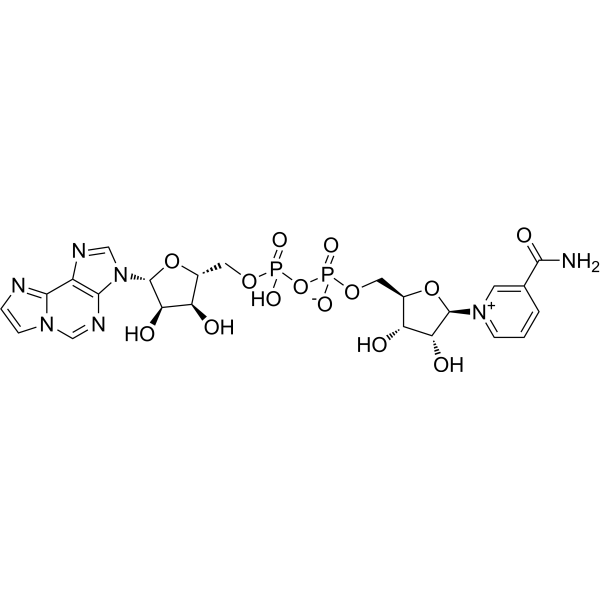
    Nicotinamide 1,N6-ethenoadenine dinucleotide (ε-NAD) is a fluorescent analog of NAD. Nicotinamide 1,N6-ethenoadenine dinucleotide can be cleaved by phosphodiesterase I (from C. adamanteus venom) and binds to bovine liver glutamate dehydrogenase. Nicotinamide 1,N6-ethenoadenine dinucleotide can serve as a substrate for G-ADP ribosylation of G proteins catalyzed by bacterial toxins. Nicotinamide 1,N6-ethenoadenine dinucleotide can be used as a fluorescent substrate for the study of ADP ribosylation reactions .
    Nicotinamide 1,N6-ethenoadenine dinucleotide
  • HY-112473
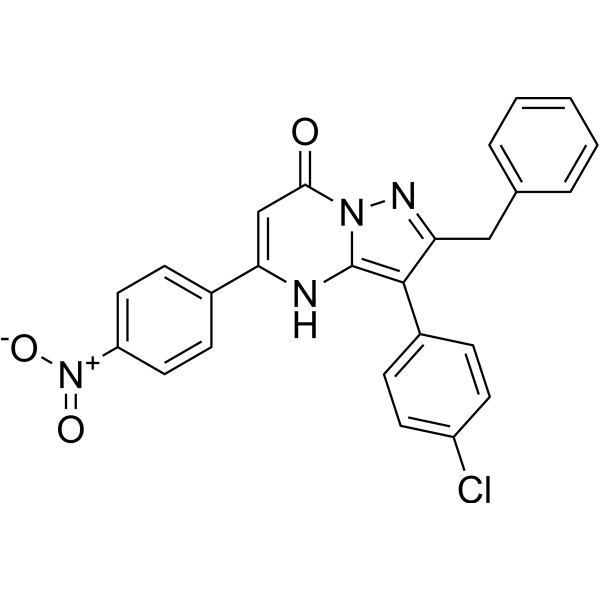
    Grassofermata
    Maximum Cited Publications
    11 Publications Verification

    NAV-2729

    Ras Cancer
    Grassofermata is a dual Arf1/Arf6 activation inhibitor. ADP ribosylation factors (Arfs) are members of the Arf family of GTP-binding proteins of the Ras superfamily.
    Grassofermata
  • HY-100540
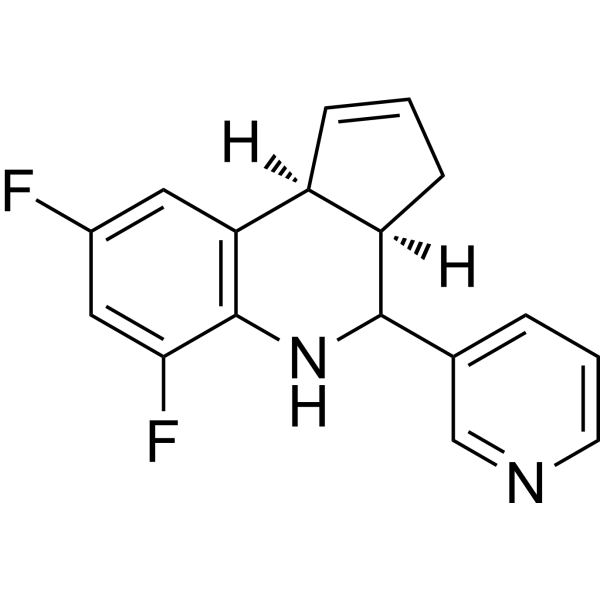
    Golgicide A
    Maximum Cited Publications
    11 Publications Verification

    GCA

    Enterovirus Infection Cancer
    Golgicide A (GCA) is a potent, highly specific, and reversible inhibitor of the cis-Golgi ADP-ribosylation factor guanine nucleotide exchange factors (ArfGEF) GBF1 . Golgicide A drastically reduced replication of coxsackievirus B3 (CVB3) and other human enterovirus species .
    Golgicide A
  • HY-145746

    Fluorescent Dye PD-1/PD-L1 Inflammation/Immunology Cancer
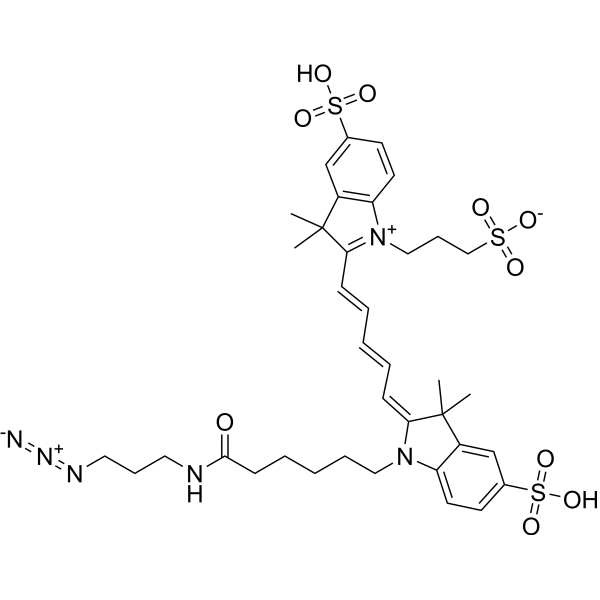
    Sulfo-Cy5 azide is a near-infrared fluorescent probe with favorable click chemistry reactivity. Sulfo-Cy5 azide enables fluorescence imaging, tissue and cellular visualization of PD-L1 in tumors, and site-specific modification of anti-PD-L1 antibodies. Sulfo-Cy5 azide has been employed for RNA labeling and imaging. Sulfo-Cy5 azide can be conjugated to targeting agents for fluorescence imaging in atherosclerosis and breast cancer models (Ex/Em = 645/670 nm) .
    Sulfo-Cy5 azide
  • HY-150207

    PARP Inflammation/Immunology
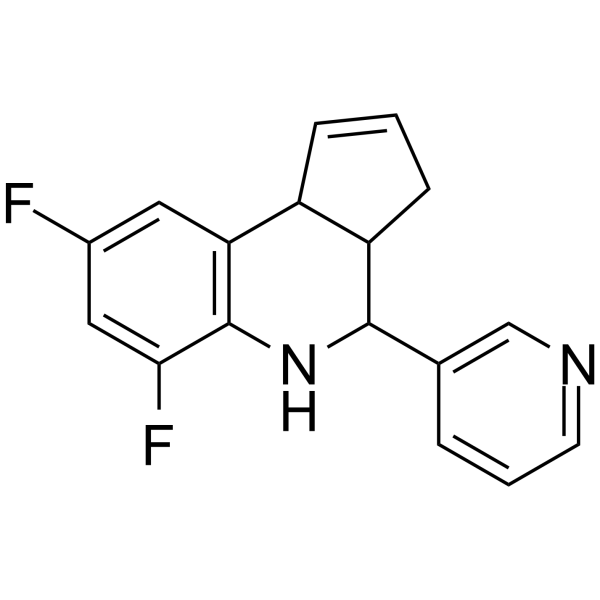
    RBN-3143 is a potent and NAD+-competitive catalytic PARP14 inhibitor with an IC50 value of 4 nM. RBN-3143 inhibits PARP14-mediated ADP-ribosylation and stabilizes PARP14 in cell lines. RBN-3143 can be used in research of lung inflammation .
    RBN-3143
  • HY-12762
    QS11
    2 Publications Verification

    β-catenin Wnt Arf Family GTPase Cancer
    QS11 is an inhibitor of ARFGAP1 (ADP-ribosylation factor GTPase-activating protein 1), with an EC50 of 1.5 μM. QS11 activates Wnt/β-catenin signaling through an effect on protein trafficking. QS11 inhibits migration of ARFGAP overexpressing breast cancer cells .
    QS11
  • HY-100767

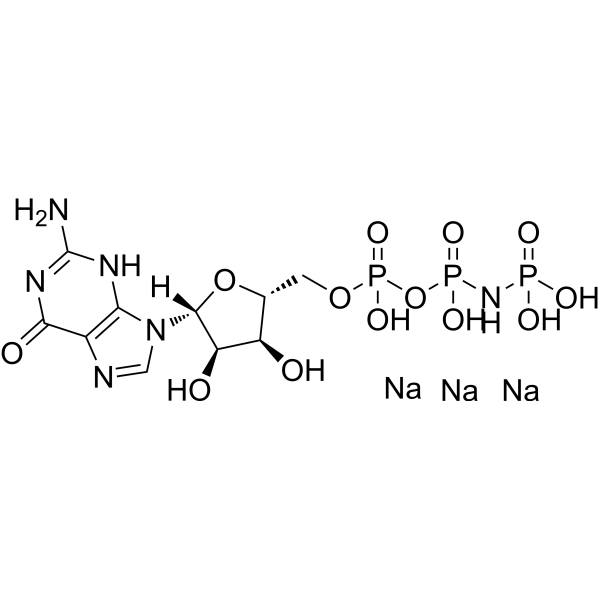
    Guanosine 5'-[β,γ-imido]triphosphate trisodium

    Adenylate Cyclase Endocrinology
    Guanylyl Imidodiphosphate (Guanosine 5'-[β,γ-imido]triphosphate) trisodium is a non-hydrolysable GTP analogue, an activator of ADP-ribosylation factor (ARF) and a potent stimulator of adenylate cyclase. Imidodiphosphate trisodium can be used in protein synthesis studies .
    Guanylyl Imidodiphosphate trisodium
  • HY-129040A
    m-Iodobenzylguanidine sulfate
    1 Publications Verification

    MIBG sulfate; Iobenguane sulfate

    Adrenergic Receptor Cancer
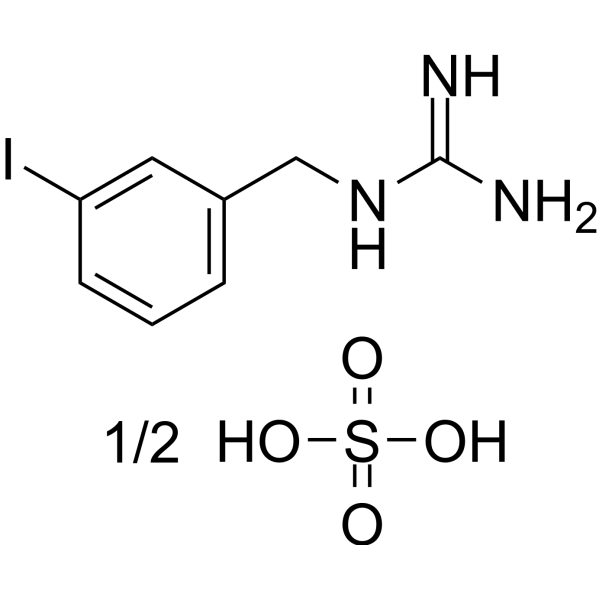
    m-Iodobenzylguanidine sulfate (MIBG sulfate) is an analogue of the neurotransmitter norepinephrine with antitumor activity. Radioiodinated m-Iodobenzylguanidine sulfate is clinically used as a tumor-targeted radiopharmaceutical in the diagnosis and treatment of adrenergic tumors. m-Iodobenzylguanidine sulfate is a high-affinity substrate for cholera toxin that interferes with cellular mono(ADP-ribosylation) .
    m-Iodobenzylguanidine sulfate
  • HY-U00422
    K-756
    2 Publications Verification

    PARP Cancer
    K-756 is a direct and selective tankyrase (TNKS) inhibitor, which inhibits the ADP-ribosylation activity of TNKS1 and TNKS2 with IC50s of 31 and 36 nM, respectively.
    K-756
  • HY-125218

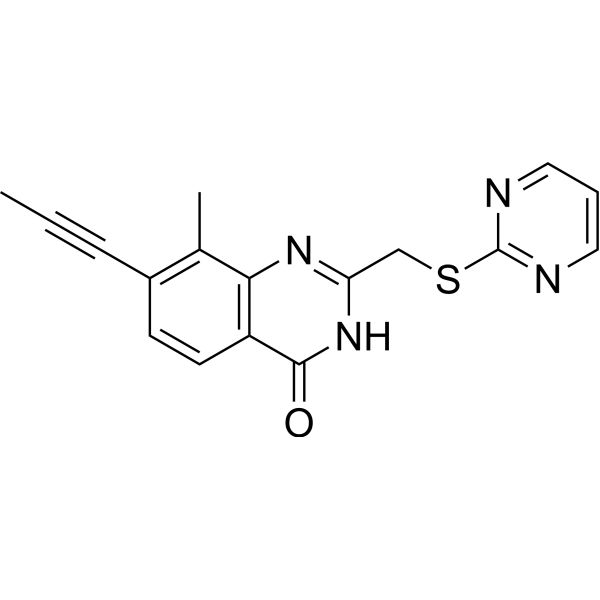
    ITK7

    PARP Cancer
    PARP11 inhibitor ITK7 (ITK7) is a potent and selective PARP11 inhibitor. PARP11 inhibitor ITK7 can potently inhibit PARP11 with an IC50 value of 14 nM. PARP11 inhibitor ITK7 can be used for the research of cellular localization .
    PARP11 inhibitor ITK7
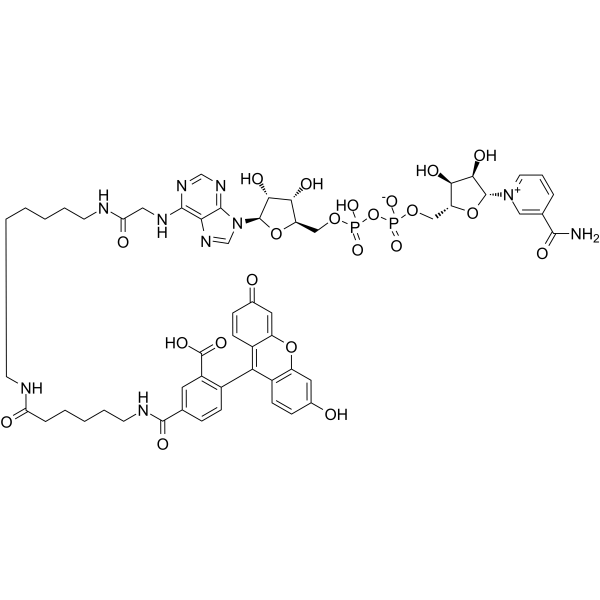
  • HY-131009

    PARP Others
    Fluorescein-NAD+ is an alternative to radiolabeled NAD and a substrate for ADP-ribosylation. Fluorescein-NAD+ can be used in PARP assays by fluorescence microscopy. Extinction Coefficient: 262 nm.
    Fluorescein-NAD+
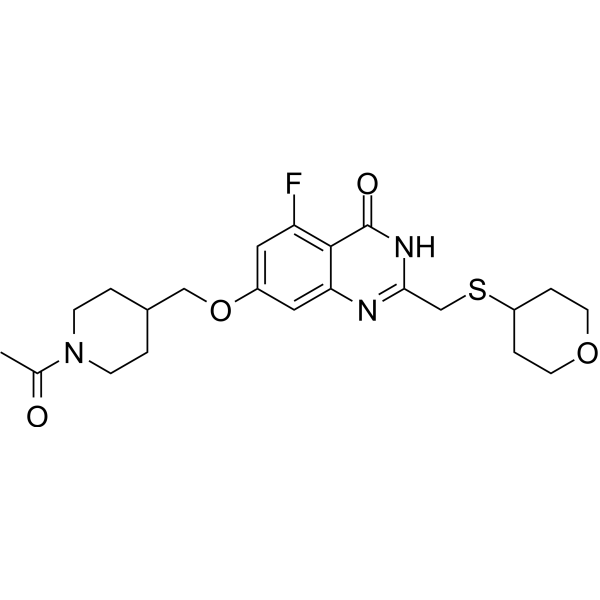
  • HY-178317

    PARP Apoptosis Infection Inflammation/Immunology Cancer
    OUL312 is a potent PARP10 inhibitor (IC50 = 20 nM), showing more than 75-fold greater selectivity for PARP15 (IC50 = 1500 nM). OUL312 is also at least 18-fold higher than all other human enzymes in the family. OUL312 has a good ADME profile, is able to enter cells, is not toxic, and effectively rescues human cells from PARP10-induced apoptosis at sub-micromolar concentrations. OUL312 can be used for the study of cervical cancer .
    OUL312
  • HY-135218A
    AV-153 free base
    1 Publications Verification

    DNA/RNA Synthesis Cancer
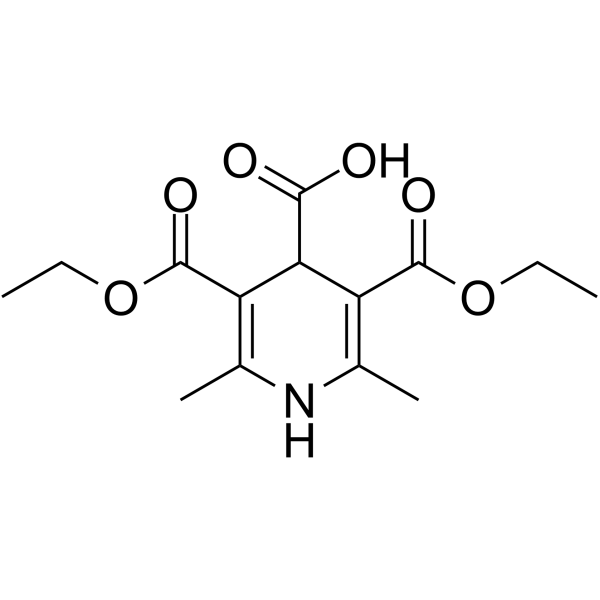
    AV-153 free base, a 1,4-dihydropyridine (1,4-DHP) derivative, is an antimutagenic. AV-153 free base intercalates to DNA in a single strand break and reduces DNA damage, stimulates DNA repair in human cells in vitro. AV-153 free base interacts with thymine and cytosine and has an influence on poly(ADP)ribosylation. AV-153 free base has anti-cancer activity .
    AV-153 free base
  • HY-131009A

    PARP Others
    Fluorescein-NAD+ sodium is an alternative to radiolabeled NAD and a substrate for ADP-ribosylation. Fluorescein-NAD+ sodium can be used in PARP assays by fluorescence microscopy. Extinction Coefficient: 262 nm.
    Fluorescein-NAD+ sodium
  • HY-165040

    DG(16:0/18:0/0:0); 1-Palmitin-2-Stearin

    Others Others
    1-Palmitoyl-2-stearoyl-rac-glycerol (DG(16:0/18:0/0:0)) is a compound mentioned in the study of the activation of ADP-ribosylation factor 1 GTPase activating protein by phosphatidylcholine-derived diacylglycerol, and related studies have shown that it may be involved in certain feedback mechanisms within cells.
    1-Palmitoyl-2-stearoyl-rac-glycerol
  • HY-E70238

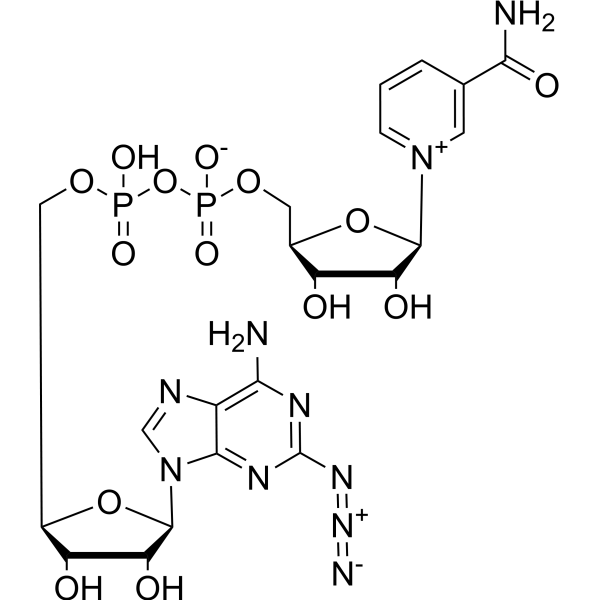
    Nicotinamide 2-azidoadenine dinucleotide

    Glutamate Dehydrogenase (GLDH) Others
    2-Azido-NAD is a NAD + analog that can be used for visualization of intracellular Poly(ADP ribos)ylation (PARylation) processes .
    2-Azido-NAD
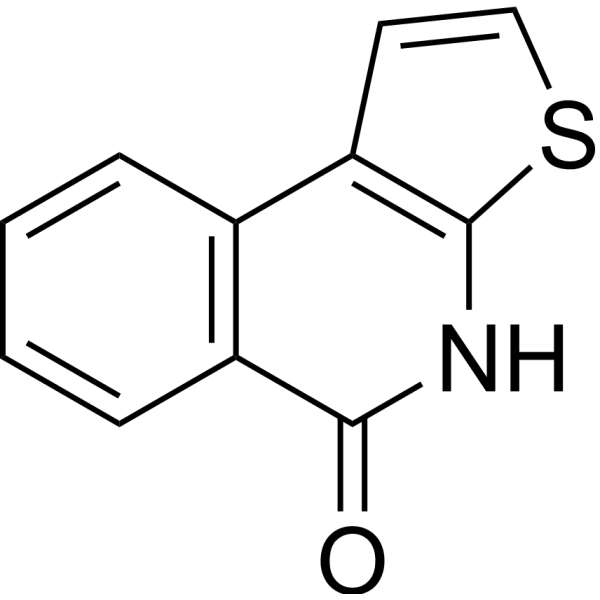
  • HY-121719

    PARP Cardiovascular Disease Cancer
    TIQ-A is a potent TNKS (poly-ART, PARP) inhibitor, with an IC50 of 24 nM for TNKS2. TIQ-A is a potential anti-ischemic agent .
    TIQ-A
  • HY-100540A

    (Rac)-GCA

    Enterovirus Infection
    (Rac)-Golgicide A ((Rac)-GCA) is a racemate of Golgicide A. Golgicide A (GCA) is a potent, highly specific, and reversible inhibitor of the cis-Golgi ADP-ribosylation factor guanine nucleotide exchange factors (ArfGEF) GBF1 .Golgicide A drastically reduced replication of coxsackievirus B3 (CVB3) and other human enterovirus species .
    (Rac)-Golgicide A
  • HY-137592A

    ε-NAD sodium

    Fluorescent Dye Others
    Nicotinamide 1,N6-ethenoadenine dinucleotide (ε-NAD) sodium, a fluorescent analogue of NAD, is able to serve as a substrate for the bacterial toxincatalyzed G-ADP ribosylation of signal-transducing G-proteins. Nicotinamide 1,N6-ethenoadenine dinucleotide sodium can be used as a fluorescent substrate for the studies of the ADP ribosylation reaction .
    Nicotinamide 1,N6-ethenoadenine dinucleotide sodium
  • HY-175290

    Arf Family GTPase Cancer
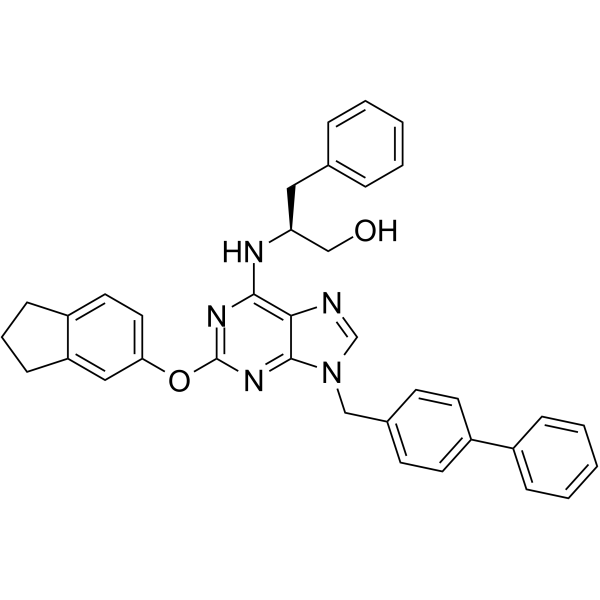
    Arf1-GEFs-IN-1 is a potent and orally active ADP-ribosylation factor 1- guanine nucleotide exchange factors (Arf1-GEFs) inhibitor with an IC50 value of 40.85 μM against CT26 cells. Arf1-GEFs-IN-1 primarily mediates tumor regression by triggering anti-tumor immune responses, rather than through direct cytotoxicity. Arf1-GEFs-IN-1 effectively promotes CCL5 expression, demonstrates excellent in vivo efficacy. Arf1-GEFs-IN-1 can be used for the study of colon cancer .
    Arf1-GEFs-IN-1
  • HY-172747

    PARP Cancer
    TNKS-2-IN-3 (Compound 5) is a selective competitive tankyrase 2 (TNKS2) inhibitor with an IC50 value of 0.3 nM, showing over 20-fold selectivity over TNKS1 and more than 100-fold selectivity over PARP1/2. TNKS-2-IN-3 stabilizes axin and suppresses the Wnt/β-catenin pathway by inhibiting TNKS2-mediated ADP-ribosylation, exhibiting antiproliferative activity in colorectal cancer cells. TNKS-2-IN-3 is proming for rasearch of solid tumors with aberrant Wnt pathway activation, such as colorectal cancer .
    TNKS-2-IN-3
  • HY-134355

    PARP Others
    ADPRP is an intranuclear enzyme whose main activity is to use NAD+ (nicotinamide adenine dinucleotide) as a substrate to add ADP-ribose units to chromatin-bound proteins, including the ADPRP enzyme itself. This process, called poly(ADP-ribosylation), is a post-translational modification that regulates the interaction between DNA and nuclear proteins .
    ADPRP
  • HY-135218

    DNA/RNA Synthesis Cancer
    AV-153, a 1,4-dihydropyridine (1,4-DHP) derivative, is an antimutagenic. AV-153 intercalates to DNA in a single strand break and reduces DNA damage, stimulates DNA repair in human cells in vitro. AV-153 interacts with thymine and cytosine and has an influence on poly(ADP)ribosylation. AV-153 has anti-cancer activity .
    AV-153
  • HY-129040AR

    MIBG sulfate (Standard); Iobenguane sulfate (Standard)

    Adrenergic Receptor Reference Standards Cancer
    m-Iodobenzylguanidine (sulfate) (Standard) is the analytical standard of m-Iodobenzylguanidine (sulfate). This product is intended for research and analytical applications. m-Iodobenzylguanidine sulfate (MIBG sulfate) is an analogue of the neurotransmitter norepinephrine with antitumor activity. Radioiodinated m-Iodobenzylguanidine sulfate is clinically used as a tumor-targeted radiopharmaceutical in the diagnosis and treatment of adrenergic tumors. m-Iodobenzylguanidine sulfate is a high-affinity substrate for cholera toxin that interferes with cellular mono(ADP-ribosylation) .
    m-Iodobenzylguanidine sulfate (Standard)
  • HY-P10658

    Phospholipase Others
    ARF1 (2-17) inhibits both ARF-independent (PLC-β) and ARF-dependent (PLD) pathways. ARF1 (2-17) inhibits GTP-γ-S-stimulated PLD activity, phospholipase C-β (PLC-β), and exocytosis .
    ARF1 (2-17)
  • HY-DY1108

    ε-NAD (solution)

    Glutamate Dehydrogenase (GLDH) Phosphodiesterase (PDE) Fluorescent Dye Others
    Nicotinamide 1,N6-ethenoadenine dinucleotide (solution) (ε-NAD (solution)) is a fluorescent analog of NAD. Nicotinamide 1,N6-ethenoadenine dinucleotide can be cleaved by phosphodiesterase I (from C. adamanteus venom) and binds to bovine liver glutamate dehydrogenase. Nicotinamide 1,N6-ethenoadenine dinucleotide can serve as a substrate for G-ADP ribosylation of G proteins catalyzed by bacterial toxins. Nicotinamide 1,N6-ethenoadenine dinucleotide can be used as a fluorescent substrate for the study of ADP ribosylation reactions .
    Solvent and concentration: ddH2O: 20 mM
    Nicotinamide 1,N6-ethenoadenine dinucleotide (solution)
  • HY-183548

    PARP Inflammation/Immunology
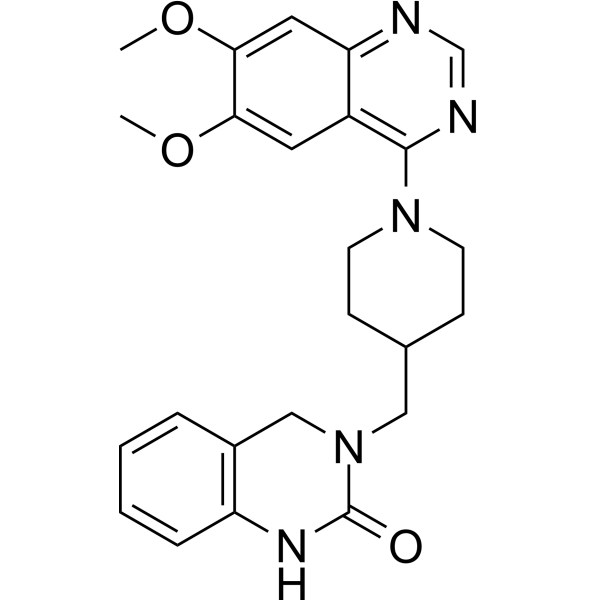
    XW-17 is a PARP14 inhibitor with an IC50 of 3.03 nM and selectivity over other PARP family members.XW-17 suppresses PARP14-mediated mono-ADP-ribosylation, engages and stabilizes endogenous PARP14 protein.XW-17 attenuates skin lesions and decreases expression of IL-4, IL-13, IgE, and IL-17A in an atopic dermatitis-like mouse model.XW-17 can be used for the research of atopic dermatitis .
    XW-17
  • HY-125217

    PARP Cancer
    PARP10-IN-1 is a PARP10 inhibitor with an IC50 of 1.8 μM, 2.7 μM, and >10-fold selectivity over most PARP family members, excluding PARP7 and PARP16.PARP10-IN-1 inhibits PARP10-mediated mono-ADP-ribosylation, including auto-MARylation of PARP10 and MARylation of its protein targets.PARP10-IN-1 is membrane permeable and inhibits PARP10-dependent MARylation in human embryonic kidney cells.PARP10-IN-1 can be used for the research of cancer .
    PARP10-IN-1

Inquiry Online

Your information is safe with us. * Required Fields.

Salutation


Country or Region *

Applicant Name *


Organization Name *

Department *


Email Address *


Product Name *

Cat. No.


Requested quantity *

Phone Number *


Remarks

Inquiry Online

Inquiry Information

Product Name:
Cat. No.:
Quantity:
MCE Japan Authorized Agent:

