Search Result
Results for "
AR LNCaP cell
" in MedChemExpress (MCE) Product Catalog:
5
Isotope-Labeled Compounds
| Cat. No. |
Product Name |
Target |
Research Areas |
Chemical Structure |
-
- HY-70002
-
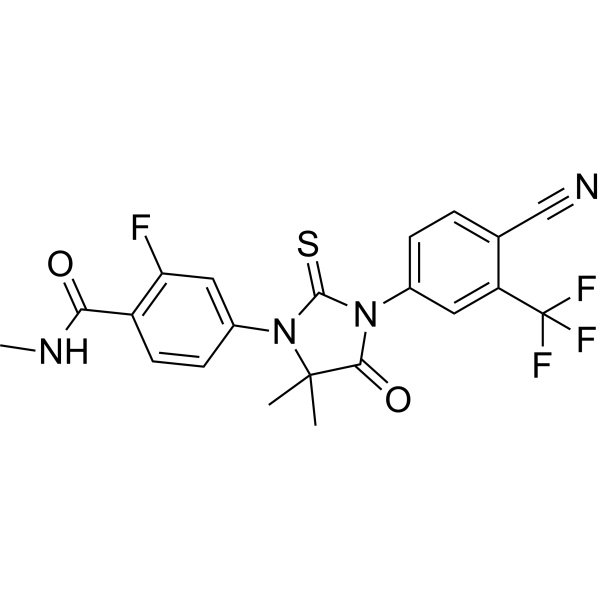
Enzalutamide
Maximum Cited Publications
214 Publications Verification
MDV3100
|
Androgen Receptor
Autophagy
|
Cancer
|
|
Enzalutamide (MDV3100) is an androgen receptor (AR) antagonist with an IC50 of 36 nM in LNCaP prostate cells. Enzalutamide is an autophagy activator .
|
-
-
- HY-16985
-
|
ODM-201; BAY-1841788
|
Androgen Receptor
|
Cancer
|
|
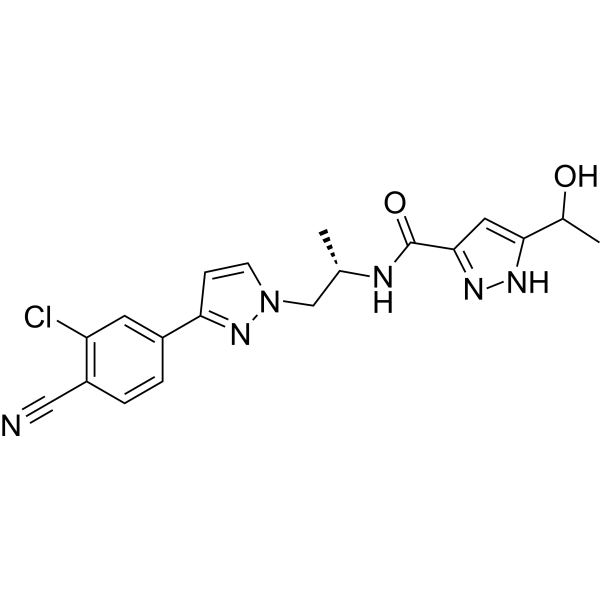
Darolutamide (ODM-201) is an orally active competitive androgen receptor (AR) antagonist. Darolutamide has a Ki of 11 nM for rat wild-type AR (wtAR) and IC50 of 26 nM for human wild-type AR (hAR)-mediated transcriptional activation . Darolutamide inhibits testosterone-induced AR nuclear translocation and transcriptional activation . Darolutamide exerts selective effects on AR-positive cells by inhibiting AR-dependent signaling pathways, and its active metabolite retains full antagonistic activity against AR mutants . Darolutamide can be used for the research of prostate cancer, including androgen receptor-dependent prostate cancer .
|
-
-
- HY-158113
-
|
|
Histone Acetyltransferase
PROTACs
|
Cancer
|
|
CBPD-409 is an orally active PROTAC degrader for CBP/p300, with DC50 of 0.2–0.4 nM. CBPD-409 exhibits antiproliferative effects in AR+ prostate cancer cell lines VCaP, LNCaP and 22Rv1, with IC50s of 1.2–2.0 nM. CBPD-409 exhibits antitumor efficacy (Red: CBP inhibitor GNE049 (HY-108435); Blue: CRBN/cullin 4A Thalidomide (HY-14658); Black: Linker) .
|
-
-
- HY-N2908
-
|
Methyl atrARate
|
Environmental Pollutants
NF-κB
Androgen Receptor
p38 MAPK
NO Synthase
|
Inflammation/Immunology
Cancer
|
|
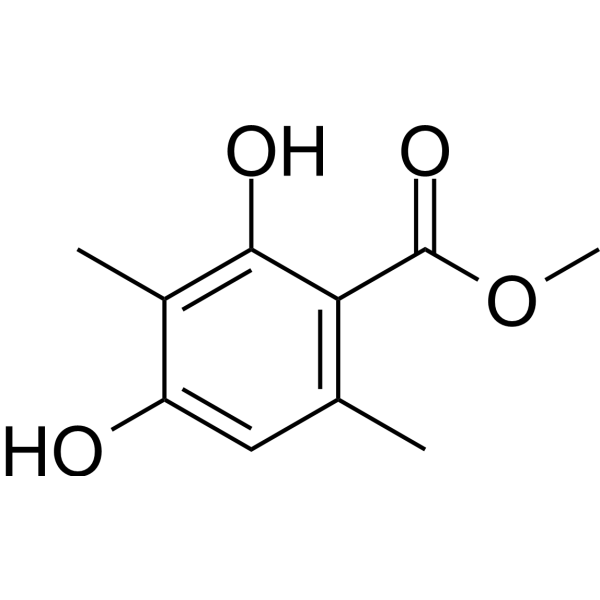
Atraric acid (Methyl atrarate) is a specific androgen receptor (AR) antagonist with anti-inflammatory and anticancer effects. Atraric acid represses the expression of the endogenous prostate specific antigen gene in both LNCaP and C4-2 cells. Atraric acid can also inhibit the synthesis of NO and cytokine, and suppress the MAPK-NFκB signaling pathway. Atraric acid can be used to research prostate diseases and inflammatory diseases .
|
-
-
- HY-70002R
-
|
MDV3100 (StandARd)
|
Reference Standards
Androgen Receptor
Autophagy
|
Cancer
|
|
Enzalutamide (Standard) is the analytical standard of Enzalutamide. This product is intended for research and analytical applications. Enzalutamide (MDV3100) is an androgen receptor (AR) antagonist with an IC50 of 36 nM in LNCaP prostate cells. Enzalutamide is an autophagy activator .
|
-

-
- HY-130992
-
|
|
Androgen Receptor
Ligands for Target Protein for PROTAC
|
Cancer
|
|
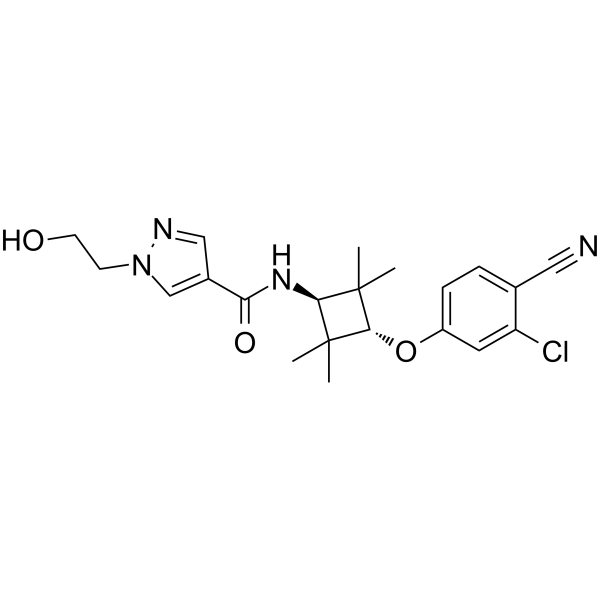
Androgen receptor antagonist 1 is an orally available full androgen receptor (AR) antagonist with an IC50 of 59 nM . Androgen receptor antagonist 1 (Compound 6) can be used in the synthesis of PROTAC AR degraders, which results 24% and 47 % AR protein degradation in LNCaP cells at 1 μM and 10 μM, respectively .
|
-
-
- HY-70002S1
-
-
-
- HY-16079
-
AZD3514
3 Publications Verification
|
Androgen Receptor
|
Cancer
|
|
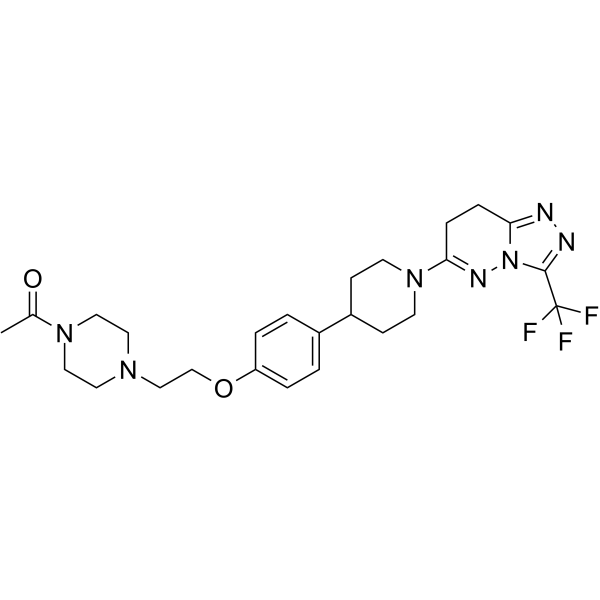
AZD3514 is an orally activie and selective androgen receptor (AR) inhibitor. AZD3514 androgen-dependently and -independently inhibits AR signal. AZD351 down-regulates nuclear AR levels in human LNCaP prostate cancer cells in the absence of androgen with an pIC50 value of 5.75. AZD3514 can be used for the research of prostate cancer .
|
-
-
- HY-19337
-
|
BAY 1896953; ORM-15341
|
Androgen Receptor
|
Cancer
|
|
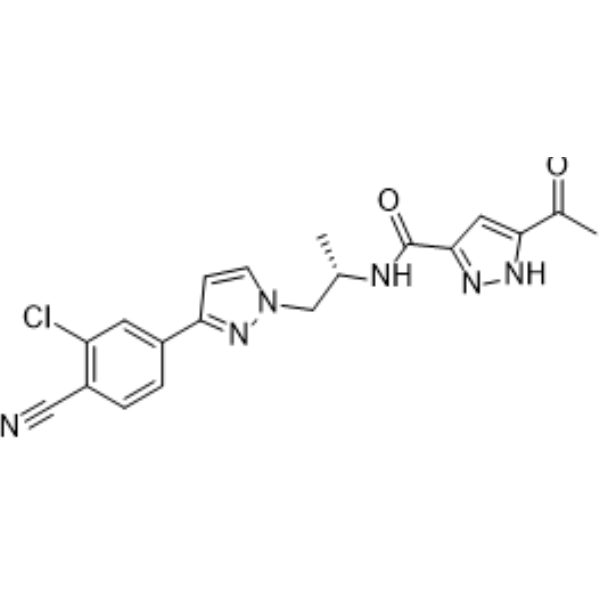
Ketodarolutamide (ORM-15341) is a potent, high-affinity nonsteroidal competitive full antagonist of androgen receptor (AR). Ketodarolutamide displays a Ki value of 8 nM for rat wild-type AR and an IC50 value of 38 nM in AR-HEK293 cells . Ketodarolutamide inhibits testosterone-induced nuclear translocation of the AR and antagonizes both overexpressed and mutant ARs . Ketodarolutamide specifically suppresses the proliferation of AR-dependent prostate cancer cells and exhibits antitumor activity in models of castration-resistant prostate cancer (CRPC) . Ketodarolutamide is suitable for the mechanistic and therapeutic research of prostate cancer .
|
-
-
- HY-170329
-
|
|
PROTACs
Androgen Receptor
Apoptosis
|
Cancer
|
|
PROTAC AR Degrader-8 is the PROTAC degrader for androgen receptor (AR) that degrades AR-FL with DC50s of 0.018 μM and 0.14 μM in 22Rv1 cell and LNCaP cell, degrades AR-V7 with DC50 of 0.026 μM in 22Rv1 cell. PROTAC AR Degrader-8 inhibits the proliferation of cancer cell 22Rv1 and LNCaP with IC50 values of 0.038 μM and 1.11 μM. PROTAC AR Degrader-8 arrests cell cycle at G2/M phase, induces apoptosis in 22Rv1 cell. PROTAC AR Degrader-8 exhibits anticancer efficacy in mouse and zebrafish model. PROTAC AR Degrader-8 can be used for the research of prostate cancer, castration-resistant prostate cancer .
|
-

-
- HY-70002S
-
|
Enzalutamide-d3; MDV3100-d3
|
Androgen Receptor
Autophagy
|
Cancer
|
|
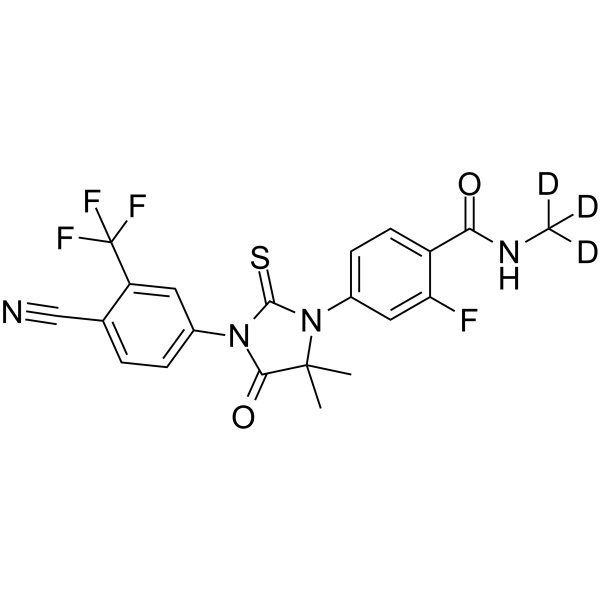
Deutenzalutamide (Enzalutamide-d3) is a developed deuterium labeled Enzalutamide (MDV3100). Enzalutamide is an androgen receptor (AR) antagonist with an IC50 of 36 nM in LNCaP prostate cells .
|
-
-
- HY-115282A
-
|
TRC-253
|
Androgen Receptor
|
Cancer
|
|
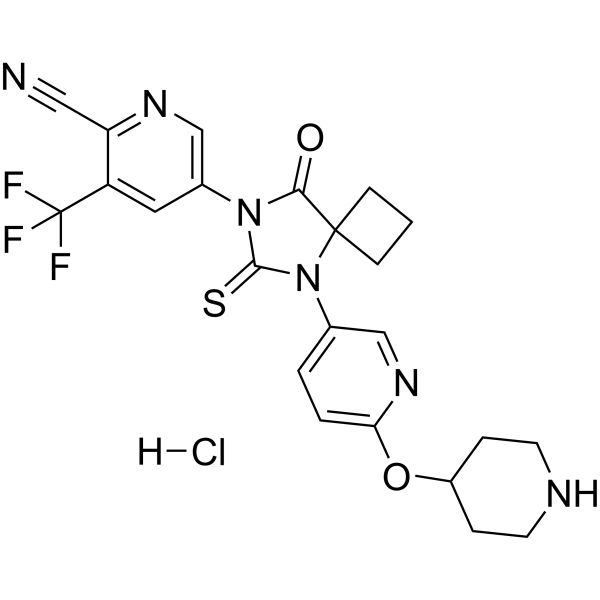
JNJ-63576253 (TRC-253) is a potent and orally active full antagonist of androgen receptor (AR), with IC50s of 37 and 54 nM for F877L mutant AR and wild-type AR in LNCaP cells. JNJ-63576253 can be used for the research of castration-resistant prostate cancer (CRPC) .
|
-
-
- HY-149433
-
|
|
PROTACs
Androgen Receptor
Apoptosis
|
Cancer
|
|
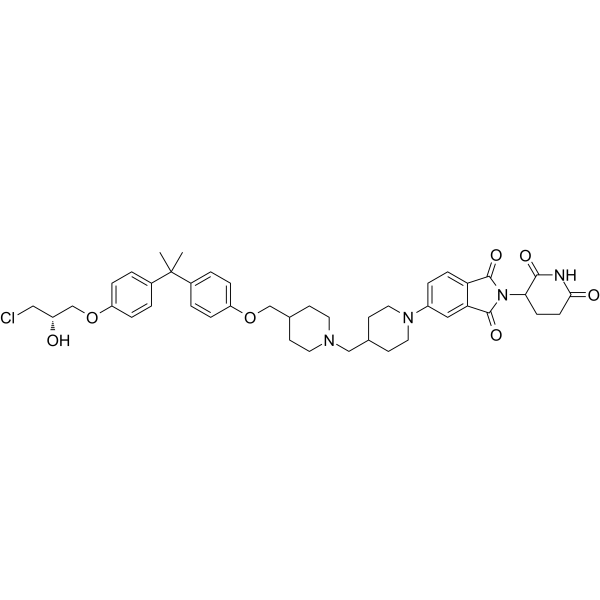
BWA-522 is an orally active PROTAC degrader targeting full-length androgen receptor (AR-FL) and androgen receptor splice variant 7 (AR-V7). BWA-522 antagonizes the N-terminal domain (AR-NTD) of the androgen receptor, suppresses AR downstream signaling proteins and induces cancer cells apoptosis. BWA-522 inhibits tumor growth in LNCaP xenograft mouse model. BWA-522 can be used for the research of prostate cancer .
|
-
-
- HY-133045
-
|
|
Ligands for E3 Ligase
|
Cancer
|
|
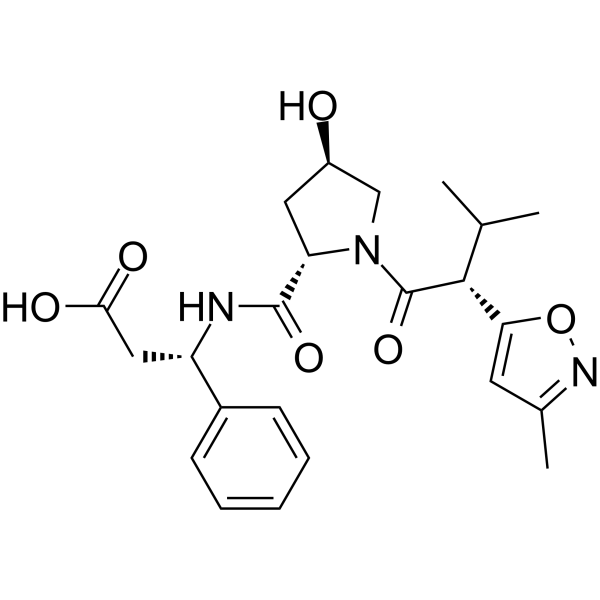
VHL Ligand 8 is a VHL ligand. VHL Ligand 8 can be used to synthesize ARD-266 (HY-133020), a highly potent and VHL E3 ligase-based androgen receptor (AR) PROTAC degrader. ARD-266 effectively induces degradation of AR protein in AR-positive LNCaP, VCaP, and 22Rv1 prostate cancer cell lines with DC50 values of 0.2-1 nM .
|
-
-
- HY-N0475
-
|
Hypolide; (+)-Triptophenolide
|
Androgen Receptor
Pyroptosis
Caspase
Bcl-2 Family
Apoptosis
|
Inflammation/Immunology
Cancer
|
|
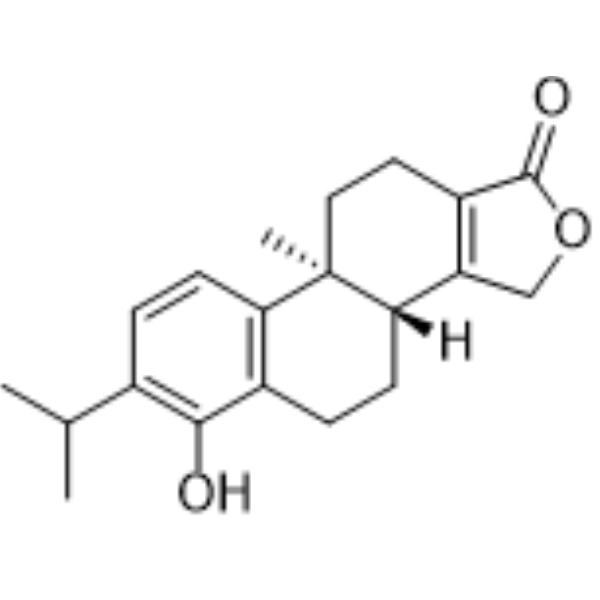
Triptophenolide (Hypolide) is a colorless crystal isolated from the ethyl acetate extract of Tripterygium wilfordii. Triptophenolide is an orally active pan‑antagonist of the androgen receptor (AR) with an IC50 of 467 nM against human wild‑type AR. Triptophenolide reduces AR expression, inhibits AR nuclear translocation, downregulates prostate‑specific antigen mRNA levels, and suppresses the growth of AR‑positive prostate cancer cells. Triptophenolide shows anti-tumor effects against breast cancer by inhibiting cell proliferation and migration, inducing G1-phase arrest and apoptosis, repressing xenograft tumor growth. Triptophenolide inhibits pyroptosis, alleviates tissue inflammation, and ameliorates synovial injury. Triptophenolide can be used for the study of prostate cancer, rheumatoid arthritis and breast cancer .
|
-
-
- HY-149862
-
|
|
PROTACs
Androgen Receptor
|
Cancer
|
|
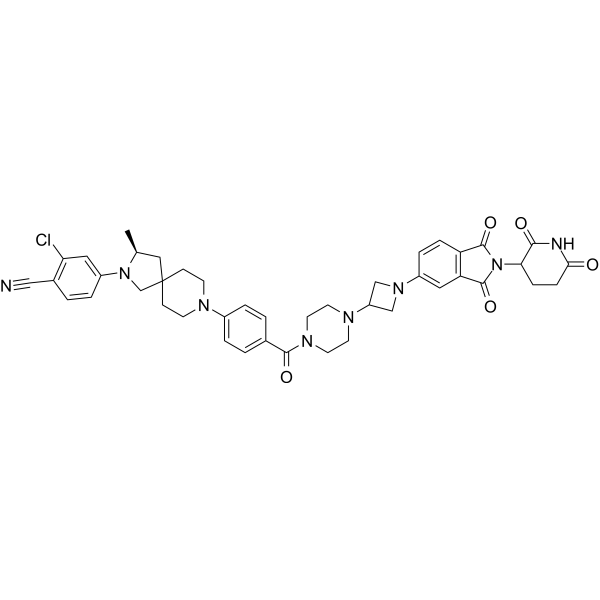
ARD-2051 is a selective and orally active androgen receptor (AR) proteolysis-targeting chimera degrader. ARD-2051 achieves DC50 values of 0.6 nM for AR protein degradation in both the LNCaP and VCaP prostate cancer cell lines. ARD-2051 exhibits effective anti-tumor activity in VCaP xenograft mice model. ARD-2051 can be used for the research of prostate cancer (Pink: AR ligand (HY-400666), Blue: CRBN Ligand (HY-14658), Black: Linker) .
|
-
-
- HY-133020
-
|
|
PROTACs
Androgen Receptor
|
Cancer
|
|
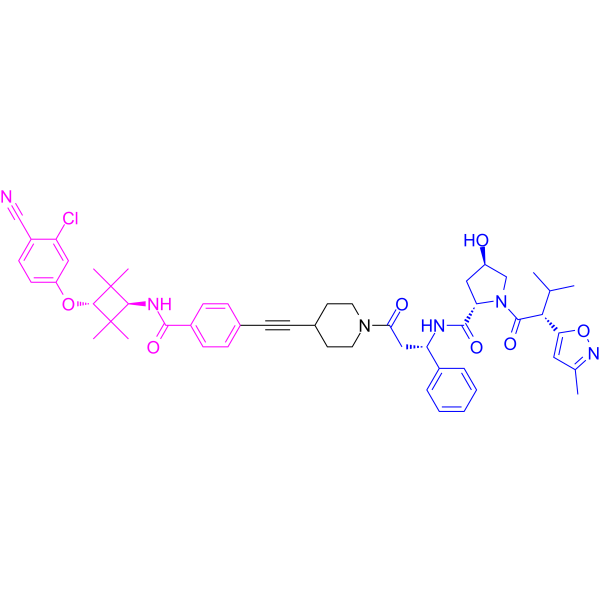
ARD-266 is a highly potent and von Hippel-Lindau E3 ligase-based Androgen Receptor (AR) PROTAC degrader. ARD-266 effectively induces degradation of AR protein in AR-positive LNCaP, VCaP, and 22Rv1 prostate cancer cell lines with DC50 values of 0.2-1 nM . ARD-266 is a click chemistry reagent, it contains an Alkyne group and can undergo copper-catalyzed azide-alkyne cycloaddition (CuAAc) with molecules containing Azide groups.
|
-
-
- HY-162702
-
|
|
PROTACs
Androgen Receptor
|
Cancer
|
|
AZ‘3137 is an orally active PROTAC-type androgen receptor (AR) degrader with a DC50 value of 22 nM. AZ‘3137 can degrade L702H mutant AR (DC50 of 92 nM). AZ'3137 can inhibit cell proliferation of LNCaP, with a GI50 value of 74 nM. AZ'3137 can inhibit AR signaling and tumor growth in prostate cancer mice (Pink: AR Ligand (HY-172954); Blue: CRBN ligand (HY-172955); Black: linker (HY-W262798); E3 Ligand+Linker: HY-172956) .
|
-

-
- HY-175652
-
|
|
PROTACs
Adenosine Receptor
|
Cancer
|
|
AZD9750 is an orally active, Cereblon (CRBN)-recruiting, androgen receptor (AR)-targeted PROTAC degrader. AZD9750 induces the proteasome-dependent degradation of both wild-type AR and the drug-resistant mutant AR L702H, thereby inhibiting the AR signaling pathway. AZD9750 suppresses tumor growth in mouse prostate cancer xenograft models and has been utilized in prostate cancer research .
|
-

-
- HY-16985S
-
|
ODM-201-d4; BAY-1841788-d4
|
Isotope-Labeled Compounds
Androgen Receptor
|
Cancer
|
|
Darolutamide-d4 (ODM-201-d4) is deuterium labeled Darolutamide (HY-16985). Darolutamide (ODM-201) is an orally active competitive androgen receptor (AR) antagonist, with a Ki of 11 nM for rat wild-type AR (wtAR) and an IC50 of 26 nM for human wild-type AR (hAR)-mediated transcriptional activation . Darolutamide inhibits testosterone-induced AR nuclear translocation and transcriptional activation . Darolutamide exerts selective effects on AR-positive cells by inhibiting AR-dependent signaling pathways, and its active metabolite retains full antagonistic activity against AR mutants . Darolutamide can be used for the research of prostate cancer, including androgen receptor-dependent prostate cancer .
|
-

-
- HY-163641
-
|
|
Molecular Glues
Androgen Receptor
E1/E2/E3 Enzyme
|
Cancer
|
|
AR Degrader-1 (Compound ML 2-9) is a molecular glue androgen receptor (AR) monovalent degrader. AR Degrader-1 degrades AR through DCAF16 (E3 ligase) without obvious cytotoxicity in LNCaP prostate cancer cells .
|
-

-
- HY-175455
-
|
|
PROTACs
Androgen Receptor
Akt
|
Cancer
|
|
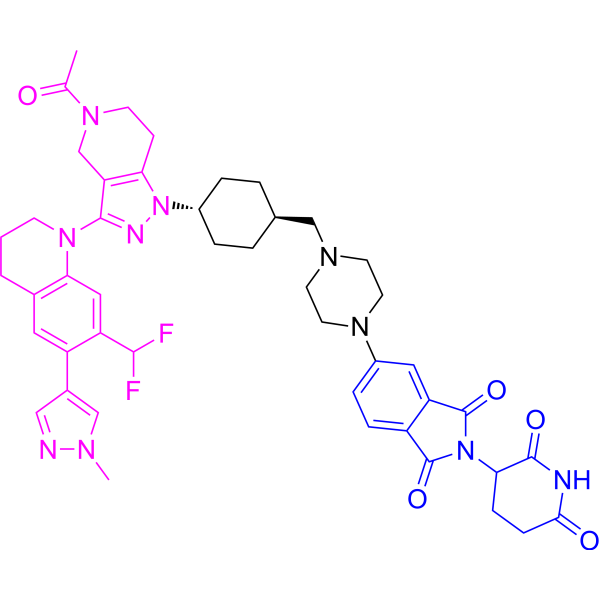
LYA914 is an orally active AR/AR-V7 PROTAC degrader. LYA914 targets the proteolytic degradation of the conserved DNA binding domain (DBD) of the androgen receptor (AR). LYA914 exhibits potent antiproliferative effects in Enzalutamide (HY-70002)-insensitive/resistant cells. LYA914 inhibits tumor growth in VCaP/LNCaP tumor mouse models. LYA914 can be used to study castration-resistant prostate cancer (CRPC). (Pink: AR-DBD ligand-1: HY-175456, Blue: Thalidomide: HY-14658, Pink + Black: AR-DBD ligand-Linker Conjugate 1: HY-175457, Black: Boc-piperidine-oxopiperidin: HY-175458) .
|
-

-
- HY-176128
-
|
|
PROTACs
Androgen Receptor
Apoptosis
PARP
Caspase
|
Cancer
|
|
BWA-6047 is an oral active PROTAC degrader targeting AR/AR-V7 and GSPT1 with DC50 values of 3.7, 3.0 and 1.2 nM in 22Rv1 cells. BWA-6047 suppresses the expression of AR downstream target genes and and transcriptional activity. BWA-6047 inhibits cancer cells proliferation, causes G1 phase cell cycle arrest and induces apoptosis. BWA-6047 increases cleaved-PARP-1 and cleaved-caspase-3 levels. BWA-6047 reduces growth of LNCaP xenograft tumors in mice models without obvious toxicity. BWA-6047 can be used for the research of prostate cancer .
|
-

-
- HY-16985R
-
|
ODM-201 (StandARd); BAY-1841788 (StandARd)
|
Reference Standards
Androgen Receptor
|
Cancer
|
|
Darolutamide (Standard) is the analytical standard of Darolutamide (HY-16985). This product is intended for research and analytical applications. Darolutamide (ODM-201) is an orally active competitive androgen receptor (AR) antagonist, with a Ki of 11 nM for rat wild-type AR (wtAR) and an IC50 of 26 nM for human wild-type AR (hAR)-mediated transcriptional activation . Darolutamide inhibits testosterone-induced AR nuclear translocation and transcriptional activation . Darolutamide exerts selective effects on AR-positive cells by inhibiting AR-dependent signaling pathways, and its active metabolite retains full antagonistic activity against AR mutants . Darolutamide can be used for the research of prostate cancer, including androgen receptor-dependent prostate cancer .
|
-

-
- HY-163510
-
|
|
Androgen Receptor
|
Cancer
|
|
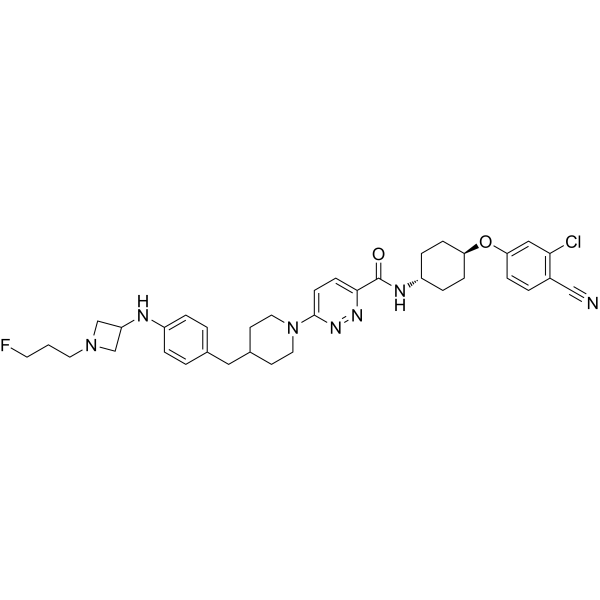
AR/AR-V7-IN-1 (Compound 20i) is an AR/ARV7 inhibitor (IC50 = 172.85 nM). AR/AR-V7-IN-1 potently inhibits cell growth with IC50 values of 4.87 and 2.07 μM in the LNCaP and 22RV1 cell lines, respectively. AR/AR-V7-IN-1 exhibits effective tumor growth inhibition in the 22RV1 xenograft study. AR/AR-V7-IN-1 can be used for the research of prostate cancer .
|
-
-
- HY-149914
-
|
|
Androgen Receptor
|
Cancer
|
|
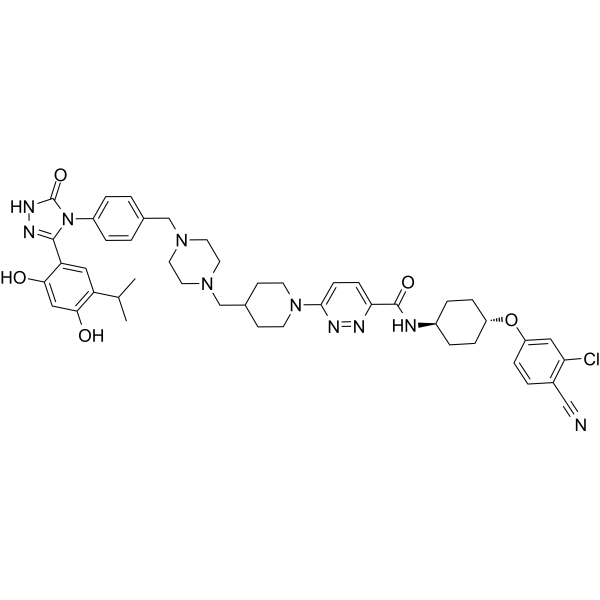
WCA-814 is an androgen receptor (AR) antagonist-Hsp90 inhibitor conjugate. WCA-814 induces the degradation of full-length and AR-V7. WCA-814 has cytotoxic effect in prostatic cancer cells (IC50: 171.2 nM, 26.5 nM for LNCaP, 22Rv1 cell) .
|
-
-
- HY-124585
-
|
|
Epigenetic Reader Domain
|
Cancer
|
|
Y08060 is a selective BET inhibitor. Y08060 inhibits the viability of C4-2B and LNCaP cell lines with IC50 values of 3.23 and 4.41 μM. Y08060 can suppress colony formation as well as AR expression in prostate cancer cell line. Y08060 can be studied in prostate cancer research .
|
-

-
- HY-133044
-
|
|
PROTAC Linkers
|
Cancer
|
|
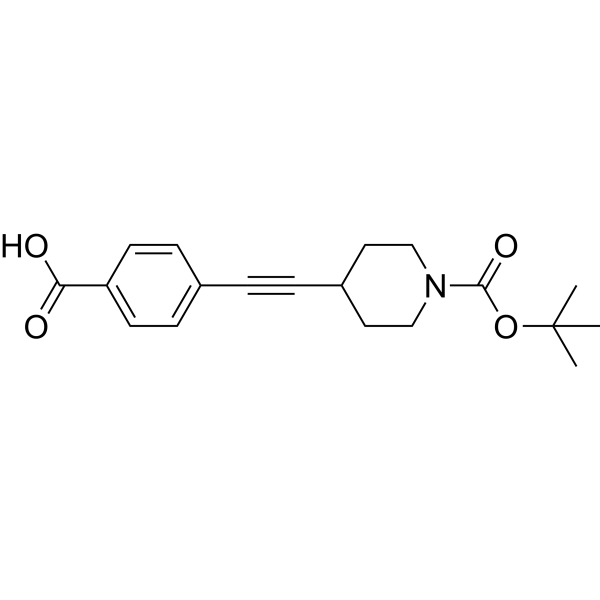
Boc-Pip-alkyne-Ph-COOH is a PROTAC linker, which refers to the alkyl/ether composition. Boc-Pip-alkyne-Ph-COOH can be used in the synthesis of a series of PROTACs, such as ARD-266 (HY-133020). ARD-266 effectively induces degradation of androgen receptor (AR) protein in AR-positive LNCaP, VCaP, and 22Rv1 prostate cancer cell lines with DC50 values of 0.2-1 nM . Boc-Pip-alkyne-Ph-COOH is a click chemistry reagent, it contains an Alkyne group and can undergo copper-catalyzed azide-alkyne cycloaddition (CuAAc) with molecules containing Azide groups.
|
-
-
- HY-N8504
-
|
NSC 260179; Spectinabilin
|
Bacterial
|
Infection
|
|
Neoaureothin is a bacterial metabolite that has been found in Streptomyces. It is an androgen receptor (AR) antagonist that inhibits binding of dihydrotestosterone (DHT) to ARs (IC50=13 μM) and inhibits DHT-induced expression of prostate-specific antigen in LNCaP cells (IC50=1.75 nM). Neoaureothin is cytotoxic to A549, HCT116, and HepG2 cells (IC50s=34.3, 47, and 37.2 μg/mL, respectively). It also has nematocidal activity against the pine wood nematode B. xylophilus (LC50=0.84 μg/mL) and increases survival of P. densiflora trees inoculated with B. xylophilus.
|
-

-
- HY-111231
-
|
|
Androgen Receptor
|
Cancer
|
|
CH4933468 is a thiohydantoin derivative, shows androgen receptor (AR) pure antagonist activity in vitro. CH4933468 inhibits AR-mediated transactivation and proliferation of LNCaP and LNCaP-BC2 cells. CH4933468 can be used for castration-resistant prostate cancer (CRPC) research .
|
-

-
- HY-126464
-
|
EoM
|
Androgen Receptor
|
Cancer
|
|
Estromustine (EoM) is the active metabolite of Estramustine phosphate (HY-13627A). Estromustine binds to mutant androgen receptor (m-AR) with EC50 of 2.6 μM in LNCaP, exhibits cytotoxicity in human prostate cells LNCaP with IC50 of 9.73 μM .
|
-

-
- HY-131953
-
|
|
Androgen Receptor
|
Cancer
|
|
Androgen receptor-IN-3 (Compound 22) is an androgen receptor inhibitor. Androgen receptor-IN-3 inhibits AR-driven transcriptional activity in LNCaP cells, with an IC50 of 5.04 μM .
|
-

-
- HY-173409
-
|
|
Androgen Receptor
Ser/Thr Protease
|
Inflammation/Immunology
|
|
AR antagonist 11 (Compound c2) is a selective AR antagonist with an IC50 of 0.019 μM. AR antagonist 11 is also effective against AR F877L/T878A mutant (IC50: 1.03 μM). AR antagonist 11 inhibits LNCaP cell proliferation and reduces PSA protein expression (IC50: 0.54 μM). AR antagonist 11 can be used for research of prostate cancer (PCa) .
|
-

-
- HY-115282
-
|
TRC-253 free base
|
Androgen Receptor
|
Cancer
|
|
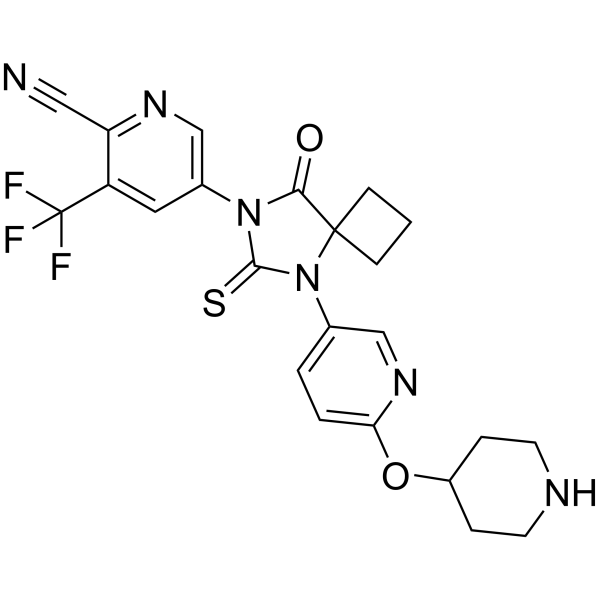
JNJ-63576253 (TRC-253) free base is a potent and orally active full antagonist of androgen receptor (AR), with IC50s of 37 and 54 nM for F877L mutant AR and wild-type AR in LNCaP cells. JNJ-63576253 free base can be used for the research of castration-resistant prostate cancer (CRPC) .
|
-
-
- HY-179050
-
|
|
Androgen Receptor
Reactive Oxygen Species (ROS)
|
Cancer
|
|
Androgen receptor-IN-7 is a potent androgen receptor (AR) inhibitor. Androgen receptor-IN-7 exhibits potent anticancer activity against PC-3 cells (IC50 =370.37 nM) and LNCaP cells via both AR-dependent and AR-independent pathways. Androgen receptor-IN-7 induces ROS production in PC-3 cells. Androgen receptor-IN-7 can be used for prostate cancer research .
|
-

-
- HY-178148
-
|
|
Androgen Receptor
|
Endocrinology
Cancer
|
|
AR antagonist 17 is a selective, orally active, low brain-penetrant Androgen Receptor (AR) antagonist (IC50 = 0.010 μM), effectively blocking AR dimerization and nuclear translocation, and demonstrating potent efficacy in several castration-resistant prostate cancer (CRPC) cells. AR antagonist 17 showed superior efficacy against variant drug-resistant AR mutants. AR antagonist 17 can inhibit tumor growth in an LNCaP xenograft model without apparent toxicity. AR antagonist 17 can be used for the study of castration-resistant prostate cancer (CRPC) .
|
-

-
- HY-161741
-
|
|
AUTOTACs
Androgen Receptor
|
Cancer
|
|
VinclozolinM2-2204 is a androgen receptor (AR) AUTOTAC degrader, with an DC50 of 200 nM in LNCaP prostate cancer cells. VinclozolinM2-2204 induces the formation of AR +LC3 + autophagic membranes. VinclozolinM2-2204 can be used for the research of cancer .(Pink: AR inhibitor (HY-168296); Black: linker (HY-128833); Blue: CRBN Ligand (HY-168293))
|
-

-
- HY-118375
-
|
ISC-4
|
Apoptosis
|
Cancer
|
|
Phenylbutyl isoselenocyanate (ISC-4) is a selective apoptosis inducer that increases reactive oxygen species levels to inhibit androgen receptor (AR) and activate p53 pathway. Phenylbutyl isoselenocyanate induces apoptosis in LNCaP prostate cancer cells and has anti-prostate cancer properties.
|
-

-
- HY-139970
-
|
|
Androgen Receptor
|
Endocrinology
Cancer
|
|
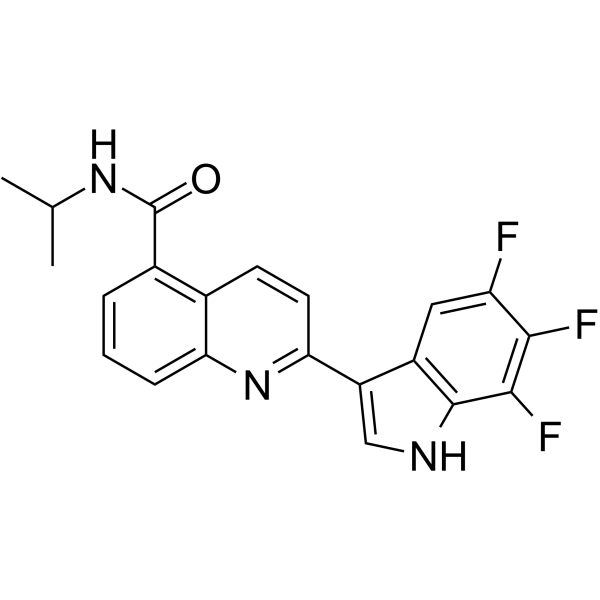
VPC-13789 is a potent, selective, and orally bioavailable antiandrogen. VPC-13789 can be used for the research of castration-resistant prostate cancer (CRPC) therapeutics. VPC-13789 inhibits androgen receptor (AR) transcriptional activity in LNCaP cells (IC50=0.19 μM) .
|
-
-
- HY-164477
-
|
|
Androgen Receptor
|
Cancer
|
|
FL442 is an Androgen Receptor (AR) modulator. FL442 exhibits strong inhibitory effects in AR-dependent prostate cancer cells, showing similar inhibitory efficiency to traditional antiandrogen drugs Bicalutamide (HY-14249) and Enzalutamide (HY-70002), while maintaining antiandrogenic activity against the AR mutant F876L, which is highly resistant to Enzalutamide. Pharmacokinetic studies of FL442 in mice reveal a long half-life (8 hours), good targeting (prostate tissue), and metabolic stability, and it effectively inhibits LNCaP tumor growth at low plasma concentrations (30 ng/mL) .
|
-

-
- HY-N2908R
-
|
Methyl atrARate (StandARd)
|
Reference Standards
Androgen Receptor
NO Synthase
p38 MAPK
NF-κB
|
Inflammation/Immunology
Cancer
|
|
Atraric acid (Standard) is the analytical standard of Atraric acid. This product is intended for research and analytical applications. Atraric acid (Methyl atrarate) is a specific androgen receptor (AR) antagonist with anti-inflammatory and anticancer effects. Atraric acid represses the expression of the endogenous prostate specific antigen gene in both LNCaP and C4-2 cells. Atraric acid can also inhibit the synthesis of NO and cytokine, and suppress the MAPK-NFκB signaling pathway. Atraric acid can be used to research prostate diseases and inflammatory diseases[1][2].
|
-

-
- HY-172954
-
-

-
- HY-19337S1
-
|
BAY 1896953-d6; ORM-15341-d6
|
Isotope-Labeled Compounds
Androgen Receptor
|
Cancer
|
|
Ketodarolutamide-d6 (BAY 1896953-d6) is the deuterium labeled Ketodarolutamide (HY-19337). Ketodarolutamide (ORM-15341) is a potent, high-affinity nonsteroidal competitive full antagonist of androgen receptor (AR). Ketodarolutamide displays a Ki value of 8 nM for rat wild-type AR and an IC50 value of 38 nM in AR-HEK293 cells . Ketodarolutamide inhibits testosterone-induced nuclear translocation of the AR and antagonizes both overexpressed and mutant ARs . Ketodarolutamide specifically suppresses the proliferation of AR-dependent prostate cancer cells and exhibits antitumor activity in models of castration-resistant prostate cancer (CRPC) . Ketodarolutamide is suitable for the mechanistic and therapeutic research of prostate cancer .
|
-

-
- HY-19337S
-
|
BAY 1896953-d3; ORM-15341-d3
|
Isotope-Labeled Compounds
Androgen Receptor
|
Cancer
|
|
Ketodarolutamide-d3 (BAY 1896953-d3) is the deuterium labeled Ketodarolutamide (HY-19337). Ketodarolutamide (ORM-15341) is a potent, high-affinity nonsteroidal competitive full antagonist of androgen receptor (AR). Ketodarolutamide displays a Ki value of 8 nM for rat wild-type AR and an IC50 value of 38 nM in AR-HEK293 cells . Ketodarolutamide inhibits testosterone-induced nuclear translocation of the AR and antagonizes both overexpressed and mutant ARs . Ketodarolutamide specifically suppresses the proliferation of AR-dependent prostate cancer cells and exhibits antitumor activity in models of castration-resistant prostate cancer (CRPC) . Ketodarolutamide is suitable for the mechanistic and therapeutic research of prostate cancer .
|
-

| Cat. No. |
Product Name |
Category |
Target |
Chemical Structure |
-
- HY-N2908
-
-
-
- HY-N0475
-
-
-
- HY-N2908R
-
|
Methyl atrARate (StandARd)
|
Microorganisms
Phenols
Plants
|
Reference Standards
Androgen Receptor
NO Synthase
p38 MAPK
NF-κB
|
|
Atraric acid (Standard) is the analytical standard of Atraric acid. This product is intended for research and analytical applications. Atraric acid (Methyl atrarate) is a specific androgen receptor (AR) antagonist with anti-inflammatory and anticancer effects. Atraric acid represses the expression of the endogenous prostate specific antigen gene in both LNCaP and C4-2 cells. Atraric acid can also inhibit the synthesis of NO and cytokine, and suppress the MAPK-NFκB signaling pathway. Atraric acid can be used to research prostate diseases and inflammatory diseases[1][2].
|
-
| Cat. No. |
Product Name |
Chemical Structure |
-
- HY-70002S1
-
|
|
|
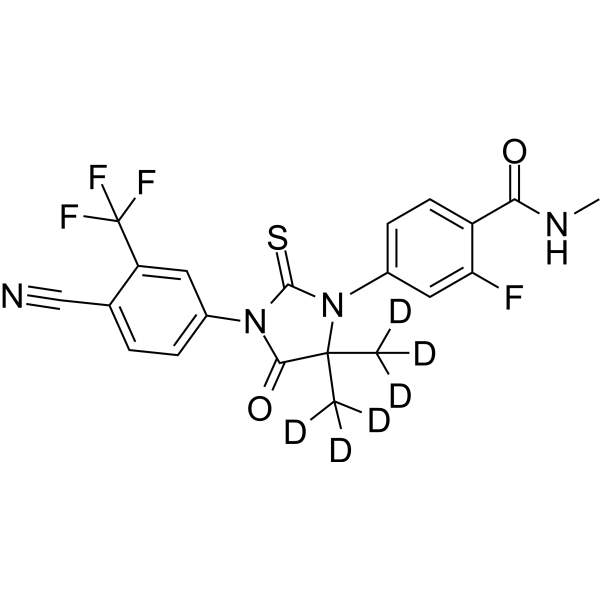
Enzalutamide-d6 (MDV3100-d6) is a deuterium labeled Enzalutamide (MDV3100). Enzalutamide is an androgen receptor (AR) antagonist with an IC50 of 36 nM in LNCaP prostate cells .
|
-
-
- HY-70002S
-
|
|
|
Deutenzalutamide (Enzalutamide-d3) is a developed deuterium labeled Enzalutamide (MDV3100). Enzalutamide is an androgen receptor (AR) antagonist with an IC50 of 36 nM in LNCaP prostate cells .
|
-
-
- HY-16985S
-
|
|
|
Darolutamide-d4 (ODM-201-d4) is deuterium labeled Darolutamide (HY-16985). Darolutamide (ODM-201) is an orally active competitive androgen receptor (AR) antagonist, with a Ki of 11 nM for rat wild-type AR (wtAR) and an IC50 of 26 nM for human wild-type AR (hAR)-mediated transcriptional activation . Darolutamide inhibits testosterone-induced AR nuclear translocation and transcriptional activation . Darolutamide exerts selective effects on AR-positive cells by inhibiting AR-dependent signaling pathways, and its active metabolite retains full antagonistic activity against AR mutants . Darolutamide can be used for the research of prostate cancer, including androgen receptor-dependent prostate cancer .
|
-
-
- HY-19337S1
-
|
|
|
Ketodarolutamide-d6 (BAY 1896953-d6) is the deuterium labeled Ketodarolutamide (HY-19337). Ketodarolutamide (ORM-15341) is a potent, high-affinity nonsteroidal competitive full antagonist of androgen receptor (AR). Ketodarolutamide displays a Ki value of 8 nM for rat wild-type AR and an IC50 value of 38 nM in AR-HEK293 cells . Ketodarolutamide inhibits testosterone-induced nuclear translocation of the AR and antagonizes both overexpressed and mutant ARs . Ketodarolutamide specifically suppresses the proliferation of AR-dependent prostate cancer cells and exhibits antitumor activity in models of castration-resistant prostate cancer (CRPC) . Ketodarolutamide is suitable for the mechanistic and therapeutic research of prostate cancer .
|
-
-
- HY-19337S
-
|
|
|
Ketodarolutamide-d3 (BAY 1896953-d3) is the deuterium labeled Ketodarolutamide (HY-19337). Ketodarolutamide (ORM-15341) is a potent, high-affinity nonsteroidal competitive full antagonist of androgen receptor (AR). Ketodarolutamide displays a Ki value of 8 nM for rat wild-type AR and an IC50 value of 38 nM in AR-HEK293 cells . Ketodarolutamide inhibits testosterone-induced nuclear translocation of the AR and antagonizes both overexpressed and mutant ARs . Ketodarolutamide specifically suppresses the proliferation of AR-dependent prostate cancer cells and exhibits antitumor activity in models of castration-resistant prostate cancer (CRPC) . Ketodarolutamide is suitable for the mechanistic and therapeutic research of prostate cancer .
|
-
| Cat. No. |
Product Name |
|
Classification |
-
- HY-133020
-
|
|
|
PROTAC Synthesis
|
|
ARD-266 is a highly potent and von Hippel-Lindau E3 ligase-based Androgen Receptor (AR) PROTAC degrader. ARD-266 effectively induces degradation of AR protein in AR-positive LNCaP, VCaP, and 22Rv1 prostate cancer cell lines with DC50 values of 0.2-1 nM . ARD-266 is a click chemistry reagent, it contains an Alkyne group and can undergo copper-catalyzed azide-alkyne cycloaddition (CuAAc) with molecules containing Azide groups.
|
Your information is safe with us. * Required Fields.
Inquiry Information
- Product Name:
- Cat. No.:
- Quantity:
- MCE Japan Authorized Agent:








