



Androgen receptor antagonist 1

Based on 1 Customer Validation
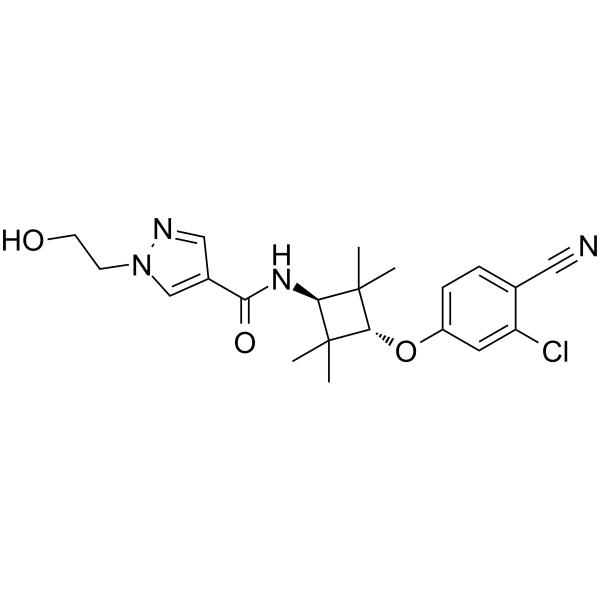
Androgen receptor antagonist 1 is an orally available full androgen receptor (AR) antagonist with an IC50 of 59 nM. Androgen receptor antagonist 1 (Compound 6) can be used in the synthesis of PROTAC AR degraders, which results 24% and 47 % AR protein degradation in LNCaP cells at 1 μM and 10 μM, respectively.
For research use only. We do not sell to patients.
- Purity : 99.64%
- CAS No.: 1338812-36-4
- Formula: C21H25ClN4O3
- Molecular Weight:416.90
-
Storage:Powder -20°C, 3 years , 4°C, 2 years ; In solvent -80°C, 2 years , -20°C, 1 year

To place orders, for customer services and technical support, please contact: MedChemExpress USA
Tel: 609-228-6898 E-mail: [email protected] [email protected]


-
 Biological Activity
-
Chemical Information
-
Solvent & Solubility
- Purity & Documentation
- References
-
 Help & FAQs


-
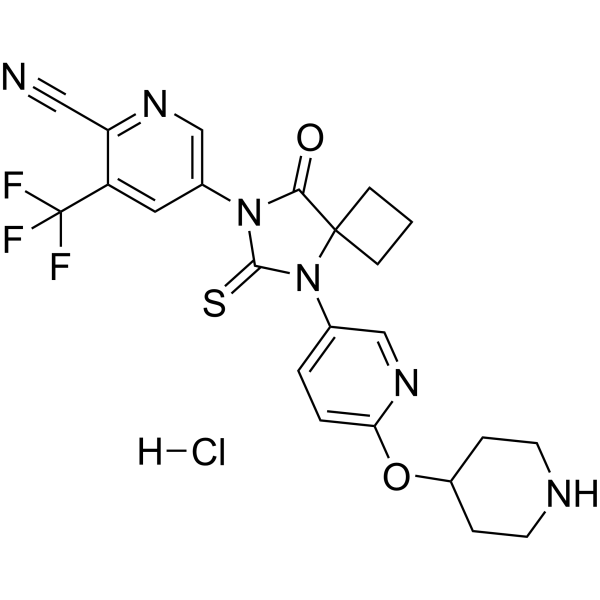
HY-115282A
JNJ-63576253 -
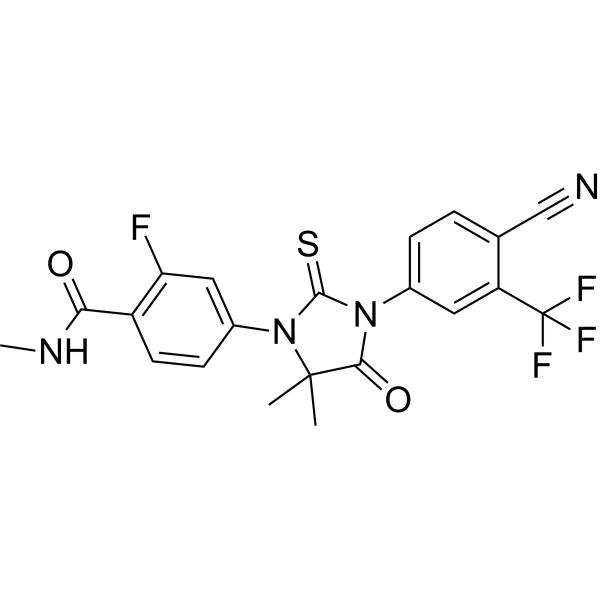
HY-70002
Enzalutamide -
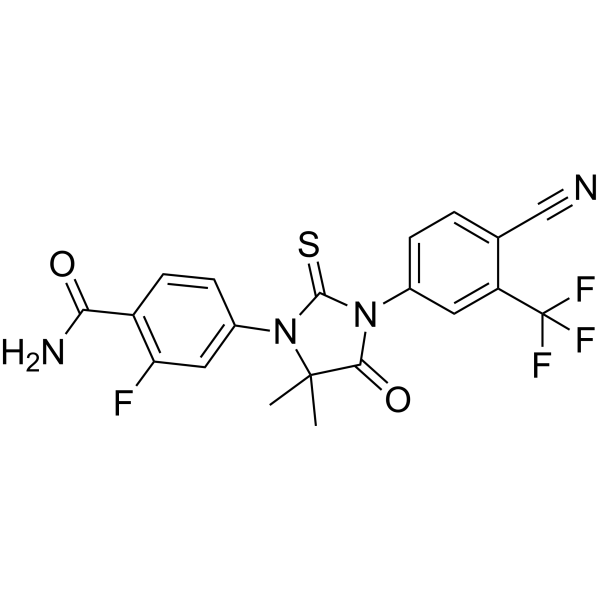
HY-70002A
N-Desmethyl enzalutamide -
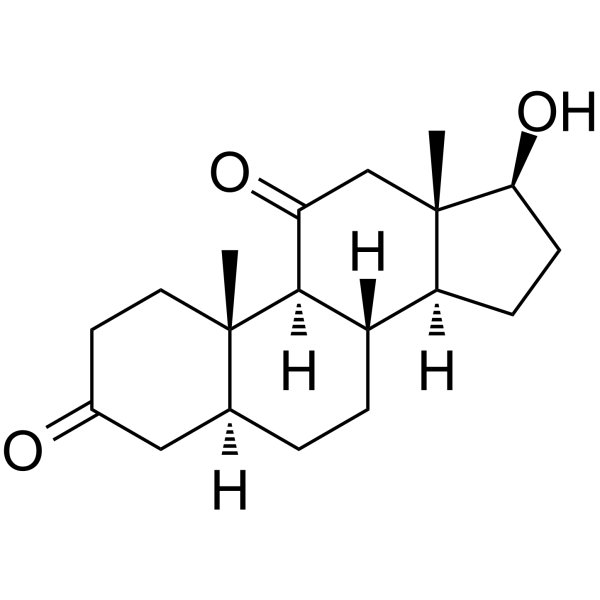
HY-135794
11-Ketodihydrotestosterone -
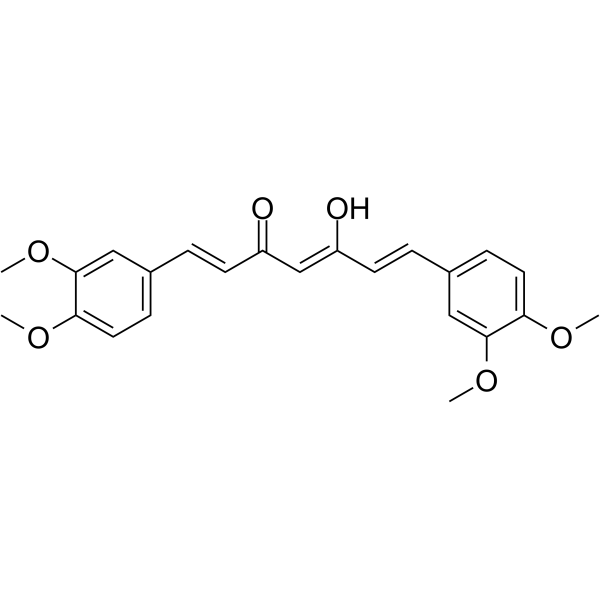
HY-15194
Dimethylcurcumin -
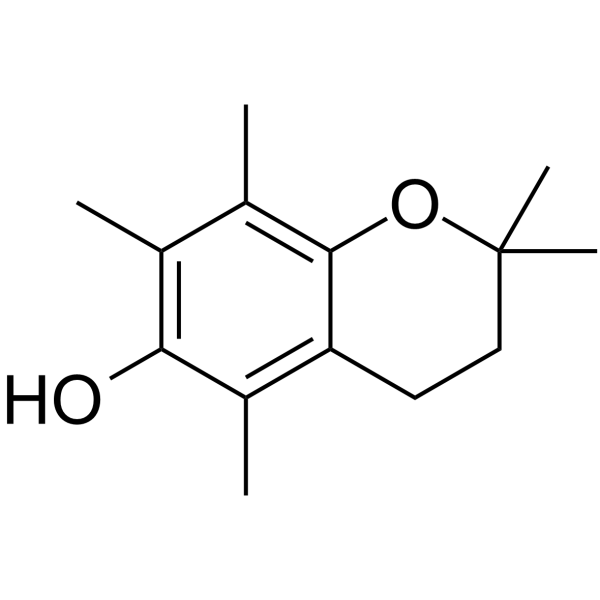
HY-111024
2,2,5,7,8-Pentamethyl-6-Chromanol -
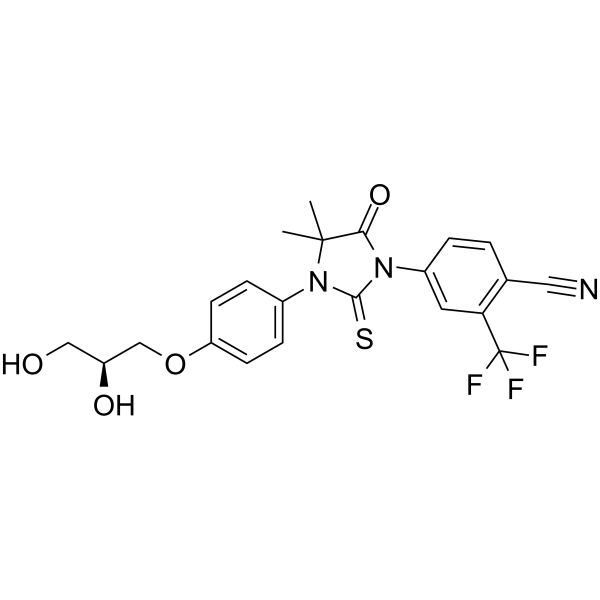
HY-137448
Rezvilutamide -
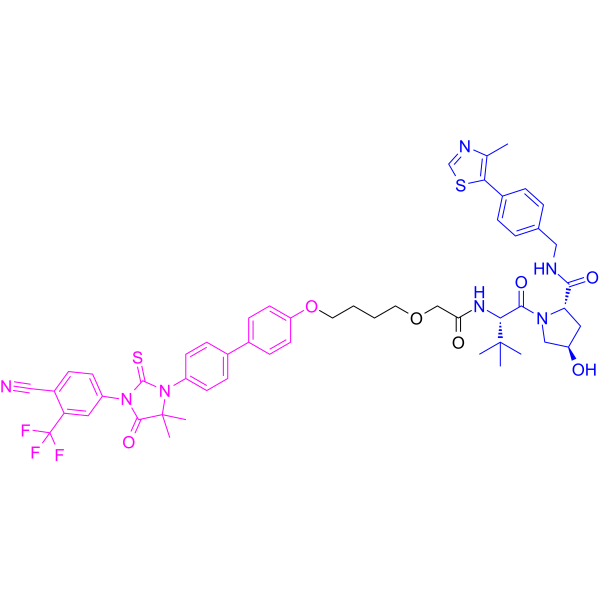
HY-130492
ARCC-4 -
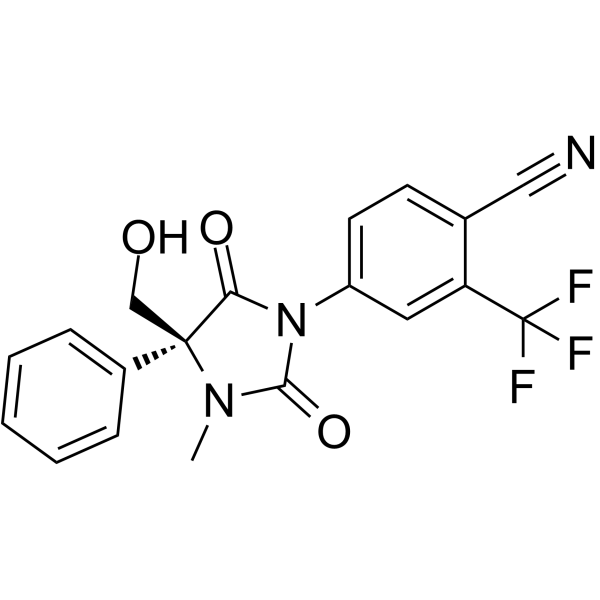
HY-18102
GLPG0492 -
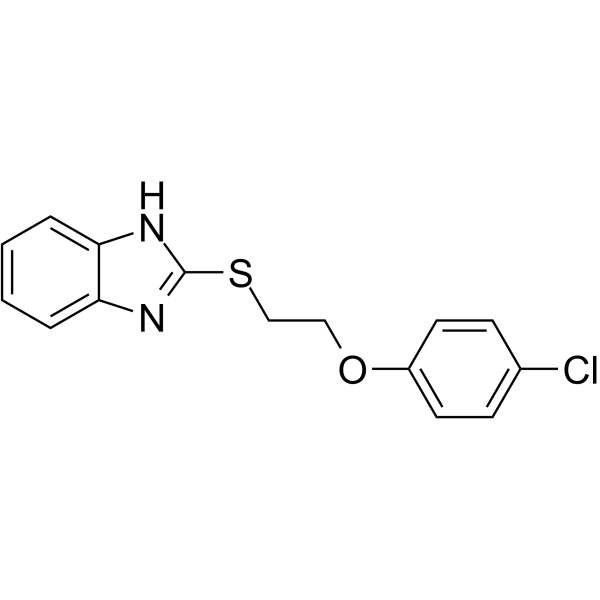
HY-141487
CLP-3094 -
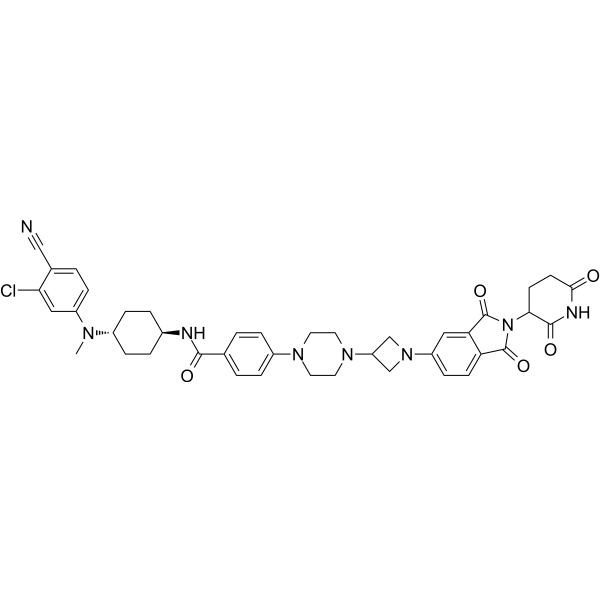
HY-139436
ARD-2585 -
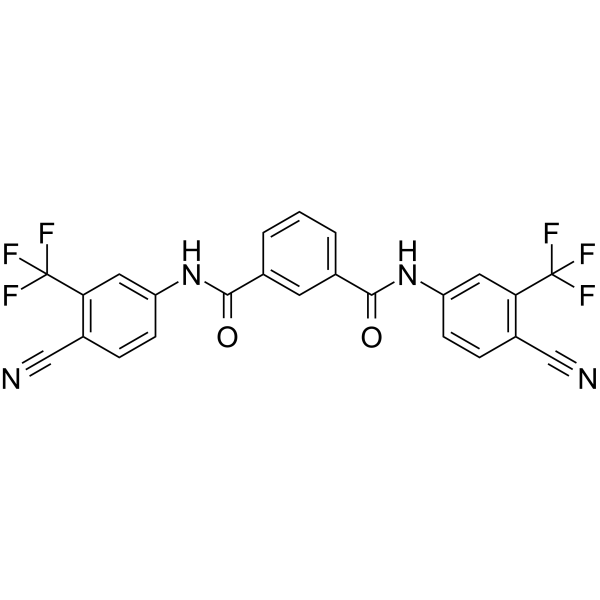
HY-114165
DJ-V-159


Biological Activity
Description
IC50 & Target
IC50: 59 nM (androgen receptor)[1]
Cellular Effect
|
Cell Line

|
Type | Value | Description | References |
|---|---|---|---|---|
| CWR22R | IC50 |
>10 μM
Compound: 6
|
Cytotoxicity against AR-positive human 22Rv1 cells assessed as inhibition of cell growth incubated for 7 days in regular culture medium by WST-8 assay
Cytotoxicity against AR-positive human 22Rv1 cells assessed as inhibition of cell growth incubated for 7 days in regular culture medium by WST-8 assay
|
[PMID: 30629437] |
| LNCaP | IC50 |
48 nM
Compound: 6
|
Cytotoxicity against AR-positive human LNCaP cells assessed as inhibition of cell growth incubated for 7 days in presence of AR agonist, R1881 in charcoal stripped medium by WST-8 assay
Cytotoxicity against AR-positive human LNCaP cells assessed as inhibition of cell growth incubated for 7 days in presence of AR agonist, R1881 in charcoal stripped medium by WST-8 assay
|
[PMID: 30629437] |
| LNCaP | IC50 |
59 nM
Compound: 26
|
Antagonist activity at human AR overexpressed in human LNCAP cells by luciferase reporter gene assay
Antagonist activity at human AR overexpressed in human LNCAP cells by luciferase reporter gene assay
|
[PMID: 21936524] |
| LNCaP | IC50 |
59 nM
Compound: 72
|
Antiproliferative activity against human LNCaP cells
Antiproliferative activity against human LNCaP cells
|
[PMID: 35786895] |
| LNCaP | IC50 |
64.5 nM
Compound: 41
|
Antiproliferative activity against AR-positive human LNCAP cells incubated for 7 days in presence of AR agonist, R1881 by WST-8 assay
Antiproliferative activity against AR-positive human LNCAP cells incubated for 7 days in presence of AR agonist, R1881 by WST-8 assay
|
[PMID: 31804827] |
| VCaP | IC50 |
147.9 nM
Compound: 6
|
Cytotoxicity against AR-positive human VCaP cells assessed as inhibition of cell growth incubated for 7 days in presence of AR agonist, R1881 in charcoal stripped medium by WST-8 assay
Cytotoxicity against AR-positive human VCaP cells assessed as inhibition of cell growth incubated for 7 days in presence of AR agonist, R1881 in charcoal stripped medium by WST-8 assay
|
[PMID: 30629437] |
| VCaP | IC50 |
182 nM
Compound: 41
|
Antiproliferative activity against AR- positive human VCaP cells incubated for 7 days in presence of AR agonist, R1881 by WST-8 assay
Antiproliferative activity against AR- positive human VCaP cells incubated for 7 days in presence of AR agonist, R1881 by WST-8 assay
|
[PMID: 31804827] |
In Vitro
Androgen receptor antagonist 1 (Compound 26; 1 nM-100 μM) shows significant cell growth inhibition effects for LNCaP and LNAR cells but not DU145 cells[1].
MedChemExpress (MCE) has not independently confirmed the accuracy of these methods. They are for reference only.
-
Cell Line:Prostate cancer (CaP) cells (LNCAP, LNAR, and DU145)
-
Concentration:1 nM, 10 nM, 100 nM, 1 μM, 10 μM, 100 μM
-
Incubation Time:7 days
-
Result:Antiproliferative effects of in LNCAP and LNAR cells.
In Vivo
MedChemExpress (MCE) has not independently confirmed the accuracy of these methods. They are for reference only.
-
Animal Model:Male athymic nude mice with LNCaP xenograft model of CRPC[1]
-
Dosage:100 mg/kg
-
Administration:Orally once a day for 5 weeks
-
Result:Demonstrated outstanding efficacy in inhibiting tumor growth. At the given doses (100 mg/kg once a day) nearly completely suppressed tumor growth (by 90 %) and the PSA levels (78%) after 5 weeks, with no detectable body weight loss for the period of time when animals were treated.


Chemical Information
-
CAS No. 1338812-36-4
-
Appearance Solid
-
Molecular Weight 416.90
-
Formula C21H25ClN4O3
-
Color White to off-white
-
SMILES
O=C(C1=CN(CCO)N=C1)N[C@H]2C(C)(C)[C@H](OC3=CC=C(C#N)C(Cl)=C3)C2(C)C
-
Shipping
Room temperature in continental US; may vary elsewhere.
-
Storage
Powder -20°C 3 years 4°C 2 years In solvent -80°C 2 years -20°C 1 year


Solvent & Solubility
In Vitro:
DMSO : 100 mg/mL (239.87 mM; Need ultrasonic; Hygroscopic DMSO has a significant impact on the solubility of product, please use newly opened DMSO)
Please refer to the solubility information to select the appropriate solvent. Once prepared, please aliquot and store the solution to prevent product inactivation from repeated freeze-thaw cycles.
Storage method and period of stock solution: -80°C, 2 years; -20°C, 1 year. When stored at -80°C, please use it within 2 years. When stored at -20°C, please use it within 1 year.
Please refer to the solubility information to select the appropriate solvent. Once prepared, please aliquot and store the solution to prevent product inactivation from repeated freeze-thaw cycles.
Storage method and period of stock solution: -80°C, 2 years; -20°C, 1 year. When stored at -80°C, please use it within 2 years. When stored at -20°C, please use it within 1 year.
Concentration (start) × Volume (start) = Concentration (final) × Volume (final)
In Vivo:
Select the appropriate dissolution method based on your experimental animal and administration route.
- For the following dissolution methods, please ensure to first prepare a clear stock solution using an In Vitro approach and then sequentially add co-solvents:
- To ensure reliable experimental results, the clarified stock solution can be appropriately stored based on storage conditions. As for the working solution for In Vivo experiments, it is recommended to prepare freshly and use it on the same day.
- The percentages shown for the solvents indicate their volumetric ratio in the final prepared solution. If precipitation or phase separation occurs during preparation, heat and/or sonication can be used to aid dissolution.
In Vivo Dissolution Calculator
Please enter the basic information of animal experiments:
-
-
-
-
Recommended: Prepare an additional quantity of animals to account for potential losses during experiments.
Please enter your animal formula composition:
-
%DMSO +
Recommended: Keep the proportion of DMSO in working solution below 2% if your animal is weak.
-
%+
-
+%Tween-80 + +
-
%Saline +
The co-solvents required include: DMSO, . All of co-solvents are available by MedChemExpress (MCE). , Tween 80. All of co-solvents are available by MedChemExpress (MCE).
Working solution concentration: 0.22 mg/mL
Method for preparing stock solution: mg drug dissolved in μL DMSO. Stock solution concentration: mg/mL.
1. Take μL DMSO stock solution;
2. Add μL .
μL , mix evenly;
3. Then add μL Tween 80, mix evenly;
4. Then add μL
Please ensure that the stock solution in the first step is dissolved to a clear state, and add co-solvents in sequence. You can use ultrasonic heating (ultrasonic cleaner, recommended frequency 20-40 kHz), vortexing, etc. to assist dissolution.


Purity & Documentation
-
Data Sheet (272 KB)
-
SDS (251 KB)
- English - EN (251 KB)
- Français - FR (251 KB)
- Deutsch - DE (251 KB)
- Norwegian - NO (251 KB)
- Español - ES (251 KB)
- Swedish - SV (251 KB)
- Italian - IT (251 KB)
- Korean - KR (251 KB)
- Portuguese - PT (251 KB)
-
Handling Instructions (2659 KB)
References
[1]. Guo C, et al. Discovery of aryloxy tetramethylcyclobutanes as novel androgen receptor antagonists. J Med Chem. 2011 Nov 10;54(21):7693-704. [Content Brief]
[2]. Han X, et al. Discovery of ARD-69 as a Highly Potent Proteolysis Targeting Chimera (PROTAC) Degrader of Androgen Receptor (AR) for the Treatment of Prostate Cancer. J Med Chem. 2019 Jan 24;62(2):941-964. [Content Brief]


Complete Stock Solution Preparation Table
Please refer to the solubility information to select the appropriate solvent. Once prepared, please aliquot and store the solution to prevent product inactivation from repeated freeze-thaw cycles.
Storage method and period of stock solution: -80°C, 2 years; -20°C, 1 year. When stored at -80°C, please use it within 2 years. When stored at -20°C, please use it within 1 year.
| Optional Solvent | Concentration Solvent Mass | 1 mg | 5 mg | 10 mg | 25 mg |
|---|---|---|---|---|---|
| DMSO | 1 mM | 2.3987 mL | 11.9933 mL | 23.9866 mL | 59.9664 mL |
| 5 mM | 0.4797 mL | 2.3987 mL | 4.7973 mL | 11.9933 mL | |
| 10 mM | 0.2399 mL | 1.1993 mL | 2.3987 mL | 5.9966 mL | |
| 15 mM | 0.1599 mL | 0.7996 mL | 1.5991 mL | 3.9978 mL | |
| 20 mM | 0.1199 mL | 0.5997 mL | 1.1993 mL | 2.9983 mL | |
| 25 mM | 0.0959 mL | 0.4797 mL | 0.9595 mL | 2.3987 mL | |
| 30 mM | 0.0800 mL | 0.3998 mL | 0.7996 mL | 1.9989 mL | |
| 40 mM | 0.0600 mL | 0.2998 mL | 0.5997 mL | 1.4992 mL | |
| 50 mM | 0.0480 mL | 0.2399 mL | 0.4797 mL | 1.1993 mL | |
| 60 mM | 0.0400 mL | 0.1999 mL | 0.3998 mL | 0.9994 mL | |
| 80 mM | 0.0300 mL | 0.1499 mL | 0.2998 mL | 0.7496 mL | |
| 100 mM | 0.0240 mL | 0.1199 mL | 0.2399 mL | 0.5997 mL |


Androgen receptor antagonist 1 Related Classifications
HY-130992 Related Classifications
 Powered by Bioz