



GLPG0492
Based on 7 publication(s) in Google Scholar
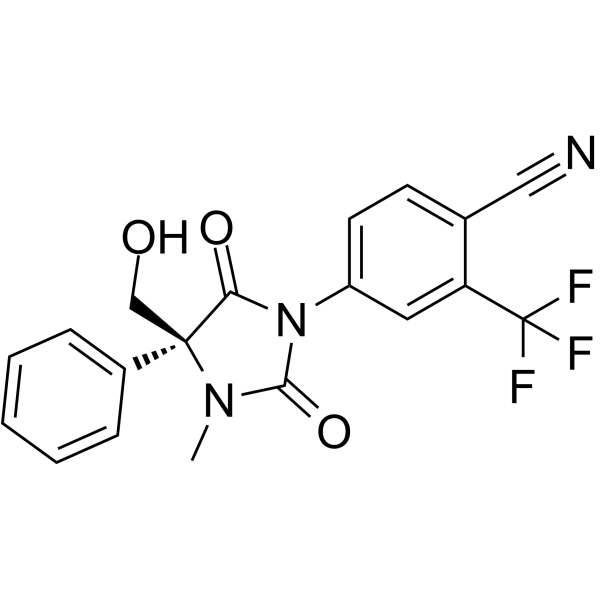
GLPG0492 is an orally active, non-steroidal selective androgen receptor modulator. GLPG0492 exerts functional transactivation by binding to the ligand-binding domain of the receptor, exhibiting preferential partial agonist activity in muscle and bone tissues with low activity in reproductive tissues. GLPG0492 effectively counteracts muscle atrophy-related pathways, significantly enhances muscle strength, maintains motor ability, reduces fibrosis and improves electrophysiological parameters. GLPG0492 prevents immobilization-induced muscle atrophy and regulates muscle mass homeostasis, serving as a valuable tool compound for studies on Duchenne muscular dystrophy, muscle loss and various types of disuse musculoskeletal atrophy.
For research use only. We do not sell to patients.
- Purity : 99.85%
- CAS No.: 1215085-92-9
- Formula: C19H14F3N3O3
- Molecular Weight:389.33
-
Storage:Powder -20°C, 3 years , 4°C, 2 years ; In solvent -80°C, 2 years , -20°C, 1 year

To place orders, for customer services and technical support, please contact: MedChemExpress USA
Tel: 609-228-6898 E-mail: [email protected] [email protected]


-
 Biological Activity
-
Chemical Information
-
Solvent & Solubility
- Protocols
- Purity & Documentation
- References
-
 Help & FAQs


-
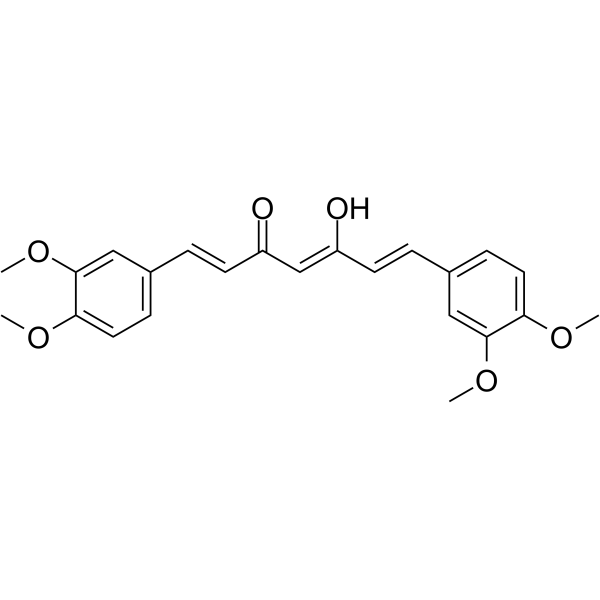
HY-15194
DimethylcurcuminAndrogen Receptor Inhibitor -
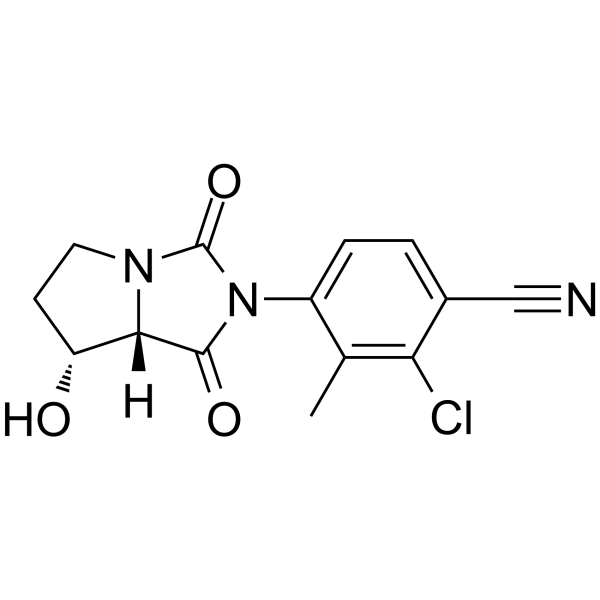
HY-12111
BMS-564929Androgen Receptor Agonist -
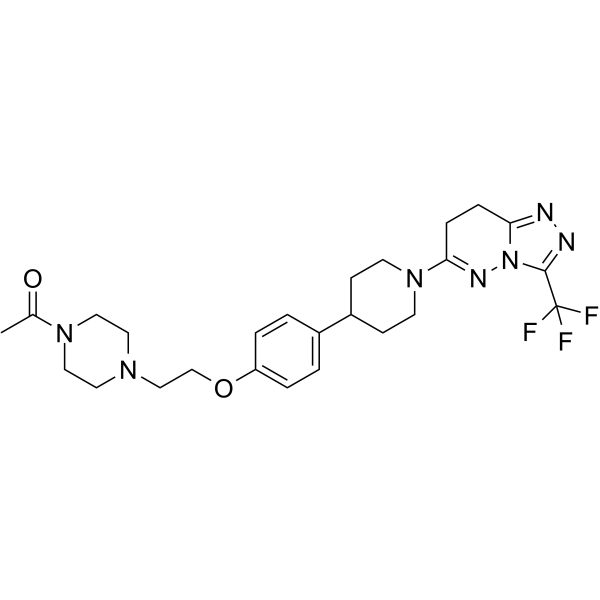
HY-16079
AZD3514AR Inhibitor -
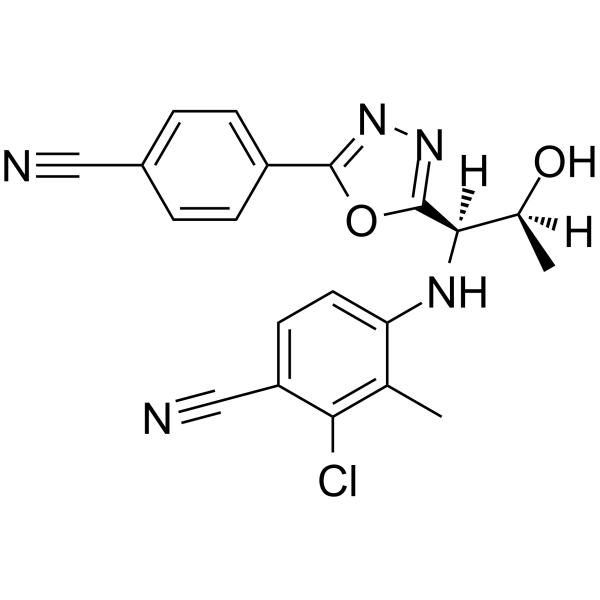
HY-14383
VosilasarmAndrogen Receptor Modulator -
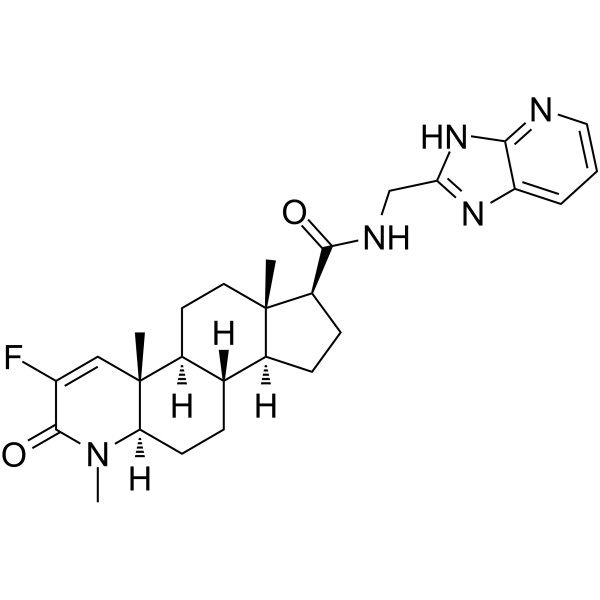
HY-11027
MK-0773Androgen Receptor Inhibitor -
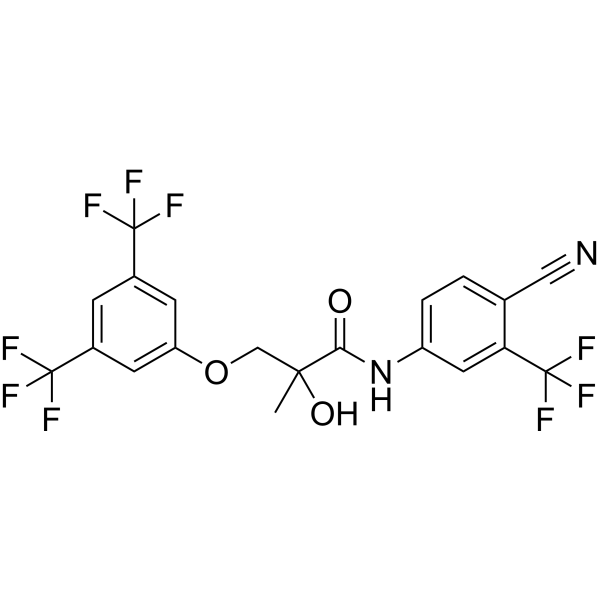
HY-135732
SK33Anti-androgen -
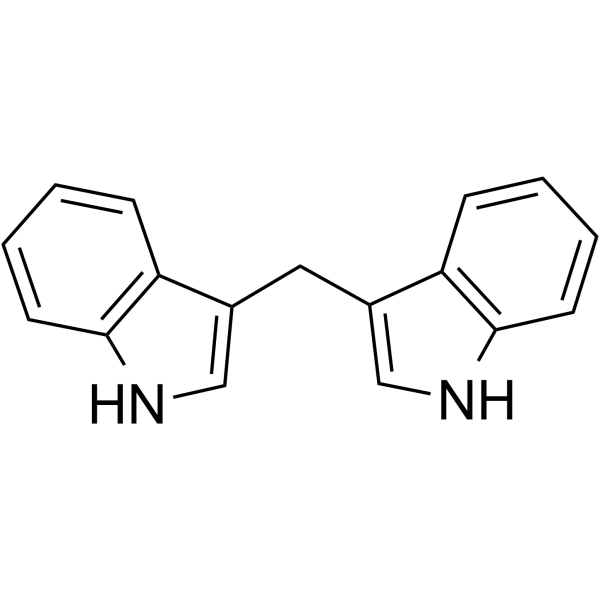
HY-15758
3,3'-DiindolylmethaneAndrogen Receptor Antagonist -
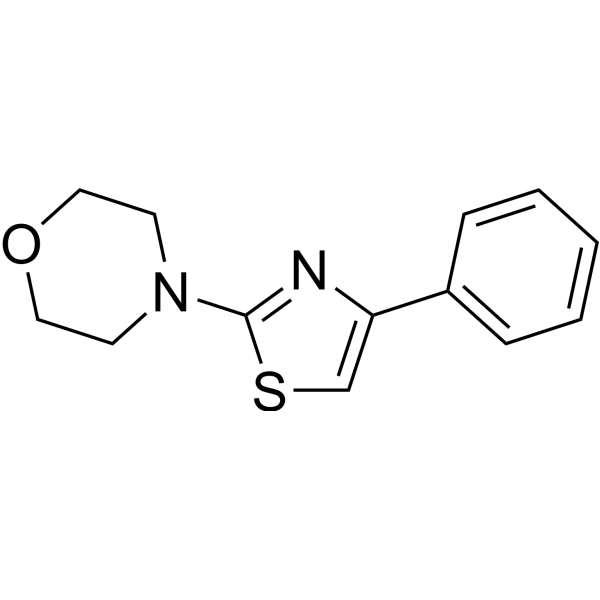
HY-117669
VPC-14228AR-DBD Inhibitor -
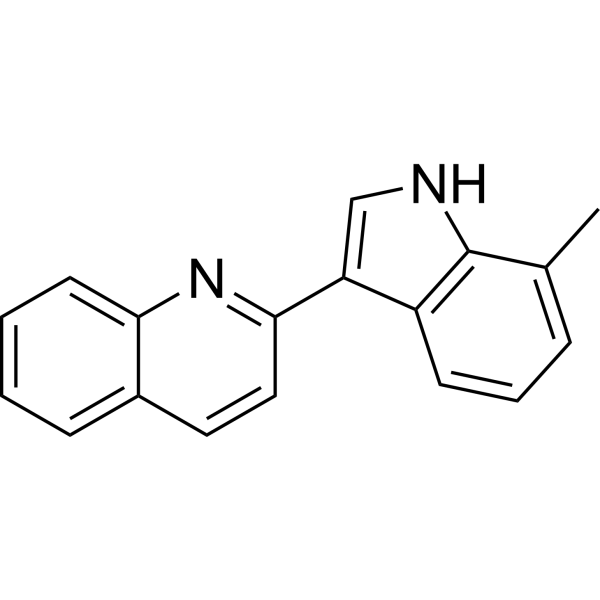
HY-120018
VPC-13566AR Inhibitor -
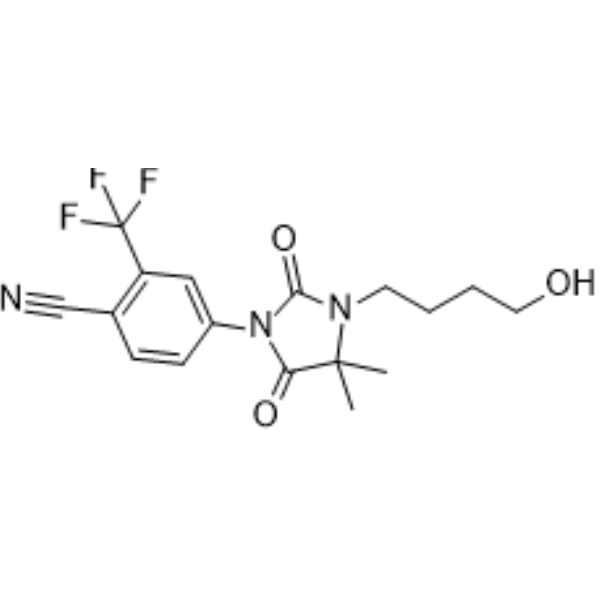
HY-10561
RU 58841Androgen Receptor Antagonist -
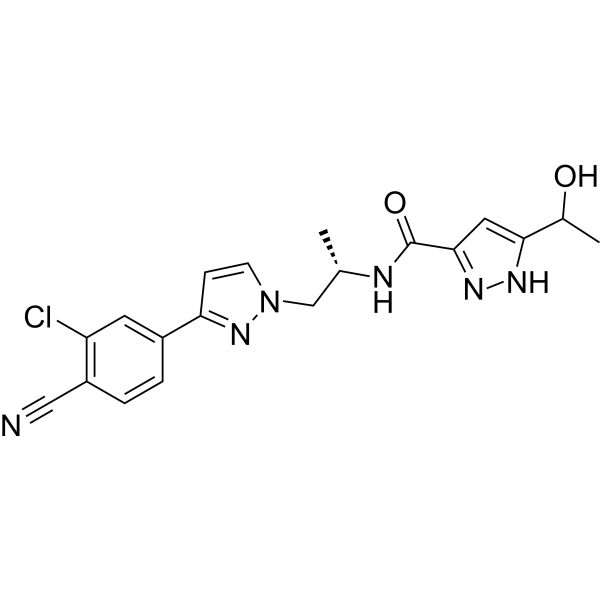
HY-16985
DarolutamideAndrogen Receptor Antagonist -
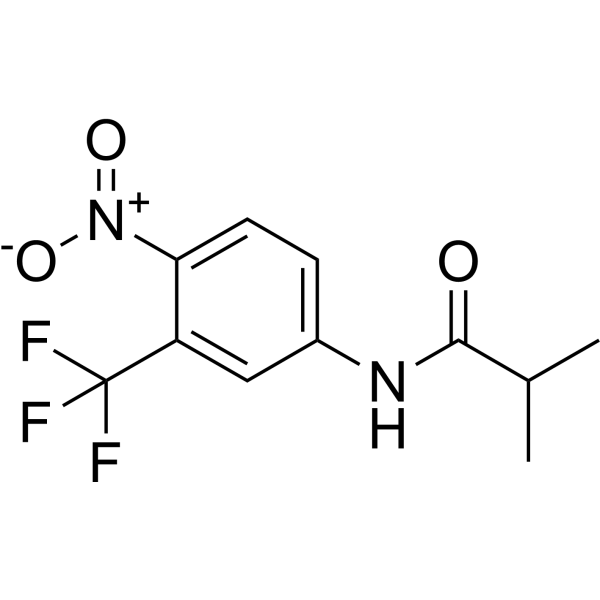
HY-B0022
FlutamideAntiandrogen Agent
Publications Citing Use of MedChemExpress (MCE) GLPG0492
More- Food Chem X. 2019 Sep 24:4:100056. [Abstract]
- J Chromatogr A. 2019 Aug 30:1600:183-196. [Abstract]
- J Steroid Biochem Mol Biol. 2019 May:189:81-86. [Abstract]
- MethodsX. 2020 May 21:7:100926. [Abstract]
- Drug Test Anal. 2021 Feb;13(2):283-298. [Abstract]
- Food Addit Contam Part A Chem Anal Control Expo Risk Assess. 2020 Aug;37(8):1253-1263. [Abstract]
- Rapid Commun Mass Spectrom. 2023 Jul 30;37(14):e9530. [Abstract]


Biological Activity
Description
In Vitro
GLPG0492 (10-12-10-5 M) acts as a weak androgen agonist in yeast androgen screening assays, with an EC50 of 1.30 × 10⁻⁶ M[1].
GLPG0492 (10-11-10-5 M; 24 h) acts as an androgen agonist in human PC3 (AR) 2 prostate cancer cells, with an EC50 of 1.24 × 10⁻⁸ M, and this agonistic activity is antagonized by the antiandrogen drug bicalutamide (HY-14249)[1].
MedChemExpress (MCE) has not independently confirmed the accuracy of these methods. They are for reference only.
In Vivo
GLPG0492 (0.3-30 mg/kg; s.c.; once daily, 6 days per week for 12 weeks) significantly enhances long-term forelimb strength and exercise endurance in mdx mice after exercise, improves the functions of the diaphragm and EDL muscle, reduces the degeneration-regeneration cycle and fibrosis of the diaphragm, and ameliorates cell damage markers in the EDL muscle, with a plateau effect often observed at low doses[2].
GLPG0492 (0.3-30 mg/kg; s.c.; 6 days per week; for 4 to 12 weeks) significantly increases forelimb grip strength, maintains running capacity, improves muscle electrophysiological and histological parameters, and exhibits a dose-dependent therapeutic effect in exercised mdx mice (a model of Duchenne muscular dystrophy)[3].
GLPG0492 (0.3-10 mg/kg; s.c.; once daily for 7 consecutive days) dose-dependently alleviates hindlimb immobilization-induced muscle atrophy in male BALB/cj mice; at doses of 3 and 10 mg/kg/day, it exerts maximal improving effects on muscle mass and myofiber size, without causing damage to reproductive tissues, and regulates key muscle atrophy signaling pathways related to mitochondrial bioenergetics and plasma metabolic markers[4].
MedChemExpress (MCE) has not independently confirmed the accuracy of these methods. They are for reference only.
-
Animal Model:C57BL/10ScSn-Dmdmdx/J mice with Duchenne muscular dystrophy (male, 4-5 weeks old, homogeneous for body weight, forelimb force, exercise resistance, Duchenne muscular dystrophy model with treadmill exercise)[2]
-
Dosage:0.3 mg/kg; 3 mg/kg; 30 mg/kg
-
Administration:s.c.; once daily, 6 days/week; 12 weeks
-
Result:Increased absolute and body weight-normalized forelimb force at T4, T8, and T12 compared to vehicle controls across all doses; 30 mg/kg dose produced the highest absolute forelimb force at T12.\nIncreased treadmill running distance at T4, T8, and T12 compared to vehicle controls across all doses; 3 mg/kg dose maintained maximal activity over 12 weeks, while 0.3 and 3 mg/kg doses were more effective than 30 mg/kg at T4.\nIncreased diaphragm twitch and tetanic tension with 41% and 50% recovery scores relative to wild-type mice at 0.3 mg/kg dose; higher doses showed non-significant upward trends.\nIncreased EDL twitch force at 3 and 30 mg/kg doses; all doses showed non-significant increases in EDL tetanic tension; 3 and 30 mg/kg doses produced wild-type-like EDL resistance to fatigue, while 0.3 and 3 mg/kg doses partially protected against eccentric contraction force drop (non-significant); all doses shifted EDL muscle fibre mechanical threshold voltages to more positive values, reduced rheobase voltage, shortened time constant to reach rheobase, and increased gm compared to vehicle controls.\nReduced diaphragm centrally nucleated fibres from 48 ± 2.4% (vehicle) to 41 ± 1.8% at 0.3 mg/kg dose; all doses reduced total and active TGF-β1 levels in the diaphragm with an inverse dose-dependent relationship (0.3 mg/kg most effective).\nShowed no significant effect on plasma CK or LDH levels at any dose; 3 mg/kg dose resulted in significantly lower body weight gain compared to other groups; no significant effect on trabecular bone structural parameter (BV/TV) observed.
-
Animal Model:mdx mice with Duchenne Muscular Dystrophy[3]
-
Dosage:30 mg/kg (4-week study); 0.3-30 mg/kg (up to 12-week time- and dose-dependent study)
-
Administration:s.c.; 6 days per week; 4 weeks; s.c.; up to 12 weeks
-
Result:Increased maximal forelimb grip strength to 0.168 kg.
Preserved running performance over 4 weeks, while comparator- or vehicle-treated animals showed 30-50% increased fatigue.
Induced a modest but statistically significant increase in diaphragm tetanic tension. Decreased non-muscular tissue area in the diaphragm (greater than that seen with nandrolone).
Significantly improved extensor digitorum longus chloride conductance and mechanical threshold.
Confirmed effect on mouse strength and resistance to fatigue in a separate time- and dose-dependent study, and showed significant efficacy of lower doses on in vivo and ex vivo functional parameters.
-
Animal Model:BALB/cj (male, 10 weeks old, unilateral hindlimb plaster casting for 7 days)[4]
-
Dosage:0.3-10 mg/kg/day
-
Administration:s.c.; daily; 7 days
-
Result:Reduced immobilization-induced gastrocnemius atrophy dose-dependently, with maximal significant effect at 3 and 10 mg/kg/day.
Caused a statistically significant increase in contralateral (non-immobilized) leg gastrocnemius weight at 3 mg/kg/day compared to intact animals.
Increased mean muscle fiber cross-sectional area (FCSA) in immobilized gastrocnemius muscle dose-dependently, with significant effects at all tested doses relative to vehicle-treated immobilized mice, with effects comparable to testosterone propionate and a trend toward greater activity on slow-twitch fibers.
Significantly inhibited immobilization-induced upregulation of MurF1, FoxO1, Myogenin, and IL1β gene expression in tibialis muscle at 10 mg/kg/day.
Significantly increased PGC-1α gene expression and significantly decreased PGC-1α4 gene expression in tibialis muscle at 10 mg/kg/day relative to vehicle-treated immobilized mice.
Did not cause a significant increase in prostate weight or alter circulating testosterone levels at any tested dose. Significantly increased serum levels of glutamine, pyruvate, citrate, fumarate, 3-hydroxybutyrate, acetate, acetone, mannose, and O-acetylcarnitine at 10 mg/kg/day relative to vehicle-treated immobilized mice.
Clinical Trial
| NCT Number | Sponsor | Condition | Start Date |
Phase

|
|---|---|---|---|---|
| NCT01329991 | 2011-05 | PHASE1 |


Chemical Information
-
CAS No. 1215085-92-9
-
Appearance Solid
-
Molecular Weight 389.33
-
Formula C19H14F3N3O3
-
Color White to off-white
-
SMILES
N#CC1=CC=C(N(C(N(C)[C@]2(CO)C3=CC=CC=C3)=O)C2=O)C=C1C(F)(F)F
-
Shipping
Room temperature in continental US; may vary elsewhere.
-
Storage
Powder -20°C 3 years 4°C 2 years In solvent -80°C 2 years -20°C 1 year


Publications (7)
-
Journal Impact Factor
-
Most Recent
-
Food Chem X
Monitoring of selective androgen receptor modulators in bovine muscle tissue by ultra-high performance liquid chromatography-tandem mass spectrometry. [Abstract]2019 Sep 24:4:100056. PMID: 31650129 -
J Chromatogr A
Development and validation of a semi-quantitative ultra-high performance liquid chromatography-tandem mass spectrometry method for screening of selective androgen receptor modulators in urine. [Abstract]2019 Aug 30:1600:183-196. PMID: 31053351 -
J Steroid Biochem Mol Biol
Comparison of the three SARMs RAD-140, GLPG0492 and GSK-2881078 in two different in vitro bioassays, and in an in silico androgen receptor binding assay. [Abstract]2019 May:189:81-86. PMID: 30825507 -
MethodsX
Enhanced UHPLC-MS/MS screening of selective androgen receptor modulators following urine hydrolysis. [Abstract]2020 May 21:7:100926. PMID: 32547930 -
Drug Test Anal
High-throughput liquid chromatography tandem mass spectrometry assay as initial testing procedure for analysis of total urinary fraction. [Abstract]2021 Feb;13(2):283-298. PMID: 32852861 -
Food Addit Contam Part A Chem Anal Control Expo Risk Assess
2020 Aug;37(8):1253-1263. PMID: 32401172 -
Rapid Commun Mass Spectrom
Electrospray ionisation mass spectrometry (ESI-MS) adduct formation by mobile phase additives: A case study using nitrile functional groups containing selective androgen receptor modulators (SARMs). [Abstract]2023 Jul 30;37(14):e9530. PMID: 37125537


Solvent & Solubility
In Vitro:
DMSO : ≥ 50 mg/mL (128.43 mM; Hygroscopic DMSO has a significant impact on the solubility of product, please use newly opened DMSO)
* "≥" means soluble, but saturation unknown.
Please refer to the solubility information to select the appropriate solvent. Once prepared, please aliquot and store the solution to prevent product inactivation from repeated freeze-thaw cycles.
Storage method and period of stock solution: -80°C, 2 years; -20°C, 1 year. When stored at -80°C, please use it within 2 years. When stored at -20°C, please use it within 1 year.
Please refer to the solubility information to select the appropriate solvent. Once prepared, please aliquot and store the solution to prevent product inactivation from repeated freeze-thaw cycles.
Storage method and period of stock solution: -80°C, 2 years; -20°C, 1 year. When stored at -80°C, please use it within 2 years. When stored at -20°C, please use it within 1 year.
Concentration (start) × Volume (start) = Concentration (final) × Volume (final)
In Vivo:
Select the appropriate dissolution method based on your experimental animal and administration route.
- For the following dissolution methods, please ensure to first prepare a clear stock solution using an In Vitro approach and then sequentially add co-solvents:
- To ensure reliable experimental results, the clarified stock solution can be appropriately stored based on storage conditions. As for the working solution for In Vivo experiments, it is recommended to prepare freshly and use it on the same day.
- The percentages shown for the solvents indicate their volumetric ratio in the final prepared solution. If precipitation or phase separation occurs during preparation, heat and/or sonication can be used to aid dissolution.
Add each solvent one by one: 10% DMSO 40% PEG300 5% Tween-80 45% Saline
Solubility: ≥ 2.5 mg/mL (6.42 mM); Clear solution
This protocol yields a clear solution of ≥ 2.5 mg/mL (saturation unknown).
Taking 1 mL working solution as an example, add 100 μL DMSO stock solution (25.0 mg/mL) to 400 μL PEG300, and mix evenly; then add 50 μL Tween-80 and mix evenly; then add 450 μL Saline to adjust the volume to 1 mL.
Preparation of Saline: Dissolve 0.9 g sodium chloride in ddH₂O and dilute to 100 mL to obtain a clear Saline solution.
Add each solvent one by one: 10% DMSO 90% (20% SBE-β-CD in Saline)
Solubility: ≥ 2.5 mg/mL (6.42 mM); Clear solution
This protocol yields a clear solution of ≥ 2.5 mg/mL (saturation unknown).
Taking 1 mL working solution as an example, add 100 μL DMSO stock solution (25.0 mg/mL) to 900 μL 20% SBE-β-CD in Saline, and mix evenly.
Preparation of 20% SBE-β-CD in Saline (4°C, storage for one week): 2 g SBE-β-CD powder is dissolved in 10 mL Saline, completely dissolve until clear.
In Vivo Dissolution Calculator
Please enter the basic information of animal experiments:
-
-
-
-
Recommended: Prepare an additional quantity of animals to account for potential losses during experiments.
Please enter your animal formula composition:
-
%DMSO +
Recommended: Keep the proportion of DMSO in working solution below 2% if your animal is weak.
-
%+
-
+%Tween-80 + +
-
%Saline +
The co-solvents required include: DMSO, . All of co-solvents are available by MedChemExpress (MCE). , Tween 80. All of co-solvents are available by MedChemExpress (MCE).
Working solution concentration: 0.22 mg/mL
Method for preparing stock solution: mg drug dissolved in μL DMSO. Stock solution concentration: mg/mL.
1. Take μL DMSO stock solution;
2. Add μL .
μL , mix evenly;
3. Then add μL Tween 80, mix evenly;
4. Then add μL
Please ensure that the stock solution in the first step is dissolved to a clear state, and add co-solvents in sequence. You can use ultrasonic heating (ultrasonic cleaner, recommended frequency 20-40 kHz), vortexing, etc. to assist dissolution.


Purity & Documentation
-
Data Sheet (289 KB)
-
SDS (251 KB)
- English - EN (251 KB)
- Français - FR (251 KB)
- Deutsch - DE (251 KB)
- Norwegian - NO (251 KB)
- Español - ES (251 KB)
- Swedish - SV (251 KB)
- Italian - IT (251 KB)
- Korean - KR (251 KB)
- Portuguese - PT (251 KB)
-
Handling Instructions (2659 KB)
References
[1]. Zierau O, et al. Comparison of the three SARMs RAD-140, GLPG0492 and GSK-2881078 in two different in vitro bioassays, and in an in silico androgen receptor binding assay. J Steroid Biochem Mol Biol. 2019;189:81-86. [Content Brief]
[2]. Cozzoli A, et al. GLPG0492, a novel selective androgen receptor modulator, improves muscle performance in the exercised-mdx mouse model of muscular dystrophy. Pharmacol Res. 2013;72:9-24. [Content Brief]
[4]. Blanqué R, et al. Characterization of GLPG0492, a selective androgen receptor modulator, in a mouse model of hindlimb immobilization. BMC Musculoskelet Disord. 2014;15:291. Published 2014 Sep 3. [Content Brief]


Complete Stock Solution Preparation Table
Please refer to the solubility information to select the appropriate solvent. Once prepared, please aliquot and store the solution to prevent product inactivation from repeated freeze-thaw cycles.
Storage method and period of stock solution: -80°C, 2 years; -20°C, 1 year. When stored at -80°C, please use it within 2 years. When stored at -20°C, please use it within 1 year.
| Optional Solvent | Concentration Solvent Mass | 1 mg | 5 mg | 10 mg | 25 mg |
|---|---|---|---|---|---|
| DMSO | 1 mM | 2.5685 mL | 12.8426 mL | 25.6852 mL | 64.2129 mL |
| 5 mM | 0.5137 mL | 2.5685 mL | 5.1370 mL | 12.8426 mL | |
| 10 mM | 0.2569 mL | 1.2843 mL | 2.5685 mL | 6.4213 mL | |
| 15 mM | 0.1712 mL | 0.8562 mL | 1.7123 mL | 4.2809 mL | |
| 20 mM | 0.1284 mL | 0.6421 mL | 1.2843 mL | 3.2106 mL | |
| 25 mM | 0.1027 mL | 0.5137 mL | 1.0274 mL | 2.5685 mL | |
| 30 mM | 0.0856 mL | 0.4281 mL | 0.8562 mL | 2.1404 mL | |
| 40 mM | 0.0642 mL | 0.3211 mL | 0.6421 mL | 1.6053 mL | |
| 50 mM | 0.0514 mL | 0.2569 mL | 0.5137 mL | 1.2843 mL | |
| 60 mM | 0.0428 mL | 0.2140 mL | 0.4281 mL | 1.0702 mL | |
| 80 mM | 0.0321 mL | 0.1605 mL | 0.3211 mL | 0.8027 mL | |
| 100 mM | 0.0257 mL | 0.1284 mL | 0.2569 mL | 0.6421 mL |


GLPG0492 Related Classifications
HY-18102 Related Classifications
 Powered by Bioz
Keywords
- GLPG0492
- 1215085-92-9
- GLPG 0492
- GLPG-0492
- Androgen Receptor
- androgen receptor ligand binding domain
- male BALB/cj mice
- musculoskeletal atrophy
- diaphragm fibrosis
- human PC3(AR)2 prostate carcinoma cells
- mdx mice
- Duchenne muscular dystrophy
- muscle atrophy pathways
- androgen receptor signaling
- muscular dystrophy
- Inhibitor
- inhibitor
- inhibit