1. Search Result
Search Result
Pathways Recommended: Anti-infection
Results for "

C. albicans infections

" in MedChemExpress (MCE) Product Catalog:

26

Inhibitors & Agonists

3

Peptides

9

Natural
Products

Cat. No. Product Name Target Research Areas Chemical Structure
  • HY-N6647
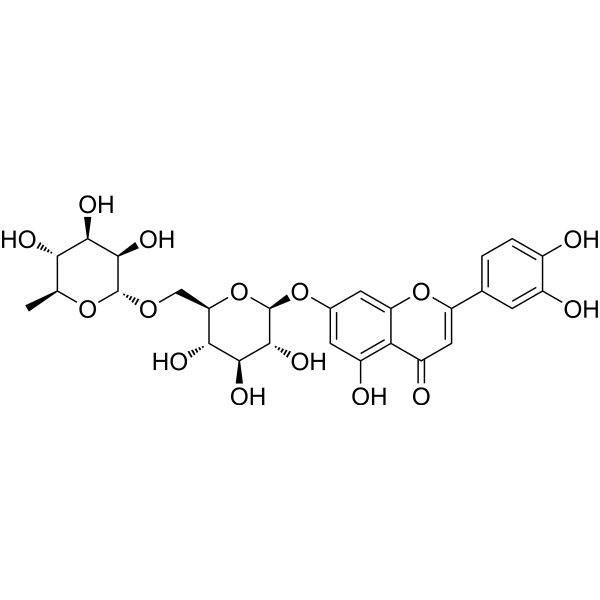
    Luteolin-7-rutinoside
    1 Publications Verification

    Fungal Infection Inflammation/Immunology
    Luteolin-7-rutinoside has both anti-arthritic and antifungal activities, can result in a combination therapy for the treatment of fungal arthritis due to C. albicans infection.
    Luteolin-7-rutinoside
  • HY-P10408

    EGFR MMP Calcium Channel NOD-like Receptor (NLR) ERK p38 MAPK Infection Inflammation/Immunology
    Candidalysin is a cytolytic peptide toxin secreted by the fungus Candida albicans. Candidalysin drives epithelial immune responses by activating the EGFR-MAPK signaling pathway, inducing MMP expression and calcium influx, and regulating the c-Fos transcription factor and MKP1 via p38 MAPK and ERK1/2 respectively. Candidalysin is essential for mucosal and systemic infections, activating NLRP3 to promote inflammatory responses, neutrophil recruitment, and Th17 immunity. Candidalysin activates LDH causing membrane damage and exhibiting cytotoxicity
    Candidalysin
  • HY-B0914

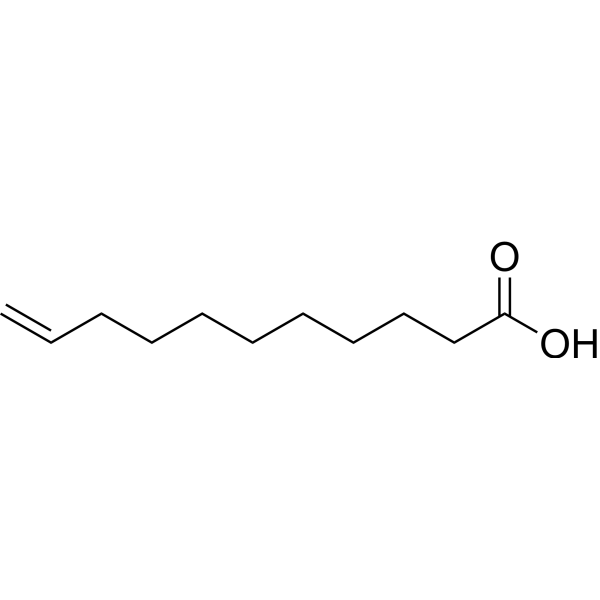
    Undecylenic acid

    Environmental Pollutants Bacterial Fungal Proteasome Amyloid-β Reactive Oxygen Species (ROS) Infection Neurological Disease Endocrinology Cancer
    10-Undecenoic acid (Undecylenic acid) is an antifungal agent. 10-Undecenoic acid inhibits oligomerization, scavenges ROS and inhibits μ-calpain activity. 10-Undecenoic acid has neuroprotective effects. 10-Undecenoic acid has anticancer effects on a variety of tumors. 10-Undecenoic acid inhibits C. albicans biofilm formation and MRSA infection. 10-Undecenoic acid inhibits quorum sensing signals of Bacillus subtilis and Pseudomonas aeruginosa .
    10-Undecenoic acid,98% (stabilized with TBC)
  • HY-106228

    Fungal Bacterial Glutathione Peroxidase Infection
    HLF1-11, a human lactoferrin-derived peptide, is a broad spectrum antimicrobial agent. HLF1-11 inhibits human MPO activity. HLF1-11 also directs GM-CSF-driven monocyte differentiation toward macrophages, and enhances immune responses .
    HLF1-11
  • HY-B0914A
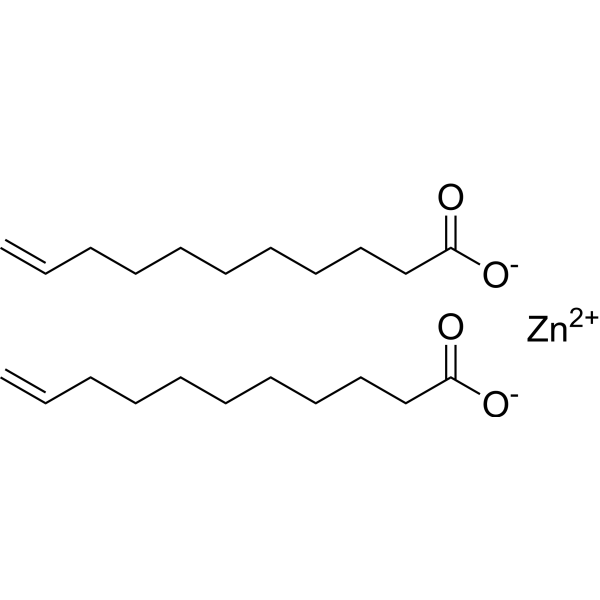
    10-Undecenoic acid zinc salt
    2 Publications Verification

    Zinc undecylenate

    Fungal Bacterial Amyloid-β Reactive Oxygen Species (ROS) Proteasome Infection Neurological Disease Endocrinology Cancer
    10-Undecenoic acid zinc salt (Undecylenic acid zinc salt) is an antifungal agent. 10-Undecenoic acid zinc salt inhibits oligomerization, scavenges ROS and inhibits μ-calpain activity. 10-Undecenoic acid zinc salt has neuroprotective effects. 10-Undecenoic acid zinc salt has anticancer effects on a variety of tumors. 10-Undecenoic acid zinc salt inhibits C. albicans biofilm formation and MRSA infection. 10-Undecenoic acid zinc salt inhibits quorum sensing signals of Bacillus subtilis and Pseudomonas aeruginosa .
    10-Undecenoic acid zinc salt
  • HY-N1341

    HCV HCV Protease DNA/RNA Synthesis Bacterial Infection
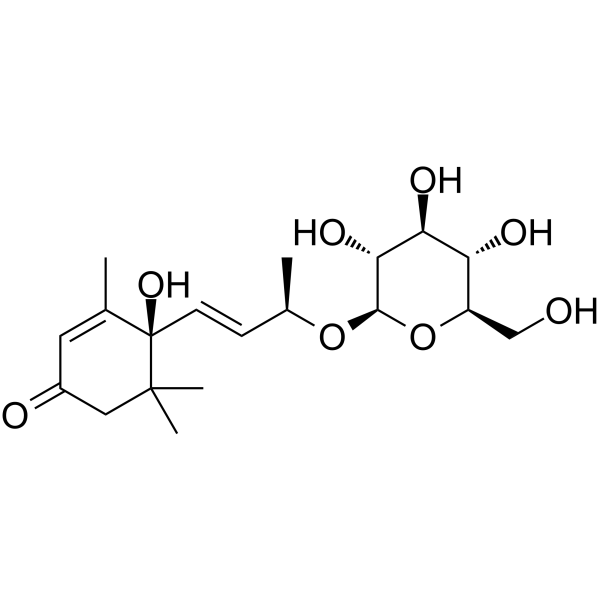
    Roseoside is an inhibitor of DNA gyrase and HAV 3C protease, and also inhibits HCV NS5A/B replicase in human systems with an IC50 of 20 μM. Roseoside binds to the active site of enzymes and stabilizes the interaction by forming hydrogen bonds with key amino acid residues. Roseoside inhibits the growth of Gram-positive bacteria, Gram-negative bacteria, and Candida albicans, and interferes with HCV RNA replication in vitro by inhibiting HCV NS5A/B replicase (IC50=20 μM). Roseoside shows no cytotoxicity and serves as a research tool for studies related to bacterial infections, candidiasis, HAV and HCV .
    Roseoside
  • HY-N8540

    Phosphoglycerate Kinase (PGK) Fungal Apoptosis Infection Cancer
    Ilicicolin H is a selective and non-ATP-competitive phosphoglycerate kinase 1 (PGK1) (IC50 = 9.02 μM) and mitochondrial cytochrome bc1 reductase (IC50 = 2-3 ng/mL) inhibitor. Ilicicolin H directly binds to PGK1 with KD of 60 μM .Ilicicolin H can inhibit cell proliferation and induce apoptosis. Ilicicolin H can inhibit the lactate production and glucose uptake of hepatocellular carcinoma (HCC) cells. Ilicicolin H has a broad antifungal spectrum including C. albicans, Cryptococcus and A. fumigatus. Ilicicolin H can be used for the researches of cancer and infection, such as hepatocellular carcinoma (HCC) and C. albicans infection .
    Ilicicolin H
  • HY-134090

    Antibiotic TS 885; NSC 248958

    Bacterial VSV Infection
    9-Methylstreptimidone is a microbial metabolite originally isolated from Streptomyces sp. S-885 that has antifungal and antiviral activities. It is active against several fungi, including S. sake, S. fragilis, R. rubra, T. rubra, and C. albidus (MICs=4-20 μg/mL) and has antiviral activity against poliovirus, vesicular stomatitis virus (VSV), and Newcastle disease virus (NDV) in vitro (MIC=0.02 μg/mL for all). 9-Methylstreptimidone increases survival in mouse models of infection with influenza A2 (H2N2) or C. albicans when administered prior to infection.
    9-Methylstreptimidone
  • HY-B0914R

    Undecylenic acid (Standard)

    Reference Standards Fungal Amyloid-β Reactive Oxygen Species (ROS) Proteasome Bacterial Infection Neurological Disease Endocrinology Cancer
    10-Undecenoic acid (Standard) is the analytical standard of 10-Undecenoic acid. This product is intended for research and analytical applications. 10-Undecenoic acid (Undecylenic acid) is an antifungal agent. 10-Undecenoic acid inhibits oligomerization, scavenges ROS and inhibits μ-calpain activity. 10-Undecenoic acid has neuroprotective effects. 10-Undecenoic acid has anticancer effects on a variety of tumors. 10-Undecenoic acid inhibits C. albicans biofilm formation and MRSA infection. 10-Undecenoic acid inhibits quorum sensing signals of Bacillus subtilis and Pseudomonas aeruginosa .
    10-Undecenoic acid (Standard)
  • HY-W016288R

    2,3-Naphthalenedicarboxaldehyde (Standard); Naphthalene-2,3-dialdehyde (Standard)

    Fungal Reference Standards Infection
    Naphthalene-2,3-dicarboxaldehyde (Standard) is the analytical standard for Naphthalene-2,3-dicarboxaldehyde (HY-W016288). This product is for research and analytical applications. Naphthalene-2,3-dicarboxaldehyde (NDA) is an effective inhibitor of Candida albicans aspartate semialdehyde dehydrogenase (ASADH), with a Ki value of 45 μM. Naphthalene-2,3-dicarboxaldehyde targets ASADH in the aspartate biosynthetic pathway of Candida albicans. Naphthalene-2,3-dicarboxaldehyde reacts with primary amines to generate highly fluorescent and stable derivatives. Naphthalene-2,3-dicarboxaldehyde serves as a fungistatic agent and a fluorogenic derivatization reagent. Naphthalene-2,3-Dicarboxaldehyde can be used for the research of candidiasis .
    Naphthalene-2,3-dicarboxaldehyde (Standard)
  • HY-N4164

    Fungal Apoptosis Infection Cancer
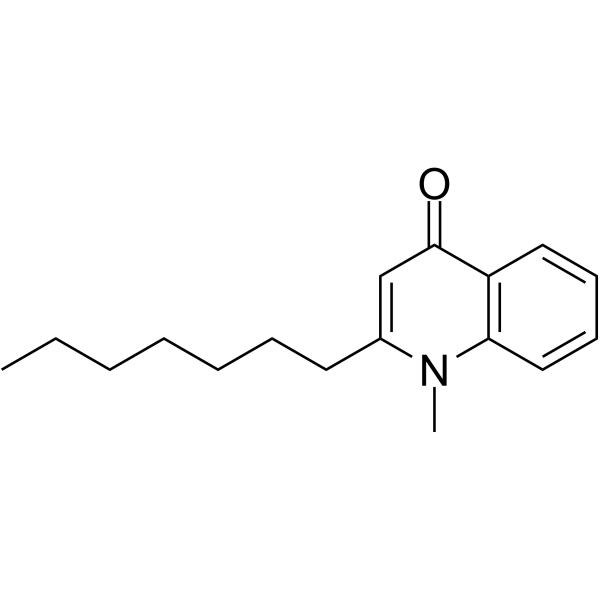
    Schinifoline is a 4-quinolinone found in Zanthoxylum schinifolium. Schinifoline can inhibit cancer cells proliferation, cause G2/M phase arrest and induce apoptosis. Schinifoline can improve radiosensitizing effect of cancer cells. Schinifoline shows anti-fungal activity. Schinifoline can be used for the researches of cancer and infection, such as lung cancer and C. albicans infection .
    Schinifoline
  • HY-P11091

    Bacterial Infection
    PA2-GNU7 is an antimicrobial peptide (AMP). PA2-GNU7 exhibits potent antimicrobial activity with minimal inhibitory concentration (MIC) against P. aeruginosa, E. coli, S. typhimurium, S. aureus, and C. albicans are 2 μM, 1 μM, 2 μM, 2 μM, and 8 μM, respectively. PA2-GNU7 rapidly and selectively kills Pseudomonas aeruginosa without affecting other commensal bacteria. PA2-GNU7 significantly improves survival of mice infected with P. aeruginosa. PA2-GNU7 can be used for the research and development of therapeutic agents against MDR Pseudomonas aeruginosa infections .
    PA2-GNU7
  • HY-151420

    Fungal Infection Cancer
    Chitin synthase inhibitor 10 is a chitin synthase inhibitor. Chitin synthase inhibitor 10 shows excellent chitin synthase inhibitory activity with an IC50 value of 0.11 mM. Chitin synthase inhibitor 10 also is an antifungal agent and has significantly antifungal activity against drug-resistant fungal variants, such as C. albicans and C. neoformans. Chitin synthase inhibitor 10 can be used for the research of invasive fungal infections (IFIs) .
    Chitin synthase inhibitor 10
  • HY-151422

    Fungal Infection Cancer
    Chitin synthase inhibitor 12 is a chitin synthase inhibitor. Chitin synthase inhibitor 12 shows excellent inhibitory activity with an IC50 value of 0.16 mM. Chitin synthase inhibitor 12 also is a broad-spectrum antifungal agent and has significantly antifungal activity against drug-resistant fungal variants, such as C. albicans and C. neoformans. Chitin synthase inhibitor 12 can be used for the research of invasive fungal infections (IFIs) .
    Chitin synthase inhibitor 12
  • HY-163631

    Fungal Endogenous Metabolite Infection
    Antibacterial agent 218 (compound d28) is an orally active sterol 24-C-Methyltransferase inhibitor with the IC50 of 0.273 μM. Antibacterial agent 218 shows antifungal activity against the C.albicans SC5314 with the IC50 of 0.25 μg/mL .
    Antibacterial agent 218
  • HY-172676

    Fungal Casein Kinase Infection
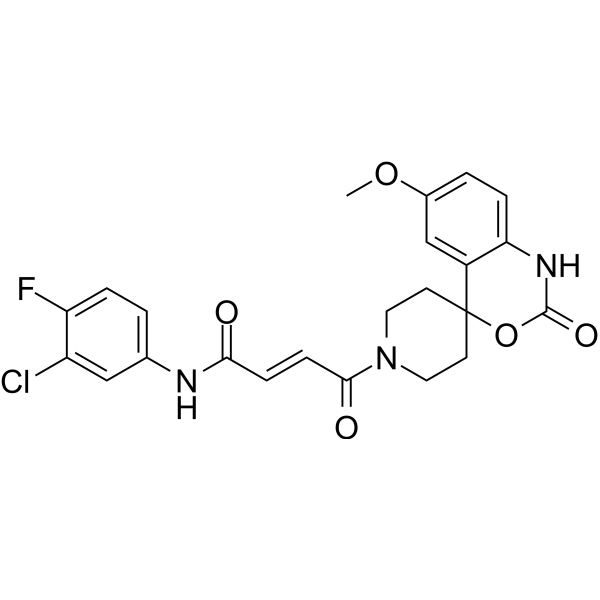
    GW461484A is a small-molecule inhibitor targeting Candida albicans Yck2, with an IC50 of 0.11 µM. It exhibits antifungal activity against C. albicans with a MIC80 of 12.5 µM. GW461484A holds potential for research on fungal diseases, such as drug-resistant Candida infections .
    GW461484A
  • HY-106997

    BAY 10-8888; PLD 118

    Fungal Infection
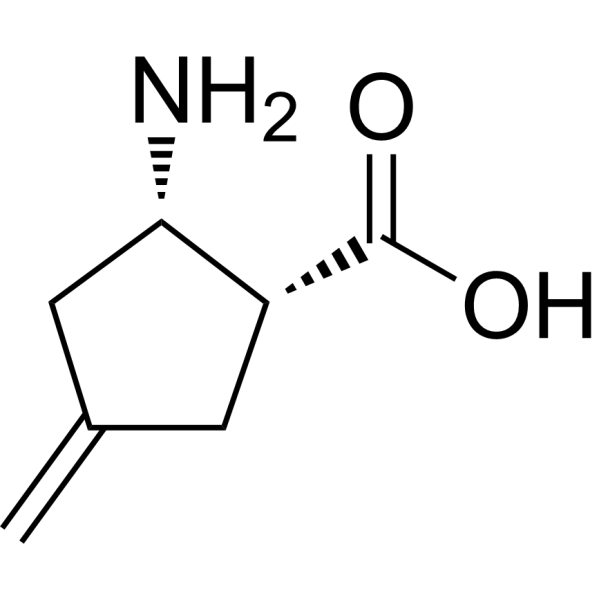
    Icofungipen is an orally active antifungal agent. Icofungipen is the representative of beta amino acids, is toxic against Candida species. Icofungipen protects infected mice survival from C. albicans infection .
    Icofungipen
  • HY-N8296

    Bacterial Infection
    Saccharocarcin A is an antibiotic originally isolated from S. aerocolonigenes subsp. antibiotica. It is active against M. luteus, S. aureus, E. coli, P. aeruginosa, and C. albicans in a disc assay. Saccharocarcin A inhibits C. trachomatis infection by 88% without inducing cytotoxicity in McCoy cells when used at a concentration of 0.5 μg/mL.
    Saccharocarcin A
  • HY-173206

    Fungal Infection
    Antifungal agent 128 (Compound 3ja) is an antifungal agent. When used in combination with Fluconazole (HY-B0101), the MIC range against C. albicans strains is 0.5-4 μg/mL. Antifungal agent 128 can be used in the research of the anti-infection field .
    Antifungal agent 128
  • HY-151421

    Fungal Infection Cancer
    Chitin synthase inhibitor 11 is a chitin synthase inhibitor. Chitin synthase inhibitor 11 shows excellent chitin synthase inhibitory activity with an IC50 value of 0.10 mM. Chitin synthase inhibitor 11 has broad-spectrum antifungal activity in vitro. Chitin synthase inhibitor 11 can be used for the research of invasive fungal infections (IFIs) .
    Chitin synthase inhibitor 11
  • HY-168998

    Fungal Casein Kinase Infection
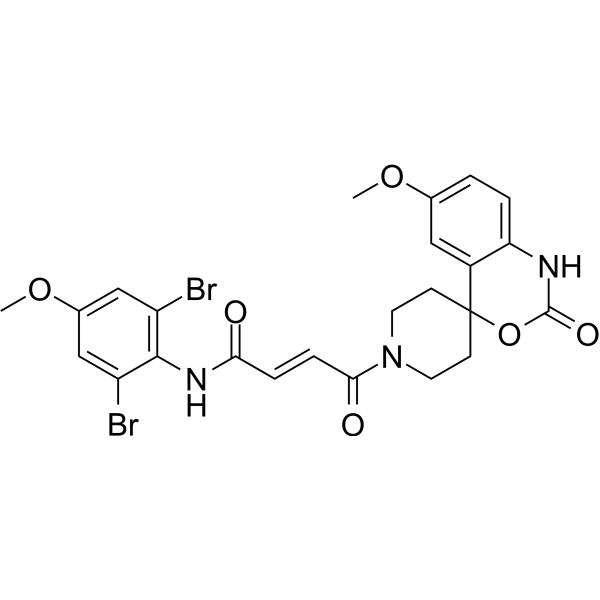
    Yck2-IN-1 (Compound 2a) is an inhibitor of the fungal Candida albicans Yck2 kinase. It exhibits an IC50 of approximately 80 nM against Yck2 and a MIC80 of 12.5 µM against C. albicans, with good metabolic stability (66% remaining in mouse liver microsomes). In a mouse model of drug-resistant candidiasis, Yck2-IN-1 significantly reduced fungal burden in the kidneys. Yck2-IN-1 holds promise for research in the field of antifungal infection .
    Yck2-IN-1
  • HY-B0914B

    Undecylenic acid (copper)

    Fungal Bacterial Amyloid-β Reactive Oxygen Species (ROS) Proteasome Infection Neurological Disease Endocrinology Cancer
    10-Undecenoic acid copper (Undecylenic acid copper) is an antifungal agent. 10-Undecenoic acid copper inhibits oligomerization, scavenges ROS and inhibits μ-calpain activity. 10-Undecenoic acid copper has neuroprotective effects. 10-Undecenoic acid copper has anticancer effects on a variety of tumors. 10-Undecenoic acid copper inhibits C. albicans biofilm formation and MRSA infection. 10-Undecenoic acid copper inhibits quorum sensing signals of Bacillus subtilis and Pseudomonas aeruginosa .
    10-Undecenoic acid (copper)
  • HY-B0914AR

    Zinc undecylenate (Standard)

    Reference Standards Fungal Amyloid-β Reactive Oxygen Species (ROS) Proteasome Bacterial Infection Neurological Disease Endocrinology Cancer
    10-Undecenoic acid (zinc salt) (Standard) is the analytical standard of 10-Undecenoic acid (zinc salt). This product is intended for research and analytical applications. 10-Undecenoic acid zinc salt (Undecylenic acid zinc salt) is an antifungal agent. 10-Undecenoic acid zinc salt inhibits oligomerization, scavenges ROS and inhibits μ-calpain activity. 10-Undecenoic acid zinc salt has neuroprotective effects. 10-Undecenoic acid zinc salt has anticancer effects on a variety of tumors. 10-Undecenoic acid zinc salt inhibits C. albicans biofilm formation and MRSA infection. 10-Undecenoic acid zinc salt inhibits quorum sensing signals of Bacillus subtilis and Pseudomonas aeruginosa .
    10-Undecenoic acid zinc salt (Standard)
  • HY-181159

    Fungal Infection
    Antifungal agent-164 is an exo-β-(1,3)-glucanase inhibitor that binds to the enzyme’s binding site. Antifungal agent-164 inhibits the growth of fungal. Antifungal agent-164 can be used for the research of candida infection .
    Antifungal agent-164
  • HY-N16865

    COX Prostaglandin Receptor Fungal Infection Inflammation/Immunology
    Myristinin B/C is a mixture of Myristinin B and Myristinin C. Myristinin B/C is a flavan compound found in Horsfieldia amygdaline and Myristica cinnamomea. Myristinin B/C can selectively inhibit COX-2 activity with an IC50 of 2.1 μg/mL. Myristinin B/C can reduce the production of prostaglandin E2 (PGE2) and inhibit phospholipase A2 (PLA2), thereby blocking the release of inflammatory mediators. Myristinin B/C can inhibit Candida albicans with an IC50 of 6 μg/mL. Myristinin B/C can be used for the research of inflammation and infection, such as rheumatoid arthritis .
    Myristinin B/C
  • HY-W142206

    Fungal Infection
    Cyclopent-4-ene-1,3-dione is a potent antifungal inhibitor of chitin synthesis. Cyclopent-4-ene-1,3-dione is potently antifungal against human pathogenic Candida species (IC50 = 1-2 μM). Cyclopent-4-ene-1,3-dione is detected in feijoa cultivars with high antifungal bioactivity. Cyclopent-4-ene-1,3-dione can be used for the research of fungal infections .
    Cyclopent-4-ene-1,3-dione

Inquiry Online

Your information is safe with us. * Required Fields.

Salutation


Country or Region *

Applicant Name *


Organization Name *

Department *


Email Address *


Product Name *

Cat. No.


Requested quantity *

Phone Number *


Remarks

Inquiry Online

Inquiry Information

Product Name:
Cat. No.:
Quantity:
MCE Japan Authorized Agent: