



10-Undecenoic acid,98% (stabilized with TBC)
Based on 2 publication(s) in Google Scholar
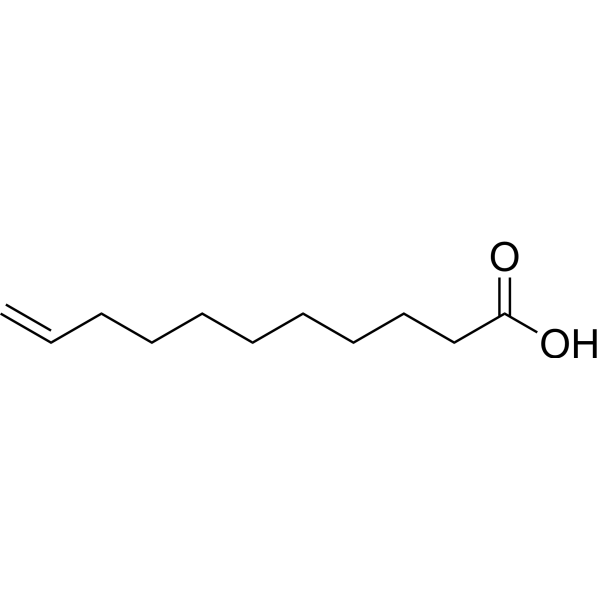
10-Undecenoic acid (Undecylenic acid) is an antifungal agent. 10-Undecenoic acid inhibits Aβ oligomerization, scavenges ROS and inhibits μ-calpain activity. 10-Undecenoic acid has neuroprotective effects. 10-Undecenoic acid has anticancer effects on a variety of tumors. 10-Undecenoic acid inhibits C. albicans biofilm formation and MRSA infection. 10-Undecenoic acid inhibits quorum sensing signals of Bacillus subtilis and Pseudomonas aeruginosa.
For research use only. We do not sell to patients.
- Purity : 99.99%
- CAS No.: 112-38-9
- Formula: C11H20O2
- Molecular Weight:184.28
-
Storage:Pure form -20°C, 3 years , 4°C, 2 years ; In solvent -80°C, 6 months , -20°C, 1 month

To place orders, for customer services and technical support, please contact: MedChemExpress USA
Tel: 609-228-6898 E-mail: [email protected] [email protected]


-
 Biological Activity
-
Chemical Information
-
Solvent & Solubility
- Protocols
- Purity & Documentation
- References
-
 Help & FAQs


-

HY-B0914R
10-Undecenoic acid (Standard)Antifungal Agent -
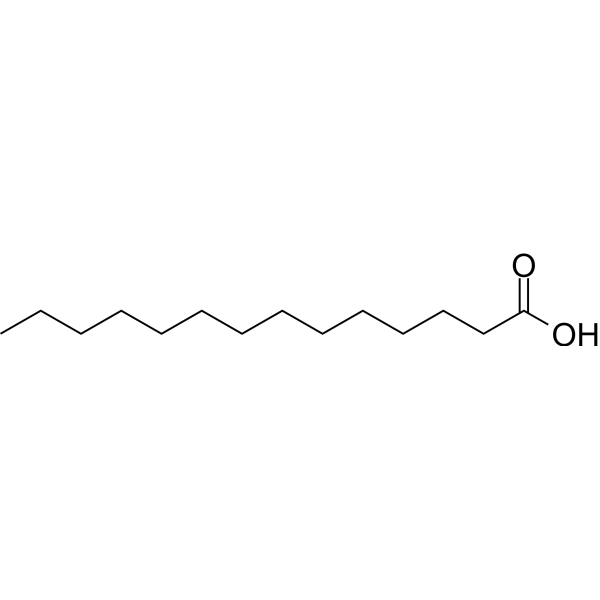
HY-N2041
Myristic acidEndogenous Metabolite -
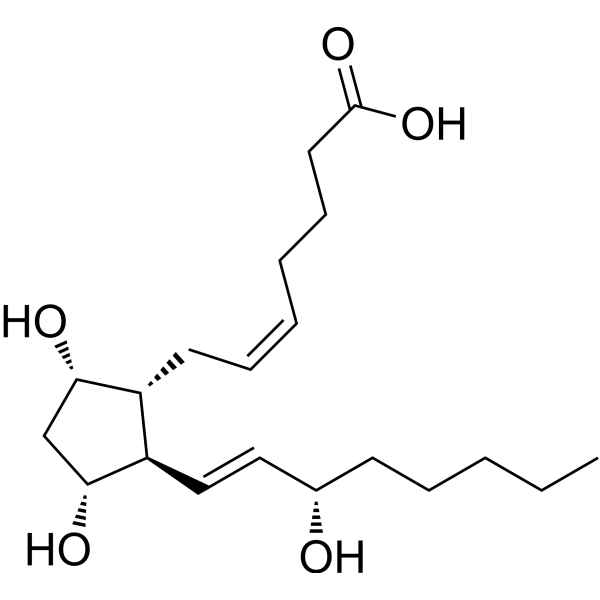
HY-12956
DinoprostFP Receptor Agonist -
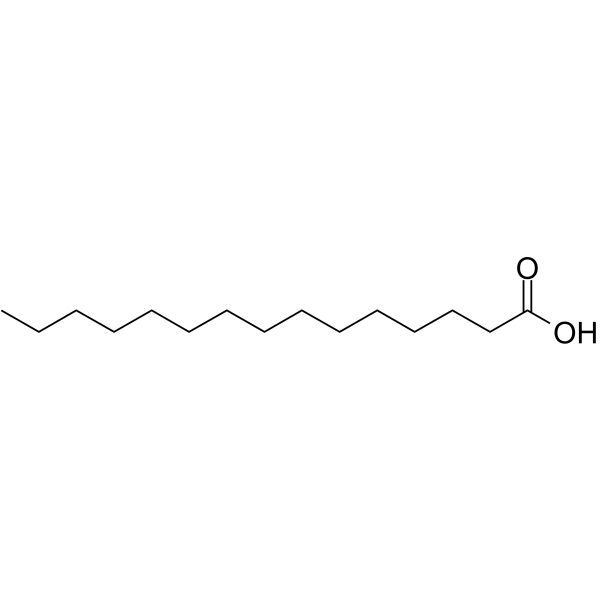
HY-W004283
Pentadecanoic acidSTAT3 Inhibitor -
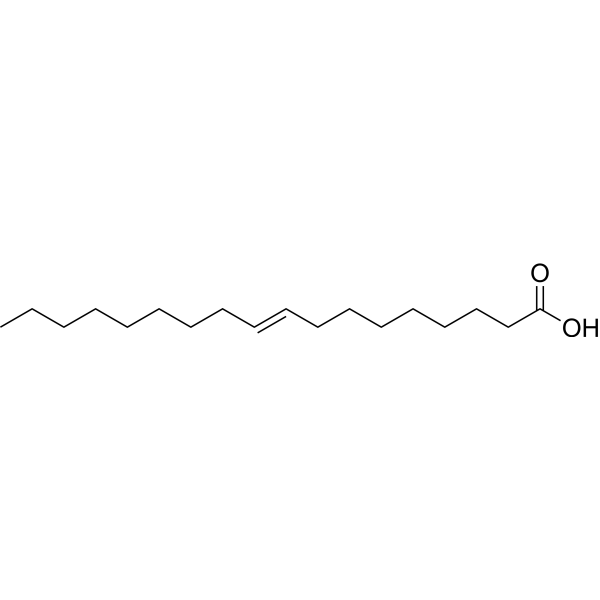
HY-113016
Elaidic acidTrans Fatty Acid -
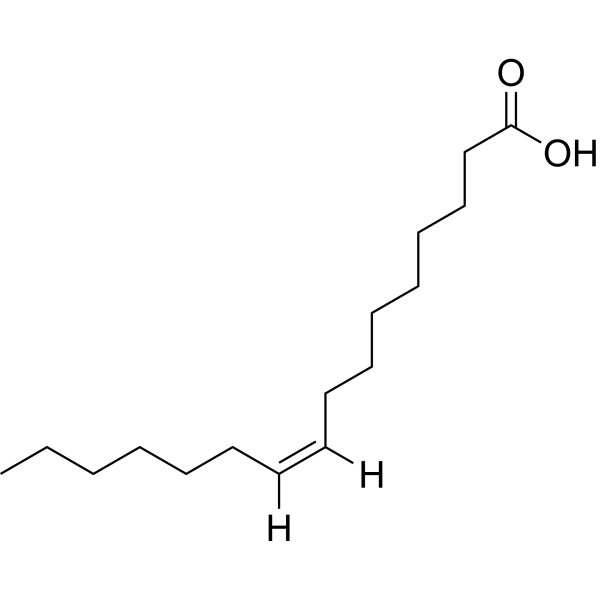
HY-W011873
Palmitoleic acid -

HY-N2041R
Myristic acid (Standard)Endogenous Metabolite -

HY-W004283R
Pentadecanoic acid (Standard)STAT3 Inhibitor -
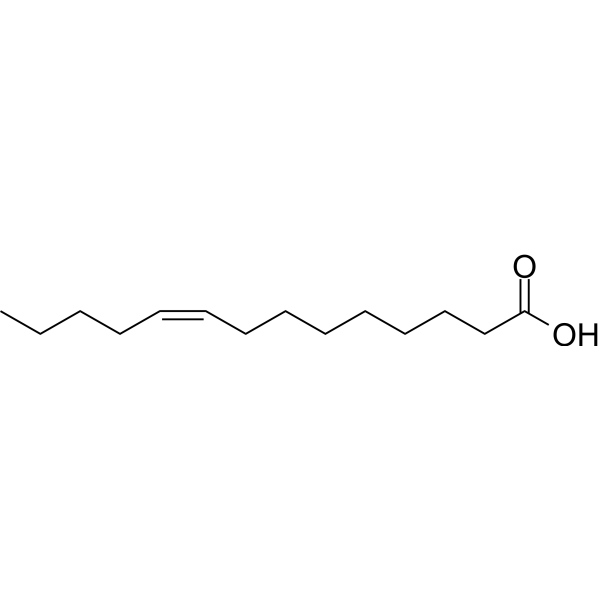
HY-113332
Myristoleic acidNecrosis Activator -

HY-W068212
16-Hydroxyhexadecanoic acidEster Product
Publications Citing Use of MedChemExpress (MCE) 10-Undecenoic acid,98% (stabilized with TBC)
More

Biological Activity
Description
IC50 & Target
|
Human Endogenous Metabolite |
In Vitro
Preparations (1.6-3.8 mM; 3-6 h) of 10-Undecenoic acid complexed with L-arginine induces apoptosis in tumor cells (A549 and Jurkat)[2].
10-Undecenoic acid (24 h) shows dose-dependent cytotoxicity to human tumor cell lines HeLa, A549, Jurkat, and U937, with IC50s of 0.9862, 0.3751, 0.5782, 0.2893 mM, respectively[2].
10-Undecenoic acid (up to 5 μM) significantly increases the expression and activity of alkaline phosphatase and calcium deposition, and induces the expression of the osteocalcin gene in mouse osteoblastic MC3T3-E1 subclone 4 cells and primary mouse calvarial cells[3].
10-Undecenoic acid reduces the number of viable and active cells and makes the biofilm thinner in C. albicans biofilms, while it increases the cell count, metabolic activity and proteinase activity in C. glabrata biofilms[4].
10-Undecenoic acid (20 μM) shows neuroprotective effect against glutamate, H2O2 and Aβ1-42 induced cell death in SH-SY5Y cells[5].
10-Undecenoic acid (1-40 mM; 6-24 h) reduces the cell death induced by H2O2, partially attenuates the cell death induced by Staurosporine (HY-15141) and Ddoxorubicin (HY-15142A) in SH-SY5Y cells[6].
10-Undecenoic acid (12.5-50 μg/mL) causes a reduction of LuxS/AI-2QS system in B. subtilis, and (15.625-250 μg/mL) causes a 10-54% reduction of LasI/LasR QS system in P. aeruginosa[7].
MedChemExpress (MCE) has not independently confirmed the accuracy of these methods. They are for reference only.
-
Cell Line:Mouse osteoblastic MC3T3-E1 subclone 4 cells, primary mouse calvarial cells
-
Concentration:2.5 μM, 5 μM
-
Incubation Time:During osteoblast differentiation (up to 18 days for some assays)
-
Result:Significantly increased the expression and activity of alkaline phosphatase at day 9 of differentiation (MC3T3-E1 subclone 4 cells).
Induced mineralization at day 15 and 18 (MC3T3-E1 subclone 4 cells).
Significantly induced calcium deposition at differentiation day 28 (primary mouse calvarial cells).
Regulated the mRNA expression levels of osteocalcin (OCN), Fra-2 and NFATc1 in both cell types.
In Vivo
MedChemExpress (MCE) has not independently confirmed the accuracy of these methods. They are for reference only.


Chemical Information
-
CAS No. 112-38-9
-
Appearance <23°C Solid,>25°C Liquid
-
Molecular Weight 184.28
-
Formula C11H20O2
-
Color Off-white to light yellow
-
SMILES
C=CCCCCCCCCC(O)=O
-
Synonyms
Undecylenic acid
-
Structure Classification
-
Initial Source
-
Shipping
Room temperature in continental US; may vary elsewhere.
-
Storage
Pure form -20°C 3 years 4°C 2 years In solvent -80°C 6 months -20°C 1 month


Publications (2)
-
Journal Impact Factor
-
Most Recent
-
Cancer Res
Loss of CDKN2A Enhances the Efficacy of Immunotherapy in EGFR-Mutant Non-Small Cell Lung Cancer. [Abstract]2025 Feb 1;85(3):585-601. PMID: 39514336 -
Cell Death Differ
PD-L2 drives resistance to EGFR-TKIs: dynamic changes of the tumor immune environment and targeted therapy. [Abstract]2024 Sep;31(9):1140-1156. PMID: 38816578


Solvent & Solubility
In Vitro:
DMSO : ≥ 50 mg/mL (271.33 mM; Hygroscopic DMSO has a significant impact on the solubility of product, please use newly opened DMSO)
* "≥" means soluble, but saturation unknown.
Please refer to the solubility information to select the appropriate solvent. Once prepared, please aliquot and store the solution to prevent product inactivation from repeated freeze-thaw cycles.
Storage method and period of stock solution: -80°C, 6 months; -20°C, 1 month. When stored at -80°C, please use it within 6 months. When stored at -20°C, please use it within 1 month.
Please refer to the solubility information to select the appropriate solvent. Once prepared, please aliquot and store the solution to prevent product inactivation from repeated freeze-thaw cycles.
Storage method and period of stock solution: -80°C, 6 months; -20°C, 1 month. When stored at -80°C, please use it within 6 months. When stored at -20°C, please use it within 1 month.
Concentration (start) × Volume (start) = Concentration (final) × Volume (final)
In Vivo:
Select the appropriate dissolution method based on your experimental animal and administration route.
- For the following dissolution methods, please ensure to first prepare a clear stock solution using an In Vitro approach and then sequentially add co-solvents:
- To ensure reliable experimental results, the clarified stock solution can be appropriately stored based on storage conditions. As for the working solution for In Vivo experiments, it is recommended to prepare freshly and use it on the same day.
- The percentages shown for the solvents indicate their volumetric ratio in the final prepared solution. If precipitation or phase separation occurs during preparation, heat and/or sonication can be used to aid dissolution.
Add each solvent one by one: 10% DMSO 40% PEG300 5% Tween-80 45% Saline
Solubility: 2.5 mg/mL (13.57 mM); Clear solution; Need ultrasonic
This protocol yields a clear solution of 2.5 mg/mL.
Taking 1 mL working solution as an example, add 100 μL DMSO stock solution (25.0 mg/mL) to 400 μL PEG300, and mix evenly; then add 50 μL Tween-80 and mix evenly; then add 450 μL Saline to adjust the volume to 1 mL.
Preparation of Saline: Dissolve 0.9 g sodium chloride in ddH₂O and dilute to 100 mL to obtain a clear Saline solution.
Add each solvent one by one: 10% DMSO 90% (20% SBE-β-CD in Saline)
Solubility: ≥ 2.5 mg/mL (13.57 mM); Clear solution
This protocol yields a clear solution of ≥ 2.5 mg/mL (saturation unknown).
Taking 1 mL working solution as an example, add 100 μL DMSO stock solution (25.0 mg/mL) to 900 μL 20% SBE-β-CD in Saline, and mix evenly.
Preparation of 20% SBE-β-CD in Saline (4°C, storage for one week): 2 g SBE-β-CD powder is dissolved in 10 mL Saline, completely dissolve until clear.
In Vivo Dissolution Calculator
Please enter the basic information of animal experiments:
-
-
-
-
Recommended: Prepare an additional quantity of animals to account for potential losses during experiments.
Please enter your animal formula composition:
-
%DMSO +
Recommended: Keep the proportion of DMSO in working solution below 2% if your animal is weak.
-
%+
-
+%Tween-80 + +
-
%Saline +
The co-solvents required include: DMSO, . All of co-solvents are available by MedChemExpress (MCE). , Tween 80. All of co-solvents are available by MedChemExpress (MCE).
Working solution concentration: 0.22 mg/mL
Method for preparing stock solution: mg drug dissolved in μL DMSO. Stock solution concentration: mg/mL.
1. Take μL DMSO stock solution;
2. Add μL .
μL , mix evenly;
3. Then add μL Tween 80, mix evenly;
4. Then add μL
Please ensure that the stock solution in the first step is dissolved to a clear state, and add co-solvents in sequence. You can use ultrasonic heating (ultrasonic cleaner, recommended frequency 20-40 kHz), vortexing, etc. to assist dissolution.


Purity & Documentation
-
Data Sheet (276 KB)
-
SDS (393 KB)
- English - EN (393 KB)
- Français - FR (393 KB)
- Deutsch - DE (393 KB)
- Norwegian - NO (393 KB)
- Español - ES (393 KB)
- Swedish - SV (393 KB)
- Italian - IT (393 KB)
- Korean - KR (393 KB)
- Portuguese - PT (393 KB)
-
Handling Instructions (2659 KB)
References
[1]. Brayden DJ, et al. Efficacious intestinal permeation enhancement induced by the sodium salt of 10-undecylenic acid, a medium chain fatty acid derivative. AAPS J. 2014 Sep;16(5):1064-76. [Content Brief]
[2]. Day ZI, et al. Novel Formulation of Undecylenic Acid induces Tumor Cell Apoptosis. Int J Mol Sci. 2022 Nov 16;23(22):14170. [Content Brief]
[3]. Kim MH, et al. Stimulatory effect of undecylenic acid on mouse osteoblast differentiation. Phytother Res. 2010 Apr;24(4):559-64. [Content Brief]
[4]. Gonçalves LM, et al. Effects of undecylenic acid released from denture liner on Candida biofilms. J Dent Res. 2012 Oct;91(10):985-9. [Content Brief]
[5]. Lee E, et al. Neuroprotective effect of undecylenic acid extracted from Ricinus communis L. through inhibition of μ-calpain. Eur J Pharm Sci. 2012 May 12;46(1-2):17-25. [Content Brief]
[6]. Jantas D, et al. An Involvement of PI3-K/Akt Activation and Inhibition of AIF Translocation in Neuroprotective Effects of Undecylenic Acid (UDA) Against Pro-Apoptotic Factors-Induced Cell Death in Human Neuroblastoma SH-SY5Y Cells. J Cell Biochem. 2015 Dec;116(12):2882-95. [Content Brief]
[7]. Fernandes S, et al. Curcumin and 10-undecenoic acid as natural quorum sensing inhibitors of LuxS/AI-2 of Bacillus subtilis and LasI/LasR of Pseudomonas aeruginosa. Food Res Int. 2023 Mar;165:112519. [Content Brief]
[8]. Mayfosh A, et al. A Novel Ammonium Carboxylate Salt of Undecylenic Acid for the Topical Treatment of Gram-Positive and Antibiotic-Resistant Skin Infections. Exp Dermatol. 2025 Mar;34(3):e70075. [Content Brief]


Complete Stock Solution Preparation Table
Please refer to the solubility information to select the appropriate solvent. Once prepared, please aliquot and store the solution to prevent product inactivation from repeated freeze-thaw cycles.
Storage method and period of stock solution: -80°C, 6 months; -20°C, 1 month. When stored at -80°C, please use it within 6 months. When stored at -20°C, please use it within 1 month.
| Optional Solvent | Concentration Solvent Mass | 1 mg | 5 mg | 10 mg | 25 mg |
|---|---|---|---|---|---|
| DMSO | 1 mM | 5.4265 mL | 27.1326 mL | 54.2652 mL | 135.6631 mL |
| 5 mM | 1.0853 mL | 5.4265 mL | 10.8530 mL | 27.1326 mL | |
| 10 mM | 0.5427 mL | 2.7133 mL | 5.4265 mL | 13.5663 mL | |
| 15 mM | 0.3618 mL | 1.8088 mL | 3.6177 mL | 9.0442 mL | |
| 20 mM | 0.2713 mL | 1.3566 mL | 2.7133 mL | 6.7832 mL | |
| 25 mM | 0.2171 mL | 1.0853 mL | 2.1706 mL | 5.4265 mL | |
| 30 mM | 0.1809 mL | 0.9044 mL | 1.8088 mL | 4.5221 mL | |
| 40 mM | 0.1357 mL | 0.6783 mL | 1.3566 mL | 3.3916 mL | |
| 50 mM | 0.1085 mL | 0.5427 mL | 1.0853 mL | 2.7133 mL | |
| 60 mM | 0.0904 mL | 0.4522 mL | 0.9044 mL | 2.2611 mL | |
| 80 mM | 0.0678 mL | 0.3392 mL | 0.6783 mL | 1.6958 mL | |
| 100 mM | 0.0543 mL | 0.2713 mL | 0.5427 mL | 1.3566 mL |


10-Undecenoic acid,98% (stabilized with TBC) Related Classifications
HY-B0914 Related Classifications
 Powered by Bioz