Delivery of temperature sensitive items including proteins and kits will be paused on 6/19 for the Juneteenth holiday. For urgent orders please contact customer service.
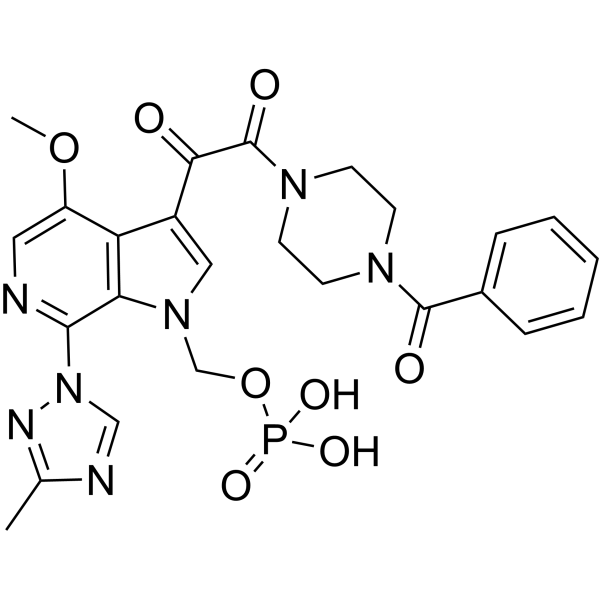
Fostemsavir (BMS-663068) is the phosphonooxymethyl prodrug of BMS-626529. Fostemsavir (BMS-663068) is a novel attachment inhibitor that targets HIV-1gp120 and prevents its binding to CD4 + T cells.
VRC-01 is a broadly neutralizing IgG1 monoclonal antibody that targets HIV-1 envelope glycoprotein gp120 Protein. VRC-01 blocks HIV-1 viral entry by mimicking CD4 receptor interaction with HIV-1 gp120 and neutralizes broad HIV-1 clades. VRC-01 can be used for the research of HIV-1 infection .
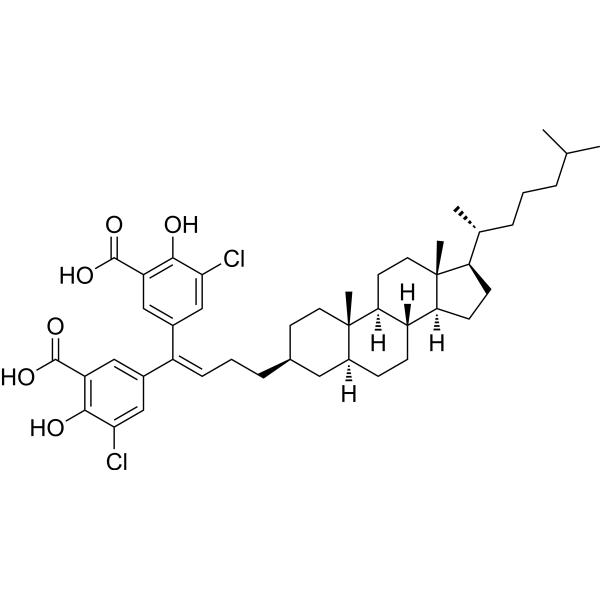
Cosalane (NSC 658586) is a CCR7 (IC50 = 2.43 μM) and CXCR2 antagonist (IC50 = 0.66 μM). Cosalane is an inhibitor of HIV replication with a wide range of activity against HIV-1 isolates, HIV-2, Rauscher murine leukemia virus, HSV-1, HSV-2 and human cytomegalovirus. Cosalane inhibits both attachment of gp120 to CD4. Cosalane inhibits human and murine CCR7 in response to both CCL19 and CCL21 agonists. Cosalane can be studied in research for HIV or attenuating acute graft-versus-host disease (aGVHD) in allogeneic hematopoietic stem cell transplantation (HSCT) .
BMS-378806 is a potent HIV-1 attachment inhibitor that interferes with CD4-gp120 interactions. BMS-378806 selectively inhibits the binding of HIV-1 gp120 to the CD4 receptor with EC50 of 0.85-26.5 nM in virus.
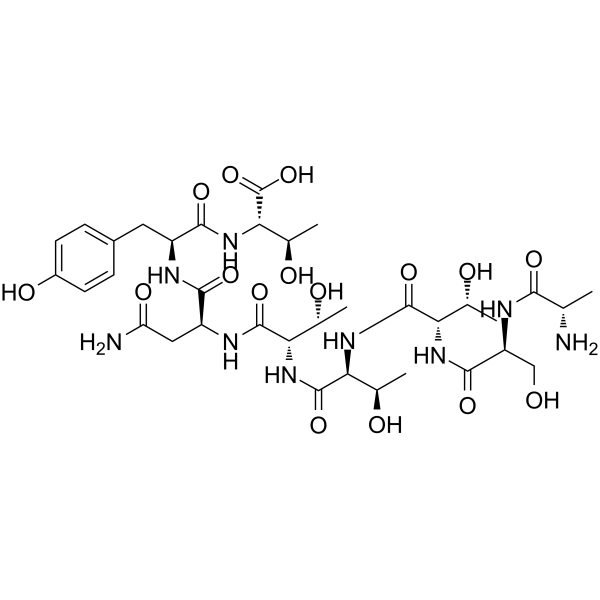
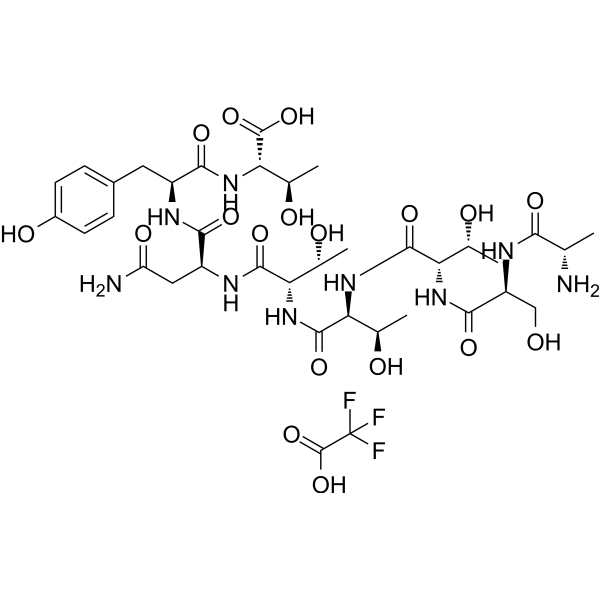
Peptide T is an octapeptide from the V2 region of HIV-1 gp120. Peptide T is a ligand for the CD4 receptor and prevents binding of HIV to the CD4 receptor.
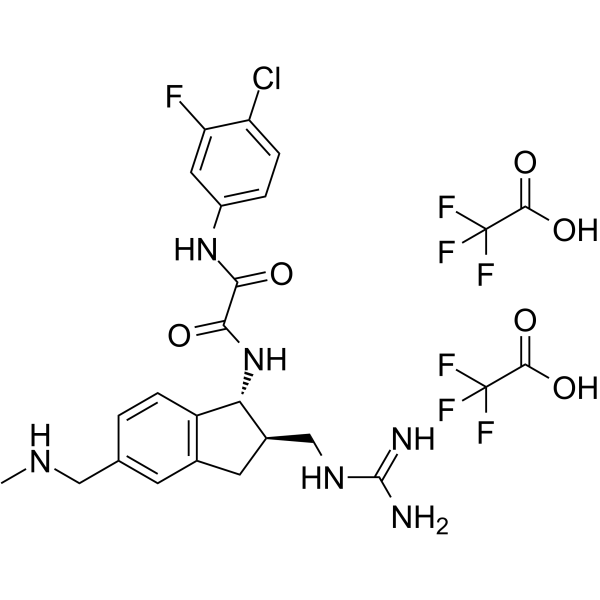
BNM-III-170, CD4-mimeticcompound, is an anti-HIV-1 agent. BNM-III-170 binds to the Phe43 cavity of HIV 1 gp120. BNM-III-170 can inhibits HIV-1 viral entry into target cells. BNM-III-170 can be used for the research of HIV-1 infection .
Indoline is a derivative of Indole (HY-W001132). Indoline can use as the basic structure for CD4 mimetic compounds (CD4mcs), which triggers conformational changes of the HIV-1 envelope glycoprotein (Env) in advance, and causes viral inactivation. Indoline binds to gp120. Indoline CD4mcs can inhibit HIV-1AD8 with an IC50 in the micromolar range .
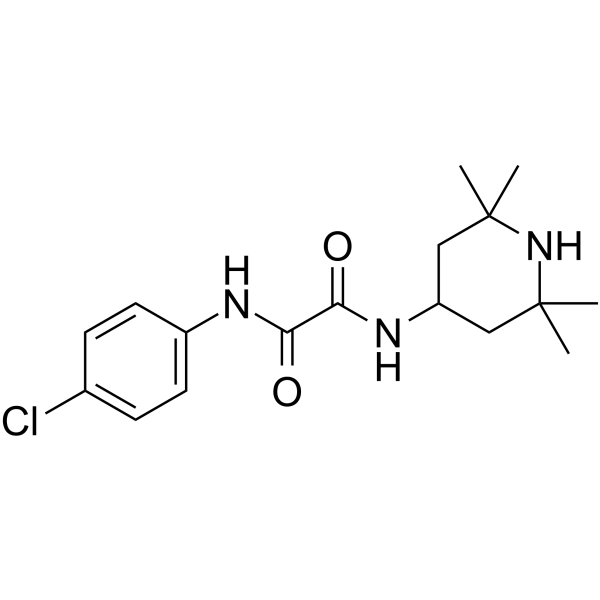
NBD-556, a CD4 mimetic, is a potent HIV-1 entry inhibitor that blocks the gp120-CD4 interaction. NBD-556 shows potent cell fusion and virus-cell fusion inhibitory activity at low micromolar levels .
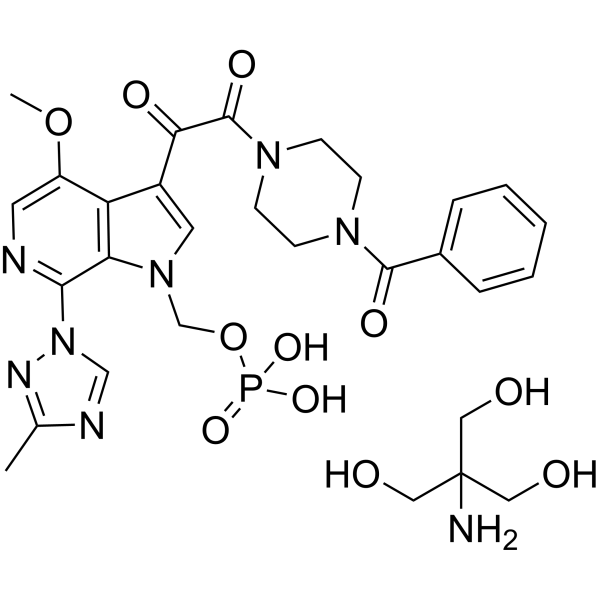
Fostemsavir Tris (BMS-663068 (Tris)) is the phosphonooxymethyl proagent of BMS-626529. Fostemsavir Tris (BMS-663068 (Tris)) is a novel attachment inhibitor that targets HIV-1gp120 and prevents its binding to CD4 + T cells.
Anti-HIV gp120 Antibody (55-36) is a kind of mouse IgG1 κ chimeric antibody, targeting to human HIV gp120. Anti-HIV gp120 Antibody (55-36) reacts with human immunodeficiency virus (HIV) envelope glycoprotein 120 (gp120). Anti-HIV gp120 Antibody (55-36) can be used for the research of HIV infection .
BMS-818251 is a HIV-1 attachment and entry inhibitor. BMS-818251 binds to HIV-1 Env gp120, interferes with viral attachment and entry processes, and inhibits HIV-1 viral replication. BMS-818251 can be used in studies related to HIV-1 infection .
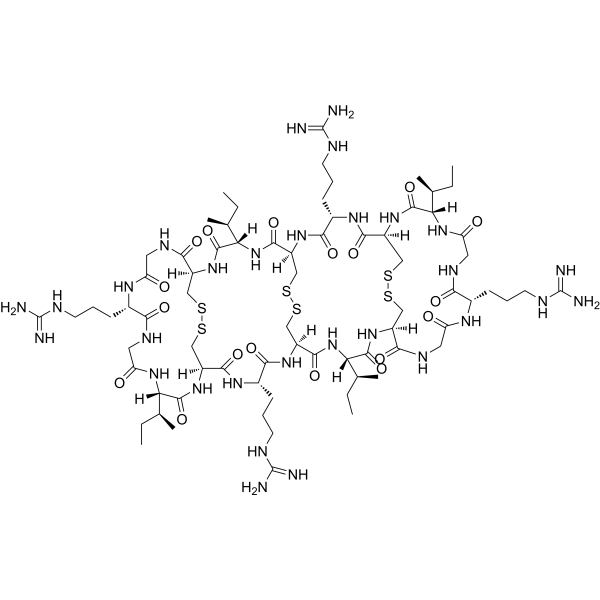
Retrocyclin-1 is a kind of Theta-defensin. Retrocyclin-1 recognizes and binds to carbohydrate-containing surface molecules, to protect cells from HIV-1 infection. Retrocyclin-1 exhibits high affinity to fetuin, gp120 (Kd=35.4 nM), CD4 (Kd=31 nM), and galactosylceramide (Kd=24.1 nM) .
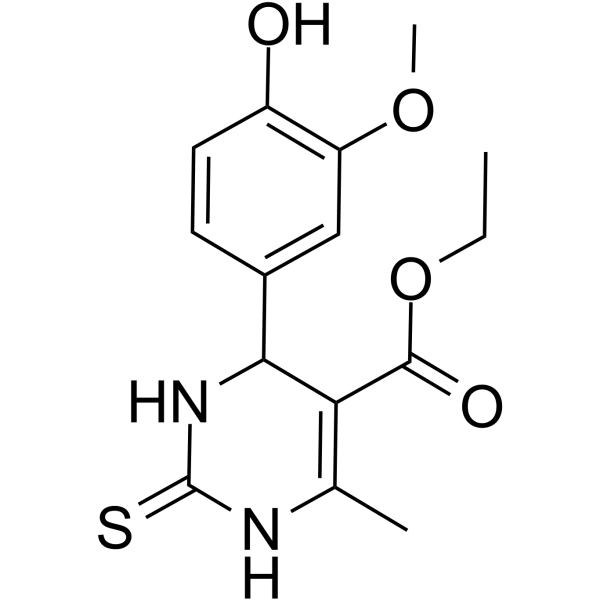
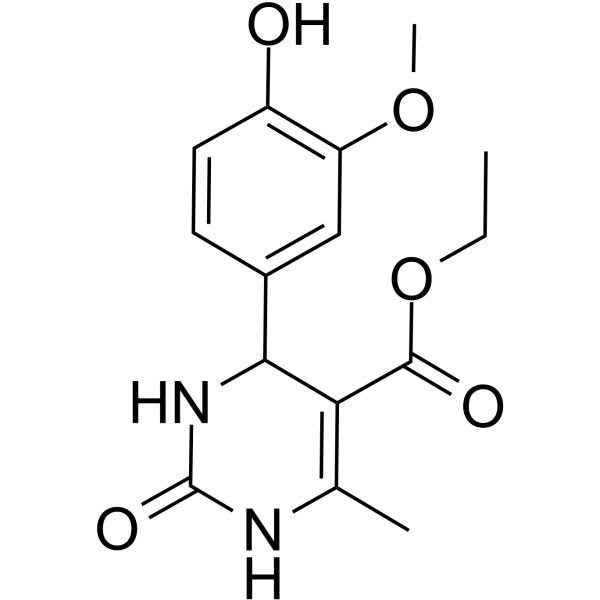
gp120-IN-1 (compound 4e) is a potent HIV-1 gp120 inhibitor with an IC50 of 2.2 µM and CC50 of 100.90 µM. gp120-IN-1 shows anti-HIV-1 activity. gp120-IN-1 shows cytotoxicity in a dose dependent manner in SUP-T1 cells. gp120-IN-1 shows inhibition of gp120-mediated virus enter into cells .
HIV gp120 (318-327) is a short sequence of the HIV-1 strain IIIB envelope peptide (rgpgrafvti) that corresponds to the conserved C-terminal region of the glycoprotein. HIV gp120 (318-327) is part of the HIV vaccine V3 peptide epitope, also known as the I10 peptide. However, HIV gp120 (318-327) lacks the A2 anchor residues recognized by epitope-specific CTLs but has structural features that confer promiscuous A2 binding .
N-Succinimidyl bromoacetate (NHS-Bromoacetate) is a heterobifunctional crosslinking reagent, mainly used to modify the ɛ-amino group of lysine side chains. By covalently linking its bromoacetyl moiety to the ɛ-amino group of lysine in peptidomimetics, N-Succinimidyl bromoacetate enables their conjugation with thiol-modified nanoparticles via thioether bonds. N-Succinimidyl bromoacetate also performs bromoacetylation modification on carrier proteins, which then forms stable thioether bonds with the thiol groups of cysteine in peptides, thus efficiently preparing soluble peptide-protein conjugates with high substitution ratios. N-Succinimidyl bromoacetate can be used to prepare activated Sepharose derivatives for affinity chromatography, protein affinity labeling reagents, and peptide-protein immunogen conjugates with non-immunogenic linkages. N-Succinimidyl bromoacetate is applicable to studies related to HIV-1 infection and glioblastoma multiforme .
Lafuvitug (3BNC-117) is a fully human IgG1 antibody that targets envelope glycoprotein gp120 protein. The isotype control for Lafuvitug can refer to Human IgG1 kappa, Isotype Control (HY-P99001) .
gp120-IN-2 (compound 4i) is a potent HIV-1 gp120 inhibitor with an IC50 of 7.5 µM and CC50 of 112.93 µM. gp120-IN-2 shows anti-HIV-1 activity. gp120-IN-2 shows cytotoxicity in a dose dependent manner in SUP-T1 cells .
(D-Ala)-Peptide T is an octapeptide derived from gp120. (D-Ala)-Peptide T releases chemokines and prevents HIV-1GP120-induced neuronal death. (D-Ala)-Peptide T can be used in research on infectious and neurological diseases such as AIDS-related dementia .
NBD-14270, a pyridine analogue, is a potent HIV-1 entry antagonist with an IC50 of 180 nM against 50 HIV-1 Env-pseudotyped viruses. NBD-14270 binds to HIV-1 gp120 and shows potent antiviral activity. NBD-14270 shows low cytotoxicity (CC50>100 μM) .
Peptide T (TFA) is an octapeptide from the V2 region of HIV-1 gp120. Peptide T is a ligand for the CD4 receptor and prevents binding of HIV to the CD4 receptor.
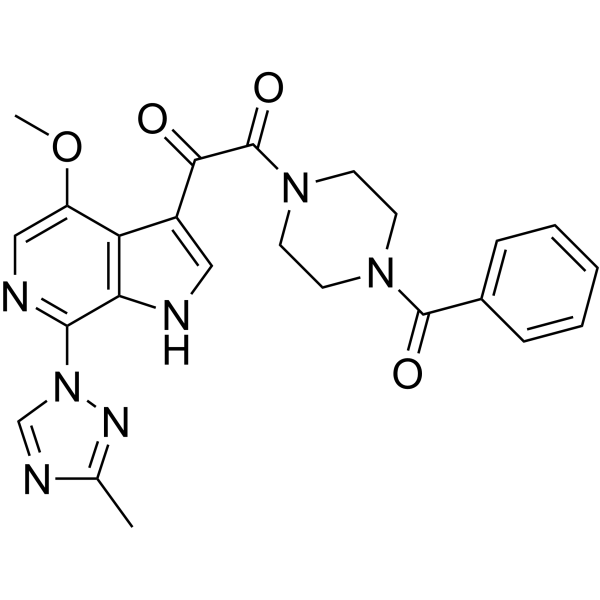
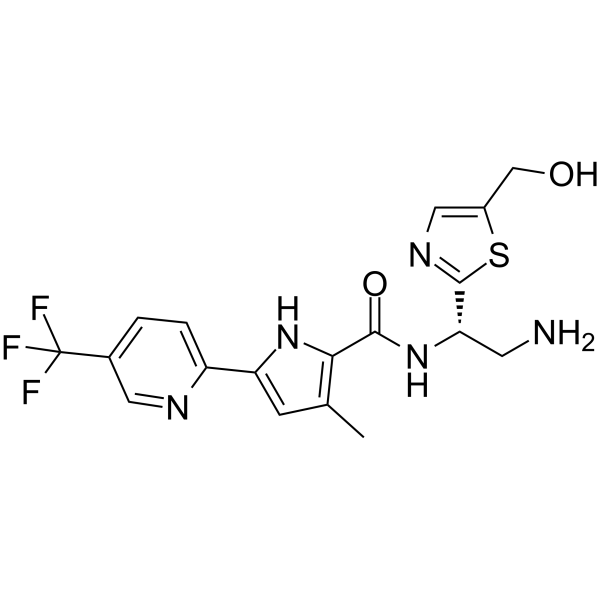
Temsavir (Standard) is the analytical standard of Temsavir. This product is intended for research and analytical applications. Temsavir (BMS-626529) is a novel attachment inhibitor that targets HIV-1 gp120 and prevents its binding to CD4+ T cells.
Ophiobolin C inhibits CCR5 binding to the envelop protein gp120 and CD4, which is responsible for mediating the entry of HIV-1 into cells . Ophiobolin C is also cytotoxic to chronic lymphocytic leukemia cells .
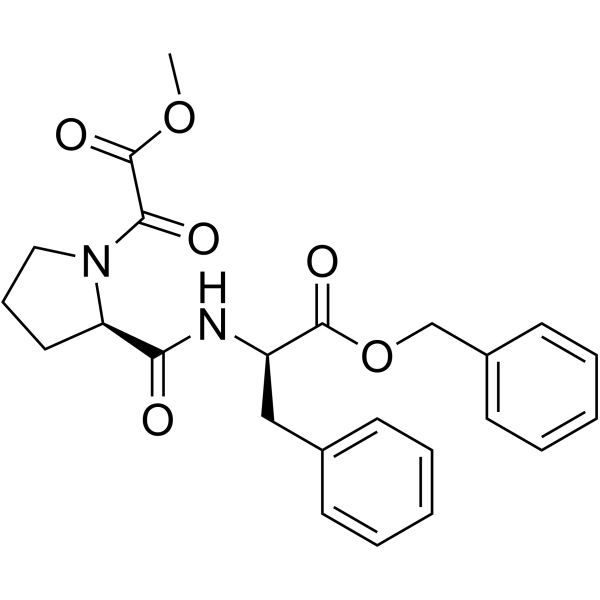
Carbomethoxycarbonyl-D-Pro-D-Phe-OBzl (compound (CPF(LL)) is an HIV-1 inhibitor. Carbomethoxycarbonyl-D-Pro-D-Phe-OBzl interacts with gp120 to block gp120 binding to CD4 and preserve CD4-dependent T cell function .
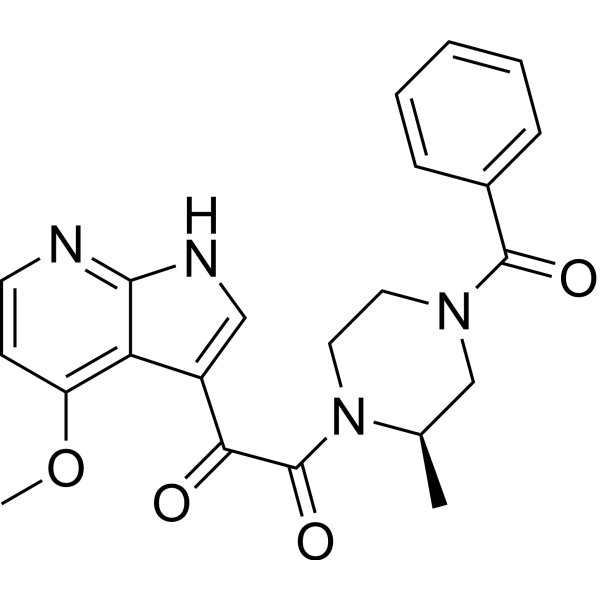
(S)-BMS-378806 ((S)-BMS-806) is an orally bioavailable HIV-1 inhibitor with activity against gp120-CD4 interactions. (S)-BMS-378806 exhibits micromolar inhibition of HIV-1 gp120-CD4 binding. The design and synthesis of (S)-BMS-378806 was based on a comprehensive study of protein-ligand interactions, which guided the identification and design of novel symmetrical N,N'-disubstituted aminoureas and thioureas. (S)-BMS-378806, synthesized in aqueous media using microwave irradiation, was validated for its inhibitory activity in HIV-1 gp120-CD4 capture ELISA .
NBD-14189 is a potent HIV-1 entry antagonist with an IC50 of 89 nM against the HIV-1HXB2 pseudovirus. NBD-14189 binds to HIV-1 gp120 and shows potent antiviral activity (EC50<200 nM) .
SCH 350581 (AD-101) is a CCR5 antagonist. SCH 350581 inhibits HIV-1 replication, viral entry into cells, and the binding of gp120 to cell lines in primary lymphocytes .
Fostemsavir (Standard) is the analytical standard of Fostemsavir. This product is intended for research and analytical applications. Fostemsavir (BMS-663068) is the phosphonooxymethyl prodrug of BMS-626529. Fostemsavir (BMS-663068) is a novel attachment inhibitor that targets HIV-1gp120 and prevents its binding to CD4 + T cells.
Fostemsavir-d8 (BMS-663068-d8) is deuterium labeled Fostemsavir. Fostemsavir (BMS-663068) is the phosphonooxymethyl prodrug of BMS-626529. Fostemsavir (BMS-663068) is a novel attachment inhibitor that targets HIV-1gp120 and prevents its binding to CD4 + T cells.
DMJ-I-228 is a CD4-mimetic. DMJ-I-228 binds to HIV-1gp120 within the conserved Phe 43 cavity near the CD4-binding site, thereby blocking CD4 binding and inhibiting HIV-1 infection .
Fostemsavir Tris (Standard) is the analytical standard of Fostemsavir Tris. This product is intended for research and analytical applications. Fostemsavir Tris (BMS-663068 (Tris)) is the phosphonooxymethyl proagent of BMS-626529. Fostemsavir Tris (BMS-663068 (Tris)) is a novel attachment inhibitor that targets HIV-1 gp120 and prevents its binding to CD4+ T cells.
Anti-Human/Monkey CXCR4 Antibody (12G5) reacts with human and monkey CXCR4. Anti-Human/Monkey CXCR4 Antibody (12G5) blocks the cognate ligand, CXCL12/SDF-1, and gp120/160 from binding to CXCR4. Recommend Isotype Controls: Mouse IgG2a kappa, Isotype Control (HY-P99978) .
BNM-III-170 free base, CD4-mimeticcompound, is an anti-HIV-1 agent. BNM-III-170 free base, binds to the Phe43 cavity of HIV 1 gp120. BNM-III-170 can inhibits HIV-1 viral entry into target cells. BNM-III-170 free base, can be used for the research of HIV-1 infection .
ITIH4 Human Pre-designed siRNA Set A contains three designed siRNAs for ITIH4 gene (Human), as well as a negative control, a positive control, and a FAM-labeled negative control.
JRC-I-191 is an anti-HIV-1 agent. JRC-I-191 inhibits HIV-1 YU-2 entry into cells. JRC-I-191 does not inhibit infection of cells by amphotropic murine leukemia virus. JRC-I-191 can be used for the research of HIV-1 infection .
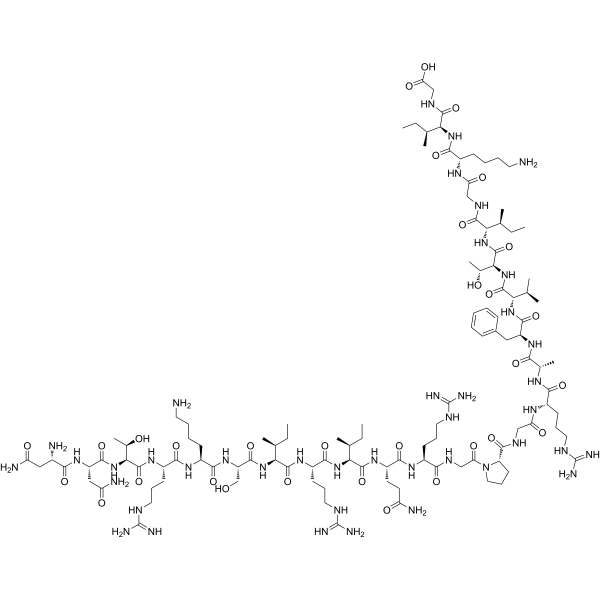
NIAID RSVF2-5 is a human monoclonal antibody fragment. NIAID RSVF2-5 binds to conserved, distinct conformational epitopes on RSV fusion glycoprotein, and shows activity against RSVsubgroup A and B strains. NIAID RSVF2-5 reduces pulmonary and lung viral titers in RSV-infected rodents. NIAID RSVF2-5 can be used for the research of respiratory syncytial virus infection .
Indoline is a derivative of Indole (HY-W001132). Indoline can use as the basic structure for CD4 mimetic compounds (CD4mcs), which triggers conformational changes of the HIV-1 envelope glycoprotein (Env) in advance, and causes viral inactivation. Indoline binds to gp120. Indoline CD4mcs can inhibit HIV-1AD8 with an IC50 in the micromolar range .
Peptide T is an octapeptide from the V2 region of HIV-1 gp120. Peptide T is a ligand for the CD4 receptor and prevents binding of HIV to the CD4 receptor.
Retrocyclin-1 is a kind of Theta-defensin. Retrocyclin-1 recognizes and binds to carbohydrate-containing surface molecules, to protect cells from HIV-1 infection. Retrocyclin-1 exhibits high affinity to fetuin, gp120 (Kd=35.4 nM), CD4 (Kd=31 nM), and galactosylceramide (Kd=24.1 nM) .
HIV gp120 (318-327) is a short sequence of the HIV-1 strain IIIB envelope peptide (rgpgrafvti) that corresponds to the conserved C-terminal region of the glycoprotein. HIV gp120 (318-327) is part of the HIV vaccine V3 peptide epitope, also known as the I10 peptide. However, HIV gp120 (318-327) lacks the A2 anchor residues recognized by epitope-specific CTLs but has structural features that confer promiscuous A2 binding .
(D-Ala)-Peptide T is an octapeptide derived from gp120. (D-Ala)-Peptide T releases chemokines and prevents HIV-1GP120-induced neuronal death. (D-Ala)-Peptide T can be used in research on infectious and neurological diseases such as AIDS-related dementia .
Peptide T (TFA) is an octapeptide from the V2 region of HIV-1 gp120. Peptide T is a ligand for the CD4 receptor and prevents binding of HIV to the CD4 receptor.
Carbomethoxycarbonyl-D-Pro-D-Phe-OBzl (compound (CPF(LL)) is an HIV-1 inhibitor. Carbomethoxycarbonyl-D-Pro-D-Phe-OBzl interacts with gp120 to block gp120 binding to CD4 and preserve CD4-dependent T cell function .
VRC-01 is a broadly neutralizing IgG1 monoclonal antibody that targets HIV-1 envelope glycoprotein gp120 Protein. VRC-01 blocks HIV-1 viral entry by mimicking CD4 receptor interaction with HIV-1 gp120 and neutralizes broad HIV-1 clades. VRC-01 can be used for the research of HIV-1 infection .
Anti-HIV gp120 Antibody (55-36) is a kind of mouse IgG1 κ chimeric antibody, targeting to human HIV gp120. Anti-HIV gp120 Antibody (55-36) reacts with human immunodeficiency virus (HIV) envelope glycoprotein 120 (gp120). Anti-HIV gp120 Antibody (55-36) can be used for the research of HIV infection .
Lafuvitug (3BNC-117) is a fully human IgG1 antibody that targets envelope glycoprotein gp120 protein. The isotype control for Lafuvitug can refer to Human IgG1 kappa, Isotype Control (HY-P99001) .
HY-P991007 is an gp120 envelope glycoprotein-targeting IgG1κ type human antibody, the recommed isotype control is Human IgG1 kappa, Isotype Control (HY-P99001) .
Anti-Human/Monkey CXCR4 Antibody (12G5) reacts with human and monkey CXCR4. Anti-Human/Monkey CXCR4 Antibody (12G5) blocks the cognate ligand, CXCL12/SDF-1, and gp120/160 from binding to CXCR4. Recommend Isotype Controls: Mouse IgG2a kappa, Isotype Control (HY-P99978) .
NIAID RSVF2-5 is a human monoclonal antibody fragment. NIAID RSVF2-5 binds to conserved, distinct conformational epitopes on RSV fusion glycoprotein, and shows activity against RSVsubgroup A and B strains. NIAID RSVF2-5 reduces pulmonary and lung viral titers in RSV-infected rodents. NIAID RSVF2-5 can be used for the research of respiratory syncytial virus infection .
envelope glycoprotein gp120 Protein is a glycoprotein exposed on the surface of the HIV envelope.Gp120 is essential for viral infection as it facilitates HIV entry into the host cell.gp120 may also be facilitating viral persistence and continuing HIV infection by influencing the T cell immune response to the virus.envelope glycoprotein gp120 Protein, HIV-1 (ACY40659, HEK293, His) is the recombinant Virus-derived envelope glycoprotein gp120 protein, expressed by HEK293 , with C-His labeled tag.
envelope glycoprotein gp120 Protein is a glycoprotein exposed on the surface of the HIV envelope.Gp120 is essential for viral infection as it facilitates HIV entry into the host cell.gp120 may also be facilitating viral persistence and continuing HIV infection by influencing the T cell immune response to the virus.envelope glycoprotein gp120 Protein, HIV-1 (AFM77980, HEK293, His) is the recombinant Virus-derived envelope glycoprotein gp120 protein, expressed by HEK293 , with C-His labeled tag.
envelope glycoprotein gp120 Protein is a glycoprotein exposed on the surface of the HIV envelope.Gp120 is essential for viral infection as it facilitates HIV entry into the host cell.gp120 may also be facilitating viral persistence and continuing HIV infection by influencing the T cell immune response to the virus.envelope glycoprotein gp120 Protein, HIV-1 (AAC57427, HEK293, His) is the recombinant Virus-derived envelope glycoprotein gp120 protein, expressed by HEK293 , with C-His labeled tag.
envelope glycoprotein gp120 Protein is a glycoprotein exposed on the surface of the HIV envelope.Gp120 is essential for viral infection as it facilitates HIV entry into the host cell.gp120 may also be facilitating viral persistence and continuing HIV infection by influencing the T cell immune response to the virus.envelope glycoprotein gp120 Protein, HIV-1 (AAA44191, HEK293, His) is the recombinant Virus-derived envelope glycoprotein gp120 protein, expressed by HEK293 , with C-10*His labeled tag.
The envelope glycoprotein gp120 protein facilitates viral capture and dissemination by dendritic cells and endothelial cells by attaching the virus to host lymphocytes through binding to the CD4 receptor. HIV exploits the migratory properties of dendritic cells to access CD4+ T cells, leading to infection. Envelope glycoprotein gp120 Protein, HIV (Q9DKG6, HEK293, His) is the recombinant Virus-derived Envelope glycoprotein gp120 protein, expressed by HEK293 , with C-8*His labeled tag.
envelope glycoprotein gp120 Protein is a glycoprotein exposed on the surface of the HIV envelope.Gp120 is essential for viral infection as it facilitates HIV entry into the host cell.gp120 may also be facilitating viral persistence and continuing HIV infection by influencing the T cell immune response to the virus.envelope glycoprotein gp120 Protein, SIV (ADN41251, HEK293, His) is the recombinant Virus-derived envelope glycoprotein gp120 protein, expressed by HEK293 , with C-His labeled tag.
envelope glycoprotein gp120 Protein is a glycoprotein exposed on the surface of the HIV envelope.Gp120 is essential for viral infection as it facilitates HIV entry into the host cell.gp120 may also be facilitating viral persistence and continuing HIV infection by influencing the T cell immune response to the virus.envelope glycoprotein gp120 Protein, SIV (CAA32487, HEK293, His) is the recombinant Virus-derived envelope glycoprotein gp120 protein, expressed by HEK293 , with C-His labeled tag.
envelope glycoprotein gp120 Protein is a glycoprotein exposed on the surface of the HIV envelope.Gp120 is essential for viral infection as it facilitates HIV entry into the host cell.gp120 may also be facilitating viral persistence and continuing HIV infection by influencing the T cell immune response to the virus.envelope glycoprotein gp120 Protein, SIV (ADH04463, HEK293, His) is the recombinant Virus-derived envelope glycoprotein gp120 protein, expressed by HEK293 , with C-His labeled tag.
The envelope glycoprotein gp120 protein facilitates viral capture and dissemination by dendritic cells and endothelial cells by attaching the virus to host lymphocytes through binding to the CD4 receptor.HIV exploits the migratory properties of dendritic cells to access CD4+ T cells, leading to infection.envelope glycoprotein gp120 Protein, HIV-1 (AAC31819, HEK293, His) is the recombinant Virus-derived envelope glycoprotein gp120 protein, expressed by HEK293 , with C-His labeled tag.
Envelope glycoprotein gp160 Protein (HIV-1 gp160 Protein) is the sole antigenic protein on the surface of the HIV-1 virion and mediates HIV-1 entry into target cells. The endoproteolytic processing of HIV-1 gp160 membrane glycoprotein precursor into gp120 and gp41 is necessary for formation of infectious HIV particles. HIV-1 gp160 induces endothelial cell apoptosis, which is mediated by CXCR4 chemokine receptor. envelope glycoprotein gp160 Protein, HIV-1 (ADD25380, HEK293, His) is the recombinant Virus-derived envelope glycoprotein gp160 protein, expressed by HEK293 , with C-His labeled tag.
gp160 is an envelope glycoprotein that oligomerizes into major trimers in the host endoplasmic reticulum.gp160 is transported in the host Golgi apparatus to complete the glycosylation process.The precursors are proteolytic cleaved in the trans-Golgi apparatus to produce gp120 and gp41.envelope glycoprotein gp160 Protein, HIV-1 (AAT67478, HEK293, His) is the recombinant Virus-derived envelope glycoprotein gp160 protein, expressed by HEK293 , with C-His labeled tag.
Fostemsavir-d8 (BMS-663068-d8) is deuterium labeled Fostemsavir. Fostemsavir (BMS-663068) is the phosphonooxymethyl prodrug of BMS-626529. Fostemsavir (BMS-663068) is a novel attachment inhibitor that targets HIV-1gp120 and prevents its binding to CD4 + T cells.
CD4 aptamer sodium is a single-strand DNA aptamer that targets CD4. It significantly blocks the interaction between viral gp120 and CD4-expressing cells
ITIH4 Human Pre-designed siRNA Set A contains three designed siRNAs for ITIH4 gene (Human), as well as a negative control, a positive control, and a FAM-labeled negative control.
Inquiry Online
Your information is safe with us. * Required Fields.
Western blot analysis of extracts from THP-1(lane 2(20μg), Jurkat (lane 3(20μg) and NIH3T3(lane 4(20μg) using FOXO1A (HY-P80132) Rabbit mAb. Proteins were transferred
to a PVDF membrane and blocked with 5% non-fat milk in TBST for 2 hour at room temperature. The primary antibody (1/1000) and Loading control antibody (Beta Actin, HY-P80438, 1/10000) was
used in 5% non-fat milk in TBST at 4°C overnight. Goat Anti-Mouse/Rabbit IgG-HRP Secondary Antibody (1/10000) was used for 1 hour at room temperature.
Western blot analysis of extracts from THP-1(lane 2(20μg), Jurkat (lane 3(20μg) and NIH3T3(lane 4(20μg) using FOXO1A (HY-P80132) Rabbit mAb. Proteins were transferred
to a PVDF membrane and blocked with 5% non-fat milk in TBST for 2 hour at room temperature. The primary antibody (1/1000) and Loading control antibody (Beta Actin, HY-P80438, 1/10000) was
used in 5% non-fat milk in TBST at 4°C overnight. Goat Anti-Mouse/Rabbit IgG-HRP Secondary Antibody (1/10000) was used for 1 hour at room temperature.
Western blot analysis of extracts from THP-1(lane 2(20μg), Jurkat (lane 3(20μg) and NIH3T3(lane 4(20μg) using FOXO1A (HY-P80132) Rabbit mAb. Proteins were transferred
to a PVDF membrane and blocked with 5% non-fat milk in TBST for 2 hour at room temperature. The primary antibody (1/1000) and Loading control antibody (Beta Actin, HY-P80438, 1/10000) was
used in 5% non-fat milk in TBST at 4°C overnight. Goat Anti-Mouse/Rabbit IgG-HRP Secondary Antibody (1/10000) was used for 1 hour at room temperature.
Western blot analysis of extracts from THP-1(lane 2(20μg), Jurkat (lane 3(20μg) and NIH3T3(lane 4(20μg) using FOXO1A (HY-P80132) Rabbit mAb. Proteins were transferred
to a PVDF membrane and blocked with 5% non-fat milk in TBST for 2 hour at room temperature. The primary antibody (1/1000) and Loading control antibody (Beta Actin, HY-P80438, 1/10000) was
MedchemExpress Validation 03
Western blot analysis of extracts from THP-1(lane 2(20μg), Jurkat (lane 3(20μg) and NIH3T3(lane 4(20μg) using FOXO1A (HY-P80132) Rabbit mAb. Proteins were transferred
MedchemExpress Validation 04
Western blot analysis of extracts from THP-1(lane 2(20μg), Jurkat (lane 3(20μg) and NIH3T3(lane 4(20μg) using FOXO1A (HY-P80132) Rabbit mAb. Proteins were transferred
to a PVDF membrane and blocked with 5% non-fat milk in TBST for 2 hour at room temperature. The primary antibody (1/1000) and Loading control antibody (Beta Actin, HY-P80438, 1/10000) was
used in 5% non-fat milk in TBST at 4°C overnight. Goat Anti-Mouse/Rabbit IgG-HRP Secondary Antibody (1/10000) was used for 1 hour at room temperature.
MedchemExpress Validation
Western blot analysis of extracts from THP-1(lane 2(20μg), Jurkat (lane 3(20μg) and NIH3T3(lane 4(20μg) using FOXO1A (HY-P80132) Rabbit mAb. Proteins were transferred
to a PVDF membrane and blocked with 5% non-fat milk in TBST for 2 hour at room temperature. The primary antibody (1/1000) and Loading control antibody (Beta Actin, HY-P80438, 1/10000) was
used in 5% non-fat milk in TBST at 4°C overnight. Goat Anti-Mouse/Rabbit IgG-HRP Secondary Antibody (1/10000) was used for 1 hour at room temperature.
Western blot analysis of extracts from THP-1(lane 2(20μg), Jurkat (lane 3(20μg) and NIH3T3(lane 4(20μg) using FOXO1A (HY-P80132) Rabbit mAb. Proteins were transferred
to a PVDF membrane and blocked with 5% non-fat milk in TBST for 2 hour at room temperature. The primary antibody (1/1000) and Loading control antibody (Beta Actin, HY-P80438, 1/10000) was
used in 5% non-fat milk in TBST at 4°C overnight. Goat Anti-Mouse/Rabbit IgG-HRP Secondary Antibody (1/10000) was used for 1 hour at room temperature.
MedchemExpress Validation
Western blot analysis of extracts from THP-1(lane 2(20μg), Jurkat (lane 3(20μg) and NIH3T3(lane 4(20μg) using FOXO1A (HY-P80132) Rabbit mAb. Proteins were transferred
to a PVDF membrane and blocked with 5% non-fat milk in TBST for 2 hour at room temperature. The primary antibody (1/1000) and Loading control antibody (Beta Actin, HY-P80438, 1/10000) was
used in 5% non-fat milk in TBST at 4°C overnight. Goat Anti-Mouse/Rabbit IgG-HRP Secondary Antibody (1/10000) was used for 1 hour at room temperature.
MedchemExpress Validation
Western blot analysis of extracts from THP-1(lane 2(20μg), Jurkat (lane 3(20μg) and NIH3T3(lane 4(20μg) using FOXO1A (HY-P80132) Rabbit mAb. Proteins were transferred
to a PVDF membrane and blocked with 5% non-fat milk in TBST for 2 hour at room temperature. The primary antibody (1/1000) and Loading control antibody (Beta Actin, HY-P80438, 1/10000) was
used in 5% non-fat milk in TBST at 4°C overnight. Goat Anti-Mouse/Rabbit IgG-HRP Secondary Antibody (1/10000) was used for 1 hour at room temperature.
MedchemExpress Validation
Western blot analysis of extracts from THP-1(lane 2(20μg), Jurkat (lane 3(20μg) and NIH3T3(lane 4(20μg) using FOXO1A (HY-P80132) Rabbit mAb. Proteins were transferred
to a PVDF membrane and blocked with 5% non-fat milk in TBST for 2 hour at room temperature. The primary antibody (1/1000) and Loading control antibody (Beta Actin, HY-P80438, 1/10000) was
used in 5% non-fat milk in TBST at 4°C overnight. Goat Anti-Mouse/Rabbit IgG-HRP Secondary Antibody (1/10000) was used for 1 hour at room temperature.
MedchemExpress Validation
Western blot analysis of extracts from THP-1(lane 2(20μg), Jurkat (lane 3(20μg) and NIH3T3(lane 4(20μg) using FOXO1A (HY-P80132) Rabbit mAb. Proteins were transferred
to a PVDF membrane and blocked with 5% non-fat milk in TBST for 2 hour at room temperature. The primary antibody (1/1000) and Loading control antibody (Beta Actin, HY-P80438, 1/10000) was
used in 5% non-fat milk in TBST at 4°C overnight. Goat Anti-Mouse/Rabbit IgG-HRP Secondary Antibody (1/10000) was used for 1 hour at room temperature.
MedchemExpress Validation
Western blot analysis of extracts from THP-1(lane 2(20μg), Jurkat (lane 3(20μg) and NIH3T3(lane 4(20μg) using FOXO1A (HY-P80132) Rabbit mAb. Proteins were transferred
to a PVDF membrane and blocked with 5% non-fat milk in TBST for 2 hour at room temperature. The primary antibody (1/1000) and Loading control antibody (Beta Actin, HY-P80438, 1/10000) was
used in 5% non-fat milk in TBST at 4°C overnight. Goat Anti-Mouse/Rabbit IgG-HRP Secondary Antibody (1/10000) was used for 1 hour at room temperature.
MedchemExpress Validation
Western blot analysis of extracts from THP-1(lane 2(20μg), Jurkat (lane 3(20μg) and NIH3T3(lane 4(20μg) using FOXO1A (HY-P80132) Rabbit mAb. Proteins were transferred
to a PVDF membrane and blocked with 5% non-fat milk in TBST for 2 hour at room temperature. The primary antibody (1/1000) and Loading control antibody (Beta Actin, HY-P80438, 1/10000) was
used in 5% non-fat milk in TBST at 4°C overnight. Goat Anti-Mouse/Rabbit IgG-HRP Secondary Antibody (1/10000) was used for 1 hour at room temperature.
MedChemExpress values your privacy and your trust is important to us. We use cookies to enhance your website experience. Some cookies are necessary to run the website.
Privacy and Cookie Policy