Search Result
Results for "
HPSP Agarose HP
" in MedChemExpress (MCE) Product Catalog:
8
Biochemical Assay Reagents
1
Isotope-Labeled Compounds
| Cat. No. |
Product Name |
Target |
Research Areas |
Chemical Structure |
-
- HY-P2149
-
|
|
Mitosis
|
Infection
Metabolic Disease
Inflammation/Immunology
Cancer
|
|
Concanavalin A can be coupled to agarose to form Concanavalin A (agarose) (HY-P2149A). Concanavalin A (ConA) is a selective, competitive binding agent that targets specific carbohydrate structures containing glucose and mannose; it acts as a mitogen and exhibits varying degrees of cytotoxicity, hepatotoxicity, and teratogenicity. Concanavalin A is also utilized for in vivo blood glucose monitoring in the context of diabetes .
|
-

-
- HY-D0021
-
|
EtBr; Homidium bromide
|
DNA Stain
|
Others
|
|
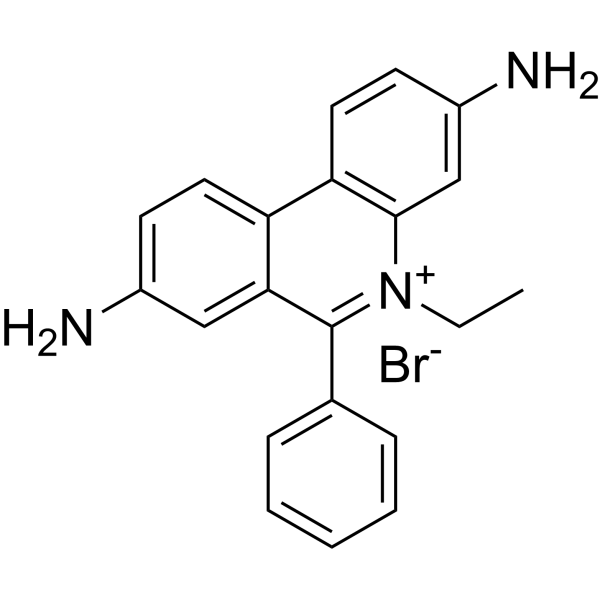
EthD bromide is an intercalating agent commonly used as a fluorescent tag (nucleic acid stain) in molecular biology laboratories for techniques such as agarose gel electrophoresis.
|
-
-
- HY-W088070A
-
|
|
Biochemical Assay Reagents
|
Others
|
|
Agarose,Low melting point is a kind of agarose, a kind of polysaccharide that can be derived from seaweed. It is commonly used in molecular biology and biochemistry to isolate and purify DNA and RNA fragments. Agarose,Low melting point is a low melting point agarose, which is suitable for the recovery of large DNA fragments and enzymatic reactions in gels and other applications. In addition, it has been used in various techniques, such as pulsed field gel electrophoresis and capillary electrophoresis for analyzing genetic material.
|
-

-
- HY-W134423
-
|
|
Environmental Pollutants
Biochemical Assay Reagents
|
Others
Cancer
|
|
Agar, microbiology tested, for cell culture (powder) is a jelly like substance that contains agarose and agar gel. Agar, microbiology tested, for cell culture (powder) can be isolated from the cell walls of red algae species such as Gelidium and Gracilaria (Ogonori). The gelation and melting of Agar, microbiology tested, for cell culture (powder) is based on the hydrogen bridge (physical gels), so the gelation is reversible. Agar, microbiology tested, for cell culture (powder) is widely used in food additives, plant tissue culture, microorganisms culture media, fingerprint recognition, and medical fields .
|
-

-
- HY-P2149A
-
|
|
Mitosis
|
Others
Metabolic Disease
|
|
Concanavalin A (agarose) is composed of Concanavalin A (HY-P2149) conjugated with agarose. Concanavalin A (ConA) is a selective competitive binder targeting the specific carbohydrate structures of glucose and mannose, inducing mitosis, and exhibiting certain cytotoxicity, hepatotoxicity, and teratogenicity. Concanav in A (agarose) can be used for in vivo blood glucose monitoring in diabetes, and for "fishing out" specific glycoproteins or removing sugar impurities from complex samples .
|
-

-
- HY-DY1050
-
|
|
DNA Stain
|
Others
|
Ethidium bromide (solution) is an intercalating agent commonly used as a fluorescent tag (nucleic acid stain) in molecular biology laboratories for techniques such as agarose gel electrophoresis.
Solvent and Concentration: Sterile water: 10 mg/Ml
|
-

-
- HY-D0947
-
|
|
DNA Stain
|
Others
|
|
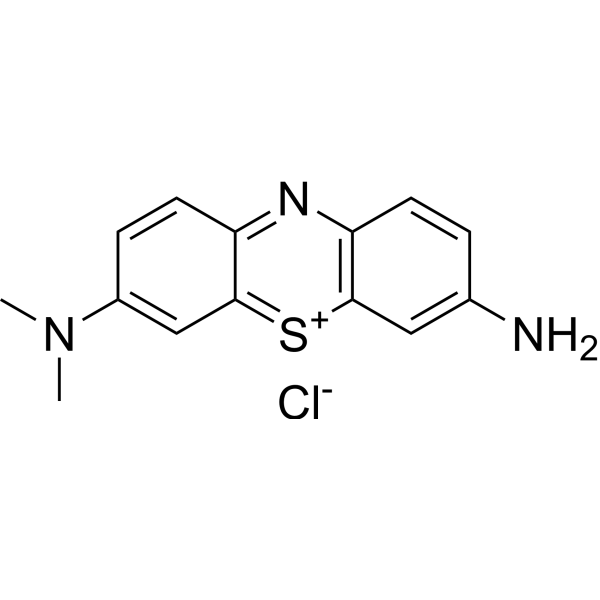
Azure A chloride is a phenothiazine dye. Azure A chloride is an alternative DNA dye used for the separation of DNA and protein fragments in agarose gel electrophoresis and PAGE. Azure A chloride can be chemisorbed on the surface of mild steel according to the Langmuir adsorption isotherm to form a protective film. Azure A chloride binds to double-stranded DNA in a non-cooperative manner via weak intercalation, triggering molecular conformational disturbance, restricted rotational motion, and changes in optical activity .
|
-
-
- HY-B2218D
-
|
Magnesium dihydroxide, 99%(KT)
|
Environmental Pollutants
Bacterial
|
Infection
Inflammation/Immunology
|
|
Magnesium hydroxide (Magnesium dihydroxide), 99%(KT) is an orally effective antacid. Magnesium hydroxide, 99%(KT) can form a local strongly alkaline microenvironment, reduce ATP production by consuming H +, and hydrolyze cellular phospholipids to disrupt the cellular integrity of microorganisms, thus exhibiting antibacterial activity. Magnesium hydroxide, 99%(KT) downregulates the generation of inflammatory macrophages to alleviate inflammatory responses. Magnesium hydroxide, 99%(KT) can be used in research related to acid peptic diseases and chronic wound infections .
|
-

-
- HY-W190824
-
|
|
Biochemical Assay Reagents
|
Others
|
|
Biotin-PEG8-azide is a bioconjugation reagent. Biotin-PEG8-azide consists of biotin, PEG8 linker and azide group and serves as a modifying linker in click reactions. Biotin-PEG8-azide can be used for research related to click chemistry .
|
-

-
- HY-W134423A
-
|
|
Biochemical Assay Reagents
Bacterial
Fungal
|
Infection
|
|
Agar, microbiology tested, for cell culture (granular) is a hydrocolloid with gelling ability. Agar, microbiology tested, for cell culture (granular) can be used to prepare microbial culture media (for bacteria, yeasts and molds) .
|
-

-
- HY-113553
-
|
(p-Aminophenyl)phosphocholine; p-Aminophenylphosphorylcholine; 4-APPC
|
Endogenous Metabolite
|
Metabolic Disease
|
|
4-Aminophenylphosphorylcholine ((p-Aminophenyl)phosphocholine) is a probe that can be conjugated to agarose gels to generate adsorbents for affinity precipitation experiments.
|
-

-
- HY-P2929B
-
|
|
Glycosidase
|
Others
|
PNGase F (Immobilized, Microspin) is a resin in which PNGase F (peptide N-glycosidase F) is covalently coupled to agarose beads, and it is used to remove N-glycans from antibodies, fusion proteins and other N-glycosylated proteins. The enzyme is recombinantly expressed in Escherichia coli, with its sequence derived from Flavobacterium meningsepticum .
|
-

-
- HY-NP0160
-
|
WGA (Agarose)
|
Fluorescent Dye
|
Others
|
|
Succinylated Wheat Germ Agglutinin (WGA) Agarose is a plant lectin that can serve as a probe to specifically bind biomolecules (such as polysaccharides, polypeptides, etc.). Succinylated Wheat Germ Agglutinin (WGA) Agarose is available as a biological material or organic compound for life science research .
|
-

-
- HY-P2769A
-
|
|
Biochemical Assay Reagents
|
Others
|
|
Thermostable β-Agarase is a hydrolase that can hydrolyze the β-1,4 linkages in agarose to produce neoagaro-oligosaccharides, and it can be used to extract DNA and RNA from gels. Compared to conventional β-Agarase, Thermostable β-Agarase exhibits higher heat resistance and stronger hydrolytic activity. The thermostable properties of Thermostable β-Agarase simplify experimental procedures and make it suitable for the rapid purification of intact large DNA molecules .
|
-

-
- HY-D0009
-
|
|
Fluorescent Dye
|
Others
|
|
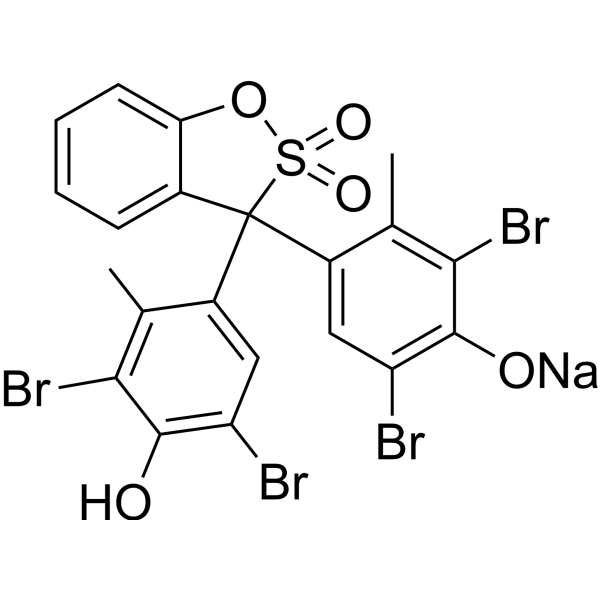
Bromocresol green sodium is an anionic dye. Bromocresol green sodium can be used for pH indication and DNA agarose gel electrophoresis. Bromocresol green sodium is also used in mammalian albumin measurement. Bromocresol green sodium deprotonates and produces the monoanionic form of yellow colour at lower pH (acidic condition), and produces dianionic blue colour at the basic condition .
|
-
-
- HY-D0011
-
|
|
Biochemical Assay Reagents
|
Others
|
|
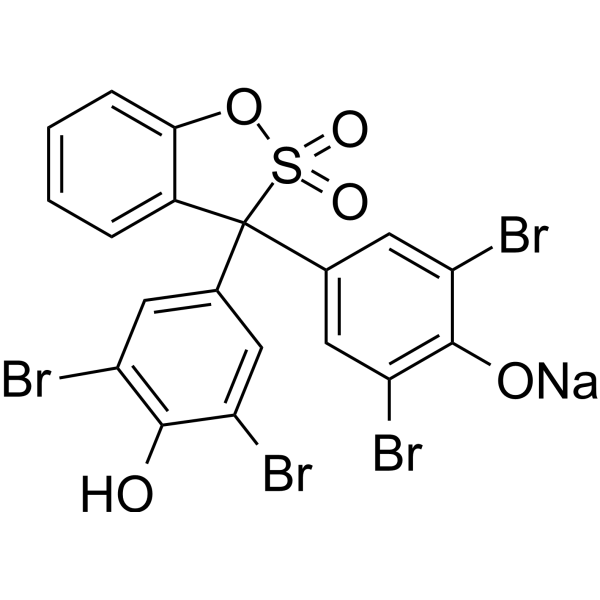
Bromophenol blue sodium is a pH indicator. It changes from yellow at pH 3.0 to blue at pH 4.6. Bromophenol blue sodium is also used as a tracking dye to monitor the process of agarose gel electrophoresis and polyacrylamide gel electrophoresis .
|
-
-
- HY-121322
-
|
|
Others
|
Others
|
|
Neoagarobiose has both a moisturizing effect on skin and a whitening effect on melanoma cells. RagaA11 is an endo-type beta-agarase hydrolysing not only agarose, but also neoagarotetraose, to yield neoagarobiose as the final main product .
|
-

-
- HY-157235
-
|
|
Biochemical Assay Reagents
|
Inflammation/Immunology
|
|
AC Antibody affinity resin is AC commonly used packing. AC Antibody affinity resin has highly cross-linked agarose matrix with 85 μm of average particle size. AC Antibody affinity resin has alkali-resistant protein A derivative (E. coli) ligand. AC Antibody affinity resin can be used for antibody affinity chromatography .
|
-

-
- HY-157246
-
-

-
- HY-157242
-
|
|
Biochemical Assay Reagents
|
Others
|
|
CEX Polishing resin is an agarose filler that can be used in cation exchange chromatography (The average particle size: 50 μm) .
|
-

-
- HY-157245
-
|
|
Biochemical Assay Reagents
|
Others
|
|
Hydrophobic polishing resin is an agarose filler that can be used in hydrophobic interaction chromatography (The average particle size: 40 μm) .
|
-

-
- HY-157232
-
|
|
Biochemical Assay Reagents
|
Others
|
AC Antibody purification resin 2 is based on spherical, highly cross-linked agarose beads with a narrow size distribution and high mechanical stability. Used for the separation and purification of complex antibodies such as monoclonal antibody, double antibody, multi-antibody and Fc fusion protein
.
Substrate: highly crosslinked agarose microspheres; Particle size: 65μm; Ligand: alkali-resistant recombinant Protein A; ADC purified resin.
|
-
-
- HY-D0021S
-
|
EtBr-d5; Homidium-d5 bromide
|
Isotope-Labeled Compounds
DNA Stain
|
Others
|
|
EthD-d5 bromide is the deuterium labeled Ethidium bromide. EthD bromide is an intercalating agent commonly used as a fluorescent tag (nucleic acid stain) in molecular biology laboratories for techniques such as agarose gel electrophoresis.
|
-

-
- HY-157233
-
|
|
Biochemical Assay Reagents
|
Cardiovascular Disease
|
|
AC Antibody purification resin 1 is a nano agarose with a particle size of 69μm. AC Antibody purification resin 1 can be used in ADC purification. AC Antibody purification resin 1 contains a ligand: recombinant protein A.
|
-
-
- HY-E70365A
-
|
|
Biochemical Assay Reagents
|
Inflammation/Immunology
|
|
IdeS (Immobilized, Microspin) is a resin that covalently couples IdeS protease to agarose beads and cleaves IgG at specific sites to generate F(ab')2 and Fc fragments. After IdeS (Immobilized, Microspin) digestion, F(ab')2 and Fc fragments are obtained in the solution without IdeS enzyme.
|
-

-
- HY-165277
-
|
|
Angiotensin-converting Enzyme (ACE)
|
Cardiovascular Disease
|
|
ε-Biotinamidocaproyl-β-alanyl-β-alanyl-lisinopril is an angiotensin-converting enzyme (ACE) inhibitor. Structurally, ε-Biotinamidocaproyl-β-alanyl-β-alanyl-lisinopril is a biotinylated derivative of lisinopril (HY-18206), with a chemical structure linking the biotin molecule and the lisinopril molecule composed of 19 atoms. ε-Biotinamidocaproyl-β-alanyl-β-alanyl-lisinopril can bind to both ACE and streptavidin (HY-P3152) simultaneously, making it possible to separate and purify ACE using streptavidin-agarose beads .
|
-

-
- HY-E71012
-
-

-
- HY-W800818
-
|
|
Biochemical Assay Reagents
|
Others
|
|
(Z)-Non-2-enyl 6-bromohexanoate is an analogue of Biotin and a protein cross-linking agent.(Z)-Non-2-enyl 6-bromohexanoate binds less tightly to biotin-binding proteins such as Avidin and is easily displaced by Biotin. It is used in the preparation of agarose matrices for affinity-based isolation of streptavidin-fluorophore conjugates.
|
-

-
- HY-P11661
-
|
|
Epigenetic Reader Domain
|
Inflammation/Immunology
|
DC-peptoid-1 is a specific binder and crosslinker targeting the phosphorylated Brd4 PDID domain, with a dissociation constant (Kd) of approximately 50-100 μM for human-derived targets. DC-peptoid-1 only binds to phosphorylated PDID and fails to recognize the non-phosphorylated form or other domains (such as Brd4 598-785). DC-peptoid-1 effectively crosslinks with the target protein both in solution and cell lysates. It can successfully capture phosphorylated PDID from complex systems via immobilization, without binding to bacterial-derived non-phosphorylated proteins or other non-specific phosphoproteins. DC-peptoid-1 has the potential to serve as a phosphoprotein-specific antibody substitute for applications such as immunoaffinity purification .
|
-

-
- HY-165400
-
|
|
Fluorescent Dye
DNA Alkylator/Crosslinker
|
Others
|
|
TODi-1 (TOTO) is a double-stranded DNA binder and Fluorescence enhancer (with a lambda max of 513 nm for dsDNA-TOTO). TODi-1 forms stable bis-intercalation complexes with double-stranded DNA. TODi-1 shows almost no fluorescence in free solution, but its fluorescence intensity increases significantly upon binding to double-stranded DNA .
|
-

| Cat. No. |
Product Name |
Type |
-
- HY-D0021
-
|
EtBr; Homidium bromide
|
Fluorescent Dyes
|
|
EthD bromide is an intercalating agent commonly used as a fluorescent tag (nucleic acid stain) in molecular biology laboratories for techniques such as agarose gel electrophoresis.
|
-
- HY-DY1050
-
|
|
Fluorescent Dyes
|
Ethidium bromide (solution) is an intercalating agent commonly used as a fluorescent tag (nucleic acid stain) in molecular biology laboratories for techniques such as agarose gel electrophoresis.
Solvent and Concentration: Sterile water: 10 mg/Ml
|
-
- HY-D0947
-
|
|
Fluorescent Dyes
|
|
Azure A chloride is a phenothiazine dye. Azure A chloride is an alternative DNA dye used for the separation of DNA and protein fragments in agarose gel electrophoresis and PAGE. Azure A chloride can be chemisorbed on the surface of mild steel according to the Langmuir adsorption isotherm to form a protective film. Azure A chloride binds to double-stranded DNA in a non-cooperative manner via weak intercalation, triggering molecular conformational disturbance, restricted rotational motion, and changes in optical activity .
|
-
- HY-D0009
-
|
|
Fluorescent Dyes
|
|
Bromocresol green sodium is an anionic dye. Bromocresol green sodium can be used for pH indication and DNA agarose gel electrophoresis. Bromocresol green sodium is also used in mammalian albumin measurement. Bromocresol green sodium deprotonates and produces the monoanionic form of yellow colour at lower pH (acidic condition), and produces dianionic blue colour at the basic condition .
|
-
- HY-D0011
-
|
|
Fluorescent Dyes
|
|
Bromophenol blue sodium is a pH indicator. It changes from yellow at pH 3.0 to blue at pH 4.6. Bromophenol blue sodium is also used as a tracking dye to monitor the process of agarose gel electrophoresis and polyacrylamide gel electrophoresis .
|
-
- HY-165400
-
|
|
Fluorescent Dyes
|
|
TODi-1 (TOTO) is a double-stranded DNA binder and Fluorescence enhancer (with a lambda max of 513 nm for dsDNA-TOTO). TODi-1 forms stable bis-intercalation complexes with double-stranded DNA. TODi-1 shows almost no fluorescence in free solution, but its fluorescence intensity increases significantly upon binding to double-stranded DNA .
|
| Cat. No. |
Product Name |
Type |
-
- HY-P2149
-
|
|
Biochemical Assay Reagents
|
|
Concanavalin A can be coupled to agarose to form Concanavalin A (agarose) (HY-P2149A). Concanavalin A (ConA) is a selective, competitive binding agent that targets specific carbohydrate structures containing glucose and mannose; it acts as a mitogen and exhibits varying degrees of cytotoxicity, hepatotoxicity, and teratogenicity. Concanavalin A is also utilized for in vivo blood glucose monitoring in the context of diabetes .
|
-
- HY-W088070A
-
|
|
Biochemical Assay Reagents
|
|
Agarose,Low melting point is a kind of agarose, a kind of polysaccharide that can be derived from seaweed. It is commonly used in molecular biology and biochemistry to isolate and purify DNA and RNA fragments. Agarose,Low melting point is a low melting point agarose, which is suitable for the recovery of large DNA fragments and enzymatic reactions in gels and other applications. In addition, it has been used in various techniques, such as pulsed field gel electrophoresis and capillary electrophoresis for analyzing genetic material.
|
-
- HY-W134423
-
|
|
Biochemical Assay Reagents
|
|
Agar, microbiology tested, for cell culture (powder) is a jelly like substance that contains agarose and agar gel. Agar, microbiology tested, for cell culture (powder) can be isolated from the cell walls of red algae species such as Gelidium and Gracilaria (Ogonori). The gelation and melting of Agar, microbiology tested, for cell culture (powder) is based on the hydrogen bridge (physical gels), so the gelation is reversible. Agar, microbiology tested, for cell culture (powder) is widely used in food additives, plant tissue culture, microorganisms culture media, fingerprint recognition, and medical fields .
|
-
- HY-P2149A
-
|
|
Biochemical Assay Reagents
|
|
Concanavalin A (agarose) is composed of Concanavalin A (HY-P2149) conjugated with agarose. Concanavalin A (ConA) is a selective competitive binder targeting the specific carbohydrate structures of glucose and mannose, inducing mitosis, and exhibiting certain cytotoxicity, hepatotoxicity, and teratogenicity. Concanav in A (agarose) can be used for in vivo blood glucose monitoring in diabetes, and for "fishing out" specific glycoproteins or removing sugar impurities from complex samples .
|
-
- HY-B2218D
-
|
Magnesium dihydroxide, 99%(KT)
|
Biochemical Assay Reagents
|
|
Magnesium hydroxide (Magnesium dihydroxide), 99%(KT) is an orally effective antacid. Magnesium hydroxide, 99%(KT) can form a local strongly alkaline microenvironment, reduce ATP production by consuming H +, and hydrolyze cellular phospholipids to disrupt the cellular integrity of microorganisms, thus exhibiting antibacterial activity. Magnesium hydroxide, 99%(KT) downregulates the generation of inflammatory macrophages to alleviate inflammatory responses. Magnesium hydroxide, 99%(KT) can be used in research related to acid peptic diseases and chronic wound infections .
|
-
- HY-W134423A
-
|
|
Biochemical Assay Reagents
|
|
Agar, microbiology tested, for cell culture (granular) is a hydrocolloid with gelling ability. Agar, microbiology tested, for cell culture (granular) can be used to prepare microbial culture media (for bacteria, yeasts and molds) .
|
-
- HY-NP0160
-
|
WGA (Agarose)
|
Biochemical Assay Reagents
|
|
Succinylated Wheat Germ Agglutinin (WGA) Agarose is a plant lectin that can serve as a probe to specifically bind biomolecules (such as polysaccharides, polypeptides, etc.). Succinylated Wheat Germ Agglutinin (WGA) Agarose is available as a biological material or organic compound for life science research .
|
-
- HY-D0011
-
|
|
Biochemical Assay Reagents
|
|
Bromophenol blue sodium is a pH indicator. It changes from yellow at pH 3.0 to blue at pH 4.6. Bromophenol blue sodium is also used as a tracking dye to monitor the process of agarose gel electrophoresis and polyacrylamide gel electrophoresis .
|
| Cat. No. |
Product Name |
Target |
Research Area |
-
- HY-P11661
-
|
|
Epigenetic Reader Domain
|
Inflammation/Immunology
|
DC-peptoid-1 is a specific binder and crosslinker targeting the phosphorylated Brd4 PDID domain, with a dissociation constant (Kd) of approximately 50-100 μM for human-derived targets. DC-peptoid-1 only binds to phosphorylated PDID and fails to recognize the non-phosphorylated form or other domains (such as Brd4 598-785). DC-peptoid-1 effectively crosslinks with the target protein both in solution and cell lysates. It can successfully capture phosphorylated PDID from complex systems via immobilization, without binding to bacterial-derived non-phosphorylated proteins or other non-specific phosphoproteins. DC-peptoid-1 has the potential to serve as a phosphoprotein-specific antibody substitute for applications such as immunoaffinity purification .
|
-
- HY-K1029
-
|
|
|
MCE Agarose With TAE Powder (1%) mainly consists of proportionally mixed agarose and TAE Powder, and can be directly made into 1% agarose gel. The 20 pouches are defined as the base specification. All larger sizes correspond to incremental volumes of this base.
|
-
- HY-K0211
-
|
|
|
MCE Glutathione Agarose, a 4% highly cross-linked agarose reagent, enables high-yield, high-purity purification of GST-tagged proteins.
|
-
- HY-K0218A
-
|
|
|
MCE Streptavidin Agarose 6FF, a 6% highly cross-linked agarose reagent coupled with recombinant streptavidin, is an affinity chromatography medium for separation and purification of biotinylated peptides, antibodies, lectins, etc. The total binding capacity of Streptavidin Agarose 6FF is more than 200 nmol of D-Biotin/mL settled resin.
|
-
- HY-K0210
-
Maximum Cited Publications
30 Publications Verification
|
|
MCE Ni-NTA His-Tag Purification Agarose, a 6% highly cross-linked agarose reagent, enables high-yield, high-purity purification of his-tagged proteins.
|
-
- HY-K0213
-
5 Publications Verification
|
|
MCE Protein A Agarose, a 4% highly cross-linked agarose reagent coupled with recombinant Protein A, effectively purifies mammalian monoclonal and polyclonal antibodies, such as human IgG, IgE, IgM.
|
-
- HY-K0264
-
|
|
|
MCE Butyl Agarose 4FF is a hydrophobic chromatography medium formed by covalently coupling butyl ligands to agarose. It is suitable for both laboratory use and large-scale industrial purification.
|
-
- HY-K0266
-
|
|
|
MCE Octyl Agarose 6FF is a hydrophobic chromatography medium formed by covalently coupling butyl ligands to agarose. It is suitable for both laboratory use and large-scale industrial purification.
|
-
- HY-K0270
-
|
|
|
MCE Phenyl Agarose HP is a high-resolution hydrophobic chromatography medium formed by covalently coupling phenyl ligands to agarose. It is suitable for laboratory-scale and industrial-scale purification of biomolecules.
|
-
- HY-K1031
-
2 Publications Verification
|
|
MCE Agarose can be made into 0.5-2.5% agarose gel according to different needs and can resolve DNA and RNA fragments from 50-15,000 bp.
|
-
- HY-K0215
-
1 Publications Verification
|
|
MCE Protein L Agarose, a 4% highly cross-linked agarose reagent coupled with recombinant Protein L, effectively purifies mammalian monoclonal and polyclonal antibodies which have kappa light chain.
|
-
- HY-K0219
-
1 Publications Verification
|
|
MCE High-Affinity Iodoacetyl Agarose, a 4% highly cross-linked agarose reagent coupled with a derivative of iodoacetic acid, is ideal for conjugating sulfhydryl-containing peptide or protein for subsequent affinity purification.
|
-
- HY-K0265
-
|
|
|
MCE Butyl Agarose HP is a high-resolution hydrophobic chromatography medium formed by covalently coupling butyl ligands to agarose. It is suitable for both laboratory use and large-scale industrial purification.
|
-
- HY-K0267
-
|
|
|
MCE Octyl Agarose HP is a high-resolution hydrophobic chromatography medium formed by covalently coupling octyl ligands to agarose. It is suitable for both laboratory use and large-scale industrial purification.
|
-
- HY-K0257
-
|
|
|
MCE CM Agarose 6FF is a weak cation exchanger formed by covalently coupling carboxymethyl (CM) groups to agarose microspheres. It is suitable for both laboratory research and large-scale industrial purification processes.
|
-
- HY-K0258
-
|
|
|
MCE SP Agarose 6FF is a strong cation exchanger formed by covalently coupling sulfopropyl (SP) groups to agarose microspheres. It is suitable for both laboratory research and large-scale industrial purification processes.
|
-
- HY-K0259
-
|
|
|
MCE DEAE Agarose 6FF is a weak cation exchanger formed by covalently coupling diethylaminoethyl (DEAE) groups to agarose microspheres. It is suitable for both laboratory research and large-scale industrial purification processes.
|
-
- HY-K0260
-
|
|
|
MCE Q Agarose 6FF is a strong cation exchanger formed by covalently coupling quarternary ammonium (Q) groups to agarose. It is suitable for both laboratory research and large-scale industrial purification processes.
|
-
- HY-K0214
-
|
|
|
MCE Protein G Agarose, a 4% highly cross-linked agarose reagent coupled with recombinant Protein G, effectively purifies mammalian monoclonal and polyclonal antibodies, such as human IgG3 and rat IgG2a.
|
-
- HY-K0268
-
|
|
|
MCE Phenyl Agarose (Low Sub) 6FF is a low-substitution hydrophobic chromatography medium formed by covalently coupling phenyl ligands to agarose. It is suitable for laboratory-scale and industrial-scale purification of biomolecules with relatively weak hydrophobicity.
|
-
- HY-K0269
-
|
|
|
MCE Phenyl Agarose (High Sub) 6FF is a high-substitution hydrophobic chromatography medium formed by covalently coupling phenyl ligands to agarose. It is suitable for laboratory-scale and industrial-scale purification of biomolecules with relatively weak hydrophobicity.
|
-
- HY-K0252
-
|
|
|
MCE MBP Agarose (Dextrin) 6FF is prepared by covalently coupling dextrin to an agarose matrix. It features high binding capacity, excellent specificity, and superior ligand stability. It can achieve one-step purification of MBP fusion protein.
|
-
- HY-K0261
-
|
|
|
MCE SP Agarose HP is a high-resolution strong cation exchanger formed by covalently coupling sulfopropyl (SP) groups to agarose. This medium offers high binding capacity, high specificity, and excellent ligand stability, making it suitable for both laboratory-scale and large-scale industrial purification applications.
|
-
- HY-K0262
-
|
|
|
MCE DEAE Agarose HP is a high-resolution weak anion exchanger formed by covalently coupling diethylaminoethyl (DEAE) groups to agarose. This medium offers high binding capacity, high specificity, and excellent ligand stability, making it suitable for both laboratory-scale and large-scale industrial purification applications.
|
-
- HY-K0230
-
Maximum Cited Publications
30 Publications Verification
|
|
MCE Protein A/G Agarose is an affinity chromatography medium for separation and purification of immunoglobulins.
|
-
- HY-K0238
-
|
|
|
MCE Ni-IDA Agarose can be used for the detection and purification of His-tag proteins.
|
-
- HY-K0263
-
|
|
|
MCE Q Agarose HP is a high-resolution strong anion exchanger formed by covalently coupling quaternary ammonium (Q) groups to agarose. This medium offers high binding capacity, high specificity, and excellent ligand stability, making it suitable for both laboratory-scale and large-scale industrial purification applications.
|
-
- HY-K0255
-
|
|
|
MCE IMAC Agarose (NTA) 6FF is prepared by covalently coupling tetradentate nitrilotriacetic acid (NTA) to an agarose matrix. It features high binding capacity, excellent specificity, and superior ligand stability. The resin allows flexible chelation with metal ions such as Zn2+, Ni2+, or Cu2+, and is suitable for the purification of His-tagged recombinant proteins expressed in bacterial, mammalian, insect, and baculovirus systems.
|
-
- HY-K0237
-
2 Publications Verification
|
|
MCE Anti-HA Magnetic Agarose Beads can be used for the detection and purification of HA fusion-expressed proteins and IP assays.
|
-
- HY-K0246
-
3 Publications Verification
|
|
MCE Anti-GFP Magnetic Agarose Beads can be used for the detection and purification of GFP, EGFP, and their fusion-expressed proteins and IP assays.
|
-
- HY-K0241
-
1 Publications Verification
|
|
MCE Ni-NTA Magnetic Agarose Beads can be used for the detection and purification of His-tag proteins from various expression sources.
|
-
- HY-K0236
-
|
|
|
MCE Anti-GFP Magnetic Agarose Beads can be used for the detection and purification of Flag (DYKDDDDK) fusion-expressed proteins and IP assays.
|
-
- HY-K0240
-
|
|
|
MCE Ni-IDA Magnetic Agarose Beads can be used for the detection and purification of His-tag proteins from various expression sources.
|
-
- HY-K1004
-
|
|
|
MCE SYBR Green I Nucleic Acid Gel Stain is one of the most sensitive stains available for detecting double-stranded DNA (dsDNA) in agarose and polyacrylamide gels.
|
-
- HY-K0242
-
1 Publications Verification
|
|
MCE Protein A Plus Magnetic Agarose Beads can be used for the detection and purification of IgG from serum, ascites fluid, cell culture supernatant and other antibody samples.
|
-
- HY-K0243
-
3 Publications Verification
|
|
MCE Protein G Plus Magnetic Agarose Beads can be used for the detection and purification of IgG from serum, ascites fluid, cell culture supernatant and other antibody samples.
|
-
- HY-K1007
-
4 Publications Verification
|
|
MCE Red Nucleic Acid Gel Stain (10,000×) is a nucleic acid stain that can be used as a safer alternative to the traditional ethidium bromide (EB) stain for detecting nucleic acids in agarose gels or polyacrylamide gels.
|
-
- HY-K0251
-
|
|
|
MCE Protein A Agarose (Alkali-Tolerant) 4FF can efficiently binds IgG from serum, ascites, culture supernatants, and other antibody-containing samples, enabling high-performance antibody purification.
|
-
- HY-K1016
-
|
|
|
MCE TBE Powder (1 L of 1×) consists of Tris, Boric Acid and EDTA, and is widely used in agarose gel electrophoresis of nucleic acid. The 10 pouches are defined as the base specification. All larger sizes correspond to incremental volumes of this base.
|
-
- HY-K0234
-
2 Publications Verification
|
|
MCE Glutathione Magnetic Agarose Beads have high protein-binding capacity and stability, making it ideal for high performance purification of GST-tagged fusion proteins expressed in E. coli, yeast, insect and mammalian expression systems.
|
-
- HY-K0254
-
|
|
|
MCE Blue Agarose 6FF can be used for the purification of biological macromolecules such as albumin, interferons, nucleotide-dependent enzymes (e.g., kinases, dehydrogenases), α2-macroglobulin, and coagulation factors.
|
-
- HY-K0256
-
|
|
|
MCE Chelating Agarose (IDA) 6FF allows flexible chelation with metal ions such as Zn2+, Ni2+, or Cu2+, and is suitable for the purification of His-tagged recombinant proteins expressed in bacterial, mammalian, insect, and baculovirus systems.
|
-
- HY-K1015
-
|
|
|
MCE TAE Powder (1 L of 1×) consists of Tris-acetate and EDTA-2Na, and is widely used in agarose gel electrophoresis of nucleic acid. The 20 pouches are defined as the base specification. All larger sizes correspond to incremental volumes of this base.
|
-
- HY-K0253
-
|
|
|
MCE Heparin Agarose 6FF is suitable for the separation and purification of heparin-binding biomolecules, including antithrombin III, coagulation factors, other plasma proteins, DNA-binding proteins, lipoproteins, protein synthesis factors, nucleic acid-related enzymes, and steroid receptors.
|
| Cat. No. |
Product Name |
Category |
Target |
Chemical Structure |
| Cat. No. |
Product Name |
Chemical Structure |
-
- HY-D0021S
-
|
|
|
EthD-d5 bromide is the deuterium labeled Ethidium bromide. EthD bromide is an intercalating agent commonly used as a fluorescent tag (nucleic acid stain) in molecular biology laboratories for techniques such as agarose gel electrophoresis.
|
-
| Cat. No. |
Product Name |
|
Classification |
-
- HY-W134423
-
|
|
|
Thickeners
|
|
Agar, microbiology tested, for cell culture (powder) is a jelly like substance that contains agarose and agar gel. Agar, microbiology tested, for cell culture (powder) can be isolated from the cell walls of red algae species such as Gelidium and Gracilaria (Ogonori). The gelation and melting of Agar, microbiology tested, for cell culture (powder) is based on the hydrogen bridge (physical gels), so the gelation is reversible. Agar, microbiology tested, for cell culture (powder) is widely used in food additives, plant tissue culture, microorganisms culture media, fingerprint recognition, and medical fields .
|
Your information is safe with us. * Required Fields.
Inquiry Information
- Product Name:
- Cat. No.:
- Quantity:
- MCE Japan Authorized Agent:








