Search Result
Results for "
anesthetized
" in MedChemExpress (MCE) Product Catalog:
| Cat. No. |
Product Name |
Target |
Research Areas |
Chemical Structure |
-
- HY-17465
-
|
Glycopyrronium bromide; Glycopyrrolate bromide
|
mAChR
|
Cardiovascular Disease
Neurological Disease
Cancer
|
|
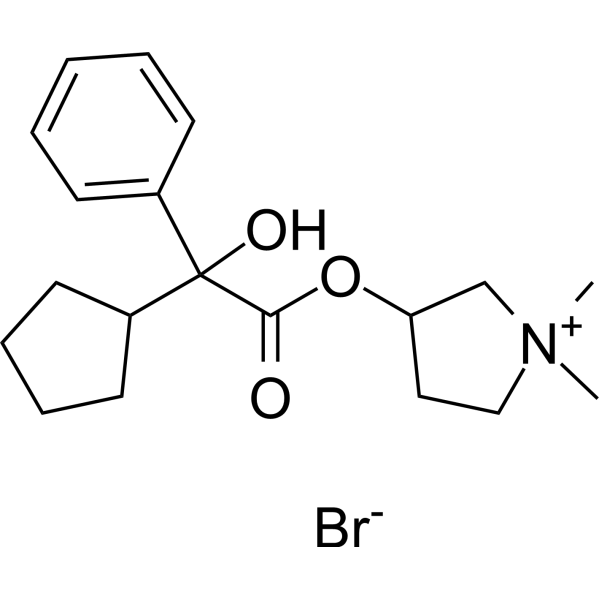
Glycopyrrolate (Glycopyrronium bromide), a quaternary ammonium derivative, is a muscarinic receptor antagonist. Glycopyrrolate has bronchoprotective effect and produces a beneficial effect on blood pressure. Glycopyrrolate can be used for the research of bronchial diseases .
|
-
-
- HY-100788C
-
|
2-(Phosphonomethyl)pentanedioic acid sodium
|
Carboxypeptidase
|
Neurological Disease
|
|
2-PMPA (2-(Phosphonomethyl)pentanedioic acid) sodium is a glutamate carboxypeptidase II (GCPII) inhibitor with an IC50 of 0.0003 μM. 2-PMPA sodium shows low blood-brain barrier penetration. 2-PMPA sodium blocks the hydrolysis of NAAG, regulates glutamate levels in the brain and neurovascular coupling. 2-PMPA sodium is applicable to the research of neurological diseases .
|
-
-
- HY-118470
-
|
Butoxamin hydrochloride
|
Adrenergic Receptor
|
Endocrinology
|
|
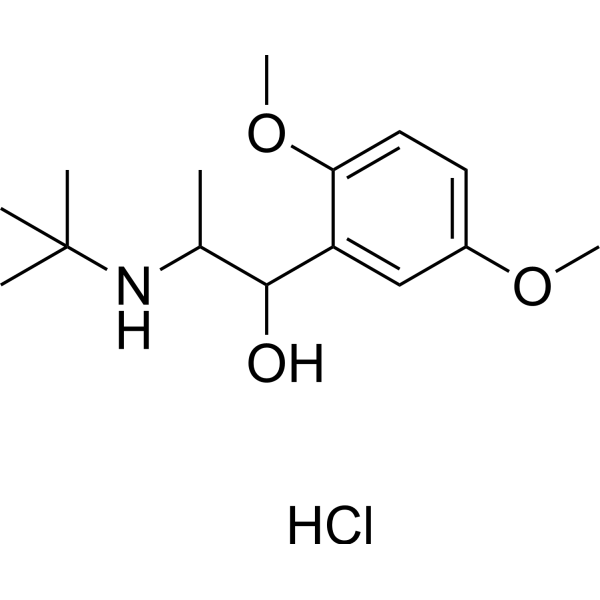
Butaxamine (Butoxamin) hydrochloride is a specific β2-adrenergic receptor blocker. Butaxamine hydrochloride inhibits the decreases in urine volume in ethanol-anesthetized, water-diuretic rats .
|
-
-
- HY-123068
-
|
SQ 14551
|
Drug Derivative
|
Cardiovascular Disease
|
|
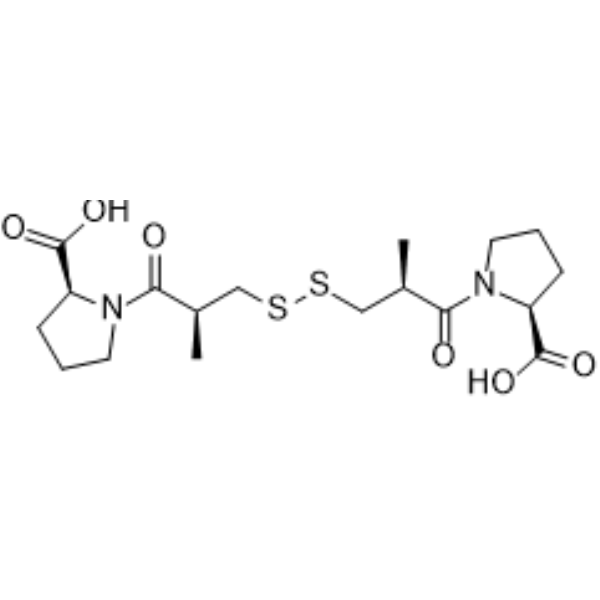
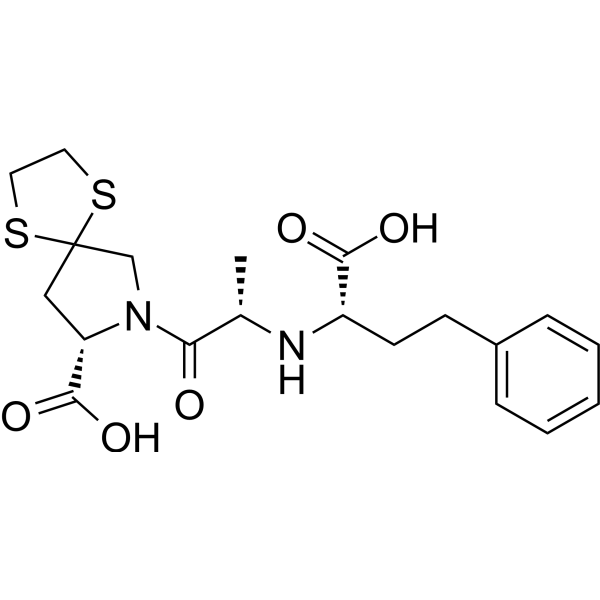
Captopril disulfide (SQ 14551) is an orally active disulfide dimer prodrug. Captopril disulfide is metabolized to Captopril and acts as a Bradykinin potentiator. Captopril disulfide enhances the vasodilatory effect of Bradykinin in anesthetized rats and the contractile response of isolated guinea pig ileum to Bradykinin. Captopril disulfide exhibits antihypertensive activity in spontaneously hypertensive rats. Captopril disulfide can be used in hypertension-related research .
|
-
-
- HY-105090
-
|
|
5-HT Receptor
|
Cardiovascular Disease
Neurological Disease
|
|
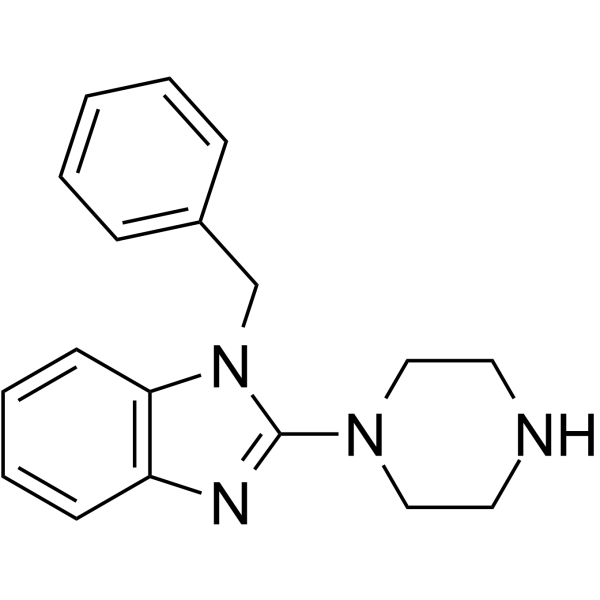
Lerisetron is a potent 5-HT3 antagonists and possess high-affinity binding for the 5-HT3 receptors with pKi value of 9.2. Lerisetron has a potent ability to inhibit the 5-HT-evoked reflex bradycardia in urethane-anesthetized rats .
|
-
-
- HY-P1323A
-
|
|
Neuropeptide Y Receptor
|
Cardiovascular Disease
Neurological Disease
|
|
[Leu31,Pro34]-Neuropeptide Y(human,rat) TFA is a specific neuropeptide Y Y1 receptor agonist. [Leu31,Pro34]-Neuropeptide Y(human,rat) TFA slao activates Y4, Y5. [Leu31,Pro34]-Neuropeptide Y(human,rat) TFA can increase blood pressure in anesthetized rats and increases food intake .
|
-
-
- HY-P1323
-
|
|
Neuropeptide Y Receptor
|
Cardiovascular Disease
Neurological Disease
|
|
[Leu31,Pro34]-Neuropeptide Y(human,rat) is a specific neuropeptide Y Y1 receptor agonist. [Leu31,Pro34]-Neuropeptide Y(human,rat) slao activates Y4, Y5. [Leu31,Pro34]-Neuropeptide Y(human,rat) can increase blood pressure in anesthetized rats and increases food intake .
|
-
-
- HY-121460
-
-
-
- HY-102065
-
|
|
Prostaglandin Receptor
|
Others
|
|
SC-19220 is a competitive prostaglandinn E2 receptor antagonist. SC-19220 increases the bladder capacity and reduced the voiding efficiency of micturition (elicited by slow transvesical filling) of urethane-anesthetized rats. SC-19220 can restores the balance in bone marrow granulocyte and monocyte production after burn sepsis .
|
-
-
- HY-151413A
-
|
|
Neurokinin Receptor
|
Neurological Disease
|
|
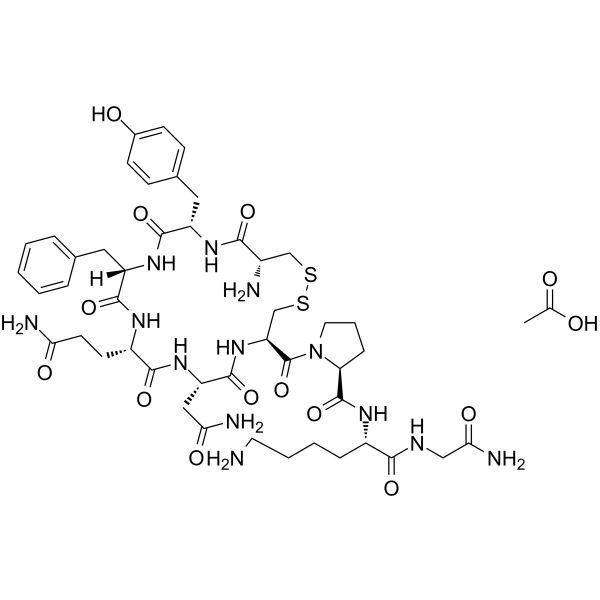
MEN 10207 (acetate) is a selective antagonist of the NK-2 tachykinin receptor. MEN 10207 (acetate) induces tachykinin-induced contractions in rat bladder and guinea pig airways in vivo. MEN 10207 (acetate) inhibits [β-Ala 8 ]-NKA (4-10)-induced enhancement of bladder motility in anesthetized rats and [β-Ala 8 ]-NKA (4-10)-induced enhancement of bronchoconstriction in anesthetized guinea pigs .
|
-
-
- HY-17019
-
|
|
Adrenergic Receptor
|
Inflammation/Immunology
|
|
SL-89.0591 is a uroselective α1-adrenoceptor antagonist. SL-89.0591 exhibits a more potent blocking effect on urethral receptors than on vascular receptors in anesthetized rabbits, with a lower risk of orthostatic hypotension. SL-89.0591 can be used in research related to benign prostatic hyperplasia .
|
-
-
- HY-W724254
-
|
|
Adrenergic Receptor
|
Endocrinology
|
|
SNAP-6201 is a selective α1a adrenoceptor antagonist with a Ki of 0.2 nM. SNAP-6201 exhibits >1400-fold selectivity over α1b and α1d adrenoceptors. SNAP-6201 exhibits excellent selectively to inhibit intraurethral pressure (IUP) in the anesthetized dog model. SNAP-6201 can be used for benign prostatic hyperplasia (BPH) research .
|
-
-
- HY-116778
-
|
|
Reactive Oxygen Species (ROS)
|
Cardiovascular Disease
Neurological Disease
Inflammation/Immunology
|
|
Prostaglandin G2 is a prostaglandin peroxide. Prostaglandin G2 acts as a precursor for thromboxane A2 production, inducing platelet aggregation and serotonin release. Prostaglandin G2 also induces cerebral arteriole injury in anesthetized cats via the generation of reactive oxygen free radicals, triggering persistent vasodilation, reduced reactivity to hypocapnia, and endothelial damage. Prostaglandin G2 can be used in studies related to cerebral arteriole injury .
|
-
-
- HY-119291
-
|
|
Phosphodiesterase (PDE)
|
Others
|
|
RA642 is a compound with vasodilatory and hypertensive effects, with the activity of increasing arterial blood pressure, enhancing cerebral blood flow, reducing cerebrovascular resistance and peripheral resistance, and having a papaverine-like relaxant effect on smooth muscle in anesthetized animals.
|
-
-
- HY-125673
-
|
|
Somatostatin Receptor
|
Neurological Disease
|
|
AC-178335 is a SRIF antagonist, with a Ki of 172 nM. AC-178335 blocks SRIF inhibition of adenylate cyclase in vitro (IC50=5.1 μM). AC-178335 induces GH release in anesthetized rats .
|
-
-
- HY-N4209
-
|
|
Others
|
Cardiovascular Disease
|
|
3α-Dihydrocadambine is a natural product isolated from the heartwoods of Anthocephalus cadamba.3α-Dihydrocadambine exhibits dose-dependent hypotensive and anti-hypertensive effects in anesthetized normotensive rats and in conscious spontaneously hypertensive rats .
|
-
-
- HY-19136
-
|
|
5-HT Receptor
|
Neurological Disease
|
|
WAY-100289 is an orally active antagonist for 5-HT3 receptor, that exhibits high affinity to the isolated rat vagus nerves with pA2 of 8.9. WAY-100289 inhibits the Bezold-Jarisch reflex in anesthetized and awake rats .
|
-
-
- HY-19037
-
-
-
- HY-17465R
-
|
Glycopyrronium bromide (Standard); Glycopyrrolate bromide (Standard)
|
Reference Standards
mAChR
|
Neurological Disease
Cancer
|
|
Glycopyrrolate (Standard) is the analytical standard of Glycopyrrolate. This product is intended for research and analytical applications. Glycopyrrolate (Glycopyrronium bromide), a quaternary ammonium derivative, is a muscarinic receptor antagonist. Glycopyrrolate has bronchoprotective effect and produces a beneficial effect on blood pressure. Glycopyrrolate can be used for the research of bronchial diseases .
|
-
-
- HY-105925
-
|
MCN 2378
|
Adrenergic Receptor
|
Cardiovascular Disease
|
|
Mefenidil (MCN 2378) is a selective cerebral vasodilator that is not affected by beta-adrenergic blockade. Mefenidil can be used in the study of cardiovascular disease. In monkey models, mefenidil preferentially increases cerebral blood flow over systemic (femoral) blood flow. Mefenidil is also able to reduce systemic arterial pressure in anesthetized dogs.
|
-
-
- HY-129445
-
|
|
Potassium Channel
|
Cardiovascular Disease
|
|
SG-209 is a Nicorandil (HY-B0341) derivative that produces relaxation through potassium channel activation, while this action contributes to the vasodilating action of Nicorandil (HY-B0341) at higher concentrations. SG-209 dilates tracheal smooth muscle and increases tracheal blood flow in anesthetized dogs .
|
-
-
- HY-129706
-
|
|
Others
|
Cardiovascular Disease
|
|
LY127210 (free base) is a potent vasodilator with antihypertensive effects that reduces pressure in chloralose-anesthetized spontaneously hypertensive rats primarily by direct arteriolar dilation and to a lesser extent by decreasing cardiac output. LY127210 (free base) reduces blood pressure, heart rate and left ventricular end-diastolic pressure in hypertensive rats by reducing vascular resistance .
|
-
-
- HY-119883
-
|
|
Adrenergic Receptor
|
Neurological Disease
|
|
A-61603 free base is a potent adrenergic receptor agonist. A-61603 free base reduces carotid artery conductance in anesthetized pigs mediated by α1 and α2 adrenergic receptors (pEC50=7.25). A-61603 free base can be used as a probe to study adrenergic function .
|
-
-
- HY-105090R
-
|
|
Reference Standards
5-HT Receptor
|
Cardiovascular Disease
Neurological Disease
Cancer
|
|
Lerisetron (Standard) is the analytical standard of Lerisetron. This product is intended for research and analytical applications. Lerisetron is a potent 5-HT3 antagonists and possess high-affinity binding for the 5-HT3 receptors with pKi value of 9.2. Lerisetron has a potent ability to inhibit the 5-HT-evoked reflex bradycardia in urethane-anesthetized rats .
|
-
-
- HY-118350
-
|
|
Biochemical Assay Reagents
|
Neurological Disease
|
|
FR 75513 is a 1,1'-biphenyl-2,6-dicarboxylic acid diester series compound that can inhibit the contraction of the detrusor muscle of guinea pig bladder (IC50=3.3 μg/mL). After intravenous injection of FR 75513 into anesthetized rats, it also showed strong inhibitory activity on the detrusor contraction (ID50=0.04 mg/kg).
|
-
-
- HY-108502
-
|
|
Sodium Channel
|
Cardiovascular Disease
|
|
KC 12291 hydrochloride is an orally active blocker of voltage-gated sodium channel (VGSC). KC 12291 hydrochloride reduces the amplitude of sustained Na + current to exert antiischemic activity. KC 12291 hydrochloride has significant cardioprotective effect in vitro and in vivo .
|
-
-
- HY-118233
-
|
M 17055
|
Chloride Channel
|
Neurological Disease
|
|
Alilusem potassium is a diuretic. In anesthetized dogs undergoing water diuresis, Alilusem potassium effectively decreased free water clearance and increased Na+ and Cl- levels in excreted urine. When combined with Furosemide (HY-B0135) or Hydrochlorothiazid, Alilusem potassium further inhibited free water clearance. Alilusem potassium inhibited the lumen-positive transepithelial voltage and lumen-to-cistern Cl- flux in isolated rabbit cortical thick ascending limbs of Henle .
|
-
-
- HY-107063
-
|
10-Undecen-1-yl-thiopseudourea iodide
|
Histamine Receptor
|
Cancer
|
|
AHR-1911 (10-Undecen-1-yl-Thiopseudourea Iodide;Isothiuronium) is a thiourea-based anti-inflammatory and anti-tumor agent that has an improving effect on burned skin. AHR-1911 produces histamine-like effects when injected intradermally and may reduce arterial pressure in anesthetized dogs. AHR-1911 inhibits tumor growth and reduces microsomal and C-polysome protein synthesis .
|
-
-
- HY-118665
-
|
|
Cholecystokinin Receptor
|
Metabolic Disease
|
|
L-736380 is a high affinity CCK-B (cholecystokinin B receptor) receptor antagonist, with IC50 values of 0.054 nM and 400 nM for CCK-B and CCK-A, respectively. L-736380 dose-dependently inhibits gastric acid secretion in anesthetized rats (ID50, 0.064 mg/kg) and ex vivo binding of [125I]CCK-8S in BKTO mice brain membranes (ED50, 1.7 mg/kg) .
|
-
-
- HY-121670A
-
|
|
Adrenergic Receptor
|
Neurological Disease
|
|
Ambenoxan hydrochloride is a central nervous system-acting skeletal muscle relaxant that is effective in mice, rats, rabbits, dogs, and monkeys without loss of the righting reflex. It has no peripheral neuromuscular blocking effects and significantly reduces or eliminates decerebrate rigidity in rabbits, but does not antagonize the effects of strychnine, leptazol, or tremorine. Like other central nervous system depressants, ambenoxan prolongs sleep duration with hexobarbitone, but it has no local anesthetic effects. In anesthetized cats, the agent lowers blood pressure and reduces the pressor response to epinephrine, but has no effect on norepinephrine.
|
-
-
- HY-121670
-
|
|
Others
|
Neurological Disease
|
|
Ambenoxan is a central nervous system-acting skeletal muscle relaxant that is effective in mice, rats, rabbits, dogs, and monkeys without loss of the righting reflex. It has no peripheral neuromuscular blocking effects and significantly reduces or eliminates decerebrate rigidity in rabbits, but does not antagonize the effects of strychnine, leptazol, or tremorine. Like other central nervous system depressants, ambenoxan prolongs sleep duration with hexobarbitone, but it has no local anesthetic effects. In anesthetized cats, the agent lowers blood pressure and reduces the pressor response to epinephrine, but has no effect on norepinephrine.
|
-
-
- HY-106909A
-
|
KAE-393
|
5-HT Receptor
|
Cardiovascular Disease
|
|
YM114 (KAE-393) is a highly potent and selective (5-HT)3-receptor antagonist that does not affect Veratridine (HY-N6691)- or electrical stimulation-induced bradycardia in anesthetized rats. YM114 inhibits 2-methyl-5-HT (HY-19358)-induced Bezold-Jarisch reflex, which originates from (5-HT)3-receptor located on the endings of vagal afferent nerves in the heart .
|
-
-
- HY-137055
-
|
|
Others
|
Others
|
|
PF-3774076 is a highly central nervous system (CNS) penetrant, potent, and selective human α1A-adrenoceptor partial agonist. It exhibits good potency and selectivity in multiple binding and functional assays. PF-3774076 increases peak urethral pressure in anesthetized female dogs in a dose-dependent manner via a central mechanism. PF-3774076 affects both the proximal and distal portions of the urethra in vivo. These properties suggest that PF-3774076 may have significant benefit in the treatment of stress urinary incontinence (SUI) as a CNS-penetrant α1A receptor partial agonist. However, despite its partial agonism and selectivity for α1A receptors, PF-3774076 failed to provide adequate safety differences in in vivo models of cardiovascular function. This may be due to the simultaneous activation of both peripheral and central α1A receptors. These data suggest that while central α1A partial agonists may have significant benefit in the treatment of SUI, this class of agents may have difficulty achieving the desired urethral selectivity without affecting cardiovascular function.
|
-
-
- HY-182445
-
|
|
Angiotensin-converting Enzyme (ACE)
|
Cardiovascular Disease
|
|
FPL 66564 is a short-acting angiotensin-converting enzyme (ACE) inhibitor with an IC50 of 5.7 nM against rabbit ACE. FPL 66564 inhibits ACE activity at the functional level and is hydrolyzed in human blood into inactive hydrophilic metabolites. FPL 66564 modulates angiotensin I-induced pressor responses in anesthetized rats, and its effects rapidly return to baseline after cessation of intravenous infusion. FPL 66564 can be used for research on cardiovascular regulation related to critical illness .
|
-
-
- HY-129737
-
|
|
Endogenous Metabolite
|
Cardiovascular Disease
|
|
A-62198 is a potent and selective renin inhibitor with antihypertensive activity. A-62198 reduces mean arterial pressure (MAP) in anesthetized, salt-deprived monkeys in a dose-dependent manner. A-62198 induced MAP reduction in normal monkeys that reached statistical significance at the highest dose and significantly inhibited plasma renin activity (PRA) at all doses .
|
-
-
- HY-118991
-
|
|
Adenosine Receptor
|
Cardiovascular Disease
|
|
KT-1 is a vasodilator. KT 1 can decrease aortic pressure, renal blood flow, left ventricular enddiastolic pressure and resistances of total peripheral, vertebral, coronary and renal vasculatures and increase aortic blood flow, vertebral blood flow, coronary blood flow, peak positive left ventricular dP/dt and heart rate in anesthetized open-chest dogs. KT-1 can be used for the research of cardiovascular disease .
|
-
-
- HY-114833
-
|
(Rac)-Bunolol; dl-Bunolol
|
Adrenergic Receptor
|
Cardiovascular Disease
Neurological Disease
|
|
Bunolol ((Rac)-Bunolol) is a β-adrenergic receptor blocker. Bunolol antagonizes the β-receptor agonist activity induced by Isoproterenol (HY-B0468) and Dichloroisoproterenol. Bunolol reduces the heart rate and mean blood pressure of anesthetized dogs. Bunolol decreases spontaneous motor activity and Amphetamine-induced hyperactivity in rats, potentiates Pentobarbital-induced hypnosis in mice, and protects rats from extensor tonic convulsions induced by maximal electroshock .
|
-
-
- HY-102065R
-
|
|
Reference Standards
Prostaglandin Receptor
|
Others
|
|
SC-19220 (Standard) is the analytical standard of SC-19220 (HY-102065). This product is intended for research and analytical applications. SC-19220 is a competitive prostaglandinn E2 receptor antagonist. SC-19220 increases the bladder capacity and reduced the voiding efficiency of micturition (elicited by slow transvesical filling) of urethane-anesthetized rats. SC-19220 can restores the balance in bone marrow granulocyte and monocyte production after burn sepsis .
|
-
-
- HY-113589
-
|
|
Lipoxygenase
|
Inflammation/Immunology
|
|
ICI 198615 is a lipoxygenase inhibitor. ICI 198615 inhibits the activity of lipoxygenases involved in eicosanoid metabolism. ICI 198615 attenuates the early phase of bronchoconstriction induced by ET-1 .
|
-
-
- HY-182301
-
|
|
Renin
|
Cardiovascular Disease
|
|
CP 71362 is a renin inhibitor, a highly potent substrate-analog transition state mimic with antihypertensive properties. CP 71362 exhibits significant inhibitory activity against plasma renin from rats, dogs, and humans (IC50 values are 3 nM, 0.0033 nM, and 20 nM, respectively). CP 71362 reduces the mean arterial pressure of anesthetized and conscious sodium-depleted animals in a dose-dependent manner, and has pharmacokinetic characteristics of rapid elimination and short duration of action. CP 71362 can be used in research related to hypertension and congestive heart failure .
|
-
-
- HY-167848
-
|
XL-118
|
Others
|
Cardiovascular Disease
|
|
DMP-728 free base (XL-118) is a highly potent and selective GPIIb/IIIa antagonist with antiplatelet and antithrombotic activities. DMP-728 free base can inhibit ADP-induced human platelet aggregation in vitro, with an IC50 of 46 nmol/L, and can significantly reduce the interaction between fibrinogen and human platelets or Binding of purified human GPIIb/IIIa receptors. DMP-728 free base exhibits dose-dependent antiplatelet effects in anesthetized mongrel dogs, effectively inhibiting ADP-induced platelet aggregation and prolonging template bleeding time .
|
-
-
- HY-124940
-
|
|
Calcium Channel
Potassium Channel
|
Cardiovascular Disease
|
|
CPU-228 is a complex class III antiarrhythmic agent. CPU-228 concentration-dependently blocks the activities of the rapid component 50 of the delayed rectifier potassium channel (IKr) and the L-type calcium channel (ICa,L), with an IC50 value of 0.909 μM for ICa,L current. CPU-228 produces negative inotropic effects and induces mild, non-frequency-dependent prolongation of the effective refractory period (ERP) in isolated left atria. CPU-228 reduces the incidence of torsades de pointes (TDP) in anesthetized rabbits and inhibits ischemia/reperfusion-induced arrhythmias in rats. CPU-228 can be used in studies related to torsades de pointes .
|
-
-
- HY-183136
-
|
BMY 25801
|
5-HT Receptor
|
Cancer
|
|
Batanopride (BMY 25801) is a selective 5-HT3 receptor antagonist. Batanopride inhibits chemotherapy-induced emesis, and prevents Cisplatin (HY-17394)-, Cyclophosphamide (HY-17420)-, Doxorubicin (HY-15142A)-, and total body irradiation-induced emesis .
|
-
-
- HY-120247
-
|
|
Vasopressin Receptor
P-glycoprotein
|
Others
|
|
TASP0434299 (Compound 10) is a radiolabeled ligand for the vasopressin V1b receptor. TASP0434299 exhibits high binding affinity for human and murine V1B receptors, with IC50 values of 0.526 nM and 0.641 nM, respectively, and shows potent antagonistic activity against the human V1B receptor with an IC50 of 0.639 nM. TASP0434299 is a substrate for human and rhesus monkey P-glycoprotein, resulting in low brain uptake in rhesus monkeys. TASP0434299 binds to V1B receptors in rat and monkey pituitary tissues in a saturable and specific manner both in vitro and in vivo. When radiolabeled with tritium or 11C, TASP0434299 serves as a prototype V1B receptor radiotracer to visualize V1B receptor in the pituitary gland of anesthetized monkeys via positron emission tomography .
|
-
-
- HY-105439A
-
|
LY 150378
|
Drug Derivative
|
Cardiovascular Disease
|
|
Clofilium phosphate (LY 150378) is an antiarrhythmic/antifibrillatory agent. Clofilium phosphate significantly prolongs the action potential duration and effective refractory period of canine cardiac Purkinje fibers, increases the ventricular fibrillation threshold, reduces the risk of reentrant arrhythmias, and enables spontaneous conversion of some ventricular fibrillation episodes to sinus rhythm. Clofilium phosphate is applicable to research related to ventricular fibrillation, arrhythmias, and ventricular tachyarrhythmias .
|
-
-
- HY-183138
-
|
|
Drug Metabolite
|
Cardiovascular Disease
|
|
N-Demethyldiltiazem is a metabolite of Diltiazem (HY-B0632). N-Demethyldiltiazem increases coronary blood flow, modulates cardiac function, decreases systemic blood pressure and heart rate, and alters papillary muscle developed tension .
|
-
| Cat. No. |
Product Name |
Target |
Research Area |
-
- HY-P1323A
-
|
|
Neuropeptide Y Receptor
|
Cardiovascular Disease
Neurological Disease
|
|
[Leu31,Pro34]-Neuropeptide Y(human,rat) TFA is a specific neuropeptide Y Y1 receptor agonist. [Leu31,Pro34]-Neuropeptide Y(human,rat) TFA slao activates Y4, Y5. [Leu31,Pro34]-Neuropeptide Y(human,rat) TFA can increase blood pressure in anesthetized rats and increases food intake .
|
-
- HY-P1323
-
|
|
Neuropeptide Y Receptor
|
Cardiovascular Disease
Neurological Disease
|
|
[Leu31,Pro34]-Neuropeptide Y(human,rat) is a specific neuropeptide Y Y1 receptor agonist. [Leu31,Pro34]-Neuropeptide Y(human,rat) slao activates Y4, Y5. [Leu31,Pro34]-Neuropeptide Y(human,rat) can increase blood pressure in anesthetized rats and increases food intake .
|
-
- HY-151413A
-
|
|
Neurokinin Receptor
|
Neurological Disease
|
|
MEN 10207 (acetate) is a selective antagonist of the NK-2 tachykinin receptor. MEN 10207 (acetate) induces tachykinin-induced contractions in rat bladder and guinea pig airways in vivo. MEN 10207 (acetate) inhibits [β-Ala 8 ]-NKA (4-10)-induced enhancement of bladder motility in anesthetized rats and [β-Ala 8 ]-NKA (4-10)-induced enhancement of bronchoconstriction in anesthetized guinea pigs .
|
-
- HY-125673
-
|
|
Somatostatin Receptor
|
Neurological Disease
|
|
AC-178335 is a SRIF antagonist, with a Ki of 172 nM. AC-178335 blocks SRIF inhibition of adenylate cyclase in vitro (IC50=5.1 μM). AC-178335 induces GH release in anesthetized rats .
|
| Cat. No. |
Product Name |
Category |
Target |
Chemical Structure |
-
- HY-116778
-
|
|
Source Classification
|
Reactive Oxygen Species (ROS)
|
|
Prostaglandin G2 is a prostaglandin peroxide. Prostaglandin G2 acts as a precursor for thromboxane A2 production, inducing platelet aggregation and serotonin release. Prostaglandin G2 also induces cerebral arteriole injury in anesthetized cats via the generation of reactive oxygen free radicals, triggering persistent vasodilation, reduced reactivity to hypocapnia, and endothelial damage. Prostaglandin G2 can be used in studies related to cerebral arteriole injury .
|
-
-
- HY-N4209
-
-
| Cat. No. |
Product Name |
|
Classification |
-
- HY-129737
-
|
|
|
Azide
|
|
A-62198 is a potent and selective renin inhibitor with antihypertensive activity. A-62198 reduces mean arterial pressure (MAP) in anesthetized, salt-deprived monkeys in a dose-dependent manner. A-62198 induced MAP reduction in normal monkeys that reached statistical significance at the highest dose and significantly inhibited plasma renin activity (PRA) at all doses .
|
Your information is safe with us. * Required Fields.
Inquiry Information
- Product Name:
- Cat. No.:
- Quantity:
- MCE Japan Authorized Agent: