1. Search Result
Search Result
Results for "

exonuclease

" in MedChemExpress (MCE) Product Catalog:

29

Inhibitors & Agonists

1

Biochemical Assay Reagents

2

MCE Kits

1

Inhibitory Antibodies

6

Recombinant Proteins

5

Antibodies

4

Oligonucleotides

Cat. No. Product Name Target Research Areas Chemical Structure
  • HY-19959
    Mirin
    Maximum Cited Publications
    9 Publications Verification

    ATM/ATR Apoptosis Cancer
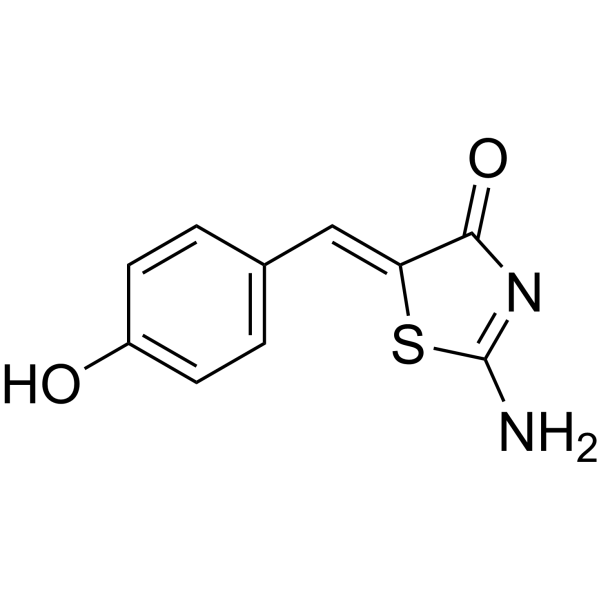
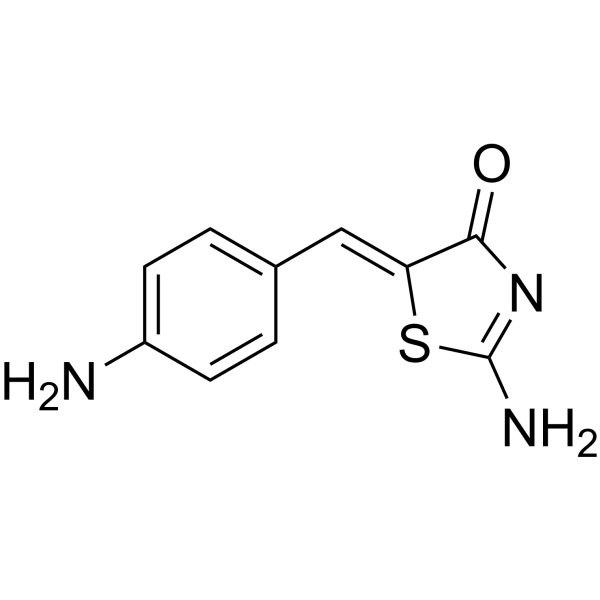
    Mirin is a potent Mre11-Rad50-Nbs1 (MRN) complex inhibitor. Mirin prevents MRN-dependent activation of ATM (IC50=12 μM) without affecting ATM protein kinase activity, and it inhibits Mre11-associated exonuclease activity. Mirin abolishes the G2/M checkpoint and homology-dependent repair in mammalian cells. Mirin prevents ATM activation in response to DNA double-strand breaks (DSBs) and blocks homology-directed repair (HDR) in mammalian cells .
    Mirin
  • HY-W014622
    CRT0044876
    2 Publications Verification

    DNA/RNA Synthesis Cancer
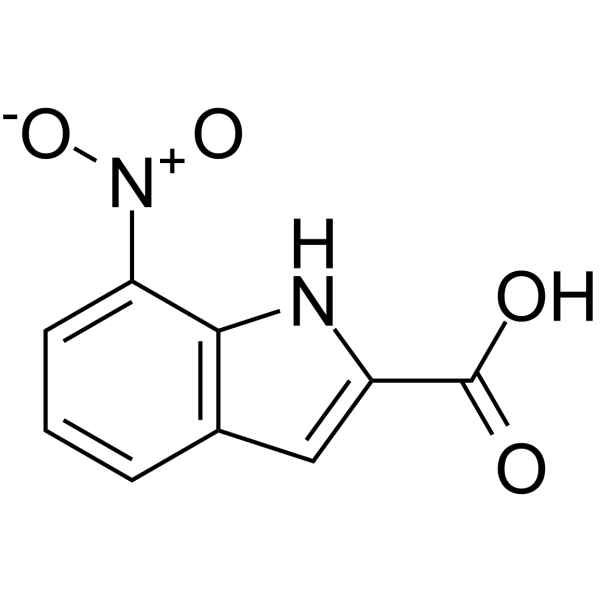
    CRT0044876 is a potent and selective apurinic/apyrimidinic endonuclease 1 (APE1) inhibitor (IC50=~3 μM). CRT0044876 inhibits the AP endonuclease, 3′-phosphodiesterase and 3′-phosphatase activities of APE1, and is a specific inhibitor of the exonuclease III family of enzymes to which APE1 belongs. CRT0044876 potentiates the cytotoxicity of several DNA base-targeting compounds .
    CRT0044876
  • HY-148503

    Phosphoramidites Nucleoside Antimetabolite/Analog Others
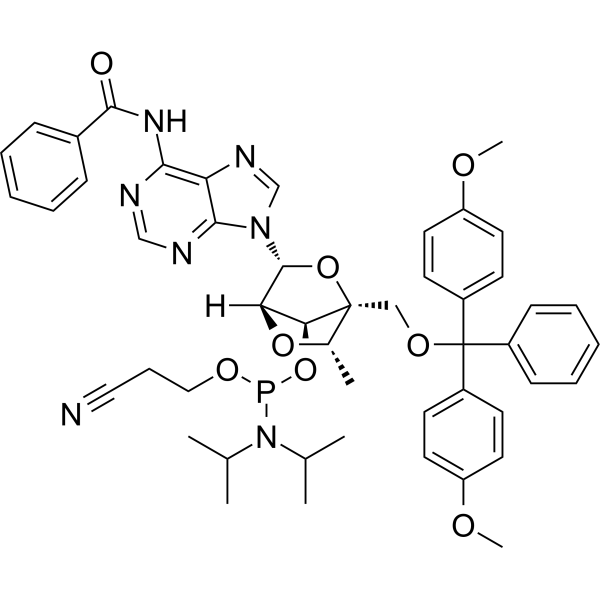
    5'-ODMT cEt N-Bz A Phosphoramidite (Amidite) is a nucleoside phosphoramidite monomer used to synthesize locked nucleic acid (LNA) analog oligonucleotides. It can be used as a building block of antisense oligonucleotides (ASOs) to target complementary RNA sequences. 5'-ODMT cEt N-Bz A Phosphoramidite (Amidite) locks the furanose ring into an N-type conformation through 2',4'-constrained ethyl (cEt) modification, enhancing hybridization affinity and mismatch discrimination with RNA, while significantly improving the resistance of oligonucleotides to exonuclease digestion. 5'-ODMT cEt N-Bz A Phosphoramidite (Amidite) mediates RNase H-dependent mRNA degradation or inhibits translation by forming a stable hybrid with RNA, thereby achieving gene expression regulation. 5'-ODMT cEt N-Bz A Phosphoramidite (Amidite) is mainly used in the development of antisense drugs, gene function research and oligonucleotide synthesis related to disease treatment .
    5'-ODMT cEt N-Bz A Phosphoramidite (Amidite)
  • HY-W406070

    LNA-G

    Nucleoside Antimetabolite/Analog DNA/RNA Synthesis Others
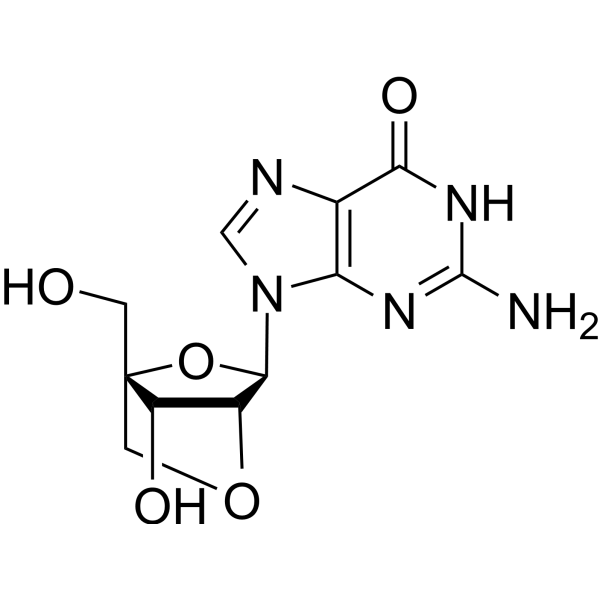
    2′-O,4′-C-Methyleneguanosine (LNA-G) is a reverse guanine analog, where LNA (locked nucleic acid) is a nucleic acid analog. LNA modification can be widely used in various fields, such as effective binding affinity with complementary sequences and stronger nuclease resistance than natural nucleotides, providing great potential for application in disease diagnosis and research. 2'-O,4'-C-Methyleneguanosine is a substrate for KOD DNA polymerase, which incorporates LNA-G nucleotides into growing DNA strands, including consecutive incorporations , to generate full-length extension products .
    2'-O,4'-C-Methyleneguanosine
  • HY-P2746

    EC 3.4.2.2

    Endogenous Metabolite Metabolic Disease
    Carboxypeptidase B, Porcine pancreas (EC 3.4.2.2) is a peptide exonuclease that can specifically degrade peptide chains. Carboxypeptidase B is progressively degraded from the C-terminal to release free amino acids. Carboxypeptidase B hydrolyzes only peptide bonds with basic amino acids (such as arginine and lysine) as C-terminal residues .
    Carboxypeptidase B, Porcine pancreas
  • HY-174143

    Apoptosis Cancer
    EXO1-IN-1 is a human exonuclease 1 (EXO1) inhibitor (IC50 = 15.7 μM). EXO1-IN-1 inhibits DNA end resection, promotes the accumulation of DNA double-strand breaks, and triggers S-phase polyamylation. EXO1-IN-1 induces apoptosis (Apoptosis) in BRCA1-deficient breast cancer cells. EXO1-IN-1 suppresses the growth of BRCA1-deficient breast cancer xenografts. EXO1-IN-1 can be used in research related to BRCA1-deficient breast cancer .
    EXO1-IN-1
  • HY-156262

    Biochemical Assay Reagents Others
    DEPC-Treated Water is ultrapure water that has been sterilized by high temperature and high pressure and does not contain nuclease. It can avoid contamination by non-specific endonucleases and exonucleases and does not affect RNase activity .
    DEPC-Treated Water
  • HY-120951
    PFM39
    1 Publications Verification

    Endonuclease Cancer
    PFM39, a Mirin analog, is a potent and selective MRE11 exonuclease inhibitor. PFM39 inhibits phosphate rotation for dsDNA exonuclease activity. PFM39 does not inhibit TmMre11 or human MRE11/MRN endonuclease activity .
    PFM39
  • HY-P99039
    Oleclumab
    1 Publications Verification

    MEDI9447

    CD73 Cancer
    Oleclumab (MEDI9447) is a human IgG1λ monoclonal antibody targeting CD73 and inhibits the exonuclease activity of the extracellular enzyme CD73. Oleclumab can adjust the composition of bone marrow and lymphoid infiltrating leukocyte populations in the tumor microenvironment and has anti-tumor activity .
    Oleclumab
  • HY-E70201

    EC 3.4.2.2 (MS grade)

    Endogenous Metabolite Others
    Carboxypeptidase B (MS grade) is a peptide exonuclease that can specifically degrade peptide chains. Carboxypeptidase B (MS grade) is progressively degraded from the C-terminal to release free amino acids. Carboxypeptidase B (MS grade) hydrolyzes only peptide bonds with basic amino acids (such as arginine and lysine) as C-terminal residues .
    Carboxypeptidase B (MS grade)
  • HY-P3187

    DNA/RNA Synthesis Others
    Exo-1,4-β-xylosidase is an exonuclease that specifically acts on the β-1,4 glycosidic bonds at the non-reducing ends of xylan and xylooligosaccharides. Exo-1,4-β-xylosidase is Ca 2+-dependent and reversibly binds to metal ions to catalyze the hydrolysis of β-1,4 glycosidic bonds, thereby degrading xylan to produce xylose. Exo-1,4-β-xylosidase can be used in research fields such as lignocellulose bioconversion, bioethanol production, and optimization of xylan saccharification processes .
    exo-β-1,4-Xylosidase, Cellulosimicrobium cellulans sp. 21
  • HY-E70580

    Endonuclease Others
    T5 Exonuclease is a DNA exonuclease that has 5′-3′ exonuclease activity on both single- and double-stranded DNA. T5 Exonuclease also has single-strand endonuclease and 5′-flap endonuclease activity .
    T5 Exonuclease
  • HY-E70577

    Endonuclease Others
    DNA repair enzyme. Endonuclease IV has endonuclease activity at AP sites, 3' phosphodiesterase activity that can remove a variety of ligation-blocking lesions from the 3' end of DNA, endonuclease activity on oxidative DNA lesions, and 3' to 5' exonuclease activity .
    Endonuclease IV
  • HY-W570886

    DNA/RNA Synthesis Cancer
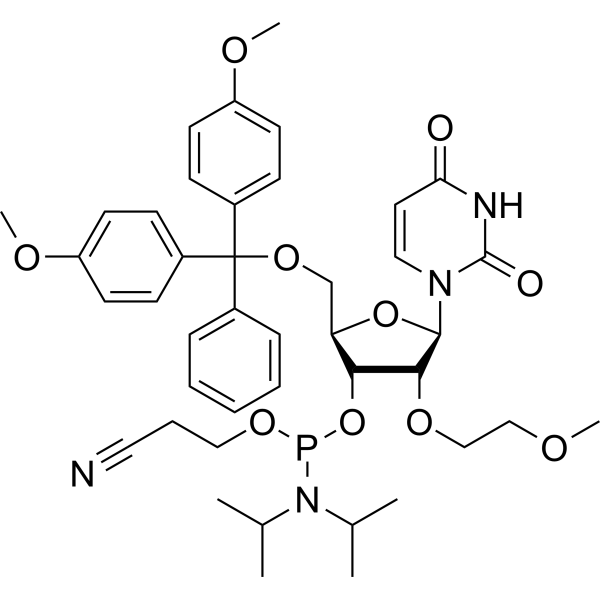
    2'-O-MOE-U is a nucleic acid modification group (Phosphoramidite) with 3'-exonuclease inhibitory activity. 2'-O-MOE-U also exhibits gene silencing activity and double-stranded oligonucleotide stability. By forming steric interactions with 3'-exonuclease residues, 2'-O-MOE-U anchors the 3'-end of the siRNA guide strand in the hAgo2 PAZ domain, thereby regulating double-stranded thermal stability and enhancing base-pairing specificity. 2'-O-MOE-U does not induce IFNα production, can be incorporated at multiple sites of siRNA to enhance RNAi activity, and produces a synergistic effect with 2'-F modification. 2'-O-MOE-U has been widely used in studies related to breast cancer and other diseases .
    2'-O-MOE-U
  • HY-E70579

    DNA/RNA Synthesis Others
    Exonuclease III is a nuclease for specifically targeting double-stranded DNA (dsDNA). Exonuclease III is a DNA repair-associated nuclease with apurinic/apyrimidinic (AP)-endonuclease and 3'→5' exonuclease activities. Exonuclease III cleaves the ssDNA at 5'-bond of phosphodiester from 3' to 5' end by both exonuclease and endonuclease activities .
    Exonuclease III
  • HY-P2867

    3′-exonuclease

    Phosphodiesterase (PDE) Neurological Disease
    Phosphodiesterase II (EC 3.1.16.1), namely phosphodiesterase 2, is mainly involved in the hydrolysis of the important second messengers cyclic adenosine monophosphate (cAMP) and cyclic guanosine monophosphate (cGMP), and is often used in biochemical research. Phosphodiesterase II is expressed in a variety of tissues, such as the adrenal medulla, brain, heart, platelets, macrophages and endothelial cells, and is involved in the regulation of many different intracellular processes .
    Phosphodiesterase II, Bovine Spleen
  • HY-145976

    Nucleoside Antimetabolite/Analog Others
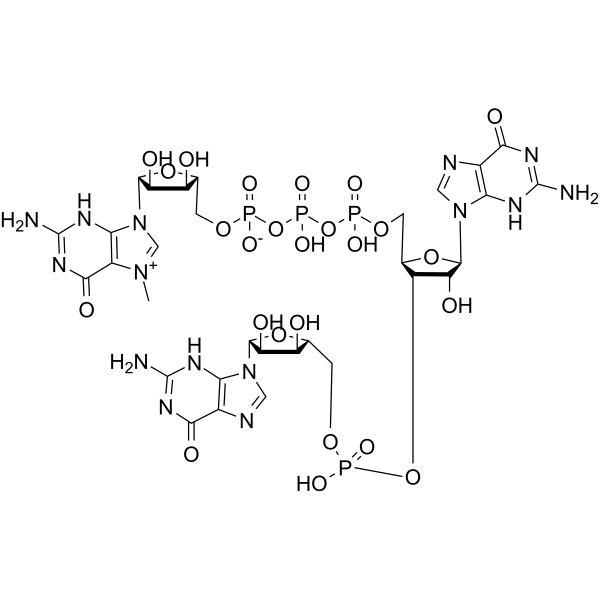
    m7GpppGpG, an oligonucleotide, is an M 7GpppNpG trinucleotide cap analogue. m7GpppGpG prevents premature degradation by 5′-exonucleases and recruits proteins required for pre-mRNA splicing, mRNA transport and initiation of protein biosynthesis .
    m7GpppGpG
  • HY-E70404

    DNA/RNA Synthesis Biochemical Assay Reagents Others
    FastTaq DNA Polymerase (5'→3' exo-) is a modified DNA polymerase based on Taq DNA Polymerase. FastTaq DNA Polymerase (5'→3' exo-) lacks the 5'→3' exonuclease activity of wild-type Taq. It retains the 5'→3' DNA polymerase activity of wild-type Taq .
    FastTaq DNA Polymerase(5'→3' exo-)
  • HY-P3187B

    DNA/RNA Synthesis Others
    exo-β-1,4-xylosidase, Bacteroides ovatus (EC.3.2.1.37) is an exonuclease that specifically acts on the β-1,4 glycosidic bonds at the non-reducing ends of xylan and xylooligosaccharides. exo-β-1,4-xylosidase is Ca 2+-dependent and reversibly binds to metal ions to catalyze the hydrolysis of β-1,4 glycosidic bonds, thereby degrading xylan to produce xylose. exo-β-1,4-xylosidase can be used in research fields such as lignocellulose bioconversion, bioethanol production, and optimization of xylan saccharification processes .
    exo-β-1,4-xylosidase, Bacteroides ovatus
  • HY-P3187A

    DNA/RNA Synthesis Others
    exo-β-1,4-xylosidase,Clostridium stercorarium (EC.3.2.1.37) is an exonuclease that specifically acts on the β-1,4 glycosidic bonds at the non-reducing ends of xylan and xylooligosaccharides. exo-β-1,4-xylosidase is Ca 2+-dependent and reversibly binds to metal ions to catalyze the hydrolysis of β-1,4 glycosidic bonds, thereby degrading xylan to produce xylose. exo-β-1,4-xylosidase can be used in research fields such as lignocellulose bioconversion, bioethanol production, and optimization of xylan saccharification processes .
    exo-β-1,4-xylosidase, Clostridium stercorarium
  • HY-W753281

    SARS-CoV Infection
    Dexamethasone metasulfobenzoate sodium is a SARS-CoV-2 exonuclease (ExoN) inhibitor that binds to the catalytic site of ExoN .
    Dexamethasone metasulfobenzoate sodium
  • HY-W753281R

    Reference Standards SARS-CoV Infection
    Dexamethasone metasulfobenzoate (sodium) (Standard) is the analytical standard of Dexamethasone metasulfobenzoate (sodium). This product is intended for research and analytical applications. Dexamethasone metasulfobenzoate sodium is a SARS-CoV-2 exonuclease (ExoN) inhibitor that binds to the catalytic site of ExoN .
    Dexamethasone metasulfobenzoate sodium (Standard)
  • HY-P2937A

    DNA/RNA Synthesis Others
    DNA polymerase, NeoApollonia Thermophilus is a thermostable DNA polymerase from Streptococcus thermophilus that can be used in PCR reactions. DNA polymerase, NeoApollonia Thermophilus has 3’→5’ and 5’→3’ exonuclease activities.
    DNA polymerase, NeoApollonia Thermophilus
  • HY-182634

    DNA/RNA Synthesis Phosphatase Cancer
    NCGC00063279 is a reversible Werner Syndrome Helicase-Nuclease (WRN) helicase inhibitor with modest selectivity over BLM and FANCJ helicases, and does not inhibit WRN exonuclease activity at active concentrations. NCGC00063279 inhibits Hematopoietic Protein Tyrosine Phosphatase (HePTP) and reduces proliferation of cancer cells. NCGC00063279 can be used for the research of osteosarcoma .
    NCGC00063279
  • HY-180126

    SARS-CoV Infection
    SARS-CoV-2 nsp14-IN-11 (Compound 13) is a NSP14 exonuclease inhibitor (pIC50 = 4.4). SARS-CoV-2 nsp14-IN-11 shows robust and complete NSP14 exonuclease inhibition. SARS-CoV-2 nsp14-IN-11 can be used in the research of SARS-CoV-2 infection .
    SARS-CoV-2 nsp14-IN-11
  • HY-E70904

    Endogenous Metabolite Metabolic Disease
    Terminal Transferase, Calf (EC 2.7.7.31) is a template independent polymerase that catalyzes the addition of deoxynucleotides to the 3' hydroxyl terminus of DNA molecules. Protruding, recessed or blunt-ended double or single-stranded DNA molecules serve as a substrate for Terminal Transferase. Terminal Transferase does not have 5' or 3' exonuclease activity. The addition of Co 2+ in the reacton makes tailing more efficient.
    Terminal Transferase, Calf
  • HY-P2775B

    Glycosidase Metabolic Disease
    β-Glucosidase, Rhizobium etli (EC 3.2.1.21), is a glucosidase that acts on the β1→4 glycosidic bond connecting two glucose molecules or glucose-substituted molecules (e.g., disaccharide cellobiose). β-Glucosidase is an exonuclease specific for a variety of β-D-glycosidic substrates. β-Glucosidase catalyzes the hydrolysis of the terminal non-reducing residues of β-D-glucosides, releasing glucose.
    β-Glucosidase, Rhizobium etli
  • HY-P2775C

    Glycosidase Metabolic Disease
    β-Glucosidase, Clostridium thermocellum (EC 3.2.1.21), is a glucosidase that acts on the β1→4 glycosidic bond connecting two glucose molecules or glucose-substituted molecules (e.g., disaccharide cellobiose). β-Glucosidase is an exonuclease specific for a variety of β-D-glycosidic substrates. β-Glucosidase catalyzes the hydrolysis of the terminal non-reducing residues of β-D-glucosides, releasing glucose.
    β-Glucosidase, Clostridium thermocellum
  • HY-P2775D

    Glycosidase Metabolic Disease
    β-Glucosidase, Bacteroides fragilis (EC 3.2.1.21), is a glucosidase that acts on the β1→4 glycosidic bond connecting two glucose molecules or glucose-substituted molecules (e.g., disaccharide cellobiose). β-Glucosidase is an exonuclease specific for a variety of β-D-glycosidic substrates. β-Glucosidase catalyzes the hydrolysis of the terminal non-reducing residues of β-D-glucosides, releasing glucose.
    β-Glucosidase, Bacteroides fragilis

Inquiry Online

Your information is safe with us. * Required Fields.

Salutation


Country or Region *

Applicant Name *


Organization Name *

Department *


Email Address *


Product Name *

Cat. No.


Requested quantity *

Phone Number *


Remarks

Inquiry Online

Inquiry Information

Product Name:
Cat. No.:
Quantity:
MCE Japan Authorized Agent: