1. Search Result
Search Result
Results for "

human epidermoid

" in MedChemExpress (MCE) Product Catalog:

22

Inhibitors & Agonists

2

Inhibitory Antibodies

12

Natural
Products

Cat. No. Product Name Target Research Areas Chemical Structure
  • HY-112411

    EGFR ERK PDGFR FGFR Neurological Disease Inflammation/Immunology
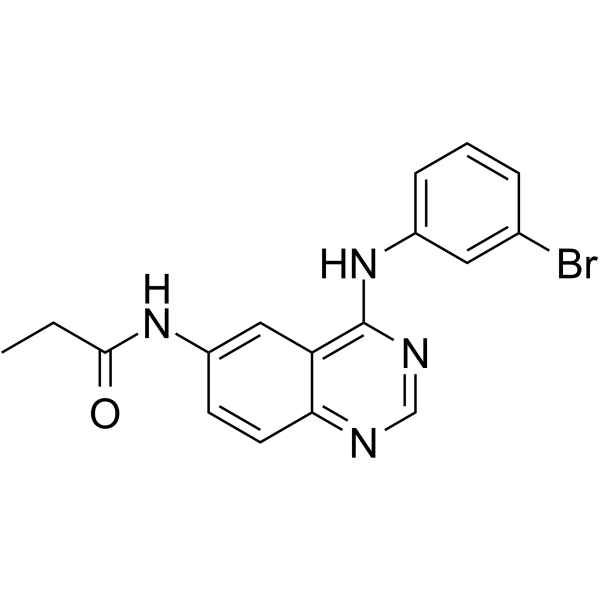
    PD 174265 is a highly selective, reversible EGFR/ErbB2 tyrosine kinase inhibitor (IC50=0.45 nM) and cell differentiation inducer. By blocking receptor autophosphorylation and the downstream ERK signaling pathway (with an IC50 of 0.45 μM for full-length ERK), PD 174265 effectively inhibits tumor growth and exhibits antitumor activity without obvious toxicity in in vivo models. PD 174265 drives oligodendrocyte precursor cells to switch from a proliferative state to a differentiated state, significantly upregulates the expression of myelin proteins such as CNP, PLP and MBP, and induces neurite branching. PD 174265 shows no inhibitory effect on other kinases including insulin, PDGF and basic FGF receptors, and serves as a crucial tool molecule for investigating the treatment of human epidermoid carcinoma and the mechanism of myelin repair in multiple sclerosis .
    PD 174265
  • HY-W017424

    Drug Intermediate Caspase Apoptosis Neurological Disease Cancer
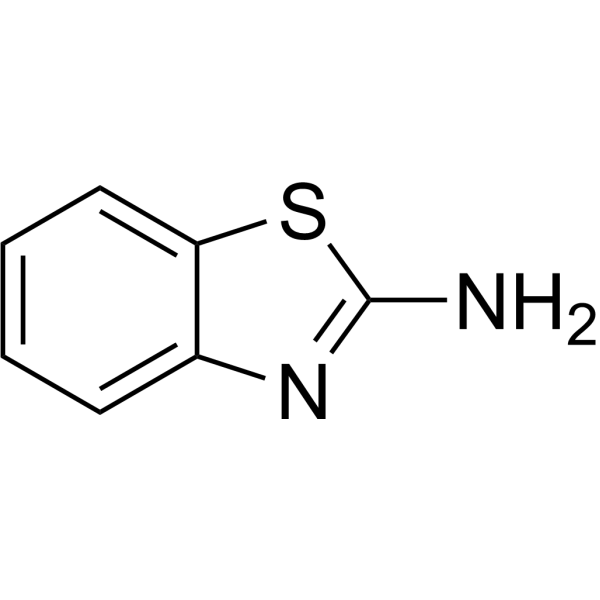
    2-Aminobenzothiazole acts as a caspase 3/7 activator, an anticancer cytotoxic agent, and also exhibits neurotoxicity. 2-Aminobenzothiazole drives the apoptotic pathway by activating caspase 3/7, induces mitochondrial inner membrane depolarization, and triggers both early and late apoptosis via a caspase-dependent pathway. In zebrafish models, 2-Aminobenzothiazole induces oxidative damage in brain tissues and inhibits genes related to GABA and 5-HT synthesis pathways. Long-term exposure to 2-Aminobenzothiazole impairs motor ability, social behavior, anxiety-like state and cognitive function. 2-Aminobenzothiazole can be used in studies of human laryngeal carcinoma and related neurotoxicity .
    2-Aminobenzothiazole
  • HY-N8420

    Fungal Infection Cancer
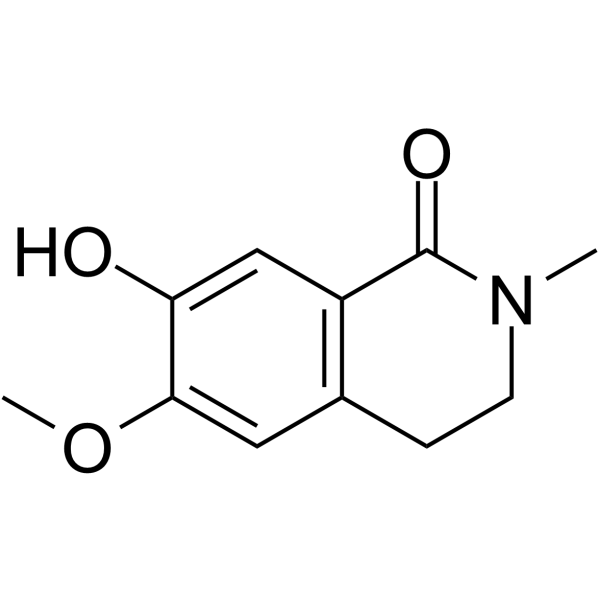
    Thalifoline is an isoquinoline alkaloid. Thalifoline exerts cytotoxic effects on cancer cells. Thalifoline inhibits the growth of Fusarium oxysporum f. sp. lycopersici. Thalifoline can be used in research related to lung adenocarcinoma, colon cancer, oral epidermoid carcinoma, and fungal infections .
    Thalifoline
  • HY-121255

    (R)-Cryptopleurine; NSC 19912

    TMV Cancer
    (–)-Cryptopleurine is an alkaloid that has been found in Lauraceae and has diverse biological activities. It inhibits the growth of human A375 melanoma, A431 epidermoid carcinoma, A549 lung, MES-SA uterine sarcoma, and MCF-7 breast cancer cells (IC50=3 nM for all).2 (–)-Cryptopleurine inhibits hypoxia-induced gene expression in a hypoxia response element (HRE) reporter assay (IC50=8.7 nM).3 (–)-Cryptopleurine (500 μg/mL) prevents lesion formation in tobacco (N. tabacum) plants infected with tobacco mosaic virus (TMV). It also inhibits protein synthesis by yeast and mammalian ribosomes.
    (-)-Cryptopleurine
  • HY-N1261

    Others Cancer
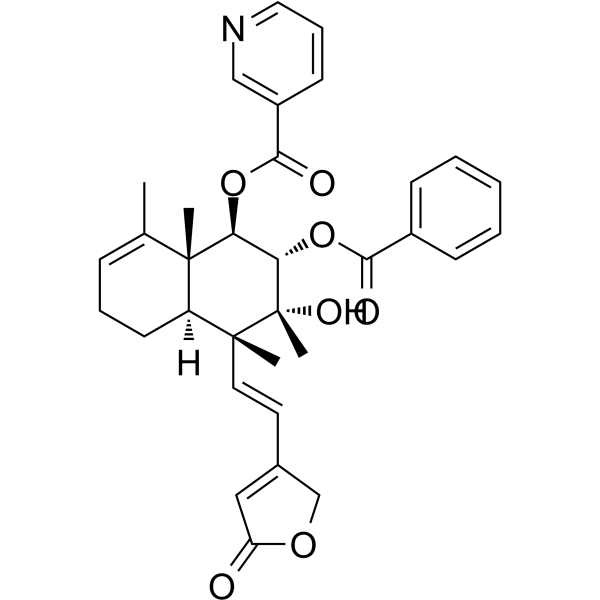
    Scutebarbatine B shows significant cytotoxic activities against three human cancer lines, namely, HONE-1 nasopharyngeal, KB oral epidermoid carcinoma, and HT29 colorectal carcinoma cells, with IC50 values in the range 3.5-8.1 mM [1]<
    Scutebarbatine B
  • HY-N8394

    Others Cancer
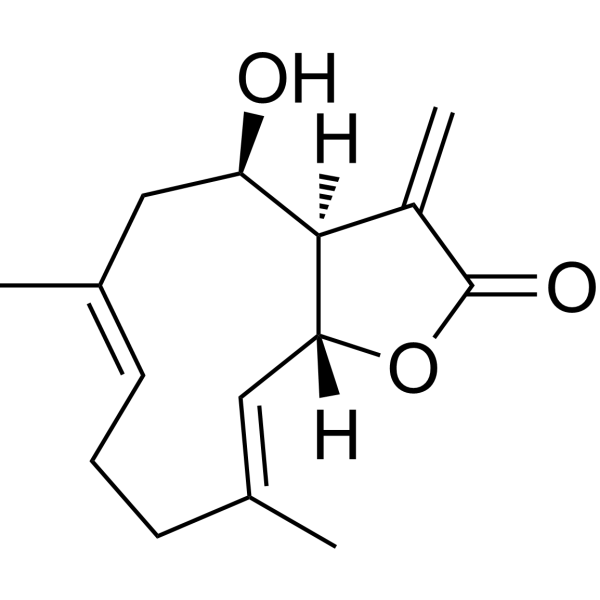
    Eupatolide is an antitumor agent that can be isolated from Eupatorium formosanum. Eupatolide has cytotoxic activity and inhibits human epidermoid carcinoma of larynx cell growth in vitro .
    Eupatolide
  • HY-126598

    Endogenous Metabolite Cancer
    Chaetoglobosin F is a cytochalasan-based alkaloid from Chaetomium globosum. Chaetoglobosin F exhibits cytotoxicity against human nasopharyngeal epidermoid tumor cell KB, with IC50 of 52.0 µM .
    Chaetoglobosin F
  • HY-N10206

    Endogenous Metabolite Cancer
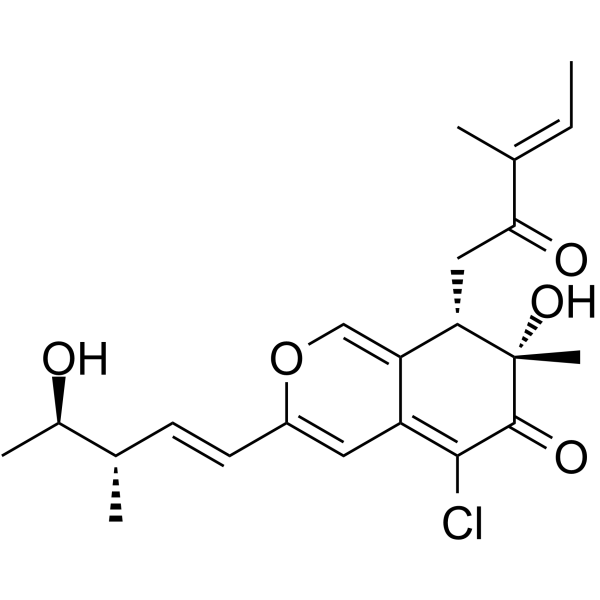
    11-epi-Chaetomugilin I is a metabolite found in Chaetomium globosum. 11-epi-Chaetomugilin I exhibits significant cytotoxic activity against the murine P388 leukemia cell line, the human HL-60 leukemia cell line, the murine L1210 leukemia cell line, and the human KB epidermoid carcinoma cell line .
    11-epi-Chaetomugilin I
  • HY-N8036

    Others Cancer
    (2R,3R)-Pterosin L 3-O-β-D-glucopyranoside is an glucoside compound found in the aerial parts of Pteris multifida. (2R,3R)-Pterosin L 3-O-β-D-glucopyranoside shows cytotoxicity against cancer cells. (2R,3R)-Pterosin L 3-O-β-D-glucopyranoside can be used for the research of cancer, such as human epidermoid carcinoma .
    (2R,3R)-Pterosin L 3-O-β-D-glucopyranoside
  • HY-N18083

    Drug Derivative Cancer
    Gweicurculactone is a sesquiterpene and cytotoxin found in the root tuber of Curcuma wenyujin Y. H. Chen et C. Ling. Gweicurculactone exerts cytotoxic effects against human promyelocytic leukemia, hepatocellular carcinoma, chronic myelogenous leukemia, epidermoid carcinoma, and breast adenocarcinoma cells. Gweicurculactone can be used for the research of leukemia, hepatocellular carcinoma, epidermoid carcinoma of the mouth, breast adenocarcinoma .
    Gweicurculactone
  • HY-124130

    Survivin Cancer
    MX106 is a survivin inhibitor and an analog of UC-112 (HY-12842). MX106 inhibits the expression of survivin both in vitro and in vivo. MX106 suppresses the proliferation of human melanoma cells, epidermoid carcinoma cells and colon cancer cells, and also exerts inhibitory effects on multidrug-resistant cell lines overexpressing P-glycoprotein .
    MX106
  • HY-N18294

    Parasite Infection Cancer
    (R,R)-Polysphorin is a neolignan antimalarial agent that is isolated from the dried leaves and stems of Rhaphidophora decursiva. (R,R)-Polysphorin inhibits the growth of chloroquine-sensitive and chloroquine-resistant Plasmodium falciparum clones in vitro by mediating free radical damage to key cellular components via conjugated double bonds. (R,R)-Polysphorin also exhibits cytotoxicity against human oral epidermoid carcinoma cells .
    (R,R)-Polysphorin
  • HY-165375

    Others Cancer
    Plenolin is an anticancer agent. Plenolin exhibits inhibitory activity against human epidermoid carcinoma cells. Plenolin shows in vivo antitumor activity against ascites carcinosarcoma and lymphocytic leukemia in rodent models. Plenolin can be used for research related to ascites tumors and leukemia .
    Plenolin
  • HY-N18150

    Others Cancer
    12-O-Methylvolkensin is a limonoid found in the fruits of Melia toosendan Sieb. et Zucc. 12-O-Methylvolkensin shows cytotoxicity against cancer cells. 12-O-Methylvolkensin can be used for the research of cancer, such as human oral epidermoid carcinoma .
    12-O-Methylvolkensin
  • HY-N17957

    Others Cancer
    Homoisopogon B is a homoisoflavane found in the tubers of Ophiopogon japonicus. Homoisopogon B shows cytotoxic activity against cancer cells. Homoisopogon B can be used for the research of cancer, such as human lung adenocarcinoma and human melanoma .
    Homoisopogon B
  • HY-141425

    P-glycoprotein Cancer
    NSC73306, a thiosemicarbazone, is a cell penetrant, cytotoxic agent that exhibits greater toxicity against cells expressing functional P-gp (P-glycoprotein) than against other cells .
    NSC73306
  • HY-N19312

    Apoptosis Glutathione S-transferase Topoisomerase Cancer
    Diospyrin is a dinaphthoquinone anticancer agent with pro-apoptotic (apoptosis) activity, glutathione S-transferase (Glutathione S-transferase) inhibitory activity, and topoisomerase (Topoisomerase) I inhibitory activity. Diospyrin is present in the heartwood of various Diospyros plants and can be used for research on Ehrlich ascites carcinoma, acute myeloid leukemia, chronic myeloid leukemia, mammary adenocarcinoma, cervical epithelial carcinoma, malignant cutaneous melanoma, laryngeal epidermoid carcinoma, human osteosarcoma, and human lymphoblastic carcinoma .
    Diospyrin
  • HY-P991922

    Fc Receptor (FcR) Complement System Radionuclide-Drug Conjugates (RDCs) Cancer
    AKIR001 is a high-affinity human IgG1 antibody targeting CD44v6. AKIR001 carries LALA-silencing mutations in its FcγR-binding domain to reduce FcγR and C1q interactions, minimizing tissue interactions and limiting CDC and ADCC risks. [ 177Lu] radiolabeled AKIR001, namely [ 177Lu]Lu-AKIR001, has anticancer activity against epidermoid carcinoma .
    AKIR001
  • HY-P991969

    EGFR Cancer
    LR004 is an EGFR monoclonal antibody, with a Kd of 2.80 × 10 -9 M against human EGFR. LR004 shows extremely weak inhibitory effect on the viability of EGFR-positive tumor cells in vitro, but inhibits the growth of EGFR-positive tumor xenografts as a single agent. LR004 is applicable to research related to advanced colorectal cancer, solid tumors, esophageal squamous cell carcinoma, epidermoid carcinoma, colon cancer and breast cancer .
    LR004
  • HY-N19853

    Drug Derivative Cancer
    Mangiferonic acid is a triterpenoid found in the stems of Vatica diospyroides. Mangiferonic acid can be used for cancer research .
    Mangiferonic acid
  • HY-112334

    EGFR Cancer
    EGFR-IN-198 is a selective EGFR inhibitor with subnanomolar irreversible inhibitory activity against EGFR. EGFR-IN-198 covalently binds to the kinase domain of EGFR and inhibits its autophosphorylation .
    EGFR-IN-198
  • HY-186120A

    Amino Acid Derivatives Cancer
    N-(Aminoiminomethyl)-N-methyl-L-alanine is an Amino acid analog. N-(Aminoiminomethyl)-N-methyl-L-alanine can be used in cancer-related research .
    N-(Aminoiminomethyl)-N-methyl-L-alanine

Inquiry Online

Your information is safe with us. * Required Fields.

Salutation


Country or Region *

Applicant Name *


Organization Name *

Department *


Email Address *


Product Name *

Cat. No.


Requested quantity *

Phone Number *


Remarks

Inquiry Online

Inquiry Information

Product Name:
Cat. No.:
Quantity:
MCE Japan Authorized Agent:

