1. Search Result
Search Result
Results for "

related isomer

" in MedChemExpress (MCE) Product Catalog:

37

Inhibitors & Agonists

3

Biochemical Assay Reagents

9

Natural
Products

2

Isotope-Labeled Compounds

1

Click Chemistry

1

Oligonucleotides

Cat. No. 상품명 Target 연구분야 Chemical Structure
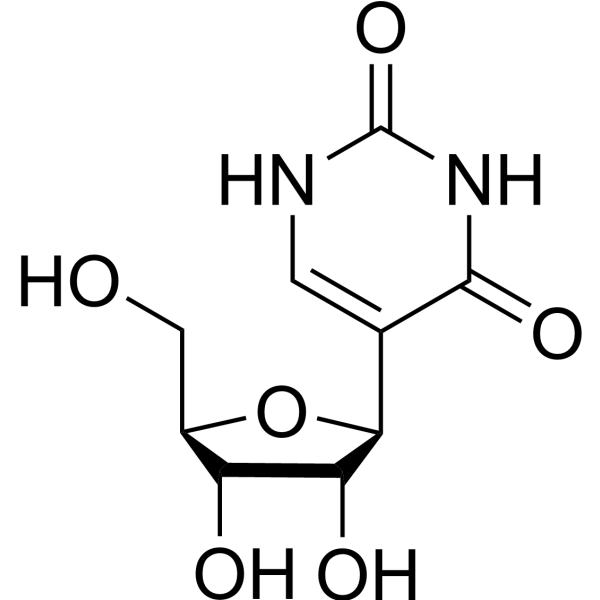
  • HY-113061
    Pseudouridine
    1 Publications Verification

    Endogenous Metabolite Nucleoside Antimetabolite/Analog DNA/RNA Synthesis Cancer
    Pseudouridine is an isomer of uridine and the most abundant modified nucleoside in non-coding RNA. It fine-tunes and stabilizes regional structures in rRNA and tRNA, maintaining their functions in mRNA decoding, ribosome assembly, processing, and translation. Pseudouridine-modified tRNA fragments can inhibit aberrant protein synthesis and hold promise for research on myelodysplastic syndrome (MDS)-related leukemia. .
    Pseudouridine
  • HY-113298
    Citraconic acid
    4 Publications Verification

    Methylmaleic acid

    NOD-like Receptor (NLR) Keap1-Nrf2 Reactive Oxygen Species (ROS) Cardiovascular Disease Inflammation/Immunology
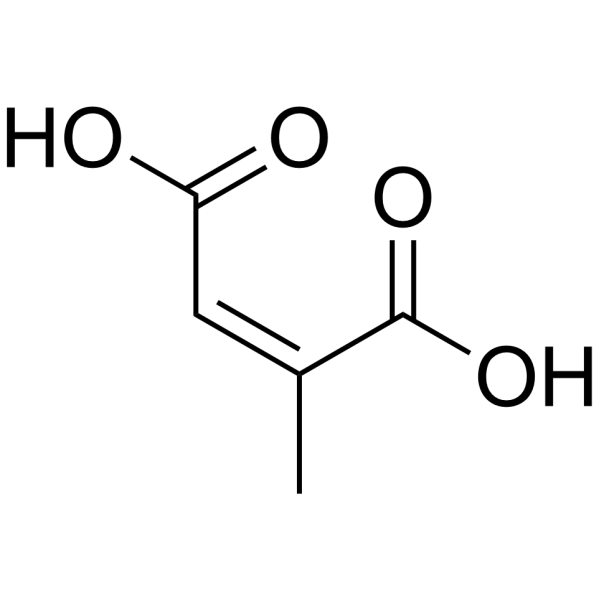
    Citraconic acid (Methylmaleic acid) is an orally active inhibitor targeting the NLRP3 inflammasome and Keap1-Nrf2 pathway. Citraconic acid reduces reactive oxygen species (ROS) generation by inhibiting succinate dehydrogenase (SDH) activity. Citraconic acid also modifies the conformation of Keap1 protein, relieves its inhibition of Nrf2, promotes antioxidant gene expression, and inhibits NLRP3 activation and the release of pro-inflammatory factors such as IL-1β and IL-18. Citraconic acid has anti-inflammatory and antioxidant activities, can reduce oxidative stress and cell pyroptosis, improve tissue damage, and can be used for the research of inflammation-related diseases such as acute renal ischemia-reperfusion injury. Citraconic acid is an isomer of Itaconic acid (HY-Y052) .
    Citraconic acid
  • HY-Y0003

    Biochemical Assay Reagents Others
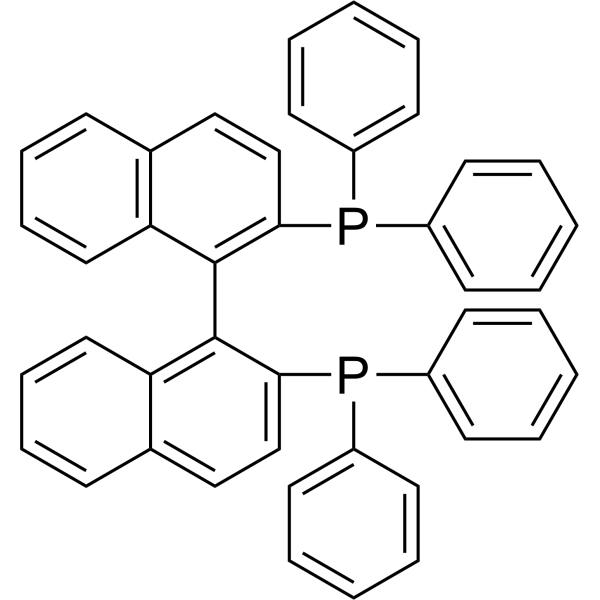
    (Rac)-BINAP is the isomer of (R)-BINAP (HY-W017757), and can be used as an experimental control. (R)-BINAP is a biochemical reagent that can be used as a biological material or organic compound for life science related research.
    (Rac)-BINAP
  • HY-113334

    Endogenous Metabolite Metabolic Disease Inflammation/Immunology
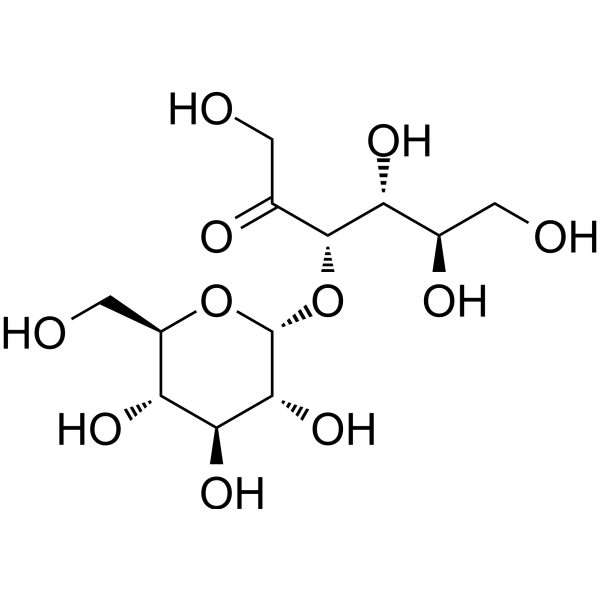
    Turanose is an isomer of Sucrose that naturally exists in honey. Turanose has anti-inflammatory and regulates adipogenesis effect. Turanose has potential for obesity and related chronic diseases research .
    Turanose
  • HY-115733
    Cathepsin L-IN-2
    1 Publications Verification

    (Rac)-Z-Phe-Phe-FMK

    Cathepsin Cancer
    Cathepsin L-IN-2 ((Rac)-Z-Phe-Phe-FMK) is an isomer of the Cathepsin L inhibitor Z-Phe-Phe-FMK (HY-141867), with an IC50 of 15 μM for cathepsin L. Z-Phe-Phe-FMK irreversibly blocks the proteolytic function of cathepsins by covalently binding to the cysteine residues in the active center of the enzyme. Cathepsin L-IN-2 and Z-Phe-Phe-FMK can be used to study neurodegenerative diseases (such as GRN-related frontotemporal dementia) and cancer invasion and metastasis.
    Cathepsin L-IN-2
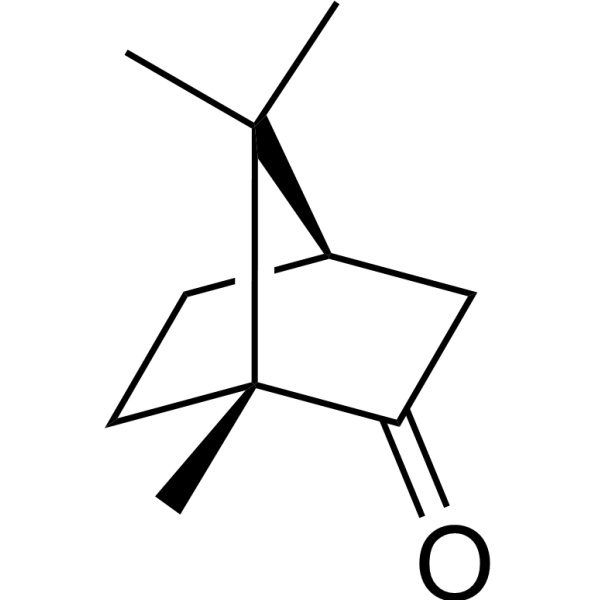
  • HY-B1173
    (+)-Camphor
    1 Publications Verification

    D-(+)-Camphor; (1R)-(+)-Camphor

    Environmental Pollutants Bacterial Neurological Disease Inflammation/Immunology Cancer
    (+)-Camphor (D-(+)-Camphor; (1R)-(+)-Camphor) is an isomer of Camphor. Camphor is an agonist of monoterpenoid transient receptor potential (TRP) channels (such as TRPV1, TRPV3, TRPM8) and an inhibitor of TRPA1 channels. Camphor's derivatives have multiple biological activities, including antibacterial, antiviral, antioxidant, analgesic and anticancer. Camphor can selectively activate cold-sensitive TRP channels and inhibit TRPA1-mediated nociceptive signals. Camphor stimulates the cold-sensing nerve endings in the skin and regulates the activity of ion channels to exert analgesic, anti-inflammatory and anti-itching effects. It also has anti-proliferative and anti-mutagenic activities on tumor cells, which may be related to inhibiting ribosome function or inducing cell apoptosis. Camphor can be absorbed through the skin and (+)-Camphor can be used in the study of muscle and joint pain and inflammation .
    (+)-Camphor
  • HY-W073501

    trans-2-Pentenedioic acid

    Drug Isomer Endogenous Metabolite Cardiovascular Disease Metabolic Disease
    trans-Glutaconic acid (trans-2-Pentenedioic acid) is the trans isomer of Glutaconic acid (HY-W073501A). trans-Glutaconic acid is a neurotoxic metabolite. trans-Glutaconic acid induces weak neurotoxicity in cultured cerebral neocortical neurons. trans-Glutaconic acid elicits significant electrophysiological responses in rat neocortical wedge preparations at high concentrations. trans-Glutaconic acid can be used in studies related to glutaric acidemia type 1 .
    trans-Glutaconic acid
  • HY-12093A

    Drug Isomer MMP Cadherin Inflammation/Immunology
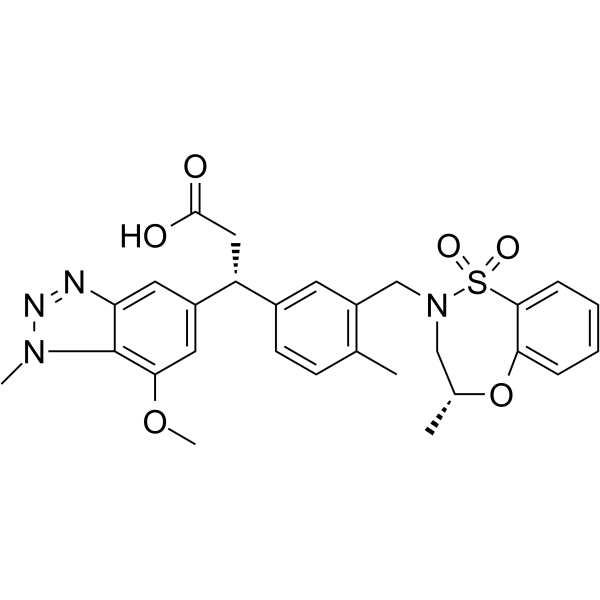
    (R)-MMP408 is an isomer of MMP408 (HY-12093). MMP408 is an orally active MMP-12 inhibitor (IC50=2.0 nM for hMMP-12) that effectively interferes with the epithelial-mesenchymal transition (EMT) process. MMP408 significantly upregulates the expression of E-cadherin in nasal epithelial cells, while inhibiting mesenchymal markers such as vimentin, α-smooth muscle actin and fibronectin, thereby reversing the EMT phenotype. MMP408 is used in studies of airway remodeling-related diseases, including chronic rhinosinusitis with nasal polyps, chronic obstructive pulmonary disease (COPD) and asthma .
    (R)-MMP408
  • HY-145056

    DNA/RNA Synthesis Cancer
    ART615 is the related isomer of ART558. ART615, the inactive of ART558, elicits <10% Polθ inhibition at 12 µM, thus serving as a control for ART558 (IC50=7.9 nM) .
    ART615
  • HY-111226A

    Estrogen Receptor/ERR Reactive Oxygen Species (ROS) Cardiovascular Disease Cancer
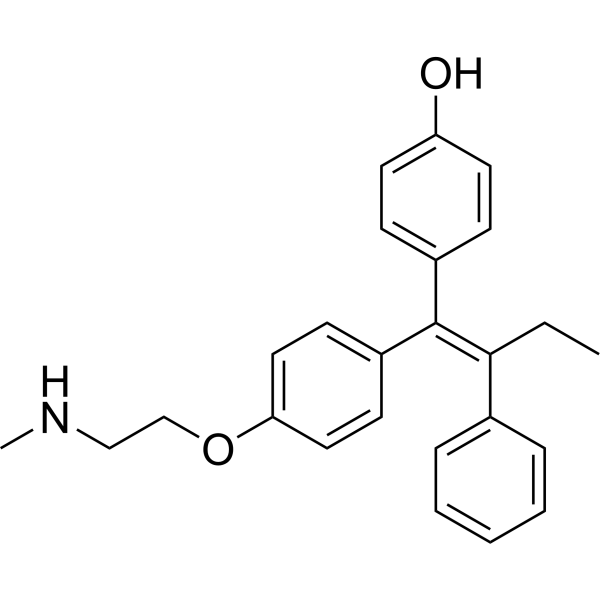
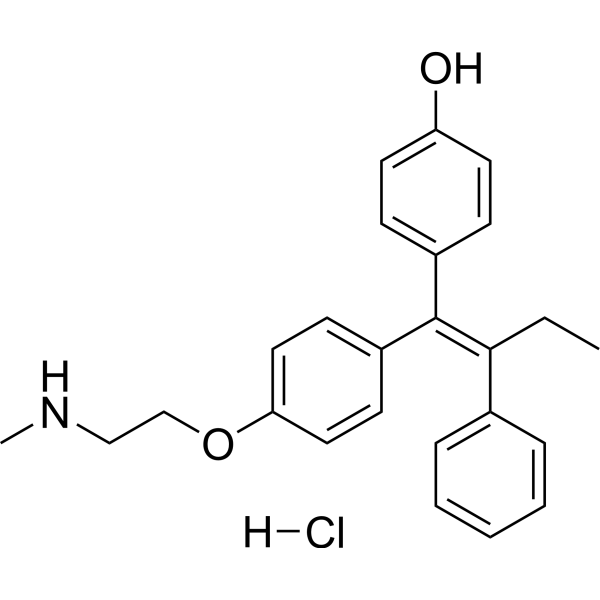
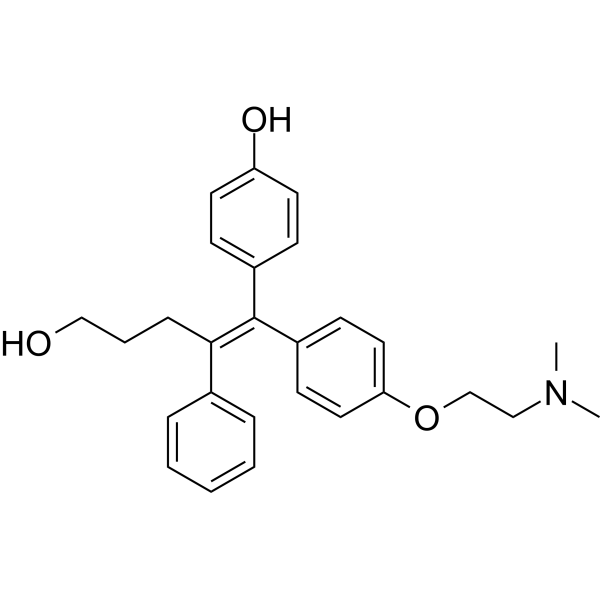
    (E/Z)-GSK5182 is a racemic compound of (E)-GSK5182 and (Z)-GSK5182 isomers. GSK5182 is a highly selective and orally active inverse agonist of estrogen-related receptor γ (ERRγ) with an IC50 of 79 nM . GSK5182 also induces reactive oxyen species (ROS) generation in hepatocellular carcinoma .
    (E/Z)-GSK5182
  • HY-W007978

    R-(-)-2,2-Diamino-1,1-binaphthyl

    Biochemical Assay Reagents Others
    (R)-[1,1'-Binaphthalene]-2,2'-diamine is the isomer of (S)-[1,1'-Binaphthalene]-2,2'-diamine (HY-W007978A), and can be used as an experimental control. (S)-[1,1'-Binaphthalene]-2,2'-diamine is a biochemical reagent that can be used as a biological material or organic compound for life science related research.
    (R)-[1,1'-Binaphthalene]-2,2'-diamine
  • HY-N6065
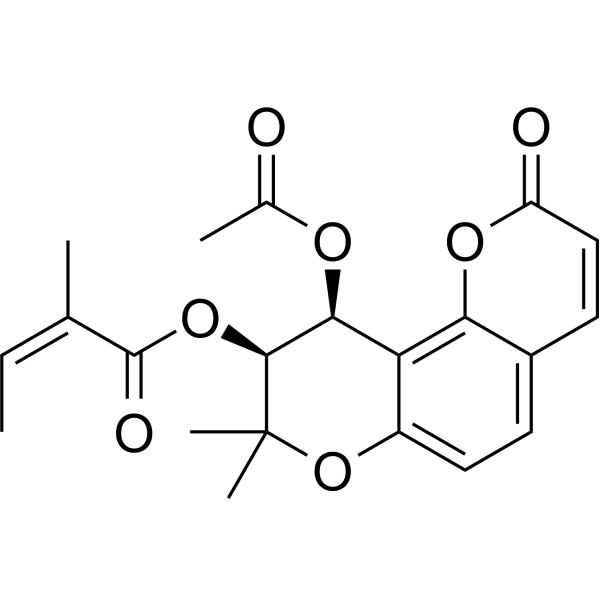
    Praeruptorin A
    3 Publications Verification

    (+)-Praeruptorin A

    Calcium Channel Drug Isomer Cytochrome P450 iGluR Apoptosis Cardiovascular Disease Neurological Disease
    Praeruptorin A ((+)-Praeruptorin A) is an orally active isomer of (±)-Praeruptorin A (HY-N0081). Praeruptorin A also acts as a Calcium channel blocker. Praeruptorin A can be isolated from Peucedanum. Praeruptorin A serves as a substrate for CYP3A4. Praeruptorin A downregulates NMDA receptors containing GluN2B and inhibits neuronal Apoptosis. Praeruptorin A mediates vasodilation, inhibits vascular hypertrophy and reduces blood pressure. Praeruptorin A can be used in research related to neurological diseases, myocardial ischemia, heart failure, exertional angina, renovascular hypertension and spontaneous hypertension .
    Praeruptorin A
  • HY-W002530A

    Biochemical Assay Reagents Others
    (1R,2R)-1-Aminoindan-2-ol is the isomer of (1S,2R)-1-Aminoindan-2-ol (HY-W002530), and can be used as a biological material or organic compound for life science related research. (1R,2R)-1-Aminoindan-2-ol can be used as a starting material to prepare an indene-based chiral auxiliary that is used in the aldol reaction. (1R,2R)-1-Aminoindan-2-ol can be used as a starting material in the synthesis of oxazoline-alcohol ligands .
    (1R,2R)-1-Aminoindan-2-ol
  • HY-111424A

    Cdc42-binding kinase Cancer
    (R)-BDP9066 is an isomer of BDP9066 and has lower activity compared to BDP9066. BDP9066 is a potent inhibitor of myotonic dystrophy kinase-related Cdc42-binding kinase (MRCK). (R)-BDP9066 is derived from patent WO2019034890A1 (E118) .
    (R)-BDP9066
  • HY-W250128

    DDSA (mixture of isomers)

    Biochemical Assay Reagents Others
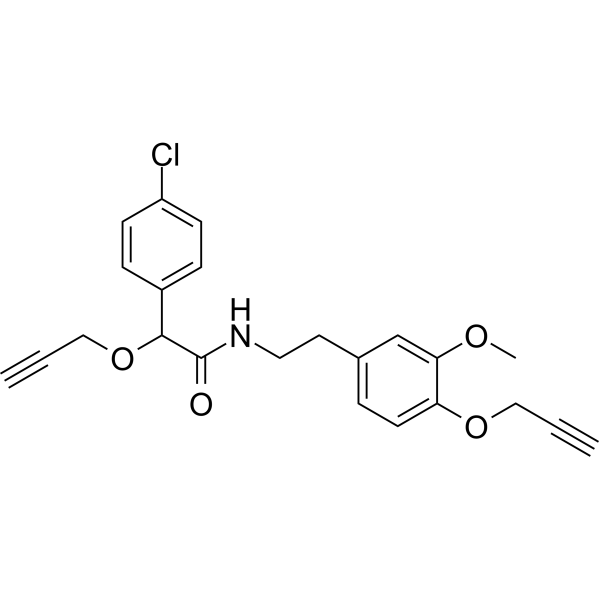
    2-Dodecen-1-Ylsuccinic Anhydride is a biochemical reagent that can be used as a biological material or organic compound for life science related research. Dodecenylsuccinic anhydride (mixture of isomers) is a click chemistry reagent, it contains an Alkyne group and can undergo copper-catalyzed azide-alkyne cycloaddition (CuAAc) with molecules containing Azide groups.
    Dodecenylsuccinic anhydride (mixture of isomers)
  • HY-138794A

    Deubiquitinase Cancer
    (Rac)-XL177A is the racemic isomer of XL177A (HY-138794). XL177A is a covalent USP7 inhibitor that blocks the deubiquitinase activity of USP7. XL177A destabilizes non-canonical PRC1 complexes or KDM6A and reduces chromatin deposition of H2AK119Ub, thereby relieving the repression of neuronal differentiation programs. Meanwhile, XL177A also regulates the ELOF1-UVSSA-USP7-nuclear β-catenin axis, decreasing the transcription levels of related proteins and the accumulation of nuclear β-catenin. XL177A exerts antiviral effects by reducing the expression levels of coronavirus receptors, and exhibits inhibitory activity against APC-mutated colorectal cancer cells, neuroblastoma, and coronaviruses including SARS-CoV-2 variants. XL177A is mainly used in studies related to colorectal cancer, neuroblastoma, and coronavirus infections .
    (Rac)-XL177A
  • HY-N15738

    Fungal Infection
    (-)-Zonarol is an antifungal agent. (-)-Zonarol exhibits divergent translational potential. (-)-Zonarol is an isomer of Zonarol. Zonarol is a (-)-Yahazunol-related natural product .
    (-)-Zonarol
  • HY-W007978B

    2,2'-Diamino-1,1'-dinaphthyl

    MOFs Others
    1,1'-Binaphthyl-2,2'-diamine is the isomer of (S)-[1,1'-Binaphthalene]-2,2'-diamine (HY-W007978A), and can be used as an experimental control. (S)-[1,1'-Binaphthalene]-2,2'-diamine is a biochemical reagent that can be used as a biological material or organic compound for life science related research.
    1,1'-Binaphthyl-2,2'-diamine
  • HY-W768571

    Isotope-Labeled Compounds Nucleoside Antimetabolite/Analog DNA/RNA Synthesis Endogenous Metabolite Cancer
    Pseudouridine- 13C, 15N2 is the 13C- and 15N-labeled Pseudouridine (HY-113061). Pseudouridine is an isomer of uridine and the most abundant modified nucleoside in non-coding RNA. It fine-tunes and stabilizes regional structures in rRNA and tRNA, maintaining their functions in mRNA decoding, ribosome assembly, processing, and translation. Pseudouridine-modified tRNA fragments can inhibit aberrant protein synthesis and hold promise for research on myelodysplastic syndrome (MDS)-related leukemia. .
    Pseudouridine-13C,15N2
  • HY-B1173R

    D-(+)-Camphor (Standard); (1R)-(+)-Camphor (Standard)

    Reference Standards Bacterial Neurological Disease Inflammation/Immunology Cancer
    (+)-Camphor (Standard) is the analytical standard of (+)-Camphor. This product is intended for research and analytical applications. (+)-Camphor (D-(+)-Camphor; (1R)-(+)-Camphor) is an isomer of Camphor. Camphor is an agonist of monoterpenoid transient receptor potential (TRP) channels (such as TRPV1, TRPV3, TRPM8) and an inhibitor of TRPA1 channels. Camphor's derivatives have multiple biological activities, including antibacterial, antiviral, antioxidant, analgesic and anticancer. Camphor can selectively activate cold-sensitive TRP channels and inhibit TRPA1-mediated nociceptive signals. Camphor stimulates the cold-sensing nerve endings in the skin and regulates the activity of ion channels to exert analgesic, anti-inflammatory and anti-itching effects. It also has anti-proliferative and anti-mutagenic activities on tumor cells, which may be related to inhibiting ribosome function or inducing cell apoptosis. Camphor can be absorbed through the skin and (+)-Camphor can be used in the study of muscle and joint pain and inflammation .
    (+)-Camphor (Standard)
  • HY-116161

    Drug Intermediate Cardiovascular Disease Others
    15(R)-17-phenyl trinor Prostaglandin F2α isopropyl ester (15(R)-17-phenyl trinor PGF2α isopropyl ester) is the latanoprost-related isomer containing both a double bond at 13,14 and an inverted (β) hydroxyl group at C-15. Similar to 15(S)-latanoprost, 15(R)-17-phenyl trinor PGF2α isopropyl ester is a potential impurity in most commercial preparations of the latanoprost bulk drug product. The IC50 values for the free acid forms of 15(S)-17-phenyl trinor PGF2α and 15(R)-17-phenyl trinor PGF2α were determined to be 0.71 nM and 30 nM, respectively, in a FP receptor binding assay using the cat iris sphincter muscle.1 A 3 μg dose of 15(R)-17-phenyl trinor PGF2α caused a 1.9 mmHg reduction of IOP in normotensive cynomolgus monkeys.
    Bimatoprost isopropyl ester
  • HY-W589849

    FITC isomer

    Biochemical Assay Reagents Others
    6-Isothiocyanato-Fluorescein (FITC Isomer Ⅱ) is a biochemical reagent that can be used as a biological material or organic compound for life science related research.
    6-Isothiocyanato-Fluorescein
  • HY-105109B

    5-HT Receptor Neurological Disease
    (S)-Cilansetron is the S-isomer of Cilansetron. Cilansetron is a 5-HT3 receptor antagonist that can be used in research related to irritable bowel syndrome .
    (S)-Cilansetron
  • HY-165052

    1,3-Didocosahexaenoin-2-palmitin; DPD; TG(22:6/16:0/22:6)

    Others Others
    1,3-Didocosahexaenoyl-2-palmitoyl glycerol (1,3-Didocosahexaenoin-2-palmitin) is a compound that is being studied as a triglyceride positional isomer in fish and marine mammals. The fatty acid binding position of 1,3-Didocosahexaenoyl-2-palmitoyl glycerol varies in different organisms, which may be related to the substrate preference of related enzymes.
    1,3-Didocosahexaenoyl-2-palmitoyl glycerol
  • HY-113334R

    Reference Standards Endogenous Metabolite Metabolic Disease Inflammation/Immunology
    Turanose (Standard) is the analytical standard of Turanose. This product is intended for research and analytical applications. Turanose is an isomer of Sucrose that naturally exists in honey. Turanose has anti-inflammatory and regulates adipogenesis effect. Turanose has potential for obesity and related chronic diseases research[1][2].
    Turanose (Standard)
  • HY-W776824

    Biochemical Assay Reagents Others
    2-Phthalimidolactosamine,heptaacetate (mixture of isomers) is a class of biochemical reagents used in glycobiology research. Glycobiology studies the structure, synthesis, biology, and evolution of sugars. It involves carbohydrate chemistry, enzymology of glycan formation and degradation, protein-glycan recognition, and the role of glycans in biological systems. This field is closely related to basic research, biomedicine, and biotechnology .
    2-Phthalimidolactosamine,heptaacetate (mixture of isomers)
  • HY-132184S

    5,6-EET-d11; (±)5,6-EpETrE-d11

    Isotope-Labeled Compounds Adrenergic Receptor Cardiovascular Disease Neurological Disease
    5,6-Epoxyeicosatrienoic acid-d11 (5,6-EET-d11) is deuterium labeled 5,6-Epoxyeicosatrienoic acid. 5,6-Epoxyeicosatrienoic acid is one of the four major epoxyeicosatrienoic acid (EET) isomers metabolized from Arachidonic acid (HY-109590). 5,6-Epoxyeicosatrienoic acid induces peripheral vasodilation and lowers blood pressure by inhibiting T-type calcium channels (Cav3.2: IC50 = 0.54 μM). 5,6-Epoxyeicosatrienoic acid causes vasoconstriction in hypoxic pulmonary blood vessels via activating Rho kinase in a membrane depolarization-dependent manner. 5,6-Epoxyeicosatrienoic acid induces mechanical pain by activating TRPA1. 5,6-Epoxyeicosatrienoic acid can be used in studies related to hypoxic pulmonary vasoconstriction, mechanical hyperalgesia and hypertension.
    5,6-Epoxyeicosatrienoic acid-d11
  • HY-113298R

    Methylmaleic acid (Standard)

    Reference Standards NOD-like Receptor (NLR) Keap1-Nrf2 Reactive Oxygen Species (ROS) Cardiovascular Disease Inflammation/Immunology
    Citraconic acid (Methylmaleic acid) (Standard) is the analytical standard of Citraconic acid (HY-113298). This product is intended for research and analytical applications. Citraconic acid is an orally active inhibitor targeting the NLRP3 inflammasome and Keap1-Nrf2 pathway. Citraconic acid reduces reactive oxygen species (ROS) generation by inhibiting succinate dehydrogenase (SDH) activity. Citraconic acid also modifies the conformation of Keap1 protein, relieves its inhibition of Nrf2, promotes antioxidant gene expression, and inhibits NLRP3 activation and the release of pro-inflammatory factors such as IL-1β and IL-18. Citraconic acid has anti-inflammatory and antioxidant activities, can reduce oxidative stress and cell pyroptosis, improve tissue damage, and can be used for the research of inflammation-related diseases such as acute renal ischemia-reperfusion injury. Citraconic acid is an isomer of Itaconic acid (HY-Y052) .
    Citraconic acid (Standard)
  • HY-117806

    Akt Drug Isomer NADPH Oxidase Cancer
    TSR-011-isomer is an isomer of Belizatinib (HY-17603), a ALK inhibitor with an IC50 of 6 nM. TSR-011-isomer acts as a substrate for metabolic hydrolysis and NADPH-dependent metabolism. TSR-011-isomer undergoes enzymatic hydrolysis in mouse plasma and NADPH-dependent metabolism in mouse liver microsomes, thereby supporting clearance processes. TSR-011-isomer can be used in studies related to ALK-driven cancers .
    TSR-011-isomer
  • HY-W339192

    Drug Isomer Others
    (+)-(1S)-Camphorquinone is an isomer of Camphorquinone (HY-W086630). (+)-(1S)-Camphorquinone can be used as a biological material or organic compound for life science related research .
    (+)-(1S)-Camphorquinone
  • HY-185554

    HDAC Cancer
    HDAC-IN-102 (Compound 21) is a histone deacetylase (HDAC) inhibitor with an IC50 of 58 μM. HDAC-IN-102 inhibits total HDAC activity and exhibits partial subtype selectivity, with the R-isomer targeting HDAC2 and the S-isomer targeting HDAC8. HDAC-IN-102 exerts antioxidant effects by scavenging DPPH free radicals. HDAC-IN-102 can be used in cancer-related research .
    HDAC-IN-102
  • HY-W783844

    Drug Isomer Neurological Disease
    (R)-Nantenine ((R)-(-)-nantenine) is the levorotatory isomer of Nantenine (HY-N9141). (R)-Nantenine has high affinity and selectivity for the α1A adrenergic receptor. (R)-Nantenine can block the behavioral suppression induced by MDMA. (R)-Nantenine is mainly used for the research related to diseases caused by MDMA abuse .
    (R)-Nantenine
  • HY-W133921

    Biochemical Assay Reagents Others
    Dipropylene glycol is a mixture of three structural isomers (2-(2-hydroxypropoxy)-1-propanol, 1,1'-oxybis (2-propanol), and 2,2'-oxybis (1-propanol)). Dipropylene glycol induces liver and kidney damage as well as reproductive toxicity in rodents. Dipropylene glycol can be used in chemical industry-related research, such as for plasticizers, polyester resins, cosmetics, fragrances, polyurethane polyols, and alkyd resins .
    Dipropylene glycol
  • HY-185554B

    HDAC Cancer
    (R)-HDAC-IN-102 is a HDAC2 inhibitor and the isomer of HDAC-IN-102 (HY-185554). HDAC-IN-102 inhibits total HDAC with an IC50 of 58 μM and exhibits partial subtype selectivity. Specifically, (R)-HDAC-IN-102 targets HDAC2, while (S)-HDAC-IN-102 (HY-185554A) targets HDAC8. HDAC-IN-102 exerts antioxidant effects via scavenging DPPH free radicals and can be used in cancer-related research .
    (R)-HDAC-IN-102
  • HY-185554A

    HDAC Cancer
    (S)-HDAC-IN-102 is a HDAC8 inhibitor and an isomer of HDAC-IN-102 (HY-185554). HDAC-IN-102 inhibits total HDAC with an IC50 of 58 μM and exhibits partial subtype selectivity. Specifically, (S)-HDAC-IN-102 targets HDAC8, while (R)-HDAC-IN-102 (HY-185554B) targets HDAC2. HDAC-IN-102 exerts antioxidant effects by scavenging DPPH free radicals and can be used in cancer-related research .
    (S)-HDAC-IN-102
  • HY-183957

    Drug Isomer Sex Pheromone Infection
    (Z,E)-7,11-Hexadecadienal is a geometric isomer of Z7,Z11-16:Ald, the core component of the citrus leafminer sex pheromone. (Z,E)-7,11-Hexadecadienal acts as a sex pheromone tropism inhibitor; when mixed with the sex pheromone Z7,Z11-16:Ald, it blocks the tropism of male citrus leafminers towards the sex pheromone component. (Z,E)-7,11-Hexadecadienal can be used in insect resistance-related research .
    (Z,E)-7,11-Hexadecadienal
  • HY-105628

    CI-427

    Others Neurological Disease Inflammation/Immunology
    Prodilidine (CI-427) is an orally active, pyrrolidine-derived non-narcotic pain inhibitor. Prodilidine exerts analgesic activity against various nociceptive stimuli, and shows no antipyretic, anti-inflammatory or respiratory depressive effects. Prodilidine fails to inhibit withdrawal symptoms of addictive agents in monkeys, but exhibits excitatory effects and enhances the crossed extensor reflex at toxic doses. Prodilidine is well absorbed from the gastrointestinal tract and metabolized via hepatic microsomal N-demethylation, displaying isomer-specific activity, toxicity and metabolic characteristics. Prodilidine can be used in research related to chronic pain (e.g., cancer-, musculoskeletal/arthritis-derived), traumatic pain and arthritic pain .
    Prodilidine

온라인 문의

Your information is safe with us. * Required Fields.

호칭


Country or Region *

고객명 *


회사명 *

Department *


메일주소 *


상품명 *

Cat. No.


Requested quantity *

전화번호 *


비고

온라인 문의

Inquiry Information

상품명:
Cat. No.:
수량:
MCE Japan Authorized Agent: