



Citraconic acid
Based on 7 publication(s) in Google Scholar
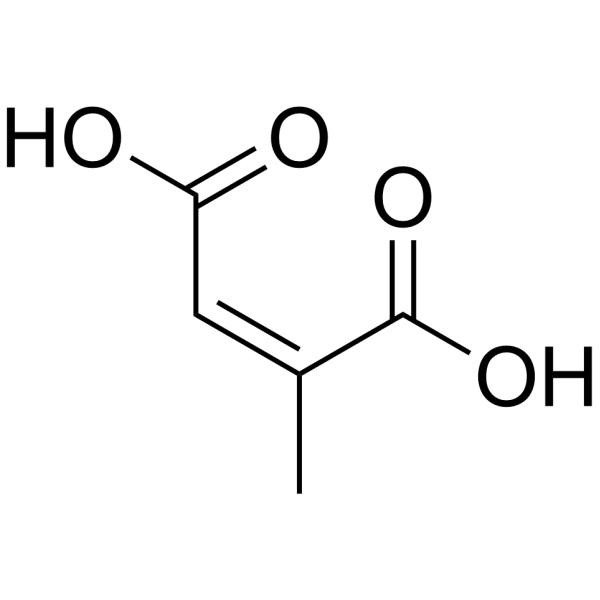
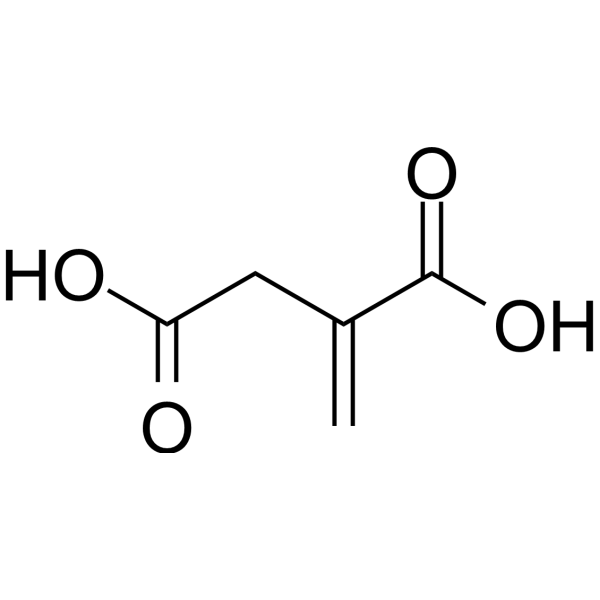
Citraconic acid (Methylmaleic acid) is an orally active inhibitor targeting the NLRP3 inflammasome and Keap1-Nrf2 pathway. Citraconic acid reduces reactive oxygen species (ROS) generation by inhibiting succinate dehydrogenase (SDH) activity. Citraconic acid also modifies the conformation of Keap1 protein, relieves its inhibition of Nrf2, promotes antioxidant gene expression, and inhibits NLRP3 activation and the release of pro-inflammatory factors such as IL-1β and IL-18. Citraconic acid has anti-inflammatory and antioxidant activities, can reduce oxidative stress and cell pyroptosis, improve tissue damage, and can be used for the research of inflammation-related diseases such as acute renal ischemia-reperfusion injury. Citraconic acid is an isomer of Itaconic acid (HY-Y052).
For research use only. We do not sell to patients.
- Purity : 99.08%
- CAS No.: 498-23-7
- Formula: C5H6O4
- Molecular Weight:130.10
-
Storage:Powder -20°C, 3 years , 4°C, 2 years ; In solvent -80°C, 6 months , -20°C, 1 month

To place orders, for customer services and technical support, please contact: MedChemExpress USA
Tel: 609-228-6898 E-mail: [email protected] [email protected]


-
 Biological Activity
-
Chemical Information
-
Solvent & Solubility
- Protocols
- Purity & Documentation
- References
-
 Help & FAQs


-
HY-Y0520
Itaconic acidFungi Metabolite -
HY-112675
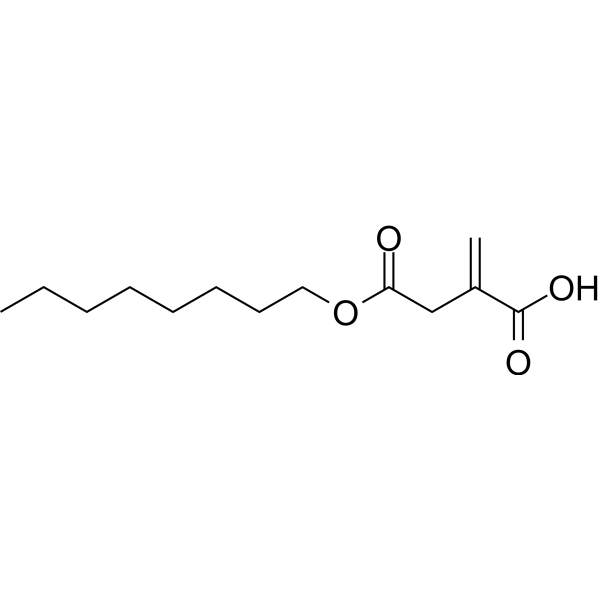
4-Octyl itaconateNrf2 Activator -
HY-78036
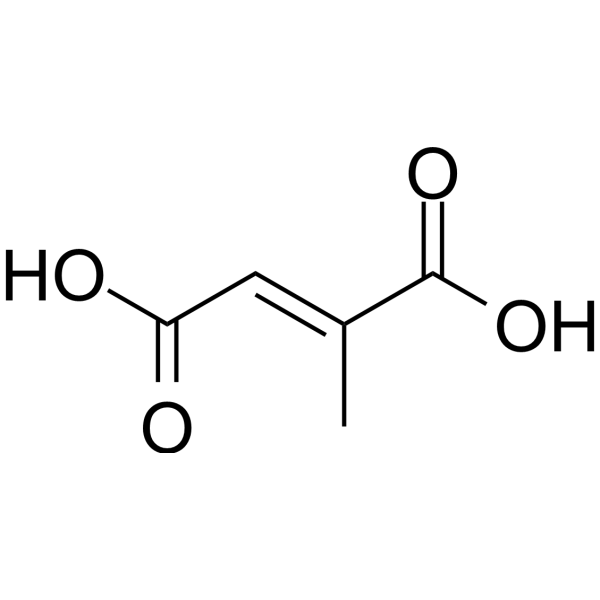
Mesaconic acidAnti-inflammatory/Antioxidant Agent -
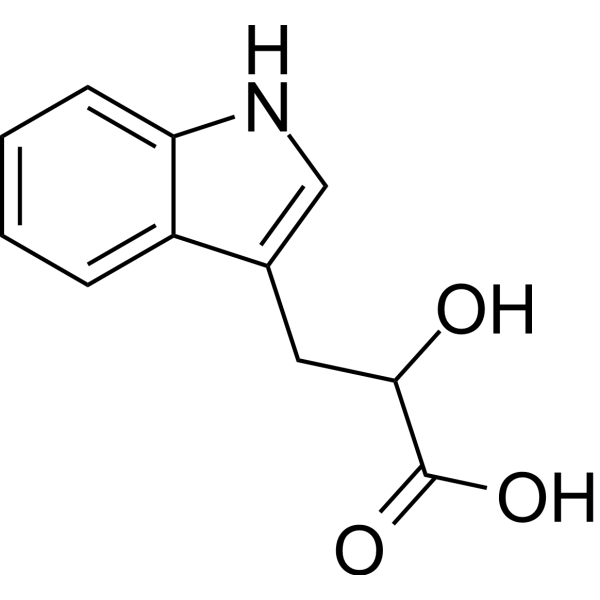
HY-113099
Indolelactic acidTryptophan Catabolite -
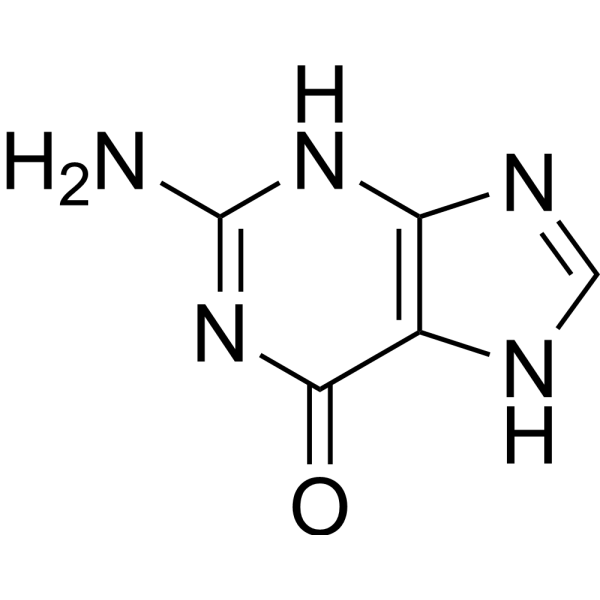
HY-Y1055
GuanineGuanine Nucleotide -
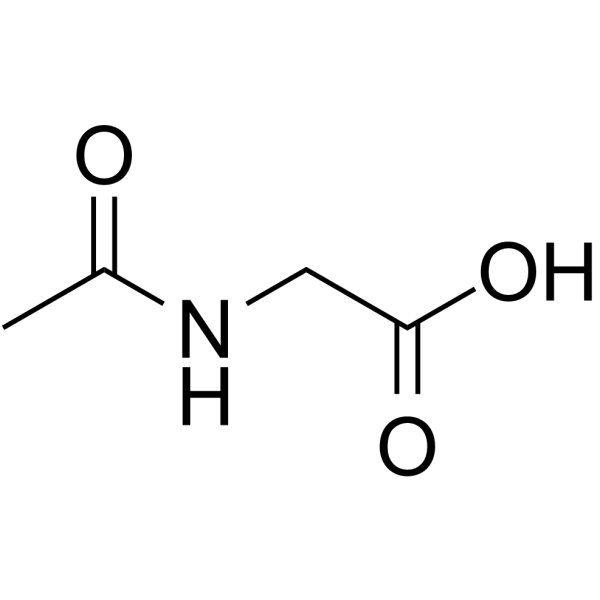
HY-Y0069
N-AcetylglycineFlavor Enhancer -
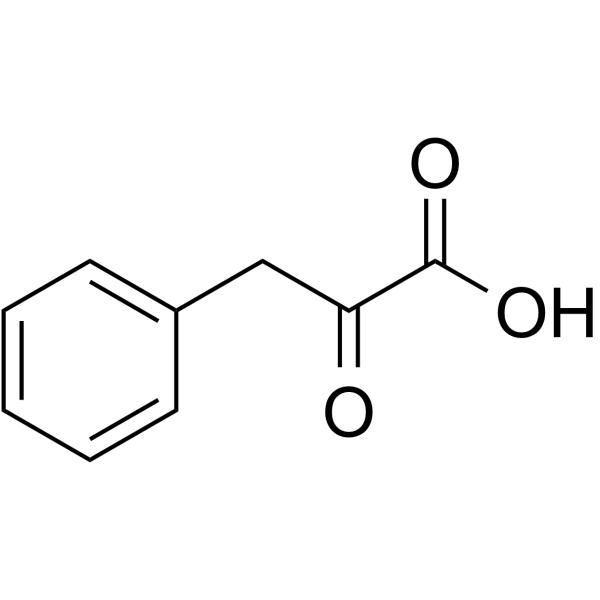
HY-W012530
Phenylpyruvic acidActive Compound -
HY-W016814
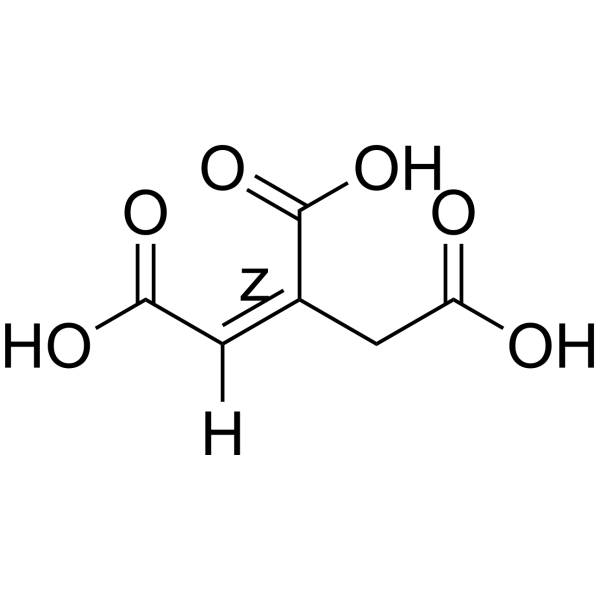
(Z)-Aconitic acidGlutamate Decarboxylase Inhibitor -

HY-113298R
Citraconic acid (Standard)NLRP3/Keap1-Nrf2 Inhibitor
Publications Citing Use of MedChemExpress (MCE) Citraconic acid
More- Nature. 2025 Jul;643(8070):192-200. [Abstract]
- Cell Host Microbe. 2025 Sep 30:S1931-3128(25)00375-0. [Abstract]
- Sci Immunol. 2026 May;11(119):eadz0348. [Abstract]
- Cell Rep. 2026 Mar 30;45(4):117179. [Abstract]
- Cell Rep. 2023 Feb 28;42(3):112145. [Abstract]
- Food Funct. 2026 Jan 26;17(2):1074-1092. [Abstract]
- Biochem Biophys Res Commun. 2026 Sep 10:830:154289.


Biological Activity
Description
IC50 & Target
|
NLRP3 |
In Vitro
Hydrogel preparation and enzyme immobilization experiments:
Citraconic acid (molar ratio of acrylamide to 1:3; polymerization reaction time 24 h) can be used to prepare chitosan-polyacrylamide-citraconic acid semi-IPN hydrogels and significantly improve the hydrogel swelling rate (240%-400%). The yield of lipase immobilization in the encapsulation method is high[3].
MedChemExpress (MCE) has not independently confirmed the accuracy of these methods. They are for reference only.
In Vivo
MedChemExpress (MCE) has not independently confirmed the accuracy of these methods. They are for reference only.
-
Animal Model:Sprague-Dawley rat renal ischemia-reperfusion injury model (250-300 g,8-10 weeks old)[1]
-
Dosage:50 mg/kg
-
Administration:Intraperitoneal injection, once daily for 3 consecutive days, starting 3 days before ischemia-reperfusion surgery
-
Result:Significantly improved renal function compared to the ischemia-reperfusion (IRI) group.
Decreased Serum Cr from 1.82 ± 0.23 mg/dL (IRI) to 1.25 ± 0.18 mg/dL, urea from 72.3 mg/dL to 51.6 mg/dL, and Cys-C from 1.57 ± 0.19.


Chemical Information
-
CAS No. 498-23-7
-
Appearance Solid
-
Molecular Weight 130.10
-
Formula C5H6O4
-
Color White to off-white
-
SMILES
O=C(O)/C(C)=C\C(O)=O
-
Synonyms
Methylmaleic acid; Citraconate
-
Structure Classification
-
Initial Source
-
Shipping
Room temperature in continental US; may vary elsewhere.
-
Storage
Powder -20°C 3 years 4°C 2 years In solvent -80°C 6 months -20°C 1 month


Publications (7)
-
Journal Impact Factor
-
Most Recent
-
Nature
2025 Jul;643(8070):192-200. PMID: 39695227 -
Cell Host Microbe
Immunometabolic reprogramming of macrophages by gut microbiota-derived cadaverine controls colon inflammation. [Abstract]2025 Sep 30:S1931-3128(25)00375-0. PMID: 41033313 -
Sci Immunol
2026 May;11(119):eadz0348. PMID: 42066062 -
Cell Rep
4-octyl itaconate inhibits cytokine-mediated inflammation via alkylation of TYK2 and JAK1. [Abstract]2026 Mar 30;45(4):117179. PMID: 41915469 -
Cell Rep
4-octyl itaconate as a metabolite derivative inhibits inflammation via alkylation of STING. [Abstract]2023 Feb 28;42(3):112145. PMID: 36862550 -
Food Funct
Sulfated polysaccharides from sea cucumber mitigate acetaminophen-induced acute liver injury in mice via citraconic acid-mediated inhibition of oxidative stress. [Abstract]2026 Jan 26;17(2):1074-1092. PMID: 41527470 -


Solvent & Solubility
In Vitro:
DMSO : ≥ 100 mg/mL (768.64 mM; Hygroscopic DMSO has a significant impact on the solubility of product, please use newly opened DMSO)
H2O : ≥ 100 mg/mL (768.64 mM)
* "≥" means soluble, but saturation unknown.
Please refer to the solubility information to select the appropriate solvent. Once prepared, please aliquot and store the solution to prevent product inactivation from repeated freeze-thaw cycles.
Storage method and period of stock solution: -80°C, 6 months; -20°C, 1 month. When stored at -80°C, please use it within 6 months. When stored at -20°C, please use it within 1 month.
* Note: If you choose water as the stock solution, please dilute it to the working solution, then filter and sterilize it with a 0.22 μm filter before use.
Please refer to the solubility information to select the appropriate solvent. Once prepared, please aliquot and store the solution to prevent product inactivation from repeated freeze-thaw cycles.
Storage method and period of stock solution: -80°C, 6 months; -20°C, 1 month. When stored at -80°C, please use it within 6 months. When stored at -20°C, please use it within 1 month.
* Note: If you choose water as the stock solution, please dilute it to the working solution, then filter and sterilize it with a 0.22 μm filter before use.
Concentration (start) × Volume (start) = Concentration (final) × Volume (final)
In Vivo:
Select the appropriate dissolution method based on your experimental animal and administration route.
- For the following dissolution methods, please ensure to first prepare a clear stock solution using an In Vitro approach and then sequentially add co-solvents:
- To ensure reliable experimental results, the clarified stock solution can be appropriately stored based on storage conditions. As for the working solution for In Vivo experiments, it is recommended to prepare freshly and use it on the same day.
- The percentages shown for the solvents indicate their volumetric ratio in the final prepared solution. If precipitation or phase separation occurs during preparation, heat and/or sonication can be used to aid dissolution.
Add each solvent one by one: 10% DMSO 40% PEG300 5% Tween-80 45% Saline
Solubility: ≥ 2.5 mg/mL (19.22 mM); Clear solution
This protocol yields a clear solution of ≥ 2.5 mg/mL (saturation unknown).
Taking 1 mL working solution as an example, add 100 μL DMSO stock solution (25.0 mg/mL) to 400 μL PEG300, and mix evenly; then add 50 μL Tween-80 and mix evenly; then add 450 μL Saline to adjust the volume to 1 mL.
Preparation of Saline: Dissolve 0.9 g sodium chloride in ddH₂O and dilute to 100 mL to obtain a clear Saline solution.
Add each solvent one by one: 10% DMSO 90% (20% SBE-β-CD in Saline)
Solubility: ≥ 2.5 mg/mL (19.22 mM); Clear solution
This protocol yields a clear solution of ≥ 2.5 mg/mL (saturation unknown).
Taking 1 mL working solution as an example, add 100 μL DMSO stock solution (25.0 mg/mL) to 900 μL 20% SBE-β-CD in Saline, and mix evenly.
Preparation of 20% SBE-β-CD in Saline (4°C, storage for one week): 2 g SBE-β-CD powder is dissolved in 10 mL Saline, completely dissolve until clear.
In Vivo Dissolution Calculator
Please enter the basic information of animal experiments:
-
-
-
-
Recommended: Prepare an additional quantity of animals to account for potential losses during experiments.
Working solution concentration: 0.22 mg/mL
This product has good water solubility, please refer to the measured solubility data in water/PBS/Saline for details.


Purity & Documentation
-
Data Sheet (287 KB)
-
SDS (393 KB)
- English - EN (393 KB)
- Français - FR (393 KB)
- Deutsch - DE (393 KB)
- Norwegian - NO (393 KB)
- Español - ES (393 KB)
- Swedish - SV (393 KB)
- Italian - IT (393 KB)
- Korean - KR (393 KB)
- Portuguese - PT (393 KB)
-
Handling Instructions (2659 KB)
References
[2]. Strelko CL, et al. Itaconic acid is a mammalian metabolite induced during macrophage activation. J Am Chem Soc. 2011 Oct 19;133(41):16386-9. [Content Brief]
[3]. Pulat M, et al. Lipase release through semi-interpenetrating polymer network hydrogels based on chitosan, acrylamide, and citraconic acid. Artif Cells Nanomed Biotechnol. 2014 Apr;42(2):121-7. [Content Brief]


Complete Stock Solution Preparation Table
Please refer to the solubility information to select the appropriate solvent. Once prepared, please aliquot and store the solution to prevent product inactivation from repeated freeze-thaw cycles.
Storage method and period of stock solution: -80°C, 6 months; -20°C, 1 month. When stored at -80°C, please use it within 6 months. When stored at -20°C, please use it within 1 month.
| Optional Solvent | Concentration Solvent Mass | 1 mg | 5 mg | 10 mg | 25 mg |
|---|---|---|---|---|---|
| DMSO / H2O | 1 mM | 7.6864 mL | 38.4320 mL | 76.8639 mL | 192.1599 mL |
| 5 mM | 1.5373 mL | 7.6864 mL | 15.3728 mL | 38.4320 mL | |
| 10 mM | 0.7686 mL | 3.8432 mL | 7.6864 mL | 19.2160 mL | |
| 15 mM | 0.5124 mL | 2.5621 mL | 5.1243 mL | 12.8107 mL | |
| 20 mM | 0.3843 mL | 1.9216 mL | 3.8432 mL | 9.6080 mL | |
| 25 mM | 0.3075 mL | 1.5373 mL | 3.0746 mL | 7.6864 mL | |
| 30 mM | 0.2562 mL | 1.2811 mL | 2.5621 mL | 6.4053 mL | |
| 40 mM | 0.1922 mL | 0.9608 mL | 1.9216 mL | 4.8040 mL | |
| 50 mM | 0.1537 mL | 0.7686 mL | 1.5373 mL | 3.8432 mL | |
| 60 mM | 0.1281 mL | 0.6405 mL | 1.2811 mL | 3.2027 mL | |
| 80 mM | 0.0961 mL | 0.4804 mL | 0.9608 mL | 2.4020 mL | |
| 100 mM | 0.0769 mL | 0.3843 mL | 0.7686 mL | 1.9216 mL |
* Note: If you choose water as the stock solution, please dilute it to the working solution, then filter and sterilize it with a 0.22 μm filter before use.


Citraconic acid Related Classifications
HY-113298 Related Classifications
 Powered by Bioz