



Dipropylene glycol

Based on 1 Customer Validation
Dipropylene glycol is a mixture of three structural isomers (2-(2-hydroxypropoxy)-1-propanol, 1,1'-oxybis (2-propanol), and 2,2'-oxybis (1-propanol)). Dipropylene glycol induces liver and kidney damage as well as reproductive toxicity in rodents. Dipropylene glycol can be used in chemical industry-related research, such as for plasticizers, polyester resins, cosmetics, fragrances, polyurethane polyols, and alkyd resins.
For research use only. We do not sell to patients.
- Purity : ≥98.0%
- CAS No.: 25265-71-8
- Formula: C6H14O3
- Molecular Weight:134.18
-
Storage:
Store at room temperature 3 years.
In solvent -80°C, 2 years , -20°C, 1 year


To place orders, for customer services and technical support, please contact: MedChemExpress USA
Tel: 609-228-6898 E-mail: [email protected] [email protected]


-
 Biological Activity
-
Chemical Information
-
Solvent & Solubility
- Protocols
- Purity & Documentation
- References
-
 Help & FAQs


-

HY-W133921R
Dipropylene glycol (Standard) -
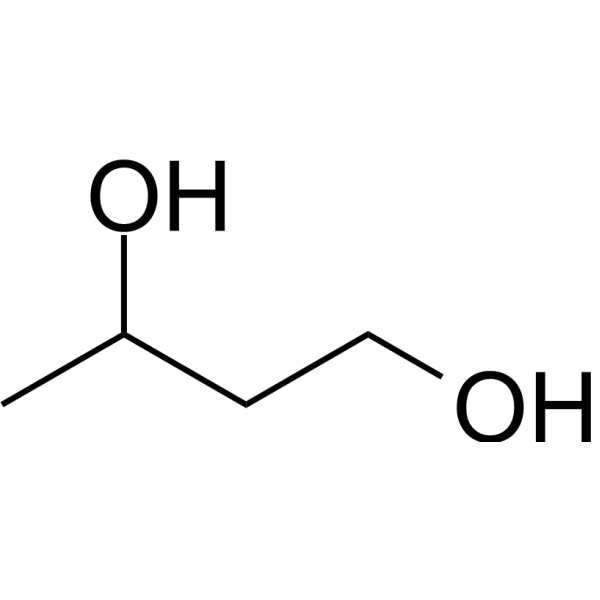
HY-77490A
1,3-Butanediolβ-Hydroxybutyrate Producer -
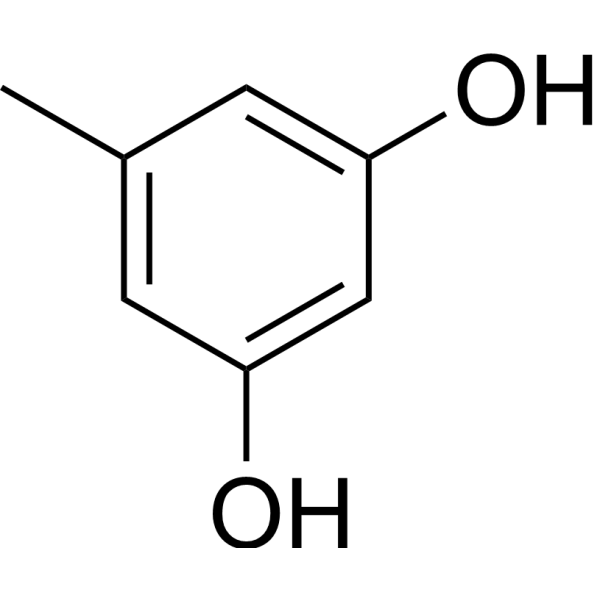
HY-D0168
OrcinolMelanogenesis Inhibitor -
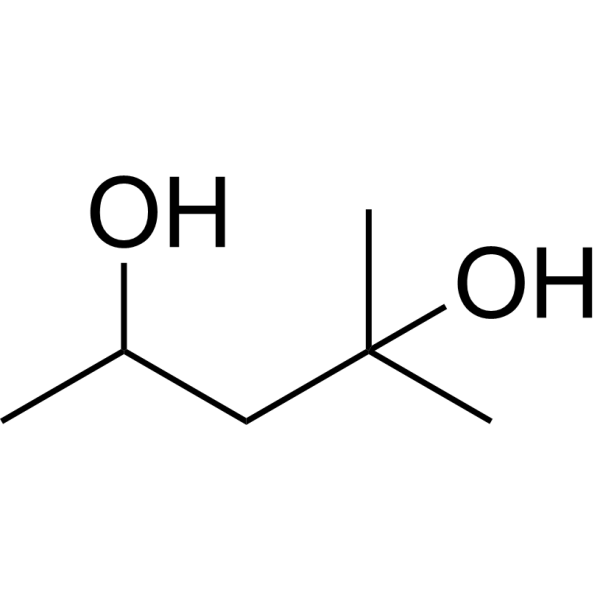
HY-B0903
Hexylene glycolSurfactant -
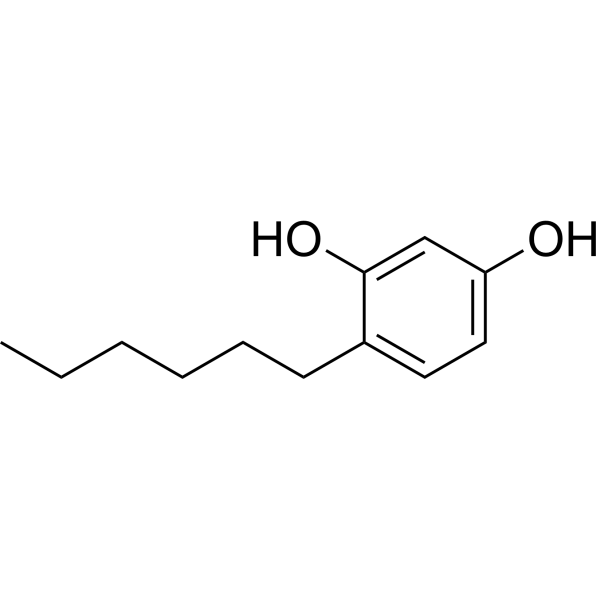
HY-B0986
HexylresorcinolAntimicrobial -
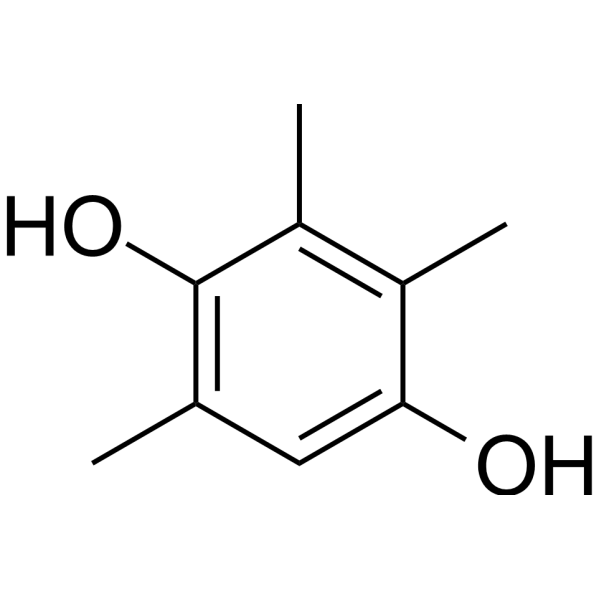
HY-W017378
TrimethylhydroquinoneIntermediate -

HY-B0903R
Hexylene glycol (Standard)Surfactant -

HY-W012816
2-MethylresorcinolTripyrrane Analog -
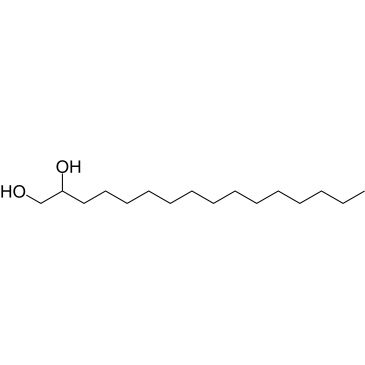
HY-W011816
1,2-HexadecanediolReducing Agent -

HY-W012880
1,2-HexanediolAntimicrobial Agent -

HY-77490AR
1,3-Butanediol (Standard)Endogenous Metabolite -

HY-B0986R
Hexylresorcinol (Standard)Antimicrobial


Biological Activity
Description
In Vivo
Dipropylene glycol (5000-80,000 ppm; p.o.; ad libitum daily; 2 weeks, 3 months, or 2 years) administered via drinking water causes limited dose-dependent nonneoplastic toxic effects in B6C3F1 mice, including reduced body weight gain, liver organ weight changes, and centrilobular liver hypertrophy at high doses, with no treatment-related lesions observed in the 2-year study, indicating mice are less susceptible to dipropylene glycol toxicity than rats[1].
MedChemExpress (MCE) has not independently confirmed the accuracy of these methods. They are for reference only.


Chemical Information
-
CAS No. 25265-71-8
-
Appearance Liquid (Density: 1.023 g/cm3)
-
Molecular Weight 134.18
-
Formula C6H14O3
-
SMILES
OC(COC(C)CO)C.OC(C)COCC(C)O.OCC(C)OC(C)CO
-
Shipping
Room temperature in continental US; may vary elsewhere.
-
Storage
Store at room temperature 3 years
In solvent -80°C 2 years -20°C 1 year


Solvent & Solubility
In Vitro:
DMSO : 100 mg/mL (745.27 mM; Need ultrasonic; Hygroscopic DMSO has a significant impact on the solubility of product, please use newly opened DMSO)
Please refer to the solubility information to select the appropriate solvent. Once prepared, please aliquot and store the solution to prevent product inactivation from repeated freeze-thaw cycles.
Storage method and period of stock solution: -80°C, 2 years; -20°C, 1 year. When stored at -80°C, please use it within 2 years. When stored at -20°C, please use it within 1 year.
Please refer to the solubility information to select the appropriate solvent. Once prepared, please aliquot and store the solution to prevent product inactivation from repeated freeze-thaw cycles.
Storage method and period of stock solution: -80°C, 2 years; -20°C, 1 year. When stored at -80°C, please use it within 2 years. When stored at -20°C, please use it within 1 year.
Concentration (start) × Volume (start) = Concentration (final) × Volume (final)

Protocols
-
Reproductive and Developmental Toxicity Study
Reproductive and developmental toxicity studies detect adverse effects of prenatal or peri/postnatal exposure on maternal condition, pregnancy maintenance, embryo-fetal survival, fetal growth, structural development, and offspring reproductive or developmental endpoints; classic rat protocols generate readouts by comparing treated groups with vehicle, pair-fed, or untreated controls for implantation, resorption, fetal weight, crown-rump length, external morphology, visceral morphology, skeletal ossification, anogenital distance, nipple/areola retention, and postnatal cohort outcomes.


Purity & Documentation
-
Data Sheet (274 KB)
-
SDS (394 KB)
- English - EN (394 KB)
- Français - FR (394 KB)
- Deutsch - DE (394 KB)
- Norwegian - NO (394 KB)
- Español - ES (394 KB)
- Swedish - SV (394 KB)
- Italian - IT (394 KB)
- Korean - KR (394 KB)
- Portuguese - PT (394 KB)
-
Handling Instructions (2659 KB)
References


Complete Stock Solution Preparation Table
Please refer to the solubility information to select the appropriate solvent. Once prepared, please aliquot and store the solution to prevent product inactivation from repeated freeze-thaw cycles.
Storage method and period of stock solution: -80°C, 2 years; -20°C, 1 year. When stored at -80°C, please use it within 2 years. When stored at -20°C, please use it within 1 year.
| Optional Solvent | Concentration Solvent Mass | 1 mg | 5 mg | 10 mg | 25 mg |
|---|---|---|---|---|---|
| DMSO | 1 mM | 7.4527 mL | 37.2634 mL | 74.5268 mL | 186.3169 mL |
| 5 mM | 1.4905 mL | 7.4527 mL | 14.9054 mL | 37.2634 mL | |
| 10 mM | 0.7453 mL | 3.7263 mL | 7.4527 mL | 18.6317 mL | |
| 15 mM | 0.4968 mL | 2.4842 mL | 4.9685 mL | 12.4211 mL | |
| 20 mM | 0.3726 mL | 1.8632 mL | 3.7263 mL | 9.3158 mL | |
| 25 mM | 0.2981 mL | 1.4905 mL | 2.9811 mL | 7.4527 mL | |
| 30 mM | 0.2484 mL | 1.2421 mL | 2.4842 mL | 6.2106 mL | |
| 40 mM | 0.1863 mL | 0.9316 mL | 1.8632 mL | 4.6579 mL | |
| 50 mM | 0.1491 mL | 0.7453 mL | 1.4905 mL | 3.7263 mL | |
| 60 mM | 0.1242 mL | 0.6211 mL | 1.2421 mL | 3.1053 mL | |
| 80 mM | 0.0932 mL | 0.4658 mL | 0.9316 mL | 2.3290 mL | |
| 100 mM | 0.0745 mL | 0.3726 mL | 0.7453 mL | 1.8632 mL |


Dipropylene glycol Related Classifications
HY-W133921 Related Classifications
 Powered by Bioz