



Pseudouridine
Based on 1 publication(s) in Google Scholar
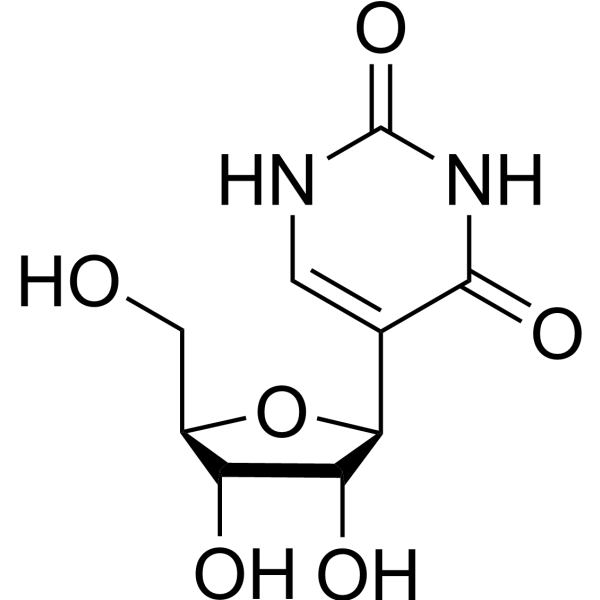
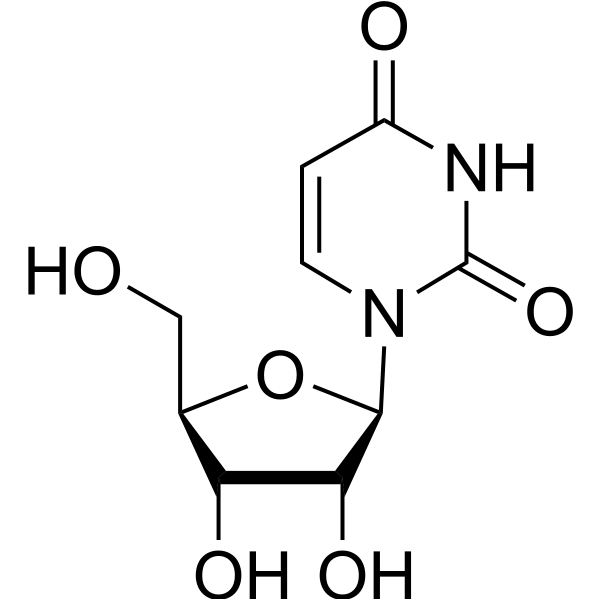
Pseudouridine is an isomer of uridine and the most abundant modified nucleoside in non-coding RNA. It fine-tunes and stabilizes regional structures in rRNA and tRNA, maintaining their functions in mRNA decoding, ribosome assembly, processing, and translation. Pseudouridine-modified tRNA fragments can inhibit aberrant protein synthesis and hold promise for research on myelodysplastic syndrome (MDS)-related leukemia..
Nur für Forschungszwecke. Wir verkaufen nicht an Patienten.
- Reinheit : 99.92%
- CAS. Nr.: 1445-07-4
- Formel: C9H12N2O6
- Molecular Weight:244.20
-
Speicherung:Powder -20°C, 3 years , 4°C, 2 years ; In solvent -80°C, 2 years , -20°C, 1 year

To place orders, for customer services and technical support, please contact: MedChemExpress USA
Tel: 609-228-6898 E-mail: [email protected] [email protected]


-
 Biologische Aktivität
-
Chemical Information
-
Lösungsmittel & Löslichkeit
- Protokoll
- Reinheit & Dokumentation
- Verweise
-
 Help & FAQs


-
HY-N0092
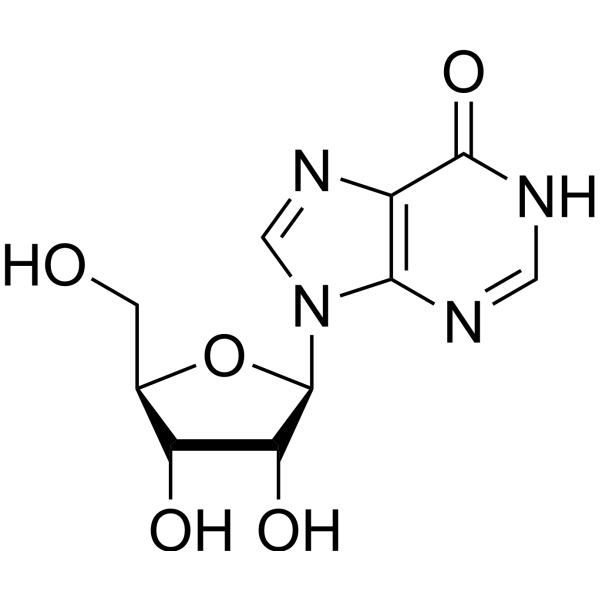
InosineEndogenous Metabolite -
HY-113135
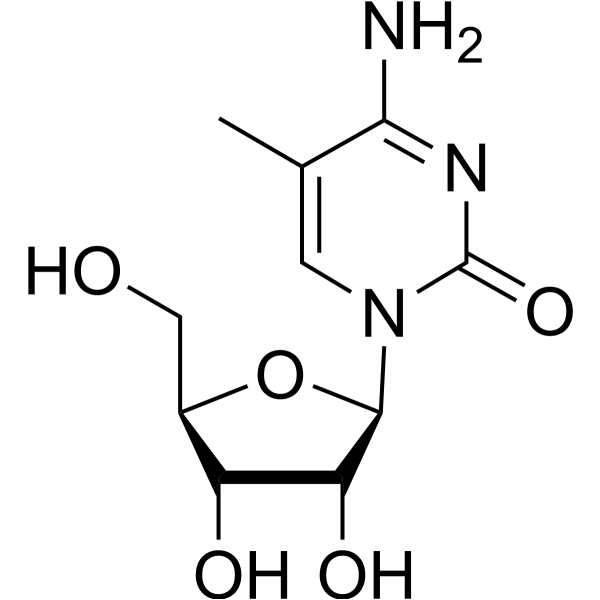
5-MethylcytidinePyrimidine Nucleoside -
HY-B1449
UridineNucleoside -
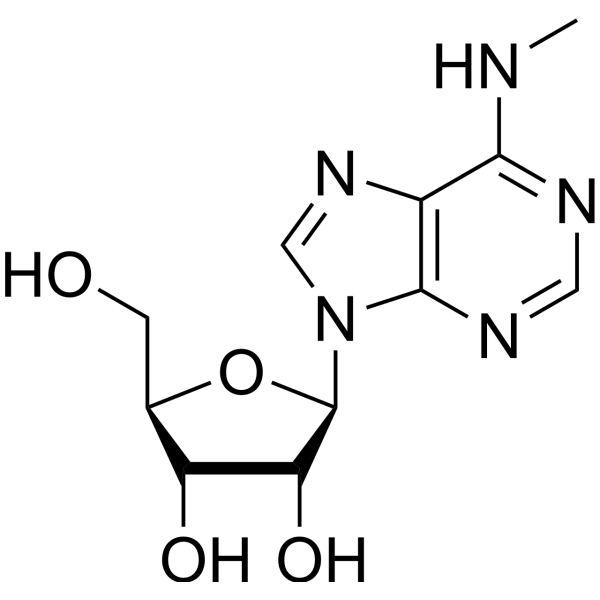
HY-N0086
N6-MethyladenosineViral RNA Modified Agent -
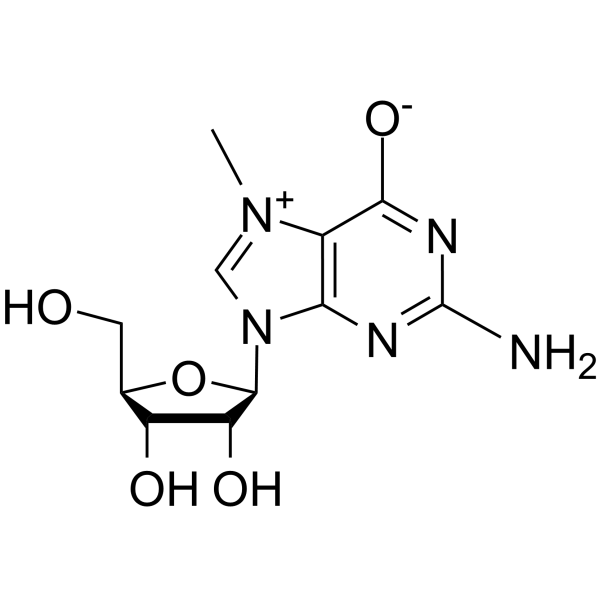
HY-122524
7-MethylguanosineNucleotide Analog -
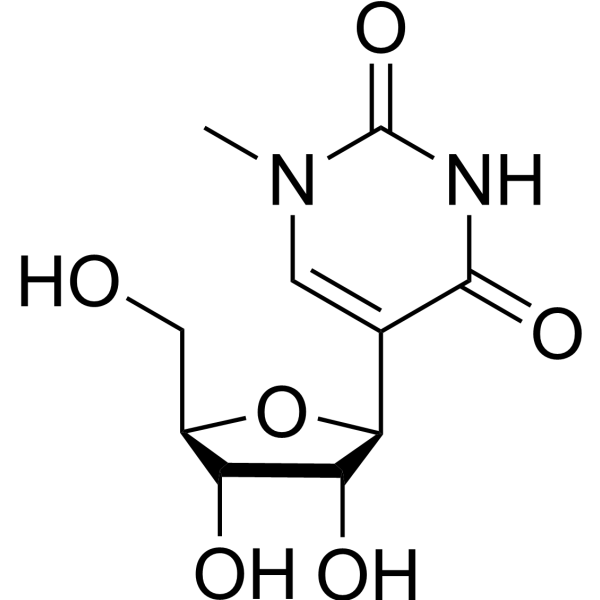
HY-112582
N1-MethylpseudouridineMethylpseudouridine -
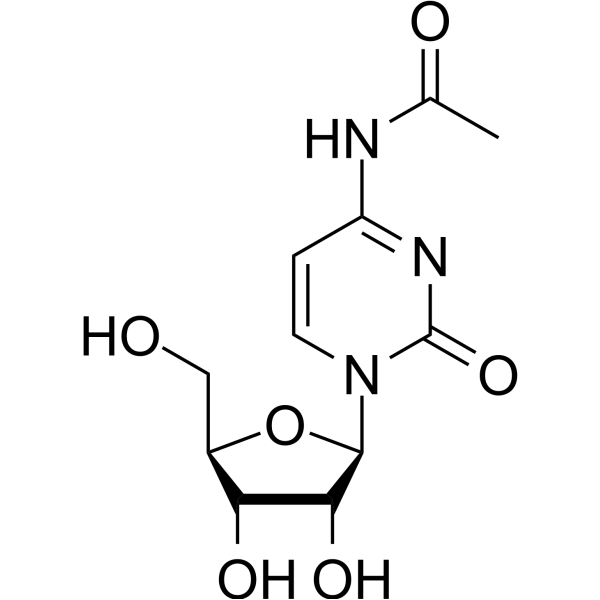
HY-W019670
N4-AcetylcytidineRNA Modifying Substance -
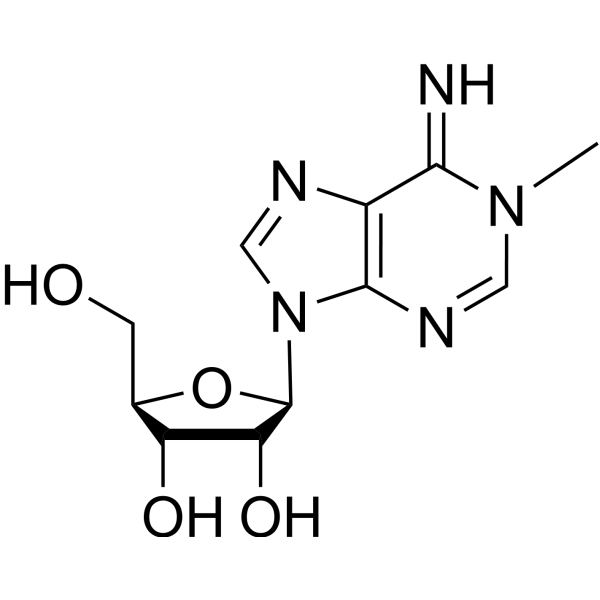
HY-113081
1-MethyladenosineEndogenous Metabolite -
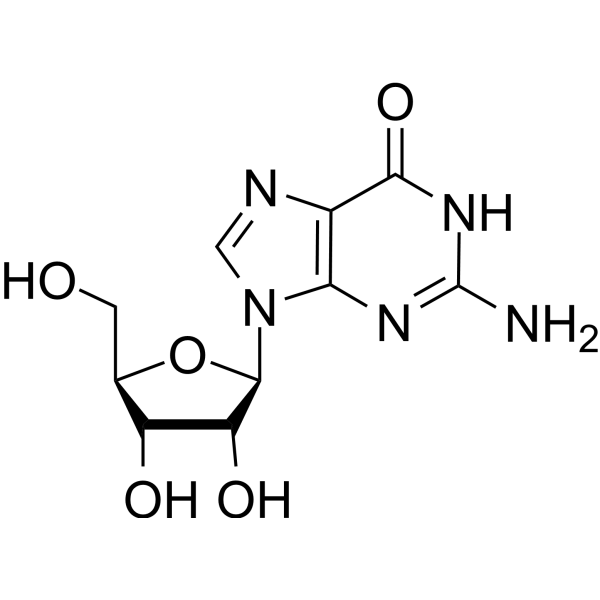
HY-N0097
GuanosineHSV Inhibitor -

HY-113061R
Pseudouridine (Standard)Nucleoside -
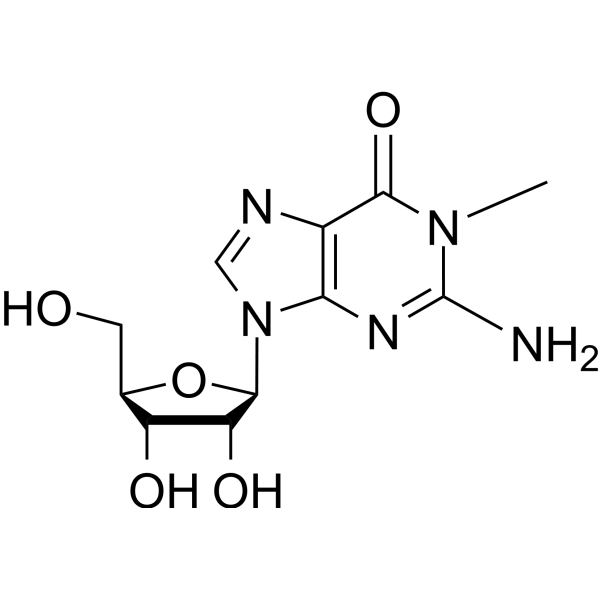
HY-113136
1-MethylguanosineTumour Marker -
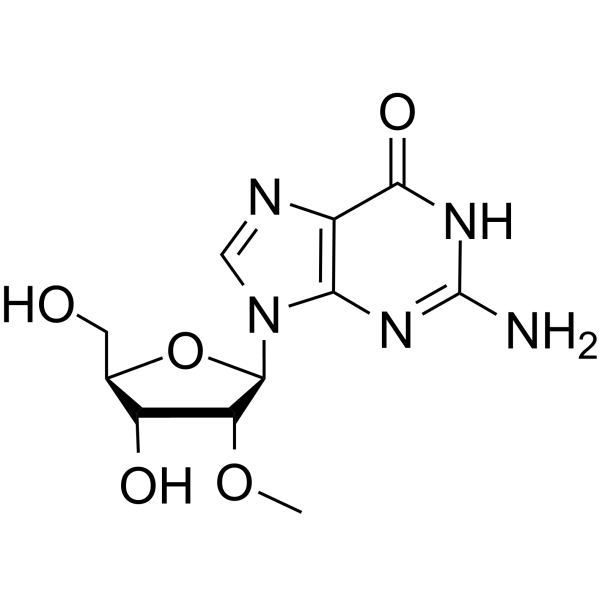
HY-W013260
2'-O-MethylguanosineApoptosis Inducing Nucleoside
Publications Citing Use of MedChemExpress (MCE) Pseudouridine
MoreAlle Endogenous Metabolite Isoform-spezifische Produkte anzeigen
MoreAlle DNA/RNA Synthesis Isoform-spezifische Produkte anzeigen
More

Biologische Aktivität
Beschreibung
IC50 & Target
|
Human Endogenous Metabolite |
In Vitro
Pseudouridine is one of the most abundant post-transcriptional modifications. It is formed through the isomerization of uracil, where the base rotates 180° and forms a new carbon-carbon bond with the sugar. This modification gives pseudouridine an additional hydrogen bond donor at its non-Watson-Crick edge, endowing it with chemical properties distinct from other bases[3]. Pseudouridine, known as the fifth nucleotide, is found in all three phylogenetic domains of life. It connects the C1 of ribose and C5 of uracil, rather than the usual C1-N1 bond. Pseudouridine is generated by standalone enzymes such as pseudouridine synthases or Pus enzymes in various types of RNA, including tRNA, rRNA, small nuclear RNA (snRNA), and also in coding RNA[4]. Pseudouridine modification stabilizes RNA, improves base stacking, and enhances structural stability by forming additional hydrogen bonds. Conserved pseudouridine modifications are found in the TΨC arm of tRNA and at several positions in rRNA, especially near the peptidyl transferase center, where they participate in the translation process[4].
MedChemExpress (MCE) has not independently confirmed the accuracy of these methods. They are for reference only.


Chemical Information
-
CAS. Nr. 1445-07-4
-
Appearance Solid
-
Molecular Weight 244.20
-
Formel C9H12N2O6
-
Color White to off-white
-
SMILES
O[C@H]1[C@@H](O)[C@H](C(C(N2)=O)=CNC2=O)O[C@@H]1CO
-
Structure Classification
-
Versand
Room temperature in continental US; may vary elsewhere.
-
Speicherung
Powder -20°C 3 years 4°C 2 years In solvent -80°C 2 years -20°C 1 year


Publications (1)
-
Journal Impact Factor
-
Most Recent


Lösungsmittel & Löslichkeit
In Vitro:
DMSO : 125 mg/mL (511.88 mM; Need ultrasonic; Hygroscopic DMSO has a significant impact on the solubility of product, please use newly opened DMSO)
H2O : 25 mg/mL (102.38 mM; ultrasonic and warming and heat to 60°C)
Please refer to the solubility information to select the appropriate solvent. Once prepared, please aliquot and store the solution to prevent product inactivation from repeated freeze-thaw cycles.
Storage method and period of stock solution: -80°C, 2 years; -20°C, 1 year. When stored at -80°C, please use it within 2 years. When stored at -20°C, please use it within 1 year.
* Note: If you choose water as the stock solution, please dilute it to the working solution, then filter and sterilize it with a 0.22 μm filter before use.
Please refer to the solubility information to select the appropriate solvent. Once prepared, please aliquot and store the solution to prevent product inactivation from repeated freeze-thaw cycles.
Storage method and period of stock solution: -80°C, 2 years; -20°C, 1 year. When stored at -80°C, please use it within 2 years. When stored at -20°C, please use it within 1 year.
* Note: If you choose water as the stock solution, please dilute it to the working solution, then filter and sterilize it with a 0.22 μm filter before use.
Konzentration (Stammlösung) × Volumen (Stammlösung) = Konzentration (Ziellösung) × Volumen (Ziellösung)
In Vivo:
Select the appropriate dissolution method based on your experimental animal and administration route.
- For the following dissolution methods, please ensure to first prepare a clear stock solution using an In Vitro approach and then sequentially add co-solvents:
- To ensure reliable experimental results, the clarified stock solution can be appropriately stored based on storage conditions. As for the working solution for In Vivo experiments, it is recommended to prepare freshly and use it on the same day.
- The percentages shown for the solvents indicate their volumetric ratio in the final prepared solution. If precipitation or phase separation occurs during preparation, heat and/or sonication can be used to aid dissolution.
Add each solvent one by one: 10% DMSO 40% PEG300 5% Tween-80 45% Saline
Solubility: ≥ 2.08 mg/mL (8.52 mM); Clear solution
This protocol yields a clear solution of ≥ 2.08 mg/mL (saturation unknown).
Taking 1 mL working solution as an example, add 100 μL DMSO stock solution (20.8 mg/mL) to 400 μL PEG300, and mix evenly; then add 50 μL Tween-80 and mix evenly; then add 450 μL Saline to adjust the volume to 1 mL.
Preparation of Saline: Dissolve 0.9 g sodium chloride in ddH₂O and dilute to 100 mL to obtain a clear Saline solution.
Add each solvent one by one: 10% DMSO 90% (20% SBE-β-CD in Saline)
Solubility: ≥ 2.08 mg/mL (8.52 mM); Clear solution
This protocol yields a clear solution of ≥ 2.08 mg/mL (saturation unknown).
Taking 1 mL working solution as an example, add 100 μL DMSO stock solution (20.8 mg/mL) to 900 μL 20% SBE-β-CD in Saline, and mix evenly.
Preparation of 20% SBE-β-CD in Saline (4°C, storage for one week): 2 g SBE-β-CD powder is dissolved in 10 mL Saline, completely dissolve until clear.
For the following dissolution methods, please prepare the working solution directly:
It is recommended to prepare fresh solutions and use them promptly within a short period of time.
The percentages shown for the solvents indicate their volumetric ratio in the final prepared solution. If precipitation or phase separation occurs during preparation, heat and/or sonication can be used to aid dissolution.
Add each solvent one by one: PBS
Solubility: 25 mg/mL (102.38 mM); Clear solution; Need ultrasonic
In Vivo Dissolution Calculator
Please enter the basic information of animal experiments:
-
-
-
-
Recommended: Prepare an additional quantity of animals to account for potential losses during experiments.
Working solution concentration: 0.22 mg/mL
This product has good water solubility, please refer to the measured solubility data in water/PBS/Saline for details.


Reinheit & Dokumentation
-
Data Sheet (279 KB)
-
SDS (396 KB)
- English - EN (396 KB)
- Français - FR (396 KB)
- Deutsch - DE (396 KB)
- Norwegian - NO (396 KB)
- Español - ES (396 KB)
- Swedish - SV (396 KB)
- Italian - IT (396 KB)
- Korean - KR (396 KB)
- Portuguese - PT (396 KB)
-
Handling Instructions (2659 KB)
Verweise
[1]. Carlile TM, et al. Pseudouridine profiling reveals regulated mRNA pseudouridylation in yeast and human cells. Nature. 2014 Nov 6;515(7525):143-6. [Content Brief]
[2]. M Charette, et al. Pseudouridine in RNA: what, where, how, and why. IUBMB Life. 2000 May;49(5):341-51. [Content Brief]
[3]. Junhui Ge, et al. RNA pseudouridylation: new insights into an old modification. Trends Biochem Sci. 2013 Apr;38(4):210-8. [Content Brief]
[4]. Anne C Rintala-Dempsey, et al. Eukaryotic stand-alone pseudouridine synthases - RNA modifying enzymes and emerging regulators of gene expression? RNA Biol. 2017 Sep 2;14(9):1185-1196. [Content Brief]
[5]. Malcovati L, et al. Pseudouridine-modified tRNA fragments repress aberrant protein synthesis and predict leukaemic progression in myelodysplastic syndrome. Nat Cell Biol. 2022 Mar;24(3):299-306. [Content Brief]


Complete Stock Solution Preparation Table
Please refer to the solubility information to select the appropriate solvent. Once prepared, please aliquot and store the solution to prevent product inactivation from repeated freeze-thaw cycles.
Storage method and period of stock solution: -80°C, 2 years; -20°C, 1 year. When stored at -80°C, please use it within 2 years. When stored at -20°C, please use it within 1 year.
| Optional Solvent | Concentration Solvent Mass | 1 mg | 5 mg | 10 mg | 25 mg |
|---|---|---|---|---|---|
| H2O / DMSO | 1 mM | 4.0950 mL | 20.4750 mL | 40.9500 mL | 102.3751 mL |
| 5 mM | 0.8190 mL | 4.0950 mL | 8.1900 mL | 20.4750 mL | |
| 10 mM | 0.4095 mL | 2.0475 mL | 4.0950 mL | 10.2375 mL | |
| 15 mM | 0.2730 mL | 1.3650 mL | 2.7300 mL | 6.8250 mL | |
| 20 mM | 0.2048 mL | 1.0238 mL | 2.0475 mL | 5.1188 mL | |
| 25 mM | 0.1638 mL | 0.8190 mL | 1.6380 mL | 4.0950 mL | |
| 30 mM | 0.1365 mL | 0.6825 mL | 1.3650 mL | 3.4125 mL | |
| 40 mM | 0.1024 mL | 0.5119 mL | 1.0238 mL | 2.5594 mL | |
| 50 mM | 0.0819 mL | 0.4095 mL | 0.8190 mL | 2.0475 mL | |
| 60 mM | 0.0683 mL | 0.3413 mL | 0.6825 mL | 1.7063 mL | |
| 80 mM | 0.0512 mL | 0.2559 mL | 0.5119 mL | 1.2797 mL | |
| 100 mM | 0.0410 mL | 0.2048 mL | 0.4095 mL | 1.0238 mL |
* Note: If you choose water as the stock solution, please dilute it to the working solution, then filter and sterilize it with a 0.22 μm filter before use.


Pseudouridine Related Classifications
HY-113061 Related Classifications
 Powered by Bioz