Search Result
Results for "
serotonin uptake
" in MedChemExpress (MCE) Product Catalog:
6
Isotope-Labeled Compounds
| Cat. No. |
Product Name |
Target |
Research Areas |
Chemical Structure |
-
- HY-N0740
-
|
|
Cholinesterase (ChE)
5-HT Receptor
Bacterial
|
Neurological Disease
Inflammation/Immunology
|
|
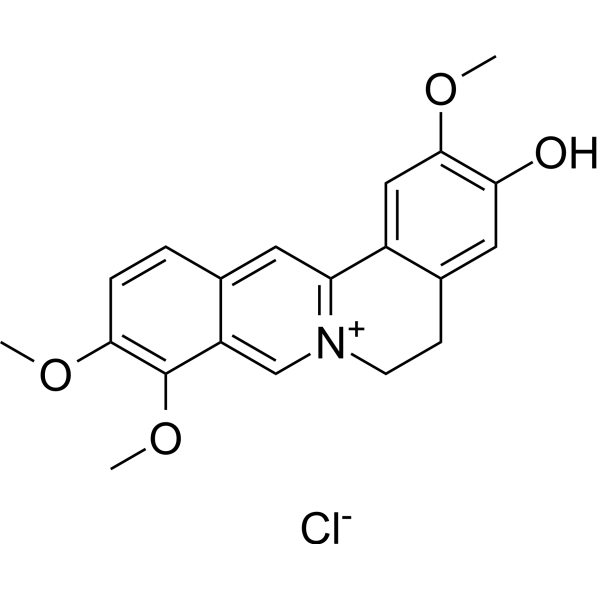
Jatrorrhizine chloride is an alkaloid isolated from?Coptis chinensis with neuroprotective, antimicrobial, antiplasmodial and antioxidant activities . Jatrorrhizine chloride is a potent and orally active inhibitor of?AChE?(IC50=872 nM) over >115-fold selectivity for BuChE . Jatrorrhizine chloride reduces uptake of serotonin (5-HT) and norepinephrine (NE) via inhibition of uptake-2 transporters .
|
-
-
- HY-14472
-
|
NS-2330
|
Dopamine Transporter
Serotonin Transporter
|
Metabolic Disease
|
|
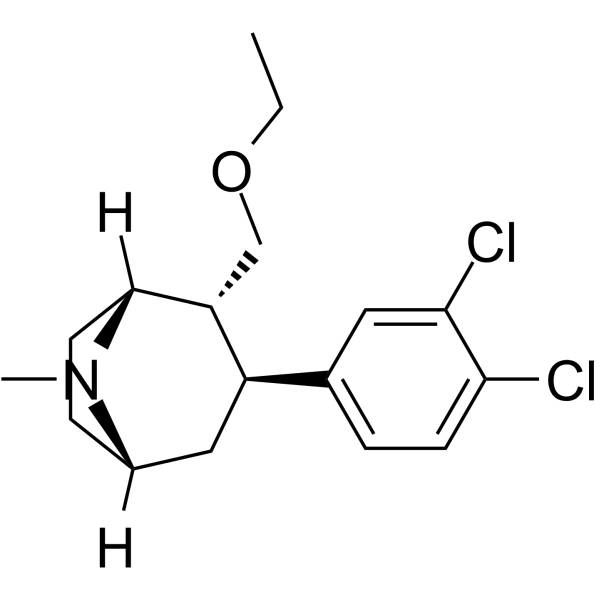
Tesofensine (NS-2330) is a triple monoamine reuptake inhibitor inducing a potent inhibition of the re-uptake process in the synaptic cleft of the neurotransmitters dopamine (DA; IC50=6.5 nM), norepinephrine (NE;IC50=1.7 nM), and serotonin (5-HT;IC50=11 nM), and with potentials as an anti-obesity agent . Tesofensine is a CNS acting anti-obesity agent .
|
-
-
- HY-N0749
-
|
|
Cholinesterase (ChE)
5-HT Receptor
Bacterial
|
Neurological Disease
|
|
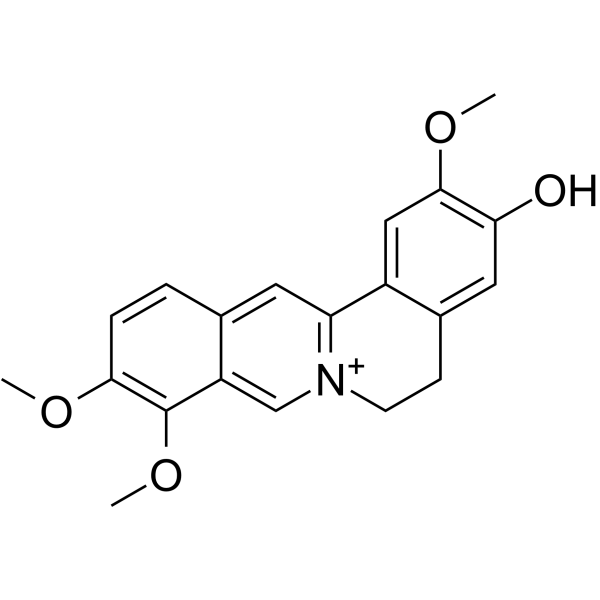
Jatrorrhizine is an alkaloid isolated from Coptis chinensis with neuroprotective, antimicrobial, antiplasmodial and antioxidant activities . Jatrorrhizine is a potent and orally active inhibitor of AChE (IC50=872 nM) over >115-fold selectivity for BuChE . Jatrorrhizine reduces uptake of serotonin (5-HT) and norepinephrine (NE) via inhibition of uptake-2 transporters .
|
-
-
- HY-108256
-
|
|
5-HT Receptor
|
Neurological Disease
|
|
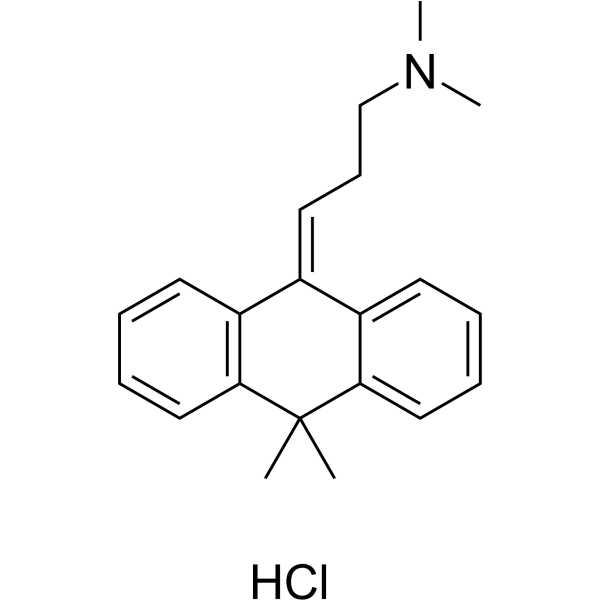
Melitracen hydrochloride is an orally active biphasic antidepressant and antianxiety agent. Melitracen hydrochloride can inhibit the uptake of Norepinephrine and 5-HT (serotonin) through the presynaptic membrane inducing the increase of monoamine transmitters in synaptic space .
|
-
-
- HY-B1287
-
|
(±)-Citalopram hydrobromide; Lu 10-171
|
Serotonin Transporter
Autophagy
|
Neurological Disease
Cancer
|
|
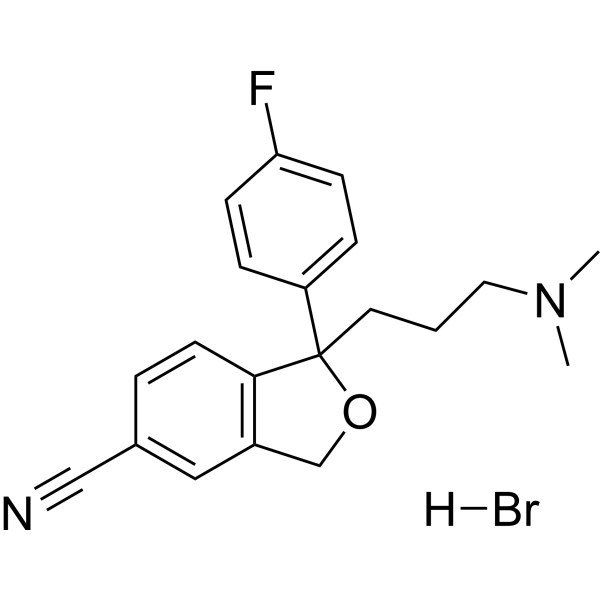
Citalopram hydrobromide is a selective serotonin reuptake inhibitor (SSRI), with blood-brain barrier permeability. Citalopram hydrobromide inhibits 5-HT uptake into synaptosomes with an IC50 of 1.8 nM. Citalopram hydrobromideinhibits the 5-HT uptake in rabbit blood platelets with an IC50 of 14 nM. Antidepressant effect .
|
-
-
- HY-W011235
-
|
|
5-HT Receptor
Calcium Channel
Drug Metabolite
|
Cardiovascular Disease
Neurological Disease
|
|
Norfluoxetine hydrochloride is an active N-demethylated metabolite of Fluoxetine. Fluoxetine is a selective serotonin (5-HT) reuptake inhibitor that is metabolized to Norfluoxetine hydrochloride by cytochrome P450 (CYP) 2D6, CYP2C19, and CYP3A4. Norfluoxetine hydrochloride inhibits 5-HT uptake and inhibits CaV3.3 T current (IC50 = 5 μM). Norfluoxetine hydrochloride has anticonvulsant activity .
|
-
-
- HY-118166
-
|
NSC 329491; 1,3,7-Trihydroxyxanthone
|
5-HT Receptor
|
Neurological Disease
|
|
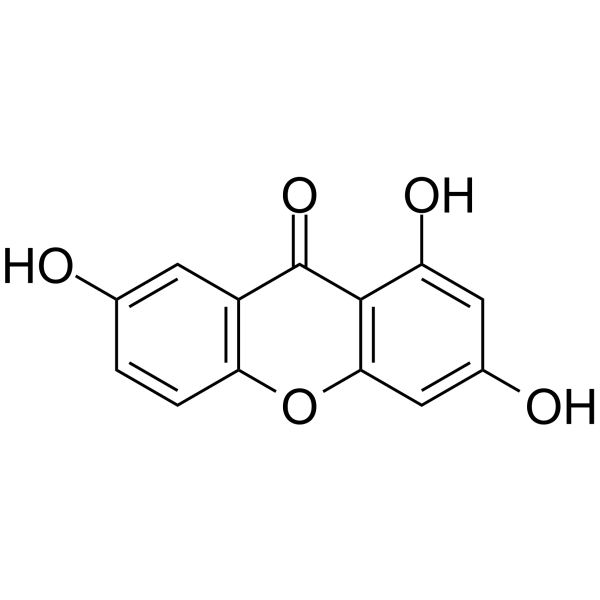
Gentisein (NSC 329491), the major metabolite of Mangiferin, shows the most potent serotonin uptake inhibition with an IC50 value of 4.7 µM .
|
-
-
- HY-N0749A
-
|
|
Cholinesterase (ChE)
5-HT Receptor
Bacterial
|
Neurological Disease
Inflammation/Immunology
|
|
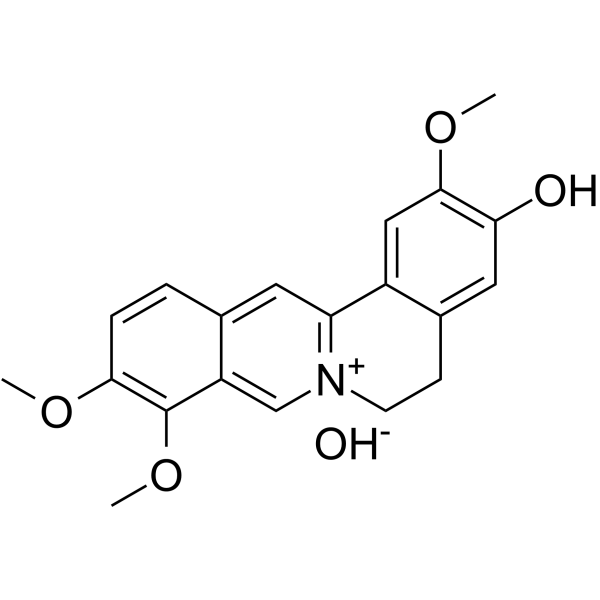
Jatrorrhizine hydroxide is an alkaloid isolated from Coptis chinensis with neuroprotective, antimicrobial, antiplasmodial and antioxidant activities . Jatrorrhizine hydroxide is a potent and orally active inhibitor of AChE (IC50=872 nM) over >115-fold selectivity for BuChE . Jatrorrhizine hydroxide reduces uptake of serotonin (5-HT) and norepinephrine (NE) via inhibition of uptake-2 transporters .
|
-
-
- HY-14201
-
|
Ro 19-6327
|
Monoamine Oxidase
|
Neurological Disease
|
|
Lazabemide (Ro 19-6327) is a selective, reversible inhibitor of monoamine oxidase B (MAO-B) (IC50=0.03 μM) but less active for MAO-A (IC50>100 μM). Lazabemide ?inhibits monoamine uptake at high concentrations, the IC50 values are 86 μM, 123 μM and >500 μM for noradrenalin, serotonin and dopamine uptake, respectively. Lazabemide can be used for the research of parkinson and?alzheimer′s disease .
|
-
-
- HY-32126
-
|
|
Drug Intermediate
|
Others
|
|
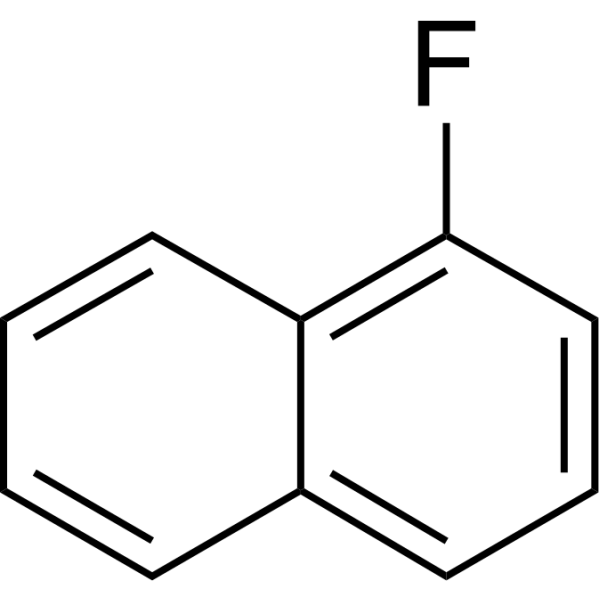
1-Fluoronaphthalene is an organofluorine compound derived from naphthalene derivatives and fluorinated aromatics. 1-Fluoronaphthalene can be used to synthesize LY248686, a potent inhibitor of serotonin and noradrenaline uptake .
|
-
-
- HY-110023
-
|
|
Serotonin Transporter
|
Neurological Disease
|
|
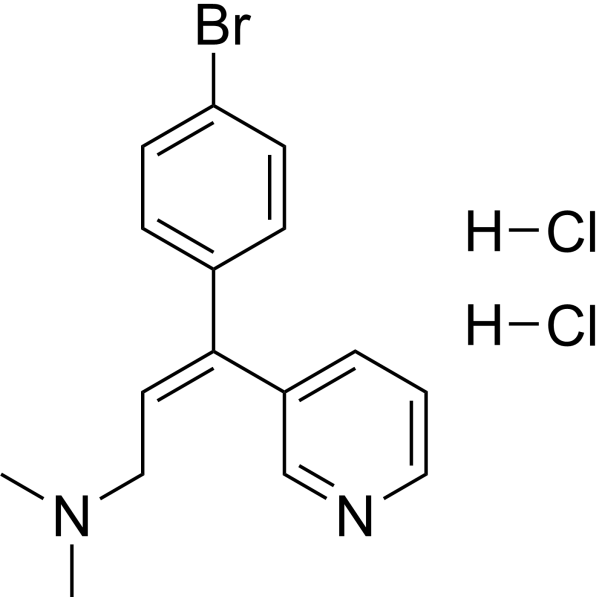
Zimelidine dihydrochloride is an orally active selective serotonin reuptake inhibitor. Zimelidine dihydrochloride competitively inhibits central 5-HT uptake and desensitizes 5-HT autoreceptors in dorsal raphe nucleus. Zimelidine dihydrochloride time-dependently modulates 5-HT neuronal firing and hippocampal CA3 responses. Zimelidine dihydrochloride strengthens central serotonergic neurotransmission and produces related behavioral changes. Zimelidine dihydrochloride exerts anxiolytic, analgesic, feeding-suppressive and tolerance-attenuating effects. Zimelidine dihydrochloride is used for the study of depressive disorders and analgesic tolerance .
|
-
-
- HY-135556
-
|
|
Drug Metabolite
|
Neurological Disease
|
|
Norfluoxetine is the active metabolite of antidepressant Fluoxetine (HY-B0102). Norfluoxetine is a selective inhibitor for serotonin uptake .
|
-
-
- HY-12394
-
|
Dosulepin; Dothep
|
Histamine Receptor
5-HT Receptor
|
Neurological Disease
|
|
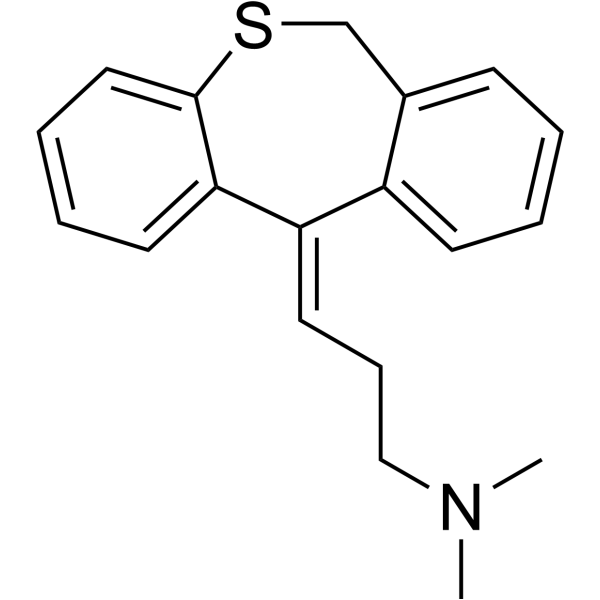
Dothiepin (Dosulepin; Dothep) is an antidepressant agent with sedative/anxiolytic activity. Dothiepin is an inhibitor preferring of noradrenaline uptake than serotonin uptake. Dothiepin facilitates noradrenergic neurotransmission via inhibiting the neuronal uptake. Dothiepin is also an antagonist of histamine H1-receptor without cardiotoxicity. Dothiepin exhibits significant analgesic activity in psychogenic facial pain,idiopathic fibromyalgia syndrome or rheumatoid arthritis .
|
-
-
- HY-18610A
-
|
Ro 8-4650
|
Dopamine Transporter
Adrenergic Receptor
5-HT Receptor
|
Neurological Disease
|
|
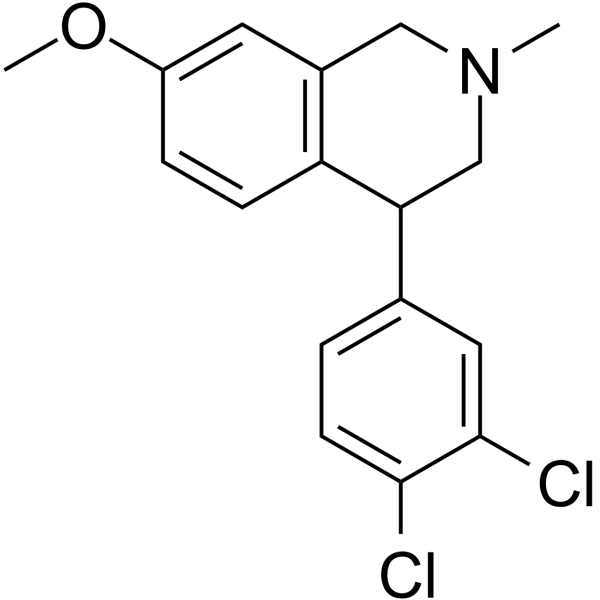
Diclofensine (Ro 8-46500) is an orally active neuronal monoamine uptake inhibitor. Diclofensine blocks the uptake of dopamine, noradrenaline, and serotonin by rat brain synaptosomes with IC50 values of 0.74, 2.3 and 3.7 nM, respectively. Diclofensine potentiates norepinephrine-induced hypertension and attenuates Tyramine (HY-W007606)-induced hypertension. Diclofensine produces psychostimulant and mood-elevating effects without causing sudden disappearance or withdrawal reactions. Diclofensine can be used in the research of moderate to severe depression .
|
-
-
- HY-14202
-
|
Ro 19-6327 hydrochloride
|
Monoamine Oxidase
|
Neurological Disease
|
|
Lazabemide hydrochloride (Ro 19-6327 hydrochloride) is a selective, reversible inhibitor of monoamine oxidase B (MAO-B) (IC50=0.03 μM) but less active for MAO-A (IC50>100 μM). Lazabemide inhibits monoamine uptake at high concentrations, the IC50 values are 86 μM, 123 μM and >500 μM for noradrenalin, serotonin and dopamine uptake, respectively. Lazabemide can be used for the research of parkinson and alzheimer′s disease .
|
-
-
- HY-14472R
-
|
NS-2330 (Standard)
|
Dopamine Transporter
Serotonin Transporter
Reference Standards
|
Metabolic Disease
|
|
Tesofensine (Standard) is the analytical standard of Tesofensine. This product is intended for research and analytical applications. Tesofensine (NS-2330) is a triple monoamine reuptake inhibitor inducing a potent inhibition of the re-uptake process in the synaptic cleft of the neurotransmitters dopamine (DA; IC50=6.5 nM), norepinephrine (NE;IC50=1.7 nM), and serotonin (5-HT;IC50=11 nM), and with potentials as an anti-obesity agent . Tesofensine is a CNS acting anti-obesity agent .
|
-
-
- HY-W020111
-
|
|
Sirtuin
Parasite
|
Infection
|
|
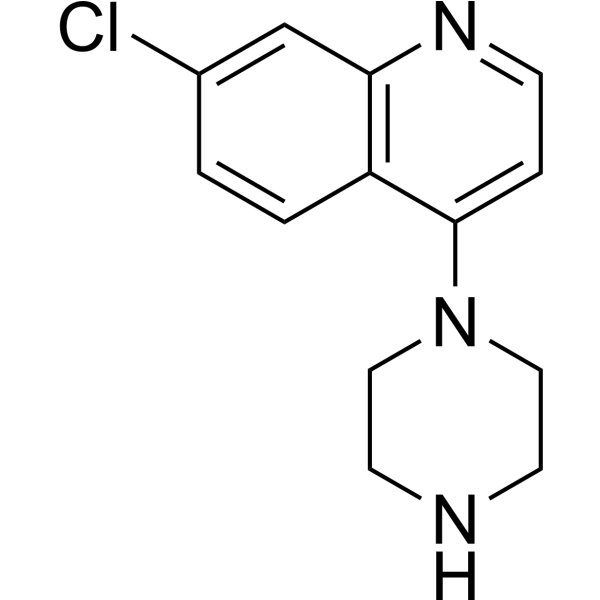
7-Chloro-4-(piperazin-1-yl)quinolone is an important scaffold in medicinal chemistry. 7-Chloro-4-(piperazin-1-yl)quinolone is a potent sirtuin inhibitor and also inhibits the serotonin uptake (IC50 of 50 μM). 7-Chloro-4-(piperazin-1-yl)quinolone exhibits antimalarial activity on D10 and K1 strains of P. falciparum with IC50s of 1.18 μM and 0.97 μM, respectively .
|
-
-
- HY-107128
-
|
TD-9855 hydrochloride
|
Serotonin Transporter
|
Neurological Disease
|
|
Ampreloxetine (TD-9855) hydrochloride is an orally active and CNS-penetrant inhibitor of Norepinephrine transporter (NET) and Serotonin 5-HT uptake transporter (SERT), but not Dopamine transporter (DAT). Ampreloxetine hydrochloride binds norepinephrine transporters (NET) and serotonin transporters (SERT) with EC50 values of 11.7 ng/mL and 50.8 ng/mL, respectively, in plasma .
|
-
-
- HY-139378
-
|
|
5-HT Receptor
|
Neurological Disease
|
|
5-IAI hydrochloride is a psychoactive analog of p-iodoamphetamine and is indistinguishable, in its physiological effects. 5-IAI hydrochloride significantly reduces both serotonin uptake sites and hippocampal serotonin levels in rats .
|
-
-
- HY-B0773
-
|
BRL29060 mesylate
|
Serotonin Transporter
Adrenergic Receptor
|
Neurological Disease
|
|
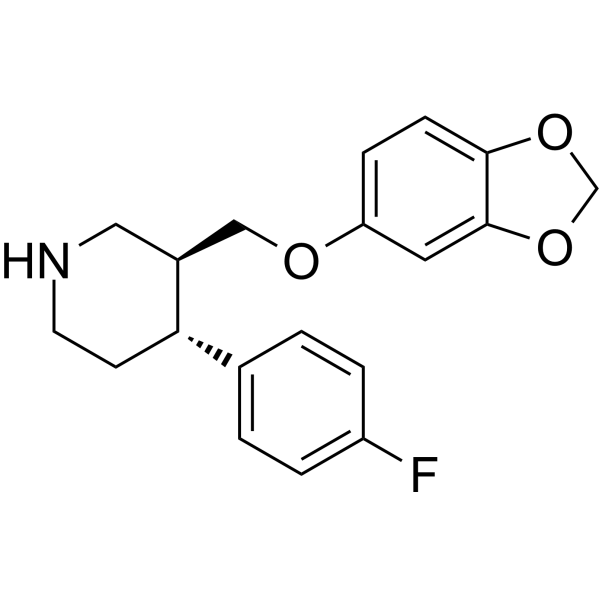
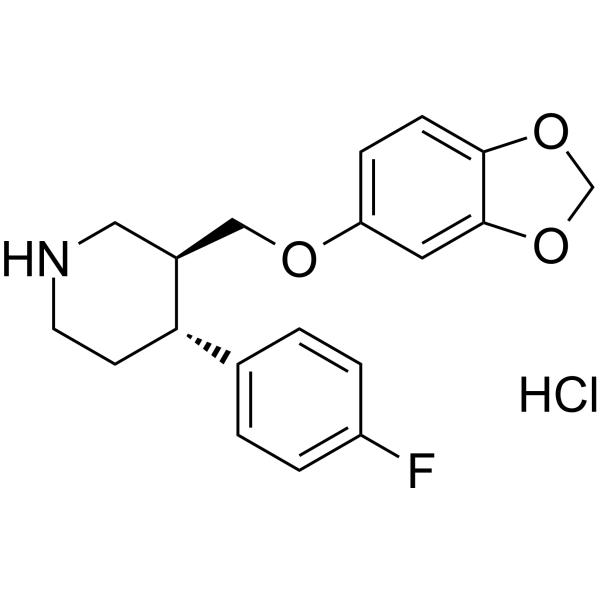
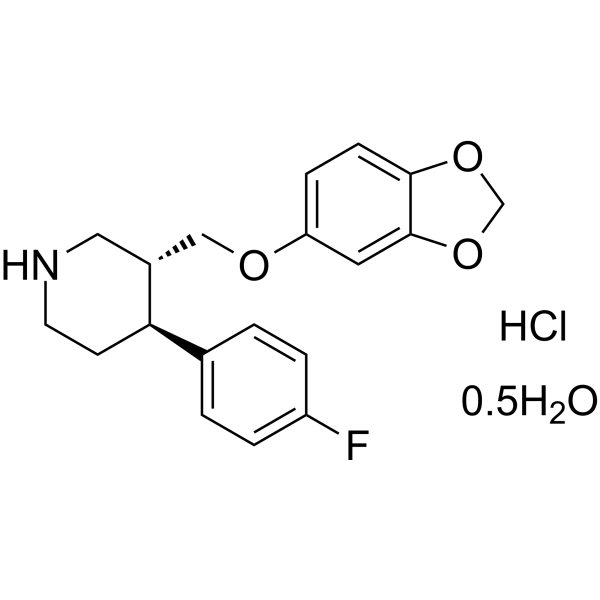
Paroxetine mesylate, a phenylpiperidine derivative, is a potent and selective serotonin reuptake inhibitor (SSRI). Paroxetine mesylate is a very weak inhibitor of norepinephrine (NE) uptake but it is still more potent at this site than the other SSRIs .
|
-
-
- HY-W284026
-
-
-
- HY-18610
-
|
Ro 8-4650 hydrochloride
|
Dopamine Transporter
Adrenergic Receptor
5-HT Receptor
|
Neurological Disease
|
|
Diclofensine (Ro 8-46500) hydrochloride is an orally active neuronal monoamine uptake inhibitor. Diclofensine hydrochloride blocks the uptake of dopamine, noradrenaline, and serotonin by rat brain synaptosomes with IC50 values of 0.74, 2.3 and 3.7 nM, respectively. Diclofensine hydrochloride potentiates norepinephrine-induced hypertension and attenuates Tyramine (HY-W007606)-induced hypertension. Diclofensine hydrochloride produces psychostimulant and mood-elevating effects without causing sudden disappearance or withdrawal reactions. Diclofensine hydrochloride can be used in the research of moderate to severe depression .
|
-
-
- HY-118835
-
|
|
Serotonin Transporter
|
Neurological Disease
|
|
Zimelidine is an orally active selective serotonin reuptake inhibitor. Zimelidine competitively inhibits central 5-HT uptake and desensitizes 5-HT autoreceptors in dorsal raphe nucleus. Zimelidine time-dependently modulates 5-HT neuronal firing and hippocampal CA3 responses. Zimelidine strengthens central serotonergic neurotransmission and produces related behavioral changes. Zimelidine exerts anxiolytic, analgesic, feeding-suppressive and tolerance-attenuating effects. Zimelidine is used for the study of depressive disorders and analgesic tolerance .
|
-
-
- HY-129682
-
-
-
- HY-123199
-
|
SABA
|
Serotonin Transporter
|
Neurological Disease
|
|
Serotonin azidobenzamidine is an arylazido derivative of 5-hydroxytryptamine (HY-B1473A). Serotonin azidobenzamide competitively inhibits [3H]5-hydroxytryptamine uptake by rat cortical synaptosomes in the dark with a Ki of 130 nM .
|
-
-
- HY-118166R
-
|
NSC 329491 (Standard); 1,3,7-Trihydroxyxanthone (Standard)
|
5-HT Receptor
Reference Standards
|
Neurological Disease
|
|
Gentisein (Standard) is the analytical standard of Gentisein. This product is intended for research and analytical applications. Gentisein (NSC 329491), the major metabolite of Mangiferin, shows the most potent serotonin uptake inhibition with an IC50 value of 4.7 µM .
|
-
-
- HY-32126R
-
|
|
Adrenergic Receptor
Serotonin Transporter
Reference Standards
|
Others
|
|
1-Fluoronaphthalene (Standard) is the analytical standard of 1-Fluoronaphthalene. This product is intended for research and analytical applications. 1-Fluoronaphthalene is an organofluorine compound derived from naphthalene derivatives and fluorinated aromatics. 1-Fluoronaphthalene can be used to synthesize LY248686, a potent inhibitor of serotonin and noradrenaline uptake .
|
-
-
- HY-105521A
-
|
(S)-Nafenodone; LU-43706
|
Adrenergic Receptor
|
Neurological Disease
|
|
Dexnafenodone hydrochloride ((S)-Nafenodone) as an antidepressant compound, is a potent and selective inhibitor of the synaptosomal uptake of noradrenaline, but has a less potent effect on serotonin uptake and a negligible effect on dopamine uptake.
|
-
-
- HY-124357
-
|
S-Norfluoxetine hydrochloride; LY 215229 hydrochloride
|
Dopamine Receptor
|
Neurological Disease
|
|
Seproxetine (S-Norfluoxetine) hydrochloride is a selective serotonin reuptake inhibitor (SSRI) that enhances serotonin levels in the brain by specifically inhibiting the serotonin uptake carrier. Seproxetine hydrochloride exhibits strong charge transfer interactions with π-electron acceptors, forming stable complexes that enhance its binding affinity to multiple receptors, including serotonin and dopamine receptors. Seproxetine hydrochloride demonstrates improved biological activity when interacting with charge transfer complexes, leading to increased stability and efficacy in therapeutic applications.
|
-
-
- HY-121203A
-
|
|
Serotonin Transporter
|
Neurological Disease
|
|
Citalopram oxalate is a serotonin uptake inhibitor that serves as an antidepressant, effectively reducing ethanol uptake in alcoholics and offering a preferable option for depressed patients experiencing tardive dyskinesia compared to tricyclic antidepressants, which may worsen this condition.
|
-
-
- HY-101753A
-
|
Cyanimipramine hydrochloride; Ro 11-2465 hydrochloride
|
5-HT Receptor
|
Neurological Disease
|
|
Cianopramine hydrochloride (Cyanimipramine hydrochloride; Ro 11-2465 hydrochloride) is the hydrochloride form of Cianopramine (HY-101753). Cianopramine hydrochloride is an antidepressant, which selectively inhibits the serotonin uptake into synaptosomes .
|
-
-
- HY-133171
-
|
|
Serotonin Transporter
|
Neurological Disease
|
|
(R)-Norfluoxetine is the (R)-enantiomer of Norfluoxetine (HY-135556). (R)-Norfluoxetine is a potent serotonin re-uptake inhibitor, with a Ki of 13 nM. (R)-Norfluoxetine can be used for the research of depression .
|
-
-
- HY-101753
-
|
Cyanimipramine; Ro 11-2465
|
5-HT Receptor
|
Neurological Disease
|
|
Cianopramine (Cyanimipramine) is a tricyclic antidepressant, and a potent inhibitor of neuronal serotonin (5-HT) uptake. Cianopramine blocks central and peripheral 5-HT receptors .
|
-
-
- HY-133732
-
|
GEA 654 hydrochloride; A03 hydrochloride
|
Serotonin Transporter
5-HT Receptor
iGluR
|
Neurological Disease
|
|
Alaproclate (GEA 654) hydrochloride is a selective and orally active serotonin re-uptake inhibitor (SSRI). Alaproclate hydrochloride also acts as a potent, reversible and noncompetitive antagonist of the NMDA receptor coupled ion flow .
|
-
-
- HY-W708023
-
|
|
5-HT Receptor
|
Neurological Disease
|
|
5-APDI hydrochloride is an indane with an amphetamine-like aminopropane group. 5-APDI hydrochloride inhibits the uptake of serotonin, dopamine, and norepinephrine by crude synaptosomes (IC50 values of 82 nM, 1,847 nM, and 849 nM, respectively) .
|
-
-
- HY-129985
-
|
DU23811
|
Serotonin Transporter
5-HT Receptor
|
Neurological Disease
|
|
Clovoxamine (DU23811) (Compound 35) has binding affinity for serotonin transporter (SERT) (Ki: 61 nM). Clovoxamine is a 5-HT and norepinephrine reuptake (NE) re-uptake inhibitor. Clovoxamine is an antidepressant .
|
-
-
- HY-W587542
-
|
|
Serotonin Transporter
|
Others
|
|
(1S,4S)-N-Desmethyl Sertraline (hydrochloride) is a metabolite of Sertraline. (1S,4S)-N-Desmethyl Sertraline (hydrochloride) is a selective serotonin uptake blocker with antidepressant properties .
|
-
-
- HY-126158
-
|
|
Dopamine Transporter
Serotonin Transporter
|
Neurological Disease
|
|
SRI-29574 is an allosteric modulator of the dopamine transporter (DAT). SRI-29574 partially inhibits the uptake of the DAT (IC50=2.3 nM) and also partially inhibits the uptake of the serotonin transporter (SERT) and norepinephrine transporter (NET). SRI-29574 may serve as a useful probe to study the function and regulatory mechanisms of DAT .
|
-
-
- HY-B1287R
-
|
(±)-Citalopram hydrobromide(Standard); Lu 10-171 (Standard)
|
Reference Standards
Serotonin Transporter
Autophagy
|
Neurological Disease
Cancer
|
|
Citalopram (hydrobromide) (Standard) is the analytical standard of Citalopram (hydrobromide). This product is intended for research and analytical applications. Citalopram hydrobromide is a selective serotonin reuptake inhibitor (SSRI). Citalopram hydrobromide inhibits 5-HT uptake into synaptosomes with an IC50 of 1.8 nM. Citalopram hydrobromideinhibits the 5-HT uptake in rabbit blood platelets with an IC50 of 14 nM. Antidepressant effect .
|
-
-
- HY-N0740R
-
|
|
Reference Standards
Cholinesterase (ChE)
5-HT Receptor
Bacterial
|
Neurological Disease
Inflammation/Immunology
|
|
Jatrorrhizine (chloride) (Standard) is the analytical standard of Jatrorrhizine (chloride). This product is intended for research and analytical applications. Jatrorrhizine chloride is an alkaloid isolated from Coptis chinensis with neuroprotective, antimicrobial, antiplasmodial and antioxidant activities . Jatrorrhizine chloride is a potent and orally active inhibitor of AChE (IC50=872 nM) over >115-fold selectivity for BuChE . Jatrorrhizine chloride reduces uptake of serotonin (5-HT) and norepinephrine (NE) via inhibition of uptake-2 transporters .
|
-
-
- HY-122272S2
-
-
-
- HY-B1287S
-
|
(±)-Citalopram hydrobromide-d3; Lu 10-171-d3
|
Isotope-Labeled Compounds
Serotonin Transporter
Autophagy
|
Neurological Disease
Cancer
|
|
Citalopram-d3 ((±)-Citalopram-d3) hydrobromide is deuterium labeled Citalopram (hydrobromide). Citalopram hydrobromide is a selective serotonin reuptake inhibitor (SSRI). Citalopram hydrobromide inhibits 5-HT uptake into synaptosomes with an IC50 of 1.8 nM. Citalopram hydrobromideinhibits the 5-HT uptake in rabbit blood platelets with an IC50 of 14 nM. Antidepressant effect .
|
-
-
- HY-108256S
-
|
|
Isotope-Labeled Compounds
5-HT Receptor
|
Neurological Disease
|
|
Melitracen-d6 (hydrochloride) is the deuterium labeled Melitracen hydrochloride. Melitracen hydrochloride is an orally active biphasic antidepressant and antianxiety agent. Melitracen hydrochloride can inhibit the uptake of Norepinephrine and 5-HT (serotonin) through the presynaptic membrane inducing the increase of monoamine transmitters in synaptic space .
|
-
-
- HY-165378
-
|
(E)-Dosulepin hydrochloride; (E)-Dothep hydrochloride
|
Histamine Receptor
|
Neurological Disease
|
|
(E)-Dothiepin ((E)-Dosulepin;(E)-Dothep) hydrochloride is an antidepressant agent with sedative/anxiolytic activity. (E)-Dothiepin hydrochloride is an inhibitor preferring of noradrenaline uptake than serotonin uptake. (E)-Dothiepin hydrochloride facilitates noradrenergic neurotransmission via inhibiting the neuronal uptake. (E)-Dothiepin hydrochloride is also an antagonist of histamine H1-receptor without cardiotoxicity. (E)-Dothiepin hydrochloride exhibits significant analgesic activity in psychogenic facial pain,idiopathic fibromyalgia syndrome or rheumatoid arthritis .
|
-
-
- HY-108256R
-
|
|
5-HT Receptor
Reference Standards
|
Neurological Disease
|
|
Melitracen (hydrochloride) (Standard) is the analytical standard of Melitracen (hydrochloride). This product is intended for research and analytical applications. Melitracen hydrochloride is an orally active biphasic antidepressant and antianxiety agent. Melitracen hydrochloride can inhibit the uptake of Norepinephrine and 5-HT (serotonin) through the presynaptic membrane inducing the increase of monoamine transmitters in synaptic space .
|
-
-
- HY-12390S
-
|
|
Isotope-Labeled Compounds
|
Neurological Disease
|
|
Lofepramine-d3 (Lopramine-d3) is the deuterium labeled Lofepramine. Lofepramine (Lopramine) is a potent tricyclic antidepressant and is extensively metabolised to Desipramine. The antidepressant activity of Lofepramine stems from the facilitation of noradrenergic neurotransmission by uptake inhibition. Lofepramine may also potentiate serotoninergic neurotransmission by inhibition of the neuronal uptake of serotonin and the enzyme tryptophan pyrrolase. Lofepramine has significant anxiolytic efficacy in addition to its antidepressant properties .
|
-
-
- HY-100651R
-
|
|
Reference Standards
Drug Metabolite
|
Neurological Disease
|
|
Desmethylnortriptyline (Standard) is the analytical standard of Desmethylnortriptyline (HY-100651). This product is intended for research and analytical applications. Desmethylnortriptyline is a metabolite of Amitriptyline (HY-B0527) and Nortriptyline (HY-118620). Desmethylnortriptylineinhibits serotonin and noradrenaline uptake, antagonizes acetylcholine-induced contraction. Desmethylnortriptyline can be used for the research of depression .
|
-
-
- HY-116062
-
|
|
Monoamine Transporter
Dopamine Transporter
Adrenergic Receptor
|
Others
|
|
JNJ-7925476 (hydrochloride) is a triple monoamine uptake inhibitor with the ability to regulate neurotransmitter levels and antidepressant activity. JNJ-7925476 (hydrochloride) can be rapidly absorbed into the plasma in rats, with a higher concentration in the brain than in plasma. It can induce an increase in the levels of extracellular serotonin, dopamine, and norepinephrine in the rat cerebral cortex, and exhibits antidepressant activity in the mouse tail suspension test.
|
-
-
- HY-117223
-
|
|
Potassium Channel
|
Neurological Disease
|
|
GEA 857 is a structural analog of the Serotonin (HY-B1473A) uptake blocker Alaproclate (HY-164011). GEA 857 enhances responses induced by muscarinic receptor agonists by inhibiting certain calcium-dependent potassium channels on membranes, a blockade that can enhance or prolong the muscarinic cholinergic effects. GEA 857 can be used in research on neurodegenerative diseases .
|
-
-
- HY-106617
-
|
|
5-HT Receptor
Adrenergic Receptor
|
Neurological Disease
|
|
Etoperidone, an antidepressant agent, is an orally active serotonin and nor-adrenaline re-uptake antagonist. Etoperidone shows Kd values of 36 nM, 38 nM, 85 nM, and 570 nM for 5-HT2 receptor, α1-adrenergic receptor, 5-HT1A receptor, and α2-adrenergic receptor, respectively .
|
-
- HY-106617A
-
|
|
5-HT Receptor
Adrenergic Receptor
|
Neurological Disease
|
|
Etoperidone hydrochloride, an antidepressant agent, is an orally active serotonin and nor-adrenaline re-uptake antagonist. Etoperidone hydrochloride shows Kd values of 36 nM, 38 nM, 85 nM, and 570 nM for 5-HT2 receptor, α1-adrenergic receptor, 5-HT1A receptor, and α2-adrenergic receptor, respectively .
|
-
- HY-18610R
-
|
Ro 8-4650 hydrochloride (Standard)
|
Reference Standards
Dopamine Transporter
Adrenergic Receptor
5-HT Receptor
|
Neurological Disease
|
|
Diclofensine (Ro 8-4650) hydrochloride (Standard) is the analytical standard of Diclofensine hydrochloride. This product is intended for research and analytical applications. Diclofensine hydrochloride is an orally active neuronal monoamine uptake inhibitor. Diclofensine hydrochloride blocks the uptake of dopamine, noradrenaline, and serotonin by rat brain synaptosomes with IC50 values of 0.74, 2.3 and 3.7 nM, respectively. Diclofensine hydrochloride potentiates norepinephrine-induced hypertension and attenuates Tyramine (HY-W007606)-induced hypertension. Diclofensine hydrochloride produces psychostimulant and mood-elevating effects without causing sudden disappearance or withdrawal reactions. Diclofensine hydrochloride can be used in the research of moderate to severe depression.
|
-
- HY-18610S
-
|
|
Isotope-Labeled Compounds
Dopamine Transporter
Adrenergic Receptor
5-HT Receptor
|
Neurological Disease
|
|
Diclofensine-d3 (Ro-8-4650-d3) hydrochloride is the deuterium labeled Diclofensine hydrochloride. Diclofensine hydrochloride is an orally active neuronal monoamine uptake inhibitor. Diclofensine hydrochloride blocks the uptake of dopamine, noradrenaline, and serotonin by rat brain synaptosomes with IC50 values of 0.74, 2.3 and 3.7 nM, respectively. Diclofensine hydrochloride potentiates norepinephrine-induced hypertension and attenuates Tyramine (HY-W007606)-induced hypertension. Diclofensine hydrochloride produces psychostimulant and mood-elevating effects without causing sudden disappearance or withdrawal reactions. Diclofensine hydrochloride can be used in the research of moderate to severe depression.
|
-
- HY-117542
-
|
|
Histone Methyltransferase
|
Neurological Disease
|
|
D595 is a phenylethylamine calcium channel blocker with potent negative inotropic activity. D595 has shown significant efficacy in its corresponding pharmacological studies, especially in inhibiting the uptake of monoamine neurotransmitters. D595 has high affinity in binding to the dopamine transporter (DAT), serotonin transporter (SERT), and norepinephrine transporter (NET). Structural adjustments of D595, especially changes in the hydroxyl stereochemistry, significantly affect its interaction with the transporters, showing a specific preference for stereoisomers .
|
-
- HY-110023R
-
|
|
Reference Standards
Serotonin Transporter
|
Neurological Disease
|
|
Zimelidine dihydrochloride (Standard) is the analytical standard of Zimelidine dihydrochloride (HY-110023). This product is intended for research and analytical applications. Zimelidine dihydrochloride is an orally active selective serotonin reuptake inhibitor. Zimelidine dihydrochloride competitively inhibits central 5-HT uptake and desensitizes 5-HT autoreceptors in dorsal raphe nucleus. Zimelidine dihydrochloride time-dependently modulates 5-HT neuronal firing and hippocampal CA3 responses. Zimelidine dihydrochloride strengthens central serotonergic neurotransmission and produces related behavioral changes. Zimelidine dihydrochloride exerts anxiolytic, analgesic, feeding-suppressive and tolerance-attenuating effects. Zimelidine dihydrochloride is used for the study of depressive disorders and analgesic tolerance .
|
-
- HY-118835S
-
|
|
Isotope-Labeled Compounds
Serotonin Transporter
|
Neurological Disease
|
|
Zimeldine-d6 is the deuterium labeled Zimeldine (HY-118835) . Zimelidine is an orally active selective serotonin reuptake inhibitor. Zimelidine competitively inhibits central 5-HT uptake and desensitizes 5-HT autoreceptors in dorsal raphe nucleus. Zimelidine time-dependently modulates 5-HT neuronal firing and hippocampal CA3 responses. Zimelidine strengthens central serotonergic neurotransmission and produces related behavioral changes. Zimelidine exerts anxiolytic, analgesic, feeding-suppressive and tolerance-attenuating effects. Zimelidine is used for the study of depressive disorders and analgesic tolerance .
|
-
- HY-107128R
-
|
TD-9855 hydrochloride (Standard)
|
Reference Standards
Serotonin Transporter
|
Neurological Disease
|
|
Ampreloxetine hydrochloride (Standard) (TD-9855 hydrochloride (Standard)) is the analytical standard of Ampreloxetine (hydrochloride) (HY-107128). This product is intended for research and analytical applications. Ampreloxetine (TD-9855) hydrochloride is an orally active and CNS-penetrant inhibitor of Norepinephrine transporter (NET) and Serotonin 5-HT uptake transporter (SERT), but not Dopamine transporter (DAT). Ampreloxetine hydrochloride binds norepinephrine transporters (NET) and serotonin transporters (SERT) with EC50 values of 11.7 ng/mL and 50.8 ng/mL, respectively, in plasma .
|
-
- HY-124186
-
|
|
Dopamine Receptor
5-HT Receptor
|
Neurological Disease
|
|
LR1143 is a dopamine transporter (DAT) and 5-HT uptake inhibitor, with IC50 values of 3.4 nM and 112 nM in rats, respectively. LR1143 binds to DAT labeled with the dopamine reuptake inhibitor GBR 12935 (HY-12242A), with an IC50 of 4.4 nM. LR1143 shows lower selectivity for DAT than for serotonin reuptake sites. LR1143 can be used in studies related to cocaine abuse .
|
-
| Cat. No. |
Product Name |
Category |
Target |
Chemical Structure |
| Cat. No. |
Product Name |
Chemical Structure |
-
- HY-122272S2
-
|
|
|
Paroxetine-d6-1 is a deuterated labeled Paroxetine . Paroxetine, a phenylpiperidine derivative, is a potent and selective serotonin reuptake inhibitor (SSRI). Paroxetine is a very weak inhibitor of norepinephrine (NE) uptake but it is still more potent at this site than the other SSRIs .
|
-
-
- HY-B1287S
-
|
|
|
Citalopram-d3 ((±)-Citalopram-d3) hydrobromide is deuterium labeled Citalopram (hydrobromide). Citalopram hydrobromide is a selective serotonin reuptake inhibitor (SSRI). Citalopram hydrobromide inhibits 5-HT uptake into synaptosomes with an IC50 of 1.8 nM. Citalopram hydrobromideinhibits the 5-HT uptake in rabbit blood platelets with an IC50 of 14 nM. Antidepressant effect .
|
-
-
- HY-108256S
-
|
|
|
Melitracen-d6 (hydrochloride) is the deuterium labeled Melitracen hydrochloride. Melitracen hydrochloride is an orally active biphasic antidepressant and antianxiety agent. Melitracen hydrochloride can inhibit the uptake of Norepinephrine and 5-HT (serotonin) through the presynaptic membrane inducing the increase of monoamine transmitters in synaptic space .
|
-
-
- HY-12390S
-
|
|
|
Lofepramine-d3 (Lopramine-d3) is the deuterium labeled Lofepramine. Lofepramine (Lopramine) is a potent tricyclic antidepressant and is extensively metabolised to Desipramine. The antidepressant activity of Lofepramine stems from the facilitation of noradrenergic neurotransmission by uptake inhibition. Lofepramine may also potentiate serotoninergic neurotransmission by inhibition of the neuronal uptake of serotonin and the enzyme tryptophan pyrrolase. Lofepramine has significant anxiolytic efficacy in addition to its antidepressant properties .
|
-
-
- HY-18610S
-
|
|
|
Diclofensine-d3 (Ro-8-4650-d3) hydrochloride is the deuterium labeled Diclofensine hydrochloride. Diclofensine hydrochloride is an orally active neuronal monoamine uptake inhibitor. Diclofensine hydrochloride blocks the uptake of dopamine, noradrenaline, and serotonin by rat brain synaptosomes with IC50 values of 0.74, 2.3 and 3.7 nM, respectively. Diclofensine hydrochloride potentiates norepinephrine-induced hypertension and attenuates Tyramine (HY-W007606)-induced hypertension. Diclofensine hydrochloride produces psychostimulant and mood-elevating effects without causing sudden disappearance or withdrawal reactions. Diclofensine hydrochloride can be used in the research of moderate to severe depression.
|
-
-
- HY-118835S
-
|
|
|
Zimeldine-d6 is the deuterium labeled Zimeldine (HY-118835) . Zimelidine is an orally active selective serotonin reuptake inhibitor. Zimelidine competitively inhibits central 5-HT uptake and desensitizes 5-HT autoreceptors in dorsal raphe nucleus. Zimelidine time-dependently modulates 5-HT neuronal firing and hippocampal CA3 responses. Zimelidine strengthens central serotonergic neurotransmission and produces related behavioral changes. Zimelidine exerts anxiolytic, analgesic, feeding-suppressive and tolerance-attenuating effects. Zimelidine is used for the study of depressive disorders and analgesic tolerance .
|
-
| Cat. No. |
Product Name |
|
Classification |
-
- HY-123199
-
|
SABA
|
|
Azide
|
|
Serotonin azidobenzamidine is an arylazido derivative of 5-hydroxytryptamine (HY-B1473A). Serotonin azidobenzamide competitively inhibits [3H]5-hydroxytryptamine uptake by rat cortical synaptosomes in the dark with a Ki of 130 nM .
|
Your information is safe with us. * Required Fields.
Inquiry Information
- Product Name:
- Cat. No.:
- Quantity:
- MCE Japan Authorized Agent:

