



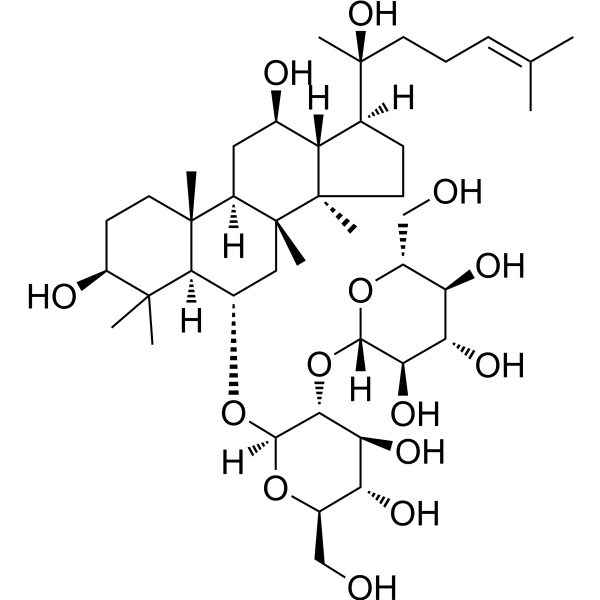
Ginsenoside Rf
Based on 1 publication(s) in Google Scholar
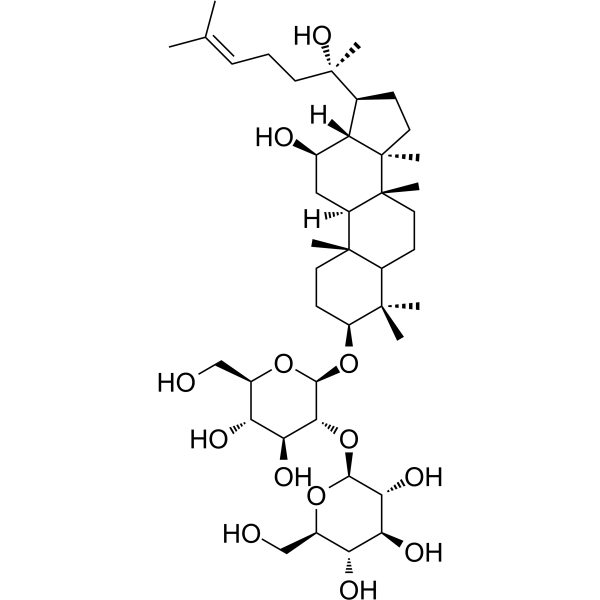
Ginsenoside Rf is a trace component of ginseng root. Ginsenoside Rf inhibits N-type Ca2+ channel.
For research use only. We do not sell to patients.
- Purity : 99.48%
- CAS No.: 52286-58-5
- Formula: C42H72O14
- Molecular Weight:801.01
-
Storage:Powder -20°C, 3 years , 4°C, 2 years ; In solvent -80°C, 2 years , -20°C, 1 year

To place orders, for customer services and technical support, please contact: MedChemExpress USA
Tel: 609-228-6898 E-mail: [email protected] [email protected]


-
 Biological Activity
-
Chemical Information
-
Solvent & Solubility
- Protocols
- Purity & Documentation
- References
-
 Help & FAQs


-
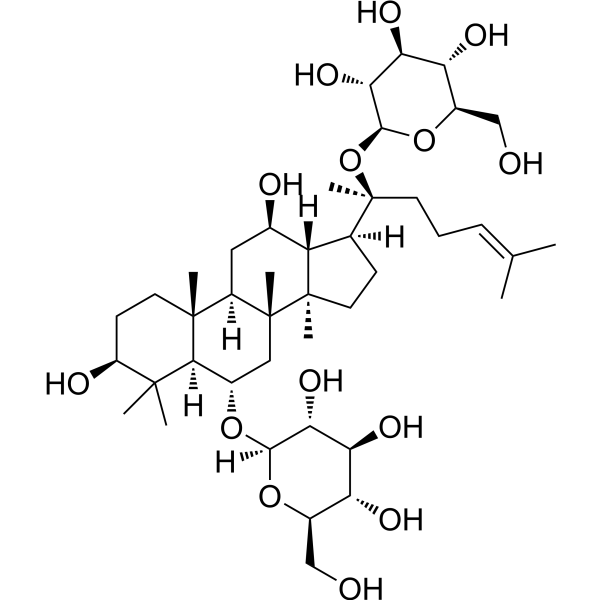
HY-N0045
Ginsenoside Rg1Apoptosis Inducer -
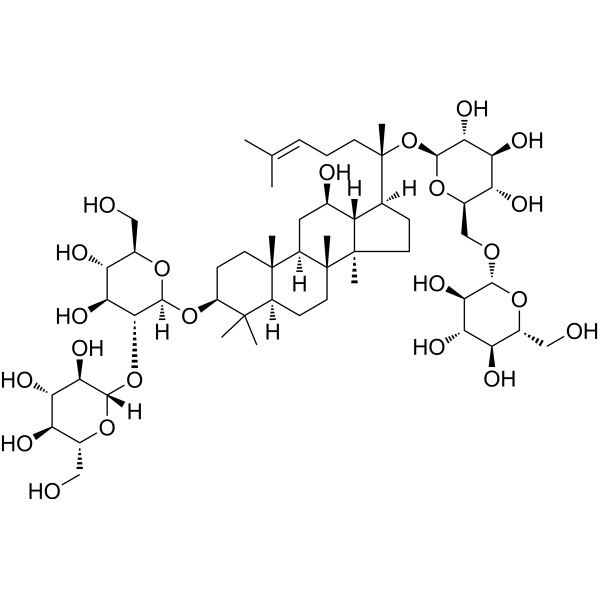
HY-N0039
Ginsenoside Rb1Autophagy Inducer -
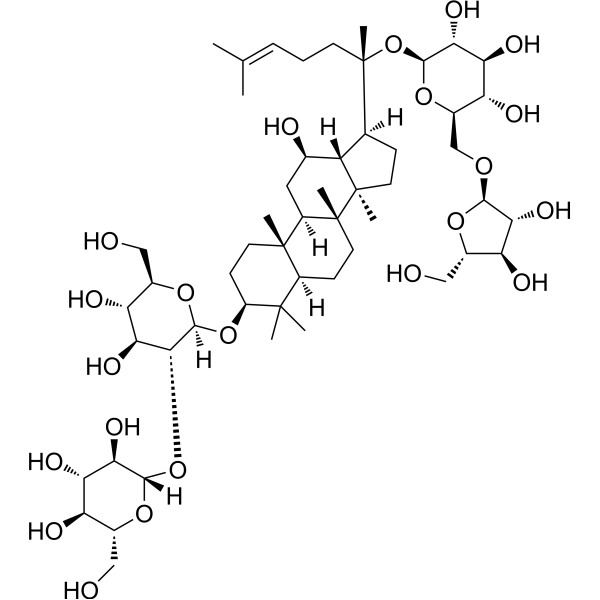
HY-N0042
Ginsenoside RcTNF Receptor Inhibitor -
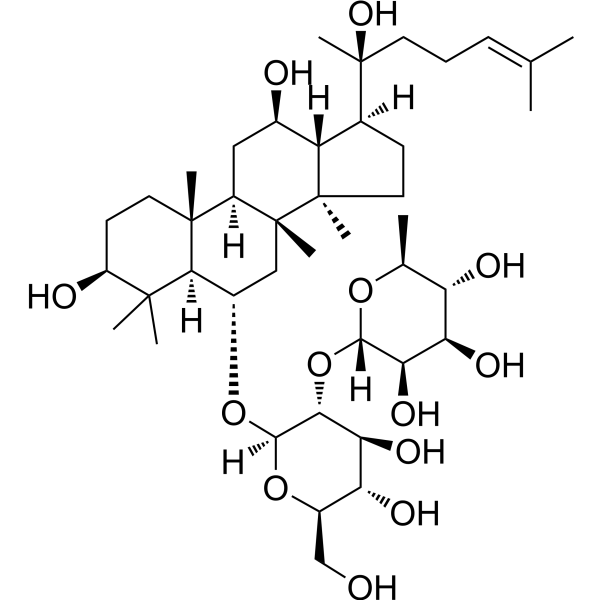
HY-N0602
Ginsenoside Rg2NF-κB Inhibitor -
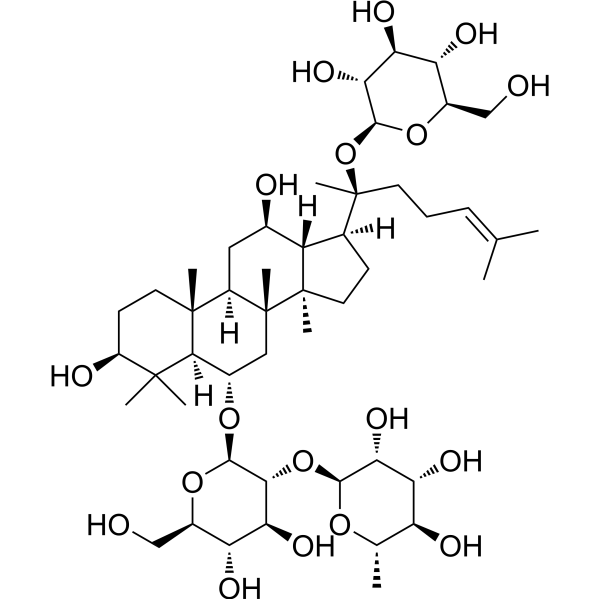
HY-N0044
Ginsenoside ReEndogenous Metabolite -
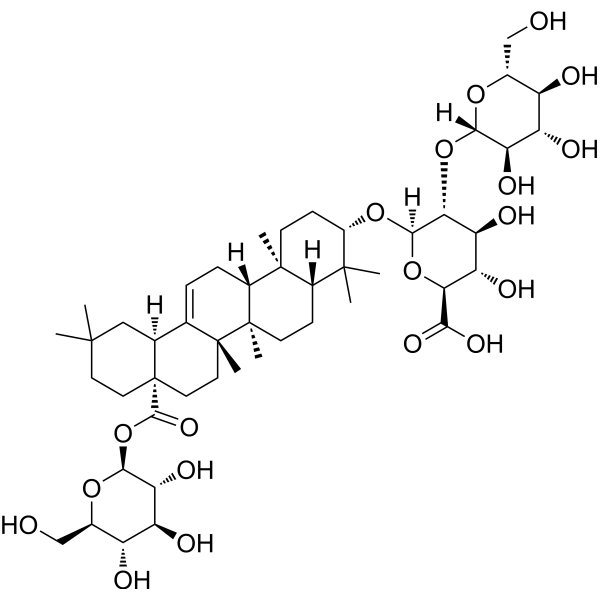
HY-N0607
Ginsenoside RoCalcium Channel Antagonist -
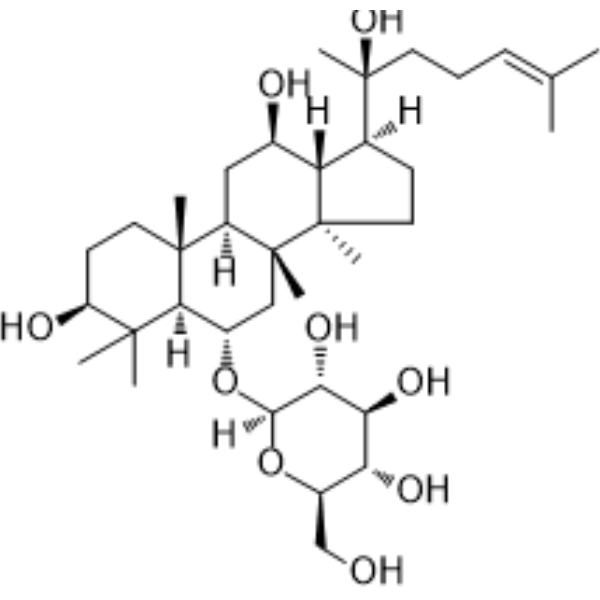
HY-N0604
Ginsenoside Rh1Endogenous Metabolite -
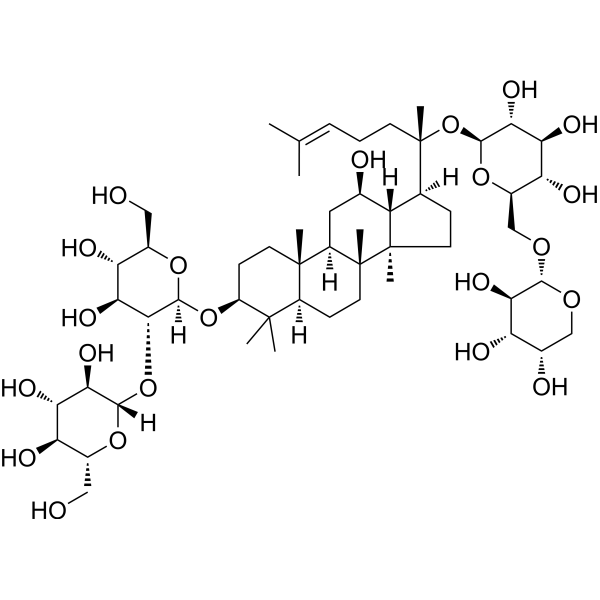
HY-N0040
Ginsenoside Rb2Influenza Virus Inhibitor -
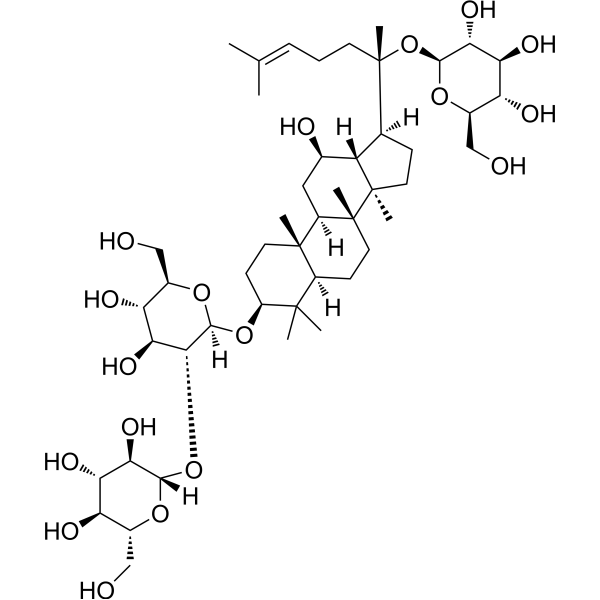
HY-N0043
Ginsenoside RdCytochrome P450 Inhibitor -
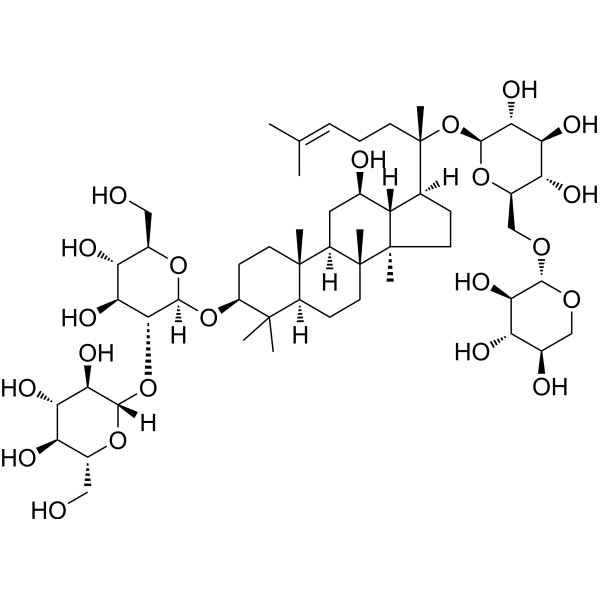
HY-N0041
Ginsenoside Rb3COX Inhibitor -
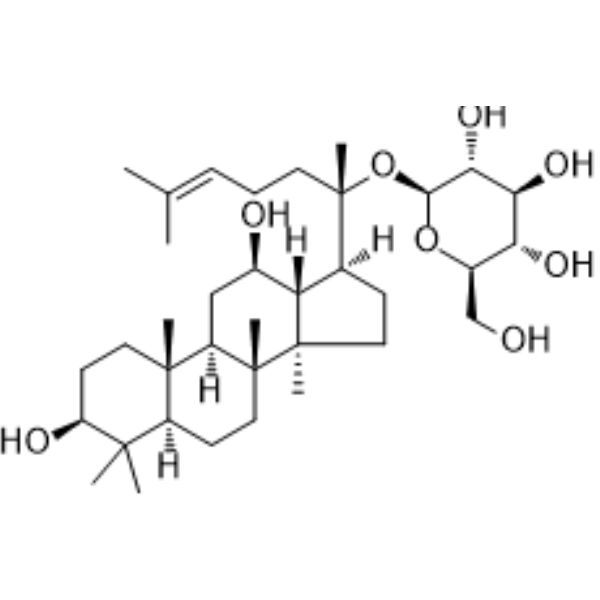
HY-N0904
Ginsenoside C-KNO Synthase/COX Inhibitor -
HY-N0603
20(S)-Ginsenoside Rg3Sodium Channel Inhibitor
Publications Citing Use of MedChemExpress (MCE) Ginsenoside Rf
More Customer Validation & Images

-
Cell Proliferation/Viability Assay
-
IF
-
WB
-
RT-PCR
All Calcium Channel Isoforms
MoreAll Endogenous Metabolite Isoforms
More

Biological Activity
Description
IC50 & Target
[1]|
N-type calcium channel |
In Vitro
Ginsenoside Rf is a saponin, which is present in only trace amounts within ginseng. At saturating concentrations, Ginsenoside Rf rapidly and reversibly inhibits N-type, and other high-threshold, Ca2+ channels in rat sensory neurons to the same degree as a maximal dose of opioids. The effect is dose-dependent (half-maximal inhibition: 40 μM) and it is virtually eliminated by pretreatment of the neurons with pertussis toxin, an inhibitor of G(o) and Gi GTP-binding proteins. Ginsenoside Rf also inhibits Ca2+ channels in the hybrid F-11 cell line[1].
MedChemExpress (MCE) has not independently confirmed the accuracy of these methods. They are for reference only. Further protocols information, click here.
In Vivo
MedChemExpress (MCE) has not independently confirmed the accuracy of these methods. They are for reference only.


Chemical Information
-
CAS No. 52286-58-5
-
Appearance Solid
-
Molecular Weight 801.01
-
Formula C42H72O14
-
Color White to off-white
-
SMILES
C[C@@]([C@@]12C)(C[C@H](O[C@@](O[C@H](CO)[C@@H](O)[C@@H]3O)([H])[C@@H]3O[C@]([C@@H]([C@@H](O)[C@@H]4O)O)([H])O[C@@H]4CO)[C@@]5([H])C6(C)C)[C@@](C[C@@H](O)[C@]1([H])[C@]([C@@](C)(O)CC/C=C(C)/C)([H])CC2)([H])[C@]5(CC[C@@H]6O)C
-
Synonyms
Panaxoside Rf
-
Structure Classification
-
Initial Source
-
Shipping
Room temperature in continental US; may vary elsewhere.
-
Storage
Powder -20°C 3 years 4°C 2 years In solvent -80°C 2 years -20°C 1 year


Publications (1)
-
Journal Impact Factor
-
Most Recent
-
BMC Complement Med Ther
Ginsenoside Rf improves glucose metabolism via the IRS/PI3K/Akt and PPARα/PGC1α signaling pathways in insulin-resistant AML12 cells. [Abstract]2025 Sep 30;25(1):340. PMID: 41029648
Ginsenoside Rf purchased from MedChemExpress. Usage Cited in: BMC Complement Med Ther. 2025 Sep 30;25(1):340. [Abstract]
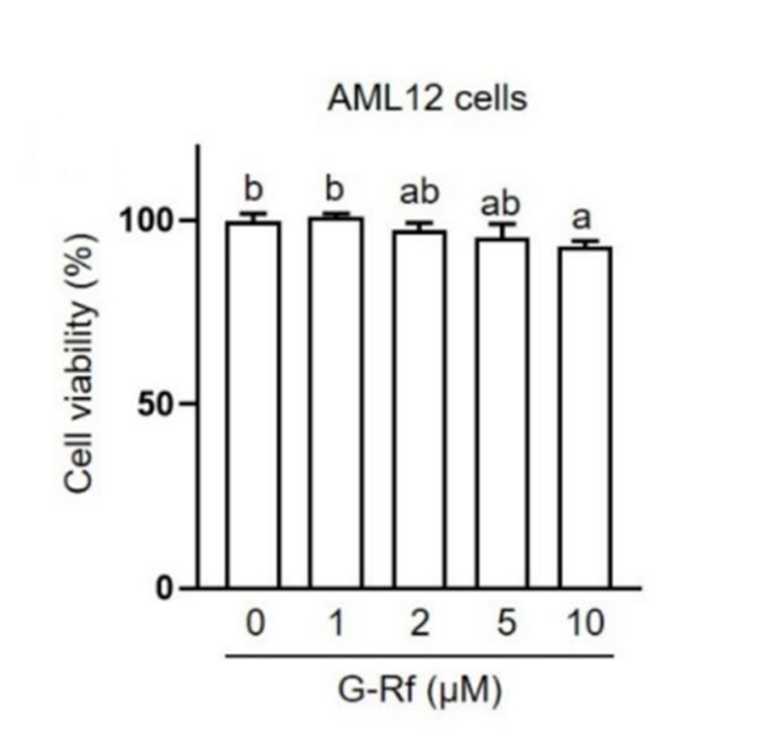
Effects of Ginsenoside Rf (G-Rf) (1, 2, 5, 10 μM) on cell viability in insulin-resistant AML12 (IR-AML12) cells.
Ginsenoside Rf purchased from MedChemExpress. Usage Cited in: BMC Complement Med Ther. 2025 Sep 30;25(1):340. [Abstract]
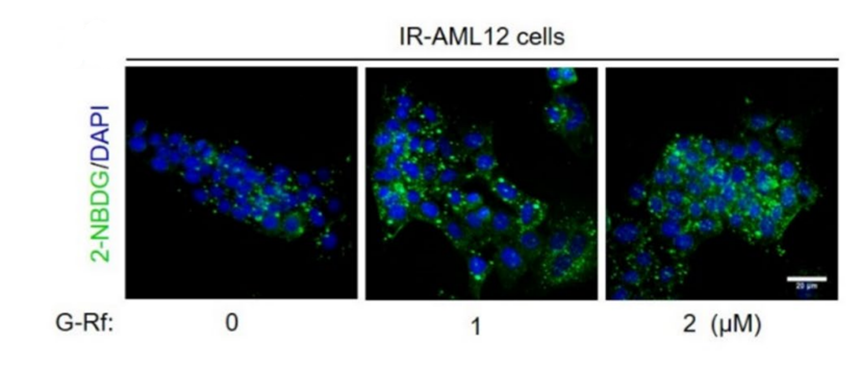
Representative fluorescence images of 2-NBDG (green; glucose analogue) and DAPI (blue; nuclei) treated with Ginsenoside Rf (G-Rf) (1, 2 μM).
Ginsenoside Rf purchased from MedChemExpress. Usage Cited in: BMC Complement Med Ther. 2025 Sep 30;25(1):340. [Abstract]
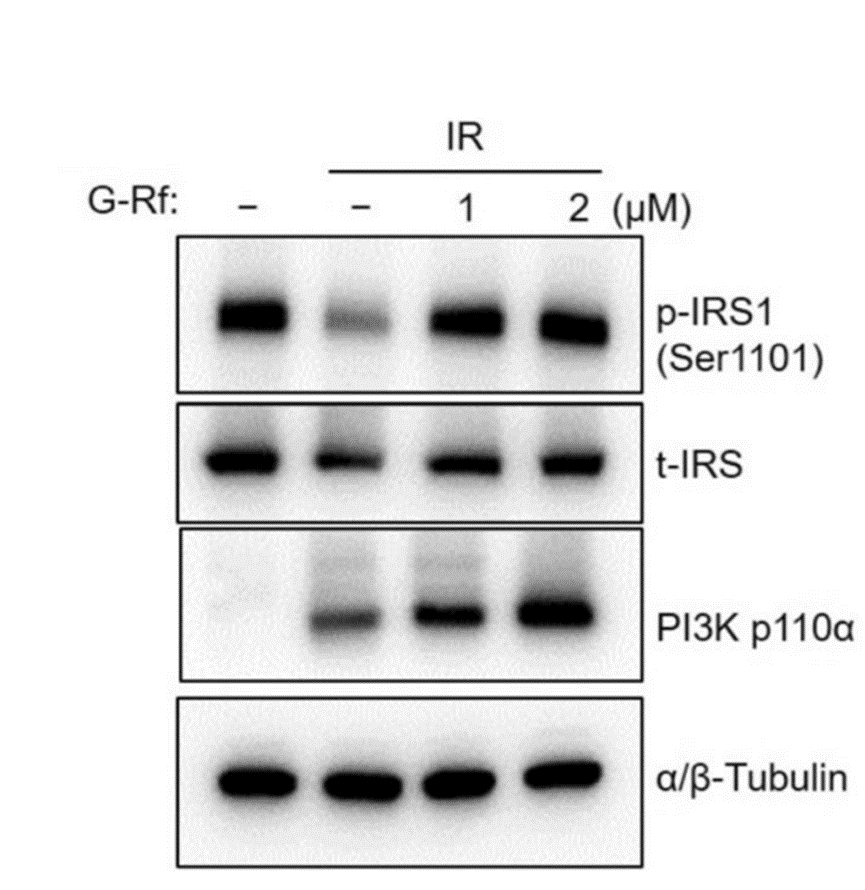
The protein expression levels of phosphorylated IRS1 (p-IRS1, Ser1101), total IRS1 (t-IRS1), PI3K p100α, and α/β-tubulin were analyzed by Western blot analysis treated with Ginsenoside Rf (G-Rf) (1, 2 μM).
Ginsenoside Rf purchased from MedChemExpress. Usage Cited in: BMC Complement Med Ther. 2025 Sep 30;25(1):340. [Abstract]
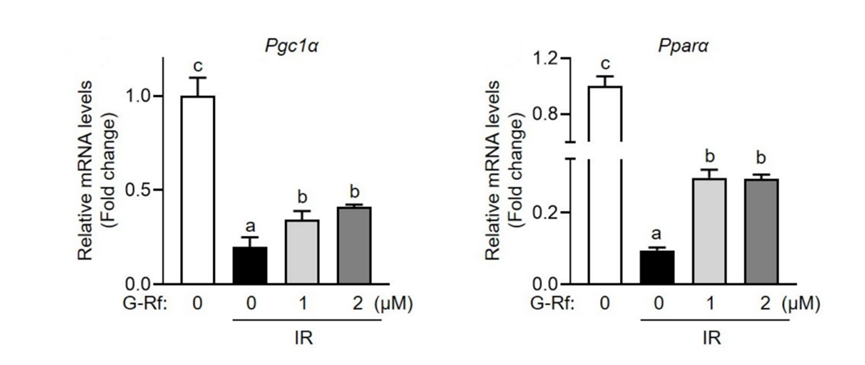
The messenger RNA (mRNA) expression levels of Pgc1α and Pparα were analyzed by real-time quantitative polymerase chain reaction treated with Ginsenoside Rf (G-Rf) (1, 2 μM).


Solvent & Solubility
In Vitro:
DMSO : 100 mg/mL (124.84 mM; Need ultrasonic; Hygroscopic DMSO has a significant impact on the solubility of product, please use newly opened DMSO)
Ethanol : 50 mg/mL (62.42 mM; Need ultrasonic)
Please refer to the solubility information to select the appropriate solvent. Once prepared, please aliquot and store the solution to prevent product inactivation from repeated freeze-thaw cycles.
Storage method and period of stock solution: -80°C, 2 years; -20°C, 1 year. When stored at -80°C, please use it within 2 years. When stored at -20°C, please use it within 1 year.
Please refer to the solubility information to select the appropriate solvent. Once prepared, please aliquot and store the solution to prevent product inactivation from repeated freeze-thaw cycles.
Storage method and period of stock solution: -80°C, 2 years; -20°C, 1 year. When stored at -80°C, please use it within 2 years. When stored at -20°C, please use it within 1 year.
Concentration (start) × Volume (start) = Concentration (final) × Volume (final)
In Vivo:
Select the appropriate dissolution method based on your experimental animal and administration route.
- For the following dissolution methods, please ensure to first prepare a clear stock solution using an In Vitro approach and then sequentially add co-solvents:
- To ensure reliable experimental results, the clarified stock solution can be appropriately stored based on storage conditions. As for the working solution for In Vivo experiments, it is recommended to prepare freshly and use it on the same day.
- The percentages shown for the solvents indicate their volumetric ratio in the final prepared solution. If precipitation or phase separation occurs during preparation, heat and/or sonication can be used to aid dissolution.
Add each solvent one by one: 10% DMSO 40% PEG300 5% Tween-80 45% Saline
Solubility: ≥ 2.5 mg/mL (3.12 mM); Clear solution
This protocol yields a clear solution of ≥ 2.5 mg/mL (saturation unknown).
Taking 1 mL working solution as an example, add 100 μL DMSO stock solution (25.0 mg/mL) to 400 μL PEG300, and mix evenly; then add 50 μL Tween-80 and mix evenly; then add 450 μL Saline to adjust the volume to 1 mL.
Preparation of Saline: Dissolve 0.9 g sodium chloride in ddH₂O and dilute to 100 mL to obtain a clear Saline solution.
Add each solvent one by one: 10% DMSO 90% (20% SBE-β-CD in Saline)
Solubility: ≥ 2.5 mg/mL (3.12 mM); Clear solution
This protocol yields a clear solution of ≥ 2.5 mg/mL (saturation unknown).
Taking 1 mL working solution as an example, add 100 μL DMSO stock solution (25.0 mg/mL) to 900 μL 20% SBE-β-CD in Saline, and mix evenly.
Preparation of 20% SBE-β-CD in Saline (4°C, storage for one week): 2 g SBE-β-CD powder is dissolved in 10 mL Saline, completely dissolve until clear.
Add each solvent one by one: 10% EtOH 40% PEG300 5% Tween-80 45% Saline
Solubility: ≥ 2.5 mg/mL (3.12 mM); Clear solution
This protocol yields a clear solution of ≥ 2.5 mg/mL (saturation unknown).
Taking 1 mL working solution as an example, add 100 μL EtOH stock solution (25.0 mg/mL) to 400 μL PEG300, and mix evenly; then add 50 μL Tween-80 and mix evenly; then add 450 μL Saline to adjust the volume to 1 mL.
Preparation of Saline: Dissolve 0.9 g sodium chloride in ddH₂O and dilute to 100 mL to obtain a clear Saline solution.
Add each solvent one by one: 10% EtOH 90% (20% SBE-β-CD in Saline)
Solubility: ≥ 2.5 mg/mL (3.12 mM); Clear solution
This protocol yields a clear solution of ≥ 2.5 mg/mL (saturation unknown).
Taking 1 mL working solution as an example, add 100 μL EtOH stock solution (25.0 mg/mL) to 900 μL 20% SBE-β-CD in Saline, and mix evenly.
Preparation of 20% SBE-β-CD in Saline (4°C, storage for one week): 2 g SBE-β-CD powder is dissolved in 10 mL Saline, completely dissolve until clear.
Add each solvent one by one: 10% EtOH 90% Corn Oil
Solubility: ≥ 2.5 mg/mL (3.12 mM); Clear solution
This protocol yields a clear solution of ≥ 2.5 mg/mL (saturation unknown). If the continuous dosing period exceeds half a month, please choose this protocol carefully.
Taking 1 mL working solution as an example, add 100 μL EtOH stock solution (25.0 mg/mL) to 900 μL Corn oil, and mix evenly.
In Vivo Dissolution Calculator
Please enter the basic information of animal experiments:
-
-
-
-
Recommended: Prepare an additional quantity of animals to account for potential losses during experiments.
Please enter your animal formula composition:
-
%DMSO +
Recommended: Keep the proportion of DMSO in working solution below 2% if your animal is weak.
-
%+
-
+%Tween-80 + +
-
%Saline +
The co-solvents required include: DMSO, . All of co-solvents are available by MedChemExpress (MCE). , Tween 80. All of co-solvents are available by MedChemExpress (MCE).
Working solution concentration: 0.22 mg/mL
Method for preparing stock solution: mg drug dissolved in μL DMSO. Stock solution concentration: mg/mL.
1. Take μL DMSO stock solution;
2. Add μL .
μL , mix evenly;
3. Then add μL Tween 80, mix evenly;
4. Then add μL
Please ensure that the stock solution in the first step is dissolved to a clear state, and add co-solvents in sequence. You can use ultrasonic heating (ultrasonic cleaner, recommended frequency 20-40 kHz), vortexing, etc. to assist dissolution.

Protocols
-
Ca2+ Staining Technique
Ca2+ staining is an experimental technique that utilizes specific fluorescent probes (such as Fluo-4 AM, Fura-2, etc.) to qualitatively or quantitatively detect dynamic changes in intracellular Ca2+ concentrations; this is achieved by monitoring the changes in fluorescent signals generated when these probes bind to free intracellular calcium ions. The underlying principle relies primarily on the presence of chelating groups within the probe's molecular structure that possess high affinity for calcium ions.


Purity & Documentation
-
Data Sheet (287 KB)
-
SDS (393 KB)
- English - EN (393 KB)
- Français - FR (393 KB)
- Deutsch - DE (393 KB)
- Norwegian - NO (393 KB)
- Español - ES (393 KB)
- Swedish - SV (393 KB)
- Italian - IT (393 KB)
- Korean - KR (393 KB)
- Portuguese - PT (393 KB)
-
Handling Instructions (2659 KB)
References
[1]. Nah SY, et al. A trace component of ginseng that inhibits Ca2+ channels through a pertussis toxin-sensitive G protein. Proc Natl Acad Sci U S A. 1995 Sep 12;92(19):8739-43. [Content Brief]
[2]. Mogil JS, et al. Ginsenoside Rf, a trace component of ginseng root, produces antinociception in mice. Brain Res. 1998 May 11;792(2):218-28. [Content Brief]


Complete Stock Solution Preparation Table
Please refer to the solubility information to select the appropriate solvent. Once prepared, please aliquot and store the solution to prevent product inactivation from repeated freeze-thaw cycles.
Storage method and period of stock solution: -80°C, 2 years; -20°C, 1 year. When stored at -80°C, please use it within 2 years. When stored at -20°C, please use it within 1 year.
| Optional Solvent | Concentration Solvent Mass | 1 mg | 5 mg | 10 mg | 25 mg |
|---|---|---|---|---|---|
| Ethanol / DMSO | 1 mM | 1.2484 mL | 6.2421 mL | 12.4842 mL | 31.2106 mL |
| 5 mM | 0.2497 mL | 1.2484 mL | 2.4968 mL | 6.2421 mL | |
| 10 mM | 0.1248 mL | 0.6242 mL | 1.2484 mL | 3.1211 mL | |
| 15 mM | 0.0832 mL | 0.4161 mL | 0.8323 mL | 2.0807 mL | |
| 20 mM | 0.0624 mL | 0.3121 mL | 0.6242 mL | 1.5605 mL | |
| 25 mM | 0.0499 mL | 0.2497 mL | 0.4994 mL | 1.2484 mL | |
| 30 mM | 0.0416 mL | 0.2081 mL | 0.4161 mL | 1.0404 mL | |
| 40 mM | 0.0312 mL | 0.1561 mL | 0.3121 mL | 0.7803 mL | |
| 50 mM | 0.0250 mL | 0.1248 mL | 0.2497 mL | 0.6242 mL | |
| 60 mM | 0.0208 mL | 0.1040 mL | 0.2081 mL | 0.5202 mL | |
| DMSO | 80 mM | 0.0156 mL | 0.0780 mL | 0.1561 mL | 0.3901 mL |
| 100 mM | 0.0125 mL | 0.0624 mL | 0.1248 mL | 0.3121 mL |


Ginsenoside Rf Related Classifications
HY-N0601 Related Classifications
 Powered by Bioz