



Cathepsin
Cathepsins are protease enzymes, categorized into multiple families. Cathepsins can be serine protease, cysteine protease, or aspartyl protease. There are about 15 classes of cathepsins in humans (Cathepsin A, B, C, D, E, F, G, H, K, L, O, S, V, W, and Z). Cathepsins are active in the low pH milieu of lysosomes and are versatile in their functions. Like other enzymes, they are vital for the normal physiological functions such as digestion, blood coagulation, bone resorption, ion channel activity, innate immunity, complement activation, apoptosis, vesicular trafficking, autophagy, angiogenesis, proliferation, and metastasis, among scores of others.
Numerous pathologies have been attributed to the dysregulated cathepsins, some of which include arthritis, periodontitis, pancreatitis, macular degeneration, muscular dystrophy, atherosclerosis, obesity, stroke, Alzheimer's disease, schizophrenia, tuberculosis, and Ebola.
Cathepsin Isoform Specific Products
All Product Categories
-
Cathepsin Inhibitors
(216)
View all products
-
Cathepsin Antagonist
(1)
View all products
-
Cathepsin Activators
(7)
View all products
-
Cathepsin Inducers
(3)
View all products
-
Cathepsin Degrader
(1)
View all products
-
Cathepsin Control
(1)
View all products
-
Cathepsin Substrates
(21)
View all products
-
Cathepsin Ligand
(1)
View all products
-
Cathepsin Proteins
(35)
View all products
-
Cathepsin B Proteins
(5)
View all products
-
Cathepsin C Proteins
(4)
View all products
-
Cathepsin D Proteins
(5)
View all products
-
Cathepsin E Proteins
(3)
View all products
-
Cathepsin K Proteins
(1)
View all products
-
Cathepsin L1 Proteins
(4)
View all products
-
Cathepsin S Proteins
(2)
View all products
-
Cathepsin Related Products (297)
Related Products (297)

-
Recombinant Proteins (35)
-
Antibodies (6)
-
Cathepsin Isoform Comparison
-
Cathepsin E substrate e
 0 ImagesCat. No.: HY-P10922CAS No.: 1246741-19-4Cathepsin E substrate e is a substrate of Cathepsin E. Cathepsin E substrate e was designed in such a way that due to the close proximity of a Mca-donor and a Dnp-acceptor, a near complete intramolecular quenching effect was achieved in its intact state. After the proteolytic cleavage of the hydrophobic motif of the peptide substrate, both Mca and Dnp would be further apart, resulting in bright fluorescence.
-
Anti-inflammatory agent 113
 0 ImagesCat. No.: HY-181676Anti-inflammatory agent 113 (compound B5) is a Cathepsin L (CTSL) inhibitor and anti-inflammatory agent with a CTSL IC50 of 5.52 μM. Anti-inflammatory agent 113 suppresses CTSL maturation, attenuates NF-κB and p38 MAPK signaling pathway activation, and binds stably in CTSL’s active site via noncovalent interactions with Asp162, Cys25, and Glu63. Anti-inflammatory agent 113 inhibits pro-inflammatory cytokine (IL-6, IL-8) production, reduces inflammatory cell lung infiltration, and alleviates lung tissue injury. Anti-inflammatory agent 113 can be used for the research of acute lung injury.
-
BJ-2302
 0 ImagesCat. No.: HY-182614CAS No.: 1631056-29-5BJ-2302 is a Src kinase inhibitor with an IC50 of 3.23 μM, and inhibits cathepsin S (CTSS) activity.BJ-2302 binds to Src, suppresses PI3K/AKT and Ras/Raf/ERK pathways, and reduces CTSS and MMP-9 expression.BJ-2302 inhibits cancer cell invasion, metastasis, proliferation, and tumor growth.BJ-2302 does not induce cytotoxicity in normal breast epithelial cells.BJ-2302 can be used for the research of breast cancer and triple-negative breast cancer.

-
CTSK Human Pre-designed siRNA Set A
 0 ImagesCat. No.: HY-RS03337
CTSK Human Pre-designed siRNA Set A contains three designed siRNAs for CTSK gene (Human), as well as a negative control, a positive control, and a FAM-labeled negative control.
-
Z-Nle-Lys-Arg-AMC
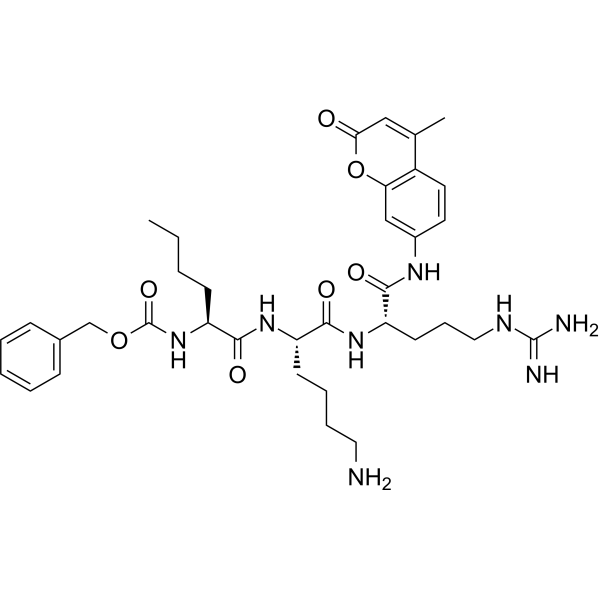 0 ImagesCat. No.: HY-155667CAS No.: 1135364-14-5Z-Nle-Lys-Arg-AMC is a fluorogenic peptide substrate that specifically monitors cathepsin B activity over a broad pH range.
-
Verducatib
 0 ImagesVerducatib (BI 1291583) is an orally active inhibitor of cathepsin C (also known as DPP1). Verducatib restores the protease-inhibitor balance by inhibiting the activation of neutrophil serine proteases, thereby alleviating pulmonary inflammation and regulating infection responses. Verducatib significantly reduces the risk (including severe exacerbations) and frequency of acute exacerbations in bronchiectasis (BE). Verducatib also improves lung function and quality of life, and shortens the duration of antibiotic use. The overall incidence of adverse events of Verducatib is comparable to that of placebo, with only slightly more mild-to-moderate cutaneous adverse events observed in the high-dose group, demonstrating promising clinical application potential.
-
BI-1124
 0 ImagesCat. No.: HY-171925CAS No.: 752237-69-7BI-1124 is a cathepsin S inhibitor that exhibits simulated sufficient ocular pharmacokinetic-pharmacodynamic coverage in rabbit models via topical ocular administration. BI-1124 can be used for the research of age-related dry eye disease.
-
FGA145
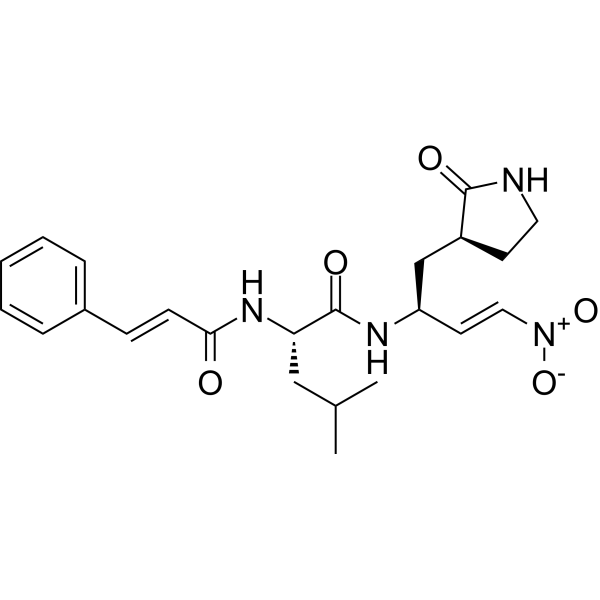 0 ImagesCat. No.: HY-161244FGA145 is a dual, selective inhibitor for Mpro and human Cathepsin L, with Kis of 3.71 μM, 9.82 μM and 53 nM, for Mal-Mpro, pET21-Mpro and Cathepsin L, respectively. FGA145 reveals a multitarget effects in the antiviral activity.
-
Poly-L-Glutamic acid (MW 100000)
 0 ImagesCat. No.: HY-112111ACAS No.: 25513-46-6Poly-L-Glutamic acid (MW 100000) is a synthetic polypeptide with biocompatibility, biodegradability and non-immunogenicity. Poly-L-Glutamic acid is an ideal tumor-targeting polymer carrier. Poly-L-Glutamic acid can be hydrolyzed by cathepsin B during metabolic decomposition.
-
Ferroptosis inducer-17
 0 ImagesCat. No.: HY-184662Ferroptosis inducer-17 is a ferroptosis inducer that downregulates GPX4 and activates the CTSB and cGAS-STING pathways. Ferroptosis inducer-17 exhibits cytotoxicity against cancer cells but low toxicity toward normal cells. Ferroptosis inducer-17 accumulates in mitochondria and lysosomes, thereby inducing ROS production, lipid peroxidation, mitochondrial membrane depolarization, lysosomal iron accumulation, increased membrane permeability, and enhanced oxidative stress. Ferroptosis inducer-17 inhibits tumor growth in cisplatin-resistant xenograft models. Ferroptosis inducer-17 can be used for cancer-related research.
-
Cathepsin C-IN-6
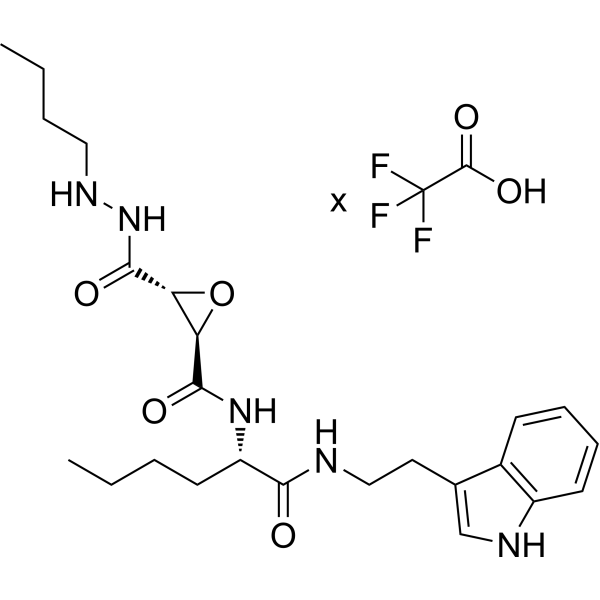 0 ImagesCat. No.: HY-155611Cathepsin C-IN-6 (compound 2) is a E-64c-hydrazideas based inhibitor of cathepsin C with anti-inflammatory activity. Cathepsin C-IN-6 inhibts activation of neutrophil elastase,exhibits potential efficacy in inflammatory diseases with high neutrophil load (e.g.,chronic obstructive pulmonary disease).
-
Alkyne-GRWHPM-CONH-NH-CMK
 0 ImagesCat. No.: HY-P11857Alkyne-GRWHPM-CONH-NH-CMK is a covalent Cathepsin S inhibitor (IC50=82 nM). Alkyne-GRWHPM-CONH-NH-CMK has an N-terminal alkyne handle for CuAAC functionalization that engages off-target protein disulfide isomerase PDIA1. Alkyne-GRWHPM-CONH-NH-CMK can be used for the research of autoimmune disorders.
-
Abz-GIVRAK(Dnp)
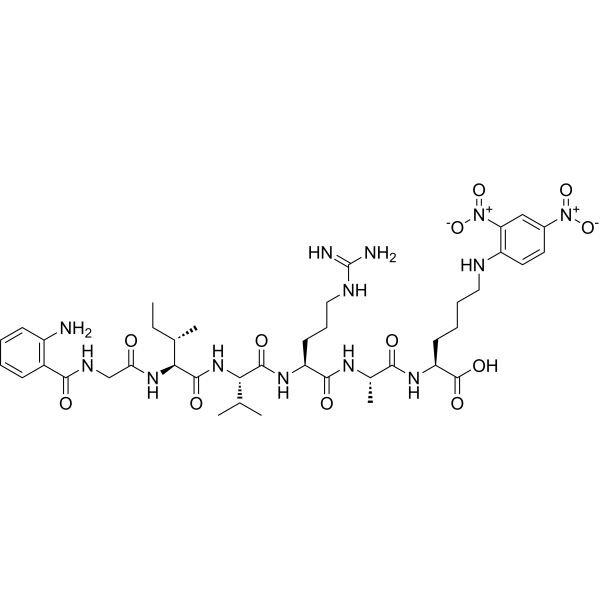 0 ImagesCat. No.: HY-P4404CAS No.: 827044-38-2Abz-GIVRAK(Dnp) is the most efficient substrate for cathepsin B and is highly selective for this enzyme among lysosomal cysteine proteases. After Abz-GIVRAK(Dnp) is hydrolyzed, aminoacylbenziminosulfosuccinic acid (Abz-SAS) is released, and dinitrobenzoyl (Dnp) is also released. The product of this hydrolysis reaction, Abz-SAS, is fluorescent under ultraviolet light and can emit a fluorescent signal.
-
AM4299B
 0 ImagesCat. No.: HY-120288CAS No.: 160825-49-0AM4299B is an inhibitor for thiol protease. AM4299B inhibits bovine spleen cathepsin B, human kidney cathepsin L and papain with IC50s of 0.7, 0.5 and 20 μM, respectively. AM4299B can be used in research in osteoporosis, and has potential to be used as an antiparasitic agent.
-
Z-FG-NHO-Bz
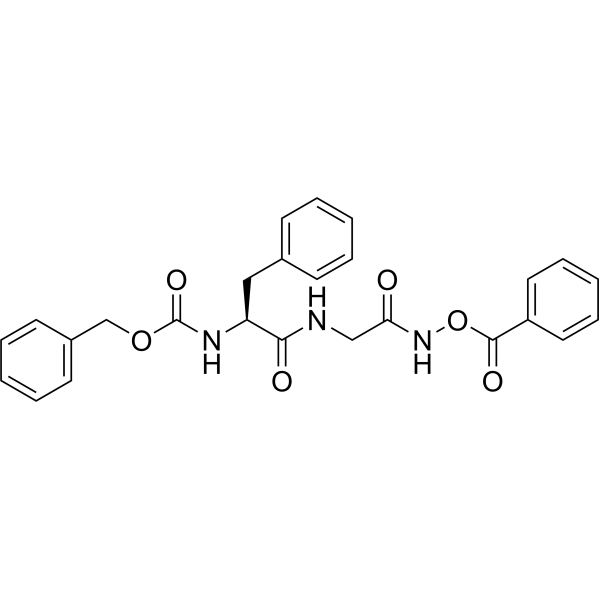 0 ImagesCat. No.: HY-P5999CAS No.: 118292-22-1Z-FG-NHO-Bz is a selective cathepsin inhibitor.
-
Dutacatib
 0 ImagesCat. No.: HY-100701CAS No.: 501000-36-8Dutacatib is inhibitor for SARS-CoV-2 3CLpro and cathepsin K, which exhibits antiviral activity and ameliorates the cancer-induced bone diseases.
-
AKR1C3-IN-17
 0 ImagesCat. No.: HY-187527CAS No.: 3120497-79-9AKR1C3-IN-17 is a cathepsin B (CTSB)-activated small molecule-drug conjugate targeting AKR1C3 with an IC50 of 9 nM. AKR1C3-IN-17 is cleaved by CTSB to release the payload Gemcitabine (HY-17026). AKR1C3-IN-17 induces apoptosis and shows antitumor activity in mice. AKR1C3-IN-17 can be used for the study of hepatocellular carcinoma.
-
Leupeptin hydrochloride
 0 ImagesCat. No.: HY-183478CAS No.: 39740-82-4Leupeptin hydrochloride is a broad-spectrum protease inhibitor. Leupeptin hydrochloride inhibits serine, cysteine and threonine proteases, and regulates autophagy. Leupeptin hydrochloride reduces the expression levels of LC3B, iNOS, Cox-2, Beclin-1 and the level of endopeptidases; increases the levels of p62, Arg 1, Msr 1 and Mrc−1; and blocks the upregulation of p-PTEN, p-NF-κB, p-PI3K, p-Akt, p-p38 and ERK1/2. Leupeptin hydrochloride inhibits NO, ROS, proinflammatory cytokines, the IFN-γ/IL-10 ratio, phagolysosome fusion, mammalian lysosomal hydrolase activity and SARS-CoV-2 replication; and reverses impaired autophagic flux. Leupeptin hydrochloride is applicable to research related to chronic inflammatory diseases, edema, skin tumorigenesis, COVID-19 and respiratory infections.
-
CA-074 methyl ester (Standard)
 0 ImagesSynonyms: CA-074Me (Standard)CA-074 methyl ester (Standard) is the analytical standard of CA-074 methyl ester (HY-100350). This product is intended for research and analytical applications. CA-074 methyl ester is a specific inhibitor of Cathepsin B, which has potent bioactivities such as neuroprotective, anti-cancer, and anti-inflamatory effects.




