1. Search Result
Search Result
Results for "

β-adrenergic antagonist

" in MedChemExpress (MCE) Product Catalog:

77

Inhibitors & Agonists

1

Peptides

5

Natural
Products

9

Isotope-Labeled Compounds

1

Click Chemistry

Cat. No. Product Name Target Research Areas Chemical Structure
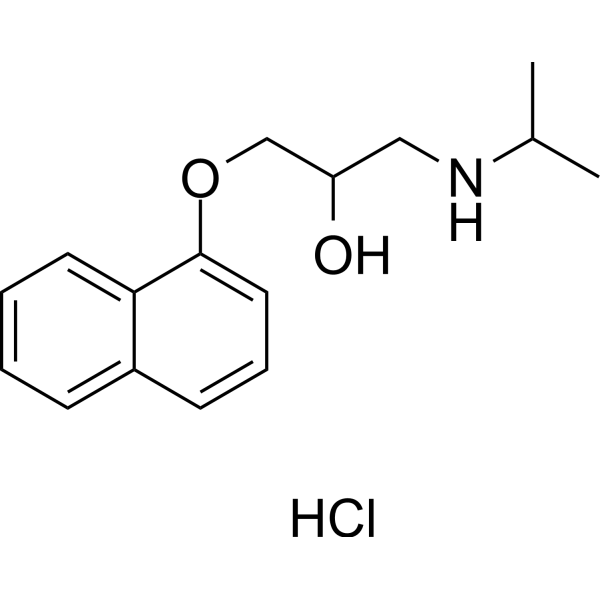
  • HY-B0573
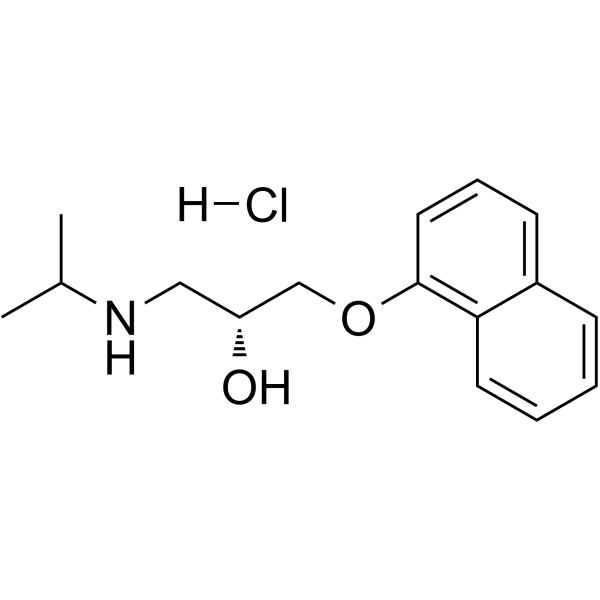
    Propranolol hydrochloride
    40+ Cited Publications

    Adrenergic Receptor Bacterial Cardiovascular Disease Infection Neurological Disease Metabolic Disease Cancer
    Propranolol hydrochloride is a nonselective and BBB-permeableβ-adrenergic receptor (βAR) antagonist, has high affinity for the β1AR and β2AR with Ki values of 1.8 nM and 0.8 nM, respectively. Propranolol hydrochloride inhibits [ 3H]-DHA binding to rat brain membrane preparation with an IC50 of 12 nM. Propranolol hydrochloride is used for study of hypertension, pheochromocytoma, myocardial infarction, cardiac arrhythmias, angina pectoris, and hypertrophic cardiomyopathy .
    Propranolol hydrochloride
  • HY-B0573B
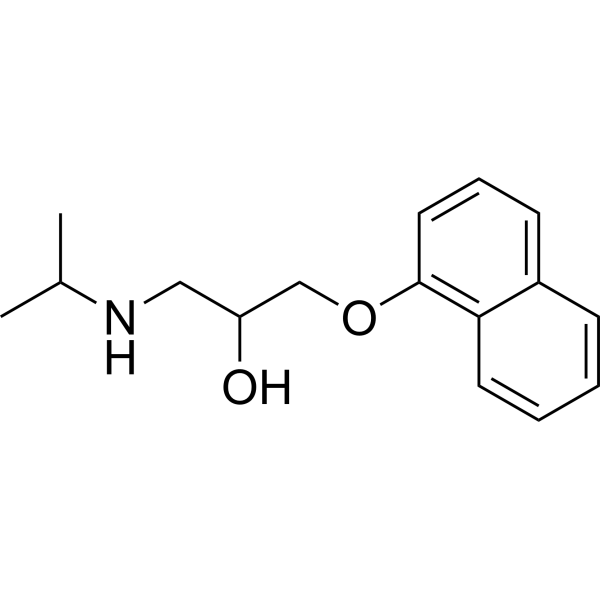
    Propranolol
    40+ Cited Publications

    Adrenergic Receptor Bacterial Cardiovascular Disease Infection Neurological Disease Metabolic Disease Cancer
    Propranolol is a nonselective and BBB-permeable β-adrenergic receptor (βAR) antagonist, has high affinity for the β1AR and β2AR with Ki values of 1.8 nM and 0.8 nM, respectively . Propranolol inhibits [ 3H]-DHA binding to rat brain membrane preparation with an IC50 of 12 nM . Propranolol is used for the study of hypertension, pheochromocytoma, myocardial infarction, cardiac arrhythmias, angina pectoris, and hypertrophic cardiomyopathy .
    Propranolol
  • HY-B1108
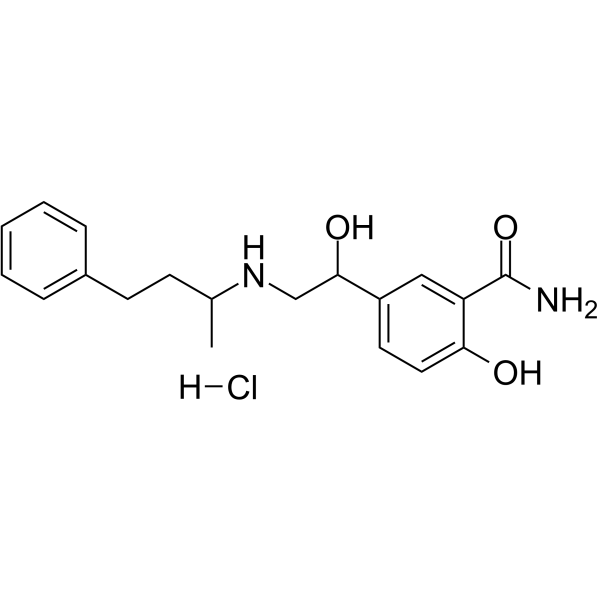
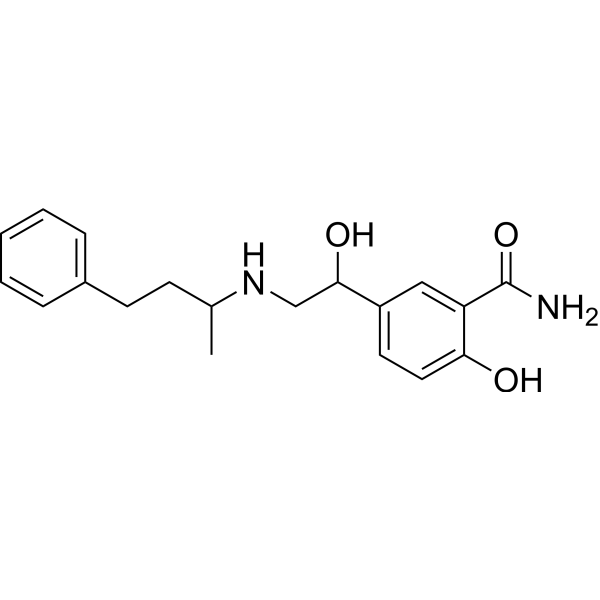
    Labetalol hydrochloride
    5 Publications Verification

    AH-5158 hydrochloride; Sch-15719W

    Adrenergic Receptor Cardiovascular Disease Inflammation/Immunology Endocrinology
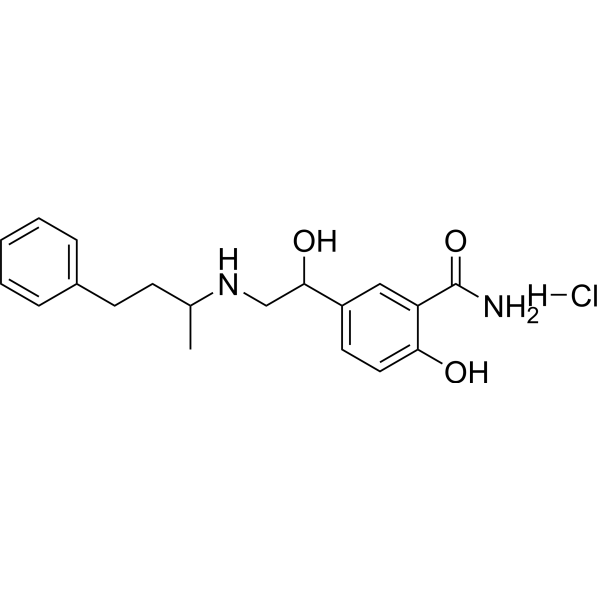
    Labetalol (AH5158) hydrochloride is an orally available, selective α1-adrenergic recepto and non-selective β-adrenergic receptor competitive antagonist. Labetalol hydrochloride is an antihypertensive molecule that partially crosses the blood-brain barrier and has little effect on cardiac output. Labetalol hydrochloride can be used in the study of cardiovascular diseases, such as hypertension during pregnancy .
    Labetalol hydrochloride
  • HY-112461A
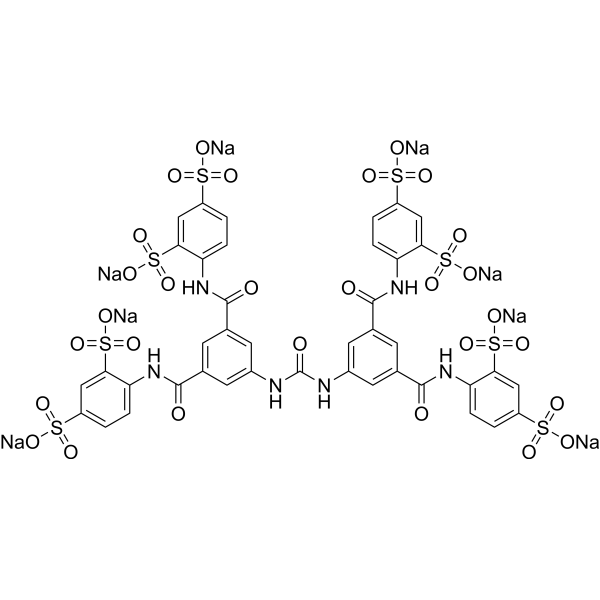
    NF449 octasodium
    4 Publications Verification

    P2X Receptor Cardiovascular Disease
    NF449 octasodium is a highly potent P2X1 receptor antagonist, with IC50s of 0.28, 0.69, and 120 nM for rP2X1, rP2X1+5, P2X2+3, respectively. NF449 octasodium is a G-selective G Protein antagonist. NF449 octasodium suppresses the rate of GTP[γS] binding to Gsα-s, inhibits the stimulation of adenylyl cyclase activity, and blocks the coupling of β-adrenergic receptors to Gs .
    NF449 octasodium
  • HY-121383
    Labetalol
    5 Publications Verification

    AH5158; Sch-15719W free base

    Adrenergic Receptor Cardiovascular Disease Inflammation/Immunology Endocrinology
    Labetalol (AH5158) is an orally available, selective α1-adrenergic recepto and non-selective β-adrenergic receptor competitive antagonist. Labetalol is an antihypertensive molecule that partially crosses the blood-brain barrier and has little effect on cardiac output. Labetalol can be used in the study of cardiovascular diseases, such as hypertension during pregnancy .
    Labetalol
  • HY-123012

    LY-488756

    Adrenergic Receptor Others
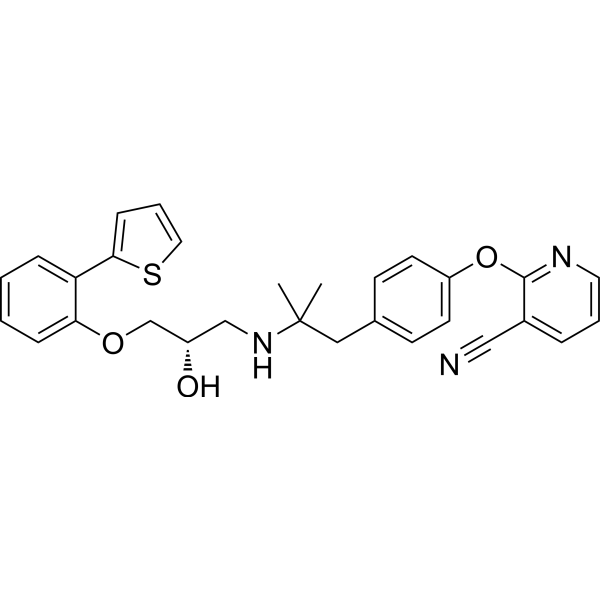
    Lubabegron is a potent modulator of β-adrenergic receptor (β-AR). Lubabegron demonstrates antagonistic behavior at the β1 and β 2 receptor subtypes and agonistic behavior at the β 3 receptor subtype in cattle. Lubabegron reduces NH3 gas emissions from an animal or its waste. Lubabegron is available as an animal supplement .
    Lubabegron
  • HY-A0295
    (R)-Propranolol hydrochloride
    1 Publications Verification

    Adrenergic Receptor Cardiovascular Disease Neurological Disease Endocrinology
    (R)-Propranolol hydrochloride is a less active enantiomer of the β-adrenoceptor antagonist propranolol (HY-B0573). Propranolol is a nonselective β-adrenergic receptor (βAR) antagonist, has high affinity for the β1AR and β2AR with Ki values of 1.8 nM and 0.8 nM, respectively .
    (R)-Propranolol hydrochloride
  • HY-B1270

    Adrenergic Receptor iGluR Neurological Disease Endocrinology
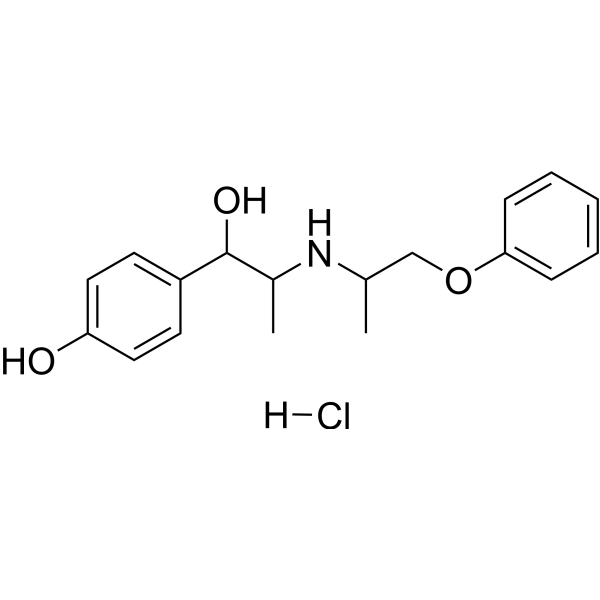
    Isoxsuprine hydrochloride is a beta-adrenergic receptor agonist with Kis of 13.65 μΜ and 3.48 μΜ for myometrial and placcntal beta-adrenergic receptor, respectively. Isoxsuprine hydrochloride is also a NMDA receptor antagonist.
    Isoxsuprine hydrochloride
  • HY-B1486
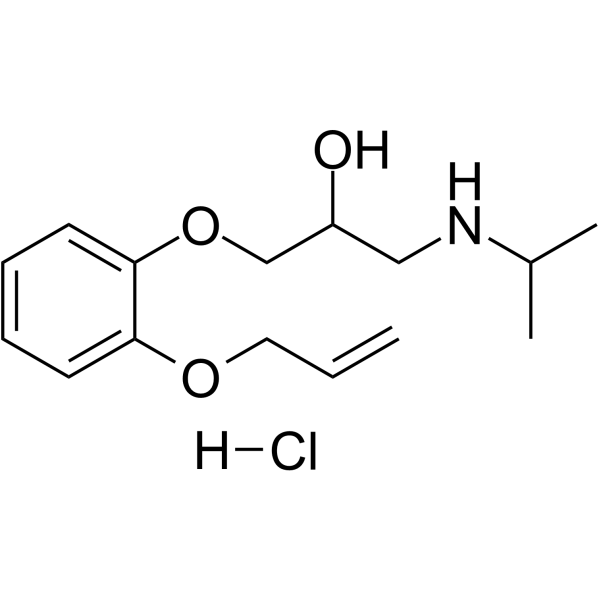
    Oxprenolol hydrochloride
    1 Publications Verification

    Ba 39089

    Adrenergic Receptor Cardiovascular Disease
    Oxprenolol hydrochloride (Ba 39089) is an orally bioavailable β-adrenergic receptor (β-AR) antagonist with a Ki of 7.10 nM in a radioligand binding assay using rat heart muscle .
    Oxprenolol hydrochloride
  • HY-100634

    (±)-4-hydroxy Propranolol hydrochloride

    Adrenergic Receptor Cardiovascular Disease
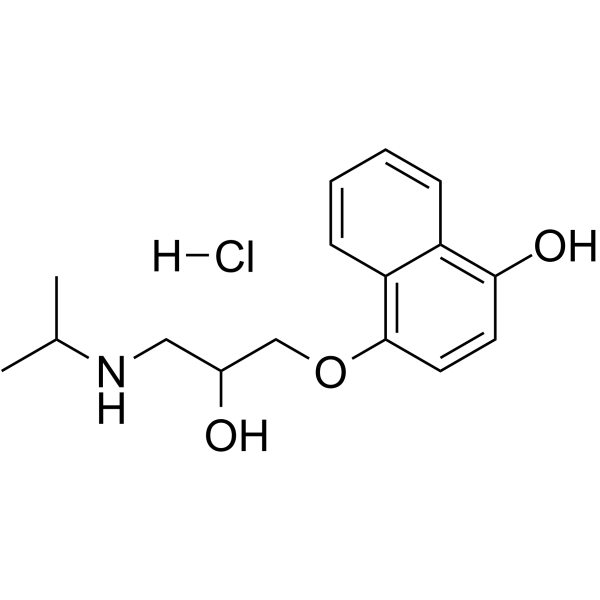
    4-Hydroxypropranolol hydrochloride is a non-cardiac selective β-adrenergic receptor antagonist and a metabolite produced after oral administration of Propranolol (HY-B0573B). 4-Hydroxypropranolol hydrochloride also acts as a membrane stabilizer and possesses intrinsic sympathomimetic inhibitory activity. 4-Hydroxypropranolol hydrochloride blocks β-adrenergic receptors to antagonize the effects of catecholamines, acts as a partial β-adrenergic receptor agonist, and induces membrane stabilization. 4-Hydroxypropranolol hydrochloride alters heart rate, left ventricular contractility, and atrioventricular conduction time. 4-Hydroxypropranolol hydrochloride can be used in research related to cardiovascular and cerebrovascular diseases .
    4-Hydroxypropranolol hydrochloride
  • HY-B1238
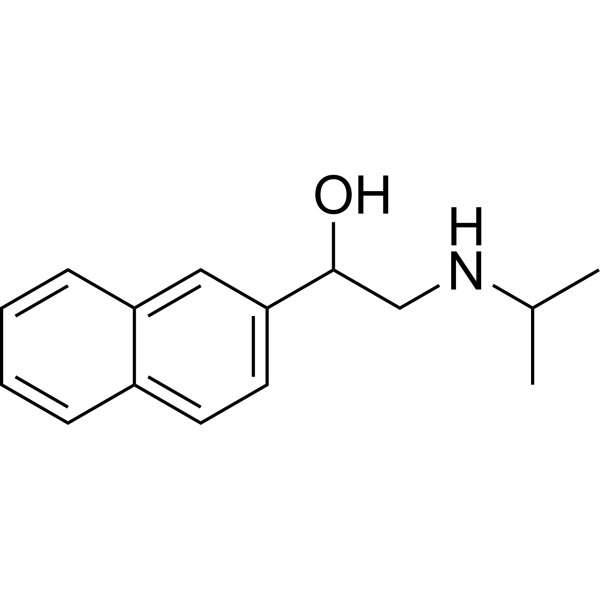
    Pronethalol
    2 Publications Verification

    (±)-Pronethalo

    Adrenergic Receptor Cardiovascular Disease Neurological Disease
    Pronethalol ((±)-Pronethalo) is a non-selective β-adrenergic antagonist. Pronethalol is a potent inhibitor of Sox2 expression. Pronethalol protects against and to reverse Digitalis-induced ventricular arrhythmias and limits the cerebral arteriovenous malformation (AVMs) .
    Pronethalol
  • HY-B1035
    Levobunolol hydrochloride
    1 Publications Verification

    l-Bunolol hydrochloride

    Adrenergic Receptor Calcium Channel Casein Kinase Cardiovascular Disease
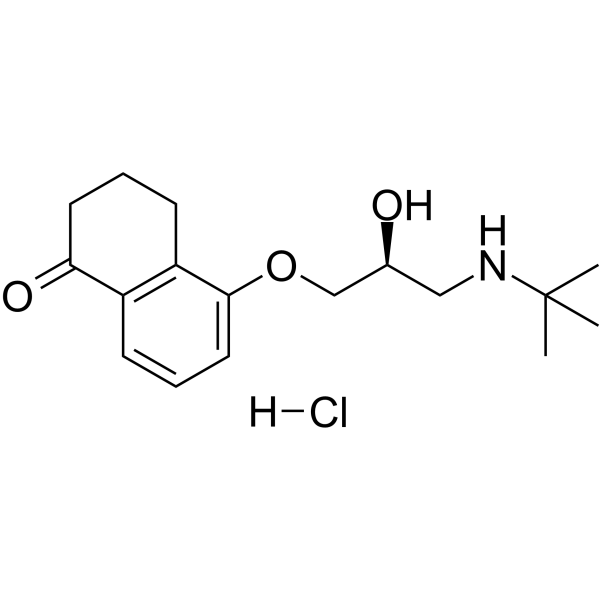
    Levobunolol (l-Bunolol) hydrochloride is a non-selective β-adrenergic antagonist and vasodilator. By blocking calcium ion influx and reducing the sensitivity of vascular smooth muscle to calcium, Levobunolol hydrochloride effectively dilates the ciliary arteries and increases ocular blood flow, so it is widely used in research on glaucoma and ocular hypertension. Levobunolol hydrochloride inhibits the β-receptor signaling pathway and the expression of related proliferation markers (such as CK3, CK14, CK19, Ki67) in corneal cells. In rabbit models, Levobunolol hydrochloride not only does not inhibit corneal epithelial regeneration, but also accelerates the healing of mechanical injury without adverse effects. Levobunolol hydrochloride also inhibits histamine-induced vasoconstriction and intracellular calcium elevation, exhibiting unique vascular regulatory activity. Levobunolol hydrochloride protects ocular blood flow and promotes corneal repair .
    Levobunolol hydrochloride
  • HY-112461

    P2X Receptor Cardiovascular Disease
    NF449 is a highly potent P2X1 receptor antagonist, with IC50s of 0.28, 0.69, and 120 nM for rP2X1, rP2X1+5, P2X2+3, respectively. NF449 is a G-selective G Protein antagonist. NF449 suppresses the rate of GTP[γS] binding to Gsα-s, inhibits the stimulation of adenylyl cyclase activity, and blocks the coupling of β-adrenergic receptors to Gs .
    NF449
  • HY-B0573S1

    Adrenergic Receptor Neurological Disease Endocrinology
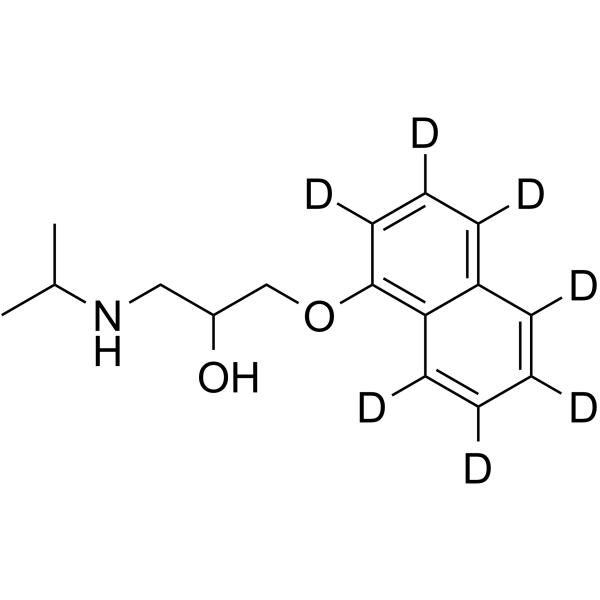
    Propranolol-d7 (ring-d7) is the deuterium labeled Propranolol hydrochloride. Propranolol hydrochloride is a nonselective β-adrenergic receptor (βAR) antagonist, has high affinity for the β1AR and β2AR with Ki values of 1.8 nM and 0.8 nM, respectively . Propranolol hydrochloride inhibits [3H]-DHA binding to rat brain membrane preparation with an IC50 of 12 nM . Propranolol hydrochloride is used for study of hypertension, pheochromocytoma, myocardial infarction, cardiac arrhythmias, angina pectoris, and hypertrophic cardiomyopathy .
    Propranolol-d7 (ring-d7)
  • HY-B0573BS

    Adrenergic Receptor Cardiovascular Disease Neurological Disease Endocrinology
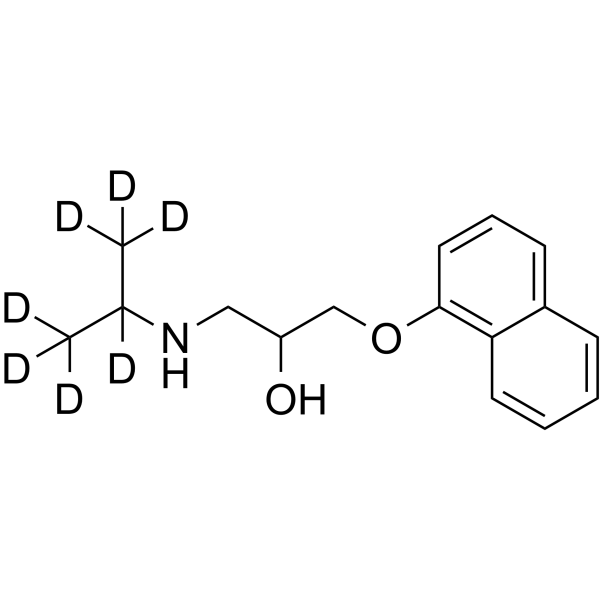
    Propranolol-d7 is the deuterium labeled Propranolol. Propranolol is a nonselective β-adrenergic receptor (βAR) antagonist, has high affinity for the β1AR and β2AR with Ki values of 1.8 nM and 0.8 nM, respectively . Propranolol inhibits [3H]-DHA binding to rat brain membrane preparation with an IC50 of 12 nM . Propranolol is used for the study of hypertension, pheochromocytoma, myocardial infarction, cardiac arrhythmias, angina pectoris, and hypertrophic cardiomyopathy .
    Propranolol-d7
  • HY-B0573S

    Adrenergic Receptor Cardiovascular Disease Neurological Disease Endocrinology
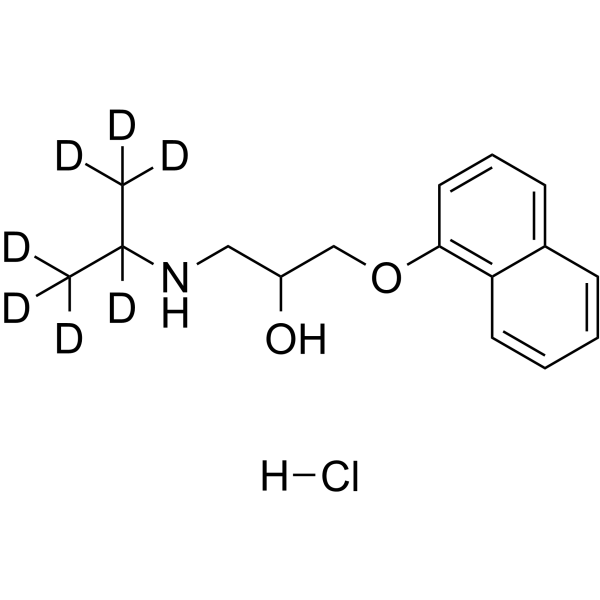
    Propranolol-d7 (hydrochloride) is a deuterium labeled Propranolol hydrochloride. Propranolol hydrochloride is a nonselective β-adrenergic receptor (βAR) antagonist, has high affinity for the β1AR and β2AR with Ki values of 1.8 nM and 0.8 nM, respectively . Propranolol hydrochloride inhibits [3H]-DHA binding to rat brain membrane preparation with an IC50 of 12 nM . Propranolol hydrochloride is used for the study of hypertension, pheochromocytoma, myocardial infarction, cardiac arrhythmias, angina pectoris, and hypertrophic cardiomyopathy .
    Propranolol-d7 hydrochloride
  • HY-121567
    Metipranolol
    1 Publications Verification

    Adrenergic Receptor Cardiovascular Disease
    Metipranolol is a nonselective and orally active β-adrenergic receptor antagonist. Metipranolol can be used for hypertension and glaucoma research .
    Metipranolol
  • HY-135014

    Melanocortin Receptor Adrenergic Receptor Others
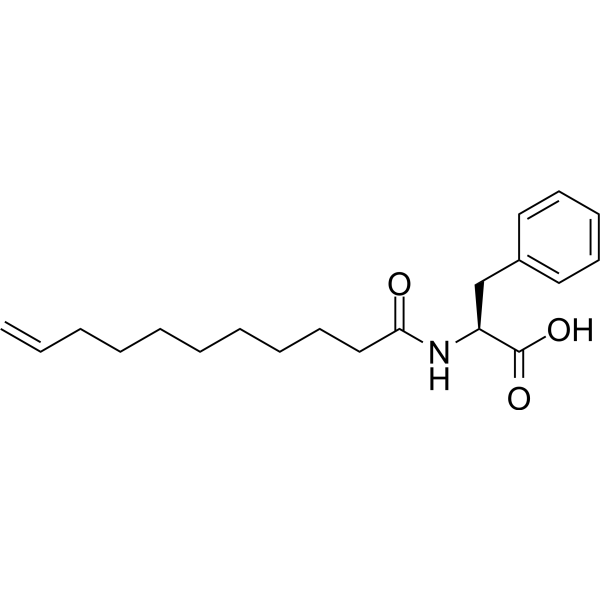
    Undecylenoyl phenylalanine is an antagonist for α-melanocyte-stimulating hormone (MSH) and β-adrenergic receptor (β-ADR) to reduce the melanogenesis in melanocytes, reduces hyperpigmentation and thus ameliorates melasma lesions and solar lentigines .
    Undecylenoyl phenylalanine
  • HY-B1108R
    Labetalol hydrochloride (Standard)
    4 Publications Verification

    AH-5158 hydrochloride(Standard); Sch-15719W (Standard)

    Reference Standards Adrenergic Receptor Cardiovascular Disease Inflammation/Immunology Endocrinology
    Labetalol hydrochloride (Standard) is the analytical standard of Labetalol hydrochloride (HY-B1108). This product is intended for research and analytical applications. Labetalol (AH5158) hydrochloride is an orally available, selective α1-adrenergic recepto and non-selective β-adrenergic receptor competitive antagonist. Labetalol hydrochloride is an antihypertensive molecule that partially crosses the blood-brain barrier and has little effect on cardiac output. Labetalol hydrochloride can be used in the study of cardiovascular diseases, such as hypertension during pregnancy .
    Labetalol hydrochloride (Standard)
  • HY-B0573R

    Reference Standards Adrenergic Receptor Bacterial Neurological Disease Endocrinology Cancer
    Propranolol (hydrochloride) (Standard) is the analytical standard of Propranolol (hydrochloride). This product is intended for research and analytical applications. Propranolol hydrochloride is a nonselective β-adrenergic receptor (βAR) antagonist, has high affinity for the β1AR and β2AR with Ki values of 1.8 nM and 0.8 nM, respectively . Propranolol hydrochloride inhibits [ 3H]-DHA binding to rat brain membrane preparation with an IC50 of 12 nM . Propranolol hydrochloride is used for study of hypertension, pheochromocytoma, myocardial infarction, cardiac arrhythmias, angina pectoris, and hypertrophic cardiomyopathy .
    Propranolol hydrochloride (Standard)
  • HY-B2111

    Adrenergic Receptor Cardiovascular Disease Others
    (R)-(+)-Atenolol is the less active enantiomer of the (R,S)-atenolol. (R,S)-atenolol is a β-adrenergic receptor antagonist .
    (R)-(+)-Atenolol
  • HY-101656

    RMI81968

    Adrenergic Receptor Cardiovascular Disease
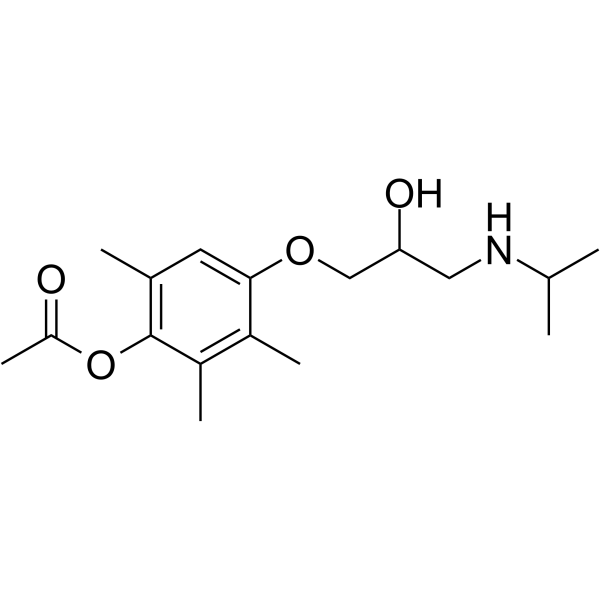
    Medroxalol (RMI81968) is an orally active adrenergic receptor antagonist, blocks α- and β-adrenergic receptors. Medroxalol shows antihypertensive and vasodilating effects .
    Medroxalol
  • HY-101393A

    (±)-CGP 12177 hydrochloride

    Adrenergic Receptor Cardiovascular Disease Metabolic Disease
    CGP 12177 ((±)-CGP 12177) hydrochloride is a β-Adrenergic receptor (β-AR) ligand. CGP 12177 hydrochloride is a β3-AR (Ki = 88 nM) agonist with β12-AR (Ki = 0.9 nM for β1; Ki = 4 nM for β2) antagonist action. CGP 12177 hydrochloride exhibits partial agonist properties for α1-AR in rat pulmonary artery. CGP 12177 hydrochloride regulates the expression of ucp and leptin genes in NMRI mice adipose tissues. CGP 12177 hydrochloride can be used for cardiovascular and metabolic disease research [1][2][3][4].
    CGP 12177 hydrochloride
  • HY-121082

    L-Dihydroalprenolol

    Adrenergic Receptor Endocrinology
    (-)-Dihydroalprenolol (L-Dihydroalprenolol) is a β-adrenergic antagonist that inhibits the activity of β-adrenergic receptors. (-)-Dihydroalprenolol can cause desensitization of approximately 60% of β-adrenergic receptor binding sites. (-)-Dihydroalprenolol has also been shown to reduce the binding capacity of specific β-adrenergic ligands. (-)-Dihydroalprenolol may affect the ability to stimulate membrane-bound adenylate acylase .
    (-)-Dihydroalprenolol
  • HY-121045

    KO 1366

    Adrenergic Receptor Cardiovascular Disease
    Bunitrolol hydrochloride is an orally active β-adrenergic blocker that has a high affinity for β-adrenergic receptors. Bunitrolol hydrochloride exerts significant β-receptor antagonist activity and has weak α1-blocking activity. Bunitrolol hydrochloride is mainly used in the study of cardiovascular diseases such as hypertension and angina pectoris, and is also used in placental transport research .
    Bunitrolol
  • HY-B1486AS

    Isotope-Labeled Compounds Adrenergic Receptor Cardiovascular Disease
    Oxprenolol-d7 is the deuterium labeled Oxprenolol. Oxprenolol (Ba 39089 free base) is an orally bioavailable β-adrenergic receptor (β-AR) antagonist with a Ki of 7.10 nM in a radioligand binding assay using rat heart muscle .
    Oxprenolol-d7
  • HY-123012A

    LY-591281; LY-488756 fumarate

    Androgen Receptor Others
    Lubabegron fumarate is a potent modulator of β-adrenergic receptor (β-AR). Lubabegron fumarate demonstrates antagonistic behavior at the β1 and β 2 receptor subtypes and agonistic behavior at the β 3 receptor subtype in cattle. Lubabegron fumarate reduces NH3 gas emissions from an animal or its waste. Lubabegron fumarate is available as an animal supplement .
    Lubabegron fumarate
  • HY-122215

    N-696

    Adrenergic Receptor Endocrinology
    Tilisolol hydrochloride (N-696) is a non-selective β-adrenergic antagonist with vasodilatory and hypotensive activities. Tilisolol hydrochloride exerts its effects in canine coronary arteries by opening ATP-sensitive K+ channels. Tilisolol hydrochloride exhibits concentration-dependent relaxation in KCl-precontracted rat thoracic aorta. Tilisolol hydrochloride reduces diastolic blood pressure in a dose-dependent manner and slightly increases heart rate in spinal cord stimulated rats .
    Tilisolol hydrochloride
  • HY-121383R

    AH5158 (Standard); Sch-15719W free base (Standard)

    Reference Standards Adrenergic Receptor Cardiovascular Disease Inflammation/Immunology Endocrinology
    Labetalol (Standard) is the analytical standard of Labetalol. This product is intended for research and analytical applications. Labetalol (AH5158) is an orally available, selective α1-adrenergic recepto and non-selective β-adrenergic receptor competitive antagonist. Labetalol is an antihypertensive molecule that partially crosses the blood-brain barrier and has little effect on cardiac output. Labetalol can be used in the study of cardiovascular diseases, such as hypertension during pregnancy .
    Labetalol (Standard)
  • HY-121166

    (S)-Betaxolol

    Adrenergic Receptor Others
    Levobetaxolol is a potent and high affinity β-adrenergic antagonist with IC50 values of 33.2, 2970, 709 nM for guinea pig atrial β1, tracheal β2 and rat colonic β3 receptors, respectively. Levobetaxolol reduces IOP (intraocular pressure). Levobetaxolol exhibits a micromolar affinity for L-type Ca21-channels. Levobetaxolol decreases the effects of ischaemia/reperfusion injury in rats. Levobetaxolol has the potential for the research of glaucoma .
    Levobetaxolol
  • HY-Z7733

    Desmethylcarvedilol; BM-14242

    Calcium Channel Metabolic Disease
    O-Desmethylcarvedilol (Desmethylcarvedilol) is an active metabolite of the non-selective β-adrenergic receptor (β-AR) antagonist Carvedilol (HY-B0006). O-Desmethylcarvedilol inhibits store-overload-induced calcium release in HEK293 cells expressing the ryanodine receptor 2 (RyR2) R4496C (RyR2 R4496C) mutation (IC50 = 7.62 µM). O-Desmethylcarvedilol reduces increases in heart rate and prevents decreases in diastolic blood pressure induced by Isoproterenol (HY-B0468) in conscious rabbits (ED50s = 32 and 5 µg/kg, respectively) .
    O-Desmethylcarvedilol
  • HY-U00283

    Adrenergic Receptor Endocrinology
    Falintolol, (Z)-, a new β-adrenergic antagonist, is characterized by the presence of an oxime function.
    Falintolol, (Z)-
  • HY-B1486A

    Ba 39089 free base

    Adrenergic Receptor Cardiovascular Disease
    Oxprenolol (Ba 39089 free base) is an orally bioavailable β-adrenergic receptor (β-AR) antagonist with a Ki of 7.10 nM in a radioligand binding assay using rat heart muscle .
    Oxprenolol
  • HY-B1486S

    Ba 39089-d7

    Adrenergic Receptor Cardiovascular Disease
    Oxprenolol-d7 (hydrochloride) is the deuterium labeled Oxprenolol hydrochloride. Oxprenolol hydrochloride (Ba 39089) is an orally bioavailable β-adrenergic receptor (β-AR) antagonist with a Ki of 7.10 nM in a radioligand binding assay using rat heart muscle .
    Oxprenolol-d7 hydrochloride
  • HY-100952

    Adrenergic Receptor Cardiovascular Disease
    Nifenalol hydrochloride is a β-adrenergic receptor antagonist. Nifenalol hydrochloride induces the Early Afterdepolarization (EAD) effect. EAD is a phenomenon in cardiac electrophysiology that usually occurs during an action potential in ventricular muscle cells and can lead to arrhythmia. The EAD effect of Nifenalol hydrochloride can be blocked by Tetrodotoxin. Nifenalol hydrochloride is used in the study of conditions such as irregular heartbeat or high blood pressure .
    Nifenalol hydrochloride
  • HY-101393

    (±)-CGP 12177

    Adrenergic Receptor Cardiovascular Disease Metabolic Disease
    CGP 12177 ((±)-CGP 12177) is a β-Adrenergic receptor (β-AR) ligand. CGP 12177 is a β3-AR (Ki = 88 nM) agonist with β12-AR (Ki = 0.9 nM for β1; Ki = 4 nM for β2) antagonist action. CGP 12177 exhibits partial agonist properties for α1-AR in rat pulmonary artery. CGP 12177 regulates the expression of ucp and leptin genes in NMRI mice adipose tissues. CGP 12177 can be used for cardiovascular and metabolic disease research .
    CGP 12177
  • HY-169137

    Adrenergic Receptor Others
    Falintolol is a β-adrenergic receptor antagonist that can be used in glaucoma research .
    Falintolol
  • HY-101656A

    RMI81968 hydrochloride

    Adrenergic Receptor Cardiovascular Disease
    Medroxalol hydrochloride is an orally active adrenergic receptor antagonist, blocks α- and β-adrenergic receptors. Medroxalol hydrochloride shows antihypertensive and vasodilating effects .
    Medroxalol hydrochloride
  • HY-N10452

    Adrenergic Receptor Cardiovascular Disease
    Methyl maslinate is a β-adrenergic antagonist. Methyl maslinate is a potent cardiotonic and antidysrhythmic agent. Methyl maslinate has the potential for hypertension research .
    Methyl maslinate
  • HY-113797

    Adrenergic Receptor Others
    RS-52367 is a potent syntex β-adrenergic antagonist. RS-52367 decreases intraocular pressure with a mild systemic effect in dogs .
    RS-52367
  • HY-126107

    Adrenergic Receptor Neurological Disease
    (±)-4-Hydroxy propranolol β-D-glucuronide is a metabolite of the β-adrenergic receptor antagonist 4-Hydroxypropranolol (HY-100634) .
    (±)-4-Hydroxy propranolol β-D-glucuronide
  • HY-178319

    PZL-1

    Drug Derivative Adrenergic Receptor Cardiovascular Disease
    Photoazolol-1 is a β-adrenergic receptor (βAR)-blocker derivative. Photoazolol-1 can transfer from an inverse agonist to a neutral antagonist upon photoactivation .
    Photoazolol-1
  • HY-103214A

    Adrenergic Receptor Cardiovascular Disease
    Bucindolol hydrochloride is a β-adrenergic receptor antagonist with activity in preventing new-onset atrial fibrillation. Bucindolol hydrochloride can reduce heart rate and the occurrence of bradycardia in patients with heart failure and atrial fibrillation .
    Bucindolol hydrochloride
  • HY-107010A

    Adrenergic Receptor Cardiovascular Disease
    Esprolol hydrochloride is an orally active and potent β-adrenergic receptor antagonist. Esprolol hydrochloride undergoes rapid metabolism by blood and tissue esterases to form an active metabolite, amoxolol. Esprolol hydrochloride is promising for research of exertional angina .
    Esprolol hydrochloride
  • HY-121567R

    Reference Standards Adrenergic Receptor Cardiovascular Disease
    Metipranolol (Standard) is the analytical standard of Metipranolol. This product is intended for research and analytical applications. Metipranolol is a nonselective and orally active β-adrenergic receptor antagonist. Metipranolol can be used for hypertension and glaucoma research .
    Metipranolol (Standard)
  • HY-107010

    Adrenergic Receptor Cardiovascular Disease
    Esprolol is an orally active and potent β-adrenergic receptor antagonist. Esprolol is rapidly metabolized by blood and tissue esterases to form the active metabolite amoxolol. Esprolol holds potential for research in exercise-induced angina .
    Esprolol
  • HY-B1238A

    (±)-Pronethalo hydrochloride

    Adrenergic Receptor Cardiovascular Disease Neurological Disease
    Pronethalol ((±)-Pronethalo) is a non-selective β-adrenergic antagonist. Pronethalol is a potent inhibitor of Sox2 expression. Pronethalol protects against and to reverse Digitalis-induced ventricular arrhythmias, and limits the cerebral arteriovenous malformation (AVMs) .
    Pronethalol hydrochloride
  • HY-122364

    Adrenergic Receptor Cardiovascular Disease
    Bucumolol hydrochloride is a β-adrenergic receptor antagonist that can slow heart rate (negative chronotropic effect) and reduce cardiac contractility (negative inotropic effect). Bucumolol hydrochloride has antiarrhythmic and local anesthetic activity and can be used in the study of cardiovascular diseases .
    Bucumolol hydrochloride
  • HY-W008226R

    2,4,6-trihydroxyacetophenone (Standard); 1-(2,4,6-Trihydroxyphenyl)ethanone (Standard)

    Reference Standards Cytochrome P450 Bacterial Antibiotic Infection Metabolic Disease
    Oxprenolol (hydrochloride) (Standard) is the analytical standard of Oxprenolol (hydrochloride). This product is intended for research and analytical applications. Oxprenolol hydrochloride (Ba 39089) is an orally bioavailable β-adrenergic receptor (β-AR) antagonist with a Ki of 7.10 nM in a radioligand binding assay using rat heart muscle .
    Phloracetophenone (Standard)
  • HY-B1486R

    Ba 39089 (Standard)

    Reference Standards Adrenergic Receptor Cardiovascular Disease
    Oxprenolol (hydrochloride) (Standard) is the analytical standard of Oxprenolol (hydrochloride). This product is intended for research and analytical applications. Oxprenolol hydrochloride (Ba 39089) is an orally bioavailable β-adrenergic receptor (β-AR) antagonist with a Ki of 7.10 nM in a radioligand binding assay using rat heart muscle .
    Oxprenolol hydrochloride (Standard)

Inquiry Online

Your information is safe with us. * Required Fields.

Salutation


Country or Region *

Applicant Name *


Organization Name *

Department *


Email Address *


Product Name *

Cat. No.


Requested quantity *

Phone Number *


Remarks

Inquiry Online

Inquiry Information

Product Name:
Cat. No.:
Quantity:
MCE Japan Authorized Agent:

