1. Search Result
Search Result
Results for "

RANKL-induced osteoporosis

" in MedChemExpress (MCE) Product Catalog:

24

Inhibitors & Agonists

8

Natural
Products

Cat. No. Product Name Target Research Areas Chemical Structure
  • HY-W008634
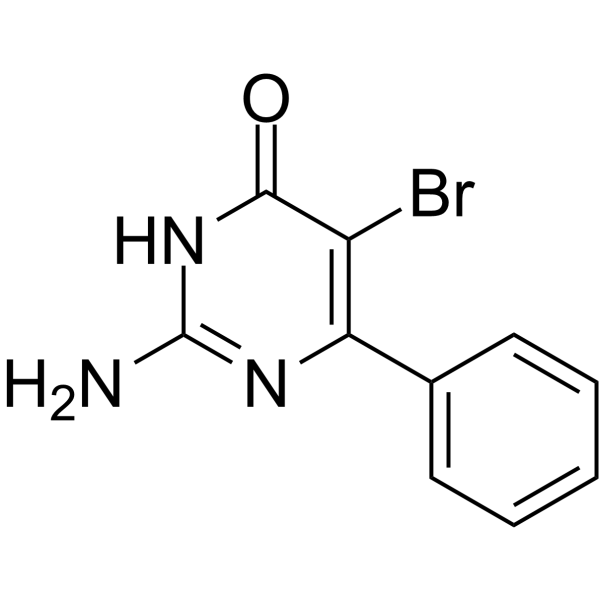
    Bropirimine
    2 Publications Verification

    U-54461; U-54461S; PNU-54461

    Toll-like Receptor (TLR) Cancer
    Bropirimine (U-54461; U-54461S; PNU-54461) is an orally active TLR7 agonist. Bropirimine inhibits RANKL-induced osteoclast differentiation of mouse bone marrow-derived macrophages (BMMs). Bropirimine exhibits dose-dependent direct inhibitory effects on colony formation of cultured KK-47 and 724 cells. Bropirimine can be used for the study of cancers and bone metabolic disorders such as osteoporosis .
    Bropirimine
  • HY-N5048

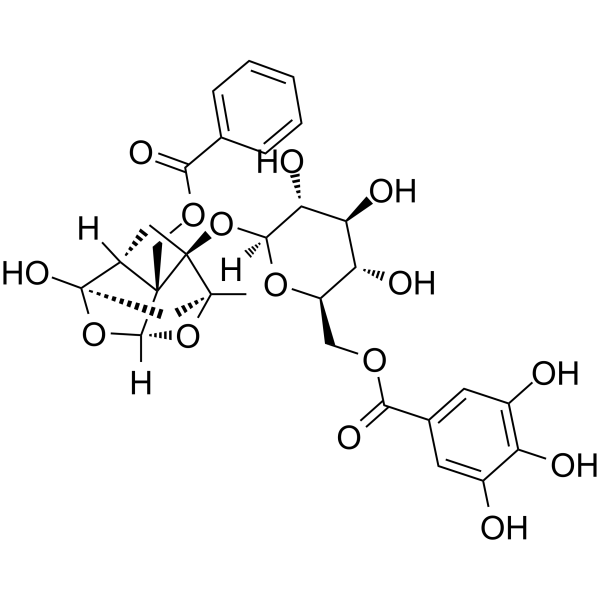
    6'-O-Galloyl paeoniflorin

    NF-κB ERK JNK Nuclear Factor of activated T Cells (NFAT) Keap1-Nrf2 PI3K Akt Reactive Oxygen Species (ROS) Apoptosis DNA/RNA Synthesis Infection Neurological Disease Metabolic Disease Inflammation/Immunology
    Galloylpaeoniflorin (6'-O-Galloyl paeoniflorin) is an orally active galloylated derivative of Paeoniflorin (HY-N0293) found in peony roots with various anti-inflammatory and antioxidant activities. Galloylpaeoniflorin suppresses RANKL-induced activation of ERK, JNK, c-Fos, c-Jun, and NFATc1, and reduces osteoclast-specific gene expression. Galloylpaeoniflorin activates Nrf2 and PI3K/Akt pathways, inhibits NF-κB activation, and scavenges ROS to reduce oxidative DNA, lipid, and protein damage. Galloylpaeoniflorin attenuates neuroinflammation, inhibits apoptosis, reduces Helicobacter pylori-induced gastric mucosa injury and UVB-induced cell damage. Galloylpaeoniflorin can be used for the research of osteoporosis, gastritis, ischemic stroke and skin diseases .
    Galloylpaeoniflorin
  • HY-N0762
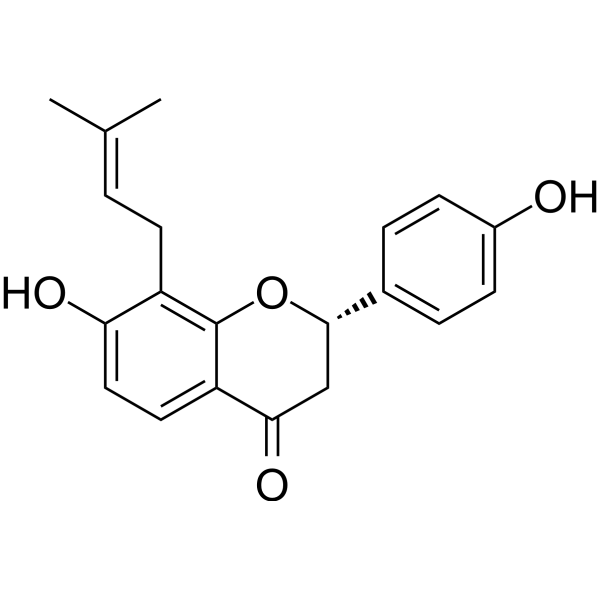
    Isobavachin
    5 Publications Verification

    Cytochrome P450 UGT p38 MAPK NF-κB NO Synthase COX Fc Receptor (FcR) RANKL/RANK Keap1-Nrf2 Reactive Oxygen Species (ROS) Apoptosis Autophagy Neurological Disease Metabolic Disease Inflammation/Immunology Cancer
    Isobavachin is an orally active, blood-brain barrier-penetrating prenylated flavonoid present in Psoralea corylifolia. Isobavachin inhibits human CYP2B6, CYP2C9, CYP2C19, UGT1A1, UGT1A9, and UGT2B7. Isobavachin suppresses MAPK activation, NF-κB nuclear translocation, overexpression of iNOS/COX-2, FcεRI-mediated signaling pathways, and RANKL-induced osteoclastogenesis. Isobavachin induces autophagy, cytotoxicity, neuronal differentiation, and NRF2 activation; it alleviates oxidative damage, inflammatory responses, apoptosis, iron accumulation, mitochondrial biogenesis, and mast cell degranulation. Isobavachin is applicable to research related to liver injury, inflammatory diseases, osteoporosis, liver cancer, prostate cancer, glioma, periodontitis-induced bone loss, and Alzheimer's disease .
    Isobavachin
  • HY-N3312

    p38 MAPK JNK NF-κB Metabolic Disease Inflammation/Immunology Cancer
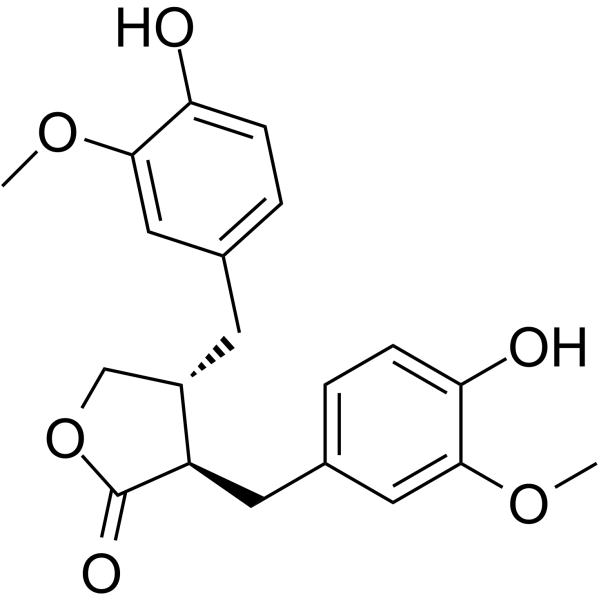
    Matairesinol is an orally active bioactive compound with anti-inflammatory, antioxidant and anticancer activities. Matairesinol inhibits the phosphorylation of MAPK, JNK and NF-κB, downregulates RANKL-induced NFATc1 expression and activity, and suppresses the activation of the PI3K/AKT/FOXO1 pathway. Matairesinol can be used in research related to sepsis-mediated brain injury, osteoporosis, heart failure, atopic dermatitis and cancer .
    Matairesinol
  • HY-N0805A
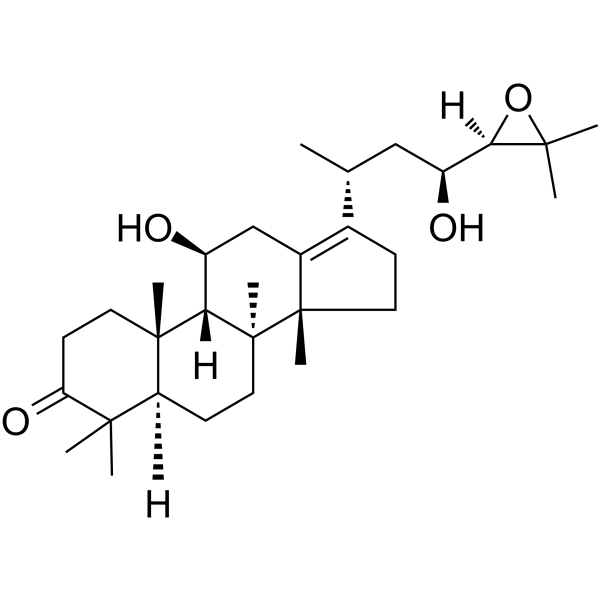
    Alisol B
    1 Publications Verification

    Epoxide Hydrolase CaMK Autophagy Apoptosis Metabolic Disease Inflammation/Immunology Cancer
    Alisol B is a triterpene with diverse biological activities. Alisol B binds human soluble epoxide hydrolase (sEH) with a Ki of 5.97 μM and reduces sEH activity. Alisol B inhibits RANKL-induced JNK phosphorylation, NFATc1 and c-Fos expression, osteoclast formation, mature osteoclast pit-forming and actin ring activity, and SERCA pump activity. Alisol B induces calcium mobilization, CaMKK-AMPK-mTOR pathway activation, autophagic flux, autophagosome formation, G1 phase cell cycle arrest, endoplasmic reticulum stress, unfolded protein responses, and cancer cell apoptosis. Alisol B can be used for the research of hypercalcemia, osteoporosis, rheumatoid arthritis, periodontitis, acute kidney injury, and breast cancer .
    Alisol B
  • HY-168336

    PPAR Metabolic Disease
    E0924G is an orally active activator for PPARδ with EC50 of 2.82 μM. E0924G promotes the upregulation of osteoprotegerin (OPG) with an EC50 of 0.29 μM. E0924G reduces RANKL-induced osteoclast differentiation and inhibites F-actin ring formation in RAW264.7 macrophages. E0924G regulates the bone density and bone loss in ovariectomized (OVX) and age-related osteoporosis models .
    E0924G
  • HY-175703

    RANKL/RANK Reactive Oxygen Species (ROS) NF-κB p38 MAPK ERK JNK MMP Metabolic Disease
    RANKL-IN-1 is a selective and orally active Receptor Activator of Nuclear Factor-κ B Ligand (RANKL) inhibitor with a KD value of 7.6 μM. RANKL-IN-1 exhibits inhibitory activity and selectivity against osteoclastogenesis with an IC50 value of 0.07 μM and SI of 82.57. RANKL-IN-1binds directly to RANKL and blocks the RANKL-induced activation of the NF-κB and MAPK pathways. RANKL-IN-1 can be used for the research of metabolic disease, such as osteoporosis .
    RANKL-IN-1
  • HY-N9736

    Calcineurin Infection Neurological Disease Inflammation/Immunology
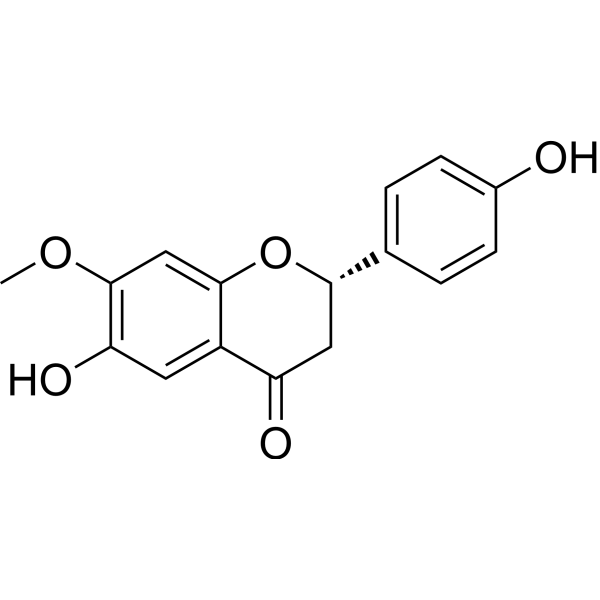
    6,4'-Dihydroxy-7-methoxyflavanone, a flavonoid, is a nature product that could be isolated from Heartwood Dalbergia odorifera. 6,4'-Dihydroxy-7-methoxyflavanone inhibits receptor activators of nuclear factor kappa-B ligand (RANKL) induced osteoclastogenesis. 6,4'-Dihydroxy-7-methoxyflavanone has antioxidant, anti-inflammatory and neuroprotective effects. 6,4'-Dihydroxy-7-methoxyflavanone can be used in research of osteoporosis .
    6,4'-Dihydroxy-7-methoxyflavanone
  • HY-153675

    PIN1 Metabolic Disease
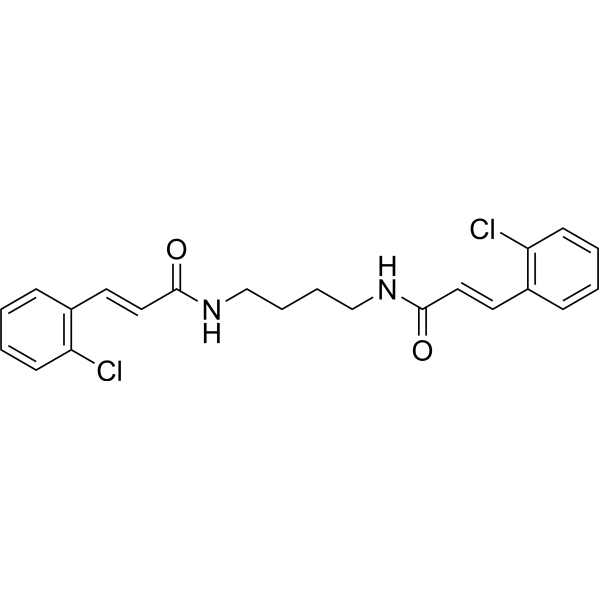
    BCPA is a Pin1 regulator without cytotoxicity. BCPA attenuates the reduction of Pin1 protein to inhibit receptor activator of RANKL-induced osteoclastogenesis. BCPA regulates osteoclast activation, used to osteoporosis research .
    BCPA
  • HY-158311

    RANKL/RANK p38 MAPK NF-κB Endocrinology
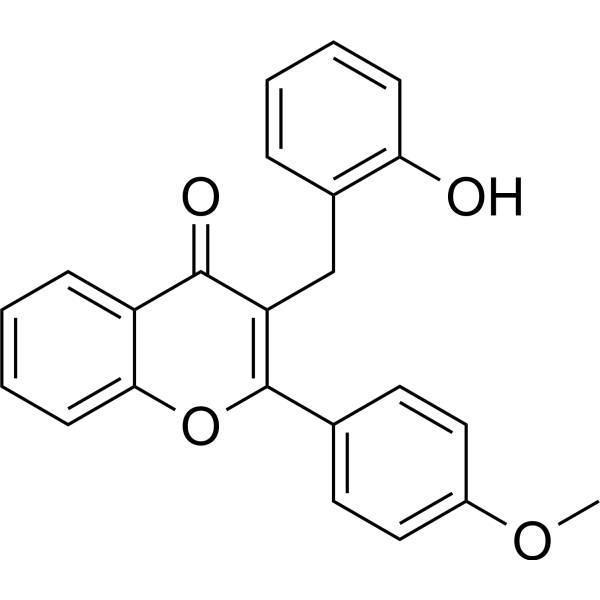
    Anti-osteoporosis agent-8 (Compound 4aa) is an inhibitor for RANKL, which inhibits RANKL-induced osteoclastogenesis and osteoclast differentiation (IC50 is 2.41 μM) in cells RAW264.7. Anti-osteoporosis agent-8 ameliorates bone loss in an ovariectomized (OVX) mice model .
    Anti-osteoporosis agent-8
  • HY-168090

    p38 MAPK NF-κB RANKL/RANK Endocrinology
    Anti-osteoporosis agent-11 (compound 3k) is an anti-osteoporosis compound targeting osteoclasts. Anti-osteoporosis agent-11 has the most significant inhibitory effect on osteoclast differentiation, with an IC50 value of 0.36 μM. In addition, Anti-osteoporosis agent-11 inhibits osteoclast formation, bone resorption, and the expression of osteoclast-specific genes by blocking rankl-induced mitogen-activated protein kinase (MAPK) and NF-κB signaling pathways .
    Anti-osteoporosis agent-11
  • HY-149472

    NF-κB PI3K Inflammation/Immunology
    Anti-osteoporosis agent-4 (Compound 11h) inhibits differentiation of primary osteoclasts. Anti-osteoporosis agent-4 attenuates RANKL-induced osteoclastogenesis. Anti-osteoporosis agent-4 inhibits osteoclast formation with an IC50 value of 358.29 nM. Anti-osteoporosis agent-4 inhibits PI3K/AKT and IκBα/NF-κB signaling pathway activation .
    Anti-osteoporosis agent-4
  • HY-161869

    Histone Methyltransferase Metabolic Disease
    LSD1-IN-32 (compound 11e) is a potent LSD1 inhibitor with an IC50 value of 0.99 µM. LSD1-IN-32 inhibits RANKL-induced osteoclastogenesis, bone resorption and F-actin belt formation. LSD1-IN-32 has the potential for the research of osteoporosis .
    LSD1-IN-32
  • HY-N12836

    Others Metabolic Disease
    Peniditerpenoid A is a di-seco-indole diterpenoid. Peniditerpenoid A decreases the expression of p-IkBαby RANKL induced. Peniditerpenoid A inhibits RANKL induced osteoclast differentiation. Peniditerpenoid A has the potential for the research of osteoporosis .
    Peniditerpenoid A
  • HY-158098

    FGFR Metabolic Disease
    FGFR1 inhibitor-11 (compound 5g) binds to FGFR1, inactivation of its downstream ERK1/2 and IκBα/NF-κB signaling inhibited RANKL-induced osteoclastogenesis. FGFR1 inhibitor-11 has oral bioactivity .
    FGFR1 inhibitor-11
  • HY-N0805AR

    Reference Standards Epoxide Hydrolase CaMK Autophagy Apoptosis Metabolic Disease Inflammation/Immunology Cancer
    Alisol B (Standard) is the analytical standard of Alisol B (HY-N0805A). This product is intended for research and analytical applications. Alisol B is a triterpene with diverse biological activities. Alisol B binds human soluble epoxide hydrolase (sEH) with a Ki of 5.97 μM and reduces sEH activity. Alisol B inhibits RANKL-induced JNK phosphorylation, NFATc1 and c-Fos expression, osteoclast formation, mature osteoclast pit-forming and actin ring activity, and SERCA pump activity. Alisol B induces calcium mobilization, CaMKK-AMPK-mTOR pathway activation, autophagic flux, autophagosome formation, G1 phase cell cycle arrest, endoplasmic reticulum stress, unfolded protein responses, and cancer cell apoptosis. Alisol B can be used for the research of hypercalcemia, osteoporosis, rheumatoid arthritis, periodontitis, acute kidney injury, and breast cancer.
    Alisol B (Standard)
  • HY-180112

    Keap1-Nrf2 Reactive Oxygen Species (ROS) PI3K Akt p38 MAPK Metabolic Disease
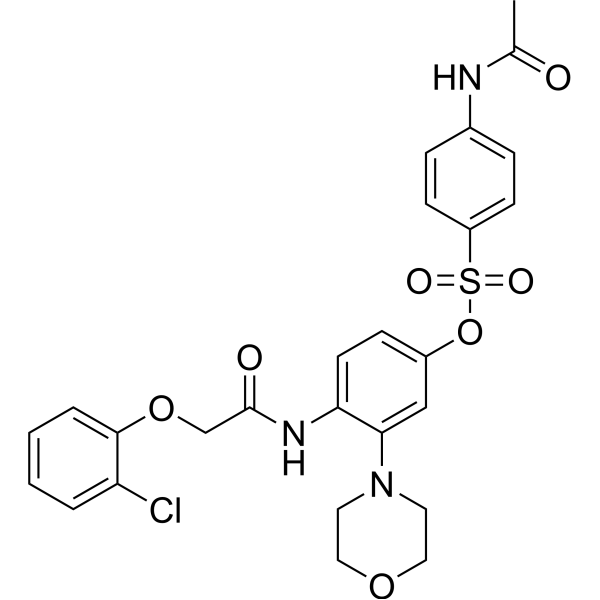
    SH543 is a potent anti-osteoporosis agent. SH543 inhibits nuclear factor κB ligand (RANKL)-induced osteoclastogenesis with an IC50 of 3.3 nM. SH543 directly binds to KEAP1, activates the Nrf2-HO-1 antioxidant pathway, reduces ROS levels, and inhibits PI3K-AKT and MAPK signaling pathways. SH543 attenuates pathological bone loss in ovariectomized mice. SH543 can be used for osteoporosis research .
    SH543
  • HY-178355

    Drug Derivative Metabolic Disease
    Anti-osteoporosis agent-12 (Compound 18) is an orally active pyrazole-fused betulinic acid derivative with potent anti-osteoporosis activity. Anti-osteoporosis agent-12 exhibits a strong inhibitory effect on RANKL-induced osteoclastogenesis in RAW264.7 cells, with an IC50 of 7.96 nM. Anti-osteoporosis agent-12 can dose-dependently improve key micro-CT parameters of bone, reduce the level of serum bone resorption marker (CTx), and effectively prevent ovariectomy-induced bone loss. Anti-osteoporosis agent can be used for the study of osteoporosis .
    Anti-osteoporosis agent-12
  • HY-W185542

    Wnt β-catenin Nuclear Factor of activated T Cells (NFAT) MMP RANKL/RANK Metabolic Disease
    E09241 is an orally active osteoclastogenesis inhibitor. E09241 reduces the RANKL-induced expression of NFATc1 and MMP-9 by activating Wnt/β-catenin. E09241 increases the OPG/RANKL ratio by upregulating OPG expression, inhibits bone resorption, promotes bone formation and prevents ovariectomy-related bone loss. E09241 can be used in the research of osteoporosis .
    E09241
  • HY-182818

    p38 MAPK Keap1-Nrf2 Reactive Oxygen Species (ROS) Metabolic Disease
    SH494 is a p38 MAPK inhibitor and Nrf2 pathway activator. SH494 inhibits RANKL-induced phosphorylation of p38 and disrupts the MAPK cascade associated with osteoclastogenesis. SH494 activates the Nrf2 pathway, upregulates downstream target genes and induces the expression of cytoprotective enzymes. SH494 reduces intracellular ROS accumulation and restores mitochondrial membrane potential (ΔΨm) to normal. SH494 decreases osteoclast activity and alleviates osteoporosis symptoms in ovariectomized mice. SH494 can be used for research on osteoporosis .
    SH494
  • HY-181079

    RANKL/RANK Reactive Oxygen Species (ROS) p38 MAPK NF-κB Metabolic Disease
    RANKL-IN-2 is an orally active RANKL inhibitor with Kd values of 3.21 μM and 4.625 μM in the SPR and MST assays, respectively. RANKL-IN-2 binds to RANKL to interfere with RANKL-RANK interaction. RANKL-IN-2 suppresses osteoclastogenesis by inhibiting ROS, MAPK and NF-κB pathways. RANKL-IN-2 inhibits osteoclastogenesis via inhibition of RANKL-induced osteoclast formation, bone resorption, and osteoclast-specific gene and protein expressions in vitro.RANKL-IN-2 prevents bone loss in ovariectomized osteoporosis mice.RANKL-IN-2 can be used for the research of osteoporosis .
    RANKL-IN-2
  • HY-182757

    RANKL/RANK Nuclear Factor of activated T Cells (NFAT) Cathepsin Metabolic Disease Inflammation/Immunology
    Y1693 is an orally active RANKL inhibitor with a Kd of 5.03 μM for hRANKL. Y1693 inhibits the activation of the downstream c-fos/NFATc1 signaling pathway by blocking its interaction with RANK. Y1693 significantly inhibits RANKL-induced osteoclast differentiation, F-actin ring formation and bone resorptive activity, while downregulating the mRNA and protein expressions of TRAP, cathepsin K, c-fos and NFATc1. Y1693 shows no obvious cytotoxicity to bone marrow-derived macrophages and osteoclast precursor cells, and exhibits favorable ADME properties. Y1693 improves ovariectomy-induced osteoporosis in mice and reverses ligation-induced periodontal alveolar bone loss. Y1693 is applicable to research related to osteoporosis and periodontal diseases .
    Y1693
  • HY-181887

    Keap1-Nrf2 NF-κB p38 MAPK Metabolic Disease
    Nrf2 activator-23 is an orally active Keap1 binder and Nrf2 activator, with KD values of 28.68 nM and 54.55 nM for Keap1 and its Kelch domain, respectively. Nrf2 activator-23 disrupts the Keap1-Nrf2 interaction, reduces ubiquitination and degradation of Nrf2, and activates the Nrf2 signaling pathway. Nrf2 activator-23 inhibits RANKL-induced osteoclast formation, bone resorptive activity, ROS production, and activation of the MAPK and NF-κB signaling pathways, while downregulating the expression of osteoclast-specific genes and proteins. Nrf2 activator-23 attenuates bone loss and reduces osteoclast formation in vivo without affecting osteoblast differentiation and mineralization. Nrf2 activator-23 can be used for the research of osteoporosis .
    Nrf2 activator-23
  • HY-N18265

    Others Metabolic Disease
    (4E,6E,12E)-3-Hydroxy-4,6,12-tetradecatriene-8,10-diyn-1-yl acetate is a polyacetylene found in rhizomes of Atractylodes chinensis. (4E,6E,12E)-3-Hydroxy-4,6,12-tetradecatriene-8,10-diyn-1-yl acetate inhibits RANKL-induced osteoclast differentiation. (4E,6E,12E)-3-Hydroxy-4,6,12-tetradecatriene-8,10-diyn-1-yl acetate can be used for the research of osteoporosis .
    (4E,6E,12E)-3-Hydroxy-4,6,12-tetradecatriene-8,10-diyn-1-yl acetate

Inquiry Online

Your information is safe with us. * Required Fields.

Salutation


Country or Region *

Applicant Name *


Organization Name *

Department *


Email Address *


Product Name *

Cat. No.


Requested quantity *

Phone Number *


Remarks

Inquiry Online

Inquiry Information

Product Name:
Cat. No.:
Quantity:
MCE Japan Authorized Agent: