



Galloylpaeoniflorin

Based on 1 Customer Validation
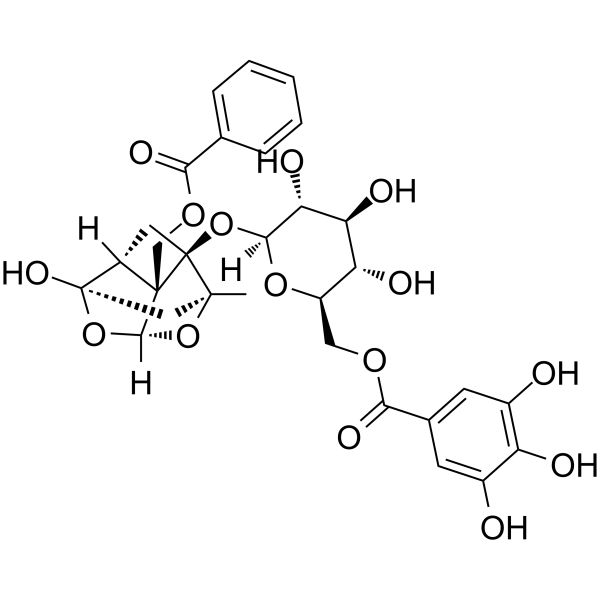
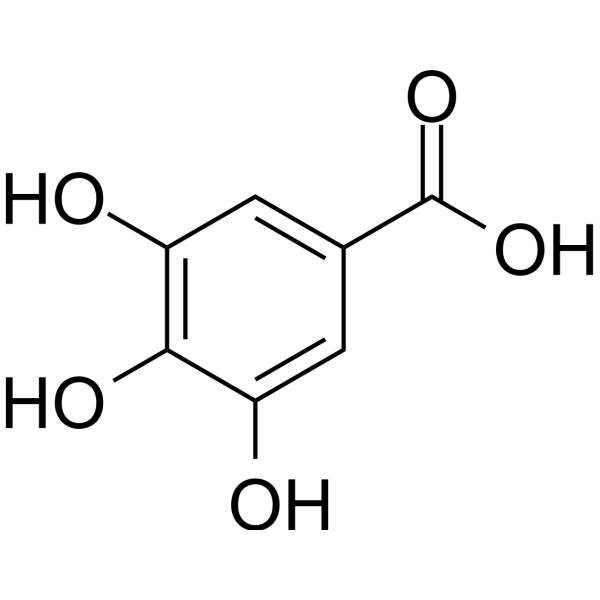
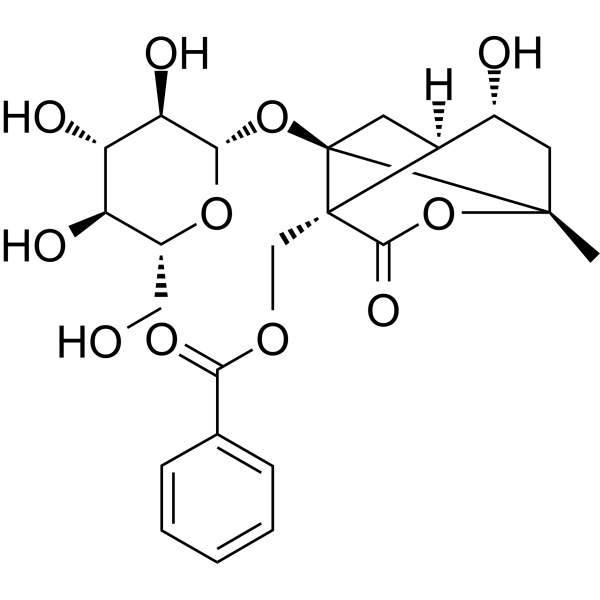
Galloylpaeoniflorin (6'-O-Galloyl paeoniflorin) is an orally active galloylated derivative of Paeoniflorin (HY-N0293) found in peony roots with various anti-inflammatory and antioxidant activities. Galloylpaeoniflorin suppresses RANKL-induced activation of ERK, JNK, c-Fos, c-Jun, and NFATc1, and reduces osteoclast-specific gene expression. Galloylpaeoniflorin activates Nrf2 and PI3K/Akt pathways, inhibits NF-κB activation, and scavenges ROS to reduce oxidative DNA, lipid, and protein damage. Galloylpaeoniflorin attenuates neuroinflammation, inhibits apoptosis, reduces Helicobacter pylori-induced gastric mucosa injury and UVB-induced cell damage. Galloylpaeoniflorin can be used for the research of osteoporosis, gastritis, ischemic stroke and skin diseases.
Nos produits utilisent uniquement pour la recherche. Nous ne vendons pas aux patients.
- Pureté : 98.30%
- CAS No.: 122965-41-7
- Formule: C30H32O15
- Masse moléculaire:632.57
-
Stockage:
4°C, sealed storage, away from moisture and light
* In solvent : -80°C, 6 months; -20°C, 1 month (sealed storage, away from moisture and light)

To place orders, for customer services and technical support, please contact: MedChemExpress USA
Tel: 609-228-6898 E-mail: [email protected] [email protected]


-
 Activité biologique
-
Chemical Information
-
Solvant et solubilité
- Protocole
- Pureté et documentation
- Références
-
 Help & FAQs


Voir tous les produits spécifiques à Isoform DNA/RNA Synthesis
More

Activité biologique
Description
In Vitro
Galloylpaeoniflorin (0-160 µM; 96 h) shows no significant cytotoxicity to primary murine bone marrow-derived macrophages/monocytes at concentrations up to 80 µM after 96 hours of incubation[1].
Galloylpaeoniflorin (10-40 µM; 1-7 days) dose-dependently inhibits RANKL-induced osteoclastogenesis in primary murine bone marrow-derived macrophages/monocytes[1].
Galloylpaeoniflorin (0-40 µM; 5 days) dose-dependently suppresses the expression of osteoclast-specific genes (c-Fos, NFATc1, Acp5) in primary murine bone marrow-derived macrophages/monocytes stimulated with RANKL[1].
Galloylpaeoniflorin (10-40 µM) dose-dependently inhibits podosome belt formation, reduces cell size, and decreases multinucleation in primary murine bone marrow-derived macrophages/monocytes differentiated into osteoclasts with RANKL[1].
Galloylpaeoniflorin (10-40 µM) dose-dependently inhibits the bone resorptive function of mature osteoclasts derived from primary murine bone marrow-derived macrophages/monocytes[1].
Galloylpaeoniflorin (10-40 µM) dose-dependently scavenges RANKL-induced intracellular ROS in primary murine bone marrow-derived macrophages/monocytes[1].
Galloylpaeoniflorin (40 µM; 2 h) suppresses RANKL-induced activation of ERK and JNK MAPK pathways, as well as downstream c-Fos and NFATc1 protein expression, in primary murine bone marrow-derived macrophages/monocytes, with no effect on p38 or NF-κB pathways[1].
Galloylpaeoniflorin (20-100 μg/mL; 8-24 h) up to 60 μg/mL has no cytotoxic effect on uninfected GES-1 human gastric epithelial cells after 8, 16, or 24 h of treatment, while concentrations of 80 and 100 μg/mL induce concentration-dependent cytotoxicity[2].
Galloylpaeoniflorin (60 μg/mL; 8-24 h) significantly increases the viability of H. pylori-infected GES-1 human gastric epithelial cells[2].
Galloylpaeoniflorin (60 μg/mL; 24 h) significantly inhibits H. pylori-induced early and late apoptosis in GES-1 human gastric epithelial cells[2].
Galloylpaeoniflorin (60 μg/mL; 24 h) significantly reduces ROS, MDA production and increases SOD activity in H. pylori-infected GES-1 human gastric epithelial cells[2].
Galloylpaeoniflorin (60 μg/mL; 24 h) significantly reduces mRNA and protein expression of pro-inflammatory cytokines COX2, TNF-α, and IL-6, and significantly increases mRNA and protein expression of antioxidant genes HMOX1, NQO1 and MUC1 in H. pylori-infected GES-1 human gastric epithelial cells[2].
Galloylpaeoniflorin (60 μg/mL; 24 h) significantly inhibits adhesion of H. pylori to GES-1 human gastric epithelial cells[2].
Galloylpaeoniflorin (60 μg/mL; 24 h) significantly increases Nrf2 mRNA and protein expression in H. pylori-infected GES-1 human gastric epithelial cells[2].
Galloylpaeoniflorin (20 μM; 1 h pre-incubation before UVB exposure, 24 h incubation after UVB exposure) significantly scavenges UVB-induced intracellular ROS in human HaCaT keratinocytes[5].
Galloylpaeoniflorin (20 μM; 1 h pre-incubation before UVB exposure, 2 h incubation after UVB exposure) attenuates UVB-induced DNA strand breaks in human HaCaT keratinocytes[5].
Galloylpaeoniflorin (20 μM; 1 h pre-incubation before UVB exposure, 24 h incubation after UVB exposure) attenuates UVB-induced lipid peroxidation and protein carbonylation in human HaCaT keratinocytes[5].
Galloylpaeoniflorin (20 μM; 1 h pre-incubation before UVB exposure, 24 h incubation after UVB exposure) protects human HaCaT keratinocytes against UVB-induced cell death, increasing cell viability from 46% to 55%[5].
Galloylpaeoniflorin (20 μM; 1 h pre-incubation before UVB exposure, 24 h incubation after UVB exposure) reduces UVB-induced apoptosis in human HaCaT keratinocytes[5].
Galloylpaeoniflorin (20 μM; 1 h pre-incubation before UVB exposure, 24 h incubation after UVB exposure) reduces UVB-induced apoptotic sub-G1 hypodiploid cells in human HaCaT keratinocytes, lowering the sub-G1 population from 35% to 26%[5].
Galloylpaeoniflorin (20 μM; 1 h pre-incubation before UVB exposure) inhibits the mitochondrial apoptotic pathway in UVB-exposed human HaCaT keratinocytes by reducing cleaved caspase 9, cleaved caspase 3, and cleaved PARP levels, and restoring Bcl-2/Bax protein balance[5].
MedChemExpress (MCE) has not independently confirmed the accuracy of these methods. They are for reference only.
-
Cell Line:human gastric epithelial immortalized (GES-1) cells (uninfected with H. pylori)
-
Concentration:20, 40, 60, 80,100 μg/mL
-
Incubation Time:8 h; 16 h; 24 h
-
Result:Had no effect on GES-1 cell viability at 20, 40, 60 μg/mL after 8, 16, or 24 h of treatment.
Caused a significant reduction in cell viability at 80 μg/mL after 8, 16, and 24 h.
Caused a highly significant reduction in cell viability at 100 μg/mL after 8, 16, and 24 h.
-
Cell Line:H. pylori-infected human gastric epithelial immortalized (GES-1) cells
-
Concentration:60 μg/mL
-
Incubation Time:8 h; 16 h; 24 h
-
Result:Restored cell viability of H.
pylori-infected GES-1 cells, with significant increases observed at 8 h, 16 h, and 24 h compared to infected, untreated cells.
-
Cell Line:H. pylori-infected human gastric epithelial immortalized (GES-1) cells
-
Concentration:60 μg/mL
-
Incubation Time:24 h pre-treatment, followed by 8 h H. pylori co-culture
-
Result:Significantly reduced the percentage of early apoptotic cells and late apoptotic cells compared to infected, untreated cells.
-
Cell Line:H. pylori-infected human gastric epithelial immortalized (GES-1) cells
-
Concentration:60 μg/mL
-
Incubation Time:24 h pre-treatment, followed by H. pylori infection
-
Result:Significantly inhibited mRNA expression of COX2, TNF-α, and IL-6 compared to infected, untreated cells.
Significantly increased mRNA expression of HMOX1 and NQO1 compared to infected, untreated cells.\nSignificantly increased mRNA expression of MUC1 in H.
pylori-infected GES-1 cells.
Had no effect on MUC5AC mRNA expression in H.
pylori-infected GES-1 cells.
-
Cell Line:H. pylori-infected human gastric epithelial immortalized (GES-1) cells
-
Concentration:60 μg/mL
-
Incubation Time:24 h pre-treatment, followed by H. pylori infection
-
Result:Inhibited protein expression of pro-inflammatory markers COX2, IL-6, and TNF-α compared to infected, untreated cells.
Increased protein expression of antioxidant markers HMOX1 and NQO1 compared to infected, untreated cells.
-
Cell Line:human HaCaT keratinocytes
-
Concentration:20 μM
-
Incubation Time:1 h (pre-incubation before UVB exposure); 24 h (incubation after UVB exposure before analysis)
-
Result:Increased cell viability from 46% (UVB alone) to 55% (GPF + UVB).
Did not affect cell viability relative to control cells when used alone.
-
Cell Line:primary murine bone marrow-derived macrophages/monocytes
-
Concentration:5, 10, 20, 40, 80, 160 µM
-
Incubation Time:96 h
-
Result:Showed no significant cytotoxicity at 5- 80 µM.
Slightly reduced cell viability at 160 µM.
-
Cell Line:human HaCaT keratinocytes
-
Concentration:20 μM
-
Incubation Time:1 h (pre-incubation before UVB exposure)
-
Result:Decreased UVB-induced levels of cleaved caspase 9, cleaved caspase 3, and cleaved poly ADP-ribosyl polymerase (PARP).
Reversed UVB-induced downregulation of anti-apoptotic Bcl-2 protein and upregulation of pro-apoptotic Bax protein.
-
Cell Line:primary murine bone marrow-derived macrophages/monocytes
-
Concentration:40 µM
-
Incubation Time:2 h
-
Result:Reduced p-ERK, p-JNK expression.
Rduced c-Fos and NFATc1 protein expression.
Had no effect on p38 or NF-κB pathways.
In Vivo
Galloylpaeoniflorin (5 mg/kg; i.g.; once daily; 2 weeks pretreatment) attenuates H. pylori-induced chronic gastritis in male C57BL/6 mice by reducing gastric mucosal inflammation, enhancing antioxidant responses, and activating Nrf2 signaling[2].
Galloylpaeoniflorin (2.5-10 mg/kg; i.p.; daily; 14 days) exerts dose-dependent neuroprotective effects against CIRI in male Wistar rats by reducing infarct volume, improving neurological function, mitigating oxidative stress, suppressing inflammation, and reducing neuronal apoptosis, via activation of the PI3K/Akt/Nrf2 pathway[3].
MedChemExpress (MCE) has not independently confirmed the accuracy of these methods. They are for reference only.
-
Animal Model:C57BL/6J (female, 11 weeks old, 19.5 g, bilateral ovariectomy-induced osteoporosis)[1]
-
Dosage:10 mg/kg
-
Administration:i.p.; every 2 days; 6 weeks
-
Result:Increased bone volume/tissue volume (BV/TV), trabecular number (Tb.
N), trabecular thickness (Tb.
Th), connectivity density (Conn.
Dn), and bone surface (BS) compared to ovariectomized controls.
Decreased trabecular separation (Tb.
Sp) compared to ovariectomized controls.
Significantly reduced the number of TRAP-positive osteoclasts per bone surface compared to ovariectomized controls.
-
Animal Model:C57BL/6 with H. pylori infection (male, 6-8 weeks old)[2]
-
Dosage:5 mg/kg
-
Administration:p.o.; once daily; 2 weeks pretreatment
-
Result:Alleviated H.
pylori-induced inflammatory cell infiltration in gastric mucosa and submucosa.
Reduced relative optical density of gastric tissue inflammatory markers COX2 and IL6.
Increased relative optical density of gastric tissue antioxidant markers HMOX1 and NQO1.
Repressed H.
pylori-induced upregulation of COX2, TNF-α, and IL6 mRNA expression in gastric mucosa.
Enhanced H.
pylori-induced upregulation of HMOX1 and NQO1 mRNA expression in gastric mucosa.
Repressed H.
pylori-induced upregulation of COX2, IL6, and TNF-α protein expression in gastric mucosa.
Enhanced H.
pylori-induced upregulation of HMOX1, NQO1, and Nrf2 protein expression in gastric mucosa.
Increased relative optical density of Nrf2 in gastric tissue.
-
Animal Model:Wistar with CIRI (male, 7-8 months old, 270 g)[3]
-
Dosage:2.5 mg/kg; 5 mg/kg; 10 mg/kg
-
Administration:i.p.; daily; 14 days
-
Result:Reduced infarct volume by a statistically significant amount compared to untreated CIRI rats.
Reduced neurological score compared to untreated CIRI rats.
Decreased brain malondialdehyde (MDA) levels and increased superoxide dismutase (SOD), glutathione peroxidase (GSH-Px), and glutathione (GSH) levels compared to untreated CIRI rats.
Reduced the percentage of Iba1-, p-p38 MAPK-, and p-JNK-positive cells, and reduced IL-1β and TNF-α mRNA expression compared to untreated CIRI rats.
Reduced the percentage of TUNEL-positive cells and caspase-3 activity compared to untreated CIRI rats.
Increased nuclear Nrf2 and heme oxygenase 1 (HO-1) protein expression compared to untreated CIRI rats.
Reduced infarct volume to a greater statistically significant extent compared to untreated CIRI rats.
Reduced neurological score to a greater extent compared to untreated CIRI rats.
Further decreased brain MDA levels and further increased SOD, GSH-Px, and GSH levels compared to untreated CIRI rats.
Further reduced the percentage of Iba1-, p-p38 MAPK-, and p-JNK-positive cells, and further reduced IL-1β and TNF-α mRNA expression compared to untreated CIRI rats.
Further reduced the percentage of TUNEL-positive cells and caspase-3 activity compared to untreated CIRI rats.
Further increased nuclear Nrf2 and HO-1 protein expression compared to untreated CIRI rats.
Reduced infarct volume to the greatest statistically significant extent compared to untreated CIRI rats.
Reduced neurological score to the greatest extent compared to untreated CIRI rats.
Achieved the greatest reduction in brain MDA levels and greatest increases in SOD, GSH-Px, and GSH levels compared to untreated CIRI rats.
Achieved the greatest reduction in the percentage of Iba1-, p-p38 MAPK-, and p-JNK-positive cells, and greatest reduction in IL-1β and TNF-α mRNA expression compared to untreated CIRI rats.
Achieved the greatest reduction in the percentage of TUNEL-positive cells and caspase-3 activity compared to untreated CIRI rats.
Achieved the greatest increases in nuclear Nrf2 and HO-1 protein expression compared to untreated CIRI rats.
Attenuated all protective effects when rats were pretreated with Ly294002 (HY-10108).
- RT-PCR
- RNA extraction experimental
- Detection of Apoptosis
- TUNEL staining for apoptotic DNA fragmentation
- Annexin V plus membrane-impermeant dye apoptosis staining
- ROS/oxidative-stress fluorescent staining
- Apoptosis Solutions
- Research Protocol for Inflammation-related Diseases
- Research Protocol for Neurological Diseases
- Real Time qPCR (Q-PCR)
- Osteoclast differentiation from monocyte/macrophage precursors


Chemical Information
-
CAS No. 122965-41-7
-
Appearance Solid
-
Masse moléculaire 632.57
-
Formule C30H32O15
-
Color White to off-white
-
SMILES
O=C(C1=CC=CC=C1)OC[C@@]23[C@]4([C@]5(O[C@]2([H])O[C@@]([C@]3([H])C4)(C5)O)C)O[C@]6([H])O[C@@H]([C@H]([C@@H]([C@H]6O)O)O)COC(C7=CC(O)=C(C(O)=C7)O)=O
-
Synonyms
6'-O-Galloyl paeoniflorin
-
Structure Classification
-
Initial Source
-
Livraison
Room temperature in continental US; may vary elsewhere.
-
Stockage
4°C, sealed storage, away from moisture and light
* In solvent : -80°C, 6 months; -20°C, 1 month (sealed storage, away from moisture and light)


Solvant et solubilité
In Vitro:
DMSO : 100 mg/mL (158.09 mM; Need ultrasonic; Hygroscopic DMSO has a significant impact on the solubility of product, please use newly opened DMSO)
Please refer to the solubility information to select the appropriate solvent. Once prepared, please aliquot and store the solution to prevent product inactivation from repeated freeze-thaw cycles.
Storage method and period of stock solution: -80°C, 6 months; -20°C, 1 month (sealed storage, away from moisture and light). When stored at -80°C, please use it within 6 months. When stored at -20°C, please use it within 1 month.
Please refer to the solubility information to select the appropriate solvent. Once prepared, please aliquot and store the solution to prevent product inactivation from repeated freeze-thaw cycles.
Storage method and period of stock solution: -80°C, 6 months; -20°C, 1 month (sealed storage, away from moisture and light). When stored at -80°C, please use it within 6 months. When stored at -20°C, please use it within 1 month.
Concentration (start) × Volume (start) = Concentration (final) × Volume (final)
In Vivo:
Select the appropriate dissolution method based on your experimental animal and administration route.
- For the following dissolution methods, please ensure to first prepare a clear stock solution using an In Vitro approach and then sequentially add co-solvents:
- To ensure reliable experimental results, the clarified stock solution can be appropriately stored based on storage conditions. As for the working solution for In Vivo experiments, it is recommended to prepare freshly and use it on the same day.
- The percentages shown for the solvents indicate their volumetric ratio in the final prepared solution. If precipitation or phase separation occurs during preparation, heat and/or sonication can be used to aid dissolution.
Add each solvent one by one: 10% DMSO 40% PEG300 5% Tween-80 45% Saline
Solubility: ≥ 2.5 mg/mL (3.95 mM); Clear solution
This protocol yields a clear solution of ≥ 2.5 mg/mL (saturation unknown).
Taking 1 mL working solution as an example, add 100 μL DMSO stock solution (25.0 mg/mL) to 400 μL PEG300, and mix evenly; then add 50 μL Tween-80 and mix evenly; then add 450 μL Saline to adjust the volume to 1 mL.
Preparation of Saline: Dissolve 0.9 g sodium chloride in ddH₂O and dilute to 100 mL to obtain a clear Saline solution.
Add each solvent one by one: 10% DMSO 90% (20% SBE-β-CD in Saline)
Solubility: ≥ 2.5 mg/mL (3.95 mM); Clear solution
This protocol yields a clear solution of ≥ 2.5 mg/mL (saturation unknown).
Taking 1 mL working solution as an example, add 100 μL DMSO stock solution (25.0 mg/mL) to 900 μL 20% SBE-β-CD in Saline, and mix evenly.
Preparation of 20% SBE-β-CD in Saline (4°C, storage for one week): 2 g SBE-β-CD powder is dissolved in 10 mL Saline, completely dissolve until clear.
In Vivo Dissolution Calculator
Please enter the basic information of animal experiments:
-
-
-
-
Recommended: Prepare an additional quantity of animals to account for potential losses during experiments.
Please enter your animal formula composition:
-
%DMSO +
Recommended: Keep the proportion of DMSO in working solution below 2% if your animal is weak.
-
%+
-
+%Tween-80 + +
-
%Saline +
The co-solvents required include: DMSO, . All of co-solvents are available by MedChemExpress (MCE). , Tween 80. All of co-solvents are available by MedChemExpress (MCE).
Working solution concentration: 0.22 mg/mL
Method for preparing stock solution: mg drug dissolved in μL DMSO. Stock solution concentration: mg/mL. * In solvent : -80°C, 6 months; -20°C, 1 month (sealed storage, away from moisture and light)
1. Take μL DMSO stock solution;
2. Add μL .
μL , mix evenly;
3. Then add μL Tween 80, mix evenly;
4. Then add μL
Please ensure that the stock solution in the first step is dissolved to a clear state, and add co-solvents in sequence. You can use ultrasonic heating (ultrasonic cleaner, recommended frequency 20-40 kHz), vortexing, etc. to assist dissolution.


Pureté et documentation
-
Fiche technique (303 KB)
-
SDS (252 KB)
- English - EN (252 KB)
- Français - FR (252 KB)
- Deutsch - DE (252 KB)
- Norwegian - NO (252 KB)
- Español - ES (252 KB)
- Swedish - SV (252 KB)
- Italian - IT (252 KB)
- Korean - KR (252 KB)
- Portuguese - PT (252 KB)
-
Instruction de manipulation (2659 KB)
Références
[1]. Liu W, et al. 6′-O-Galloylpaeoniflorin Attenuates Osteoclasto-genesis and Relieves Ovariectomy-Induced Osteoporosis by Inhibiting Reactive Oxygen Species and MAPKs/c-Fos/NFATc1 Signaling Pathway[J]. Frontiers in Pharmacology, 2021, 12: 641277. [Content Brief]
[2]. Zhang Y, et al. 6'-O-Galloylpaeoniflorin attenuates Helicobacter pylori-associated gastritis via modulating Nrf2 pathway. Int Immunopharmacol. 2022;111:109122. [Content Brief]
[3]. Wen Z, et al. 6'-O-Galloylpaeoniflorin Attenuates Cerebral Ischemia Reperfusion-Induced Neuroinflammation and Oxidative Stress via PI3K/Akt/Nrf2 Activation. Oxid Med Cell Longev. 2018;2018:8678267. Published 2018 Mar 25. [Content Brief]
[4]. Lu Y, et al. The Screening Research of NF-κB Inhibitors from Moutan Cortex Based on Bioactivity-Integrated UPLC-Q/TOF-MS. Evid Based Complement Alternat Med. 2019;2019:6150357. Published 2019 Mar 3. [Content Brief]
[5]. Yao CW, et al. Cytoprotective effects of 6'-O-galloylpaeoniflorin against ultraviolet B radiation-induced cell damage in human keratinocytes. In Vitro Cell Dev Biol Anim. 2014;50(7):664-674. [Content Brief]


Complete Stock Solution Preparation Table
Please refer to the solubility information to select the appropriate solvent. Once prepared, please aliquot and store the solution to prevent product inactivation from repeated freeze-thaw cycles.
Storage method and period of stock solution: -80°C, 6 months; -20°C, 1 month (sealed storage, away from moisture and light). When stored at -80°C, please use it within 6 months. When stored at -20°C, please use it within 1 month.
| Optional Solvent | Concentration Solvent Mass | 1 mg | 5 mg | 10 mg | 25 mg |
|---|---|---|---|---|---|
| DMSO | 1 mM | 1.5809 mL | 7.9043 mL | 15.8085 mL | 39.5213 mL |
| 5 mM | 0.3162 mL | 1.5809 mL | 3.1617 mL | 7.9043 mL | |
| 10 mM | 0.1581 mL | 0.7904 mL | 1.5809 mL | 3.9521 mL | |
| 15 mM | 0.1054 mL | 0.5270 mL | 1.0539 mL | 2.6348 mL | |
| 20 mM | 0.0790 mL | 0.3952 mL | 0.7904 mL | 1.9761 mL | |
| 25 mM | 0.0632 mL | 0.3162 mL | 0.6323 mL | 1.5809 mL | |
| 30 mM | 0.0527 mL | 0.2635 mL | 0.5270 mL | 1.3174 mL | |
| 40 mM | 0.0395 mL | 0.1976 mL | 0.3952 mL | 0.9880 mL | |
| 50 mM | 0.0316 mL | 0.1581 mL | 0.3162 mL | 0.7904 mL | |
| 60 mM | 0.0263 mL | 0.1317 mL | 0.2635 mL | 0.6587 mL | |
| 80 mM | 0.0198 mL | 0.0988 mL | 0.1976 mL | 0.4940 mL | |
| 100 mM | 0.0158 mL | 0.0790 mL | 0.1581 mL | 0.3952 mL |


Galloylpaeoniflorin Related Classifications
HY-N5048 Related Classifications
 Powered by Bioz
Keywords
- Galloylpaeoniflorin
- 122965-41-7
- 6'-O-Galloyl paeoniflorin
- NF-κB
- ERK
- JNK
- Nuclear Factor of activated T Cells (NFAT)
- Keap1-Nrf2
- PI3K
- Akt
- Reactive Oxygen Species (ROS)
- Apoptosis
- DNA/RNA Synthesis
- NFATc1
- Nrf2
- Helicobacter pylori
- primary murine bone marrow-derived macrophages/monocytes
- ROS
- GES-1 human gastric epithelial cells
- osteoclastogenesis
- RANKL
- Inhibitor
- inhibitor
- inhibit