



Isobavachin
Based on 6 publication(s) in Google Scholar
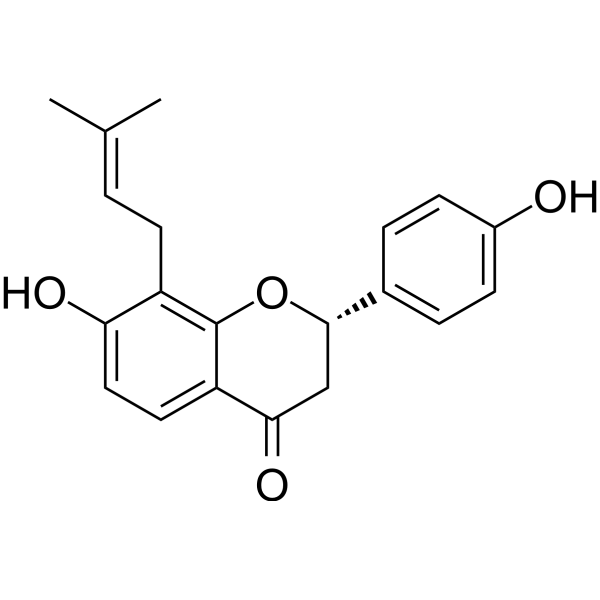
Isobavachin is an orally active, blood-brain barrier-penetrating prenylated flavonoid present in Psoralea corylifolia. Isobavachin inhibits human CYP2B6, CYP2C9, CYP2C19, UGT1A1, UGT1A9, and UGT2B7. Isobavachin suppresses MAPK activation, NF-κB nuclear translocation, overexpression of iNOS/COX-2, FcεRI-mediated signaling pathways, and RANKL-induced osteoclastogenesis. Isobavachin induces autophagy, cytotoxicity, neuronal differentiation, and NRF2 activation; it alleviates oxidative damage, inflammatory responses, apoptosis, iron accumulation, mitochondrial biogenesis, and mast cell degranulation. Isobavachin is applicable to research related to liver injury, inflammatory diseases, osteoporosis, liver cancer, prostate cancer, glioma, periodontitis-induced bone loss, and Alzheimer's disease.
For research use only. We do not sell to patients.
- Purity : 99.88%
- CAS No.: 31524-62-6
- Formula: C20H20O4
- Molecular Weight:324.37
-
Storage:
4°C, protect from light
* In solvent : -80°C, 6 months; -20°C, 1 month (protect from light)

To place orders, for customer services and technical support, please contact: MedChemExpress USA
Tel: 609-228-6898 E-mail: [email protected] [email protected]


-
 Biological Activity
-
Chemical Information
-
Solvent & Solubility
- Protocols
- Purity & Documentation
- References
-
 Help & FAQs


Publications Citing Use of MedChemExpress (MCE) Isobavachin
More Customer Validation & Images

-
Cell Proliferation/Viability Assay

-
IF

-
RT-PCR

-
WB
-
Histological Imaging/Staining


Biological Activity
Description
|
p38 MAPK |
NF-κB |
COX-2 |
iNOS |
CYP2B6 |
CYP2C19 |
CYP2C9 |
Cellular Effect
|
Cell Line

|
Type | Value | Description | References |
|---|---|---|---|---|
| Raji | IC50 |
225 molar ratio
Compound: 10
|
Inhibition of TPA-induced EBV-early antigen activation in human Raji cells
Inhibition of TPA-induced EBV-early antigen activation in human Raji cells
|
[PMID: 16441065] |
| RAW264.7 | IC50 |
47 μM
Compound: 17
|
Antiinflammatory activity in mouse RAW264.7 cells assessed as inhibition of LPS-stimulated nitric oxide production after 24 hrs by Griess method
Antiinflammatory activity in mouse RAW264.7 cells assessed as inhibition of LPS-stimulated nitric oxide production after 24 hrs by Griess method
|
[PMID: 26073007] |
In Vitro
Isobavachin (100 nmol/L; from EB stage day 4 to day 8+10) promotes the differentiation of mouse embryonic stem (D3 line) cells into neurons and astrocytes via a mechanism involving protein prenylation, ERK phosphorylation activation, and down-regulation of p38 and JNK phosphorylation[1].
Isobavachin (5-80 μM; 24 h) exerts dose-dependent cytotoxicity in AML12, HepG2, LO2, rat primary hepatocytes, and mouse primary hepatocytes with IC50 values of 35.20 μM, 19.96 μM, 20.74 μM, 55.84 μM, and 56.84 μM, respectively, and autophagy inhibition attenuates this cytotoxicity[2].
Isobavachin (5-80 μM; 24 h) induces dose-dependent LDH leakage in AML12, HepG2, LO2, rat primary hepatocytes, and mouse primary hepatocytes[2].
Isobavachin (20-44 μM; 24 h) dose-dependently elevated autophagosomes, autolysosomes and autophagic vacuoles, enhanced autophagic flux, caused progressive mitochondrial damage and reduced intracellular ATP levels in AML12 cells. All these pro-autophagic effects verified by MDC fluorescence were attenuated by the AMPK inhibitor BAY-3827 (HY-112083)[2].
Isobavachin (20-44 μM; 24 h) upregulates autophagy in AML12 cells via activating the AMPK-ULK1 pathway and inhibiting the PI3K-Akt-mTOR pathway, as shown by altered autophagy-related and signaling protein expression, and these effects are reversed by autophagy or AMPK inhibition[2].
Isobavachin (ISO) binds with high affinity to purified PI3K and AKT proteins, with binding energies of -8.6 kcal/mol and -6.4 kcal/mol, respectively[3].
Isobavachin (IBC) (3.75-30 μM; 3 h pre-incubation, followed by 21 h LPS treatment) inhibits lipopolysaccharide-induced inflammatory responses in RAW264.7 murine macrophages via suppression of the MAPK and NF-κB signaling pathways[4].
Isobavachin (60 min) was metabolized via mono-oxidation and glucuronidation by human and mouse liver/intestine microsomes as well as recombinant CYP1A2/CYP2C19 and UGT isoforms. Oxidation generated metabolites M1-M3 (CLint: 5.53-93.97 μl/min per mg), while glucuronidation produced G1-G2 (CLint: 10.73-202.62 μl/min per mg), indicating higher efficiency of glucuronidation[5].
Isobavachin (1-100 μM; 60 min) potently inhibits recombinant human CYP2B6 (Ki = 1.93 μM), CYP2C9 (Ki = 0.22 μM), and CYP2C19 (Ki = 1.55 μM) with dose-dependent, isoform-specific inhibition modes[5].
Isobavachin (1-100 μM; 60 min) potently inhibits recombinant human UGT1A1 (Ki = 3.05 μM), UGT1A9 (Ki = 0.44 μM), and UGT2B7 (Ki = 0.05 μM) with dose-dependent, isoform-specific inhibition modes[5].
Isobavachin (10 μM; 60 min)'s mono-oxidation and glucuronidation in individual human liver microsomes are significantly correlated with the activity of CYP1A2, CYP2C19, UGT1A1, and UGT1A9[5].
Isobavachin (Iso) (1-10 μM; 1 h pre-incubation, 5-15 min Ag stimulation) concentration-dependently inhibits IgE/Ag-stimulated degranulation, eicosanoid production, and intracellular Ca2+ elevation in bone marrow-derived mast cells[6].
Isobavachin (1.3-5 μM) concentration-dependently suppresses IgE/Ag-induced inflammatory genes in mast cells, as well as LPS-triggered NO, related transcripts and NF-κB activation in RAW 264.7 and peritoneal macrophages[6].
Isobavachin (10 μM; 1 h pre-incubation, 15 min Ag stimulation) inhibits IgE/Ag-stimulated activation of proximal tyrosine kinases (Fyn, Lyn, Syk, Lck) and their downstream signaling pathways, including NF-κB, in bone marrow-derived mast cells[6].
Isobavachin (10 μM; 5 min-4 h incubation) increases SHP-1 phosphorylation in resting bone marrow-derived mast cells in a Fyn- and Lyn-dependent manner[6].
Isobavachin (10 μM; 1 h pre-incubation, 5 min-4 h Ag stimulation post-48 h SHP-1 siRNA transfection) has inhibitory effects on IgE/Ag-stimulated bone marrow-derived mast cell activation and signaling that are dependent on SHP-1[6].
Isobavachin (7.5-30 μM; days 1-3, days 3-5, days 5-7) inhibits RANKL-induced osteoclastogenesis in bone marrow-derived macrophages in a dose- and time-dependent manner, with an IC50 of 15 μM, and acts primarily during the early to middle stages of differentiation[7].
Isobavachin (15-30 μM; 96 h) downregulates the expression of key osteoclast marker genes and proteins in RANKL-stimulated bone marrow-derived macrophages[7].
Isobavachin (15-30 μM; 5 days) inhibits RANKL-induced F-actin ring formation in bone marrow-derived macrophages in vitro in a dose-dependent manner[7].
Isobavachin (15-30 μM; 7 days) inhibits osteoclast-mediated bone resorption and F-actin ring formation on bone slices in a dose-dependent manner[7].
Isobavachin alters the transcriptome of RANKL-induced osteoclasts, with significant enrichment of genes related to iron ion homeostasis, ROS metabolism, and the MAPK signaling pathway[7].
Isobavachin (15-30 μM; 48-96 h) reduces cellular iron accumulation in RANKL-induced osteoclasts (bone marrow-derived macrophages and RAW264.7 cells) by upregulating Fpn1 expression and downregulating Tfr1, Ftl1, and Fth1 expression to promote iron efflux[7].
Isobavachin (30 μM; 5 days) suppresses RANKL-induced osteoclastogenesis in RAW264.7 cells by upregulating Fpn1 expression, as demonstrated by partial reversal of IBA's effects with Fpn1 knockdown and enhanced effects with Fpn1 overexpression[7].
Isobavachin (30 μM; 0, 15, 30, 60 min) upregulates Fpn1 expression in RANKL-stimulated RAW264.7 cells by inhibiting the MAPK signaling pathway (P38, JNK, and ERK)[7].
Isobavachin (30 μM; 96 h) inhibits mitochondrial biogenesis and function in RANKL-induced bone marrow-derived macrophages, as evidenced by reduced mitochondrial gene expression, mitochondrial mass, mitochondrial DNA copy number, membrane potential, ROS production, and ATP levels[7].
Isobavachin binds potently and selectively to human recombinant ApoE4 (Kd = 0.54 μM) and human recombinant ApoE3 (Kd = 0.62 μM)[8].
Isobavachin (IBA) (7.5–30 μM) dose- and time-dependently suppressed RANKL-induced osteoclastogenesis in BMMs (IC50 = 15 μM), mainly acting at early-to-middle differentiation stages, and also inhibited osteoclast formation in RAW264.7 cells after 5-day treatment[9].
Isobavachin (15-30 μM) suppressed mRNA and protein levels of osteoclast markers, downregulated iron uptake/storage genes and proteins while upregulating iron efflux FPN1 in RANKL-stimulated BMMs after 96 h incubation. It also lessened total and ferrous iron accumulation in BMMs and RAW264.7 cells. Additionally, it dose-dependently inhibited F-actin ring formation (5 days) and osteoclast-mediated bone resorption (7 days) in BMMs[9].
Isobavachin (30 μM) suppressed RANKL-induced activation of p38, JNK and ERK MAPK pathways in RAW264.7 cells, thereby upregulating FPN1. Its inhibition of RANKL-triggered osteoclastogenesis was partially mediated by FPN1 upregulation and further strengthened by FPN1 overexpression[9].
MedChemExpress (MCE) has not independently confirmed the accuracy of these methods. They are for reference only.
-
Cell Line:mouse embryonic stem (D3 line) cells
-
Concentration:100 nmol/L
-
Incubation Time:from EB stage day 4 to day 8+10
-
Result:Elevated nestin expression in EBs at day 4 and day 8+0. Time-dependently upregulated neuronal β-tubulin III, astrocytic GFAP and axonal NEFM at day 8+5 and day 8+10, and increased neuron-like cell populations by day 8+10 relative to solvent control.
Suppressed p38 and JNK phosphorylation, while enhanced ERK phosphorylation during late neuronal differentiation.
GGTI-298 co-treatment abrogated the promotive effects on neurons and astrocytes.
-
Cell Line:HepG2, LO2, AML12, rat primary hepatocytes, mouse primary hepatocytes
-
Concentration:5, 10, 20, 30, 40, 50, 60, 70, 80 μM (AML12 cells)
0.625, 1.25, 2.5, 5, 10, 20, 40, 80 μM (HepG2 cells, LO2 cells)
30, 40, 50, 60, 70, 80 μM (Rat primary hepatocytes)
8, 16, 24, 32, 4, 48, 56, 64 μM (mouse primary hepatocytes) -
Incubation Time:24 h
-
Result:Exerted dose-dependent cytotoxicity in AML12, HepG2, LO2, rat primary hepatocytes, and mouse primary hepatocytes with IC50 values of 35.20 μM, 19.96 μM, 20.74 μM, 55.84 μM, and 56.84 μM, respectively, and autophagy inhibition attenuates this cytotoxicity.
-
Cell Line:AML12 cells
-
Concentration:20, 32, 44 μM (general); 32 μM (BAY-3827 (HY-112083) co-treatment)
-
Incubation Time:24 h (isobavachin treatment); 30 min (MDC staining incubation)
-
Result:Elevated MDC fluorescence intensity in a dose-dependent manner, rising by 223.12% at 32 μM and 353.82% at 44 μM relative to the control.
BAY-3827 pretreatment decreased the fluorescence intensity by 48.67% compared with the isobavachin-only group.
-
Cell Line:AML12 cells
-
Concentration:20, 32, 44 μM (general); 32 μM (BAY-3827 co-treatment)
-
Incubation Time:24 h (Ad-mCherry-GFP-LC3B transfection); 24 h (isobavachin treatment)
-
Result:Altered GFP and mCherry fluorescence in a dose-dependent manner to reflect elevated autophagic flux.
BAY-3827 pretreatment reversed such fluorescence changes and suppressed autophagic flux.
-
Cell Line:AML12 cells
-
Concentration:20, 32, 44 μM (general); 32 μM (3-MA (HY-19312) or BAY-3827 co-treatment)
-
Incubation Time:24 h (isobavachin treatment); overnight (primary antibody incubation)
-
Result:Caused dose-dependent increases in LC3II/I, Atg5, and Beclin-1 protein levels, and dose-dependent decreases in p62 protein levels.
Increased p-AMPK and p-ULK1 levels, and decreased p-PI3K, p-Akt, and p-mTOR levels.
Reversed isobavachin-induced changes after pretreatment with 3-MA: p62 levels increased, LC3II/I levels decreased, p-PI3K, p-Akt, and p-mTOR levels increased, and p-ULK1 levels decreased.
Reversed isobavachin-induced changes after pretreatment with BAY-3827: p62 levels increased, LC3II/I levels decreased, p-AMPK and p-ULK1 levels decreased, and p-mTOR levels increased.
-
Cell Line:murine macrophage RAW264.7 cells
-
Concentration:3.75, 7.5, 15, 30 μM
-
Incubation Time:3 h pre-incubation, followed by 21 h LPS treatment
-
Result:Downregulated LPS-induced iNOS and COX-2 mRNA and protein expression in a dose-dependent manner.
Suppressed LPS-induced secretion of TNF-α, IL-6, and IL-1β respectively, at 30 μM.
-
Cell Line:murine macrophage RAW264.7 cells
-
Concentration:3.75, 7.5, 15, 30 μM
-
Incubation Time:3 h pre-incubation, followed by 21 h LPS treatment
-
Result:Reduced LPS-induced NO and PGE2 production in a dose-dependent manner.
Inhibited LPS-induced phosphorylation of ERK, JNK, and p38 MAPK; reduced ERK, JNK, and p38 phosphorylation by 66.5%, 50.2%, and 67.8%, respectively, at 30 μM.
Inhibited LPS-induced phosphorylation and degradation of IκBα, and blocks NF-κB p65 translocation from the cytoplasm to the nucleus.
-
Cell Line:bone marrow-derived mast cells (BMMCs)
-
Concentration:1.3, 2.5, 5 μM
-
Incubation Time:1 h pre-incubation; 4 h Ag stimulation post-pre-incubation
-
Result:Reduced IgE/Ag-induced mRNA expression of TNF-α and IL-6 in a concentration-dependent manner.
-
Cell Line:bone marrow-derived mast cells (BMMCs)
-
Concentration:10 μM
-
Incubation Time:1 h pre-incubation; 15 min Ag stimulation post-pre-incubation
-
Result:Suppressed IgE/Ag-stimulated tyrosine phosphorylation of Fyn, Lyn, Syk, Lck, and LAT.
Reduced phosphorylation of active Lck (Y394) and downstream signaling molecules PLCγ1, AKT, p38, ERK1/2, and JNK.
Reduced IgE/Ag-stimulated phosphorylation of IKK and NF-κB p65.
Inhibited nuclear translocation of NF-κB p65.
-
Cell Line:bone marrow-derived mast cells (BMMCs)
-
Concentration:10 μM
-
Incubation Time:5 min, 10 min, 15 min, 30 min, 1 h, 2 h, 4 h incubation; 1 h incubation post-48 h Fyn/Lyn siRNA transfection
-
Result:Increased tyrosine phosphorylation of SHP-1 (including active site Y564) in resting BMMCs, with maximal phosphorylation observed at 30 min to 1 h.
Suppressed isobavachin-induced SHP-1 phosphorylation in BMMCs treated with Fyn or Lyn siRNA.
-
Cell Line:bone marrow-derived macrophages (BMMs)
-
Concentration:7.5, 15, 30 μM (5 days incubation); 30 μM (days 1-3 incubation); 30 μM (days 3-5 incubation); 30 μM (days 5-7 incubation)
-
Incubation Time:5 days, days 1-3, days 3-5, days 5-7
-
Result:Reduced the number and area of TRAP-positive multinucleated osteoclasts in a dose-dependent manner, with an IC50 of 15 μM.
Decreased osteoclast number and area significantly when administered at 30 μM during the early to middle stages (days 1-3 and days 3-5) of osteoclastogenesis.
Showed no significant effect on osteoclast number and area when administered at 30 μM during the late stage (days 5-7) of osteoclastogenesis.
-
Cell Line:RAW264.7 cells
-
Concentration:7.5, 15, 30 μM
-
Incubation Time:5 days
-
Result:Reduced the number and area of TRAP-positive multinucleated osteoclasts formed from RAW264.7 cells in a dose-dependent manner.
-
Cell Line:RAW264.7 cells
-
Concentration:30 μM
-
Incubation Time:0, 15, 30, 60 min
-
Result:Blocked RANKL-induced phosphorylation of P38, JNK, and ERK in RAW264.7 cells.
Alleviated the IBA-induced upregulation of Fpn1 protein expression via activation of the P38, JNK, or ERK pathways.
-
Cell Line:RANKL-stimulated mouse bone marrow-derived macrophages (BMMs)
-
Concentration:15, 30 μM
-
Incubation Time:96 h
-
Result:Markedly downregulated the mRNA expression of osteoclast-specific genes Trap, Ctsk, Mmp9, Atp6v0d2, and Nfatc1 upregulated by RANKL stimulation.\nReversed RANKL-induced upregulation of Tfr1, Ftl1, and Fth1 mRNA expression.
Strongly upregulated Fpn1 mRNA expression.
-
Cell Line:RANKL-stimulated mouse bone marrow-derived macrophages (BMMs)
-
Concentration:15, 30 μM
-
Incubation Time:96 h
-
Result:Conspicuously inhibited the protein expression levels of NFATc1, MMP9, and CTSK upregulated by RANKL stimulation.\nReversed RANKL-induced upregulation of TFR1, FTL1, and FTH1 protein expression.
Strongly upregulated FPN1 protein expression.
-
Cell Line:RANKL-stimulated mouse RAW264.7 cells
-
Concentration:30 μM
-
Incubation Time:pre-treated before RANKL stimulation; RANKL stimulation for 0, 15, 30, 60 min
-
Result:Blocked RANKL-induced activation of P38, JNK, and ERK MAPK pathways at 15, 30, and 60 min post-stimulation.
-
Cell Line:RANKL-stimulated mouse RAW264.7 cells treated with MAPK activators
-
Concentration:30 μM
-
Incubation Time:incubation with RANKL and MAPK activators
-
Result:Upregulated FPN1 expression, and this effect was alleviated by co-treatment with P38 activator DHC, JNK activator AN, or ERK activator PA.
In Vivo
Isobavachin (IBC) (1-10 μM; immersion; pre-treatment for 3 hours prior to LPS stimulation) potently suppresses LPS-induced inflammatory responses (NO, ROS, neutrophil levels) in zebrafish embryos without reducing survival at these doses[4].
Isobavachin (40 mg/kg; p.o.; single dose) undergoes extensive in vivo metabolism in healthy male KM mice, producing two glucuronide and three mono-oxidated metabolites, with glucuronidation as the dominant metabolic pathway[5].
Isobavachin (Iso) (10-20 mg/kg; p.o.; single dose; 1 h before Ag challenge) dose-dependently attenuates mast cell-mediated passive cutaneous anaphylaxis reactions in mice, with the 20 mg/kg dose showing potency comparable to 50 mg/kg fexofenadine (HY-B0801)[6].
Isobavachin (30 mg/kg; i.p.; once daily; 10 days) alleviates ligature-induced periodontitis-associated alveolar bone loss in C57BL/6 mice by reducing osteoclastogenesis[7].
Isobavachin (30 mg/kg; i.p.; daily; 10 days) significantly reduces alveolar bone loss by inhibiting osteoclastogenesis in a mouse model of ligature-induced periodontitis, with measurable improvements in bone morphometric parameters and reduced osteoclast activity markers[9].
MedChemExpress (MCE) has not independently confirmed the accuracy of these methods. They are for reference only.
-
Animal Model:C57BL/6 J (male, 6 weeks old, 20-25 g, acetaminophen-induced liver injury model)[3]
-
Dosage:10 mg/kg
-
Administration:p.o.; single dose; administered 30 min after acetaminophen exposure
-
Result:Significantly lowered serum ALT and AST, and restored liver color and morphology against acetaminophen-induced injury.
Mitigated hepatic necrosis, hydropic degeneration and inflammation, decreased TUNEL-positive hepatocytes, and normalized Ki67 expression as well as liver-to-body weight ratio.
Reduced TNF-α and IL-1β at protein and mRNA levels, relieved oxidative stress by decreasing MDA and recovering T-SOD and CAT activities.
Modulated the NRF2/KEAP1 pathway, downregulated CYP2E1 and APAP-CYS adducts, and activated PI3K/AKT signaling with elevated BCL2 expression.
-
Animal Model:Tg(mpx:eGFP) (7 hpf embryos; inflammation model via LPS challenge)[4]
-
Dosage:1 μM, 5 μM, 10 μM
-
Administration:immersion; pre-treatment for 3 hours prior to LPS stimulation
-
Result:Significantly suppressed LPS-induced NO production, ROS production, and neutrophil counts.
-
Animal Model:KM mice (male, SPF grade, 6-8-week-old)[5]
-
Dosage:40 mg/kg
-
Administration:p.o.; single dose
-
Result:Identified five metabolites of isobavachin in mouse serum, bile, urine, faeces, and liver: two glucuronides (G1: isobavachin-7-O-glucuronide; G2: isobavachin-4'-O-glucuronide) and three mono-oxidated products (M1, oxidized at the isopentenyl group; M2, oxidized at the B ring; M3, oxidized at the A ring).
Detected glucuronide metabolites as more abundant than mono-oxidated products across all collected biosamples.
-
Animal Model:ICR (male, 7 weeks old)[6]
-
Dosage:10 mg/kg; 20 mg/kg
-
Administration:p.o.; single dose; 1 h before Ag challenge
-
Result:Significantly reduced IgE/Ag-induced Evans blue dye extravasation and serum levels of leukotriene C4 (LTC4) and prostaglandin D2 (PGD2) compared to IgE/Ag alone.
Produced a greater, dose-dependent reduction in dye extravasation and serum LTC4 and PGD2 levels, with inhibitory potency comparable to 50 mg/kg fexofenadine (HY-B0801).
-
Animal Model:C57BL/6 (male, 7-8 weeks old, 22-24 g, ligature-induced periodontitis)[7]
-
Dosage:30 mg/kg
-
Administration:i.p.; once daily; 10 days
-
Result:Reduced CEJ-ABC distance from ~0.5 mm to ~0.35 mm.
Elevated BV/TV (5% to 15%) and Tb.N (0.7 /mm to 1.3 /mm), while lowered Tb.Sp (0.35 mm to 0.28 mm).
Decreased N.Oc/BS (11 /mm to 5 /mm) and Oc.S/BS (17% to 12%), and attenuated CTSK fluorescence intensity (100 to 60).
Enhanced fluorescence intensity of iron exporter FPN1 (100 to 130).
-
Animal Model:C57BL/6 (male, 7-8 weeks old, 22-24 g, ligature-induced periodontitis model)[9]
-
Dosage:30 mg/kg
-
Administration:i.p.; daily; 10 days
-
Result:Reduced CEJ-ABC distance from ~0.5 mm to ~0.35 mm.
Raised BV/TV from ~5% to ~15% and Tb.N from ~0.7 /mm to ~1.3 /mm, and decreased Tb.Sp from ~0.35 mm to ~0.28 mm.
Lowered N.Oc/BS (~11 /mm to ~5 /mm) and Oc.S/BS (~17% to ~12%), and reduced CTSK fluorescence intensity from ~100 to ~60.
Elevated FPN1 fluorescence intensity from ~100 to ~130.
- Mammalian live/dead viability and cytotoxicity staining
- Annexin V plus membrane-impermeant dye apoptosis staining
- ROS/oxidative-stress fluorescent staining
- Cell differentiation
- Research Protocol for Inflammation-related Diseases
- PC12 NGF-induced neuronal-like differentiation
- Liver Cancer Modeling
- Cell Viability Determination by MTT Colorimetric Assay
- Directly Induced Neuron Culture
- Alzheimer’s Disease Modeling
- PC12 NGF-Induced Neuronal Differentiation Culture
- Cytoplasmic-Nuclear Fractionated Protein Extraction
- iPSC/hPSC-Derived Neuron Differentiation Culture
- Detection of Apoptosis
- TUNEL staining for apoptotic DNA fragmentation
- Cell Cytotoxicity Assay
- SH-SY5Y Neuronal Differentiation Culture
- Human pluripotent stem cell neural induction and neuron differentiation
- Autophagy
- SH-SY5Y neuronal-like differentiation
- Apoptosis Solutions
- Lysosome and acidic-vesicle live-cell staining
- Macroautophagy Solutions
- Osteoclast differentiation from monocyte/macrophage precursors


Chemical Information
-
CAS No. 31524-62-6
-
Appearance Solid
-
Molecular Weight 324.37
-
Formula C20H20O4
-
Color White to light yellow
-
SMILES
O=C1C[C@@H](C2=CC=C(O)C=C2)OC3=C(C/C=C(C)\C)C(O)=CC=C13
-
Structure Classification
-
Initial Source
-
Shipping
Room temperature in continental US; may vary elsewhere.
-
Storage
4°C, protect from light
* In solvent : -80°C, 6 months; -20°C, 1 month (protect from light)


Publications (6)
-
Journal Impact Factor
-
Most Recent
-
J Ethnopharmacol
2022 Nov 15:298:115593. PMID: 35973629 -
Int J Mol Sci
Dual Targeting of HIF-1α and DLL4 by Isoxanthohumol Potentiates Immune Checkpoint Blockade. [Abstract]2026 Feb 5;27(3):1576. PMID: 41683994 -
Chem Biol Interact
Bavachinin, a main compound of Psoraleae Fructus, facilitates GSDMD-mediated pyroptosis and causes hepatotoxicity in mice. [Abstract]2024 Sep 1:400:111133. PMID: 38969277 -
Arch Biochem Biophys
Exosomes from isobavachin-modified bone marrow mesenchymal stem cells promote osteoblast proliferation and alleviate osteoporosis by targeting the miR-127-3p/KIF3B/Wnt/β-catenin pathway. [Abstract]2026 Mar:777:110713. PMID: 41443290
Isobavachin purchased from MedChemExpress. Usage Cited in: Arch Biochem Biophys. 2026 Mar:777:110713. [Abstract]
The viability of hBMSC after 48 h treatment with Isobavachin (IBA) at different concentrations (0, 5, 10, 20, 40, and 60 μM) was evaluated by CCK-8 assay.
Isobavachin purchased from MedChemExpress. Usage Cited in: Arch Biochem Biophys. 2026 Mar:777:110713. [Abstract]
Representative fluorescence images showing the internalization of PKH26- labeled exosomes into hFOB1.19 cells treated with Isobavachin (IBA) (40 μM).
Isobavachin purchased from MedChemExpress. Usage Cited in: Arch Biochem Biophys. 2026 Mar:777:110713. [Abstract]
The mRNA levels of RUNX2, BMP2, and ATF4 in hFOB1.19 cells were assessed by RT-qPCR treated with Isobavachin (IBA) (40 μM).
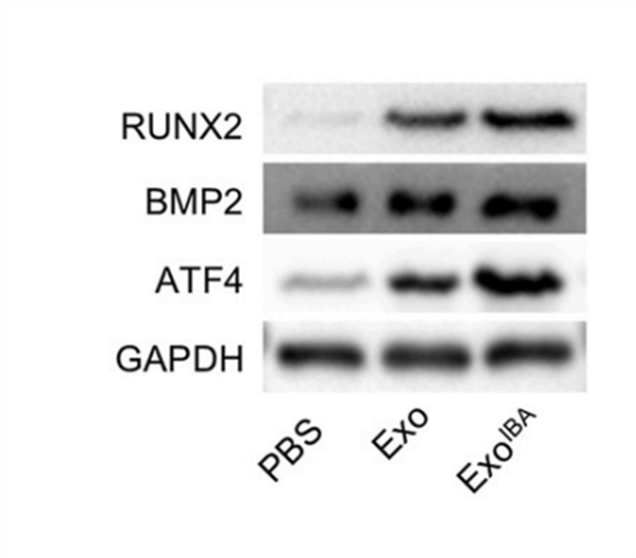
Isobavachin purchased from MedChemExpress. Usage Cited in: Arch Biochem Biophys. 2026 Mar:777:110713. [Abstract]
The protein levels of RUNX2, BMP2, and ATF4 in hFOB1.19 cells were assessed by western blotting treated with Isobavachin (IBA) (40 μM).
Isobavachin purchased from MedChemExpress. Usage Cited in: Arch Biochem Biophys. 2026 Mar:777:110713. [Abstract]
Representative H&E staining images showing the histopathological changes of the femur in rats treated with Isobavachin (IBA) (40 μM).
-
-
Front Med
Bavachin enhances NLRP3 inflammasome activation induced by ATP or nigericin and causes idiosyncratic hepatotoxicity. [Abstract]2021 Aug;15(4):594-607. PMID: 33909257


Solvent & Solubility
In Vitro:
DMSO : 100 mg/mL (308.29 mM; Need ultrasonic; Hygroscopic DMSO has a significant impact on the solubility of product, please use newly opened DMSO)
Please refer to the solubility information to select the appropriate solvent. Once prepared, please aliquot and store the solution to prevent product inactivation from repeated freeze-thaw cycles.
Storage method and period of stock solution: -80°C, 6 months; -20°C, 1 month (protect from light). When stored at -80°C, please use it within 6 months. When stored at -20°C, please use it within 1 month.
Please refer to the solubility information to select the appropriate solvent. Once prepared, please aliquot and store the solution to prevent product inactivation from repeated freeze-thaw cycles.
Storage method and period of stock solution: -80°C, 6 months; -20°C, 1 month (protect from light). When stored at -80°C, please use it within 6 months. When stored at -20°C, please use it within 1 month.
Concentration (start) × Volume (start) = Concentration (final) × Volume (final)
In Vivo:
Select the appropriate dissolution method based on your experimental animal and administration route.
- For the following dissolution methods, please ensure to first prepare a clear stock solution using an In Vitro approach and then sequentially add co-solvents:
- To ensure reliable experimental results, the clarified stock solution can be appropriately stored based on storage conditions. As for the working solution for In Vivo experiments, it is recommended to prepare freshly and use it on the same day.
- The percentages shown for the solvents indicate their volumetric ratio in the final prepared solution. If precipitation or phase separation occurs during preparation, heat and/or sonication can be used to aid dissolution.
Add each solvent one by one: 10% DMSO 40% PEG300 5% Tween-80 45% Saline
Solubility: ≥ 2.5 mg/mL (7.71 mM); Clear solution
This protocol yields a clear solution of ≥ 2.5 mg/mL (saturation unknown).
Taking 1 mL working solution as an example, add 100 μL DMSO stock solution (25.0 mg/mL) to 400 μL PEG300, and mix evenly; then add 50 μL Tween-80 and mix evenly; then add 450 μL Saline to adjust the volume to 1 mL.
Preparation of Saline: Dissolve 0.9 g sodium chloride in ddH₂O and dilute to 100 mL to obtain a clear Saline solution.
Add each solvent one by one: 10% DMSO 90% (20% SBE-β-CD in Saline)
Solubility: ≥ 2.5 mg/mL (7.71 mM); Clear solution
This protocol yields a clear solution of ≥ 2.5 mg/mL (saturation unknown).
Taking 1 mL working solution as an example, add 100 μL DMSO stock solution (25.0 mg/mL) to 900 μL 20% SBE-β-CD in Saline, and mix evenly.
Preparation of 20% SBE-β-CD in Saline (4°C, storage for one week): 2 g SBE-β-CD powder is dissolved in 10 mL Saline, completely dissolve until clear.
In Vivo Dissolution Calculator
Please enter the basic information of animal experiments:
-
-
-
-
Recommended: Prepare an additional quantity of animals to account for potential losses during experiments.
Please enter your animal formula composition:
-
%DMSO +
Recommended: Keep the proportion of DMSO in working solution below 2% if your animal is weak.
-
%+
-
+%Tween-80 + +
-
%Saline +
The co-solvents required include: DMSO, . All of co-solvents are available by MedChemExpress (MCE). , Tween 80. All of co-solvents are available by MedChemExpress (MCE).
Working solution concentration: 0.22 mg/mL
Method for preparing stock solution: mg drug dissolved in μL DMSO. Stock solution concentration: mg/mL. * In solvent : -80°C, 6 months; -20°C, 1 month (protect from light)
1. Take μL DMSO stock solution;
2. Add μL .
μL , mix evenly;
3. Then add μL Tween 80, mix evenly;
4. Then add μL
Please ensure that the stock solution in the first step is dissolved to a clear state, and add co-solvents in sequence. You can use ultrasonic heating (ultrasonic cleaner, recommended frequency 20-40 kHz), vortexing, etc. to assist dissolution.


Purity & Documentation
-
Data Sheet (322 KB)
-
SDS (393 KB)
- English - EN (393 KB)
- Français - FR (393 KB)
- Deutsch - DE (393 KB)
- Norwegian - NO (393 KB)
- Español - ES (393 KB)
- Swedish - SV (393 KB)
- Italian - IT (393 KB)
- Korean - KR (393 KB)
- Portuguese - PT (393 KB)
-
Handling Instructions (2659 KB)
References
[1]. Wang DY, et al. Promoting effects of isobavachin on neurogenesis of mouse embryonic stem cells were associated with protein prenylation. Acta Pharmacol Sin. 2011;32(4):425-432. [Content Brief]
[2]. Xia N, et al. Isobavachin induces autophagy-mediated cytotoxicity in AML12 cells via AMPK and PI3K/Akt/mTOR pathways. Toxicol In Vitro. 2024;100:105919. [Content Brief]
[3]. Ye W, et al. Isobavachin Ameliorates Acetaminophen-Induced Liver Injury Through Modulation of CYP2E1-Mediated Bioactivation and NRF2/PI3K/AKT Cytoprotective Pathways. J Biochem Mol Toxicol. 2026;40(1):e70682. [Content Brief]
[4]. Chung YC, et al. Isobavachin, a main bioavailable compound in Psoralea corylifolia, alleviates lipopolysaccharide-induced inflammatory responses in macrophages and zebrafish by suppressing the MAPK and NF-κB signaling pathways. J Ethnopharmacol. 2024;321:117501. [Content Brief]
[5]. Xing H, et al. Investigation on the metabolic characteristics of isobavachin in Psoralea corylifolia L. (Bu-gu-zhi) and its potential inhibition against human cytochrome P450s and UDP-glucuronosyltransferases. J Pharm Pharmacol. 2020;72(12):1865-1878. [Content Brief]
[6]. Sim KH, et al. Isobavachin attenuates FcεRI-mediated inflammatory allergic responses by regulating SHP-1-dependent Fyn/Lyn/Syk/Lck signaling. Biochem Pharmacol. 2025;232:116698. [Content Brief]
[7]. Li T, et al. Isobavachin attenuates osteoclastogenesis and periodontitis-induced bone loss by inhibiting cellular iron accumulation and mitochondrial biogenesis. Biochem Pharmacol. 2024;224:116202. [Content Brief]
[8]. Patil SP, et al. Discovery of Isobavachin, a Natural Flavonoid, as an Apolipoprotein E4 (ApoE4) Structure Corrector for Alzheimer's Disease. Molecules. 2025;30(4):940. Published 2025 Feb 18. [Content Brief]


Complete Stock Solution Preparation Table
Please refer to the solubility information to select the appropriate solvent. Once prepared, please aliquot and store the solution to prevent product inactivation from repeated freeze-thaw cycles.
Storage method and period of stock solution: -80°C, 6 months; -20°C, 1 month (protect from light). When stored at -80°C, please use it within 6 months. When stored at -20°C, please use it within 1 month.
| Optional Solvent | Concentration Solvent Mass | 1 mg | 5 mg | 10 mg | 25 mg |
|---|---|---|---|---|---|
| DMSO | 1 mM | 3.0829 mL | 15.4145 mL | 30.8290 mL | 77.0725 mL |
| 5 mM | 0.6166 mL | 3.0829 mL | 6.1658 mL | 15.4145 mL | |
| 10 mM | 0.3083 mL | 1.5414 mL | 3.0829 mL | 7.7072 mL | |
| 15 mM | 0.2055 mL | 1.0276 mL | 2.0553 mL | 5.1382 mL | |
| 20 mM | 0.1541 mL | 0.7707 mL | 1.5414 mL | 3.8536 mL | |
| 25 mM | 0.1233 mL | 0.6166 mL | 1.2332 mL | 3.0829 mL | |
| 30 mM | 0.1028 mL | 0.5138 mL | 1.0276 mL | 2.5691 mL | |
| 40 mM | 0.0771 mL | 0.3854 mL | 0.7707 mL | 1.9268 mL | |
| 50 mM | 0.0617 mL | 0.3083 mL | 0.6166 mL | 1.5414 mL | |
| 60 mM | 0.0514 mL | 0.2569 mL | 0.5138 mL | 1.2845 mL | |
| 80 mM | 0.0385 mL | 0.1927 mL | 0.3854 mL | 0.9634 mL | |
| 100 mM | 0.0308 mL | 0.1541 mL | 0.3083 mL | 0.7707 mL |


Isobavachin Related Classifications
HY-N0762 Related Classifications
 Powered by Bioz