Search Result
Results for "
acetamide
" in MedChemExpress (MCE) Product Catalog:
6
Biochemical Assay Reagents
22
Isotope-Labeled Compounds
| Cat. No. |
Product Name |
Target |
Research Areas |
Chemical Structure |
-
- HY-136205
-
|
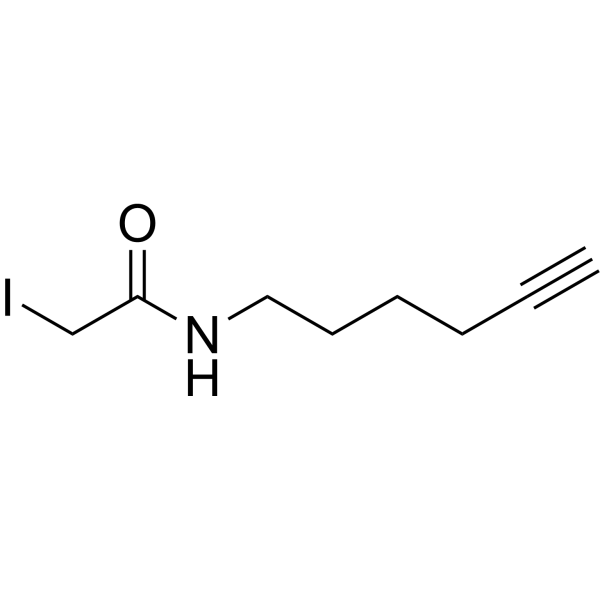
Iodoacetamide-alkyne; N-Hex-5-ynyl-2-iodo-acetamide
|
TRP Channel
|
Infection
Inflammation/Immunology
|
|
IA-Alkyne (Iodoacetamide-alkyne; N-Hex-5-ynyl-2-iodo-acetamide) is a TRP channel (TRPC) agonist and has the potential for the study of respiratory infection . IA-Alkyne can be used to develop an isotopically tagged probe for quantitative cysteine-reactivity profiling . IA-Alkyne is a click chemistry reagent, it contains an Alkyne group and can undergo copper-catalyzed azide-alkyne cycloaddition (CuAAc) with molecules containing Azide groups.
|
-
-
- HY-101403
-
-
-
- HY-153263
-
|
|
Drug-Linker Conjugates for ADC
|
Cancer
|
|
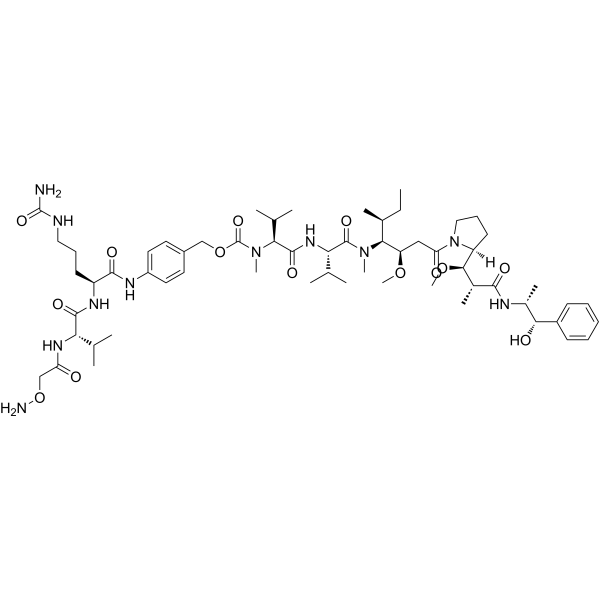
(Aminooxy)acetamide-Val-Cit-PAB-MMAE (MMAE 5) is an intermediate used in the synthetic preparation of drug-linker conjugates for ADC. (Aminooxy)acetamide-Val-Cit-PAB-MMAE is conjugated to polyamide via oxime bond formation to form MMAE polyamide conjugate. Then MMAE polyamide conjugate can be conjugated to Trastuzumab, to make ADC .
|
-
-
- HY-W089645
-
|
N-Methyl-n-trimethylsilyltrifluoroacetamide
|
Biochemical Assay Reagents
|
Cancer
|
|
2,2,2-Trifluoro-N-methyl-N-(trimethylsilyl)acetamide (N-Methyl-n-trimethylsilyltrifluoroacetamide) is an ester product commonly used for silylation reactions in analyticalchemistry. 2,2,2-Trifluoro-N-methyl-N-(trimethylsilyl)acetamide can be used in the derivatization step of metabolomics analysis with gas chromatography/mass spectrometry (GC/MS) or as a derivatization reagent in GC with flame ionization detection analysis. 2,2,2-Trifluoro-N-methyl-N-(trimethylsilyl)acetamide can be used in research for studying Tamoxifen (HY-13757A) resistant breast cancer cells and other disease pathways .
|
-

-
- HY-Y0946
-
|
|
Environmental Pollutants
|
Inflammation/Immunology
Cancer
|
|
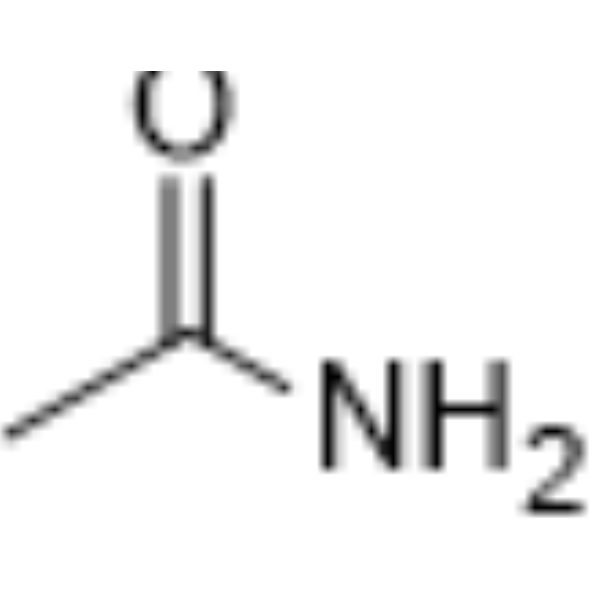
Acetamide is used as an intermediate in the synthesis of methylamine, thioacetamide, and insecticides, and as a plasticizer in leather, cloth and coatings. Acetamide has carcinogenicity. Acetamide derivatives may has antioxidant activity and potential anti-inflammatory activity. Acetamide holds promise for research in the fields of anti-inflammatory and cancer studies .
|
-
-
- HY-W016784
-
|
|
Endogenous Metabolite
|
Others
|
|
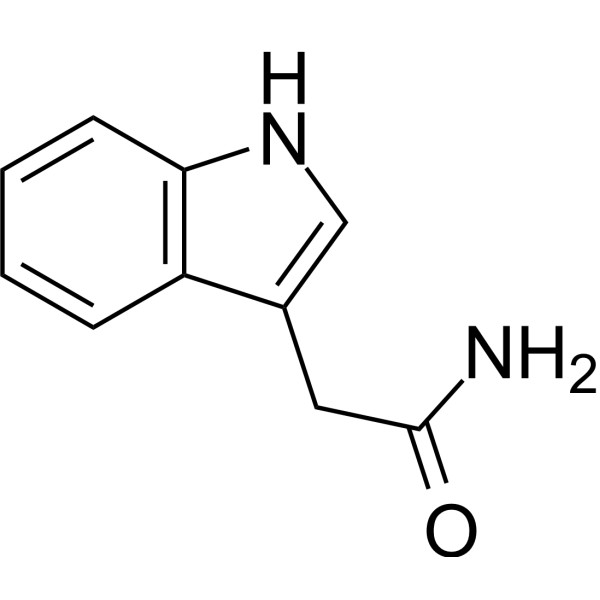
Indole-3-acetamide is a biosynthesis intermediate of 3-Indoleacetic acid (HY-18569). Indole-3-acetic acid is the most common natural plant growth hormone of the auxin class .
|
-
-
- HY-P1103
-
|
|
CXCR
|
Cancer
|
|
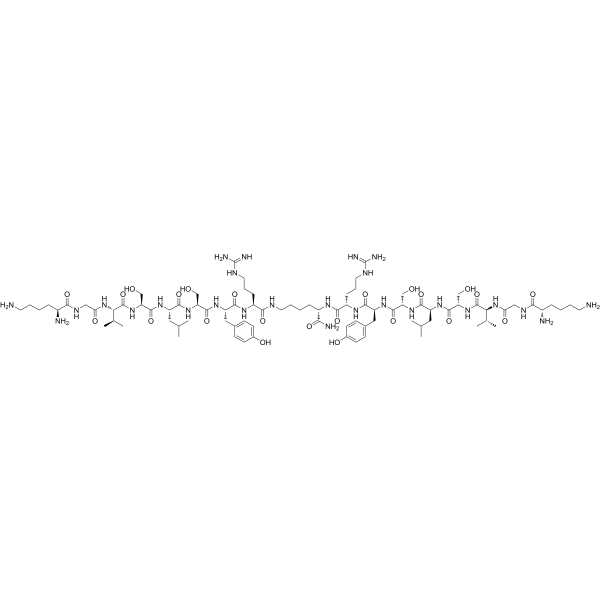
CTCE-9908 is a potent and selective CXCR4 antagonist. CTCE-9908 induces mitotic catastrophe, cytotoxicity and inhibits migration in CXCR4-expressing ovarian cancer cells .
|
-
-
- HY-W281186
-
-

-
- HY-150408
-
|
|
AUTACs
|
Cancer
|
|
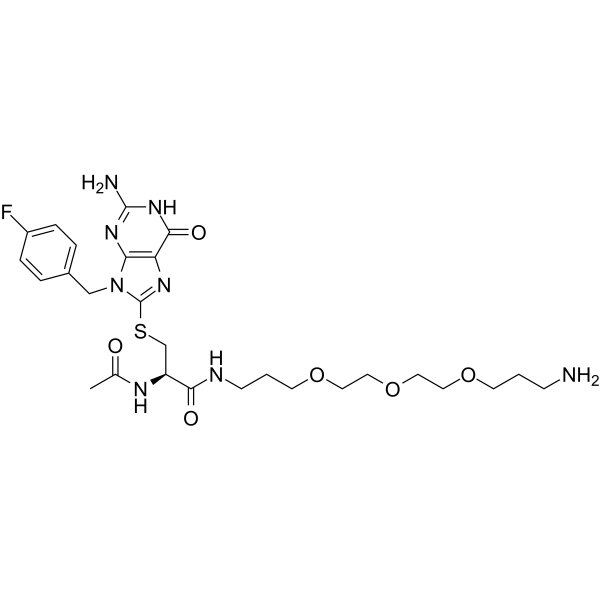
FBnG-(Cys-acetamide)-CH2-PEG3-CH2-CH2-CH2-NH2 is a tag-linker conjugate of AUTAC4 (HY-134640) that incorporates a degradation tag FBnG (HY-W073762) and a glycol linker. AUTAC4 contains an p-fluorobenzylguanine (FBnG) and a phenylindole moiety, which can induce K63-linked polyubiquitination and degradation of mitochondria in HeLa cells .
|
-
-
- HY-W016784S
-
|
|
Endogenous Metabolite
|
Others
|
|
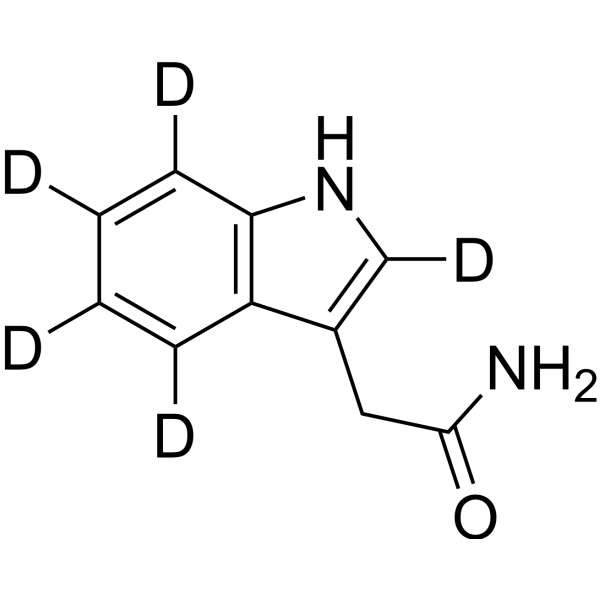
Indole-3-acetamide-d5 is the deuterium labeled Indole-3-acetamide . Indole-3-acetamide is a biosynthesis intermediate of indole-3-acetic acid (HY-18569). Indole-3-acetic acid is the most common natural plant growth hormone of the auxin class .
|
-
-
- HY-W016784R
-
|
|
Reference Standards
Endogenous Metabolite
|
Others
|
|
Indole-3-acetamide (Standard) is the analytical standard of Indole-3-acetamide. This product is intended for research and analytical applications. Indole-3-acetamide is a biosynthesis intermediate of indole-3-acetic acid (HY-18569). Indole-3-acetic acid is the most common natural plant growth hormone of the auxin class[1].
|
-

-
- HY-Z0085
-
|
|
Drug Intermediate
|
Others
|
|
2-Chloro-N-methyl-N-(4-nitrophenyl)acetamide is a synthetic intermediate useful for pharmaceutical synthesis.
|
-

-
- HY-W150695
-
|
N-(Naphthalen-1-yl)acetamide
|
Bacterial
|
Infection
|
|
1-Acetamidonaphthalene (N-(Naphthalen-1-yl)acetamide) is a degradation product of Digitoxigenin (HY-B2151). 1-Acetamidonaphthalene is weakly mutagenic to Salmonella typhimurium TA98 with metabolic activation. 1-Acetamidonaphthalene can be used for the research of bacterial infection .
|
-

-
- HY-101403R
-
|
Monoacetylcadaverine (Standard)
|
Reference Standards
Endogenous Metabolite
|
Cancer
|
|
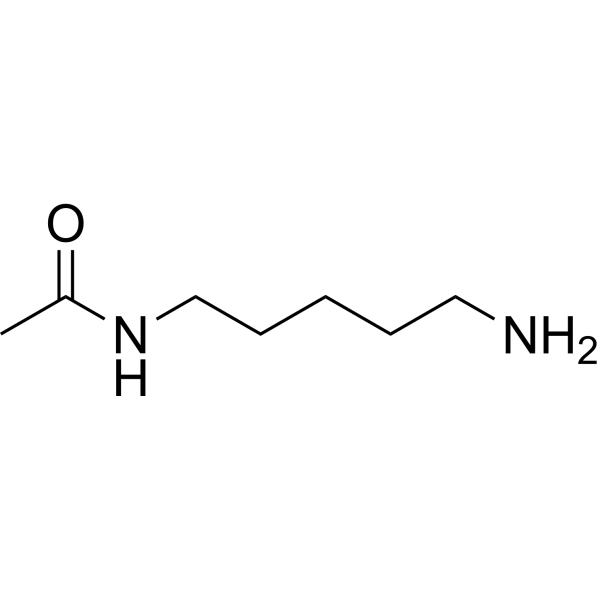
N-(5-Aminopentyl)acetamide (Standard) is the analytical standard of N-(5-Aminopentyl)acetamide. This product is intended for research and analytical applications. N-(5-Aminopentyl)acetamide is the acetylated form of the polyamine cadaverine.
|
-

-
- HY-146712S
-
-
-
- HY-79681
-
|
|
Drug Intermediate
|
Others
|
|
2-Chloro-N-(methylsulfonyl)acetamide is a drug intermediate for synthesis of various active compounds.
|
-

-
- HY-106947
-
|
|
Endogenous Metabolite
|
Metabolic Disease
|
|
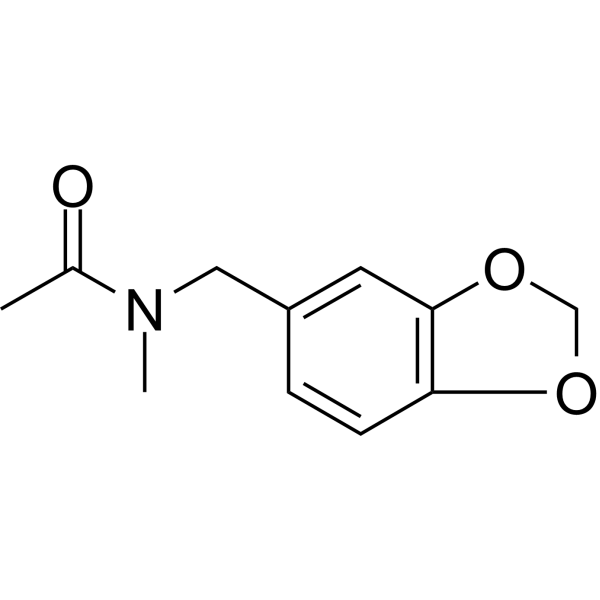
SY-640 is an Acetamide derivative and has potent hepatoprotective effect. SY-640 reduces Propionibacterium acnes and Lipopolysaccharide-induced liver injury in mice .
|
-
-
- HY-W067445
-
|
4-Acetamidobenzaldehyde
|
Biochemical Assay Reagents
|
Others
|
|
N-(4-Formylphenyl)acetamide (4-Acetamidobenzaldehyde) is a kind of biological materials or organic compounds that are widely used in life science research .
|
-

-
- HY-45213
-
|
|
Drug Intermediate
|
Others
|
|
2-(1,3-Dioxoisoindolin-2-yl)-N-(2,2,2-trifluoroethyl)acetamide is a drug intermediate for synthesis of various active compounds.
|
-

-
- HY-43045
-
|
|
Drug Intermediate
|
Others
|
|
N,N-Dimethyl-2-[4-(tetramethyl-1,3,2-dioxaborolan-2-yl)-1H-pyrazol-1-yl]acetamide is a drug intermediate for synthesis of various active compounds.
|
-
![N,N-Dimethyl-2-[4-(tetramethyl-1,3,2-dioxaborolan-2-yl)-1H-pyrazol-1-yl]acetamide](//file.medchemexpress.com/product_pic/hy-43045.gif)
-
- HY-18594
-
-
-
- HY-Y0946S2
-
|
|
Isotope-Labeled Compounds
|
Cancer
|
|
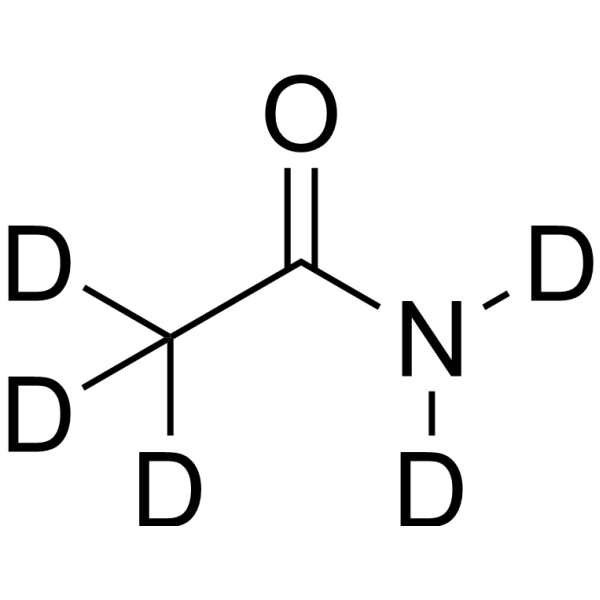
Acetamide-d5 is the deuterium labeled Acetamide . Acetamide is used as an intermediate in the synthesis of methylamine, thioacetamide, and insecticides, and as a plasticizer in leather, cloth and coatings. Acetamide has carcinogenicity .
|
-
-
- HY-175446
-
|
|
IAP
Apoptosis
|
Cancer
|
|
GDC-0152-acetamide is a pan-inhibitor of apoptosis protein (IAP) antagonist. GDC-0152-acetamide induces cIAP1/2 autoubiquitination and degradation, activating the non-canonical NF-κB pathway to promote TNF-α secretion and tumor cell apoptosis. GDC-0152-acetamide is promising for research of ERα-positive breast cancer .
|
-

-
- HY-47858
-
-

-
- HY-W015598R
-
|
p-Hydroxy pheny lacetamide (Standard)
|
Reference Standards
|
|
|
2-(4-Hydroxyphenyl)acetamide (Standard) is the analytical standard of 2-(4-Hydroxyphenyl)acetamide. This product is intended for research and analytical applications.
|
-

-
- HY-W077904
-
|
|
COX
|
Inflammation/Immunology
|
|
2-Chloro-N-(2,6-dimethylphenyl) acetamide is a cyclooxygenase (COX) inhibitor predicted by molecular topology.
|
-

-
- HY-101424
-
|
|
Fungal
|
Infection
|
|
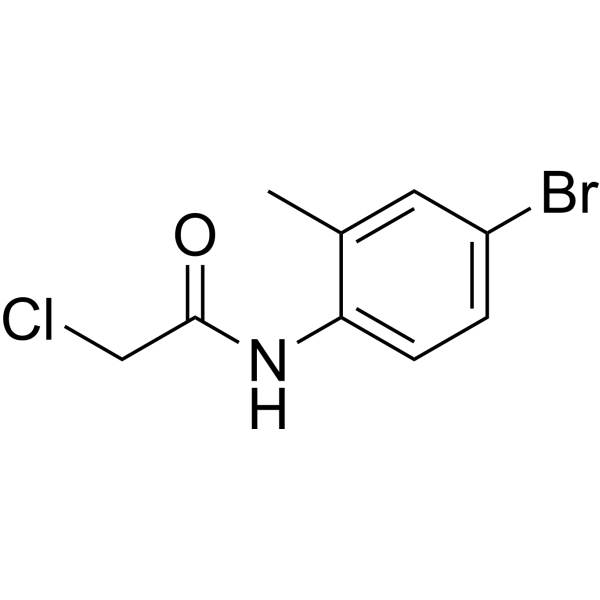
2-Chloro-N-(2-methyl-4-bromophenyl)acetamide is an antifungal compound .
|
-
-
- HY-W140566
-
-

-
- HY-Z8556R
-
|
|
Reference Standards
|
|
|
N-(2-Aminoethyl)-2-(4-(tert-butyl)-2,6-dimethylphenyl)acetamide (Xylometazoline Impurity) (Standard) is the analytical standard of N-(2-Aminoethyl)-2-(4-(tert-butyl)-2,6-dimethylphenyl)acetamide (Xylometazoline Impurity). This product is intended for research and analytical applications.
|
-

-
- HY-157360
-
|
|
Biochemical Assay Reagents
|
Others
|
|
Acetamide Agar is a solid culture media for non-fermenting bacteria. Acetamide Agar helps differentiate P. acidovorans from other non-sugar-soluble or weakly sugar-soluble Pseudomonas species. Acetamide Agar can be used to test the ability of microorganisms such as Pseudomonas aeruginosa to utilize acetamide through deamination .
|
-

-
- HY-157329
-
|
|
Endonuclease
|
Inflammation/Immunology
|
|
AD16 (Acetamide) is a LINE-1 retrotransposon endonuclease inhibitor with the IC50 of 4.7 μM. AD16 (Acetamide) reduce LINE-1 retrotransposition, L1-induced DNA damage, and inflammation reinforced by L1 in senescent cells .
|
-

-
- HY-P1103A
-
|
|
CXCR
|
Cancer
|
|
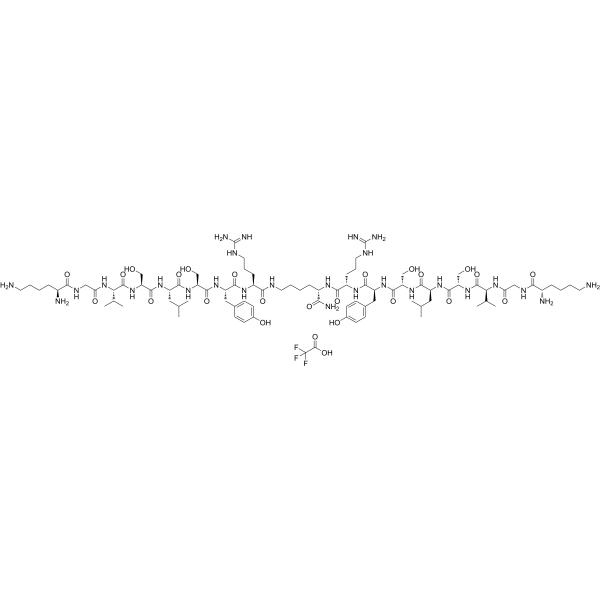
CTCE-9908 TFA is a potent and selective CXCR4 antagonist. CTCE-9908 TFA induces mitotic catastrophe, cytotoxicity and inhibits migration in CXCR4-expressing ovarian cancer cells .
|
-
-
- HY-105383
-
|
|
Thrombin
|
Cardiovascular Disease
|
|
L 373890 is a selective pyridinone acetamide thrombin inhibitor with a Ki of 0.5 nM. L 373890 shows highly selectivity for thrombin over trypsin (Ki of 570 nM), serine proteases plasmin, tPA, activated protein C, plasma kallikrein and chymotrypsin. L 373890 can be used for thrombosis research .
|
-

-
- HY-P4757
-
|
|
Parasite
|
Others
|
|
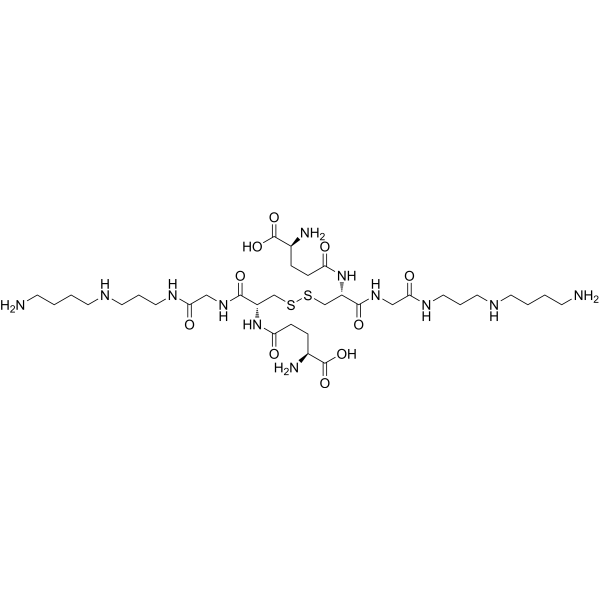
N1-Glutathionyl-spermidine disulfide is a substrate of trypanothione reductase .
|
-
-
- HY-Y0946R
-
|
|
Biochemical Assay Reagents
Reference Standards
|
Inflammation/Immunology
Cancer
|
|
Acetamide (Standard) is the analytical standard of Acetamide. This product is intended for research and analytical applications. Acetamide is used as an intermediate in the synthesis of methylamine, thioacetamide, and insecticides, and as a plasticizer in leather, cloth and coatings. Acetamide has carcinogenicity. Acetamide derivatives may has antioxidant activity and potential anti-inflammatory activity. Acetamide holds promise for research in the fields of anti-inflammatory and cancer studies .
|
-

-
- HY-Y0946S
-
|
|
Isotope-Labeled Compounds
|
Cancer
|
|
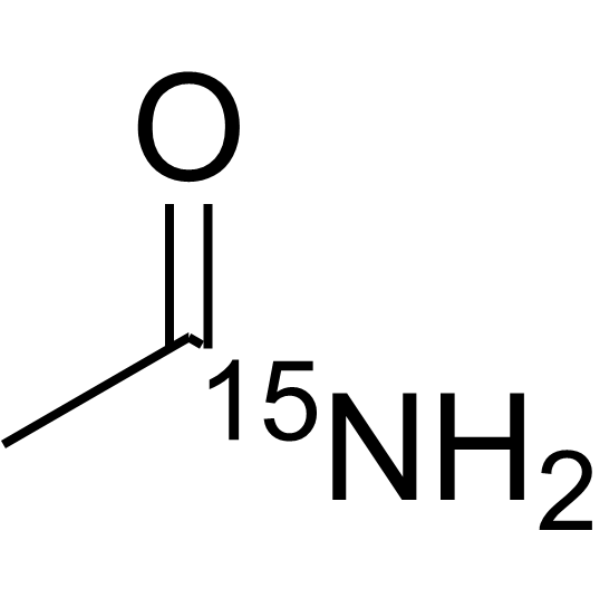
Acetamide- 15N is the 15N-labeled Acetamide. Acetamide is used as an intermediate in the synthesis of methylamine, thioacetamide, and insecticides, and as a plasticizer in leather, cloth and coatings. Acetamide has carcinogenicity .
|
-
-
- HY-W768057
-
|
|
Isotope-Labeled Compounds
Biochemical Assay Reagents
|
Cancer
|
|
Acetamide- 13C2, 15N is the 13C- and 15N-labeled Acetamide (HY-Y0946). Acetamide is used as an intermediate in the synthesis of methylamine, thioacetamide, and insecticides, and as a plasticizer in leather, cloth and coatings. Acetamide has carcinogenicity. Acetamide derivatives may has antioxidant activity and potential anti-inflammatory activity. Acetamide holds promise for research in the fields of anti-inflammatory and cancer studies .
|
-

-
- HY-W402074
-
|
Butenolide
|
Mitochondrial Metabolism
Reactive Oxygen Species (ROS)
|
Metabolic Disease
|
|
5-Acetamide-Butenolide (Butenolide) is a mycotoxin with pro-oxidant activity, which is found in Fusarium. 5-Acetamide-Butenolide disrupts the mitochondrial membrane potential in primary neonatal rat cardiomyocytes. 5-Acetamide-Butenolide also induces the production of thiobarbituric acid reactive substances (TBARS) in isolated rat myocardial mitochondria. 5-Acetamide-Butenolide increases the production of reactive oxygen species (ROS), decreases the levels of GSH and reduces the viability of HepG2 cells .
|
-

-
- HY-W009565R
-
|
|
Reference Standards
|
|
|
2-[(Diphenylmethyl)thio]acetamide (Standard) is the analytical standard of 2-[(Diphenylmethyl)thio]acetamide. This product is intended for research and analytical applications.
|
-
![2-[(Diphenylmethyl)thio]acetamide (Standard)](//file.medchemexpress.com/product_pic/hy-w009565r.gif)
-
- HY-W024564
-
|
Acetamidomethanol
|
Biochemical Assay Reagents
|
Others
|
|
N-(Hydroxymethyl)acetamide (Acetamidomethanol) is a model molecule of Ceramide. The dimers of N-(Hydroxymethyl)acetamide have various hydrogen bonds, and the three-dimensional network structure formed by these hydrogen bonds may be the main reason for the barrier function of the stratum corneum of the skin .
|
-

-
- HY-W010070R
-
|
p-Chloroacetanilide (Standard)
|
Reference Standards
|
|
|
N-(4-Chlorophenyl)acetamide (Standard) is the analytical standard of N-(4-Chlorophenyl)acetamide. This product is intended for research and analytical applications.
|
-

-
- HY-Z0007R
-
|
|
Reference Standards
|
|
|
2-Chloro-N-(4-nitrophenyl)acetamide (Standard) is the analytical standard of 2-Chloro-N-(4-nitrophenyl)acetamide. This product is intended for research and analytical applications.
|
-

-
- HY-W077904R
-
|
|
Reference Standards
|
|
|
2-Chloro-N-(2,6-dimethylphenyl)acetamide (Standard) is the analytical standard of 2-Chloro-N-(2,6-dimethylphenyl)acetamide. This product is intended for research and analytical applications.
|
-

-
- HY-W164451
-
|
|
Fungal
|
Infection
|
|
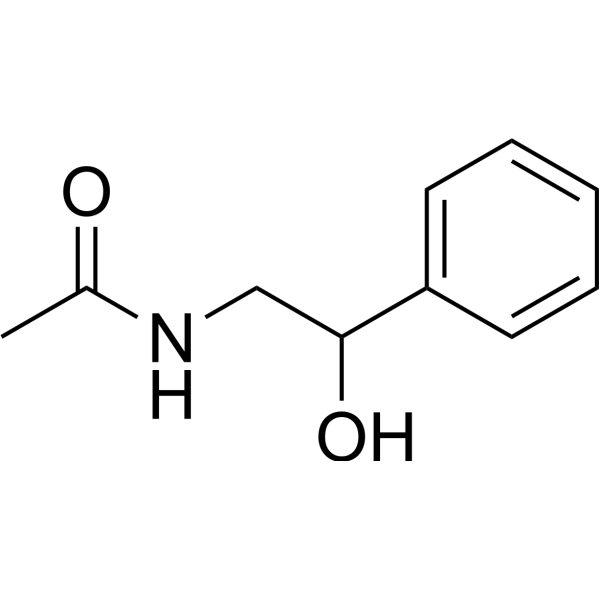
N-(2-hydroxy-2-phenylethyl)acetamide is isolated from the solid rice cultures of the endophytic fungus Diaporthe eucalyptorum KY-9. N-(2-hydroxy-2-phenylethyl)acetamide exhibits antifungal activities against Alternaria solani .
|
-
-
- HY-W700136
-
|
|
Isotope-Labeled Compounds
|
Others
|
|
N-(4-(Benzyloxy)-3-(methylthio)phenyl)acetamide-d3 is the deuterium labeled N-(4-(Benzyloxy)-3-(methylthio)phenyl)acetamide (HY-W699901).
|
-

-
- HY-W008596
-
-

-
- HY-W140566S
-
-
-
- HY-Z6544
-
-

-
- HY-176145S
-
-

-
- HY-Z1374R
-
|
|
Reference Standards
|
|
|
(R)-2-(2-(4-((4-Chlorophenyl)(phenyl)methyl)piperazin-1-yl)ethoxy)acetamide (Cetirizine Impurity) (Standard) is the analytical standard of (R)-2-(2-(4-((4-Chlorophenyl)(phenyl)methyl)piperazin-1-yl)ethoxy)acetamide (Cetirizine Impurity). This product is intended for research and analytical applications.
|
-

- HY-W726390
-
|
|
Adrenergic Receptor
|
Neurological Disease
|
|
2-(4-(2-Hydroxy-3-(isopropyl(nitroso)amino)propoxy)phenyl)acetamide is a genotoxic derivative of Atenolol (HY-17498) that can induce DNA fragmentation in rat hepatocytes when used at concentrations ranging from 0.1 to 1 mM.
|
-

- HY-D0532
-
|
|
Fluorescent Dye
|
Others
|
|
N-[5-2-[Azo]phenyl]acetamide is a multifunctional dye. Dyes are important tools in biological experiments. They can help researchers observe and analyze cell structures, track biomolecules, evaluate cell functions, distinguish cell types, detect biomolecules, study tissue pathology and monitor microorganisms. Their applications range from basic scientific research to clinical A wide range of diagnostics. Dyes are also widely used in traditional fields such as textile dyeing, as well as in emerging fields such as functional textile processing, food pigments and dye-sensitized solar cells.
|
-
![N-[5-2-[Azo]phenyl]acetamide](//file.medchemexpress.com/product_pic/hy-d0532.gif)
- HY-W707708
-
|
|
Isotope-Labeled Compounds
COX
|
Inflammation/Immunology
|
|
N-(4-Ethoxyphenyl)acetamide-2,2,2-d3 is the deuterium labeled Phenacetin (HY-B0476). Phenacetin (Acetophenetidin) is a non-opioid analgesic/antipyretic agent. Phenacetin is a selective COX-3 inhibitor. Phenacetin is used as probe of cytochrome P450 enzymes CYP1A2 in human liver microsomes and in rats .
|
-

- HY-109573
-
|
|
Phospholipase
|
Cancer
|
|
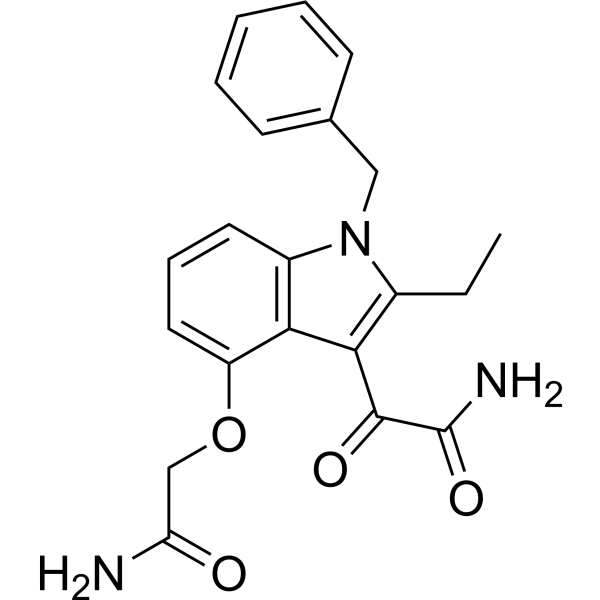
hnps-PLA-IN-1 (compound 5aa), a indole-3-acetamide, is a hnps-PLA2 inhibitor (IC50=0.124 μM) .
|
-
- HY-Y0946S1
-
-

- HY-144426
-
|
|
Influenza Virus
|
Infection
|
|
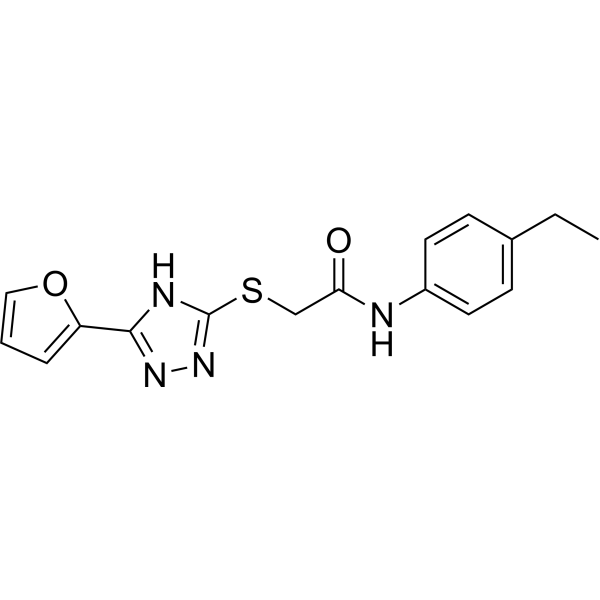
Neuraminidase-IN-6 (Compound 5c) is a potent inhibitor of neuraminidase with an IC50 of 0.11 μM. Neuraminidase-IN-6 is a 1,3,4-triazole-3-acetamide derivative. Neuraminidase (NA) is an ideal target for the development of anti-influenza agents .
|
-
- HY-W009512S
-
|
RS-94287-d8
|
Isotope-Labeled Compounds
|
Others
|
|
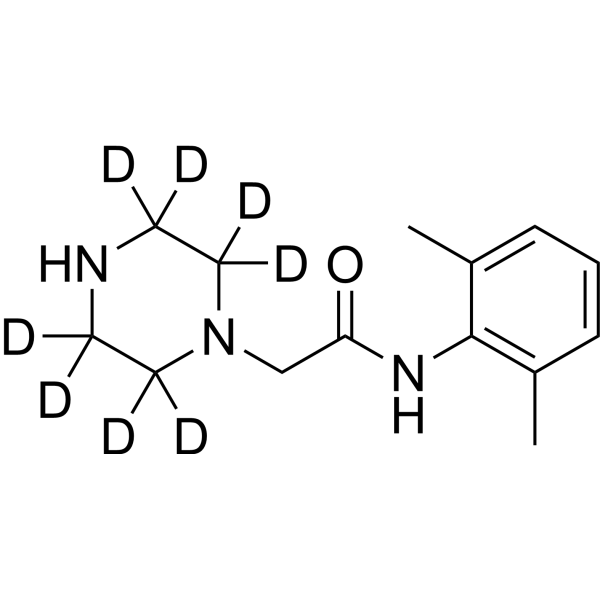
N-(2,6-Dimethylphenyl)-2-(piperazin-1-yl)acetamide-d8 is the deuterium labeled N-(2,6-Dimethylphenyl)-2-(piperazin-1-yl)acetamide .
|
-
- HY-W747973
-
|
N-(9-Acetyl-6,9-dihydro-6-oxo-1H-purin-2-yl)acetamide-13C2,15N; 2,9-Diacetylguanine; N,9-Diacetylguanine-13C2,15N
|
Isotope-Labeled Compounds
|
Others
|
|
N2,9-Diacetylguanine- 13C2, 15N (N-(9-Acetyl-6,9-dihydro-6-oxo-1H-purin-2-yl)acetamide- 13C2, 15N) is the 13C- and 15N-labeled N2,N9-Diacetylguanine (HY-41619).
|
-

- HY-124175
-
-
- HY-47876
-
|
|
Drug Derivative
|
Others
|
|
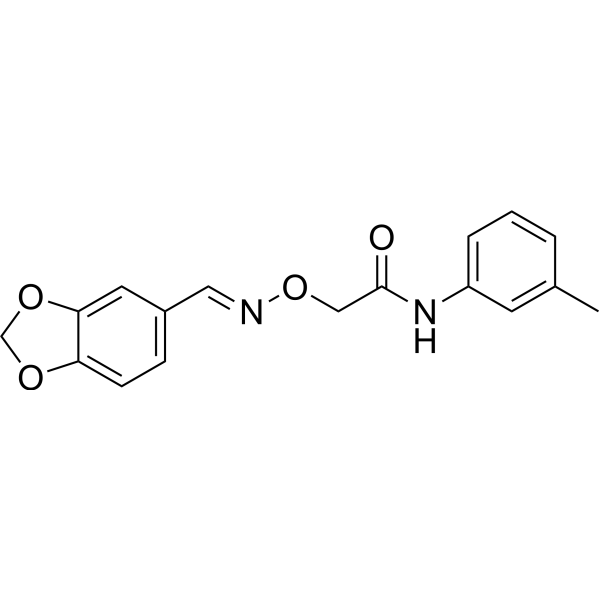
2-(((Benzo[d][1,3]dioxol-5-ylmethylene)amino)oxy)-N-(m-tolyl)acetamide is an active molecule.
|
-
- HY-W706908
-
|
|
Isotope-Labeled Compounds
|
Others
|
|
Des(isopropylamino) atenolol diol-d5 is the deuterium labeled 2-(4-(2,3-Dihydroxypropoxy)phenyl)acetamide (Atenolol Impurity) (HY-Z7632).
|
-

- HY-120369
-
|
|
FAAH
|
Neurological Disease
|
|
URB532 is an inhibitor for fatty acid amide hydrolase (FAAH) with an IC50 of 396 nM. URB532 increases levels of arachidonic acid acetamide (AEA), palmitoylethanolamide (PEA), and oleamide (OEA) in the rat brain, and exhibits anxiolytic and analgesic effects .
|
-

- HY-W742886
-
|
|
Isotope-Labeled Compounds
|
Others
|
|
Dideschloro Florfenicol-d3 is the deuterium labeled Acetamide, N-[1-(fluoromethyl)-2-hydroxy-2-[4-(methylsulfonyl)phenyl]ethyl]-, [R-(R*,S*)]- (HY-W587855).
|
-

- HY-W743678
-
-

- HY-146373
-
|
|
Bacterial
|
Infection
|
|
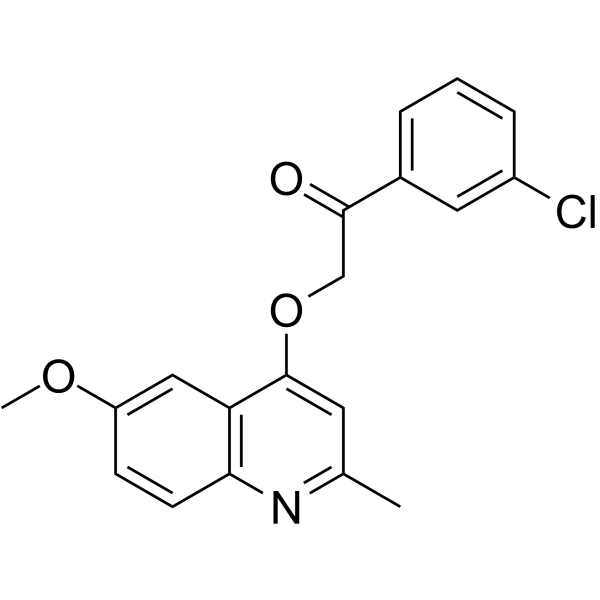
The minimum inhibitory concentration (MIC) of a new 2- (quinoline-4-methoxy) acetamide antituberculotic agent against the reference strain of Mycobacterium tuberculosis H37Rv was as low as 0.3 μ M. It also inhibited the growth of Mycobacterium tuberculosis in the macrophage model of tuberculosis infection.
|
-
- HY-103247B
-
|
|
Angiotensin Receptor
|
Cardiovascular Disease
|
|
EMD-66684 potassium salt is a non-peptide angiotensin II receptor antagonist that demonstrates significant antihypertensive effects in spontaneously hypertensive rats. EMD-66684 potassium salt exhibits nanomolar affinity for angiotensin II receptors, comparable to losartan in potency. EMD-66684 potassium salt shows increased activity when modified with acetamides, leading to superior blood pressure reduction.
|
-

- HY-W745844
-
-

- HY-CE01299
-
-

- HY-W243217
-
-
- HY-W087930S
-
-
- HY-W141704
-
|
|
Drug Intermediate
|
Others
|
|
N-(3-Aminopropyl)acetamide is the building block. N-(3-Aminopropyl)acetamide could be used for synthesis of Polyfluorosulfonamido amine, which is the material for surfactants, electronics elements, pharmaceutical- and pesticide intermediates .
|
-

- HY-W706083
-
-

- HY-W042159R
-
|
|
Reference Standards
|
|
|
N-(3-Chloro-4-hydroxyphenyl)acetamide (Standard) is the analytical standard of N-(3-Chloro-4-hydroxyphenyl)acetamide. This product is intended for research and analytical applications.
|
-

- HY-34158
-
|
|
Biochemical Assay Reagents
|
Others
|
|
N-(4-Nitrophenethyl)acetamide is a kind of biological materials or organic compounds that are widely used in life science research.
|
-

- HY-137132
-
|
Linagliptin acetamide
|
Drug Intermediate
|
Others
|
|
Linagliptin impurity 2 (Linagliptin acetamide) is an impurity of Linagliptin.
|
-

- HY-78861R
-
|
|
Reference Standards
|
|
|
2-Cyano-N-[4-(trifluoromethyl)phenyl]acetamide (Standard) is the analytical standard of 2-Cyano-N-[4-(trifluoromethyl)phenyl]acetamide. This product is intended for research and analytical applications.
|
-
![2-Cyano-N-[4-(trifluoromethyl)phenyl]acetamide (Standard)](//file.medchemexpress.com/product_pic/hy-78861r.gif)
- HY-W023852R
-
|
|
Reference Standards
|
|
|
N-(4-Chlorophenyl)-2-(2,6-dichlorophenyl)acetamide (Standard) is the analytical standard of N-(4-Chlorophenyl)-2-(2,6-dichlorophenyl)acetamide. This product is intended for research and analytical applications.
|
-

- HY-W140566R
-
|
|
Reference Standards
|
|
|
N-(2-Aminoethyl)-2-(naphthalen-1-yl)acetamide (Standard) is the analytical standard of N-(2-Aminoethyl)-2-(naphthalen-1-yl)acetamide. This product is intended for research and analytical applications.
|
-

- HY-W424876
-
|
|
Adenosine Receptor
|
Inflammation/Immunology
|
|
N-(7H-Purin-6-yl)acetamide (Compound 25) is a selective adenosine receptor (AdeR) agonist with a Ki value of 0.515 μM for the human adenosine receptor and a Ki value of 2.85 μM for the rat adenosine receptor. N-(7H-Purin-6-yl)acetamide is promising for research of adenosine receptor function, pain perception, inflammatory responses, and renal function .
|
-

- HY-W011958R
-
|
4'-Nitro-3'-(trifluoromethyl)acetanilide (Standard)
|
Reference Standards
|
|
|
N-(4-Nitro-3-(trifluoromethyl)phenyl)acetamide (Standard) is the analytical standard of N-(4-Nitro-3-(trifluoromethyl)phenyl)acetamide. This product is intended for research and analytical applications.
|
-

- HY-W172608
-
|
|
PROTAC Linkers
|
Cancer
|
|
2-Bromo-N-(but-3-yn-1-yl)acetamide is a PROTAC linker that can be used in the synthesis of PROTACs.
|
-

- HY-W740574
-
|
4-Acetylaminobiphenyl-d5
|
Isotope-Labeled Compounds
|
Others
|
|
N-([1,1'-Biphenyl]-4-yl)acetamide-d5 (4-Acetylaminobiphenyl-d5) is the deuterium labeled N-([1,1'-Biphenyl]-4-yl)acetamide (HY-W014335).
|
-
![N-([1,1'-Biphenyl]-4-yl)acetamide-d5](//file.medchemexpress.com/product_pic/hy-w740574.gif)
- HY-402277
-
|
|
Biochemical Assay Reagents
|
Others
|
|
2-[[[4-(Acetylamino)phenyl]sulfonyl][(4-fluorophenyl)methyl]amino]-N-(9-ethyl-9H-carbazol-3-yl)acetamide is a biological molecule.
|
-
![2-[[[4-(Acetylamino)phenyl]sulfonyl][(4-fluorophenyl)methyl]amino]-N-(9-ethyl-9H-carbazol-3-yl)acetamide](//file.medchemexpress.com/product_pic/hy-402277.gif)
- HY-W112133
-
|
|
MOFs
|
Others
|
|
N,N'-(Oxybis(ethane-2,1-diyl))bis(2-(3-hydroxy-2-oxopyridin-1(2H)-yl)acetamide) is a metal-organic framework (MOF).
|
-

- HY-47394
-
|
|
Drug Intermediate
|
Others
|
|
N-(1-((2R,3R,4R,5R)-3-((tert-Butyldimethylsilyl)oxy)-4-hydroxy-5-(hydroxymethyl)tetrahydrofuran-2-yl)-2-oxo-1,2-dihydropyrimidin-4-yl)acetamide is a drug intermediate for synthesis of various active compounds.
|
-

- HY-Z0138R
-
|
|
Reference Standards
|
|
|
N-Methyl-N-(4-nitrophenyl)acetamide (Nintedanib Impurity) (Standard) is the analytical standard of N-Methyl-N-(4-nitrophenyl)acetamide (Nintedanib Impurity). This product is intended for research and analytical applications.
|
-

- HY-Z2343R
-
|
|
Reference Standards
|
|
|
N-(4-methoxy-2-nitrophenyl)acetamide (Omeprazole Impurity) (Standard) is the analytical standard of N-(4-methoxy-2-nitrophenyl)acetamide (Omeprazole Impurity). This product is intended for research and analytical applications.
|
-

- HY-Z6540R
-
|
|
Reference Standards
|
|
|
2-(Diethylamino)-N-(2,4-dimethylphenyl)acetamide (Lidocaine Impurity) (Standard) is the analytical standard of 2-(Diethylamino)-N-(2,4-dimethylphenyl)acetamide (Lidocaine Impurity). This product is intended for research and analytical applications.
|
-

- HY-Z6535R
-
|
|
Reference Standards
|
|
|
2-(Diethylamino)-N-(2,3-dimethylphenyl)acetamide hydrochloride (Lidocaine Impurity) (Standard) is the analytical standard of 2-(Diethylamino)-N-(2,3-dimethylphenyl)acetamide hydrochloride (Lidocaine Impurity). This product is intended for research and analytical applications.
|
-

- HY-173487
-
|
|
COX
|
Inflammation/Immunology
|
|
COX-2-IN-53 (compound 9) is a potent COX-2 inhibitor with an IC50 of 0.373 μM. COX-2-IN-53 reduces radiation-induced oxidative stress .
|
-

- HY-W038820R
-
|
|
Reference Standards
|
|
|
N-((4-(5-Methyl-3-phenylisoxazol-4-yl)phenyl)sulfonyl)acetamide (Standard) is the analytical standard of N-((4-(5-Methyl-3-phenylisoxazol-4-yl)phenyl)sulfonyl)acetamide. This product is intended for research and analytical applications.
|
-

- HY-Z7677R
-
|
|
Reference Standards
|
|
|
N-(2-(2-Hydroxy-4-(methylsulfonamido)-5-phenoxyphenyl)-2-oxoethyl)acetamide (Iguratimod Impurity) (Standard) is the analytical standard of N-(2-(2-Hydroxy-4-(methylsulfonamido)-5-phenoxyphenyl)-2-oxoethyl)acetamide (Iguratimod Impurity). This product is intended for research and analytical applications.
|
-

- HY-W028686R
-
|
|
Reference Standards
|
|
|
N-(5-Thioxo-4,5-dihydro-1,3,4-thiadiazol-2-yl)acetamide (Standard) is the analytical standard of N-(5-Thioxo-4,5-dihydro-1,3,4-thiadiazol-2-yl)acetamide. This product is intended for research and analytical applications.
|
-

- HY-Z7676R
-
|
|
Reference Standards
|
|
|
N-(2-(2-Methoxy-4-(methylsulfonamido)-5-phenoxyphenyl)-2-oxoethyl)acetamide (Iguratimod Impurity) (Standard) is the analytical standard of N-(2-(2-Methoxy-4-(methylsulfonamido)-5-phenoxyphenyl)-2-oxoethyl)acetamide (Iguratimod Impurity). This product is intended for research and analytical applications.
|
-

- HY-Z7675R
-
|
|
Reference Standards
|
|
|
N-(7-(Methylsulfonamido)-4-oxo-6-phenoxy-4H-chromen-3-yl)acetamide (Iguratimod Impurity) (Standard) is the analytical standard of N-(7-(Methylsulfonamido)-4-oxo-6-phenoxy-4H-chromen-3-yl)acetamide (Iguratimod Impurity). This product is intended for research and analytical applications.
|
-

- HY-W728163
-
-

- HY-124889
-
|
|
Apoptosis
Herbicide
|
Others
|
|
Dimethenamid is an acetamide herbicide that is widely used on soybeans and corns to inhibit weed growth. Dimethenamid not only lead to morphological abnormalities in zebrafish larvae but also reduces their viability. ROS production and inflammation responses were promoted in zebrafish larvae.
|
-

- HY-103031
-
|
|
Bacterial
|
Infection
|
|
GSK 124576A (compound 8) is a Mycobacterium tuberculosis cytochrome bc1 complex inhibitor and member of the 2-(quinolin-4-yloxy)acetamide class. GSK 124576A can be used for the research of tuberculosis .
|
-

- HY-175097
-
|
|
Drug Derivative
|
Others
|
|
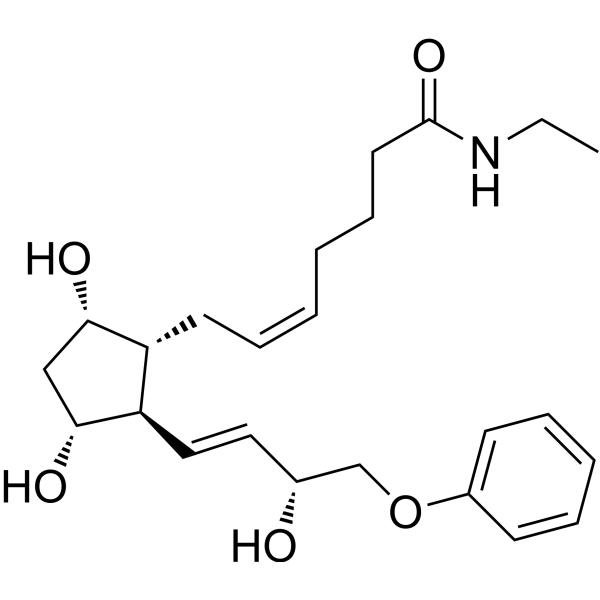
AL 8810 Ethyl amide is an acetamide derivative of AL-8810 (HY-100449). AL 8810 Ethyl amide dose not exhibit a significant antagonistic effect on the action of PGF2α, and it dose not cause the contraction of the cat iris .
|
-

- HY-Z6448R
-
-

- HY-P11293
-
|
|
Melanocortin Receptor
|
Cancer
|
|
DOTA-GGNle-CycMSHhex is a melanocortin-1 receptor (MC1R)-targeting peptide that can be radionuclide-labeled for melanoma imaging .
|
-

- HY-P11480
-
|
|
Trk Receptor
|
Neurological Disease
|
|
TrkA/NGF-IN-1 (Peptide 19) is an inhibitor of protein-protein interactions between TrkA and NGF (IC50: 21 nM for human TrkA in PathHunter assay). TrkA/NGF-IN-1 shows an analgesic effect in a rat incisional pain model .
|
-

- HY-14988
-
|
|
Bacterial
|
Infection
|
|
I-A09 and its derivatives, specifically 1,2,3-triazole-adamantylacetamide hybrids (5a–u), exhibit significant antitubercular activity. These hybrids were synthesized using copper-catalyzed click chemistry, combining bioactive fragments from antitubercular I-A09 and substituted adamantyl urea. The compound N-(1-adamantyl)-2-azido acetamide was reacted with various alkyl/aryl acetylenes to produce new analogues. Among them, N-(1-adamantan-1-yl)-2-(4-(phenanthren-2-yl)-1H-1,2,3-triazol-1-yl)acetamide (5t) showed the most promise with a minimum inhibitory concentration (MIC) of 3.12 μg/mL against Mycobacterium tuberculosis H37Rv, and a selectivity index greater than 15 .
|
-

- HY-119431
-
|
2-Hydroxypropanamide
|
Biochemical Assay Reagents
|
Others
|
|
Lactamide (2-Hydroxypropanamide) is an amide compound. Lactamide can be used as a cryoprotectant and is employed in experiments for the cryopreservation of white rabbit sperm .
|
-

- HY-W073762
-
|
|
Biochemical Assay Reagents
|
Cancer
|
|
FBnG is a component of non-ribosomal peptide synthetase/polyketide synthase (NRPS/PKS), which is associated with the biosynthesis of fabrubactin (FBN). FBnG can be used for synthesis of AUTAC4 as part of FBnG-(Cys-acetamide)-CH2-PEG3-CH2-CH2-CH2-NH2 (HY-150408) .
|
-

- HY-P1321
-
|
1229U91; GW1229
|
Neuropeptide Y Receptor
|
Neurological Disease
|
|
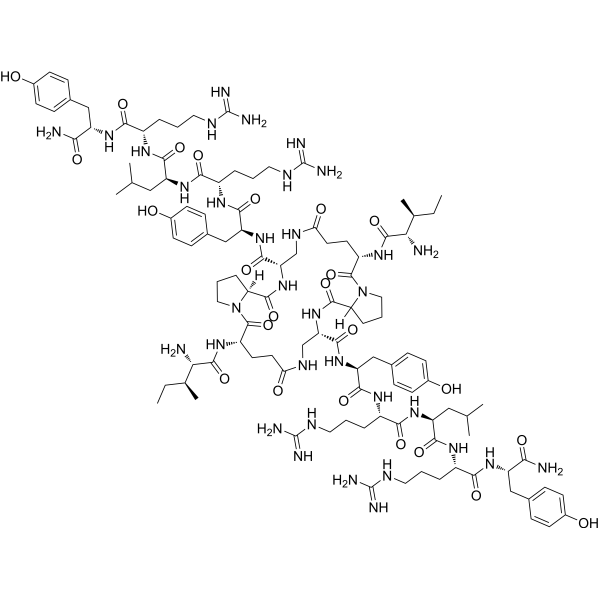
GR231118, an analogue of the C-terminus of neuropeptide Y, is a potent , competitive and relative seletive antagonist at human neuropeptide Y Y receptor with a pKi of 10.4. GR231118 a potent agonist at the human neuropeptide Y Y4 receptor (pEC50=8.6; pKi=9.6) and a weak agonist at the human and rat neuropeptide YY2 and Y5 receptors. GR231118 also has high affinity for the mouse neuropeptide Y Y6 receptor (pKi= 8.8) .
|
-
- HY-P1321A
-
|
1229U91 TFA; GW1229 TFA
|
Neuropeptide Y Receptor
|
Neurological Disease
|
|
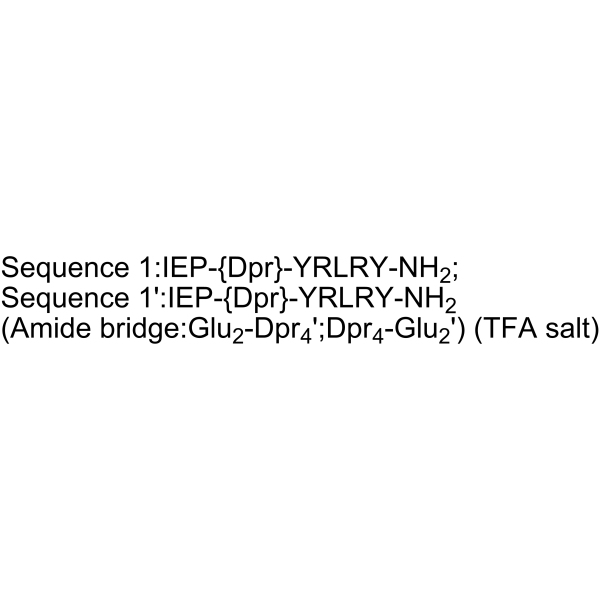
GR231118 TFA, an analogue of the C-terminus of neuropeptide Y, is a potent , competitive and relative seletive antagonist at human neuropeptide YY receptor with a pKi of 10.4. GR231118 a potent agonist at the human neuropeptide YY4 receptor (pEC50=8.6; pKi=9.6) and a weak agonist at the human and rat neuropeptide Y Y2 and Y5 receptors. GR231118 also has high affinity for the mouse neuropeptide YY6 receptor (pKi= 8.8) .
|
-
- HY-Y0191R
-
|
2-Pyridone (Standard)
|
Reference Standards
Endogenous Metabolite
Bacterial
|
Infection
Metabolic Disease
|
|
α-Pyridone (Standard) is the analytical standard of α-Pyridone. This product is intended for research and analytical applications. α-Pyridone (2-Pyridone) is an antibacterial agent. α-Pyridone can be synthesized via the 1,4-addition of 2-(phenylsulfinyl)acetamide to α,β-unsaturated ketones followed by cyclization and sulfoxide elimination. α-Pyridone can also be used to synthesize a wide range of heterocyclic compounds .
|
-

- HY-Y0191S
-
|
2-Pyridone-d5
|
Isotope-Labeled Compounds
Bacterial
Endogenous Metabolite
|
Infection
Metabolic Disease
|
|
α-Pyridone-d5 (2-Pyridone-d5) is the deuterium labeled α-Pyridone (HY-Y0191). α-Pyridone (2-Pyridone) is an antibacterial agent. α-Pyridone can be synthesized via the 1,4-addition of 2-(phenylsulfinyl)acetamide to α,β-unsaturated ketones followed by cyclization and sulfoxide elimination. α-Pyridone can also be used to synthesize a wide range of heterocyclic compounds .
|
-

- HY-W009512S1
-
|
RS-94287-d6
|
Isotope-Labeled Compounds
|
Others
|
|
N-(2,6-Dimethylphenyl)-2-(piperazin-1-yl)acetamide-d6 (N-[(2-chlorophenyl)carbamoyl]phenylalanine-d6) is deuterium-labeled CVT-2738 (HY-W009512). CVT-2738 is an orally active metabolite of Ranolazine (HY-B0280). CVT-2738 has a protective effect against isoprenaline (HY-108353)-induced myocardial ischemia in mice. CVT-2738 can be used in myocardial ischemia research .
|
-

- HY-P4070
-
|
|
Insulin Receptor
|
Metabolic Disease
|
|
Insulin icodec is an Insulin (HY-P0035) analog that strongly but reversibly binds to albumin. Insulin icodec has long plasma half-life. Insulin icodec modulates insulin receptor activity, controls blood glucose levels, reduces HbA1c levels, and binds reversibly to human serum albumin. Insulin icodec can be used for the research of type 2 diabetes mellitus .
|
-

| Cat. No. |
Product Name |
Type |
-
- HY-D0532
-
|
|
Fluorescent Dye
|
|
N-[5-2-[Azo]phenyl]acetamide is a multifunctional dye. Dyes are important tools in biological experiments. They can help researchers observe and analyze cell structures, track biomolecules, evaluate cell functions, distinguish cell types, detect biomolecules, study tissue pathology and monitor microorganisms. Their applications range from basic scientific research to clinical A wide range of diagnostics. Dyes are also widely used in traditional fields such as textile dyeing, as well as in emerging fields such as functional textile processing, food pigments and dye-sensitized solar cells.
|
| Cat. No. |
Product Name |
Type |
-
- HY-W067445
-
|
4-Acetamidobenzaldehyde
|
Biochemical Assay Reagents
|
|
N-(4-Formylphenyl)acetamide (4-Acetamidobenzaldehyde) is a kind of biological materials or organic compounds that are widely used in life science research .
|
-
- HY-119431
-
|
2-Hydroxypropanamide
|
Biochemical Assay Reagents
|
|
Lactamide (2-Hydroxypropanamide) is an amide compound. Lactamide can be used as a cryoprotectant and is employed in experiments for the cryopreservation of white rabbit sperm .
|
-
- HY-157360
-
|
|
Biochemical Assay Reagents
|
|
Acetamide Agar is a solid culture media for non-fermenting bacteria. Acetamide Agar helps differentiate P. acidovorans from other non-sugar-soluble or weakly sugar-soluble Pseudomonas species. Acetamide Agar can be used to test the ability of microorganisms such as Pseudomonas aeruginosa to utilize acetamide through deamination .
|
-
- HY-W008596
-
-
- HY-34158
-
|
|
Biochemical Assay Reagents
|
|
N-(4-Nitrophenethyl)acetamide is a kind of biological materials or organic compounds that are widely used in life science research.
|
-
- HY-20755
-
|
TFA-NH-(CH2)2-OH
|
Biochemical Assay Reagents
|
|
2,2-Trifluoro-N-(2-hydroxyethyl) acetamide (TFA-NH-(CH2)2-OH) is a carboxylic acid that can be used as a molecular block.
|
| Cat. No. |
Product Name |
Target |
Research Area |
-
- HY-P4070
-
|
|
Insulin Receptor
|
Metabolic Disease
|
|
Insulin icodec is an Insulin (HY-P0035) analog that strongly but reversibly binds to albumin. Insulin icodec has long plasma half-life. Insulin icodec modulates insulin receptor activity, controls blood glucose levels, reduces HbA1c levels, and binds reversibly to human serum albumin. Insulin icodec can be used for the research of type 2 diabetes mellitus .
|
-
- HY-P1103
-
|
|
CXCR
|
Cancer
|
|
CTCE-9908 is a potent and selective CXCR4 antagonist. CTCE-9908 induces mitotic catastrophe, cytotoxicity and inhibits migration in CXCR4-expressing ovarian cancer cells .
|
-
- HY-P1103A
-
|
|
CXCR
|
Cancer
|
|
CTCE-9908 TFA is a potent and selective CXCR4 antagonist. CTCE-9908 TFA induces mitotic catastrophe, cytotoxicity and inhibits migration in CXCR4-expressing ovarian cancer cells .
|
-
- HY-P4757
-
|
|
Parasite
|
Others
|
|
N1-Glutathionyl-spermidine disulfide is a substrate of trypanothione reductase .
|
-
- HY-P11293
-
|
|
Melanocortin Receptor
|
Cancer
|
|
DOTA-GGNle-CycMSHhex is a melanocortin-1 receptor (MC1R)-targeting peptide that can be radionuclide-labeled for melanoma imaging .
|
-
- HY-P1321
-
|
1229U91; GW1229
|
Neuropeptide Y Receptor
|
Neurological Disease
|
|
GR231118, an analogue of the C-terminus of neuropeptide Y, is a potent , competitive and relative seletive antagonist at human neuropeptide Y Y receptor with a pKi of 10.4. GR231118 a potent agonist at the human neuropeptide Y Y4 receptor (pEC50=8.6; pKi=9.6) and a weak agonist at the human and rat neuropeptide YY2 and Y5 receptors. GR231118 also has high affinity for the mouse neuropeptide Y Y6 receptor (pKi= 8.8) .
|
-
- HY-P1321A
-
|
1229U91 TFA; GW1229 TFA
|
Neuropeptide Y Receptor
|
Neurological Disease
|
|
GR231118 TFA, an analogue of the C-terminus of neuropeptide Y, is a potent , competitive and relative seletive antagonist at human neuropeptide YY receptor with a pKi of 10.4. GR231118 a potent agonist at the human neuropeptide YY4 receptor (pEC50=8.6; pKi=9.6) and a weak agonist at the human and rat neuropeptide Y Y2 and Y5 receptors. GR231118 also has high affinity for the mouse neuropeptide YY6 receptor (pKi= 8.8) .
|
-
- HY-P11480
-
|
|
Trk Receptor
|
Neurological Disease
|
|
TrkA/NGF-IN-1 (Peptide 19) is an inhibitor of protein-protein interactions between TrkA and NGF (IC50: 21 nM for human TrkA in PathHunter assay). TrkA/NGF-IN-1 shows an analgesic effect in a rat incisional pain model .
|
| Cat. No. |
Product Name |
Category |
Target |
Chemical Structure |
| Cat. No. |
Product Name |
Chemical Structure |
-
- HY-W016784S
-
|
|
|
Indole-3-acetamide-d5 is the deuterium labeled Indole-3-acetamide . Indole-3-acetamide is a biosynthesis intermediate of indole-3-acetic acid (HY-18569). Indole-3-acetic acid is the most common natural plant growth hormone of the auxin class .
|
-
-
- HY-146712S
-
|
|
|
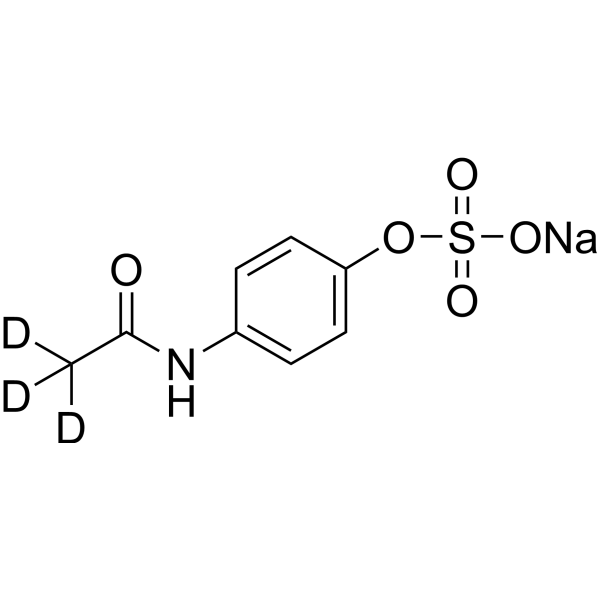
N-(4-Hydroxyphenyl)acetamide sulfate-d3 (sodium) is the deuterium labeled N-(4-Hydroxyphenyl)acetamide sulfate.
|
-
-
- HY-Y0946S2
-
|
|
|
Acetamide-d5 is the deuterium labeled Acetamide . Acetamide is used as an intermediate in the synthesis of methylamine, thioacetamide, and insecticides, and as a plasticizer in leather, cloth and coatings. Acetamide has carcinogenicity .
|
-
-
- HY-Y0946S
-
|
|
|
Acetamide- 15N is the 15N-labeled Acetamide. Acetamide is used as an intermediate in the synthesis of methylamine, thioacetamide, and insecticides, and as a plasticizer in leather, cloth and coatings. Acetamide has carcinogenicity .
|
-
-
- HY-W768057
-
|
|
|
Acetamide- 13C2, 15N is the 13C- and 15N-labeled Acetamide (HY-Y0946). Acetamide is used as an intermediate in the synthesis of methylamine, thioacetamide, and insecticides, and as a plasticizer in leather, cloth and coatings. Acetamide has carcinogenicity. Acetamide derivatives may has antioxidant activity and potential anti-inflammatory activity. Acetamide holds promise for research in the fields of anti-inflammatory and cancer studies .
|
-
-
- HY-W700136
-
|
|
|
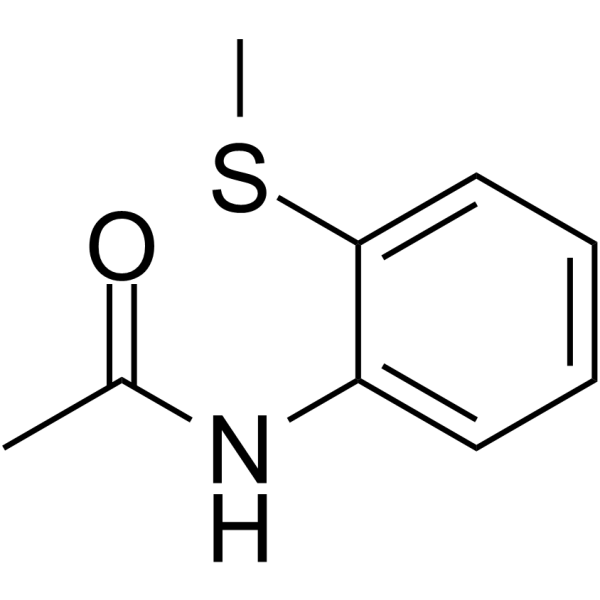
N-(4-(Benzyloxy)-3-(methylthio)phenyl)acetamide-d3 is the deuterium labeled N-(4-(Benzyloxy)-3-(methylthio)phenyl)acetamide (HY-W699901).
|
-
-
- HY-W140566S
-
|
|
|
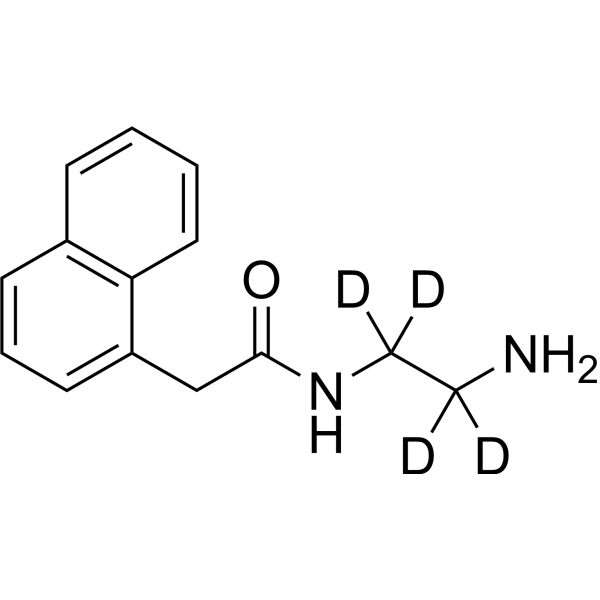
N-(2-Aminoethyl)-2-(naphthalen-1-yl)acetamide-d4 is deuterium labeled N-(2-Aminoethyl)-2-(naphthalen-1-yl)acetamide.
|
-
-
- HY-176145S
-
|
|
|
N-Benzyl-2-iodo-N-(prop-2-yn-1-yl)acetamide- 13C is the 13C-labeled N-Benzyl-2-iodo-N-(prop-2-yn-1-yl)acetamide.
|
-
-
- HY-W707708
-
|
|
|
N-(4-Ethoxyphenyl)acetamide-2,2,2-d3 is the deuterium labeled Phenacetin (HY-B0476). Phenacetin (Acetophenetidin) is a non-opioid analgesic/antipyretic agent. Phenacetin is a selective COX-3 inhibitor. Phenacetin is used as probe of cytochrome P450 enzymes CYP1A2 in human liver microsomes and in rats .
|
-
-
- HY-Y0946S1
-
-
-
- HY-W009512S
-
|
|
|
N-(2,6-Dimethylphenyl)-2-(piperazin-1-yl)acetamide-d8 is the deuterium labeled N-(2,6-Dimethylphenyl)-2-(piperazin-1-yl)acetamide .
|
-
-
- HY-W747973
-
|
|
|
N2,9-Diacetylguanine- 13C2, 15N (N-(9-Acetyl-6,9-dihydro-6-oxo-1H-purin-2-yl)acetamide- 13C2, 15N) is the 13C- and 15N-labeled N2,N9-Diacetylguanine (HY-41619).
|
-
-
- HY-W706908
-
|
|
|
Des(isopropylamino) atenolol diol-d5 is the deuterium labeled 2-(4-(2,3-Dihydroxypropoxy)phenyl)acetamide (Atenolol Impurity) (HY-Z7632).
|
-
-
- HY-W742886
-
|
|
|
Dideschloro Florfenicol-d3 is the deuterium labeled Acetamide, N-[1-(fluoromethyl)-2-hydroxy-2-[4-(methylsulfonyl)phenyl]ethyl]-, [R-(R*,S*)]- (HY-W587855).
|
-
-
- HY-W743678
-
|
|
|
4-Hydroxymelatonin-d4 is the deuterium labeled N-[2-(4-Hydroxy-5-methoxy-1H-indol-3-yl)ethyl]acetamide (HY-W587926).
|
-
-
- HY-W009512S1
-
|
|
|
N-(2,6-Dimethylphenyl)-2-(piperazin-1-yl)acetamide-d6 (N-[(2-chlorophenyl)carbamoyl]phenylalanine-d6) is deuterium-labeled CVT-2738 (HY-W009512). CVT-2738 is an orally active metabolite of Ranolazine (HY-B0280). CVT-2738 has a protective effect against isoprenaline (HY-108353)-induced myocardial ischemia in mice. CVT-2738 can be used in myocardial ischemia research .
|
-
-
- HY-W745844
-
|
|
|
Linagliptin Acetamide-d3 is the deuterium labeled Linagliptin Acetamide.
|
-
-
- HY-W243217
-
|
|
|
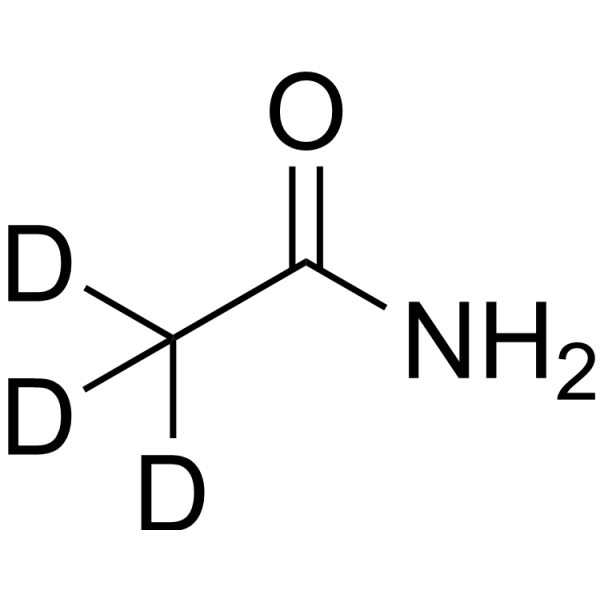
Acetamide-2,2,2-d3 is the deuterium labeled Acetamide-2,2,2-d3 .
|
-
-
- HY-W087930S
-
|
|
|
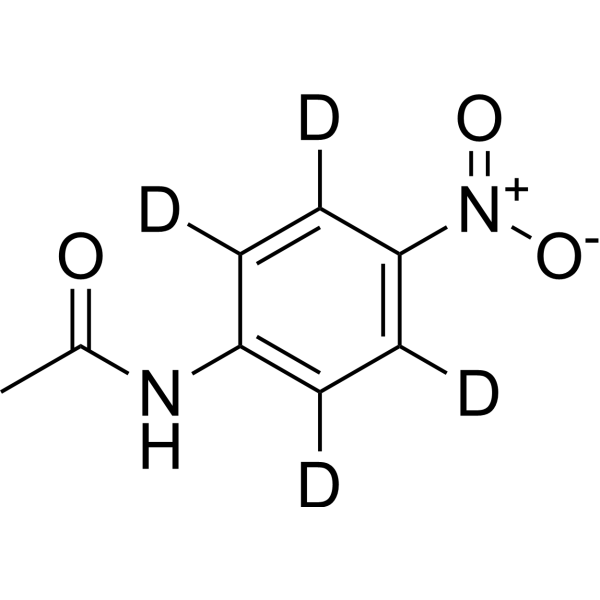
N-(4-Nitrophenyl)acetamide-d4 is the deuterium labeled N-(4-Nitrophenyl)acetamide .
|
-
-
- HY-W706083
-
|
|
|
N-(4-hydroxycyclohexyl)acetamide-d10 is the deuterium labeled N-(4-hydroxycyclohexyl)acetamide (HY-W078945).
|
-
-
- HY-W740574
-
|
|
|
N-([1,1'-Biphenyl]-4-yl)acetamide-d5 (4-Acetylaminobiphenyl-d5) is the deuterium labeled N-([1,1'-Biphenyl]-4-yl)acetamide (HY-W014335).
|
-
-
- HY-Y0191S
-
|
|
|
α-Pyridone-d5 (2-Pyridone-d5) is the deuterium labeled α-Pyridone (HY-Y0191). α-Pyridone (2-Pyridone) is an antibacterial agent. α-Pyridone can be synthesized via the 1,4-addition of 2-(phenylsulfinyl)acetamide to α,β-unsaturated ketones followed by cyclization and sulfoxide elimination. α-Pyridone can also be used to synthesize a wide range of heterocyclic compounds .
|
-
| Cat. No. |
Product Name |
|
Classification |
-
- HY-136205
-
|
Iodoacetamide-alkyne; N-Hex-5-ynyl-2-iodo-acetamide
|
|
Alkynes
|
|
IA-Alkyne (Iodoacetamide-alkyne; N-Hex-5-ynyl-2-iodo-acetamide) is a TRP channel (TRPC) agonist and has the potential for the study of respiratory infection . IA-Alkyne can be used to develop an isotopically tagged probe for quantitative cysteine-reactivity profiling . IA-Alkyne is a click chemistry reagent, it contains an Alkyne group and can undergo copper-catalyzed azide-alkyne cycloaddition (CuAAc) with molecules containing Azide groups.
|
Your information is safe with us. * Required Fields.
Inquiry Information
- Product Name:
- Cat. No.:
- Quantity:
- MCE Japan Authorized Agent:





![N,N-Dimethyl-2-[4-(tetramethyl-1,3,2-dioxaborolan-2-yl)-1H-pyrazol-1-yl]acetamide](http://file.medchemexpress.com/product_pic/hy-43045.gif)


![2-[(Diphenylmethyl)thio]acetamide (Standard)](http://file.medchemexpress.com/product_pic/hy-w009565r.gif)


![N-[5-2-[Azo]phenyl]acetamide](http://file.medchemexpress.com/product_pic/hy-d0532.gif)


![2-Cyano-N-[4-(trifluoromethyl)phenyl]acetamide (Standard)](http://file.medchemexpress.com/product_pic/hy-78861r.gif)


![N-([1,1'-Biphenyl]-4-yl)acetamide-d5](http://file.medchemexpress.com/product_pic/hy-w740574.gif)
![2-[[[4-(Acetylamino)phenyl]sulfonyl][(4-fluorophenyl)methyl]amino]-N-(9-ethyl-9H-carbazol-3-yl)acetamide](http://file.medchemexpress.com/product_pic/hy-402277.gif)





