1. Search Result
Search Result
Results for "

carbonyl groups

" in MedChemExpress (MCE) Product Catalog:

86

阻害剤およびアゴニスト

11

蛍光色素

13

生化学アッセイ試薬

1

ペプチド

9

天然物

1

同位体標識化合物

6

クリックケミストリー

1

オリゴヌクレオチド

Targets Recommended:
製品番号 製品名 Target 研究分野 構造式
  • HY-66019
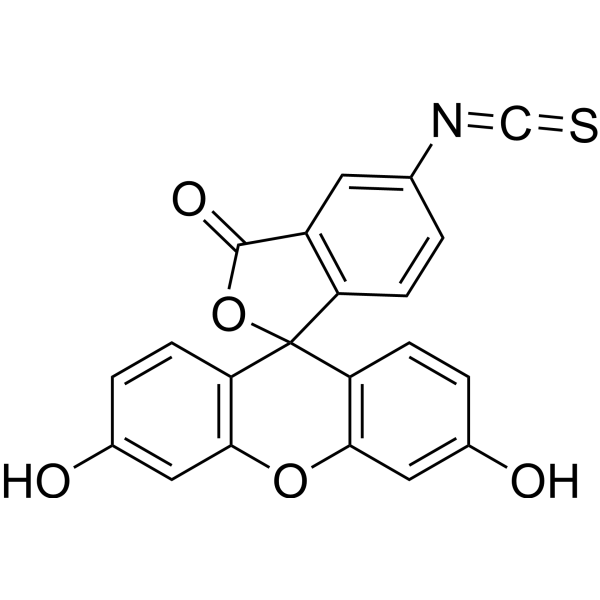
    FITC
    90+ Cited Publications

    Fluorescein 5-isothiocyanate

    Fluorescent Dye Inflammation/Immunology
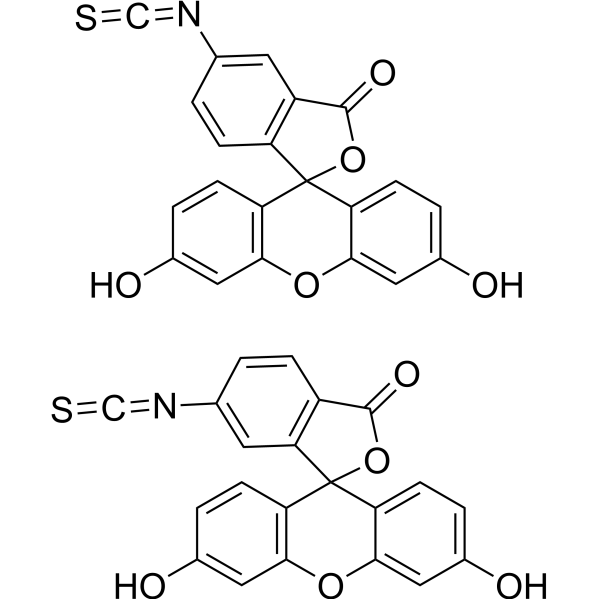
    FITC (Fluorescein Isothiocyanate), is one of the green fluorescein derivatives widely used in biology. FITC has the characteristics of high absorptivity and excellent fluorescence quantum yield. The isothiocyanate group of FITC can be combined with amino, sulfhydryl, imidazole, tyrosyl, carbonyl and other groups on the protein, so as to achieve protein labeling including antibodies and lectins. In addition to its use as a protein marker, FITC can also be used as a fluorescent protein tracer to rapidly identify pathogens by labeling antibodies, or for microsequencing of proteins and peptides (HPLC). The maximum excitation wavelength of FITC is 494 nm. Once excited, it fluoresces yellow-green at a maximum emission wavelength of 520 nm. In addition, FITC is also a hapten that can induce contact hypersensitivity (CHS) and induce an atopic dermatitis model .
    FITC
  • HY-128851
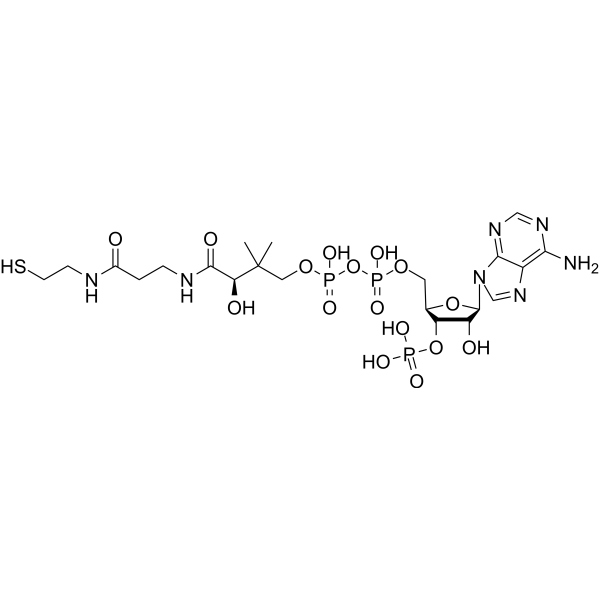
    Coenzyme A
    2 Publications Verification

    Endogenous Metabolite Fatty Acid Synthase (FASN) Metabolic Disease Cancer
    Coenzyme A (CoASH) is a ubiquitous and essential cofactor, which is an acyl group carrier and carbonyl-activating group for the citric acid cycle and fatty acid metabolism. Coenzyme A plays a central role in the oxidation of pyruvate in the citric acid cycle and the metabolism of carboxylic acids, including short- and long-chain fatty acids .
    Coenzyme A
  • HY-79880

    1,1'-carbonyldiimidazole

    MOFs Others
    N,N'-Carbonyldiimidazole (1,1'-Carbonyldiimidazole) is a highly reactive carboxylating reagent that can activate hydroxyl groups to form reactive carbonyl groups. N,N'-Carbonyldiimidazole can be used as a coupling agent and a peptide synthesis reagent .
    N,N'-Carbonyldiimidazole
  • HY-128851B
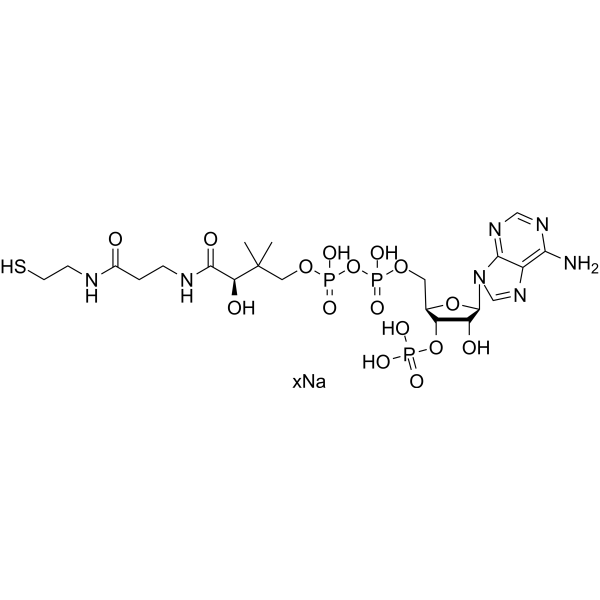
    Coenzyme A sodium
    2 Publications Verification

    Endogenous Metabolite Fatty Acid Synthase (FASN) Metabolic Disease Cancer
    Coenzyme A (CoASH) sodium is a ubiquitous and essential cofactor, which is an acyl group carrier and carbonyl-activating group for the citric acid cycle and fatty acid metabolism. Coenzyme A plays a central role in the oxidation of pyruvate in the citric acid cycle and the metabolism of carboxylic acids, including short- and long-chain fatty acids .
    Coenzyme A sodium
  • HY-15941
    5(6)-FITC
    2 Publications Verification

    Fluorescein 5(6)-isothiocyanate; Fluorescein isothiocyanate 5- and 6- isomers

    Fluorescent Dye Others
    5(6)-FITC (Fluorescein 5(6)-isothiocyanate) is an amine-reactive derivative of a fluorescent dye, characterized by high absorbance and excellent fluorescence quantum yield. The isothiocyanate group of FITC can react with various functional groups on proteins, including amines, thiols, imidazoles, tyrosines and carbonyls, enabling the labeling of proteins such as antibodies and lectins. 5(6)-FITC has a wide range of applications, including flow cytometry, immunofluorescence, protease assays and conjugation. The maximum excitation/emission wavelengths are 492/518 nm .
    5(6)-FITC
  • HY-128851A
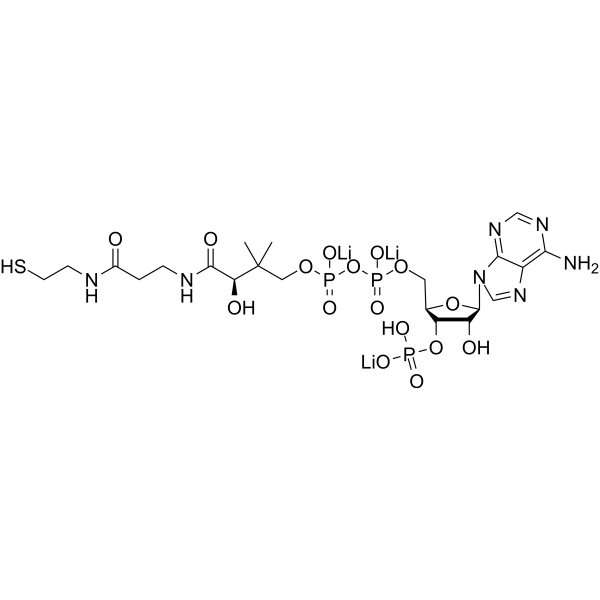
    Coenzyme A trilithium
    2 Publications Verification

    Endogenous Metabolite Fatty Acid Synthase (FASN) Metabolic Disease Cancer
    Coenzyme A (CoASH) is a ubiquitous and essential cofactor, which is an acyl group carrier and carbonyl-activating group for the citric acid cycle and fatty acid metabolism. Coenzyme A plays a central role in the oxidation of pyruvate in the citric acid cycle and the metabolism of carboxylic acids, including short- and long-chain fatty acids .
    Coenzyme A trilithium
  • HY-20128

    Drug Intermediate Others
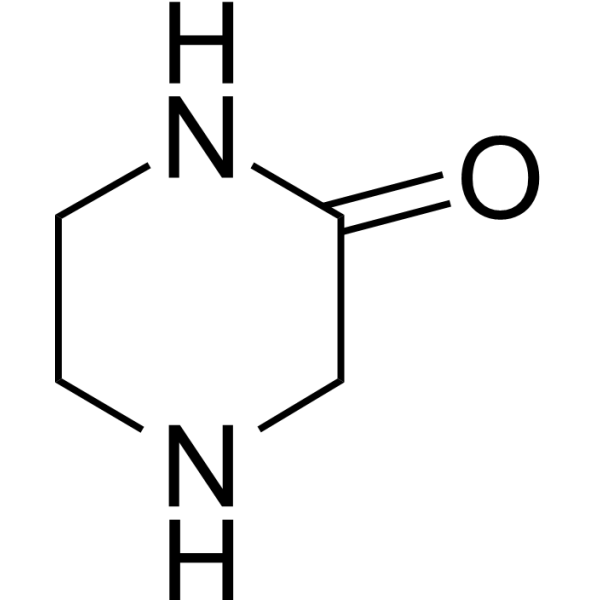
    Piperazin-2-one is a piperazine ring derivative containing amide and ester carbonyl groups. As an important intermediate, Piperazin-2-one can be used for the synthesis of various active compounds .
    Piperazin-2-one
  • HY-40228

    (R)-2-Methylpropane-2-sulfinamide

    Biochemical Assay Reagents Others
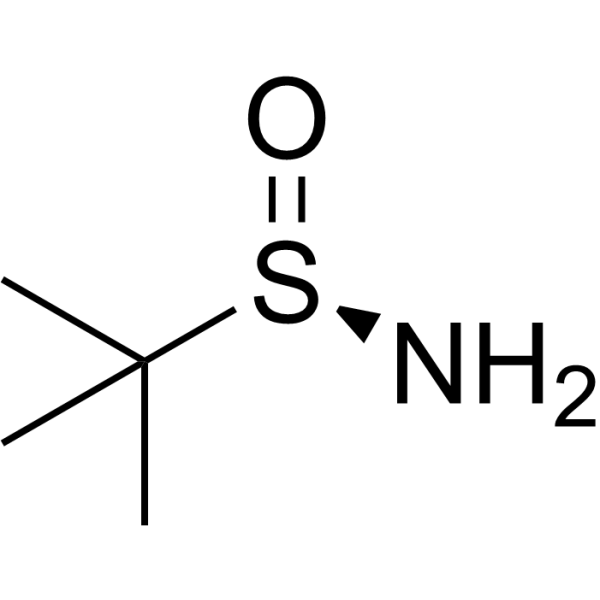
    (R)-(+)-tert-Butylsulfinamide ((R)-2-Methylpropane-2-sulfinamide) is a chiral reagent commonly used in the asymmetric synthesis of compounds such as amines, amino acids, and amino alcohols. (R)-(+)-tert-Butylsulfinamide achieves stereoselective reactions by condensing with carbonyl groups to form sulfinyl imine intermediates, and after the reaction, this group can be removed under acidic conditions to obtain the target product .
    (R)-(+)-tert-Butylsulfinamide
  • HY-DY1007

    Fluorescent Dye Inflammation/Immunology
    FITC (Fluorescein Isothiocyanate) (solution) , is one of the green fluorescein derivatives widely used in biology. FITC has the characteristics of high absorptivity and excellent fluorescence quantum yield. The isothiocyanate group of FITC can be combined with amino, sulfhydryl, imidazole, tyrosyl, carbonyl and other groups on the protein, so as to achieve protein labeling including antibodies and lectins. In addition to its use as a protein marker, FITC can also be used as a fluorescent protein tracer to rapidly identify pathogens by labeling antibodies, or for microsequencing of proteins and peptides (HPLC). The maximum excitation wavelength of FITC is 494 nm. Once excited, it fluoresces yellow-green at a maximum emission wavelength of 520 nm. In addition, FITC is also a hapten that can induce contact hypersensitivity (CHS) and induce an atopic dermatitis model .
    Solvent and concentration: DMSO: 20 mM
    The 1 mL volume is defined as the base specification. All larger sizes correspond to incremental volumes of this base.
    FITC (solution)
  • HY-76440

    Oxetan-3-one

    Biochemical Assay Reagents Others
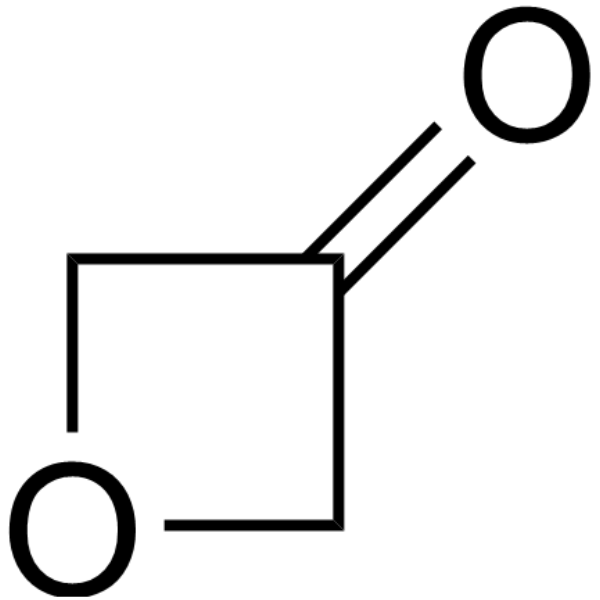
    3-Oxetanone (Oxetan-3-one) is a four-membered cyclic ketone and strained cyclic ether derivative with measurable molecular g-value, magnetic susceptibility anisotropy and molecular quadrupole moment. 3-Oxetanone acts not only as a hydrogen bond acceptor, a tetrel donor and a weak hydrogen bond acceptor, but also forms a classic O-H···O hydrogen bond with H2O via the ether oxygen atom. Alternatively, it forms a C···O tetrel bond with formaldehyde using its carbonyl group as a tetrel donor, while acting as a proton acceptor to form a C-H···O weak hydrogen bond with formaldehyde. 3-Oxetanone can be used to prepare various oxetanes .
    3-Oxetanone
  • HY-W879045

    Endo-BCN-PEG5-NH2

    Biochemical Assay Reagents Others
    Endo-BCN-PEG5-amine (Endo-BCN-PEG5-NH2) is a click chemistry crosslinker reagent. The BCN groupis very reactive with azide-tagged molecules. The amino group is reactive with carboxylic acids, activated NHS esters, carbonyls (ketone, aldehyde) etc .
    Endo-BCN-PEG5-amine
  • HY-W590569

    Biochemical Assay Reagents Others
    Azido-PEG12-amine is a water soluble PEG compound. The azide group enables Click Chemistry. The amine group is reactive with carboxylic acids, activated NHS esters, carbonyls (ketone, aldehyde), etc. The hydrophilic PEG arm increases solubility in aqueous media.
    Azido-PEG12-amine
  • HY-D1336

    Fluorescent Dye
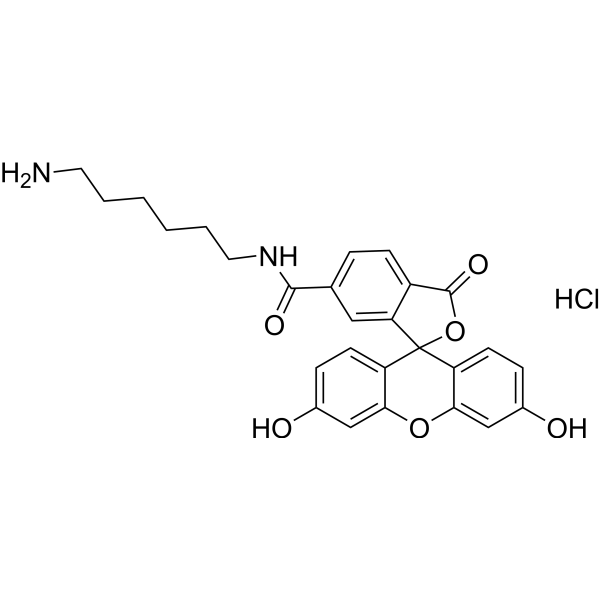
    FAM amine, 6-isomer is a fluorescein derivative with an amine group and contains an isomer of the fluorophore. Can be used to modify biomolecules through enzymatic transamination. Its fatty amine groups can also react with electrophiles such as activated esters. The amine can also be conjugated to carbonyl compounds (aldehydes and ketones) by reductive amination.
    FAM amine, 6-isomer
  • HY-77817

    2-Formylpyrrole

    Others Others
    Pyrrole-2-carboxaldehyde (2-Formylpyrrole) has vibrational and electronic characteristics used to establish the existence of dimeric form in solid phase and monomeric form in solution phase. Pyrrole-2-carboxaldehyde is a five membered N-heterocyclic system containing pyrrole group as a proton donor and carbonyl group as a proton acceptor .
    Pyrrole-2-carboxaldehyde
  • HY-W017425

    Phenylhydrazine acetate

    Biochemical Assay Reagents Others
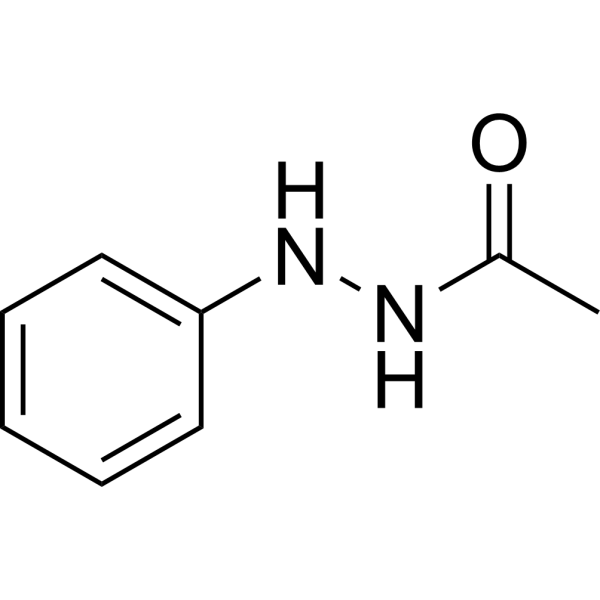
    N'-Phenylacetohydrazide consists of a phenyl group attached to the acetylhydrazide functional group via a hydrazine bond. This compound is commonly used as a reagent in organic chemistry for the determination of carbonyl compounds such as aldehydes and ketones.
    N'-Phenylacetohydrazide
  • HY-W012971

    Biochemical Assay Reagents Others
    5-Amino-1-pentanol is a linker containing a hydroxyl group and amine group. The hydroxyl group enables further derivatization or replacement with other reactive functional groups. The amine group is reactive with carboxylic acids, activated NHS esters, carbonyls (ketone, aldehyde) etc.
    5-Amino-1-pentanol
  • HY-42773

    1-Boc-1,8-diaminooctane

    PROTAC Linkers Cancer
    tert-Butyl (8-aminooctyl)carbamate (1-Boc-1,8-diaminooctane) can be used as a PROTAC linker in the synthesis of PROTACs. tert-butyl (8-aminooctyl)carbamate is an alkane chain with terminal amine and Boc-protected amino groups. Amine group is reactive with carboxylic acids, activated NHS esters, carbonyls (ketone, aldehyde) etc. The Boc group can be deprotected under mild acidic conditions to form the free amine.
    tert-Butyl (8-aminooctyl)carbamate
  • HY-21983

    Amino Acid Derivatives Others
    O-Acetyl-N-[(1,1-dimethylethoxy)carbonyl]-L-threonine is a compound containing both an amino group and a carboxyl group.
    O-Acetyl-N-[(1,1-dimethylethoxy)carbonyl]-L-threonine
  • HY-W190915

    Biochemical Assay Reagents Others
    4,7,10,13,16–Pentaoxanonadecane-1,19-diamine is a PEG based linker with two terminal amine groups. The amine group is reactive with carboxylic acids, activated NHS esters, carbonyls (ketone, aldehyde) etc.
    4,7,10,13,16-Pentaoxanonadecane-1,19-diamine
  • HY-D2751

    Fluorescent Dye Others
    BP Fluor 488 Cadaverine is a carboxyl/carbonyl reactive building block used widely to modify carboxylic groups in the presence of activators (e.g. EDC or DCC) or activated esters (e.g. NHS esters) through a stable amide bond.
    BP Fluor 488 cadaverine
  • HY-W105744

    PROTAC Linkers Cancer
    10-Aminodecanoic acid is an alkane chain with terminal carboxlic acid and amine groups. 10-Aminodecanoic acid can be used as a PROTAC linker in the synthesis of PROTACs and other conjugation applications. The amino group (NH2) is reactive with carboxylic acids, activated NHS esters, carbonyls (ketone, aldehyde) etc. The terminal carboxylic acid can react with primary amine groups of activated NHS ester to form a stable amide bond.
    10-Aminodecanoic acid
  • HY-128851R

    Reference Standards Fatty Acid Synthase (FASN) Endogenous Metabolite Metabolic Disease Cancer
    Coenzyme A (Standard) is the analytical standard of Coenzyme A. This product is intended for research and analytical applications. Coenzyme A (CoASH) is a ubiquitous and essential cofactor, which is an acyl group carrier and carbonyl-activating group for the citric acid cycle and fatty acid metabolism. Coenzyme A plays a central role in the oxidation of pyruvate in the citric acid cycle and the metabolism of carboxylic acids, including short- and long-chain fatty acids[1].
    Coenzyme A (Standard)
  • HY-W047688

    1-Boc-1,10-diaminodecane

    PROTAC Linkers Cancer
    tert-Butyl (10-aminodecyl) carbamate (1-Boc-1,10-diaminodecane) is a synthetic intermediate that serves as a PROTAC linker in PROTAC synthesis and other conjugation applications. tert-Butyl (10-aminodecyl) carbamate is an alkane chain with a terminal amine and a Boc-protected amino group. The amine group can react with carboxylic acids, active NHS esters, carbonyl groups (ketones, aldehydes), etc. The Boc group can be deprotected under mild acidic conditions to form a free amine .
    tert-Butyl (10-aminodecyl)carbamate
  • HY-W105727

    PROTAC Linkers Cancer
    9-Aminononanoic acid can be used as a PROTAC linker and other conjugation in the synthesis of PROTACs. 9-Aminononanoic acid is an alkane chain with terminal carboxlic acid and amine groups. The amino group (NH2) is reactive with carboxylic acids, activated NHS esters, carbonyls (ketone, aldehyde) etc. The terminal carboxylic acid can react with primary amine groups of activated NHS ester to form a stable amide bond.
    9-Aminononanoic acid
  • HY-151695

    N2-Fmoc-N6-[(propargyloxy)carbonyl]-L-lysine

    ADC Linker Others
    Fmoc-L-Lys(Pryoc)-OH (N2-Fmoc-N6-[(propargyloxy)carbonyl]-L-lysine) is a click chemistry reagent containing an azide group .
    Fmoc-L-Lys(Pryoc)-OH
  • HY-W998707

    Fluorescent Dye Others
    TAMRA amine, 5-isomer hydrochloride is a rhodamine dye with excitation/emission maximum 553/575 nm. The amine group is reactive with carboxylic acids, activated NHS esters, carbonyls (ketone, aldehyde) etc.
    TAMRA amine, 5-isomer hydrochloride
  • HY-42222

    Biochemical Assay Reagents Others
    N1,N5-Bis-Boc-spermidine is a linker containing an amino group with two Boc-protected amino groups. The amino group is reactive with carboxylic acids, activated NHS esters, carbonyls (ketone, aldehyde) etc. The Boc group can be deprotected under mild acidic conditions to form the free amine.
    N1,N5-Bis-boc-spermidine
  • HY-141147

    Drug-Linker Conjugates for ADC Cancer
    7-O-(Amino-PEG4)-paclitaxel is a PEG-class Drug-linker conjugates for ADC, containing a paclitaxel moiety and a amino group. The amine group is reactive with carboxylic acids, activated NHS esters, carbonyls (ketone, aldehyde) etc. 7-O-(Amino-PEG4)-paclitaxel can be used in the synthesis of Antibody-Drug Conjugates (ADCs) .
    7-O-(Amino-PEG4)-paclitaxel
  • HY-20128S

    Isotope-Labeled Compounds Drug Intermediate Others
    Piperazin-2-one-d6 is the deuterium labeled Piperazin-2-one (HY-20128). Piperazin-2-one is a piperazine ring derivative containing amide and ester carbonyl groups. As an important intermediate, Piperazin-2-one can be used for the synthesis of various active compounds .
    Piperazin-2-one-d6
  • HY-140095

    PROTAC Linkers Cancer
    N-(Propargyl-PEG4-carbonyl)-N-bis(PEG1-methyl ester) is a PEG-based PROTAC linker that can be used in the synthesis of PROTACs . N-(Propargyl-PEG4-carbonyl)-N-bis(PEG1-methyl ester) is a click chemistry reagent, it contains an Alkyne group and can undergo copper-catalyzed azide-alkyne cycloaddition (CuAAc) with molecules containing Azide groups.
    N-(Propargyl-PEG4-carbonyl)-N-bis(PEG1-methyl ester)
  • HY-W190921

    Biochemical Assay Reagents Others
    t-Butyl 3-(hydroxypropoxyl)-propanoate contains reactive hydroxyl and t-butyl protected carboxyl moieties. The hydroxyl group can react to further derivatize the compound. The t-butyl carbonyl group can be deprotected under acidic conditions.
    t-Butyl 3-(hydroxypropoxyl)-propanoate
  • HY-N16396

    Drug Derivative Others
    Ampelanol is a derivative of Altersolanol A (HY-125461). Ampelanol has no anticancer and anti-inflammatory activity through the reduction of one of a carbonyl group and removal of hydroxyl substituents within Altersolanol A. Ampelanol can be used as a negative control .
    Ampelanol
  • HY-W190918

    Biochemical Assay Reagents Others
    endo-BCN-PEG4-amine is a click chemistry crosslinker reagent. The BCN groupis very reactive with azide-tagged molecules. The amino group is reactive with carboxylic acids, activated NHS esters, carbonyls (ketone, aldehyde) etc.
    endo-BCN-PEG4-amine
  • HY-W101722

    PROTAC Linkers Cancer
    tert-Butyl (9-aminononyl)carbamate is an alkane chain with terminal amine and Boc-protected amino groups. The compound can be used as a PROTAC linker in the synthesis of PROTACs and other conjugation applications. Amine group is reactive with carboxylic acids, activated NHS esters, carbonyls (ketone, aldehyde) etc. The Boc group can be deprotected under mild acidic conditions to form the free amine.
    tert-Butyl (9-aminononyl)carbamate
  • HY-W879032

    Biochemical Assay Reagents Others
    Endo-BCN-PEG4-Pomalidomide is a PEG derivative composed of BCN, PEG4 and Pomalidomide (HY-10984). The BCN groupis very reactive with azide-tagged molecules. The amino group is reactive with carboxylic acids, activated NHS esters, carbonyls (ketone, aldehyde) etc .
    Endo-BCN-PEG4-Pomalidomide
  • HY-161998

    Bacterial Urease Others
    Urease-IN-16 (compound 4e) is a urease inhibitor, with an IC50 value of 132 μmol/L. Urease-IN-16 can coordinate with the nickel atom through the oxygen atoms of carbonyl or boronic acid groups. Urease-IN-16 shows great potential as an additive in the development of efficient fertilizers and medical applications .
    Urease-IN-16
  • HY-79880R

    1,1'-carbonyldiimidazole (Standard)

    Biochemical Assay Reagents Reference Standards Others
    N,N'-Carbonyldiimidazole (Standard) (1,1'-Carbonyldiimidazole (Standard)) is the analytical standard of N,N'-Carbonyldiimidazole (HY-79880). This product is intended for research and analytical applications. N,N'-Carbonyldiimidazole (1,1'-Carbonyldiimidazole) is a highly reactive carboxylating reagent that can activate hydroxyl groups to form reactive carbonyl groups. N,N'-Carbonyldiimidazole can be used as a coupling agent and a peptide synthesis reagent .
    N,N'-Carbonyldiimidazole (Standard)
  • HY-W879025

    Endo-BCN-PEG8-NH2

    Biochemical Assay Reagents Others
    Endo-BCN-PEG8-amine (Endo-BCN-PEG8-NH2) is a click chemistry crosslinker reagent. The BCN groupis very reactive with azide-tagged molecules. The amino group is reactive with carboxylic acids, activated NHS esters, carbonyls (ketone, aldehyde) etc .
    Endo-BCN-PEG8-amine
  • HY-32933

    Carbonic Anhydrase Metabolic Disease
    4-Acetylphenylboronic acid is a potent inhibitor of carbonic anhydrases II(CA II), with IC50s of 246 μM and 281.40 μM for bovine CA II (bCA II) and human CA II (hCA II). 4-Acetylphenylboronic acid can be obtained via mechanochemistry and solvent evaporation. 4-Acetylphenylboronic acid has a loss of the carbonyl group at 500-550 K .
    4-Acetylphenylboronic acid
  • HY-D1324

    Fluorescent Dye Others
    Cyanine5.5 hydrazide, an analog of Cyanine5.5 fluorophore, is a near-infrared (NIR) fluorescent dye. Cyanine5.5 hydrazide is used for labeling of biomolecules through the condensation between the hydrazide groups and the carbonyl groups. (λex=684 nm, λem=710 nm) .
    Cyanine5.5 hydrazide dichloride
  • HY-125161

    Bacterial Antibiotic Others
    MT0703 is an aminothiazolyl glycyl cephalosporin with a 1,5-dihydroxy-4-pyridone-2-carbonyl group and has good anti-Pseudomonas activity.
    MT0703
  • HY-154835

    Biochemical Assay Reagents Others
    N6-[[(4-Azidophenyl)methoxy]carbonyl]-L-lysine is an unnatural amino acid . N6-[[(4-Azidophenyl)methoxy]carbonyl]-L-lysine is a click chemistry reagent, it contains an Azide group and can undergo copper-catalyzed azide-alkyne cycloaddition reaction (CuAAc) with molecules containing Alkyne groups. It can also undergo strain-promoted alkyne-azide cycloaddition (SPAAC) reactions with molecules containing DBCO or BCN groups.
    N6-[[(4-Azidophenyl)methoxy]carbonyl]-L-lysine
  • HY-160124

    FGFR Cancer
    Infigratinib-Boc is a derivative of Infigratinib containing a Boc (t-Butyloxy carbonyl) group. Infigratinib is an ATP-competitive pan-FGFR inhibitor .
    Infigratinib-Boc
  • HY-132270

    Fluorescent Dye Others
    FAM amine, 5-isomer is a fluorescein linker that undergoes enzymatic transamination. The addition of the amine group makes the compound more reactive with carboxylic acids, activated NHS ester and other carbonyl groups.
    FAM amine, 5-isomer
  • HY-W800651

    Biochemical Assay Reagents Others
    Biotin-SS-Amine hydrochloride is a cleavable biotinylation reagent. The amine group can react with carboxylic acids, activated NHS esters and other carbonyl groups. The disulfide bond in this linker can be cleaved using reducing agents such as DTT, BME and TCEP.
    Biotin-SS-Amine hydrochloride
  • HY-W800654

    Biochemical Assay Reagents Others
    Mal-PEG5-amine is a PEG linker containing a maleimide group and an amine group. The hydrophilic PEG spacer increases solubility in aqueous media. The amine group is reactive with carboxylic acids, activated NHS esters, carbonyls (ketone, aldehyde) etc. The maleimide group will react with a thiol group to form a covalent bond, enabling the connection of biomolecule with a thiol.
    Mal-PEG5-amine
  • HY-W591965

    Biochemical Assay Reagents Others
    t-Boc-Aminooxy-pentane-amine is a linker containing an aminooxy group and a primary amine. The aminooxy group can be used in bioconjugation. It reacts with an aldehyde to form an oxime bond. If a reductant is used, it will form a hydroxylamine linkage. The amino group is reactive with carboxylic acids, activated NHS esters, carbonyls (ketone, aldehyde) etc.
    t-Boc-aminooxy-pentane-amine
  • HY-42213

    Biochemical Assay Reagents Others
    N1,N4-Bis-Boc-spermidine is a linker containing an amino group with two Boc-protected amino groups. The amino group is reactive with carboxylic acids, activated NHS esters, carbonyls (ketone, aldehyde) etc. The Boc group can be deprotected under mild acidic conditions to form the free amine.
    N1,N4-Bis-Boc-spermidine
  • HY-W747533

    C8 Ceramine; Ceramine (d18:1/8:0)

    Drug Derivative Others
    C8 Ceramine is an analog of ceramide in which the carbonyl group of the ceramide is replaced by a methylene group. At a concentration of 10 μM, C8 ceramine induces maximal DNA fragmentation in U937 cells after 6 hours of incubation, compared to 12 hours for C8 ceramide.
    C8 Ceramine, D-erythro
  • HY-172284

    Fluorescent Dye Others
    6-TAMRA cadaverine has achieved prominence as a dye for oligonucleotide labeling and automated DNA sequencing applications. The amino group (NH2) is reactive with carboxylic acids, activated NHS esters, carbonyls (ketone, aldehyde), etc.
    6-TAMRA cadaverine

オンラインお問い合わせ

入力情報は安全に管理されます. 必須入力項目.

タイトル


国或いは地域 *

お名前 *


組纖名 *

デパートメント *


メールアドレス *


製品名 *

製品番号


カスタマ需要量 *

電話番号 *


必ず会社名を記載ください。個人への返信は行いません。

備考

バルクお問い合わせ

Inquiry Information

製品名:
製品番号:
数量:
MCE 日本正規代理店:

