Search Result
Results for "
japonicus
" in MedChemExpress (MCE) Product Catalog:
| Cat. No. |
Product Name |
Target |
Research Areas |
Chemical Structure |
-
- HY-N0515
-
|
|
PPAR
NF-κB
Calcium Channel
Reactive Oxygen Species (ROS)
ERK
|
Cardiovascular Disease
Metabolic Disease
Inflammation/Immunology
|
|
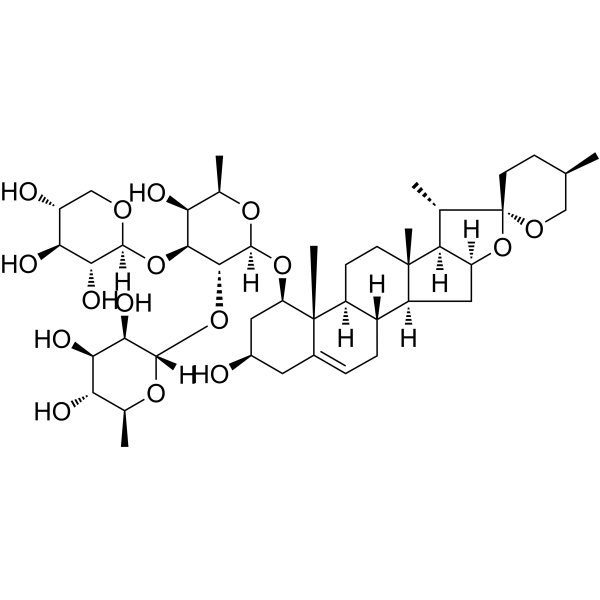
Ophiopogonin D can be isolated from the tubers of Ophiopogon japonicus, is a rare naturally occurring C29 steroidal glycoside. Ophiopogonin D is a CYP2J3 inducer that significantly inhibits Ang II induced NF-κB nuclear translocation, IκBα down-regulation, intracellular Ca 2+ overload and activation of pro-inflammatory cytokines by increasing the expression of CYP2J2/EETs and PPARα in human umbilical vein endothelial cells (HUVECs). Ophiopogonin D can inhibit isteoclastic differentiation in RAW264.7 cells. Ophiopogonin D has protective effect as an antioxidant in H2O2-induced endothelial injury. Ophiopogonin D blocks ERK signaling cascades. Ophiopogonin D alleviates high-fat diet-induced metabolic syndrome and changes the structure of gut microbiota in mice. Ophiopogonin D has been used against inflammatory, metabolic and cardiovascular diseases .
|
-
-
- HY-N1073
-
|
6-Isopentenylgenistein; Erythrinin B
|
Apoptosis
EGFR
HSP
ERK
Akt
|
Infection
Cancer
|
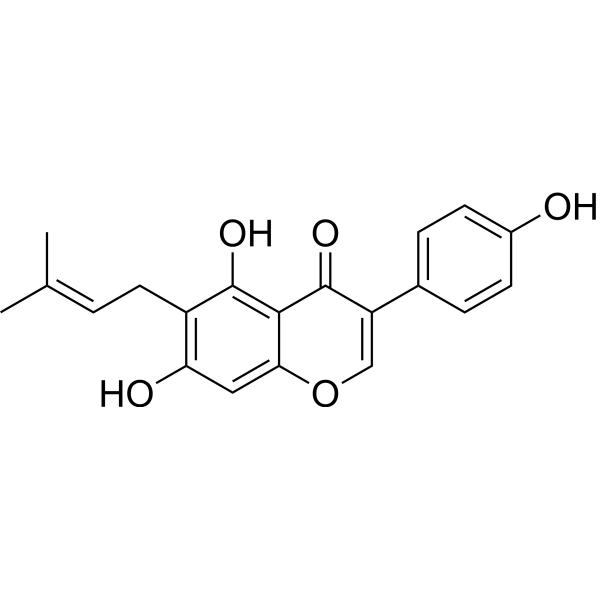
Wighteone (6-Isopentenylgenistein; Erythrinin B) is a prenylated isoflavone that acts as a HSP90/EGFR L858R/T790M inhibitor and antifungal agent. Wighteone reduces the expression level of HSP90, blocks EGF-induced phosphorylation of EGFR, and thereby inhibits the downstream ERK and AKT signaling pathways. Wighteone induces cell cycle redistribution, inhibits proliferation and triggers apoptosis in cancer cells. Wighteone can be isolated from Erythrina suberosa, and can also be induced to synthesize in Lotus japonicus under specific conditions. Wighteone can be used to study HER2-positive breast cancer, leukemia, non-small cell lung cancer with EGFR L858R/T790M mutation, and fungal infections .
|
-
-
- HY-N0496
-
Ruscogenin
Maximum Cited Publications
6 Publications Verification
|
NOD-like Receptor (NLR)
|
Cardiovascular Disease
|
|
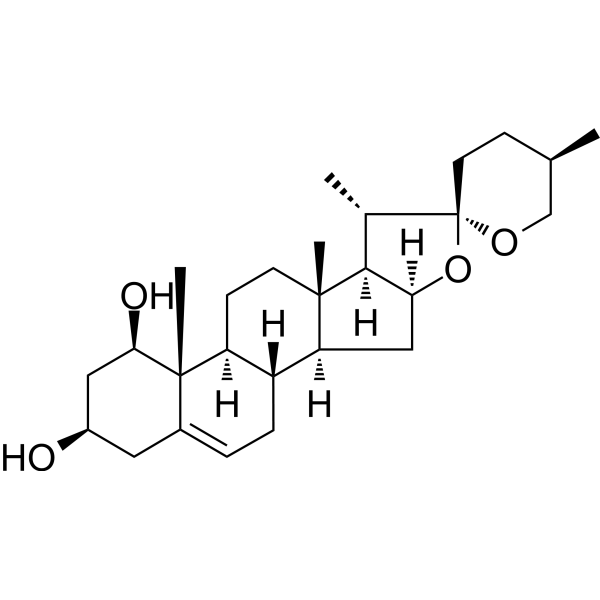
Ruscogenin, an important steroid sapogenin derived from Ophiopogon japonicus, attenuates cerebral ischemia-induced blood-brain barrier dysfunction by suppressing TXNIP/NLRP3 inflammasome activation and the MAPK pathway. Ruscogenin exerts significant anti-inflammatory and anti-thrombotic activities. Ruscogenin has orally bioactivity .
|
-
-
- HY-N0914
-
-
-
- HY-N5091
-
|
|
Others
|
Inflammation/Immunology
Cancer
|
|
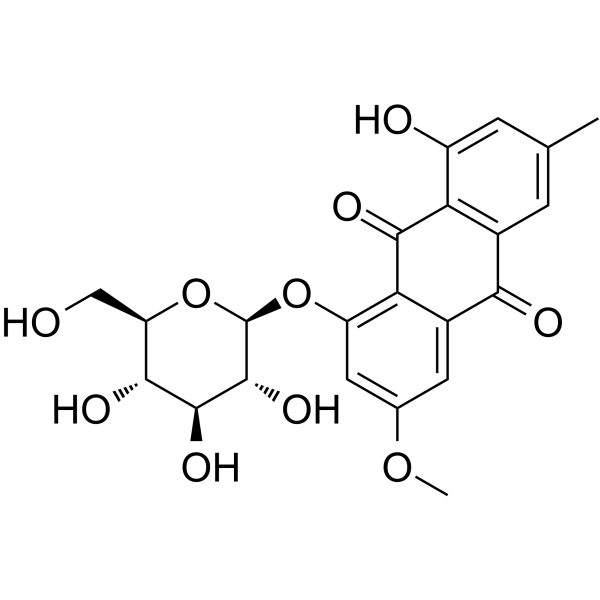
Physcion 8-O-β-D-glucopyranosideis an anthraquinone compound isolated from Rumex japonicus Houtt. Physcion 8-O-β-D-glucopyranoside exerts anti-inflammatory and anti-cancer properties, can be for common malignancy cancer research .
|
-
-
- HY-N2438
-
|
|
Ras
Microtubule/Tubulin
|
Cancer
|
|
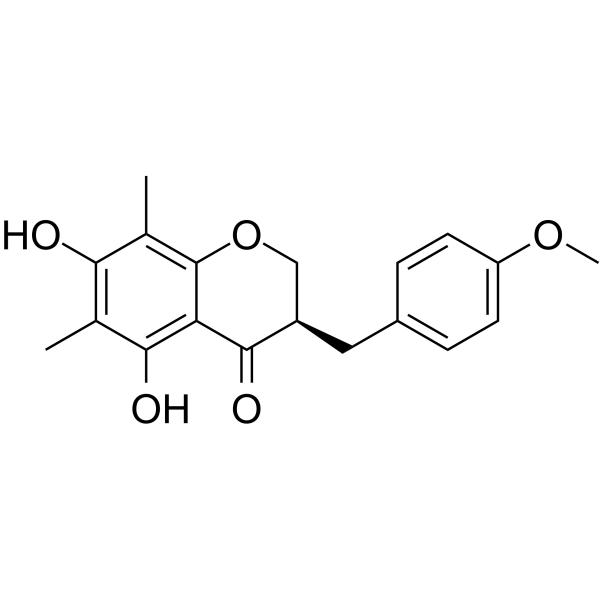
Methylophiopogonanone B is a homoisoflavonoid compound. Methylophiopogonanone B can be isolated from O. japonicus root. Methylophiopogonanone B promotes Rho activation and Tubulin depolymerization. Methylophiopogonanone B significantly increases GTP-Rho, but not GTP-Rac or GTP-CDC42. Methylophiopogonanone B induces cell morphological change via melanocyte dendrite retraction and stress fiber formation. Methylophiopogonanone B exhibits strong antioxidant activity. Methylophiopogonanone B can be used in the research of cervical cancer .
|
-
-
- HY-E70396
-
|
|
Biochemical Assay Reagents
|
Others
|
|
Pectolyase Y-23, A. japonicus is an enzyme derived from Aspergillus japonicas. Pectolyase Y-23, A. japonicus can be used in combination with cellulase to isolate bioactive protoplasts .
|
-

-
- HY-N7942
-
|
|
Others
|
Others
|
|
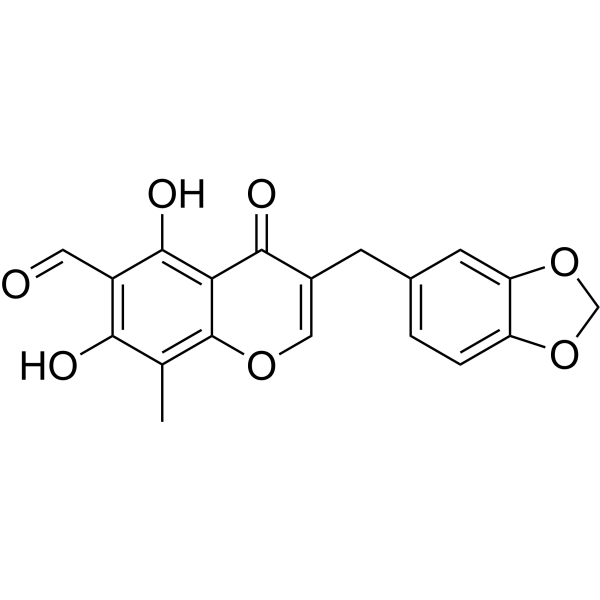
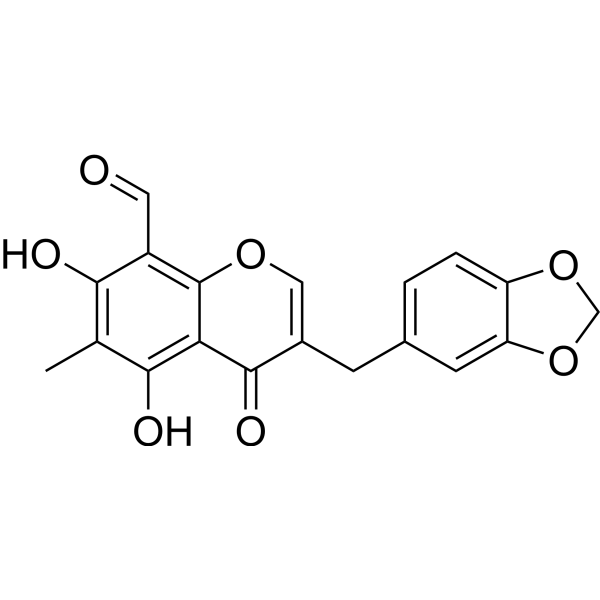
6-Aldehydoisoophiopogonone A is a homoisoflavonoid that can be isolated from Ophiopogon japonicus .
|
-
-
- HY-N3505
-
|
|
Others
|
Others
|
|
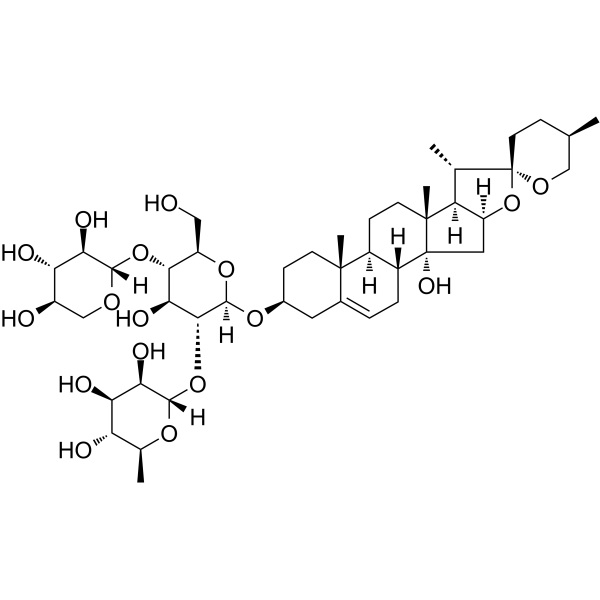
14-Hydroxy sprengerinin C is a steroidal compound found in Ophiopogon japonicus.
|
-
-
- HY-N7293
-
|
|
Histamine Receptor
|
Inflammation/Immunology
|
|
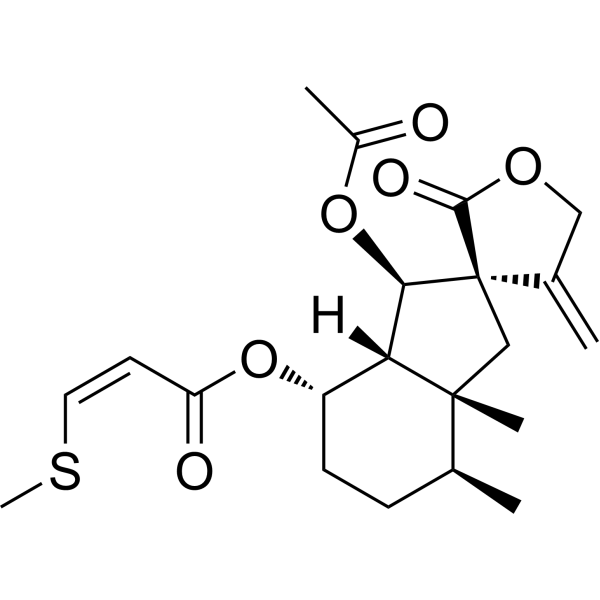
Bakkenolide D is a sesquiterpene lactone. Bakkenolide D is the major component of Bakkenolides in Petasites tricholobus. Bakkenolide D exhibits anti-allergic and antihistamine activities, and can be used in studies related to allergic rhinitis .
|
-
-
- HY-N11985
-
|
|
Others
|
Others
|
|
Ophiopogonone C (compound 3) is an isoflavone compound isolated from the ethanol extract of Ophiopogon japonicus tubers .
|
-
-
- HY-N0515R
-
|
|
Reference Standards
PPAR
NF-κB
Calcium Channel
ERK
Reactive Oxygen Species (ROS)
|
Cardiovascular Disease
Metabolic Disease
Inflammation/Immunology
|
|
Ophiopogonin D (Standard) is the analytical standard of Ophiopogonin D. This product is intended for research and analytical applications. Ophiopogonin D can be isolated from the tubers of Ophiopogon japonicus, is a rare naturally occurring C29 steroidal glycoside. Ophiopogonin D is a CYP2J3 inducer that significantly inhibits Ang II induced NF-κB nuclear translocation, IκBα down-regulation, intracellular Ca2+ overload and activation of pro-inflammatory cytokines by increasing the expression of CYP2J2/EETs and PPARα in human umbilical vein endothelial cells (HUVECs). Ophiopogonin D can inhibit isteoclastic differentiation in RAW264.7 cells. Ophiopogonin D has protective effect as an antioxidant in H2O2-induced endothelial injury. Ophiopogonin D blocks ERK signaling cascades. Ophiopogonin D alleviates high-fat diet-induced metabolic syndrome and changes the structure of gut microbiota in mice. Ophiopogonin D has been used against inflammatory, metabolic and cardiovascular diseases .
|
-

-
- HY-N2174
-
|
|
Others
|
Cardiovascular Disease
|
|
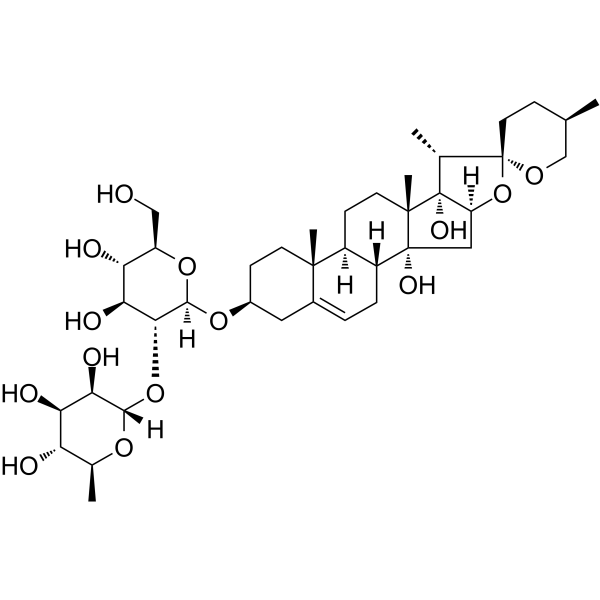
Ophiogenin 3-O-α-L-rhamnopyranosyl-(1→2)-β-D-glucopyranoside, a terpenoid glycoside from Ophiopogon japonicus roots, has good pharmacological effects on the cardiovascular system .
|
-
-
- HY-N2516
-
-
-
- HY-N2175
-
|
|
Others
|
Metabolic Disease
|
|
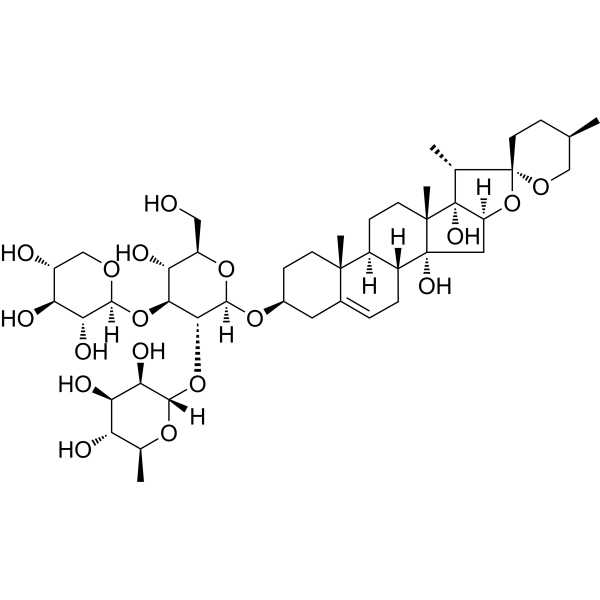
Cixiophiopogon A, a steroidal glycoside, obtained from the tuberous roots of Ophiopogon japonicus (Liliaceae) .
|
-
-
- HY-N10912
-
|
|
Others
|
Infection
|
|
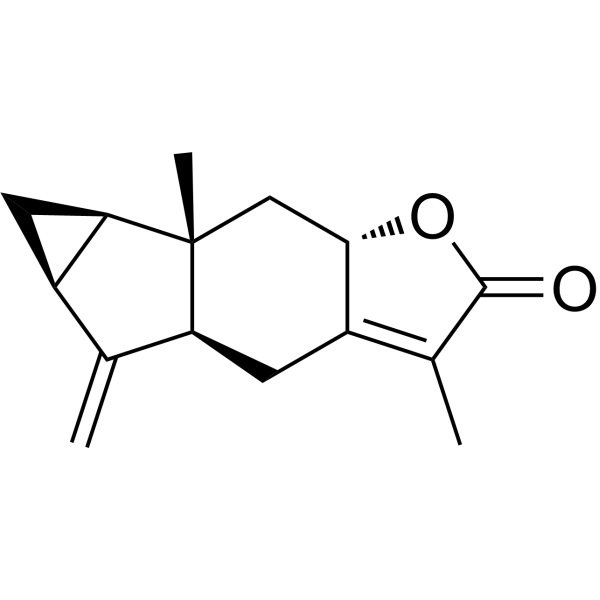
Shizukanolide, a sesquiterpene lactone, can be isolated from Chloranthus japonicus (Chloranthaceae). The dehydro-compound of Shizukanolide, shows moderate antifungal activity .
|
-
-
- HY-N0496R
-
|
|
Reference Standards
NOD-like Receptor (NLR)
|
Cardiovascular Disease
|
|
Ruscogenin (Standard) is the analytical standard of Ruscogenin. This product is intended for research and analytical applications. Ruscogenin, an important steroid sapogenin derived from Ophiopogon japonicus, attenuates cerebral ischemia-induced blood-brain barrier dysfunction by suppressing TXNIP/NLRP3 inflammasome activation and the MAPK pathway. Ruscogenin exerts significant anti-inflammatory and anti-thrombotic activities. Ruscogenin has orally bioactivity .
|
-

-
- HY-N14021
-
|
|
DNA/RNA Synthesis
|
Neurological Disease
Inflammation/Immunology
Cancer
|
|
Petasites japonicus extract is the extract from Petasites japonicus with antioxidant, anti-inflammatory, anti-obesity, neuroprotective and anti-cancer effects. Petasites japonicus extract promotes osteoblast differentiation via up-regulation of Runx2 and Osterix in MC3T3-E1 cells .
|
-

-
- HY-N10601
-
|
Neoilexonol
|
Others
|
Others
|
|
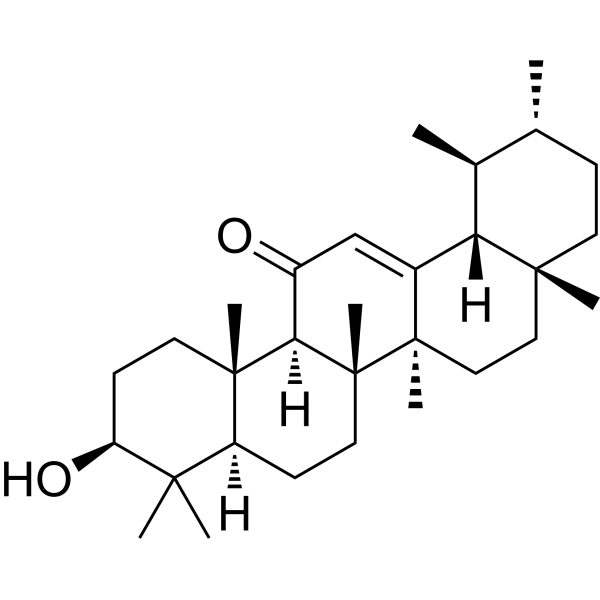
11-Oxo-α-amyrin (Neoilexonol) is a triterpenoid that can be isolated from Leonurus japonicus (Lamiaceae) .
|
-
-
- HY-N16654
-
|
|
Others
|
Others
|
|
Panaxjapyne B is a polyacetylene compound. Panaxjapyne B can be isolated from roots of P. japonicus var. major .
|
-

-
- HY-142063
-
|
Fukinotoxin
|
Endogenous Metabolite
|
Others
|
|
Petasitenine (Fukinotoxin) is a pyrrolizidine alkaloid that can be found in the plant Petasites japonicus, which is a carcinogenic metabolite of neopetasitenine. Petasitenine causes lactate dehydrogenase leakage, and exhibits hepatotoxicity .
|
-

-
- HY-122367
-
|
|
Bacterial
|
Neurological Disease
|
|
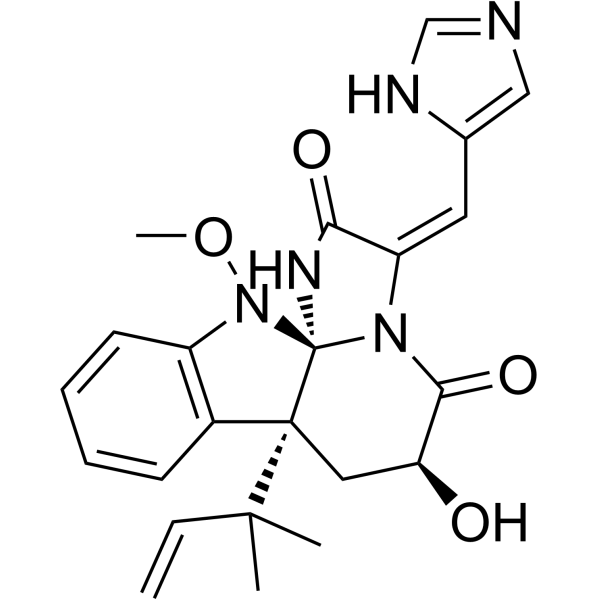
Neoxaline is an alkaloid produced by Aspergillus japonicus. Neoxaline does not possess antimicrobial activities, but weakly stimulates the central nervous system .
|
-
-
- HY-N13108
-
|
|
Others
|
Others
|
|
8-Formylophiopogonone B can be isolated from Ophiopogon japonicus,
|
-

-
- HY-N9021
-
|
|
Others
|
Others
|
|
Isoleojaponin is a Diterpenoids product that can be isolated from the herbs of Leonurus japonicus. .
|
-

-
- HY-N3129
-
|
(-)-Oplopanone; 10α-Hydroxyoplopan-4-one
|
Others
|
Others
|
|
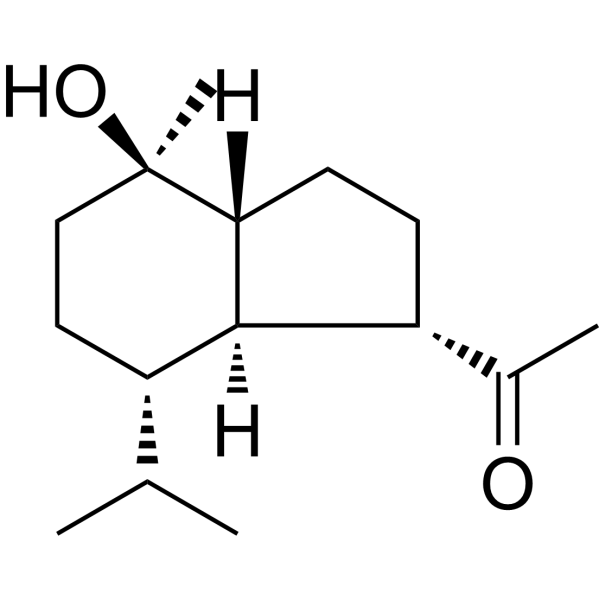
Oplopanon ((-)-Oplopanone) is a sesquiterpenic ketone that can be isolated from Oplopanax japonicus .
|
-
-
- HY-N8938
-
|
|
Others
|
Others
|
|
Jasminoid A is a Sesquiterpenoids product that can be isolated from the herbs of Chloranthus japonicus .
|
-

-
- HY-N3889
-
|
|
Others
|
Others
|
|
Excisanin B is a Diterpenoids product that can be isolated from the herbs of Isodon japonicus .
|
-

-
- HY-N7940
-
|
|
Others
|
Others
|
|
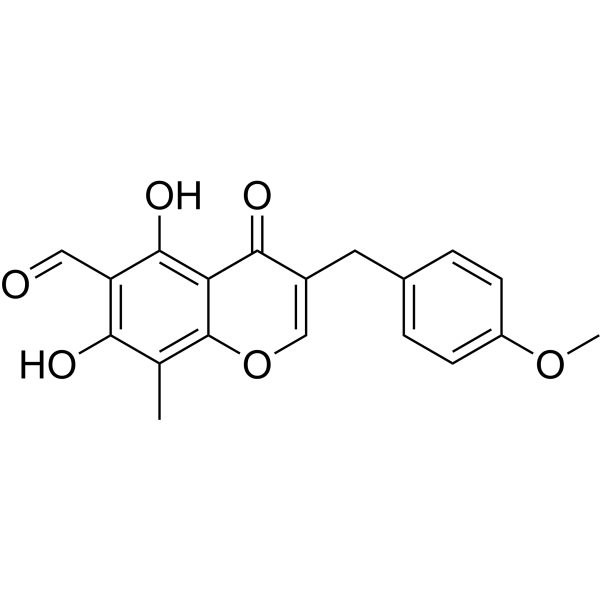
6-Aldehydoisoophiopogonone B (Compound 24) is a homoisoflavonoid that can be isolated from Ophiopogon japonicus .
|
-
-
- HY-N9167
-
|
|
Others
|
Others
|
|
6α-Hydroxyhispanone is a Diterpenoids product that can be isolated from the aerial parts of Leonurus japonicus .
|
-

-
- HY-N3131
-
|
|
Others
|
Others
|
|
Ophiopogonanone F is a Flavonoids product that can be isolated from the tubers of Ophiopogon japonicus(Thunb) Ker-Gawl. .
|
-

-
- HY-N8319
-
|
|
Others
|
Others
|
|
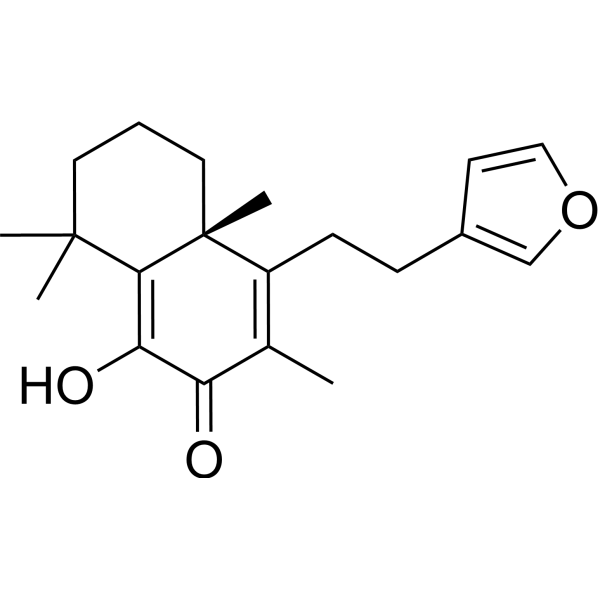
Leojaponin (compound 2 ) is a labdane diterpene. Leojaponin can be isolated from the EtOH extract of the herb Leonurus japonicus .
|
-
-
- HY-N1300
-
|
|
Fungal
|
Infection
Cancer
|
|
Shizukanolide F is a dimeric sesquiterpene, which is derivated from Chloranthus japonicus Sieb. Shizukanolide F exhibits potent antifungal activities against various plant pathogenic fungi and anti-metastasis breast cancer .
|
-

-
- HY-N12131
-
|
|
Others
|
Metabolic Disease
|
|
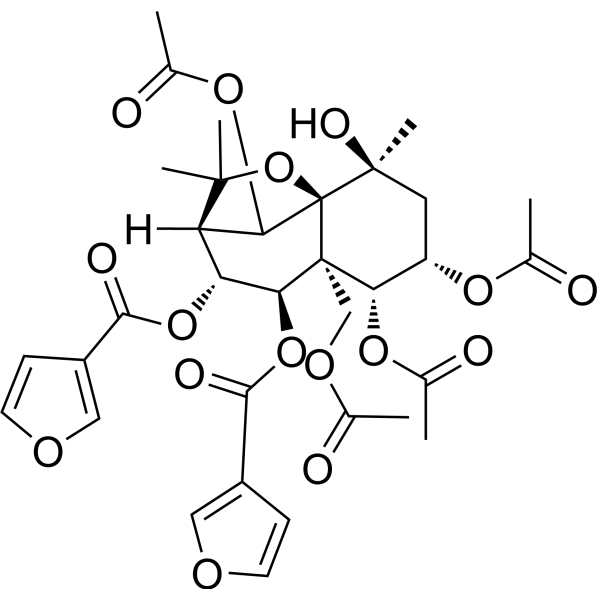
Ejaponine A (Compound 1) is an insecticidal sesquiterpene ester. Ejaponine A is obtained from the natural Euonymus japonicus. Ejaponine A has Mythimna separata killing activity (LD5089.2 μgg -1). Ejaponine A is used to kill Mythimna separata .
|
-
-
- HY-N9188
-
|
|
Others
|
Others
|
|
3-(2,4-Dihydroxybenzyl)-5-hydroxy-7,8-dimethoxy-6-methylchroman-4-one is a Flavonoids product that can be isolated from the fibrous root of Ophiopogon japonicus. .
|
-

-
- HY-N11983
-
|
|
Others
|
Others
|
|
(25R)-Ruscogenin-3-yl α-L-rhamnopyranosyl-(1→2)-[β-D-xylopyranosyl-(1→4)]-β-D-glucopyranoside (compound 1) is a steroidal saponin , can be isolated from the roots of Ophiopogon japonicus .
|
-
![(25R)-Ruscogenin-3-yl α-L-rhamnopyranosyl-(1→2)-[β-D-xylopyranosyl-(1→4)]-β-D-glucopyranoside](//file.medchemexpress.com/product_pic/hy-n11983.gif)
-
- HY-N6061
-
|
|
Others
|
Cancer
|
|
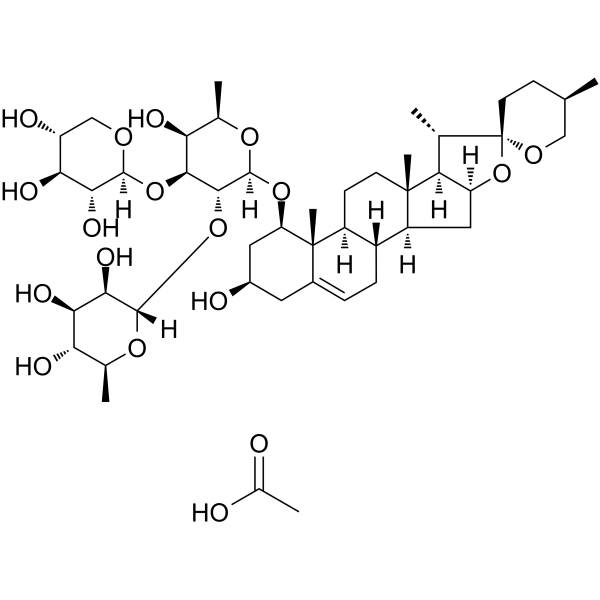
Ophiopogonin C, isolated from the tubers of Ophiopogon japonicus, is a rare naturally occurring C29 steroidal glycoside. Ophiopogonin C shows cytotoxic activity against two human tumor cell lines MG-63 and SNU387 with IC50s of 19.76 μM and 15.51 μM, respectively .
|
-
-
- HY-N10876
-
|
|
Others
|
Others
|
|
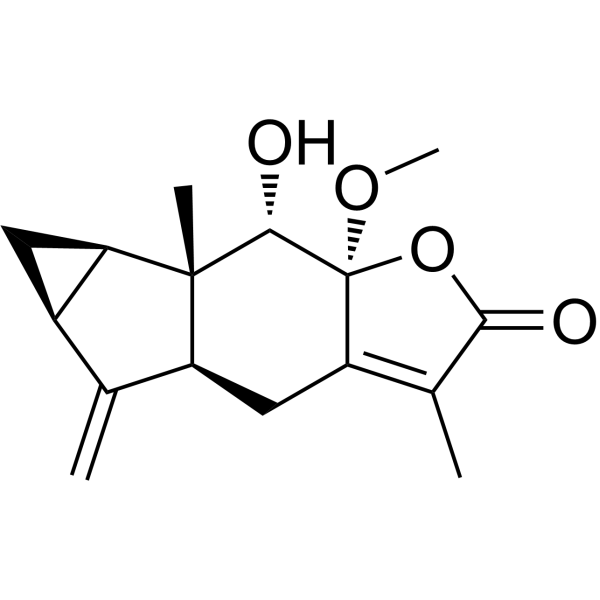
8-epi-Chlorajapolide F (compound 1) a sesquiterpene that can be isolated from the aboveground part of the Chloranthus japonicus. 8-epi-Chlorajapolide has few cytotoxic to human cancer cell lines NCI-H460 and SMMC-7721 (IC50s>50 μg/mL) .
|
-
-
- HY-N13177
-
|
|
Others
|
Inflammation/Immunology
|
|
25(S)Ruscogenin 3-O-α-L-rhamnopyranoside is from the fibrous roots of Ophiopogon japonicus and Liriope spicata var. prolifera. 25(S)Ruscogenin 3-O-α-L-rhamnopyranoside exhibits anti-inflammatory activity by inhibiting neutrophil responses to PMA (HY-18739), with an IC50 value of 1.13 μM .
|
-

-
- HY-N0914R
-
-

-
- HY-N19045
-
|
|
Others
|
Others
|
|
Ophiopogon Japonicus Extract is obtained from the dried roots of the Liliaceae plant Ophiopogon japonicus. Its main active ingredient is Ophiopogon japonicus polysaccharides. It can be used in functional cosmetics, such as creams, lotions, lotions, essences, and masks.
|
-

-
- HY-113038AR
-
|
2-Hydroxyglutarate disodium (Standard); 2-Hydroxyglutaric acid disodium (Standard); 2-Hydroxypentanedioic acid disodium (Standard)
|
Reference Standards
Histone Demethylase
Endogenous Metabolite
|
Cancer
|
|
Ophiopogonin D (Standard) is the analytical standard of Ophiopogonin D. This product is intended for research and analytical applications. Ophiopogonin D, isolated from the tubers of Ophiopogon japonicus, is a rare naturally occurring C29 steroidal glycoside . Ophiopogonin D is a CYP2J3 inducer that significantly inhibits Ang II induced NF-κB nuclear translocation, IκBα down-regulation, intracellular Ca2+ overload and activation of pro-inflammatory cytokines by increasing the expression of CYP2J2/EETs and PPARα in human umbilical vein endothelial cells (HUVECs). Ophiopogonin D has been used to treat inflammatory and cardiovascular diseases for thousands of years .
|
-

-
- HY-E70100A
-
|
|
Biochemical Assay Reagents
|
Others
|
|
Acetyl xylan esterase, Cellvibrio japonicus (EC 3.1.1.72) is an enzyme that catalyzes a chemical reaction, the deacetylation of xylans and xylo-oligosaccharides. Acetyl xylan esterase, Cellvibrio japonicus (EC 3.1.1.72) belongs to the family of hydrolases, specifically those acting on carboxylic ester bonds.
|
-

-
- HY-E70103J
-
-

-
- HY-E70101B
-
|
|
Endogenous Metabolite
|
Metabolic Disease
|
|
α-Glucuronidase, Cellvibrio japonicus (EC 3.2.1.139), is a glycosidase that hydrolyzes O- and S-glycosides. Its two substrates are α-D-glucuronide and water, and its two products are an alcohol and D-glucuronic acid.
|
-

-
- HY-E70119B
-
|
|
Biochemical Assay Reagents
|
Metabolic Disease
|
|
Pectate Lyase, Cellvibrio japonicus (EC 4.2.2.2) is an enzyme involved in the maceration and soft rotting of plant tissue. Pectate lyase is responsible for the eliminative cleavage of pectate, yielding oligosaccharides with 4-deoxy-α-D-mann-4-enuronosyl groups at their non-reducing ends.
|
-

-
- HY-E70897
-
|
|
Biochemical Assay Reagents
|
Metabolic Disease
|
|
Xylanase 10A, Cellvibrio japonicus (EC 3.2.1.8) is the name given to a class of enzymes which degrade the linear polysaccharide beta-1,4-xylan into xylose, thus breaking down hemicellulose, one of the major components of plant cell walls.
|
-

-
- HY-E71310
-
|
|
Biochemical Assay Reagents
|
Others
|
|
β-Mannanase 26A, Cellvibrio japonicus (EC 3.2.1.78) is an enzyme with system name 4-beta-D-mannan mannanohydrolase. This enzyme catalyses the following chemical reaction: Random hydrolysis of (1->4)-beta-D-mannosidic linkages in mannans, galactomannans and glucomannans.
|
-

-
- HY-N11078
-
|
|
Others
|
Others
|
|
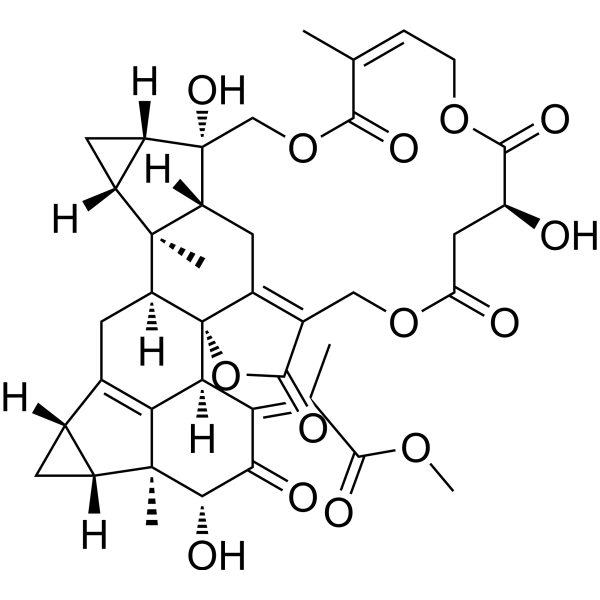
Shizukaol G is a dimeric sesquiterpene. Shizukaol G can be isolated from the roots of Chloranthus japonicus .
|
-
-
- HY-N19729
-
|
|
Others
|
Others
|
|
Chikusetsusaponin FK6 is a dammarane-type triterpenoid saponin that can be found in the fruits of Panax japonicus C. A. MEYER .
|
-

-
- HY-N18256
-
|
|
Others
|
Metabolic Disease
|
|
Leonuriside B is a hepatoprotective glycoside. Leonuriside B can be found in Chinese motherwort (Leonurus japonicus Houtt). Leonuriside B can be used for the research of liver-related disorders .
|
-

- HY-N13781
-
|
|
NO Synthase
|
Inflammation/Immunology
|
|
(-)-Sesamin 2,2'-diol is a nitric oxide (NO) production inhibitor with an IC50 of 310 μM for inhibiting LPS-induced NO production. (-)-Sesamin 2,2'-diol can be isolated from the aerial parts of Isodon japonicus. (-)-Sesamin 2,2'-diol abrogates NO production in LPS-stimulated macrophages without inducing cytotoxicity .
|
-

- HY-N8013
-
|
|
Others
|
Cancer
|
|
5-O,8-Dimethylophiopogonanone B is a homoisoflavanone found in the tuberous roots of Ophiopogon japonicus. 5-O,8-Dimethylophiopogonanone B shows cytotoxicity against cancer cells. 5-O,8-Dimethylophiopogonanone B can be used for the research of cancer, such as breast cancer .
|
-

- HY-N17957
-
|
|
Others
|
Cancer
|
|
Homoisopogon B is a homoisoflavane found in the tubers of Ophiopogon japonicus. Homoisopogon B shows cytotoxic activity against cancer cells. Homoisopogon B can be used for the research of cancer, such as human lung adenocarcinoma and human melanoma .
|
-

- HY-E71316A
-
|
|
Glycosidase
|
Others
|
|
β-Mannanase 26A, Celvibrio japonicas is an enzyme with system name 4-beta-D-mannan mannanohydrolase. This enzyme catalyses the following chemical reaction: Random hydrolysis of (1->4)-beta-D-mannosidic linkages in mannans, galactomannans and glucomannans.
|
-

- HY-N7936
-
|
|
Drug Derivative
|
Others
|
|
Ophiopogonanone H is a natural product that can be found in Ophiopogon japonicus?(L. f.) Ker Gawl..
|
-

- HY-N11533
-
|
|
Others
|
Others
|
|
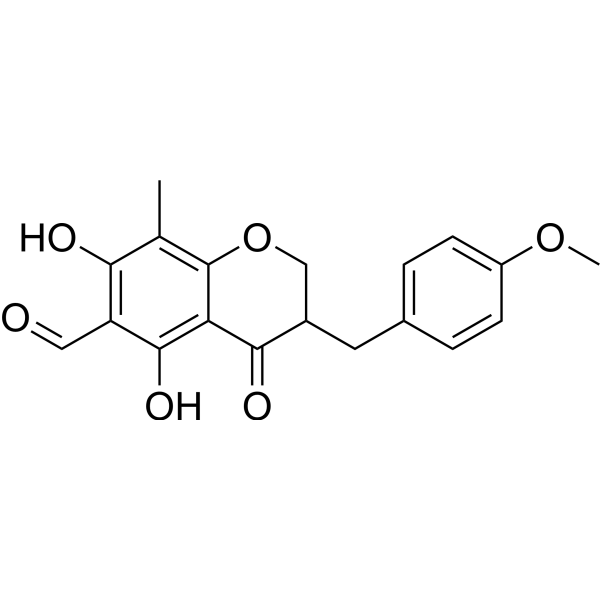
6-Formyl-isoophiopogonanone B is a homoisoflavonoid, which can be isolated from Ophiopogon japonicus .
|
-
- HY-N1740
-
|
|
Others
|
Others
|
|
2''-O-Acetylsprengerinin C is a Steroids product that can be isolated from the roots of Ophiopogon japonicus .
|
-

- HY-N9081
-
|
|
Others
|
Others
|
|
6β-Hydroxyhispanone is a Diterpenoids product that can be isolated from the aerial parts of Leonurus japonicus .
|
-

- HY-N9154
-
|
|
Others
|
Others
|
|
6-Dehydroxy-8-hydroxygaleopsinolone is a Diterpenoids product that can be isolated from the aerial parts of Leonurus japonicus .
|
-

- HY-N8019
-
|
|
Drug Derivative
|
Others
|
|
8-Formyl-5-O-methylophiopogonanone B is a natural product that can be found in Ophiopogon japonicus?(L. f.) Ker Gawl..
|
-

- HY-N13764
-
-

- HY-N10825
-
|
|
Others
|
Others
|
|
Glucopyranoside,(3beta,25R)-17-hydroxyspirost-5-en-3-yl is a Steroids product that can be isolated from the roots of Ophiopogon japonicus .
|
-

- HY-N9176
-
|
|
Others
|
Others
|
|
15,16-Epoxy-15-ethoxy-6β,13-dihydroxylabd-8-en-7-one is a Diterpenoids product that can be isolated from the aerial parts of Leonurus japonicus .
|
-

- HY-N17767
-
|
|
Others
|
Inflammation/Immunology
|
|
Leonoside F is a phenylethanoid glycoside compound isolated from the aerial parts of Leonurus japonicus Houtt., which protects liver cells from chemically induced damage. At a concentration of 1×10 -5 M, Leonoside F shows significant hepatoprotective activity against D-galactosamine-induced damage in HL-7702 liver cells, with an inhibition rate of 30.9% .
|
-

- HY-E70989
-
|
|
Biochemical Assay Reagents
|
Metabolic Disease
|
|
D-Fructose Dehydrogenase, Gluconobacter industrius (EC 1.1.99.11) is a heterotrimeric membrane-bound enzyme commonly seen in various Gluconobacter sp. especially in Gluconobacter japonicus (Gluconobacter industrius) .D-Fructose Dehydrogenase consists of subunits I (67kDa), II (51 kDa), and III (20 kDa) and catalyzes the oxidation of D-fructose to produce 5-keto-D-fructose. D-Fructose Dehydrogenase is a flavoprotein-cytochrome c complex with subunits I and II covalently bound to flavin adenine dinucleotide (FAD) and heme C as prosthetic groups, respectively.
|
-

- HY-E70989A
-
|
|
Biochemical Assay Reagents
|
Metabolic Disease
|
|
D-Fructose Dehydrogenase, Gluconobacter industrius (EC 1.1.99.11) is a heterotrimeric membrane-bound enzyme commonly seen in various Gluconobacter sp. especially in Gluconobacter japonicus (Gluconobacter industrius) .D-Fructose Dehydrogenase consists of subunits I (67kDa), II (51 kDa), and III (20 kDa) and catalyzes the oxidation of D-fructose to produce 5-keto-D-fructose. D-Fructose Dehydrogenase is a flavoprotein-cytochrome c complex with subunits I and II covalently bound to flavin adenine dinucleotide (FAD) and heme C as prosthetic groups, respectively.
|
-

- HY-N13470
-
|
|
Drug Isomer
|
Inflammation/Immunology
|
|
meso-Astaxanthin is a natural stereoisomer of astaxanthin with antioxidant activity and is found in a variety of aquatic animals. meso-Astaxanthin binds to human serum albumin in a monomeric form at a stoichiometric ratio; at low ligand-to-protein ratios, human serum albumin acts as a chiral template for supramolecular assembly at higher ratios. meso-Astaxanthin directly scavenges superoxide anions. meso-Astaxanthin can be used in the research of myocardial ischemia-reperfusion injury .
|
-

| Cat. No. |
Product Name |
Category |
Target |
Chemical Structure |
-
- HY-N0515
-
-
-
- HY-N1073
-
|
6-Isopentenylgenistein; Erythrinin B
|
Leguminosae
Genista ephedroides DC.
Plants
Isoflavones
Source Classification
|
Apoptosis
EGFR
HSP
ERK
Akt
|
Wighteone (6-Isopentenylgenistein; Erythrinin B) is a prenylated isoflavone that acts as a HSP90/EGFR L858R/T790M inhibitor and antifungal agent. Wighteone reduces the expression level of HSP90, blocks EGF-induced phosphorylation of EGFR, and thereby inhibits the downstream ERK and AKT signaling pathways. Wighteone induces cell cycle redistribution, inhibits proliferation and triggers apoptosis in cancer cells. Wighteone can be isolated from Erythrina suberosa, and can also be induced to synthesize in Lotus japonicus under specific conditions. Wighteone can be used to study HER2-positive breast cancer, leukemia, non-small cell lung cancer with EGFR L858R/T790M mutation, and fungal infections .
|
-
-
- HY-N0496
-
-
-
- HY-N0914
-
-
-
- HY-N5091
-
-
-
- HY-N2438
-
-
-
- HY-N7942
-
-
-
- HY-N3505
-
-
-
- HY-N7293
-
-
-
- HY-N11985
-
-
-
- HY-N0515R
-
|
|
Ophiopogon japonicus (L. f.) Ker-Gawl.
Liliaceae
Plants
Steroids
Source Classification
|
Reference Standards
PPAR
NF-κB
Calcium Channel
ERK
Reactive Oxygen Species (ROS)
|
|
Ophiopogonin D (Standard) is the analytical standard of Ophiopogonin D. This product is intended for research and analytical applications. Ophiopogonin D can be isolated from the tubers of Ophiopogon japonicus, is a rare naturally occurring C29 steroidal glycoside. Ophiopogonin D is a CYP2J3 inducer that significantly inhibits Ang II induced NF-κB nuclear translocation, IκBα down-regulation, intracellular Ca2+ overload and activation of pro-inflammatory cytokines by increasing the expression of CYP2J2/EETs and PPARα in human umbilical vein endothelial cells (HUVECs). Ophiopogonin D can inhibit isteoclastic differentiation in RAW264.7 cells. Ophiopogonin D has protective effect as an antioxidant in H2O2-induced endothelial injury. Ophiopogonin D blocks ERK signaling cascades. Ophiopogonin D alleviates high-fat diet-induced metabolic syndrome and changes the structure of gut microbiota in mice. Ophiopogonin D has been used against inflammatory, metabolic and cardiovascular diseases .
|
-
-
- HY-N2174
-
-
-
- HY-N2516
-
-
-
- HY-N2175
-
-
-
- HY-N10912
-
-
-
- HY-N0496R
-
-
-
- HY-N14021
-
-
-
- HY-N10601
-
-
-
- HY-N16654
-
-
-
- HY-122367
-
-
-
- HY-N13108
-
-
-
- HY-N9021
-
-
-
- HY-N3129
-
-
-
- HY-N8938
-
-
-
- HY-N3889
-
-
-
- HY-N7940
-
-
-
- HY-N9167
-
-
-
- HY-N3131
-
-
-
- HY-N8319
-
-
-
- HY-N1300
-
-
-
- HY-N12131
-
-
-
- HY-N9188
-
-
-
- HY-N11983
-
-
-
- HY-N6061
-
-
-
- HY-N10876
-
-
-
- HY-N13177
-
-
-
- HY-N0914R
-
-
-
- HY-N19045
-
|
|
Structural Classification
Extract
|
Others
|
|
Ophiopogon Japonicus Extract is obtained from the dried roots of the Liliaceae plant Ophiopogon japonicus. Its main active ingredient is Ophiopogon japonicus polysaccharides. It can be used in functional cosmetics, such as creams, lotions, lotions, essences, and masks.
|
-
-
- HY-113038AR
-
|
2-Hydroxyglutarate disodium (Standard); 2-Hydroxyglutaric acid disodium (Standard); 2-Hydroxypentanedioic acid disodium (Standard)
|
Ketones, Aldehydes, Acids
Endogenous metabolite
Source Classification
|
Reference Standards
Histone Demethylase
Endogenous Metabolite
|
|
Ophiopogonin D (Standard) is the analytical standard of Ophiopogonin D. This product is intended for research and analytical applications. Ophiopogonin D, isolated from the tubers of Ophiopogon japonicus, is a rare naturally occurring C29 steroidal glycoside . Ophiopogonin D is a CYP2J3 inducer that significantly inhibits Ang II induced NF-κB nuclear translocation, IκBα down-regulation, intracellular Ca2+ overload and activation of pro-inflammatory cytokines by increasing the expression of CYP2J2/EETs and PPARα in human umbilical vein endothelial cells (HUVECs). Ophiopogonin D has been used to treat inflammatory and cardiovascular diseases for thousands of years .
|
-
-
- HY-N11078
-
-
-
- HY-N19729
-
-
-
- HY-N18256
-
-
-
- HY-N13781
-
-
-
- HY-N8013
-
-
-
- HY-N17957
-
-
-
- HY-N7936
-
-
-
- HY-N11533
-
-
-
- HY-N1740
-
-
-
- HY-N9081
-
-
-
- HY-N9154
-
-
- HY-N8019
-
-
- HY-N13764
-
-
- HY-N10825
-
-
- HY-N9176
-
-
- HY-N17767
-
-
- HY-N13470
-
|
|
Other Terpenoids
Structural Classification
Natural Products
Animals
Terpenoids
Source Classification
|
Drug Isomer
|
|
meso-Astaxanthin is a natural stereoisomer of astaxanthin with antioxidant activity and is found in a variety of aquatic animals. meso-Astaxanthin binds to human serum albumin in a monomeric form at a stoichiometric ratio; at low ligand-to-protein ratios, human serum albumin acts as a chiral template for supramolecular assembly at higher ratios. meso-Astaxanthin directly scavenges superoxide anions. meso-Astaxanthin can be used in the research of myocardial ischemia-reperfusion injury .
|
-
| Cat. No. |
Compare |
Product Name |
Species |
Source |
Image |
Compare Products
|
| Products |
|
| Cat. No. |
|
| Species |
|
| Source |
|
| Tag |
|
| Accession |
|
| Gene ID |
|
| Molecular Weight |
|
| Purity |
|
| Endotoxin Level |
|
| Biological Activity |
|
| Appearance |
|
| Formulation |
|
| Storage & Stability |
|
| Shipping |
|
| Free Sample |
Yes
No
|
| Size |
* This product has been "discontinued".
Optimized version of product available:
|
Your information is safe with us. * Required Fields.
Inquiry Information
- Product Name:
- Cat. No.:
- Quantity:
- MCE Japan Authorized Agent:





![(25R)-Ruscogenin-3-yl α-L-rhamnopyranosyl-(1→2)-[β-D-xylopyranosyl-(1→4)]-β-D-glucopyranoside](http://file.medchemexpress.com/product_pic/hy-n11983.gif)








