Search Result
Results for "
1-9-pentadecadiene-4-6-diyne-3-8-diol-8-acetate
" in MedChemExpress (MCE) Product Catalog:
6
Biochemical Assay Reagents
10
Isotope-Labeled Compounds
| Cat. No. |
Product Name |
Target |
Research Areas |
Chemical Structure |
-
- HY-W010505
-
|
|
Biochemical Assay Reagents
Lipase
|
Others
|
|
Hexane-1,6-diol is a 6-carbon straight-chain diol with hydroxyl groups at both ends. Hexane-1,6-diol can be used as an additive for drilling fluids. Hexane-1,6-diol can also be used as a substrate in life science-related research .
|
-

-
- HY-W015788
-
|
Styrene Glycol
|
Environmental Pollutants
Drug Metabolite
Biochemical Assay Reagents
|
Neurological Disease
|
|
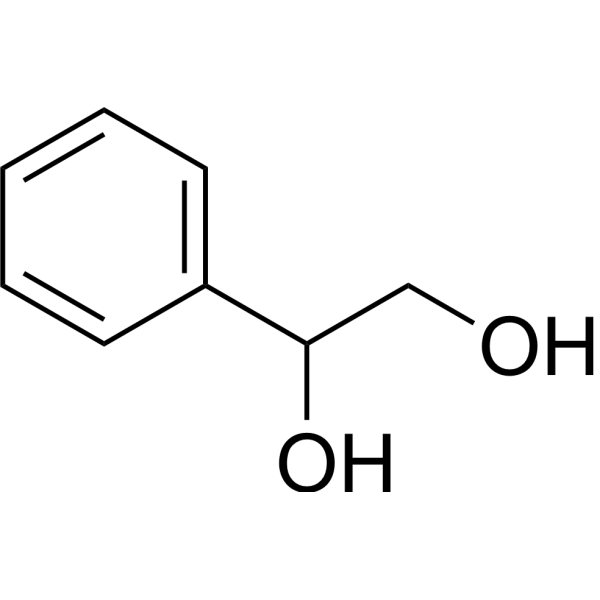
1-Phenylethane-1,2-diol (Styrene Glycol) is a benzyl diol compound, which is the major metabolite of Styrene. 1-Phenylethane-1,2-diol can be oxidized to hydroxyl ketone (2-hydroxy-1-phenylethan-1-one) selectively with variety of catalysts, including organocatalysts, metal complexes, non-noble metal oxides, bimetallics .
|
-
-
- HY-W004661
-
-
-
- HY-W392100A
-
|
PCL-diol (MW 530)
|
Biochemical Assay Reagents
Fungal
|
Infection
|
|
Polycaprolactone diol (MW 530) (PCL-diol (MW 530)) is a poly (ε-caprolactone) diol with an average molecular weight of 530 g·mol −1, which serves as a monomer for biodegradable network elastic polyesters. Network polyester films undergo enzymatic hydrolysis by Rhizopus delemar lipase .
|
-

-
- HY-W008393
-
-
-
- HY-W010514
-
|
|
Endogenous Metabolite
|
Metabolic Disease
|
|
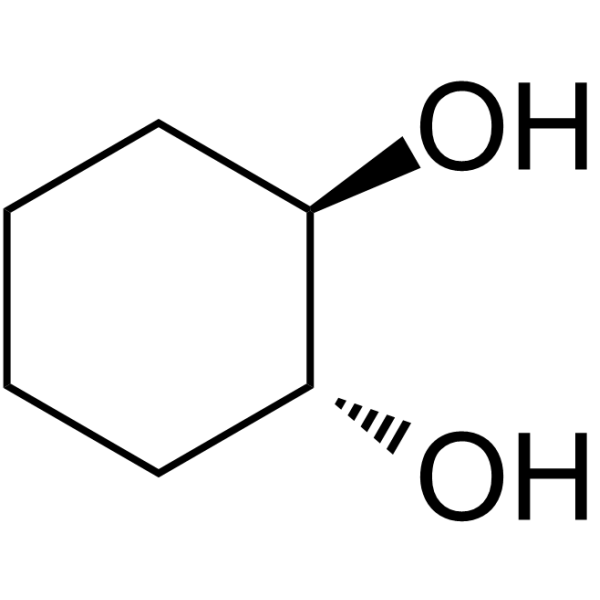
trans-Cyclohexane-1,2-diol (TCHD) is a transient dilator of the nuclear pore complex (NPC). By interacting with the hydrophobic core (FG nucleoporin) of the NPC, trans-Cyclohexane-1,2-diol can disrupt the NPC structure and reversibly increase the permeability of the nuclear pore, allowing macromolecules larger than 40 kDa (such as plasmid DNA) to enter the cell nucleus by passive diffusion, thereby enhancing the nuclear import efficiency of non-viral vectors. trans-Cyclohexane-1,2-diol can improve the efficiency of in vitro electrotransfection or lipid-mediated gene transfection, especially significantly increasing gene expression in differentiated airway epithelial cells .
|
-
-
- HY-W585819
-
|
3-MPCD dipalmitate; 3-CPD dipalmitate
|
Drug Derivative
|
Others
|
|
3-Chloropropane-1,2-diol dipalmitate (3-MPCD dipalmitate) is a fatty acid ester of 3-monochloropropane-1,2-diol (3-MCPD) and a foodborne contaminant .
|
-

-
- HY-W392100B
-
|
PCL-diol (MW 2000)
|
Biochemical Assay Reagents
|
Others
|
|
Polycaprolactone diol (MW 2000) (PCL-diol (MW 2000)) can be used as a precursor of biodegradable and bioabsorbable polycaprolactone .
|
-

-
- HY-W392100C
-
|
PCL-diol (MW 10000)
|
Biochemical Assay Reagents
|
Others
|
|
Polycaprolactone diol (MW 10000) (PCL-diol (MW 10000)) can be used as a precursor of biodegradable and bioabsorbable polycaprolactone .
|
-

-
- HY-N4034
-
|
|
Others
|
Others
|
|
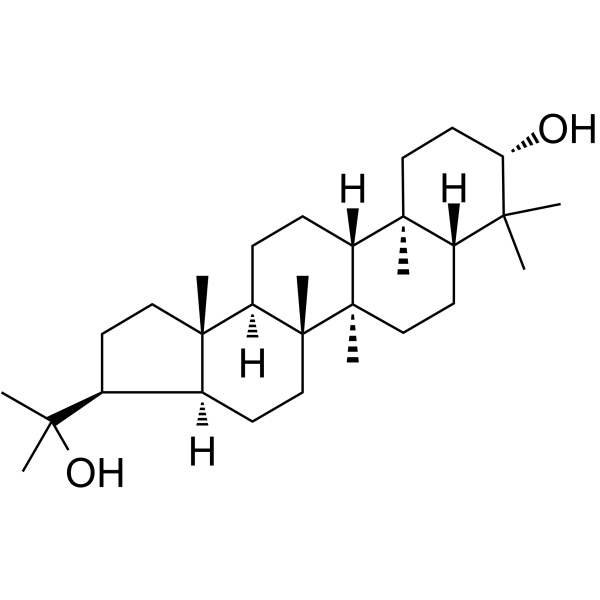
Hopane-3β,22-diol (compound 74) is a hopane isolated from A. mariesii .
|
-
-
- HY-W158327
-
|
1,9-Decadiyne
|
PROTAC Linkers
|
Cancer
|
|
Deca-1,9-diyne (1,9-Decadiyne) is a PROTAC linker that can be used in the synthesis of PROTACs.
|
-

-
- HY-Y0093
-
|
|
Drug Intermediate
|
Others
|
|
Nonane-1,9-diol is a straight-chain aliphatic diol and can be used as a drug intermediate .
|
-

-
- HY-N10834
-
|
|
Bacterial
|
Infection
|
|
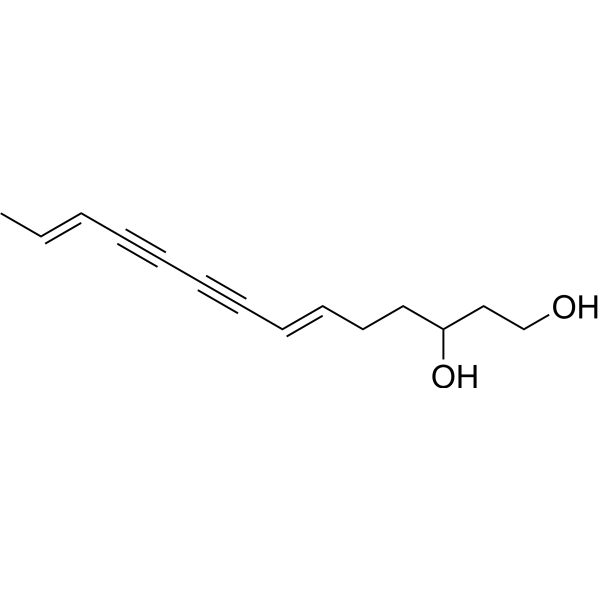
(6E,12E)-Tetradecadiene-8,10-diyne-1,3-diol is an antibacterial compound. (6E,12E)-Tetradecadiene-8,10-diyne-1,3-diol can be isolated from the roots of Atractylodes japonica. (6E,12E)-Tetradecadiene-8,10-diyne-1,3-diol has anti-methicillin-resistant Staphylococcus aureus (MRSA) activity with MIC values of 4-32 μg/mL. (6E,12E)-Tetradecadiene-8,10-diyne-1,3-diol can be used for the research of bacterial infection . (6E,12E)-Tetradecadiene-8,10-diyne-1,3-diol is a click chemistry reagent, it contains an Alkyne group and can undergo copper-catalyzed azide-alkyne cycloaddition (CuAAc) with molecules containing Azide groups.
|
-
-
- HY-W006457
-
|
|
PROTAC Linkers
|
Cancer
|
|
Tetradecane-1,14-diol is a PROTAC linker that can be used in the synthesis of PROTACs.
|
-

-
- HY-400147
-
|
|
PROTAC Linkers
|
Cancer
|
|
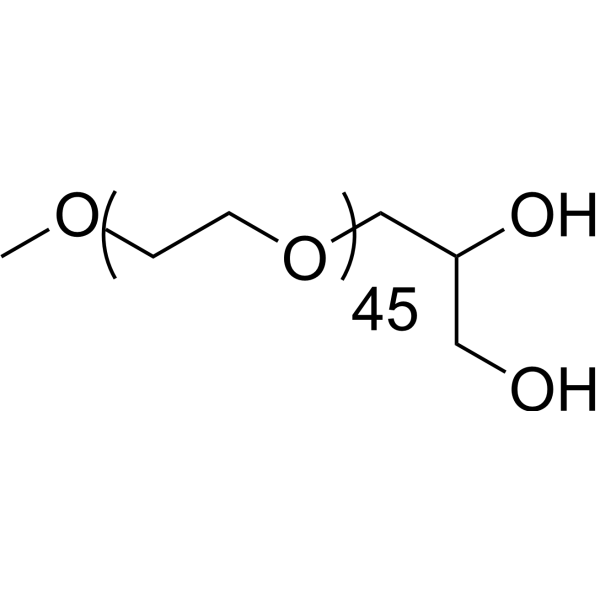
mPEG45-diol is a PEG derivative containing polyether units. mPEG45-Epoxide is a PROTAC linker can be used to synthesize PROTAC molecules .
|
-
-
- HY-N0977
-
|
Octadecane-1,18-diol
|
Biochemical Assay Reagents
|
Others
|
|
1,18-Octadecanediol (Octadecane-1,18-diol) is a copolymer of long-chain diol monomers that has properties similar to polyethylene while being easily chemically recyclable and biodegradable .
|
-

-
- HY-W014785
-
|
|
Drug Intermediate
|
Cancer
|
|
1,4-Diphenylbuta-1,3-diyne (Compound 2a) is a synthetic symmetrical 1,3-diene derivative. 1,4-Diphenylbuta-1,3-diyne exhibits significant selective anti-proliferative activity against HeLa cells. 1,4-Diphenylbuta-1,3-diyne can be utilized in cervical cancer research .
|
-

-
- HY-W100043
-
|
|
Insecticide
|
Infection
|
|
p-Menthane-3,8-diol is an insect repellent. p-Menthane-3,8-diol can be used to repel Aedes aegypti .
|
-

-
- HY-W008393R
-
|
|
Drug Intermediate
Reference Standards
|
Cardiovascular Disease
Inflammation/Immunology
|
|
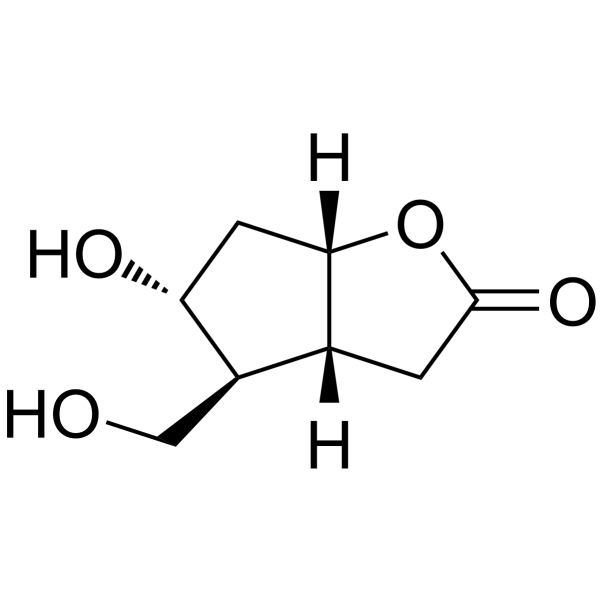
(-)-Corey lactone diol (Standard) is an analytical standard for (-)-Corey lactone diol (HY-W0088393). This product is intended for research and analytical applications. (-)-Corey lactone diol is the reduced form of Corey aldehyde. (-)-Corey lactone diol can be used as a pharmaceutical intermediate in the synthesis of Beraprost (HY-13569A).
|
-

-
- HY-14570
-
|
|
Apoptosis
|
Cancer
|
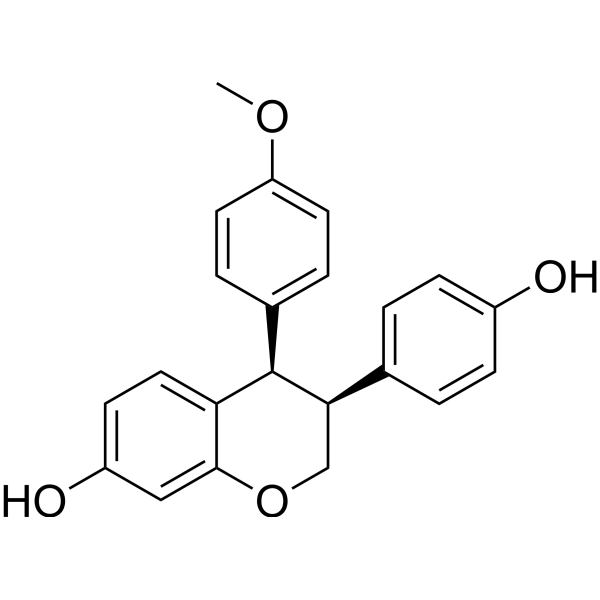
Triphen diol is a phenol diol derivative, which has excellent anticancer activity against pancreatic cancer and cholangiocarcinoma, and can induce pancreatic cell apoptosis through two mechanisms, caspase-mediated and caspase-independent .
|
-
-
- HY-W027631
-
|
|
Fluorescent Dye
|
Infection
|
|
cis-2-Butene-1,4-diol, an industrial product, can be used for the synthesis of antiviral product oxetanocin A. cis-2-Butene-1,4-diol is a probe for studying isomerization versus hydrogenation and hydrogenolysis reactions .
|
-

-
- HY-W014779
-
|
Dodecamethylene glycol
|
Biochemical Assay Reagents
|
Others
|
|
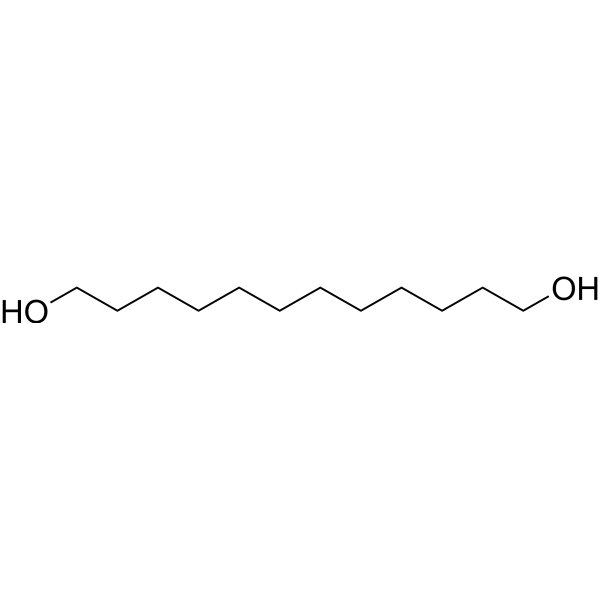
Dodecane-1,12-diol (Dodecamethylene glycol) is a biochemical reagent that can be used as a biological material or organic compound for life science related research. Dodecane-1,12-diol can be used in enzymatic synthesis of bio-based polyesters containing levoglucosan units .
|
-
-
- HY-W105732
-
|
1,13-Tridecanediol
|
PROTAC Linkers
|
Cancer
|
|
Tridecane-1,13-diol (1,13-Tridecanediol) is a PROTAC linker that can be used in the synthesis of PROTACs.
|
-

-
- HY-W005218
-
|
1,11-Undecanediol
|
PROTAC Linkers
|
Cancer
|
|
Undecane-1,11-diol (1,11-Undecanediol) is a PROTAC linker that can be used in the synthesis of PROTACs.
|
-

-
- HY-W014779S
-
-
-
- HY-121657
-
|
Ro 11-2616
|
Parasite
Bacterial
|
Others
|
|
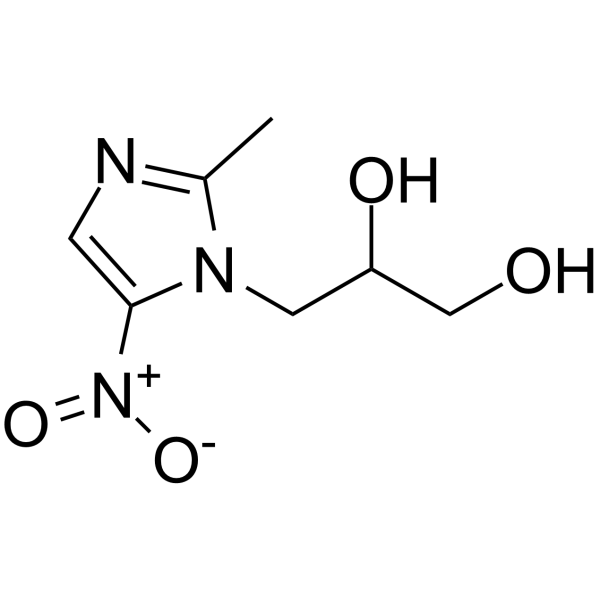
Ornidazole diol (Ro 11-2616) is the diol of Ornidazole (HY-B0508) which is rapidly hydrolyzed in alkaline solution. Ornidazole (Ro 7-0207) is a 5-nitroimidazole derivative that is antiprotozoan and anaerobic.
|
-
-
- HY-156066
-
|
Fer-1 diyne
|
Ferroptosis
|
Cancer
|
|
Ferrostatin-1 diyne (Fer-1 diyne) (compound 2) is a ferroptosis inhibitor that accumulates in lysosomes, mitochondria, and endoplasmic reticulum in cells, but its inhibition of ferroptosis is not dependent on the activity of lysosomes and mitochondria.
|
-

-
- HY-W267762
-
|
|
PROTAC Linkers
|
Cancer
|
|
Octa-1,7-diyne is a PROTAC linker that can be used in the synthesis of PROTACs.
|
-

-
- HY-N7422
-
|
ent-Kauran-16β,17-diol
|
Apoptosis
|
Inflammation/Immunology
Cancer
|
|
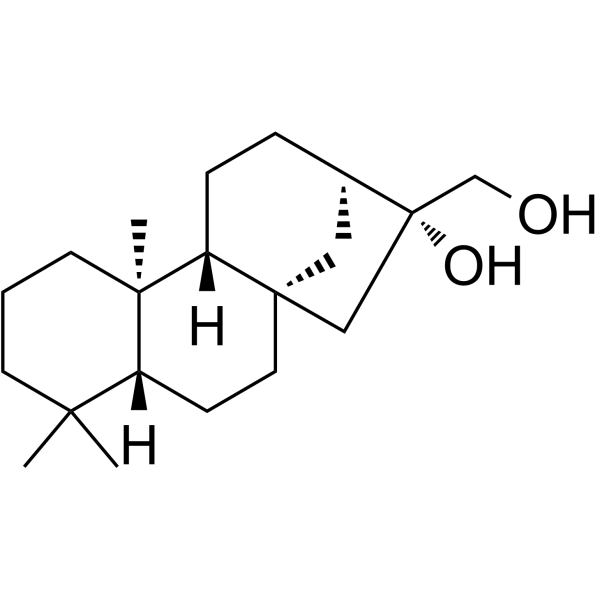
Kauran-16,17-diol (ent-Kauran-16β,17-diol), a natural diterpene, posseses anti-tumor and inducing-apoptosis activity, with a IC50 of 17 μM on inhibiting NO production in LPS-stimulated RAW 264.7 macrophages .
|
-
-
- HY-N4324
-
|
4-p-Menthan-1,8-diol
|
Others
|
Infection
|
|
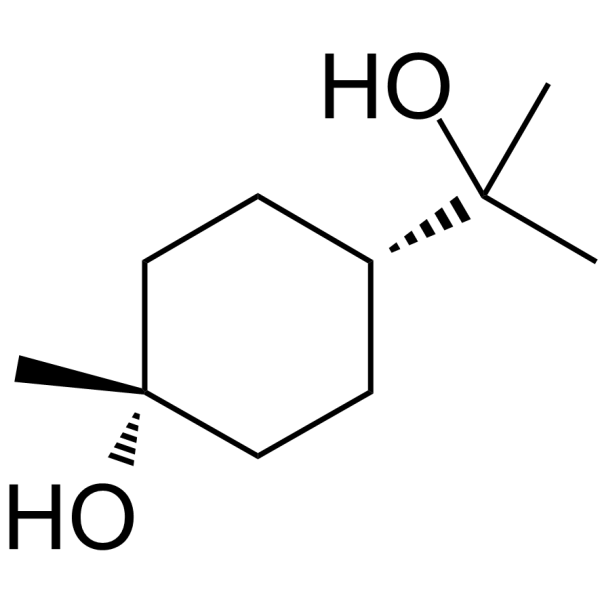
cis-p-Menthan-1,8-diol is a natural menthane monoterpenoid .
|
-
-
- HY-W614137
-
|
|
PROTAC Linkers
|
Cancer
|
|
Docosane-1,22-diol is a PROTAC linker that can be used in the synthesis of PROTACs.
|
-

-
- HY-44057
-
-

-
- HY-151895S
-
-
-
- HY-W087444A
-
|
|
Bacterial
Antibiotic
|
Infection
|
|
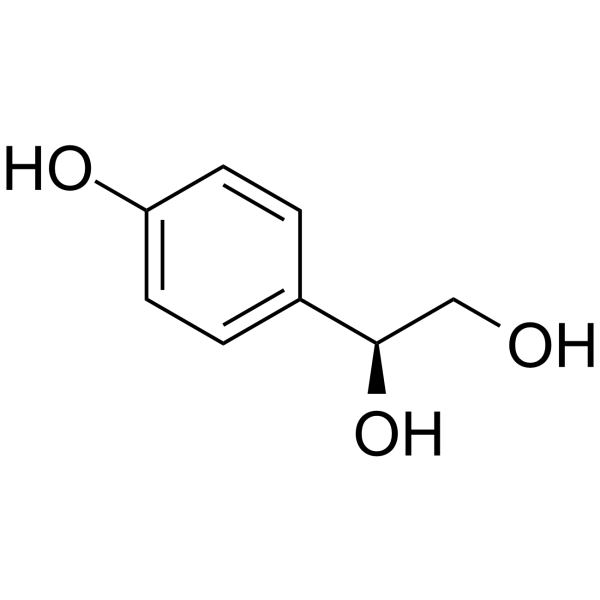
(S)-1-(4-Hydroxyphenyl)ethane-1,2-diol is an active constituent of the aerial parts of Angelica sinensis. (S)-1-(4-Hydroxyphenyl)ethane-1,2-diol significantly inhibits the growth of Aeromonas hydrophila. Anticoagulative and antibiotic activities .
|
-
-
- HY-W007357R
-
|
2-Amino-1,3-propanediol (Standard)
|
Reference Standards
|
|
|
2-Aminopropane-1,3-diol (Standard) is the analytical standard of 2-Aminopropane-1,3-diol. This product is intended for research and analytical applications.
|
-

-
- HY-W015788R
-
|
Styrene Glycol (Standard)
|
Biochemical Assay Reagents
Reference Standards
Drug Metabolite
|
Neurological Disease
|
|
1-Phenylethane-1,2-diol (Standard) is the analytical standard of 1-Phenylethane-1,2-diol. This product is intended for research and analytical applications. 1-Phenylethane-1,2-diol (Styrene Glycol) is a benzyl diol compound, which is the major metabolite of Styrene. 1-Phenylethane-1,2-diol can be oxidized to hydroxyl ketone (2-hydroxy-1-phenylethan-1-one) selectively with variety of catalysts, including organocatalysts, metal complexes, non-noble metal oxides, bimetallics[1][2][3].
|
-

-
- HY-121657R
-
|
Ro 11-2616 (Standard)
|
Parasite
Bacterial
Reference Standards
|
Others
|
|
Ornidazole diol (Standard) is an analytical standard for Ornidazole diol. This product is used for research and analytical applications. Ornidazole diol (Ro 11-2616) is the diol of Ornidazole (HY-B0508) which is rapidly hydrolyzed in alkaline solution. Ornidazole (Ro 7-0207) is a 5-nitroimidazole derivative that is antiprotozoan and anaerobic.
|
-

-
- HY-N15982
-
-

-
- HY-N2789
-
|
|
Bacterial
Fungal
|
Infection
|
|
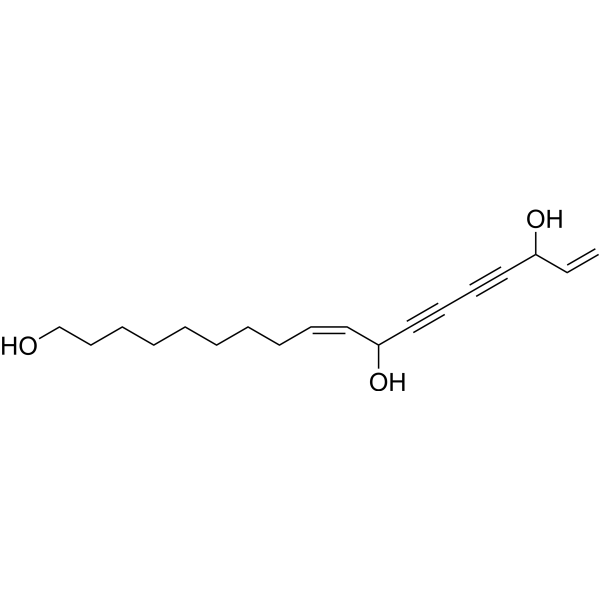
(9Z)-9,17-Octadecadiene-12,14-diyne-1,11,16-triol is a nature product that could be isolated from the ethyl acetate extract of Cassonia barteri (Araliaceae) leaves. (9Z)-9,17-Octadecadiene-12,14-diyne-1,11,16-triol has antibacterial activity against Bacillus subtilis and Pseudomonas fluorescens, antifungal activity against Cladosporium cucumerinum, moiluscicidal activity against Biomphalaria glabrata . (9Z)-9,17-Octadecadiene-12,14-diyne-1,11,16-triol is a click chemistry reagent, it contains an Alkyne group and can undergo copper-catalyzed azide-alkyne cycloaddition (CuAAc) with molecules containing Azide groups.
|
-
-
- HY-W019821
-
-
![23:2 Diyne PC [DC(8,9)PC]](//file.medchemexpress.com/product_pic/hy-w019821.gif)
-
- HY-N8989
-
|
|
Lipase
|
Metabolic Disease
|
|
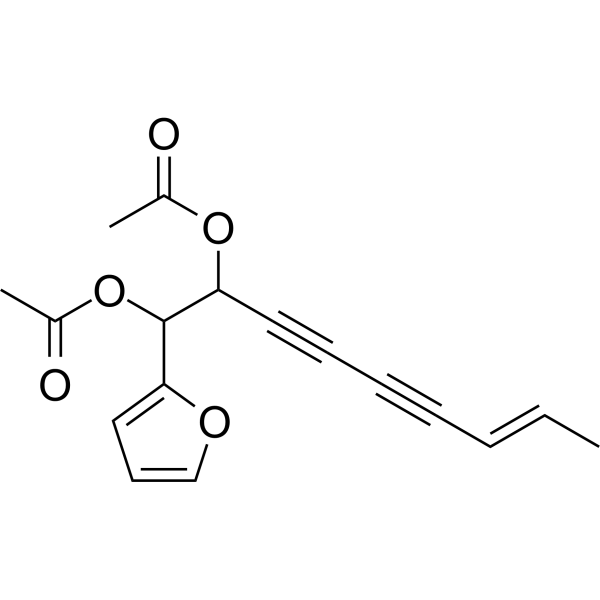
(1,5E,11E)-Tridecatriene-7,9-diyne-3,4-diacetate, isolated from the ethanol extract of Atractylodes lancea rhizome, displays significant lipase inhibition with an IC50 value of 23.9 µg/mL. Antiobesity Effect .
|
-
-
- HY-W743008
-
-

-
- HY-W010505S
-
|
|
Isotope-Labeled Compounds
Biochemical Assay Reagents
Lipase
|
Others
|
|
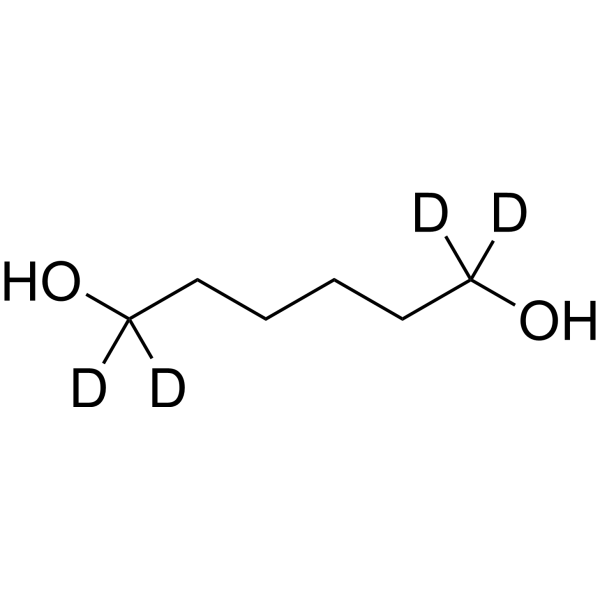
Hexane-1,6-diol-d4 is the deuterium labeled Hexane-1,6-diol (HY-W010505). Hexane-1,6-diol is a 6-carbon straight-chain diol with hydroxyl groups at both ends. Hexane-1,6-diol can be used as an additive for drilling fluids. Hexane-1,6-diol can also be used as a substrate in life science-related research .
|
-
-
- HY-W800784
-
|
|
Liposome
|
Cancer
|
|
23:2 Diyne PE [DC(8,9)PE] is a phospholipase-mediated hydrolyzed phosphocoline with palmitic acid (16:0) and Pentacosa-10,12-diynoic acid for tails.
|
-
![23:2 Diyne PE [DC(8,9)PE]](//file.medchemexpress.com/product_pic/hy-w800784.gif)
-
- HY-N0966
-
|
|
Others
|
Others
|
|
(R,E)-Deca-2-ene-4,6-diyne-1,8-diol is a natural product .
|
-

-
- HY-137034
-
|
|
Reactive Oxygen Species (ROS)
Parasite
|
Infection
|
|
(+)-Secolongifolene-diol is a sesquiterpene, that can be isolated from the marine fungal Drechslera sp. (+)-Secolongifolene-diol exhibits slightly weak effectiveness in antioxidation, antimicrobial and antifouling aspects .
|
-

-
- HY-W012816R
-
|
|
Reference Standards
|
|
|
2-Methylbenzene-1,3-diol (Standard) is the analytical standard of 2-Methylbenzene-1,3-diol. This product is intended for research and analytical applications.
|
-

-
- HY-N1751
-
|
|
Others
|
Infection
|
|
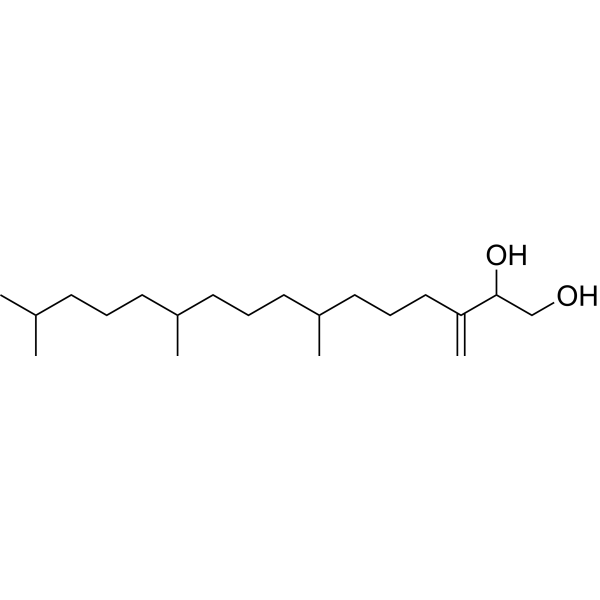
7,11,15-Trimethyl-3-methylidenehexadecane-1,2-diol is a terpenoid that can be isolated from Eupatorium fortunei. 7,11,15-Trimethyl-3-methylidenehexadecane-1,2-diol is used in dropsy, chill, and fever research .
|
-
-
- HY-N1687
-
|
|
Others
|
Others
|
|
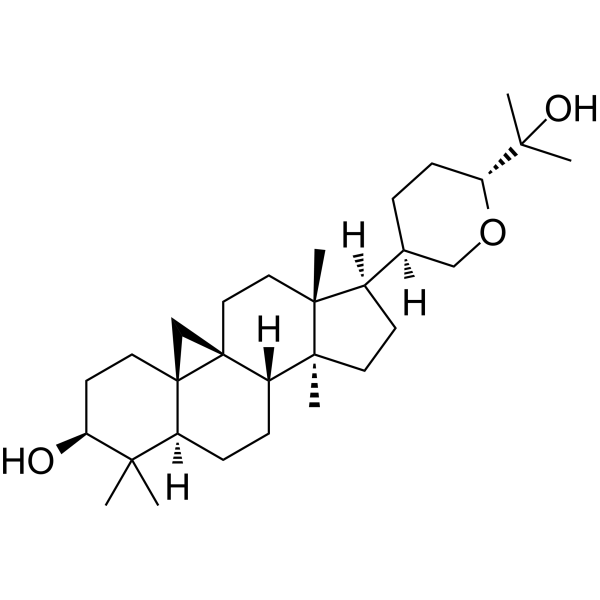
21,24-Epoxycycloartane-3,25-diol (compound 15 or 16) is a cycloartanoid triterpene that can be isolated from the leaves of Lansium domesticum. 21,24-Epoxycycloartane-3,25-diol inhibits skin-tumor promotion .
|
-
-
- HY-N0967
-
|
|
Others
|
Others
|
|
(S,E)-Deca-2,9-diene-4,6-diyne-1,8-diol is a natural product .
|
-

- HY-125946R
-
|
|
Reference Standards
Drug Intermediate
|
Metabolic Disease
|
|
Latanoprost lactone diol (Standard) is the analytical standard of Latanoprost lactone diol (HY-125946). This product is intended for research and analytical applications. Latanoprost lactone diol is a small organic molecule derived from Prostaglandin F2α (HY-12956), and is a key synthetic intermediate and inactive metabolically related form of Latanoprost (HY-B0577). Latanoprost lactone diol is significantly upregulated in hypothyroid rats, and its levels can be reversed by the crude polysaccharide, lactone, and oligosaccharide components of the rhizome of Atractylodis macrocephalae. Latanoprost lactone diol can be used for research related to hypothyroidism.
|
-

- HY-N3411
-
|
13E-Labdene-8α,15-diol; Copal-8α,15-diol
|
Others
|
Others
|
|
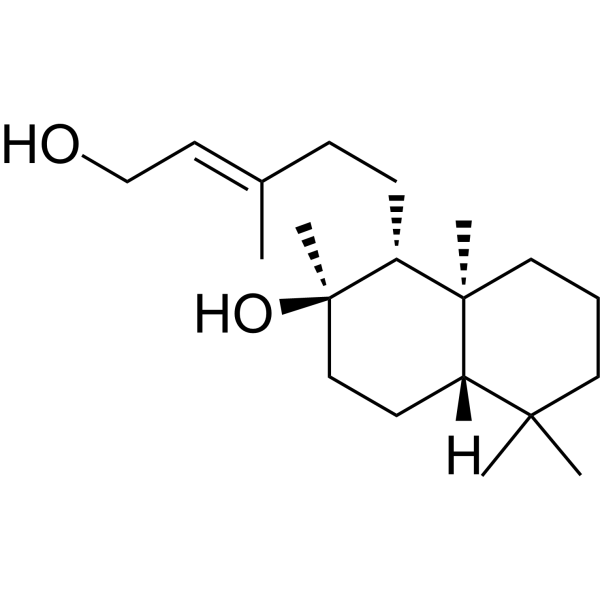
Labd-13(E)-ene-8α,15-diol is a diterpene with the labdane skeleton which can be extracted from Cistus symphytijbfolius .
|
-
- HY-165878
-
-

- HY-N1002
-
|
|
Melanocortin Receptor
|
Metabolic Disease
|
|
Cadin-1(14)-ene-7a,11-diol is a sesquiterpene alcohol with melanogenesis inhibitory activity. Cadin-1(14)-ene-7a,11-diol inhibits the melanogenesis in B16 melanoma cells induced with α-MSH (HY-P0252). Cadin-1(14)-ene-7a,11-diol can be used as a potential skin-whitening agent .
|
-

- HY-N3148
-
|
(3β,11α)-Olean-12-ene-3,11-diol; 11α-Hydroxy-β-amyrin
|
Others
|
Others
|
|
Olean-12-ene-3,11-diol ((3β,11α)-Olean-12-ene-3,11-diol) is a Phenols product that can be isolated from the herbs of Onychium japonicum .
|
-

- HY-N3236
-
|
|
Others
|
Others
|
|
Mullilam diol is a Monoterpenoids product that can be isolated from the herbs of Zanthoxylum budrunga Wall. .
|
-

- HY-125946
-
|
|
Drug Intermediate
|
Endocrinology
|
|
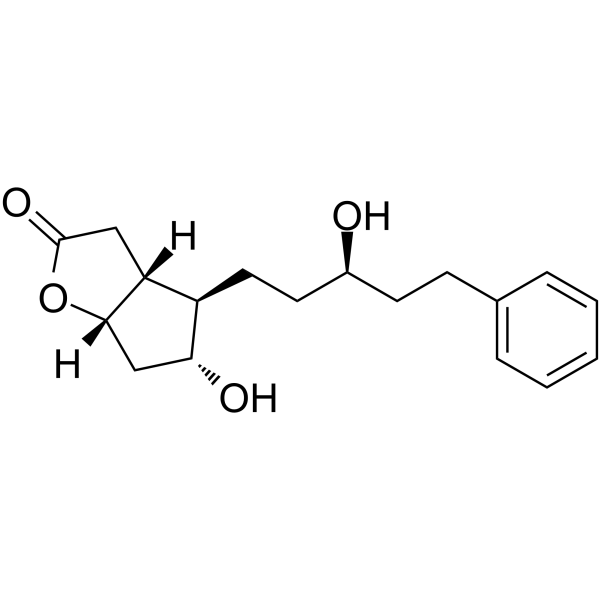
Latanoprost lactone diol is a small organic molecule derived from Prostaglandin F2α (HY-12956), serving as a key synthetic intermediate and inactive metabolism-related form of Latanoprost (HY-B0577). Latanoprost lactone diol is significantly upregulated in hypothyroid rats, and its level can be reversed by crude polysaccharide, lactone and oligosaccharide fractions from the rhizome of Atractylodis macrocephalae. Latanoprost lactone diol can be used in studies related to hypothyroidism .
|
-
- HY-N3879
-
|
|
Others
|
Others
|
|
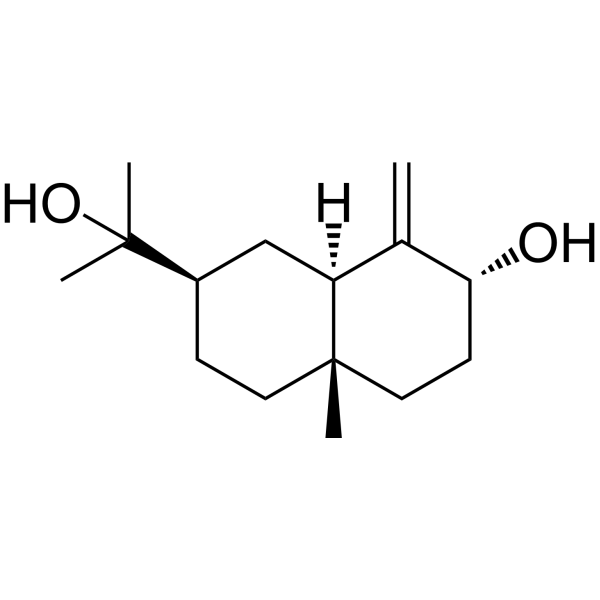
Eudesm-4(14)-ene-3α,11-diol (compound 2) is a sesquiterpenoid. Eudesm-4(14)-ene-3α,11-diol can be isolated from Neocallitropsis Pancheri Florin .
|
-
- HY-W800785
-
|
1-palMitoyl-2-(10,12-tricosadiynoyl)-sn-glycero-3-phosphocholine
|
Liposome
|
Cancer
|
|
16:0-23:2 Diyne PC is a phospholipase-mediated hydrolyzed phosphocoline with palmitic acid (16:0) and Pentacosa-10,12-diynoic acid for tails.
|
-

- HY-W009813
-
|
|
PROTAC Linkers
|
Cancer
|
|
[1,1'-Bi(cyclohexane)]-4,4'-diol is a PROTAC linker that can be used in the synthesis of PROTACs.
|
-
![[1,1'-Bi(cyclohexane)]-4,4'-diol](//file.medchemexpress.com/product_pic/hy-w009813.gif)
- HY-N3658
-
|
|
Others
|
Others
|
|
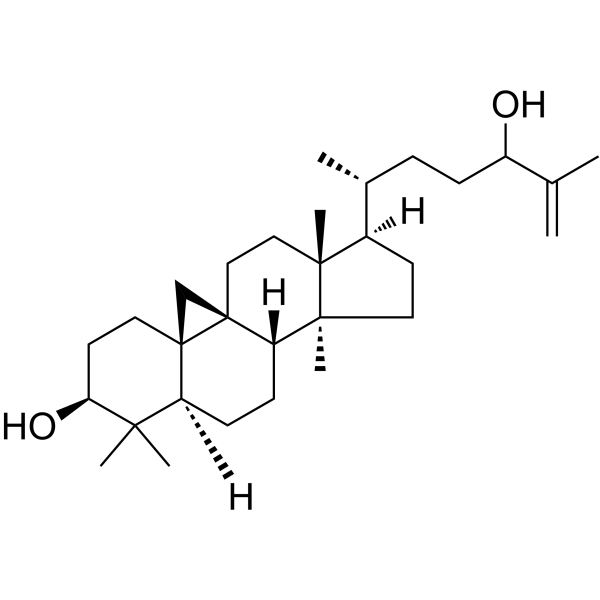
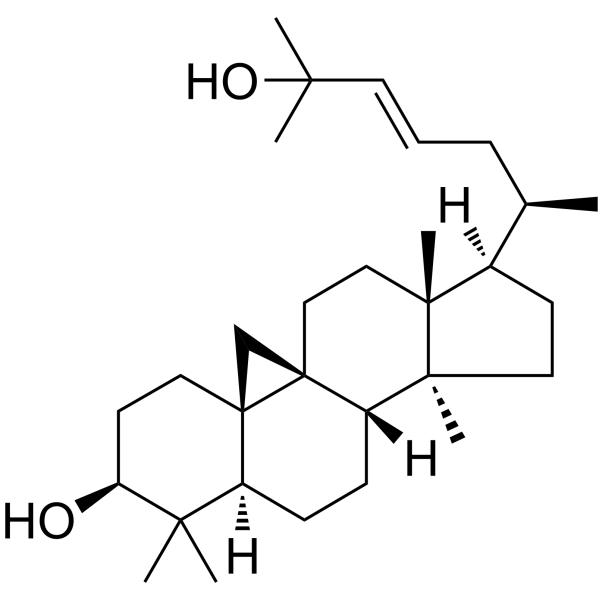
Cycloart-25-ene-3β,24-diol is a natural triterpene .
|
-
- HY-N3146
-
|
(3β,4β)-Olean-12-ene-3,23-diol; 3β,24-Dihydroxyolean-12-ene
|
Others
|
Others
|
|
Olean-12-ene-3β,24-diol ((3β,4β)-Olean-12-ene-3,23-diol) is a product that can be isolated from .
|
-

- HY-N1831
-
|
|
Others
|
Others
|
|
3-Eudesmene-1beta,11-diol is a Sesquiterpenoids product that can be isolated from the herbs of Physalis alkekengi .
|
-

- HY-W727304
-
-

- HY-N3657
-
|
|
Others
|
Others
|
|
Cycloart-23-ene-3β,25-diol is a natural crystalline triterpene .
|
-
- HY-N16950
-
|
|
Drug Derivative
|
Others
|
|
(6E,12E)-Tetradecadiene-8,10-diyne-1,3-diol diacetate is a polyacetylene that can be found in the rhizomes of Atractylodes chinensis, Atractylodes koreana, and Atractylodes japonica .
|
-

- HY-W017145S
-
-
- HY-N2761
-
|
|
Others
|
Others
|
|
8(14),15-Isopimaradiene-3,18-diol is a Diterpenoids product that can be isolated from the leaves of Platycladus orientalis .
|
-

- HY-W699990
-
|
|
Isotope-Labeled Compounds
|
Others
|
|
4-(1,2-Dihydroxyethyl)benzene-1,2-diol-d5 is the deuterium labeled 4-(1,2-Dihydroxyethyl)benzene-1,2-diol (HY-W010066). 4-(1,2-Dihydroxyethyl)benzene-1,2-diol, a normal norepinephrine metabolite, is found to be associated with Menkes syndrome.
|
-

- HY-N3783
-
|
|
Others
|
Others
|
|
Drim-7-ene-11,12-diol acetonide is a Sesquiterpenoids product that can be isolated from the herbs of Polygonum hydropiper .
|
-

- HY-N18147
-
|
|
Others
|
Others
|
|
(3R,4S,5E,11E)-1,5,11-Tridecatriene-7,9-diyne-3,4-diol (compound CZ-6) is a polyene acetylene compound with significant inhibitory effects on BMM cells .
|
-

- HY-N7988
-
|
|
Lipase
|
Metabolic Disease
|
|
4,6,12-Tetradecatriene8,10-diyne-1,3-diacetate is a polyacetylene compound found in the rhizomes of Atractylodes lancea. 4,6,12-Tetradecatriene8,10-diyne-1,3-diacetate inhibits human pancreatic lipase, with an IC50 of 55.67 μM and 16.7 μg/mL. 4,6,12-Tetradecatriene8,10-diyne-1,3-diacetate can block the digestion of triglycerides by inhibiting the activity of human pancreatic lipase. 4,6,12-Tetradecatriene8,10-diyne-1,3-diacetate can be used in research on obesity .
|
-

- HY-N7988A
-
|
|
Drug Derivative
|
Inflammation/Immunology
|
|
(E)-4,6,12-Tetradecatriene8,10-diyne-1,3-diacetate is a polyacetylene found in the rhizomes of Atractylodes lancea. (E)-4,6,12-Tetradecatriene8,10-diyne-1,3-diacetate shows no inhibitory activity against 5-lipoxygenase and COX-1 in in vitro assays at tested concentrations .
|
-

- HY-W113015
-
|
|
MOFs
|
Others
|
|
4,4'-(Buta-1,3-diyne-1,4-diyl)dibenzoicacid is a metal-organic framework (MOF).
|
-

- HY-W112975
-
|
|
MOFs
|
Others
|
|
5,5'-(Buta-1,3-diyne-1,4-diyl)diisophthalicacid is a metal-organic framework (MOF).
|
-

- HY-W113005
-
|
|
MOFs
|
Others
|
|
1,4-Di(pyridin-4-yl)buta-1,3-diyne is a metal-organic framework (MOF).
|
-

- HY-W112426
-
|
|
MOFs
|
Others
|
|
4,4'-(Buta-1,3-diyne-1,4-diyl)bis(2-hydroxybenzoic acid) is a metal-organic framework (MOF).
|
-

- HY-N0982
-
|
Calamenene-3,7-diol
|
Others
|
Others
|
|
1,3,5-Cadinatriene-3,8-diol (Calamenene-3,7-diol) is a product that can be isolated from .
|
-

- HY-N18145
-
|
|
Lipase
|
Metabolic Disease
|
|
(3Z,5E,11E)-3,5,11-Tri-decatriene-7,9-diyne-1,2-diacetate is a human pancreatic lipase inhibitor, with an IC50 of 77.97 μM against human pancreatic lipase. (3Z,5E,11E)-3,5,11-Tri-decatriene-7,9-diyne-1,2-diacetate is applicable to the research of obesity .
|
-

- HY-N13781
-
|
|
NO Synthase
|
Inflammation/Immunology
|
|
(-)-Sesamin 2,2'-diol is a nitric oxide (NO) production inhibitor with an IC50 of 310 μM for inhibiting LPS-induced NO production. (-)-Sesamin 2,2'-diol can be isolated from the aerial parts of Isodon japonicus. (-)-Sesamin 2,2'-diol abrogates NO production in LPS-stimulated macrophages without inducing cytotoxicity .
|
-

- HY-W814374
-
|
|
MOFs
|
Others
|
|
4,4-(3,3-Bis((4-bromophenyl)ethynyl)penta-1,4-diyne-1,5-diyl)bis(bromobenzene) is a metal-organic framework (MOF).
|
-

- HY-W970781
-
|
|
Fungal
|
Infection
|
|
2,5-Dimethylhexane-3,4-diol is an active ingredient that can be extracted from Mansoa hirsuta. 2,5-Dimethylhexane-3,4-diol has antifungal activity in vitro. 2,5-Dimethylhexane-3,4-diol can be used for research on fungal infections .
|
-

- HY-W112741
-
|
1,4-Bis(3-pyridyl)-1,3-butadiyne
|
MOFs
|
Others
|
|
1,4-Di(pyridin-3-yl)buta-1,3-diyne (1,4-Bis(3-pyridyl)-1,3-butadiyne) is a metal-organic framework (MOF).
|
-

- HY-W456381
-
|
|
MOFs
|
Others
|
|
5',5''''-(Buta-1,3-diyne-1,4-diyl)bis(([1,1':3',1''-terphenyl]-4,4''-dicarboxylic acid)) is a metal-organic framework (MOF).
|
-
![5',5''''-(Buta-1,3-diyne-1,4-diyl)bis(([1,1':3',1''-terphenyl]-4,4''-dicarboxylic acid))](//file.medchemexpress.com/product_pic/hy-w456381.gif)
- HY-Y1249S
-
-

- HY-W010514R
-
|
|
Endogenous Metabolite
Reference Standards
|
Metabolic Disease
|
|
trans-Cyclohexane-1,2-diol (Standard) is the analytical standard of trans-Cyclohexane-1,2-diol (HY-W010514). This product is intended for research and analytical applications. trans-Cyclohexane-1,2-diol (TCHD) is a transient dilator of the nuclear pore complex (NPC). By interacting with the hydrophobic core (FG nucleoporin) of the NPC, trans-Cyclohexane-1,2-diol can disrupt the NPC structure and reversibly increase the permeability of the nuclear pore, allowing macromolecules larger than 40 kDa (such as plasmid DNA) to enter the cell nucleus by passive diffusion, thereby enhancing the nuclear import efficiency of non-viral vectors. trans-Cyclohexane-1,2-diol can improve the efficiency of in vitro electrotransfection or lipid-mediated gene transfection, especially significantly increasing gene expression in differentiated airway epithelial cells .
|
-

- HY-W354921
-
|
1,2-Dipyridin-4-ylethane-1,2-diol
|
MOFs
|
Others
|
|
1,2-Di(pyridin-4-yl)ethane-1,2-diol (1,2-Dipyridin-4-ylethane-1,2-diol) is a metal-organic framework (MOF).
|
-

- HY-N16870
-
-

- HY-N16956
-
-

- HY-W856184
-
|
|
MOFs
|
Others
|
|
4,5-Diaminobenzene-1,2-diol is a metal-organic framework (MOF).
|
-

- HY-132319S
-
-

- HY-W004661R
-
|
Hydroxy Acetaldehyde (Standard)
|
Endogenous Metabolite
Reference Standards
|
Metabolic Disease
|
|
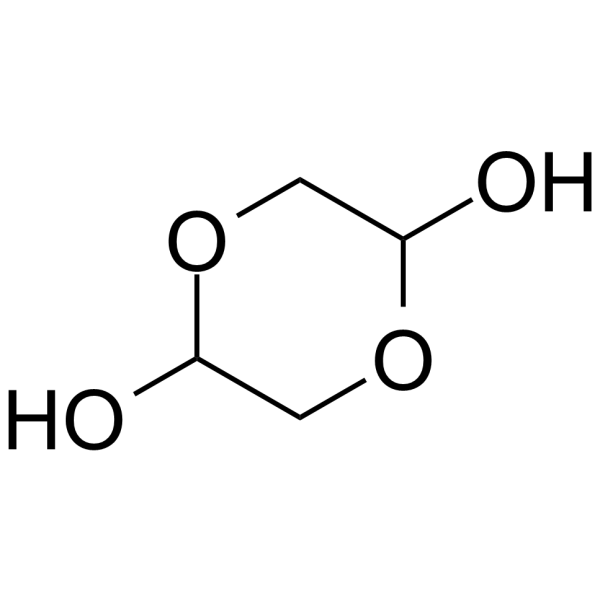
1,4-Dioxane-2,5-diol (Standard) (Hydroxy Acetaldehyde (Standard)) is the analytical standard of 1,4-Dioxane-2,5-diol (HY-W004661). This product is intended for research and analytical applications. 1,4-Dioxane-2,5-diol is an endogenous metabolite.
|
-

- HY-W036520
-
|
1,20-Eicosanediol
|
PROTAC Linkers
|
Cancer
|
|
Icosane-1,20-diol (1,20-Eicosanediol) is a PROTAC linker that can be used in the synthesis of PROTACs.
|
-

- HY-Z9464
-
|
|
Drug Intermediate
|
Others
|
|
Fluprostenol lactone diol is an intermediate used in the preparation of Fluprostenol (HY-136494).
|
-

- HY-W713416
-
|
|
Biochemical Assay Reagents
|
Others
|
|
Isoleukotoxin Diol is the oxidation product of linoleic acid, with a pair of hydroxly groups on the unsaturated fatty acid tail and a carboxylic acid as the polar head.
|
-

- HY-W585976
-
|
|
p38 MAPK
|
Cancer
|
|
Benzo[a]pyrene diol epoxide is a carcinogen present in tobacco smoke as well as in environmental pollution. Benzo[a]pyrene diol epoxide is a metabolite of benzo[a]pyrene (BaP) , which is polycyclic aromatic hydrocarbon (PAH) . Benzo[a]pyrene diol epoxide induces esophageal carcinogenesis. Benzo[a]pyrene diol epoxide may act to induce activation of ERKs and p38 MAPK marked by an increased level of phosphorylation of both the ERKs and p38 MAPK which corresponds with the increased activation of both kinases as evidenced by increased phsosphorylation of their substrates Elk-1 and ATF-2, respectively.
|
-
![Benzo[a]pyrene diol epoxide](//file.medchemexpress.com/product_pic/hy-w585976.gif)
- HY-N3362
-
-

- HY-165864B
-
|
12-Hydroxy-9(E)-octadecenol
|
Biochemical Assay Reagents
|
Others
|
|
(E)-Octadec-9-ene-1,12-diol is a Castor oil (HY-107799)-derived diol and Chain Extender. (E)-Octadec-9-ene-1,12-diol acts as a ring-opening agent for epoxidized vegetable oils in polyurethane synthesis .
|
-

- HY-N9255
-
-

- HY-W704141
-
-

| Cat. No. |
Product Name |
Type |
-
- HY-W010505
-
|
|
Biochemical Assay Reagents
|
|
Hexane-1,6-diol is a 6-carbon straight-chain diol with hydroxyl groups at both ends. Hexane-1,6-diol can be used as an additive for drilling fluids. Hexane-1,6-diol can also be used as a substrate in life science-related research .
|
-
- HY-W392100A
-
|
PCL-diol (MW 530)
|
Biochemical Assay Reagents
|
|
Polycaprolactone diol (MW 530) (PCL-diol (MW 530)) is a poly (ε-caprolactone) diol with an average molecular weight of 530 g·mol −1, which serves as a monomer for biodegradable network elastic polyesters. Network polyester films undergo enzymatic hydrolysis by Rhizopus delemar lipase .
|
-
- HY-W392100B
-
|
PCL-diol (MW 2000)
|
Biochemical Assay Reagents
|
|
Polycaprolactone diol (MW 2000) (PCL-diol (MW 2000)) can be used as a precursor of biodegradable and bioabsorbable polycaprolactone .
|
-
- HY-W392100C
-
|
PCL-diol (MW 10000)
|
Biochemical Assay Reagents
|
|
Polycaprolactone diol (MW 10000) (PCL-diol (MW 10000)) can be used as a precursor of biodegradable and bioabsorbable polycaprolactone .
|
-
- HY-W014779
-
|
Dodecamethylene glycol
|
Biochemical Assay Reagents
|
|
Dodecane-1,12-diol (Dodecamethylene glycol) is a biochemical reagent that can be used as a biological material or organic compound for life science related research. Dodecane-1,12-diol can be used in enzymatic synthesis of bio-based polyesters containing levoglucosan units .
|
-
- HY-W019821
-
| Cat. No. |
Product Name |
Category |
Target |
Chemical Structure |
-
- HY-W015788
-
-
-
- HY-W004661
-
-
-
- HY-W008393
-
-
-
- HY-W010514
-
|
|
Natural Products
Classification of Application Fields
Metabolic Disease
Endogenous metabolite
Disease Research Fields
Source Classification
|
Endogenous Metabolite
|
|
trans-Cyclohexane-1,2-diol (TCHD) is a transient dilator of the nuclear pore complex (NPC). By interacting with the hydrophobic core (FG nucleoporin) of the NPC, trans-Cyclohexane-1,2-diol can disrupt the NPC structure and reversibly increase the permeability of the nuclear pore, allowing macromolecules larger than 40 kDa (such as plasmid DNA) to enter the cell nucleus by passive diffusion, thereby enhancing the nuclear import efficiency of non-viral vectors. trans-Cyclohexane-1,2-diol can improve the efficiency of in vitro electrotransfection or lipid-mediated gene transfection, especially significantly increasing gene expression in differentiated airway epithelial cells .
|
-
-
- HY-N4034
-
-
-
- HY-N10834
-
|
|
Natural Products
Plants
Compositae
Source Classification
Erythrina sigmoidea Hua
|
Bacterial
|
|
(6E,12E)-Tetradecadiene-8,10-diyne-1,3-diol is an antibacterial compound. (6E,12E)-Tetradecadiene-8,10-diyne-1,3-diol can be isolated from the roots of Atractylodes japonica. (6E,12E)-Tetradecadiene-8,10-diyne-1,3-diol has anti-methicillin-resistant Staphylococcus aureus (MRSA) activity with MIC values of 4-32 μg/mL. (6E,12E)-Tetradecadiene-8,10-diyne-1,3-diol can be used for the research of bacterial infection . (6E,12E)-Tetradecadiene-8,10-diyne-1,3-diol is a click chemistry reagent, it contains an Alkyne group and can undergo copper-catalyzed azide-alkyne cycloaddition (CuAAc) with molecules containing Azide groups.
|
-
-
- HY-N0977
-
-
-
- HY-N7422
-
-
-
- HY-N4324
-
-
-
- HY-W087444A
-
-
-
- HY-W015788R
-
|
Styrene Glycol (Standard)
|
Natural Products
Microorganisms
|
Biochemical Assay Reagents
Reference Standards
Drug Metabolite
|
|
1-Phenylethane-1,2-diol (Standard) is the analytical standard of 1-Phenylethane-1,2-diol. This product is intended for research and analytical applications. 1-Phenylethane-1,2-diol (Styrene Glycol) is a benzyl diol compound, which is the major metabolite of Styrene. 1-Phenylethane-1,2-diol can be oxidized to hydroxyl ketone (2-hydroxy-1-phenylethan-1-one) selectively with variety of catalysts, including organocatalysts, metal complexes, non-noble metal oxides, bimetallics[1][2][3].
|
-
-
- HY-N15982
-
-
-
- HY-N2789
-
|
|
Natural Products
Cynara scolymus L.
Plants
Umbelliferae
Source Classification
|
Bacterial
Fungal
|
|
(9Z)-9,17-Octadecadiene-12,14-diyne-1,11,16-triol is a nature product that could be isolated from the ethyl acetate extract of Cassonia barteri (Araliaceae) leaves. (9Z)-9,17-Octadecadiene-12,14-diyne-1,11,16-triol has antibacterial activity against Bacillus subtilis and Pseudomonas fluorescens, antifungal activity against Cladosporium cucumerinum, moiluscicidal activity against Biomphalaria glabrata . (9Z)-9,17-Octadecadiene-12,14-diyne-1,11,16-triol is a click chemistry reagent, it contains an Alkyne group and can undergo copper-catalyzed azide-alkyne cycloaddition (CuAAc) with molecules containing Azide groups.
|
-
-
- HY-N8989
-
-
-
- HY-N0966
-
-
-
- HY-137034
-
-
-
- HY-N1751
-
-
-
- HY-N1687
-
-
-
- HY-N0967
-
-
-
- HY-N3411
-
-
-
- HY-N1002
-
-
-
- HY-N3148
-
-
-
- HY-N3236
-
-
-
- HY-N3879
-
-
-
- HY-N3658
-
-
-
- HY-N3146
-
-
-
- HY-N1831
-
-
-
- HY-N3657
-
-
-
- HY-N16950
-
-
-
- HY-N2761
-
-
-
- HY-N3783
-
-
-
- HY-N18147
-
-
-
- HY-N7988
-
|
|
Structural Classification
Plants
Compositae
Lipid
Source Classification
Erythrina sigmoidea Hua
|
Lipase
|
|
4,6,12-Tetradecatriene8,10-diyne-1,3-diacetate is a polyacetylene compound found in the rhizomes of Atractylodes lancea. 4,6,12-Tetradecatriene8,10-diyne-1,3-diacetate inhibits human pancreatic lipase, with an IC50 of 55.67 μM and 16.7 μg/mL. 4,6,12-Tetradecatriene8,10-diyne-1,3-diacetate can block the digestion of triglycerides by inhibiting the activity of human pancreatic lipase. 4,6,12-Tetradecatriene8,10-diyne-1,3-diacetate can be used in research on obesity .
|
-
-
- HY-N7988A
-
-
-
- HY-N0982
-
-
-
- HY-N18145
-
|
|
Structural Classification
Natural Products
Plants
Compositae
Source Classification
Erythrina sigmoidea Hua
|
Lipase
|
|
(3Z,5E,11E)-3,5,11-Tri-decatriene-7,9-diyne-1,2-diacetate is a human pancreatic lipase inhibitor, with an IC50 of 77.97 μM against human pancreatic lipase. (3Z,5E,11E)-3,5,11-Tri-decatriene-7,9-diyne-1,2-diacetate is applicable to the research of obesity .
|
-
-
- HY-N13781
-
-
-
- HY-W970781
-
-
-
- HY-W010514R
-
|
|
Structural Classification
Natural Products
Endogenous metabolite
Source Classification
|
Endogenous Metabolite
Reference Standards
|
|
trans-Cyclohexane-1,2-diol (Standard) is the analytical standard of trans-Cyclohexane-1,2-diol (HY-W010514). This product is intended for research and analytical applications. trans-Cyclohexane-1,2-diol (TCHD) is a transient dilator of the nuclear pore complex (NPC). By interacting with the hydrophobic core (FG nucleoporin) of the NPC, trans-Cyclohexane-1,2-diol can disrupt the NPC structure and reversibly increase the permeability of the nuclear pore, allowing macromolecules larger than 40 kDa (such as plasmid DNA) to enter the cell nucleus by passive diffusion, thereby enhancing the nuclear import efficiency of non-viral vectors. trans-Cyclohexane-1,2-diol can improve the efficiency of in vitro electrotransfection or lipid-mediated gene transfection, especially significantly increasing gene expression in differentiated airway epithelial cells .
|
-
-
- HY-N16870
-
-
-
- HY-N16956
-
-
-
- HY-W004661R
-
-
-
- HY-N3362
-
-
-
- HY-N9255
-
-
| Cat. No. |
Product Name |
Chemical Structure |
-
- HY-W014779S
-
|
|
|
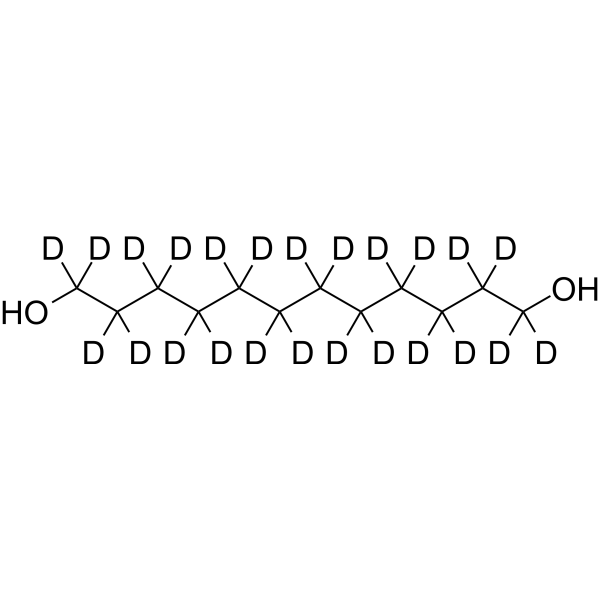
Dodecane-1,12-diol-d24 is the deuterium labeled Dodecane-1,12-diol .
|
-
-
- HY-151895S
-
|
|
|
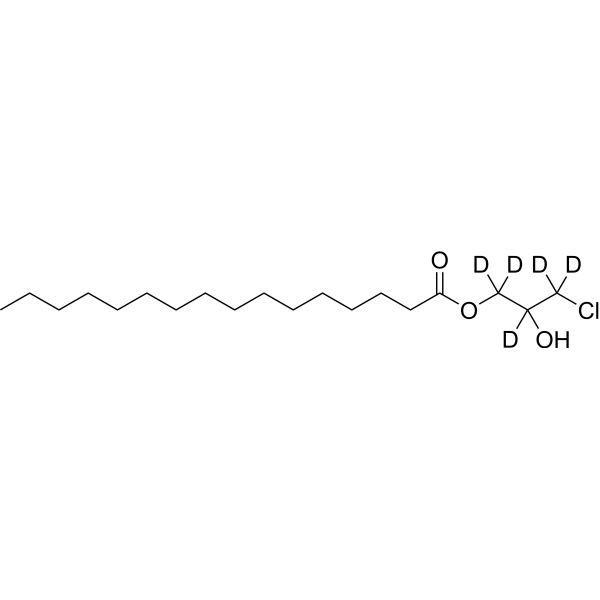
(±)-1-Hexadecanoyl-3-chloropropane-dd5-diol is the deuterium labeled (±)-1-Hexadecanoyl-3-chloropropane-diol .
|
-
-
- HY-W743008
-
|
|
|
Drospirenone-d4 3,5-Diol is the deuterium labeled Drospirenone 3,5-Diol.
|
-
-
- HY-W010505S
-
|
|
|
Hexane-1,6-diol-d4 is the deuterium labeled Hexane-1,6-diol (HY-W010505). Hexane-1,6-diol is a 6-carbon straight-chain diol with hydroxyl groups at both ends. Hexane-1,6-diol can be used as an additive for drilling fluids. Hexane-1,6-diol can also be used as a substrate in life science-related research .
|
-
-
- HY-W727304
-
|
|
|
2,2-Bis(methyl-d3)propane-1,3-diol is the deuterium labeled 2,2-Dimethylpropane-1,3-diol (HY-W010584).
|
-
-
- HY-W017145S
-
|
|
|
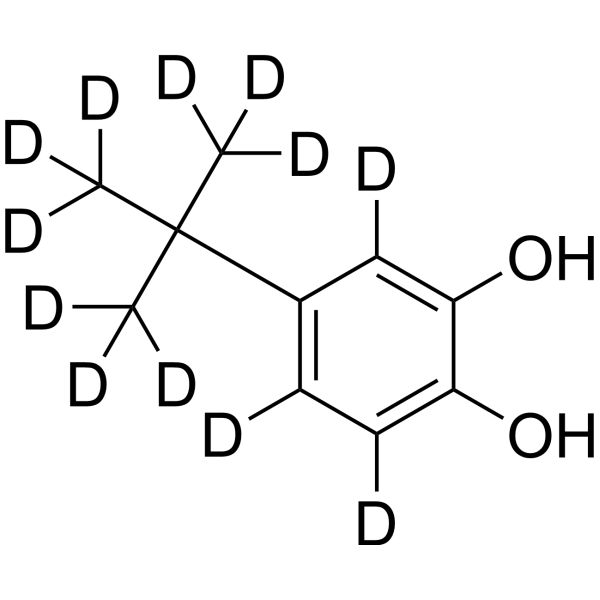
4-(tert-Butyl)benzene-1,2-diol-d12 is the deuterium labeled 4-(tert-Butyl)benzene-1,2-diol .
|
-
-
- HY-W699990
-
|
|
|
4-(1,2-Dihydroxyethyl)benzene-1,2-diol-d5 is the deuterium labeled 4-(1,2-Dihydroxyethyl)benzene-1,2-diol (HY-W010066). 4-(1,2-Dihydroxyethyl)benzene-1,2-diol, a normal norepinephrine metabolite, is found to be associated with Menkes syndrome.
|
-
-
- HY-Y1249S
-
|
|
|
Pentane-1,2-diol-d3 is the deuterium labeled Pentane-1,2-diol.
|
-
-
- HY-132319S
-
|
|
|
(-)-Corey lactone diol-heptyldioxolane-d15 is the deuterium labeled (-)-Corey lactone diol-heptyldioxolane .
|
-
-
- HY-W704141
-
|
|
|
2-(Dibenzylamino)propane-1,1,3,3-d4-1,3-diol is the deuterium labeled 2-(Dibenzylamino)propane-1,3-diol (HY-W103677).
|
-
| Cat. No. |
Product Name |
|
Classification |
-
- HY-W019821
-
|
|
|
Phospholipids
|
|
23:2 Diyne PC [DC(8,9)PC] is a biochemical reagent .
|
-
- HY-W800784
-
|
|
|
Phospholipids
|
|
23:2 Diyne PE [DC(8,9)PE] is a phospholipase-mediated hydrolyzed phosphocoline with palmitic acid (16:0) and Pentacosa-10,12-diynoic acid for tails.
|
-
- HY-W800785
-
|
1-palMitoyl-2-(10,12-tricosadiynoyl)-sn-glycero-3-phosphocholine
|
|
Phospholipids
|
|
16:0-23:2 Diyne PC is a phospholipase-mediated hydrolyzed phosphocoline with palmitic acid (16:0) and Pentacosa-10,12-diynoic acid for tails.
|
Your information is safe with us. * Required Fields.
Inquiry Information
- Product Name:
- Cat. No.:
- Quantity:
- MCE Japan Authorized Agent:





![23:2 Diyne PC [DC(8,9)PC]](http://file.medchemexpress.com/product_pic/hy-w019821.gif)

![23:2 Diyne PE [DC(8,9)PE]](http://file.medchemexpress.com/product_pic/hy-w800784.gif)


![[1,1'-Bi(cyclohexane)]-4,4'-diol](http://file.medchemexpress.com/product_pic/hy-w009813.gif)


![5',5''''-(Buta-1,3-diyne-1,4-diyl)bis(([1,1':3',1''-terphenyl]-4,4''-dicarboxylic acid))](http://file.medchemexpress.com/product_pic/hy-w456381.gif)


![Benzo[a]pyrene diol epoxide](http://file.medchemexpress.com/product_pic/hy-w585976.gif)





