



Enoxacin hydrate
Based on 2 publication(s) in Google Scholar
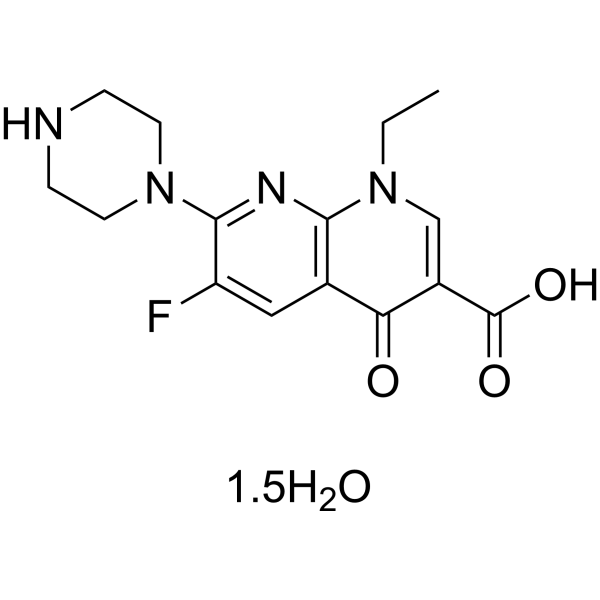
Enoxacin hydrate (Enoxacin sesquihydrate), a fluoroquinolone, interferes with DNA replication and inhibits bacterial DNA gyrase (IC50=126 µg/ml) and topoisomerase IV (IC50=26.5 µg/ml). Enoxacin hydrate is a miRNA processing activator and enhances siRNA-mediated mRNA degradation and promotes the biogenesis of endogenous miRNAs. Enoxacin hydrate has potent activities against gram-positive and -negative bacteria. Enoxacin hydrate is a cancer-specific growth inhibitor that acts by enhancing TAR RNA-binding protein 2 (TRBP)-mediated microRNA processing.
For research use only. We do not sell to patients.
- Purity : 98.14%
- CAS No.: 84294-96-2
- Formula: C15H17FN4O3.3/2H2O
- Molecular Weight:347.34
-
Storage:
4°C, sealed storage, away from moisture and light
* In solvent : -80°C, 6 months; -20°C, 1 month (sealed storage, away from moisture and light)

To place orders, for customer services and technical support, please contact: MedChemExpress USA
Tel: 609-228-6898 E-mail: [email protected] [email protected]


-
 Biological Activity
-
Chemical Information
-
Solvent & Solubility
- Protocols
- Purity & Documentation
- References
-
 Help & FAQs


-
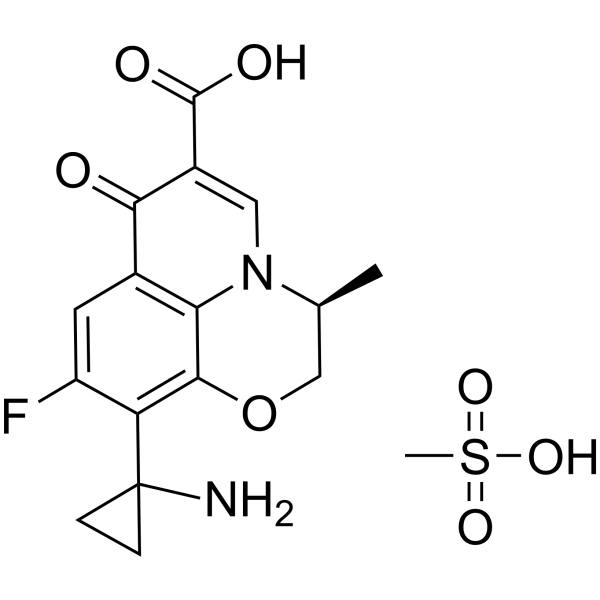
HY-B0724A
Pazufloxacin mesylateAntimicrobial Agent -
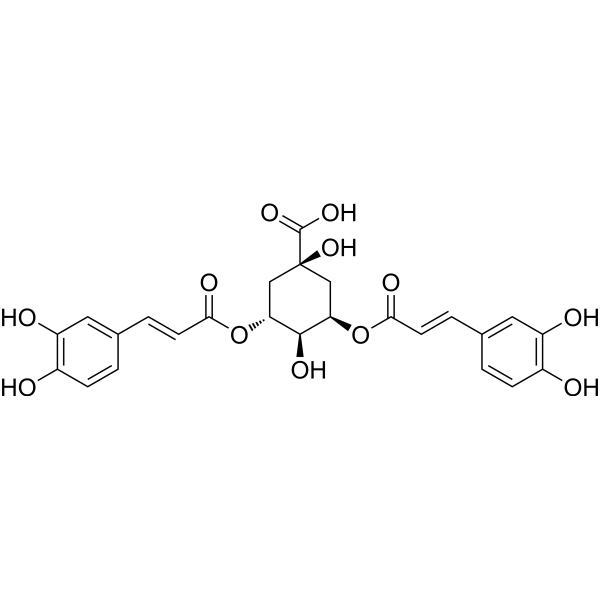
HY-N0056
Isochlorogenic acid AAntioxidant -
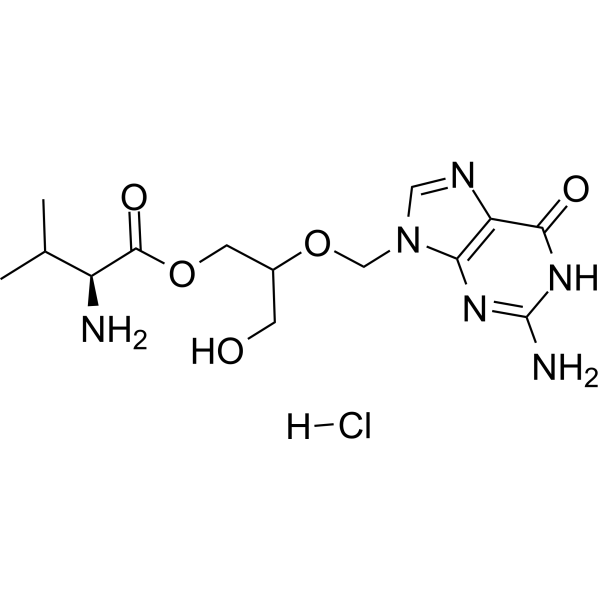
HY-A0032A
Valganciclovir hydrochlorideAntiviral Agent -

HY-B0268AR
Enoxacin hydrate (Standard)Bacterial Inhibitor -
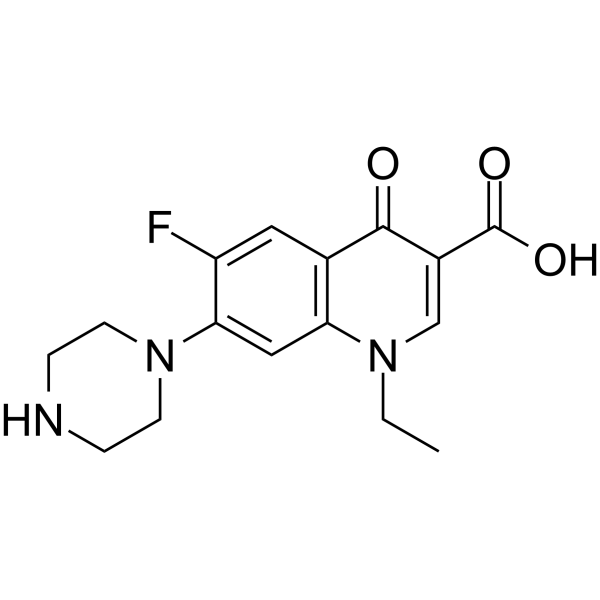
HY-B0132
Norfloxacin -

HY-B0132R
Norfloxacin (Standard) -
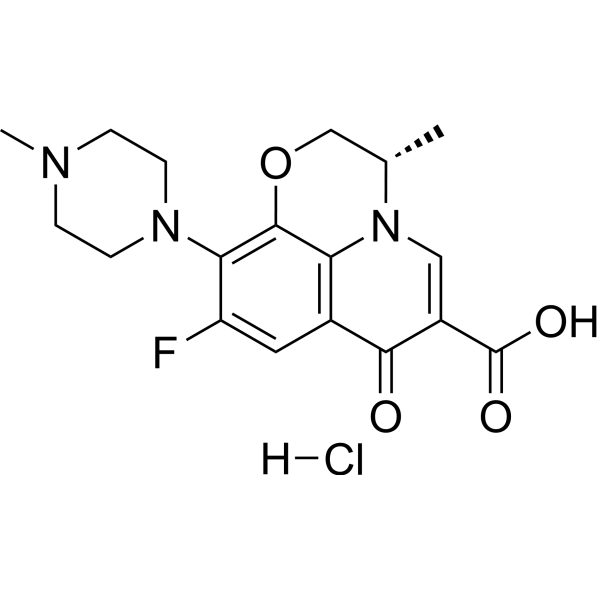
HY-B0330B
Levofloxacin hydrochlorideAntibiotic -
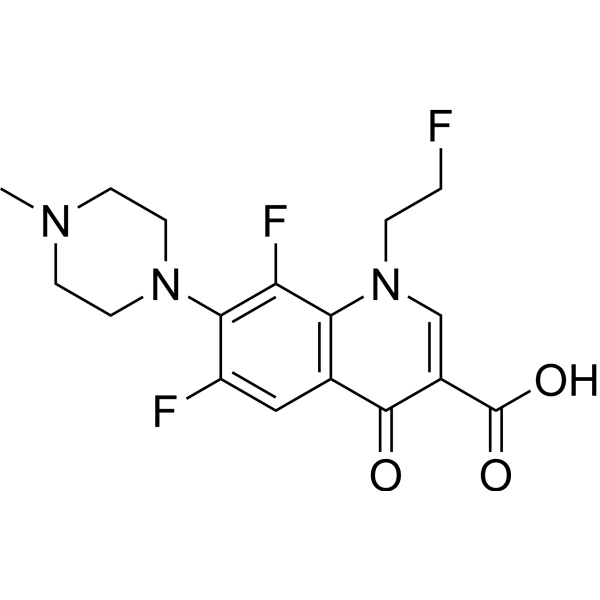
HY-B0414
FleroxacinBacterial Inhibitor -

HY-B0330BR
Levofloxacin hydrochloride (Standard)Standard Of Levofloxacin Hydrochloride -
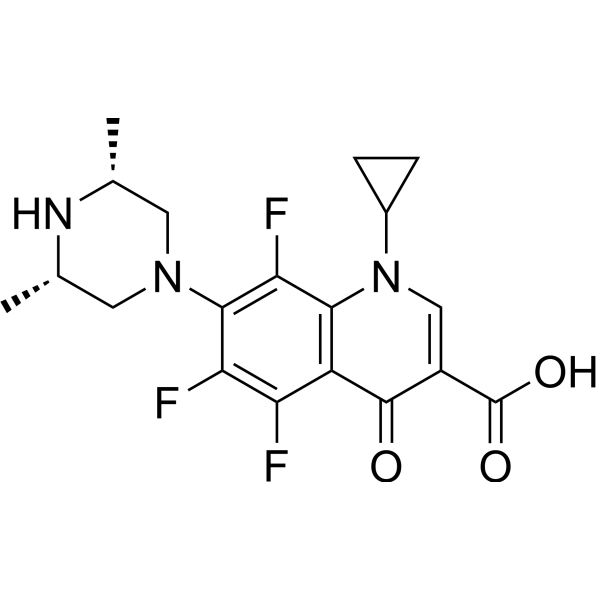
HY-B0915
OrbifloxacinAntibiotic -
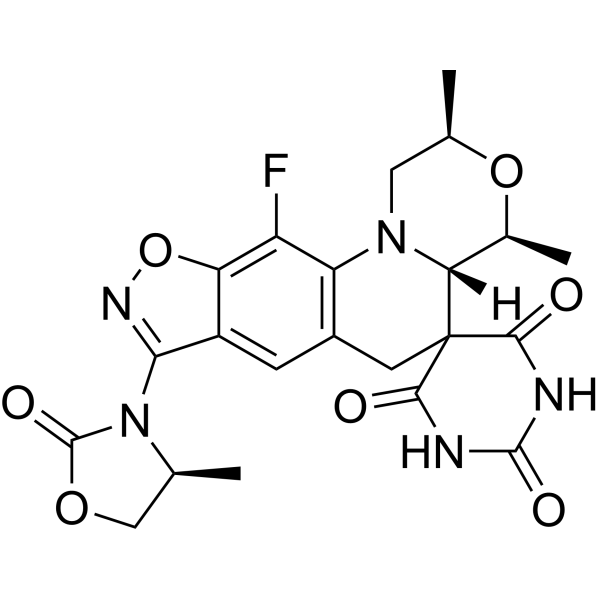
HY-17647
ZoliflodacinDNA gyrase/topoisomerase Inhibitor -

HY-B0414R
Fleroxacin (Standard)Bacterial Inhibitor
Publications Citing Use of MedChemExpress (MCE) Enoxacin hydrate
MoreAll DNA/RNA Synthesis Isoforms
MoreAll Antibiotic Isoforms
More

Biological Activity
Description
IC50 & Target
|
Quinolone |
In Vitro
Enoxacin hydrate (Enoxacin sesquihydrate) increases siGFP-mediated gene knockdown mediated by siRNA against EGFP in HEK293 cells-based reporter system in a dose-dependent manner, with a median effective concentration (EC50) of ~30 µM, whereas it has no effect on the cells expressing GFP only. Enoxacin (50 µM) promotes the processing of miRNAs and the loading of siRNA duplexes onto RISCs in HEK293 cells[3].
Enoxacin has no effect on the processing of pre-let-7 or pre-miR-30a by Dicer alone. However, the addition of Enoxacin can enhance the processing of let-7 or pre-miR-30a by Dicer and TRBP together[3].
Enoxacin inhibits 90% Escherichia coli, Klebsiella sp., Aeromonas sp., Enterobacter spp., Serratia spp., Proteus mirabilis, and Morganella morganii at less than or equal to 0.8 micrograms/ml[5].
MedChemExpress (MCE) has not independently confirmed the accuracy of these methods. They are for reference only.
In Vivo
MedChemExpress (MCE) has not independently confirmed the accuracy of these methods. They are for reference only.
Clinical Trial
| NCT Number | Sponsor | Condition | Start Date |
Phase

|
|---|---|---|---|---|
| NCT01329991 | Plexxikon| | 2011-05 | PHASE1 |


Chemical Information
-
CAS No. 84294-96-2
-
Appearance Solid
-
Molecular Weight 347.34
-
Formula C15H17FN4O3.3/2H2O
-
Color White to yellow
-
SMILES
O=C(C1=CN(CC)C2=C(C=C(F)C(N3CCNCC3)=N2)C1=O)O.[1.5H2O]
-
Synonyms
Enoxacin sesquihydrate; AT-2266 hydrate; CI-919 hydrate
-
Shipping
Room temperature in continental US; may vary elsewhere.
-
Storage
4°C, sealed storage, away from moisture and light
* In solvent : -80°C, 6 months; -20°C, 1 month (sealed storage, away from moisture and light)


Publications (2)
-
Journal Impact Factor
-
Most Recent
-
Int J Biol Macromol
Reticuline isomerase AKR1B1 with aldo-keto reductase activity and detoxification function from the insect Blaps rhynchopetera. [Abstract]2026 Mar:352:151224. PMID: 41791543 -
Sci Rep
2023 Sep 1;13(1):14360. PMID: 37658148


Solvent & Solubility
In Vitro:
1M NaOH : 100 mg/mL (287.90 mM; ultrasonic and adjust pH to 11 with NaOH)
DMSO : 2.78 mg/mL (8.00 mM; Need ultrasonic; Hygroscopic DMSO has a significant impact on the solubility of product, please use newly opened DMSO)
H2O : < 0.1 mg/mL (insoluble)
Please refer to the solubility information to select the appropriate solvent. Once prepared, please aliquot and store the solution to prevent product inactivation from repeated freeze-thaw cycles.
Storage method and period of stock solution: -80°C, 6 months; -20°C, 1 month (sealed storage, away from moisture and light). When stored at -80°C, please use it within 6 months. When stored at -20°C, please use it within 1 month.
Please refer to the solubility information to select the appropriate solvent. Once prepared, please aliquot and store the solution to prevent product inactivation from repeated freeze-thaw cycles.
Storage method and period of stock solution: -80°C, 6 months; -20°C, 1 month (sealed storage, away from moisture and light). When stored at -80°C, please use it within 6 months. When stored at -20°C, please use it within 1 month.
Concentration (start) × Volume (start) = Concentration (final) × Volume (final)


Purity & Documentation
-
Data Sheet (276 KB)
-
SDS (396 KB)
- English - EN (396 KB)
- Français - FR (396 KB)
- Deutsch - DE (396 KB)
- Norwegian - NO (396 KB)
- Español - ES (396 KB)
- Swedish - SV (396 KB)
- Italian - IT (396 KB)
- Korean - KR (396 KB)
- Portuguese - PT (396 KB)
-
Handling Instructions (2659 KB)
References
[1]. Sonia Melo, et al.Small molecule enoxacin is a cancer-specific growth inhibitor that acts by enhancing TAR RNA-binding protein 2-mediated microRNA processing. Proc Natl Acad Sci U S A. 2011 Mar 15;108(11):4394-9. [Content Brief]
[2]. M Takei, et al. Target preference of 15 quinolones against Staphylococcus aureus, based on antibacterial activities and target inhibition. Antimicrob Agents Chemother. 2001 Dec;45(12):3544-7. [Content Brief]
[3]. Ge Shan, et al. A small molecule enhances RNA interference and promotes microRNA processing. Nat Biotechnol. 2008 Aug;26(8):933-40. [Content Brief]
[4]. Rengen Fan, et al. Small molecules with big roles in microRNA chemical biology and microRNA-targeted therapeutics. RNA Biol. 2019 Jun;16(6):707-718. [Content Brief]
[5]. Chin, N.-X. and H.C. Neu, In vitro activity of enoxacin, a quinolone carboxylic acid, compared with those of norfloxacin, new beta-lactams, aminoglycosides, and trimethoprim. Antimicrobial agents and chemotherapy, 1983. 24(5): p. 754-763. [Content Brief]


Complete Stock Solution Preparation Table
Please refer to the solubility information to select the appropriate solvent. Once prepared, please aliquot and store the solution to prevent product inactivation from repeated freeze-thaw cycles.
Storage method and period of stock solution: -80°C, 6 months; -20°C, 1 month (sealed storage, away from moisture and light). When stored at -80°C, please use it within 6 months. When stored at -20°C, please use it within 1 month.
| Optional Solvent | Concentration Solvent Mass | 1 mg | 5 mg | 10 mg | 25 mg |
|---|---|---|---|---|---|
| DMSO / 1M NaOH | 1 mM | 2.8790 mL | 14.3951 mL | 28.7902 mL | 71.9756 mL |
| 5 mM | 0.5758 mL | 2.8790 mL | 5.7580 mL | 14.3951 mL | |
| 1M NaOH | 10 mM | 0.2879 mL | 1.4395 mL | 2.8790 mL | 7.1976 mL |
| 15 mM | 0.1919 mL | 0.9597 mL | 1.9193 mL | 4.7984 mL | |
| 20 mM | 0.1440 mL | 0.7198 mL | 1.4395 mL | 3.5988 mL | |
| 25 mM | 0.1152 mL | 0.5758 mL | 1.1516 mL | 2.8790 mL | |
| 30 mM | 0.0960 mL | 0.4798 mL | 0.9597 mL | 2.3992 mL | |
| 40 mM | 0.0720 mL | 0.3599 mL | 0.7198 mL | 1.7994 mL | |
| 50 mM | 0.0576 mL | 0.2879 mL | 0.5758 mL | 1.4395 mL | |
| 60 mM | 0.0480 mL | 0.2399 mL | 0.4798 mL | 1.1996 mL | |
| 80 mM | 0.0360 mL | 0.1799 mL | 0.3599 mL | 0.8997 mL | |
| 100 mM | 0.0288 mL | 0.1440 mL | 0.2879 mL | 0.7198 mL |


Enoxacin hydrate Related Classifications
HY-B0268A Related Classifications
 Powered by Bioz