



Isosakuranetin
Based on 8 publication(s) in Google Scholar
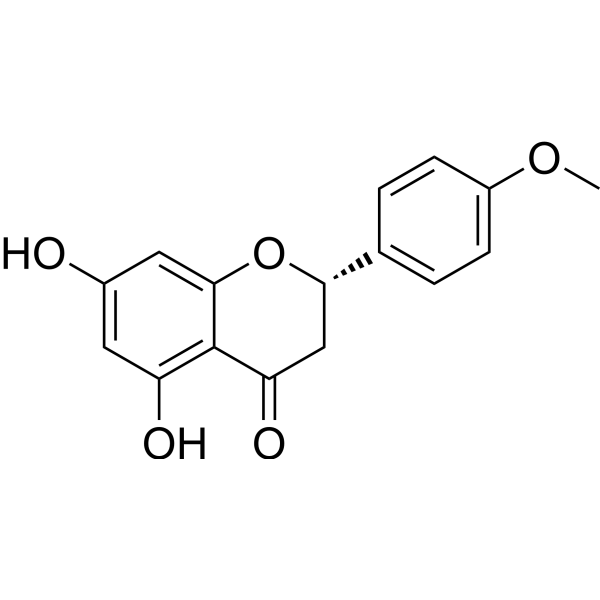
Isosakuranetin is a flavanone flavonoid which can be found in the fruit of Citrus bergamia. Isosakuranetin is a TRPM3 blocker.
Nur für Forschungszwecke. Wir verkaufen nicht an Patienten.
- Reinheit : 99.96%
- CAS. Nr.: 480-43-3
- Formel: C16H14O5
- Molecular Weight:286.28
-
Speicherung:
4°C, sealed storage, away from moisture
* In solvent : -80°C, 6 months; -20°C, 1 month (sealed storage, away from moisture)

To place orders, for customer services and technical support, please contact: MedChemExpress USA
Tel: 609-228-6898 E-mail: [email protected] [email protected]


-
 Biologische Aktivität
-
Chemical Information
-
Lösungsmittel & Löslichkeit
- Reinheit & Dokumentation
- Verweise
-
 Help & FAQs


-
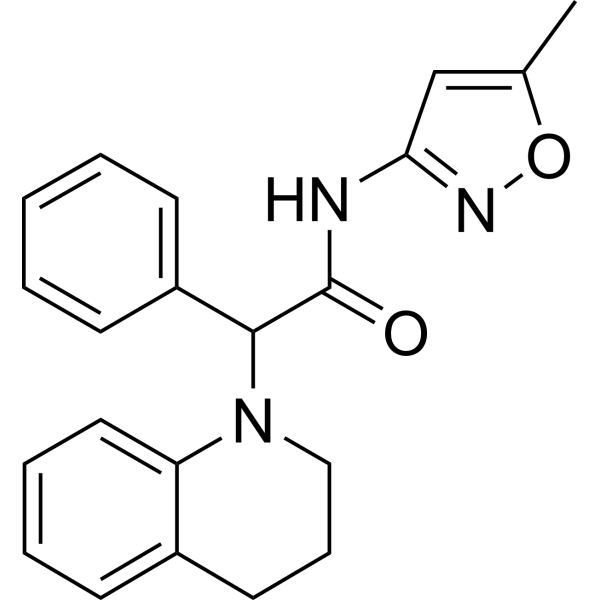
HY-110220
CIM0216TRPM3 Agonist -
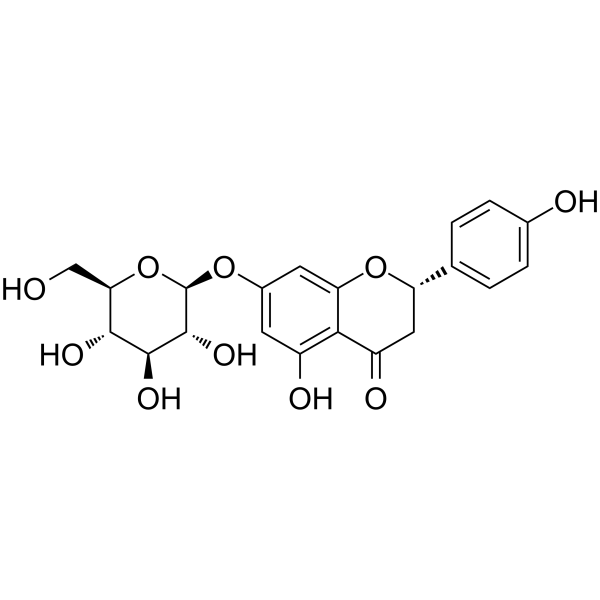
HY-N1549
PruninHEVA71/PTP1B Inhibitor -
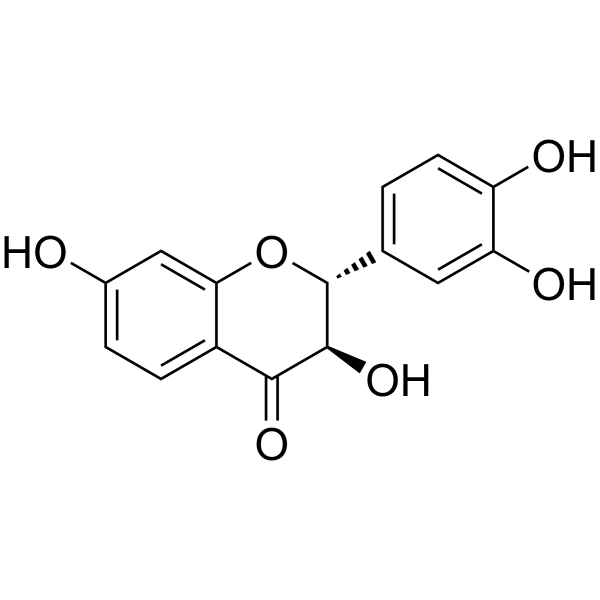
HY-N8376
FustinAβ Inhibitor -
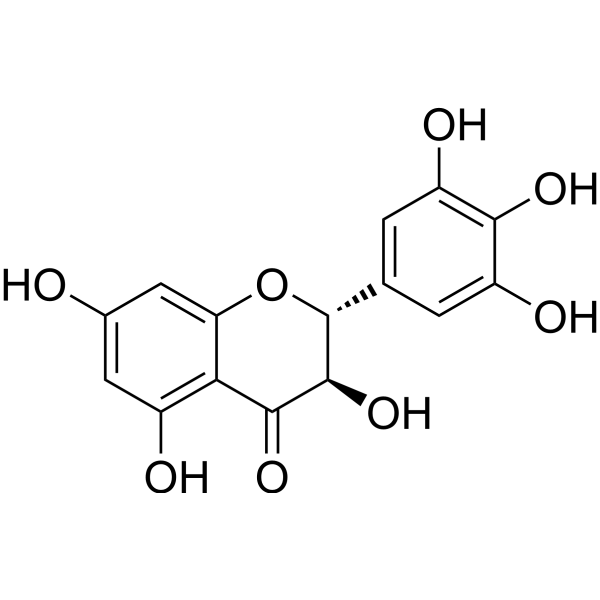
HY-N0112
DihydromyricetinAutophagy Inducer -
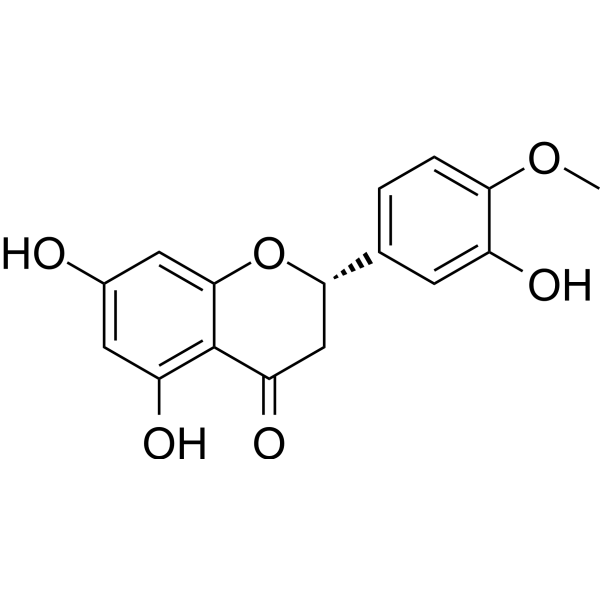
HY-N0168
HesperetinUGT Inhibitor -
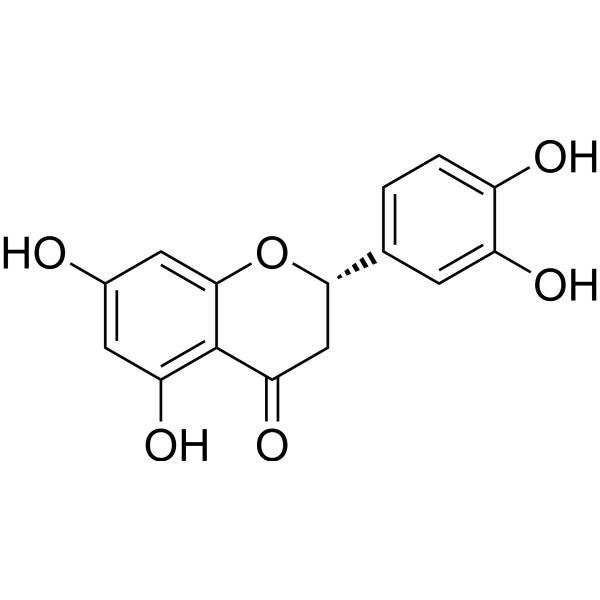
HY-N0637
EriodictyolEndogenous Metabolite -
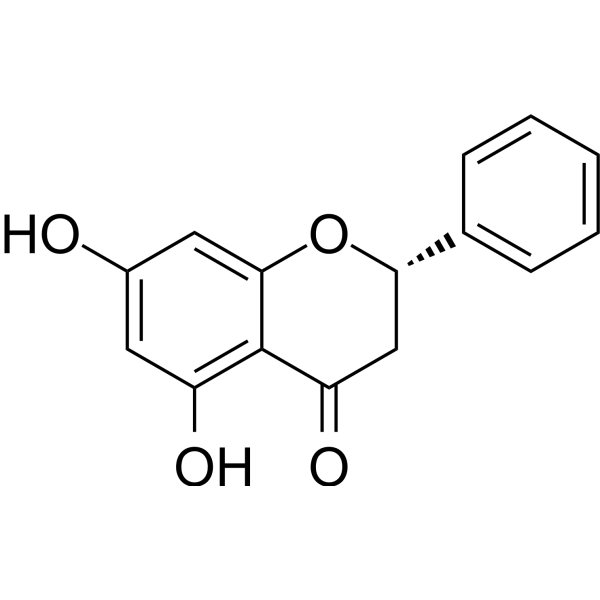
HY-N0575
PinocembrinHistidine Decarboxylase Inhibitor -
HY-B1739
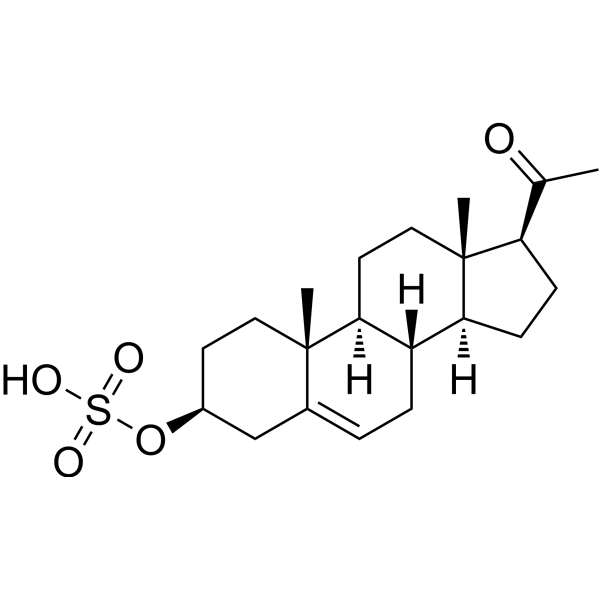
Pregnenolone monosulfateCB1 Receptor Inhibitor -

HY-N0112R
Dihydromyricetin (Standard)Autophagy Inducer -
HY-N2122
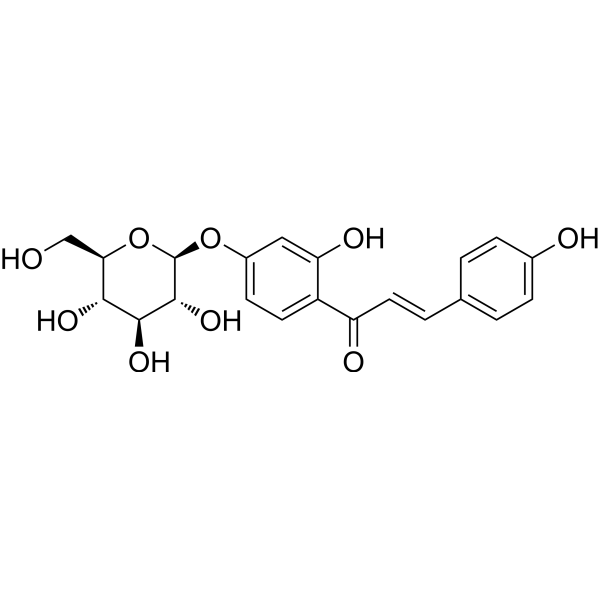
NeoisoliquiritinAndrogen Receptor Inhibitor -
HY-N2123
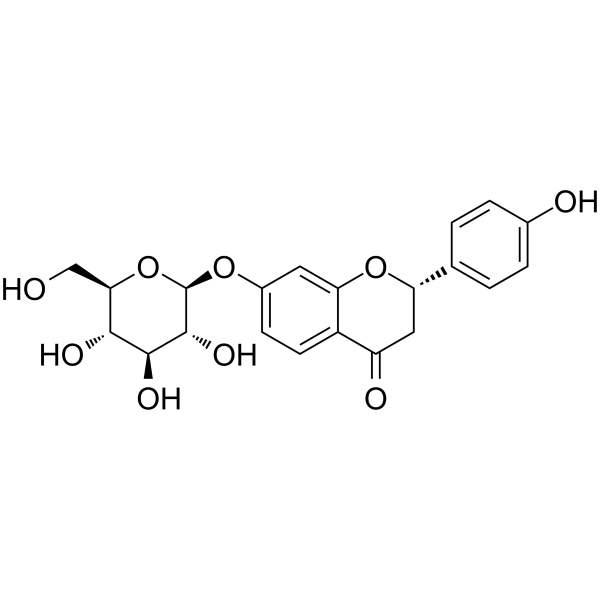
NeoliquiritinAnticancer Agent -

HY-N2123R
Neoliquiritin (Standard)Anti-Inflammatory Agent
Publications Citing Use of MedChemExpress (MCE) Isosakuranetin
More- Acta Pharm Sin B. 2021 Jan;11(1):143-155. [Abstract]
- Food Chem. 2025 Dec 30:497:146992. [Abstract]
- Food Chem. 2025 Oct 15:489:144992. [Abstract]
- Br J Pharmacol. 2026 Sep 20.
- Br J Pharmacol. 2025 Jun;182(11):2503-2523. [Abstract]
- Ind Crops Prod. 2025 Dec 11;239:122458.
- Int J Mol Sci. 2026 Feb 5;27(3):1576. [Abstract]
- Headache. 2025 Oct 24. [Abstract]
 Customer Validation & Images

-
Others

-
Others


Biologische Aktivität
Beschreibung
In Vitro
Isosakuranetin stimulates melanin accumulation in a dose-dependent manner. In addition, Isosakuranetin at 30 μM gradually increases the expression of Tyr, TRP1, and TRP2 after 48 and 72 h. The MTT assay shows that Isosakuranetin decreases the number of cells at concentrations greater than 45 μM. Further analysis of trypan blue staining demonstrates that Isosakuranetin does not affect the viability of B16 melanocytes, but shows that Isosakuranetin decreases their proliferation rate. The tyrosinase activity of B16 melanocytes treated with 15 and 30 μM Isosakuranetin for 72 h is significantly increased by 2- and 3.2-fold, respectively, in comparison with that of the control cells[1].
MedChemExpress (MCE) has not independently confirmed the accuracy of these methods. They are for reference only.
In Vivo
MedChemExpress (MCE) has not independently confirmed the accuracy of these methods. They are for reference only.


Chemical Information
-
CAS. Nr. 480-43-3
-
Appearance Solid
-
Molecular Weight 286.28
-
Formel C16H14O5
-
Color White to yellow
-
SMILES
O=C1C[C@@H](C2=CC=C(OC)C=C2)OC3=CC(O)=CC(O)=C13
-
Structure Classification
-
Initial Source
-
Versand
Room temperature in continental US; may vary elsewhere.
-
Speicherung
4°C, sealed storage, away from moisture
* In solvent : -80°C, 6 months; -20°C, 1 month (sealed storage, away from moisture)


Publications (8)
-
Journal Impact Factor
-
Most Recent
-
Acta Pharm Sin B
Chrysin serves as a novel inhibitor of DGK α/FAK interaction to suppress the malignancy of esophageal squamous cell carcinoma (ESCC). [Abstract]2021 Jan;11(1):143-155. PMID: 33532186 -
Food Chem
Effects of sun drying combined with baking processes on the flavor quality of Chongqing Tuocha raw tea. [Abstract]2025 Dec 30:497:146992. PMID: 41285060 -
Food Chem
Flavonoid-mediated metabolic underpinning quality variation in red bud-sport pear mutants. [Abstract]2025 Oct 15:489:144992. PMID: 40466530 -
-
Br J Pharmacol
Sex differences in the vasoactive effect of transient receptor potential channels: TRPM3 as a new therapeutic target for (neuro)vascular disorders. [Abstract]2025 Jun;182(11):2503-2523. PMID: 39956579
Isosakuranetin purchased from MedChemExpress. Usage Cited in: Br J Pharmacol. 2025 Jun;182(11):2503-2523. [Abstract]
Concentration–response curves to PregS in the absence (control group) or presence of 5-μM isosakuranetin, 1-μM olcegepant or 10-μM MK-801 in HMMAs from males.
-
-
Int J Mol Sci
Dual Targeting of HIF-1α and DLL4 by Isoxanthohumol Potentiates Immune Checkpoint Blockade. [Abstract]2026 Feb 5;27(3):1576. PMID: 41683994 -
Headache
TRPM3 activation causes CGRP release in trigeminal neurons: Implications for migraine mechanisms. [Abstract]2025 Oct 24. PMID: 41133435
Isosakuranetin purchased from MedChemExpress. Usage Cited in: Headache. 2025 Oct 24. [Abstract]
Representative calcium imaging fields (top) and corresponding heatmaps (bottom) showing normalized fluorescence intensity (ΔF/F min) over time in response to vehicle, CIM0216 (3 μM or 30 μM), isosakuranetin (10 μM), or their coapplication. Arrows indicate the time of compound application. Isosakuranetin alone did not induce calcium responses and reduced responses when coapplied with CIM0216.


Lösungsmittel & Löslichkeit
In Vitro:
DMSO : 62.5 mg/mL (218.32 mM; Need ultrasonic; Hygroscopic DMSO has a significant impact on the solubility of product, please use newly opened DMSO)
Please refer to the solubility information to select the appropriate solvent. Once prepared, please aliquot and store the solution to prevent product inactivation from repeated freeze-thaw cycles.
Storage method and period of stock solution: -80°C, 6 months; -20°C, 1 month (sealed storage, away from moisture). When stored at -80°C, please use it within 6 months. When stored at -20°C, please use it within 1 month.
Please refer to the solubility information to select the appropriate solvent. Once prepared, please aliquot and store the solution to prevent product inactivation from repeated freeze-thaw cycles.
Storage method and period of stock solution: -80°C, 6 months; -20°C, 1 month (sealed storage, away from moisture). When stored at -80°C, please use it within 6 months. When stored at -20°C, please use it within 1 month.
Konzentration (Stammlösung) × Volumen (Stammlösung) = Konzentration (Ziellösung) × Volumen (Ziellösung)
In Vivo:
Select the appropriate dissolution method based on your experimental animal and administration route.
- For the following dissolution methods, please ensure to first prepare a clear stock solution using an In Vitro approach and then sequentially add co-solvents:
- To ensure reliable experimental results, the clarified stock solution can be appropriately stored based on storage conditions. As for the working solution for In Vivo experiments, it is recommended to prepare freshly and use it on the same day.
- The percentages shown for the solvents indicate their volumetric ratio in the final prepared solution. If precipitation or phase separation occurs during preparation, heat and/or sonication can be used to aid dissolution.
Add each solvent one by one: 10% DMSO 40% PEG300 5% Tween-80 45% Saline
Solubility: ≥ 2.08 mg/mL (7.27 mM); Clear solution
This protocol yields a clear solution of ≥ 2.08 mg/mL (saturation unknown).
Taking 1 mL working solution as an example, add 100 μL DMSO stock solution (20.8 mg/mL) to 400 μL PEG300, and mix evenly; then add 50 μL Tween-80 and mix evenly; then add 450 μL Saline to adjust the volume to 1 mL.
Preparation of Saline: Dissolve 0.9 g sodium chloride in ddH₂O and dilute to 100 mL to obtain a clear Saline solution.
Add each solvent one by one: 10% DMSO 90% (20% SBE-β-CD in Saline)
Solubility: ≥ 2.08 mg/mL (7.27 mM); Clear solution
This protocol yields a clear solution of ≥ 2.08 mg/mL (saturation unknown).
Taking 1 mL working solution as an example, add 100 μL DMSO stock solution (20.8 mg/mL) to 900 μL 20% SBE-β-CD in Saline, and mix evenly.
Preparation of 20% SBE-β-CD in Saline (4°C, storage for one week): 2 g SBE-β-CD powder is dissolved in 10 mL Saline, completely dissolve until clear.
In Vivo Dissolution Calculator
Please enter the basic information of animal experiments:
-
-
-
-
Recommended: Prepare an additional quantity of animals to account for potential losses during experiments.
Please enter your animal formula composition:
-
%DMSO +
Recommended: Keep the proportion of DMSO in working solution below 2% if your animal is weak.
-
%+
-
+%Tween-80 + +
-
%Saline +
The co-solvents required include: DMSO, . All of co-solvents are available by MedChemExpress (MCE). , Tween 80. All of co-solvents are available by MedChemExpress (MCE).
Working solution concentration: 0.22 mg/mL
Method for preparing stock solution: mg drug dissolved in μL DMSO. Stock solution concentration: mg/mL. * In solvent : -80°C, 6 months; -20°C, 1 month (sealed storage, away from moisture)
1. Take μL DMSO stock solution;
2. Add μL .
μL , mix evenly;
3. Then add μL Tween 80, mix evenly;
4. Then add μL
Please ensure that the stock solution in the first step is dissolved to a clear state, and add co-solvents in sequence. You can use ultrasonic heating (ultrasonic cleaner, recommended frequency 20-40 kHz), vortexing, etc. to assist dissolution.


Reinheit & Dokumentation
-
Data Sheet (276 KB)
-
SDS (394 KB)
- English - EN (394 KB)
- Français - FR (394 KB)
- Deutsch - DE (394 KB)
- Norwegian - NO (394 KB)
- Español - ES (394 KB)
- Swedish - SV (394 KB)
- Italian - IT (394 KB)
- Korean - KR (394 KB)
- Portuguese - PT (394 KB)
-
Handling Instructions (2659 KB)
Verweise
[1]. Drira R, et al. Isosakuranetin, a 4'-O-methylated flavonoid, stimulates melanogenesis in B16BL6 murine melanoma cells. Life Sci. 2015 Dec 15;143:43-9. [Content Brief]
[2]. Jia S, et al. Antinociceptive Effects of Isosakuranetin in a Rat Model of Peripheral Neuropathy. Pharmacology. 2017;100(3-4):201-207. [Content Brief]
[3]. Straub I, et al. Flavanones that selectively inhibit TRPM3 attenuate thermal nociception in vivo. Mol Pharmacol. 2013 Nov;84(5):736-50. [Content Brief]


Complete Stock Solution Preparation Table
Please refer to the solubility information to select the appropriate solvent. Once prepared, please aliquot and store the solution to prevent product inactivation from repeated freeze-thaw cycles.
Storage method and period of stock solution: -80°C, 6 months; -20°C, 1 month (sealed storage, away from moisture). When stored at -80°C, please use it within 6 months. When stored at -20°C, please use it within 1 month.
| Optional Solvent | Concentration Solvent Mass | 1 mg | 5 mg | 10 mg | 25 mg |
|---|---|---|---|---|---|
| DMSO | 1 mM | 3.4930 mL | 17.4652 mL | 34.9305 mL | 87.3262 mL |
| 5 mM | 0.6986 mL | 3.4930 mL | 6.9861 mL | 17.4652 mL | |
| 10 mM | 0.3493 mL | 1.7465 mL | 3.4930 mL | 8.7326 mL | |
| 15 mM | 0.2329 mL | 1.1643 mL | 2.3287 mL | 5.8217 mL | |
| 20 mM | 0.1747 mL | 0.8733 mL | 1.7465 mL | 4.3663 mL | |
| 25 mM | 0.1397 mL | 0.6986 mL | 1.3972 mL | 3.4930 mL | |
| 30 mM | 0.1164 mL | 0.5822 mL | 1.1643 mL | 2.9109 mL | |
| 40 mM | 0.0873 mL | 0.4366 mL | 0.8733 mL | 2.1832 mL | |
| 50 mM | 0.0699 mL | 0.3493 mL | 0.6986 mL | 1.7465 mL | |
| 60 mM | 0.0582 mL | 0.2911 mL | 0.5822 mL | 1.4554 mL | |
| 80 mM | 0.0437 mL | 0.2183 mL | 0.4366 mL | 1.0916 mL | |
| 100 mM | 0.0349 mL | 0.1747 mL | 0.3493 mL | 0.8733 mL |


Isosakuranetin Related Classifications
HY-N2131 Related Classifications
 Powered by Bioz