



HDAC
Histone deacetylases
HDAC (Histone deacetylases) are a class of enzymes that remove acetyl groups (O=C-CH3) from an ε-N-acetyl lysine amino acid on ahistone, allowing the histones to wrap the DNA more tightly. This is important because DNA is wrapped around histones, and DNA expression is regulated by acetylation and de-acetylation. Its action is opposite to that of histone acetyltransferase. HDAC proteins are now also called lysine deacetylases (KDAC), to describe their function rather than their target, which also includes non-histone proteins. Together with the acetylpolyamine amidohydrolases and the acetoin utilization proteins, the histone deacetylases form an ancient protein superfamily known as the histone deacetylase superfamily.
HDAC Isoform Specific Products
-
HDAC
(391)
View all products
-
HDAC1
(317)
View all products
-
HDAC2
(211)
View all products
-
HDAC3
(204)
View all products
-
HDAC4
(72)
View all products
-
HDAC5
(56)
View all products
-
HDAC6
(335)
View all products
-
HDAC7
(53)
View all products
-
HDAC8
(188)
View all products
-
HDAC9
(41)
View all products
-
HDAC10
(67)
View all products
-
HDAC11
(71)
View all products
-
HD1
(3)
View all products
-
HD2
(4)
View all products
All Product Categories
-
HDAC Inhibitors
(780)
View all products
-
HDAC Antagonists
(3)
View all products
-
HDAC Activators
(14)
View all products
-
HDAC Modulators
(4)
View all products
-
HDAC MDM2 Inhibitor
(1)
View all products
-
HDAC Degraders
(44)
View all products
-
HDAC Controls
(4)
View all products
-
HDAC Substrates
(3)
View all products
-
HDAC Ligands
(13)
View all products
-
HDAC Related Products (915)
Related Products (915)

-
Antibodies (16)
-
HDAC Signaling Pathway
-
HDAC Isoform Comparison
-
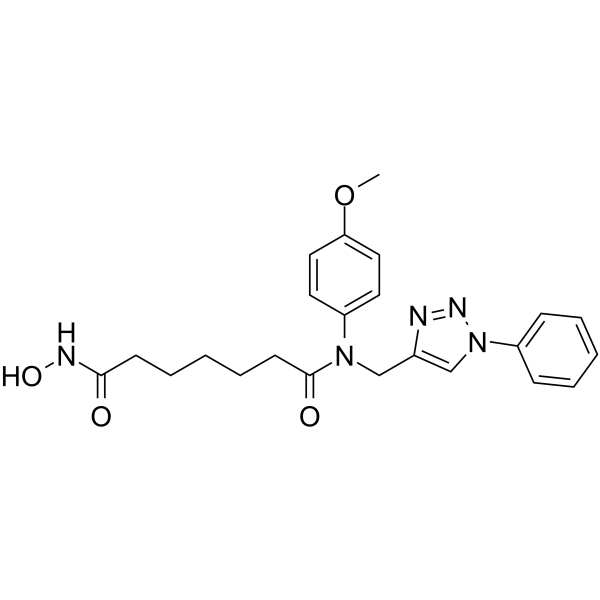
Tubulin/HDAC-IN-2
 0 ImagesCat. No.: HY-155523CAS No.: 3049740-77-1Tubulin/HDAC-IN-2 (Compound II-19k) is a dual inhibitor of Tubulin and HDAC, with an IC50 of 0.403 μM, 0.591μM, 3.552μM, 0.459μM for HDAC1/2/3/6. Tubulin/HDAC-IN-2 blocks cell cycle arrest at G2 phase, induces cell apoptosis. Tubulin/HDAC-IN-2 inhibits the growth of hematoma and solid tumor cells, reduces tumor metastasis, and also inhibits tumor growth in a liver tumor allograft mouse model.
-
HDAC6-IN-44
 0 ImagesCat. No.: HY-162630HDAC6-IN-44 (compound H10) is a selective HDAC6 inhibitor with an IC50 value of 8.97 nM. HDAC6-IN-44 can inhibit the idiopathic pulmonary fibrosis (IPF) phenotype and exhibits antifibrotic activity. Additionally, HDAC6-IN-44 reduces fibrogenesis in a bleomycin-induced pulmonary fibrosis mouse model and demonstrates good metabolic stability. HDAC6-IN-44 holds promise for research in the field of idiopathic pulmonary fibrosis.
-
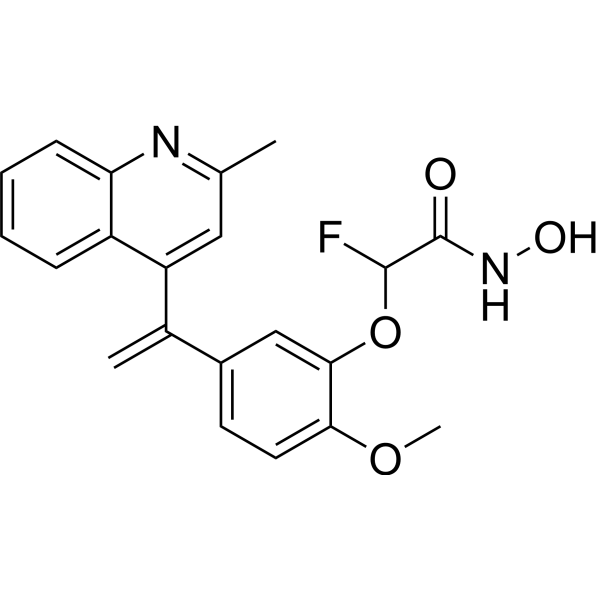
STAT3/HDAC-IN-2
 0 ImagesCat. No.: HY-162828STAT3/HDAC-IN-2 (compound 18) is a dual inhibitor of STAT3 and HDAC, inducing autophagy and apoptosis. STAT3/HDAC-IN-2 is an amphiphilic hydroxamic acid hybrid based on the natural product isopropanol lactone (IAL) and is a nanoscale anticancer agent. STAT3/HDAC-IN-2 can self-assemble in water to form nanoparticles, which have higher tumor tissue accumulation, cellular uptake and anticancer properties compared to the free state.
-
HDAC6-IN-34
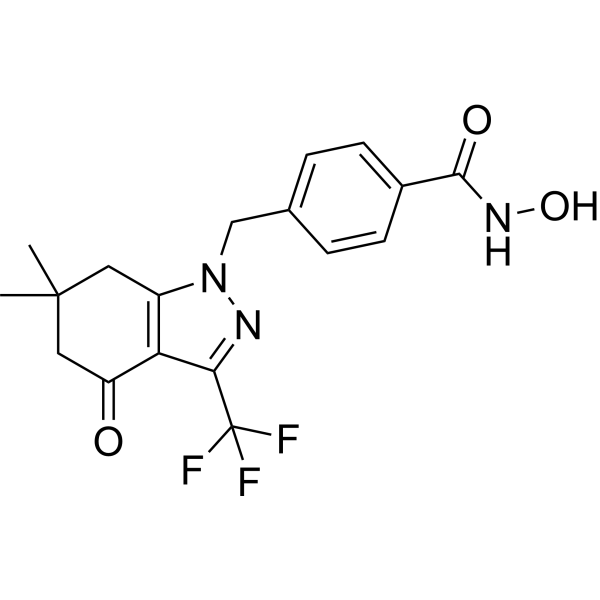 0 ImagesCat. No.: HY-163368CAS No.: 1432508-73-0HDAC6-IN-34 (compound 21) is an oral active and selective HDAC6 inhibitor with the IC50 of 18 nM. HDAC6-IN-34 increases the acetylation level of tubulin without affecting histone acetylation in cutaneous T-cell lymphoma cells and inhibits TNF-α secretion in LPS (HY-D1056)-stimulated macrophage cells. HDAC6-IN-34 shows excellent anti-arthritic efficacy in rat.
-
mTOR/HDAC6-IN-1
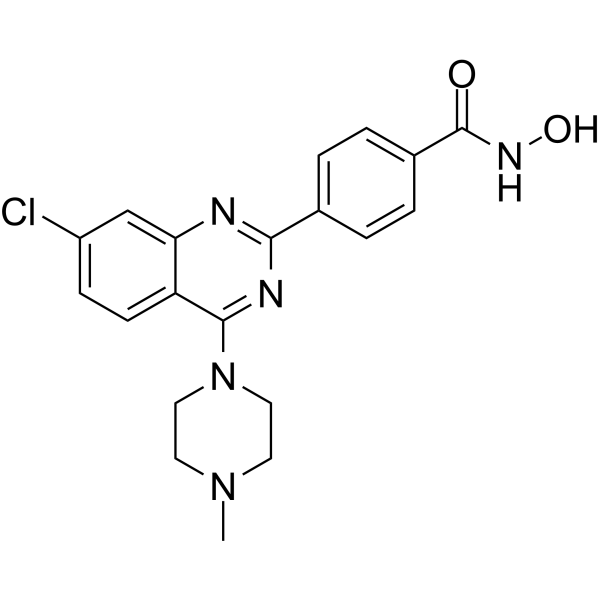 0 ImagesCat. No.: HY-144449CAS No.: 2986747-52-6

-
HDAC-IN-68 hydrochloride
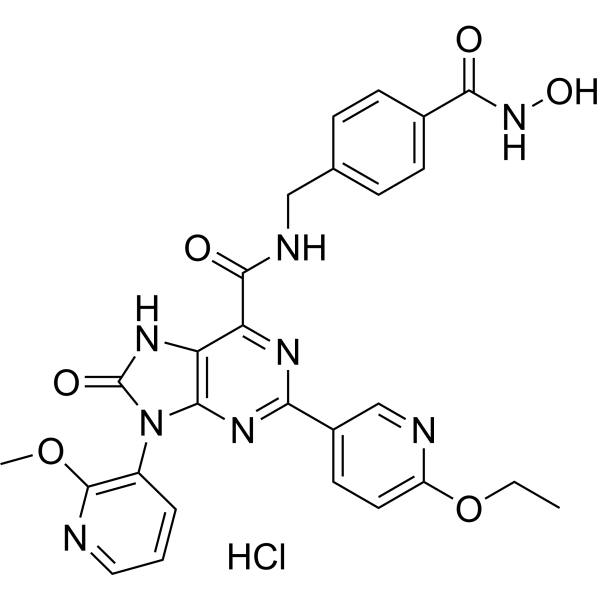 0 ImagesCat. No.: HY-162086AHDAC-IN-68 (hydrochloride) (Compound 29) has inhibitory activity against HDACs (IC50=0.04 μM) and fragments microtubules by activating katanin, a microtubule-severing protein. HDAC-IN-68 (hydrochloride) can be used in cancer research.
-
HDAC6-IN-86
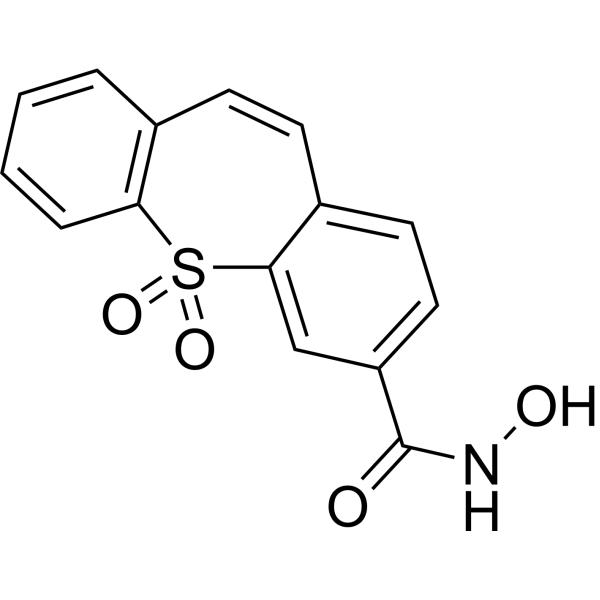
 0 ImagesCat. No.: HY-187210CAS No.: 2271229-98-0HDAC6-IN-86 is a histone deacetylase 6 (HDAC6) inhibitor with an IC50 of 74 nM, and it exhibits high selectivity for HDAC1. HDAC6-IN-86 induces cell apoptosis, triggers G2/M phase cell cycle arrest, and inhibits the proliferation of glioma cells. HDAC6-IN-86 can be used for the research of glioblastoma multiforme (GBM).
-
HDAC-IN-76
 0 ImagesCat. No.: HY-161984HDAC-IN-76 (compound 6i) is a histone deacetylase (HDAC) inhibitor. HDAC-IN-76 IC50 values of 30 nM and 98 nM for Pf3D7 (chloroquine (HY-17589A) drug-susceptible strain) and PfDd2 (chloroquine (HY-17589A) drug-resistant strain), has a highly potent antimalarial activity against asexual blood-stage Plasmodium, respectively, and exhibits selective inhibition against parasites, with IC50 values of 7 nM and 9 nM for human HDAC1 and HDAC6, respectively, while inhibiting PfHDAC1.
-
NN-429
 0 ImagesCat. No.: HY-182649CAS No.: 2490284-32-5NN-429 is a selective HDAC6 inhibitor. NN-429 induces apoptosis, increases the acetylation level of α-tubulin, and exhibits cytotoxicity against cancer cells. NN-429 is applicable to research related to acute myeloid leukemia, multiple myeloma and lymphoma.
-
HDAC-IN-59
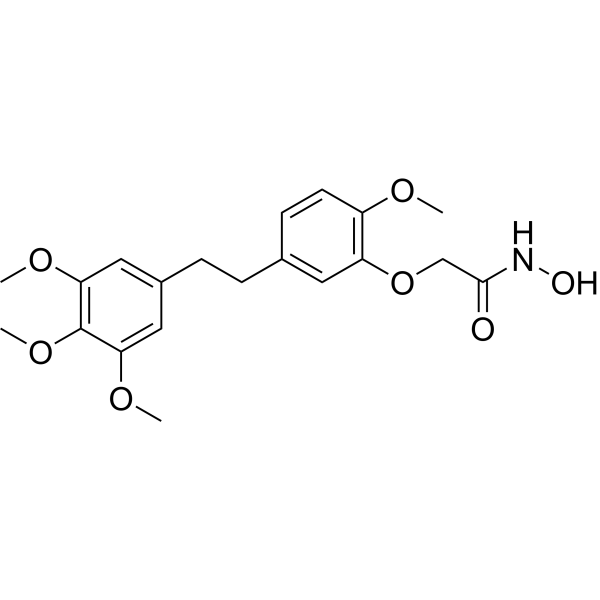 0 ImagesCat. No.: HY-149369CAS No.: 2944459-43-0
-
AChE/HDAC-IN-1
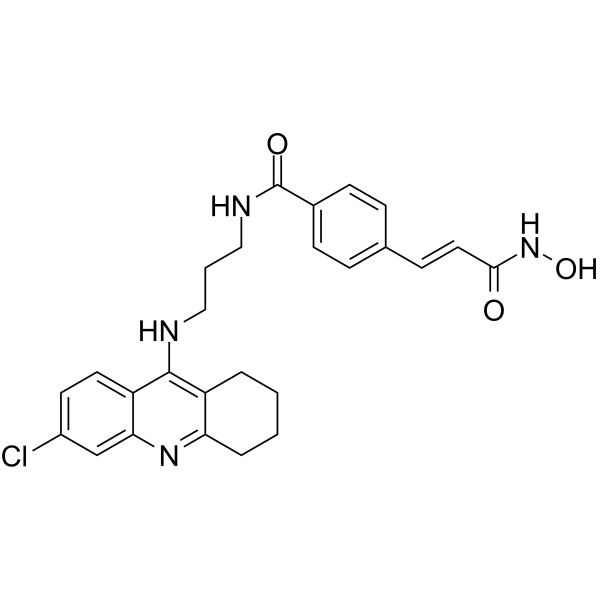 0 ImagesCat. No.: HY-147962CAS No.: 2414053-06-6COX-2-IN-23 (compound A10) is a potent both AChE and HDAC inhibitor with IC50 values of 0.12 and 0.23 nM. COX-2-IN-23 exhibits antioxidant activity and metal chelating properties. COX-2-IN-23 can be used in alzheimer's disease research.
-
FT234
 0 ImagesCat. No.: HY-182717CAS No.: 2222998-52-7
-
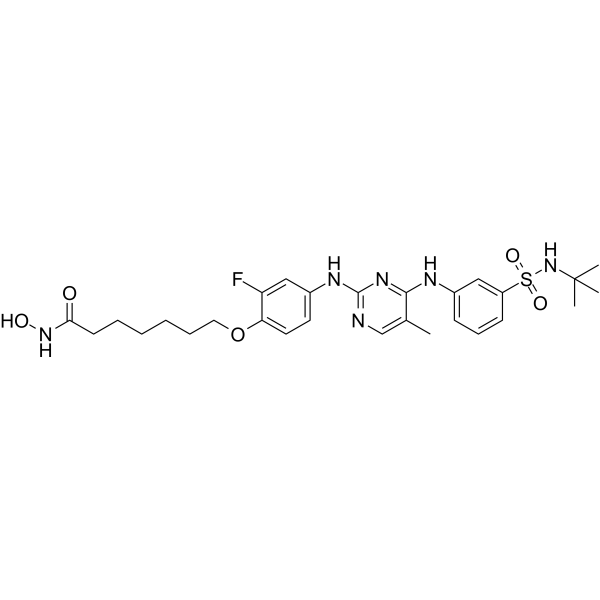
JAK/HDAC-IN-2
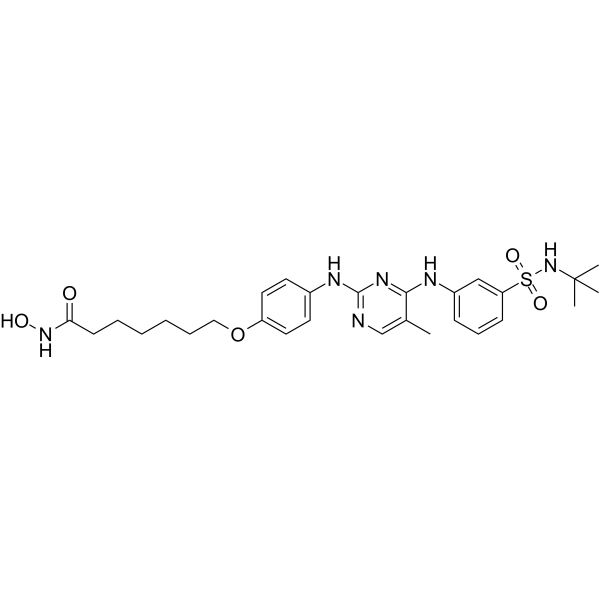 0 ImagesCat. No.: HY-149283CAS No.: 3029138-43-7JAK/HDAC-IN-2 is a potent 2-amino-4-phenylaminopyrimidine JAK/HDAC dual-target inhibitor. JAK/HDAC-IN-2 potently inhibits HDAC3/6 and JAK1/2 at nanomolar levels. JAK/HDAC-IN-2 has proapoptotic activity and inhibits histone deacetylation and STAT3 phosphorylation. JAK/HDAC-IN-2 presents remarkable antiproliferative activity in both hematological malignancies and solid cancers.
-
OKI-005
 0 ImagesCat. No.: HY-185584CAS No.: 1351479-95-2OKI-005 is an orally active inhibitor of Class I HDACs, with primary targeting of HDAC1, HDAC2 and HDAC3. OKI-005 is a prodrug of OKI-006 (HY-144893). OKI-005 increases histone acetylation levels, induces apoptosis and inhibits cancer cell proliferation. OKI-005 can be used in research related to triple-negative breast cancer and colorectal cancer.
-
HDAC6-IN-18
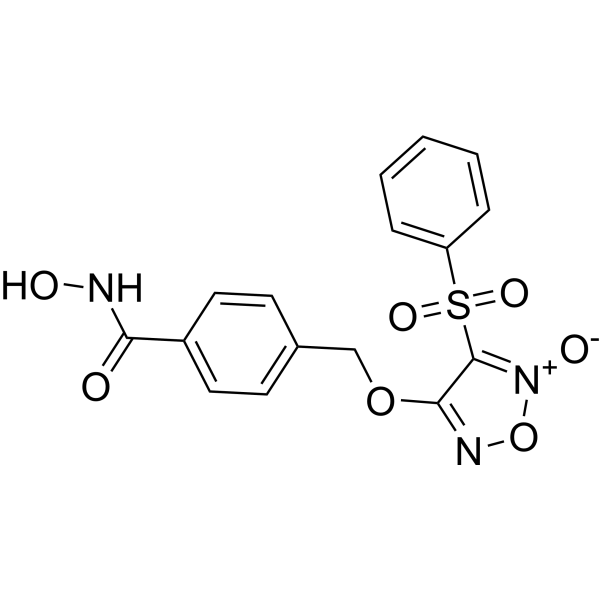 0 ImagesCat. No.: HY-155671CAS No.: 2998942-88-2
-
c-Met/HDAC-IN-2
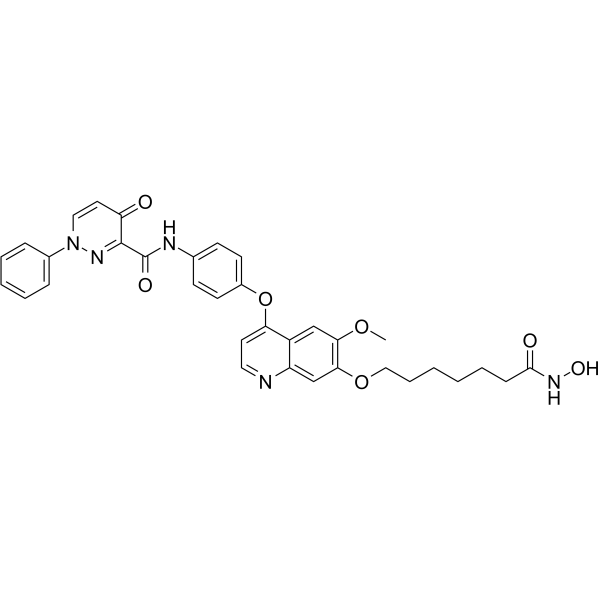 0 ImagesCat. No.: HY-143462CAS No.: 2740495-53-6c-Met/HDAC-IN-2 is a highly potent c-Met and HDAC dual inhibitor with IC50s of 18.49 nM and 5.40 nM for HDAC1 and c-Met, respectively. c-Met/HDAC-IN-2 has antiproliferative activities against certain cancer cell lines. c-Met/HDAC-IN-2 can cause G2/M-phase arrest and induce apoptosis in HCT-116. c-Met/HDAC-IN-2 can be used for researching anti-cancer resistance.




