



PKC
Protein kinase C
PKC (Protein kinase C) is a family of protein kinase enzymes that are involved in controlling the function of otherproteins through the phosphorylation of hydroxyl groups of serine and threonine amino acid residues on these proteins. PKC enzymes in turn are activated by signals such as increases in the concentration of diacylglycerol (DAG) or calcium ions (Ca2+). Hence PKC enzymes play important roles in several signal transduction cascades. The PKC family consists of 15 isozymes in humans: PKC-α (PRKCA), PKC-β1 (PRKCB), PKC-β2 (PRKCB), PKC-γ (PRKCG), PKC-δ (PRKCD), PKC-δ1 (PRKD1), PKC-δ2 (PRKD2), PKC-δ3 (PRKD3), PKC-ε (PRKCE), PKC-η (PRKCH), PKC-θ (PRKCQ), PKC-ι (PRKCI), PKC-ζ (PRKCZ), PK-N1 (PKN1), PK-N2 (PKN2), PK-N3 (PKN3). PKC is involved in receptor desensitization, in modulating membrane structure events, in regulating transcription, in mediating immune responses, in regulating cell growth, and in learning and memory. These functions are achieved by PKC-mediated phosphorylation of other proteins.
PKC Isoform Specific Products
-
PKC
(385)
View all products
-
PKCα
(47)
View all products
-
PKCβ
(40)
View all products
-
PKCγ
(26)
View all products
-
PKCδ
(26)
View all products
-
PKCε
(30)
View all products
-
PKCη
(15)
View all products
-
PKCζ
(14)
View all products
-
PKCθ
(21)
View all products
-
PKCμ
(4)
View all products
-
PKC-ι ℩
(2)
View all products
-
PKCι
(7)
View all products
All Product Categories
-
PKC Related Products (503)
Related Products (503)

-
Antibodies (21)
-
PKC Isoform Comparison
-
CGP-53353
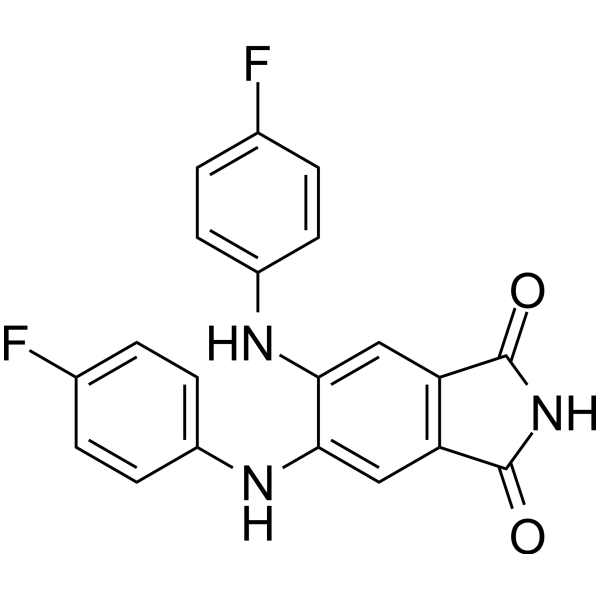 0 ImagesSynonyms: DAPH-7CGP-53353 (DAPH-7) is an potent PKC inhibitor with IC50s of 0.41 μM and 3.8 μM for PKCβII and PKCβI, respectively. CGP-53353 can inhibit glucose-induced cell proliferation and DNA synthesis in AoSMC and A10 cells. CGP-53353 can be used for researching atherosclerosis of diabetic patients.
-
A-3 hydrochloride
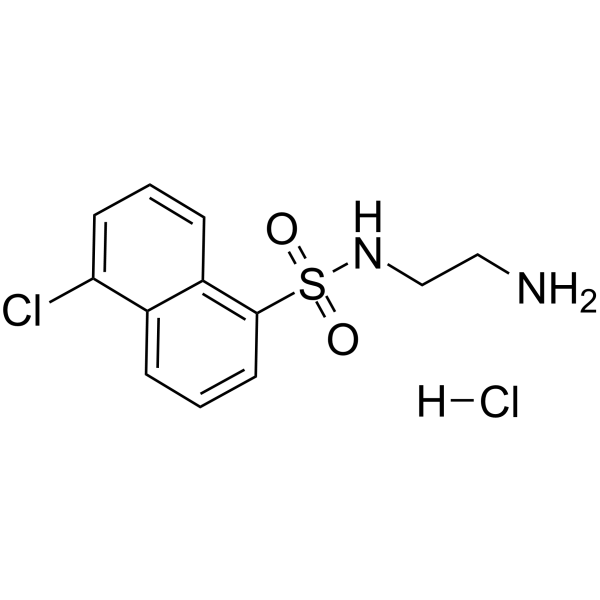 0 ImagesA-3 hydrochloride is a potent, cell-permeable, reversible, ATP-competitive non-selective antagonist of various kinases. It against PKA (Ki=4.3 µM), casein kinase II (Ki=5.1 µM) and myosin light chain kinase (MLCK) (Ki=7.4 µM). A-3 hydrochloride also inhibits PKC and casein kinase I with Ki values of 47 µM and 80 µM, respectively.
-
Delcasertib
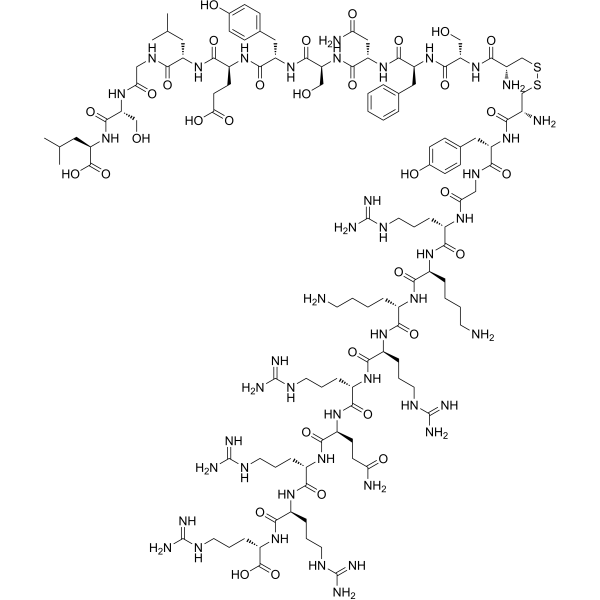 0 ImagesCat. No.: HY-106262CAS No.: 949100-39-4Synonyms: KAI-9803; BMS-875944Delcasertib (KAI-9803) is a potent and selective δ-protein kinase C (δPKC) inhibitor. Delcasertib (KAI-9803) could ameliorate injury associated with ischemia and reperfusion in animal models of acute myocardial infarction (MI).
-
Prkch Mouse Pre-designed siRNA Set A
 0 ImagesCat. No.: HY-RS11132
Prkch Mouse Pre-designed siRNA Set A contains three designed siRNAs for Prkch gene (Mouse), as well as a negative control, a positive control, and a FAM-labeled negative control.
-
Flosequinan
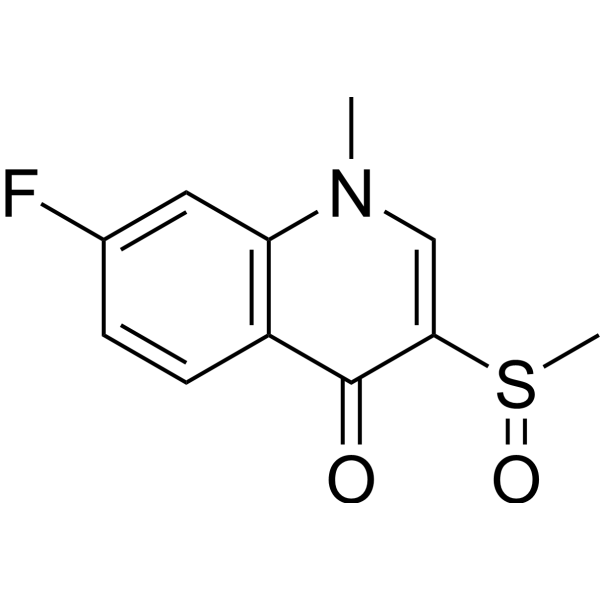 0 ImagesSynonyms: BTS 49465; FlosequinonFlosequinan is a balanced vasodilator. Flosequinan not only significantly reduces systemic vascular resistance, but also significantly reduces the beating component of left ventricular afterload, characteristic impedance and arterial wave reflection, which can be used in the research of acute heart failure.
-
(S)-Ro 32-0432
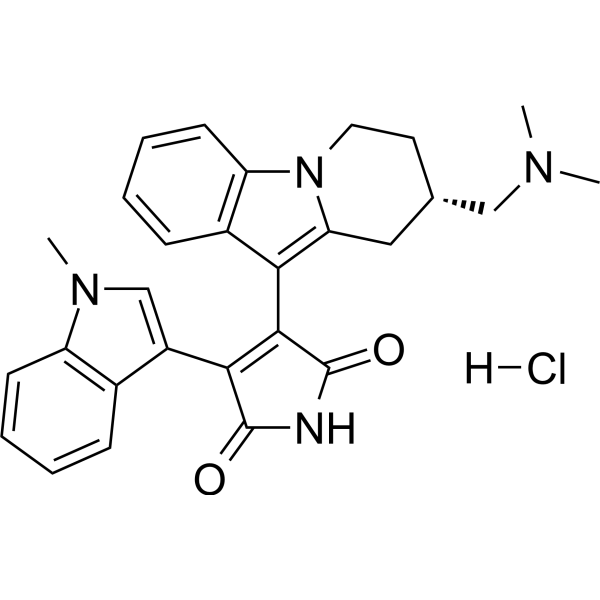 0 ImagesCat. No.: HY-108601ACAS No.: 1781828-85-0(S)-Ro 32-0432 is a potent, selective, ATP-competitive and orally active PKC inhibitor. The IC50 values of (S)-Ro 32-0432 for PKCα, PKCβI, PKCβII, PKCγ and PKCε are 9.3 nM, 28 nM, 30 nM, 36.5 nM and 108.3 nM, respectively. (S)-Ro 32-0432 is also a selective G protein-coupled receptor kinase 5 (GRK5) inhibitor. (S)-Ro 32-0432 prevents T-cell activation and has the potential for chronic inflammatory and autoimmune diseases research.
-
K-252c
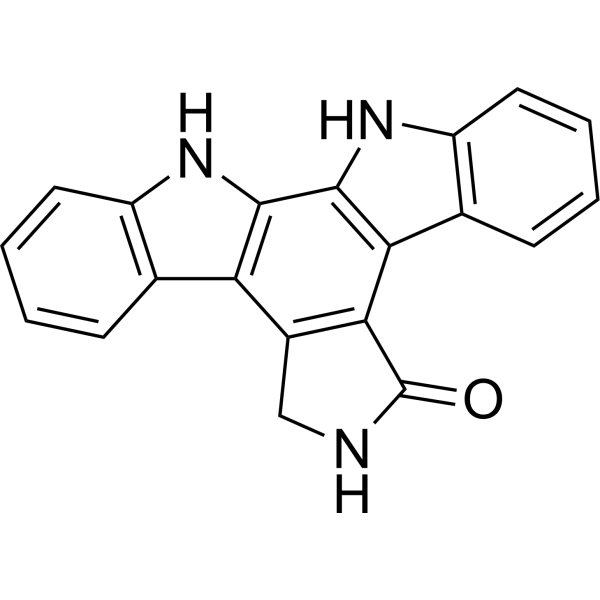 0 ImagesK-252c, a staurosporine analog isolated from Nocardiopsis sp., is a cell-permeable PKC inhibitor, with an IC50 of 2.45 µM. K-252c induces apoptosis in human chronic myelogenous leukemia cancer cells. K-252c also inhibits β-lactamase, chymotrypsin, and malate dehydrogenase.
-
PRKCH Human Pre-designed siRNA Set A
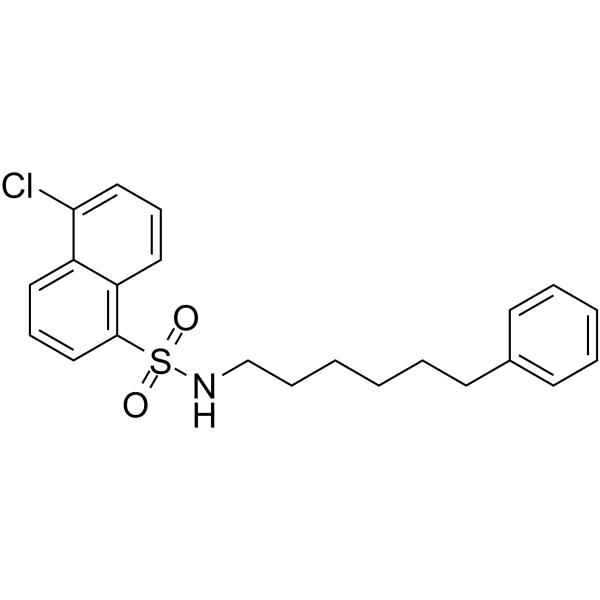
 0 ImagesCat. No.: HY-RS11131
PRKCH Human Pre-designed siRNA Set A contains three designed siRNAs for PRKCH gene (Human), as well as a negative control, a positive control, and a FAM-labeled negative control.
-
Myelin Basic Protein(87-99) TFA
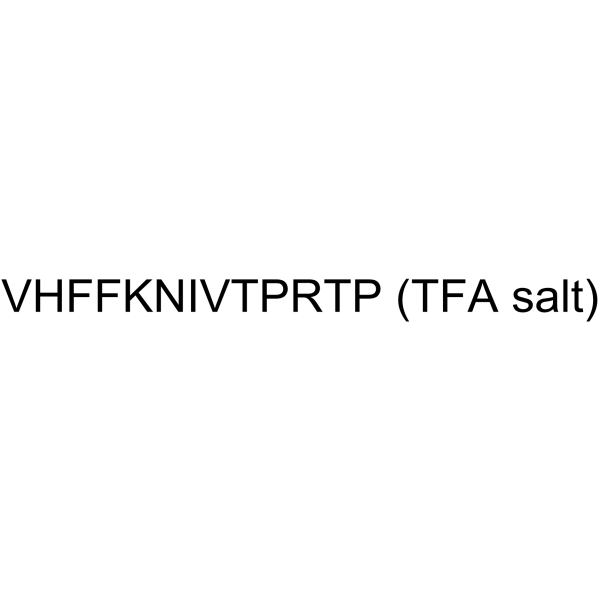 0 ImagesCat. No.: HY-P1052APurity: 99.23%Myelin Basic Protein(87-99) TFA is an encephalitogenic peptide that induces basic protein-specific T cell proliferation. Myelin Basic Protein(87-99) TFA causes a Th1 polarization in peripheral blood mononuclear cells with is implicated of multiple sclerosis (MS).
-
Malantide
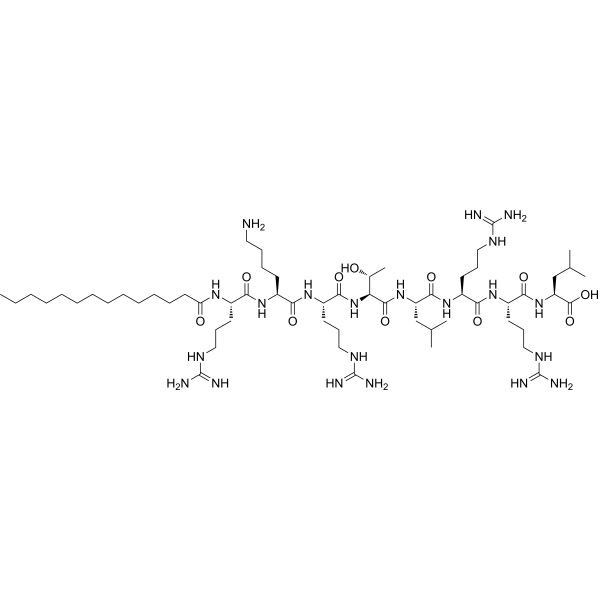
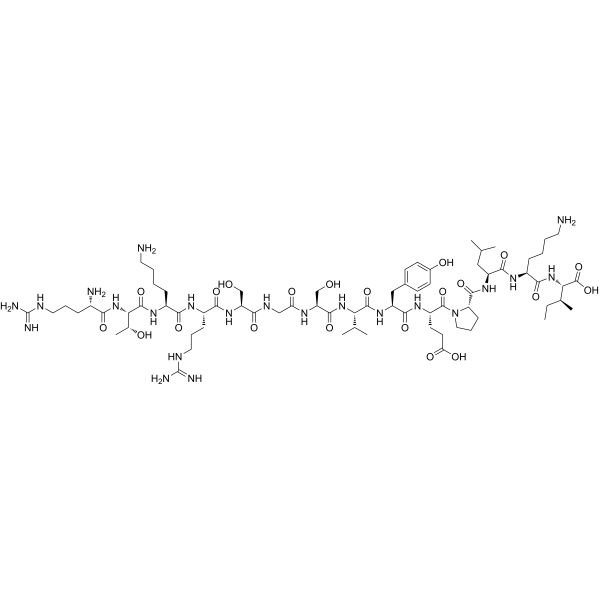 0 ImagesMalantide is a synthetic dodecapeptide derived from the site phosphorylated by cAMP-dependent protein kinase (PKA) on the β-subunit of phosphorylase kinase. Malantide is a highly specific substrate for PKA with a Km of 15 μM and shows protein inhibitor (PKI) inhibition >90% substrate phosphorylation in various rat tissue extracts. Malantide is also an efficient substrate for PKC with a Km of 16 μM.
-
Chelerythrine
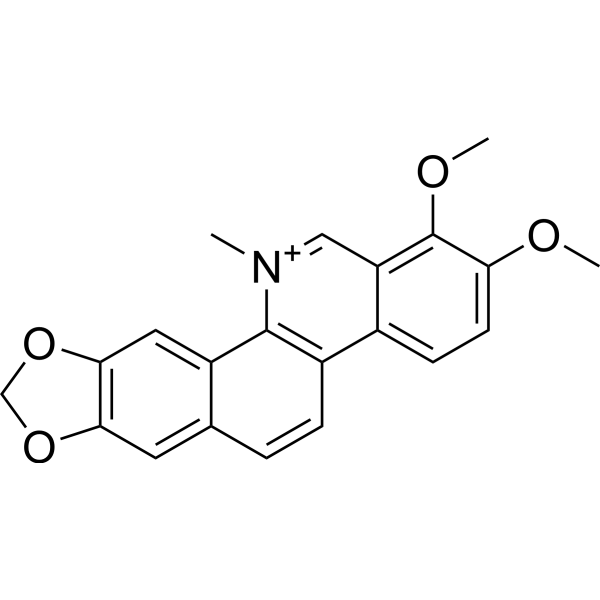 0 ImagesCat. No.: HY-N2359CAS No.: 34316-15-9Chelerythrine is an alkaloid, acts as a potent and selective Ca2+/phospholopid-dependent PKC antagonist, with an IC50 of 0.7 μM. Chelerythrine inhibits the BclXL-Bak BH3 peptide binding with IC50 of 1.5 μM. Chelerythrine triggers Apoptosis and Autophagy. Chelerythrine has antitumor, antidiabetic and anti-inflammatory activity. Chelerythrine shows antibacterial activities against Gram-positive bacteria, Staphylococcus aureus (SA), MRSA.
-
Ingenol 3-monobenzoate
 0 ImagesCat. No.: HY-N13191CAS No.: 83036-64-0Synonyms: Ingenol 3-benzoateIngenol 3-monobenzoate (Ingenol 3-benzoate) is a disgust inducing agent. Ingenol 3-monobenzoate can bind to and activate PKC (Ki=0.14 nM), inhibit the gene expression of phosphoenolpyruvate carboxykinase, thereby inhibiting gluconeogenesis, and increasing blood cortisol levels, producing food aversion.
-
Fasudil Hydrochloride (Standard)
 0 ImagesSynonyms: HA-1077 Hydrochloride (Standard); AT-877 Hydrochloride (Standard)Fasudil (Hydrochloride) (Standard) is the analytical standard of Fasudil (Hydrochloride). This product is intended for research and analytical applications. Fasudil (HA-1077; AT877) Hydrochloride is a nonspecific RhoA/ROCK inhibitor and also has inhibitory effect on protein kinases, with an Ki of 0.33 μM for ROCK1, IC50s of 0.158 μM and 4.58 μM, 12.30 μM, 1.650 μM for ROCK2 and PKA, PKC, PKG, respectively. Fasudil Hydrochloride is also a potent Ca2+ channel antagonist and vasodilator.
-
βGlcCer
 0 ImagesCat. No.: HY-152940CAS No.: 887907-50-8Synonyms: C24:1 β-glucosylceramideβGlcCer is a glycosphingolipid. βGlcCer directly increases the development and PKCα and PKCδ activation in mouse bone marrow-derived DCs (BMDCs). β-GlcCer accumulating in Gaucher disease activates microglia through macrophage-inducible C-type lectin (Mincle) to induce phagocytosis of living neurons, which exacerbates Gaucher symptoms.
-
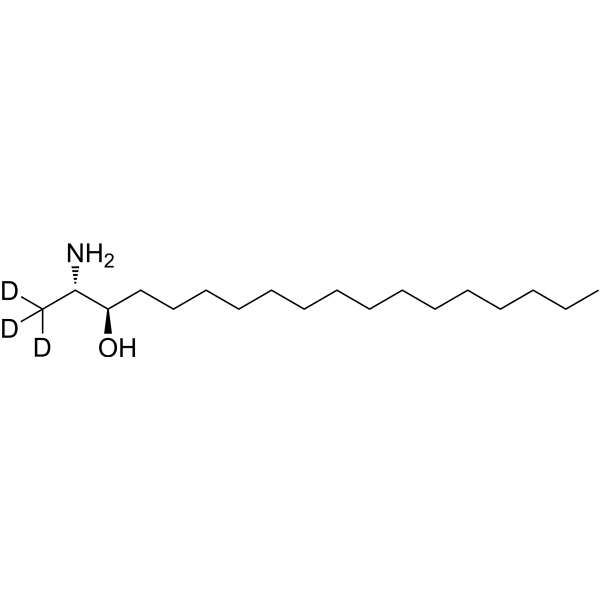
Spisulosine-d3
 0 ImagesSynonyms: ES-285-d3Spisulosine-d3 (ES-285-d3) is deuterium labeled Spisulosine (HY-13626). Spisulosine is an antiproliferative (antitumoral) compound of marine origin. Spisulosine inhibits the growth of the prostate PC-3 and LNCaP cells through intracellular ceramide accumulation and PKCζ activation. Spisulosine induces apoptosis in PC-3 and LNCaP cells.




