



Malantide
Based on 1 publication(s) in Google Scholar
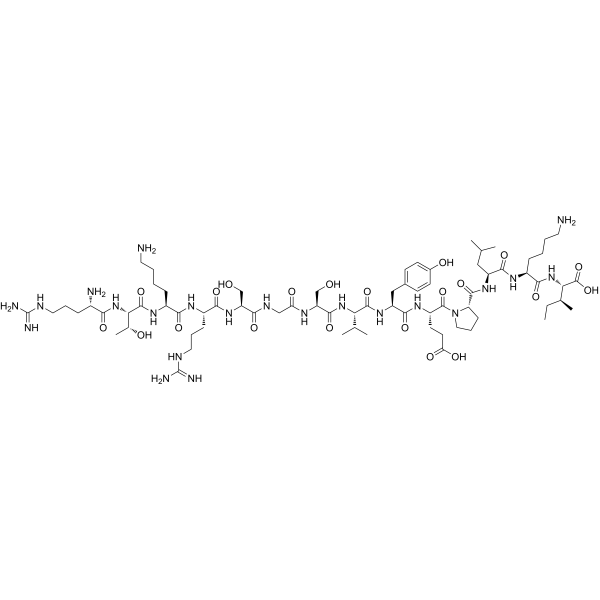
Malantide is a synthetic dodecapeptide derived from the site phosphorylated by cAMP-dependent protein kinase (PKA) on the β-subunit of phosphorylase kinase. Malantide is a highly specific substrate for PKA with a Km of 15 μM and shows protein inhibitor (PKI) inhibition >90% substrate phosphorylation in various rat tissue extracts. Malantide is also an efficient substrate for PKC with a Km of 16 μM.
For research use only. We do not sell to patients.
- Purity : 98.04%
- CAS No.: 86555-35-3
- Formula: C72H124N22O21
- Molecular Weight:1633.89
-
Storage:
Sealed storage, away from moisture.
Powder -80°C, 2 years , -20°C, 1 year* In solvent : -80°C, 6 months; -20°C, 1 month (sealed storage, away from moisture)

To place orders, for customer services and technical support, please contact: MedChemExpress USA
Tel: 609-228-6898 E-mail: [email protected] [email protected]


-
 Biological Activity
-
Chemical Information
-
Solvent & Solubility
- Protocols
- Purity & Documentation
- References
-
 Help & FAQs


-
HY-P0248
KemptidePKA Substrate -
HY-P0222
PKI(5-24)PKA Inhibitor -
HY-N6789
KT5720PKA Inhibitor -
HY-100530D
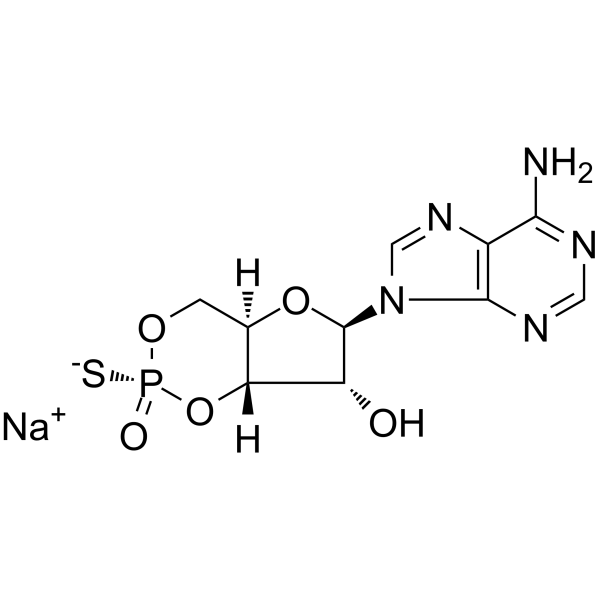
Rp-cAMPS sodium saltPKA I/II Antagonist -
HY-115732
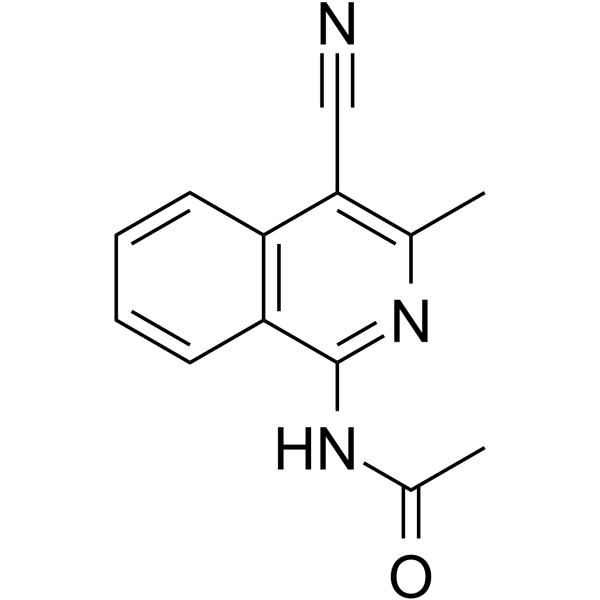
PKA-IN-1cAK Inhibitor -
HY-15979
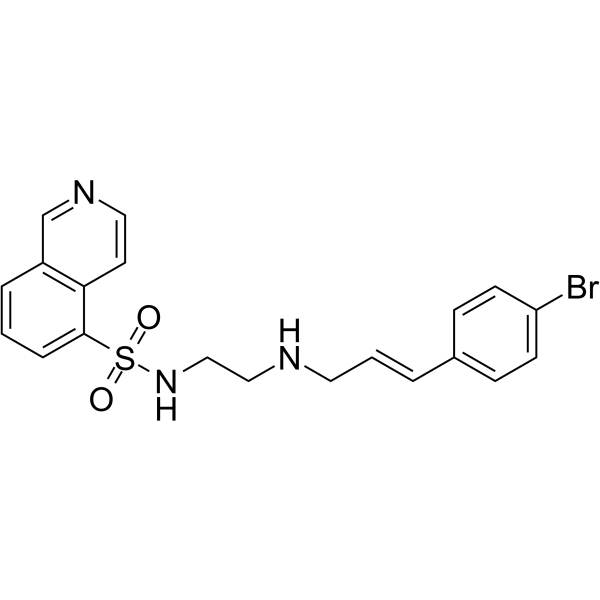
H-89PKA Inhibitor -

HY-P3785
PKI(5-22)amidePKA Inhibitor -
HY-15979A
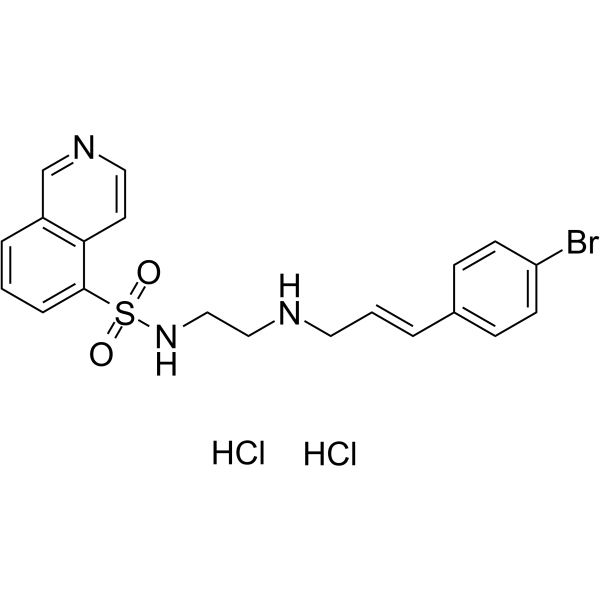
H-89 dihydrochloridePKA Inhibitor -
HY-P0154
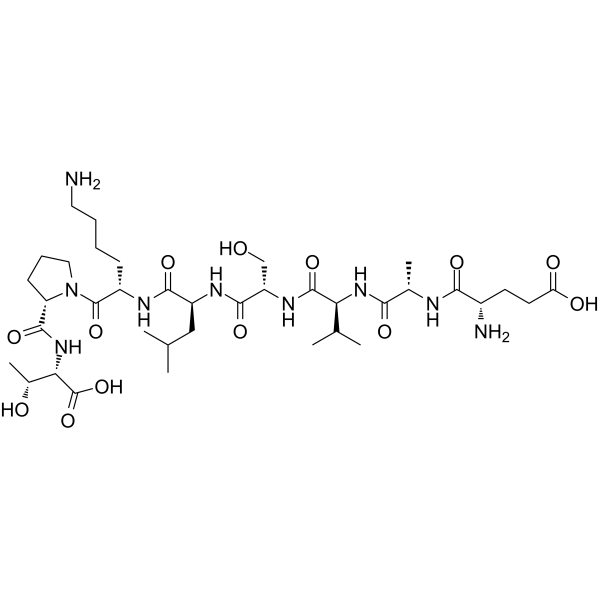
Epsilon-V1-2PKCε Inhibitor -
HY-P0225
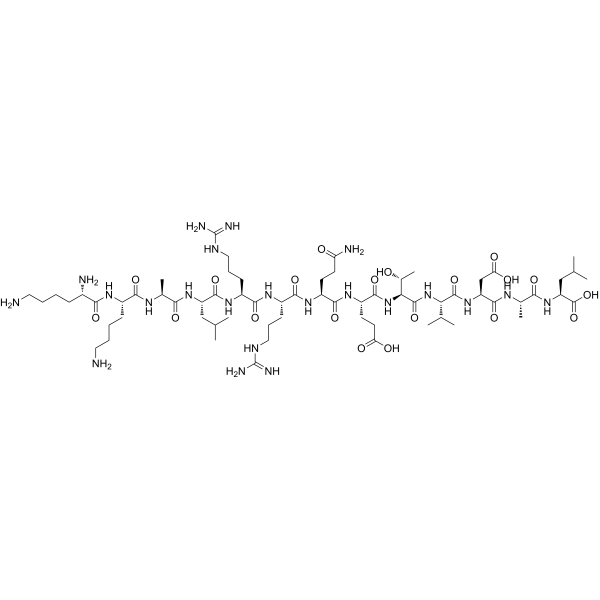
Autocamtide 2CaMKII Substrate -
HY-B0764
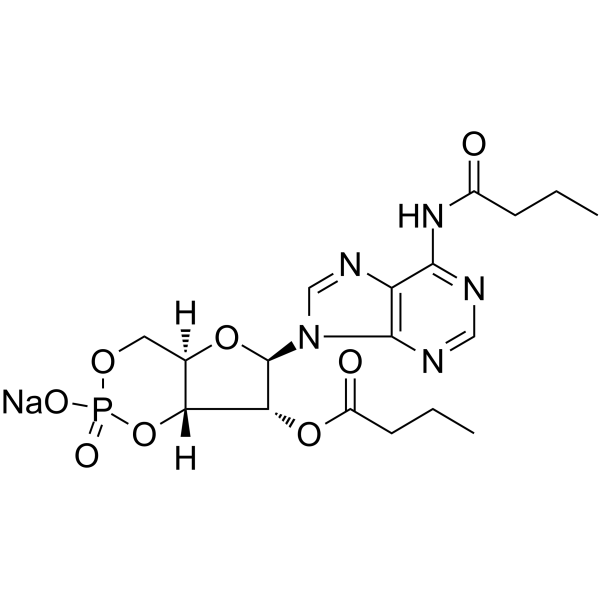
Bucladesine sodiumcAMP Analog -

HY-P1746
Protein Kinase C (19-31)PKC Inhibitor
Publications Citing Use of MedChemExpress (MCE) Malantide
More

Biological Activity
Description
IC50 & Target
In Vitro
The Km values of Malantide are 15 μM and 223 μM for PKA and PKG, respectively. The Vmax values are 23.8 units/mg and 6.6 units/mg for for PKA and PKG, respectively[1].
A statistically significant effect of isoprenaline on the activity ratio of guinea-pig heart was only: observed with Malantide[1].
MedChemExpress (MCE) has not independently confirmed the accuracy of these methods. They are for reference only.


Chemical Information
-
CAS No. 86555-35-3
-
Appearance Solid
-
Molecular Weight 1633.89
-
Formula C72H124N22O21
-
Color White to off-white
-
Sequence
Arg-Thr-Lys-Arg-Ser-Gly-Ser-Val-Tyr-Glu-Pro-Leu-Lys-Ile
-
Sequence Shortening
RTKRSGSVYEPLKI
-
Shipping
Room temperature in continental US; may vary elsewhere.
-
Storage
Sealed storage, away from moisture
Powder -80°C 2 years -20°C 1 year * In solvent : -80°C, 6 months; -20°C, 1 month (sealed storage, away from moisture)


Publications (1)
-
Journal Impact Factor
-
Most Recent
-
Int J Biol Sci
PKCα Induced the Generation of Extracellular Vesicles in Activated Platelets to Promote Breast Cancer Metastasis. [Abstract]2024 Jul 15;20(10):3956-3971. PMID: 39113702


Solvent & Solubility
In Vitro:
DMSO : 100 mg/mL (61.20 mM; Need ultrasonic; Hygroscopic DMSO has a significant impact on the solubility of product, please use newly opened DMSO)
Please refer to the solubility information to select the appropriate solvent. Once prepared, please aliquot and store the solution to prevent product inactivation from repeated freeze-thaw cycles.
Storage method and period of stock solution: -80°C, 6 months; -20°C, 1 month (sealed storage, away from moisture). When stored at -80°C, please use it within 6 months. When stored at -20°C, please use it within 1 month.
Please refer to the solubility information to select the appropriate solvent. Once prepared, please aliquot and store the solution to prevent product inactivation from repeated freeze-thaw cycles.
Storage method and period of stock solution: -80°C, 6 months; -20°C, 1 month (sealed storage, away from moisture). When stored at -80°C, please use it within 6 months. When stored at -20°C, please use it within 1 month.
Concentration (start) × Volume (start) = Concentration (final) × Volume (final)


Purity & Documentation
-
Data Sheet (274 KB)
-
SDS (252 KB)
- English - EN (252 KB)
- Français - FR (252 KB)
- Deutsch - DE (252 KB)
- Norwegian - NO (252 KB)
- Español - ES (252 KB)
- Swedish - SV (252 KB)
- Italian - IT (252 KB)
- Korean - KR (252 KB)
- Portuguese - PT (252 KB)
-
Handling Instructions (2659 KB)
References
[1]. Murray KJ, et al. Use of a synthetic dodecapeptide (malantide) to measure the cyclic AMP-dependent protein kinase activity ratio in a variety of tissues. Biochem J. 1990 May 1;267(3):703-8. [Content Brief]
[2]. Z H Zhao, et al. Characterization of a New Substrate for Protein Kinase C: Assay by Continuous Fluorometric Monitoring and High Performance Liquid Chromatography. Biochem Biophys Res Commun. 1991 May 15;176(3):1454-61. [Content Brief]


Complete Stock Solution Preparation Table
Please refer to the solubility information to select the appropriate solvent. Once prepared, please aliquot and store the solution to prevent product inactivation from repeated freeze-thaw cycles.
Storage method and period of stock solution: -80°C, 6 months; -20°C, 1 month (sealed storage, away from moisture). When stored at -80°C, please use it within 6 months. When stored at -20°C, please use it within 1 month.
| Optional Solvent | Concentration Solvent Mass | 1 mg | 5 mg | 10 mg | 25 mg |
|---|---|---|---|---|---|
| DMSO | 1 mM | 0.6120 mL | 3.0602 mL | 6.1204 mL | 15.3009 mL |
| 5 mM | 0.1224 mL | 0.6120 mL | 1.2241 mL | 3.0602 mL | |
| 10 mM | 0.0612 mL | 0.3060 mL | 0.6120 mL | 1.5301 mL | |
| 15 mM | 0.0408 mL | 0.2040 mL | 0.4080 mL | 1.0201 mL | |
| 20 mM | 0.0306 mL | 0.1530 mL | 0.3060 mL | 0.7650 mL | |
| 25 mM | 0.0245 mL | 0.1224 mL | 0.2448 mL | 0.6120 mL | |
| 30 mM | 0.0204 mL | 0.1020 mL | 0.2040 mL | 0.5100 mL | |
| 40 mM | 0.0153 mL | 0.0765 mL | 0.1530 mL | 0.3825 mL | |
| 50 mM | 0.0122 mL | 0.0612 mL | 0.1224 mL | 0.3060 mL | |
| 60 mM | 0.0102 mL | 0.0510 mL | 0.1020 mL | 0.2550 mL |


Malantide Related Classifications
HY-P1597 Related Classifications
 Powered by Bioz