



1. Search Result
Search Result
Pathways Recommended: Neuronal Signaling JAK/STAT Signaling
Results for "

Fluorescence signal

" in MedChemExpress (MCE) Product Catalog:

50

Inhibitors & Agonists

32

Fluorescent Dyes

3

Biochemical Assay Reagents

2

Peptides

1

MCE Kits

1

Natural
Products

1

Click Chemistry

1

Oligonucleotides

Targets Recommended:
Cat. No. Product Name Target Research Areas Chemical Structure
  • HY-D2449
    DQ-BSA-RED
    2 Publications Verification

    Fluorescent Dye Others
    DQ-BSA-Red is a bovine serum albumin labeled with a red fluorescent dye that can be used to detect lysosomal activity. The excitation wavelength and emission wavelength of DQ-BSA-Red are 590 nm and 620 nm, respectively. The BSA molecule in DQ-BSA-Red is labeled with high concentration of red fluorescent dye in multiple sites, which shows high fluorescence self-inhibition. Once DQ-BSA-RED enters the lysosome, DQ-BSA is cleaved by lysosomal proteases, resulting in unquenched and released fluorescent fragments, emitting bright fluorescence. Inactivated lysosomes are unable to degrade the BSA protein and thus have a lower or even no fluorescent signal .
    DQ-BSA-RED
  • HY-NP008

    Lipocalin Family Inflammation/Immunology
    β-Lactoglobulin, a major whey protein, is a small globular protein from the lipocalin family. β-Lactoglobulin is an important source of the essential and branched-chain amino acids (leucine, isoleucine, and valine). β-Lactoglobulin shows antioxidant properties, because it contains two disulfide bonds and one free thiol group. β-Lactoglobulin is a ligand transport agent. β-Lactoglobulin is one of the major allergens in milk and can be utilized in the research for developing safe hypoallergenic dairy products .
    β-Lactoglobulin
  • HY-D0155
    Zinpyr-1
    4 Publications Verification

    Fluorescent Dye Others
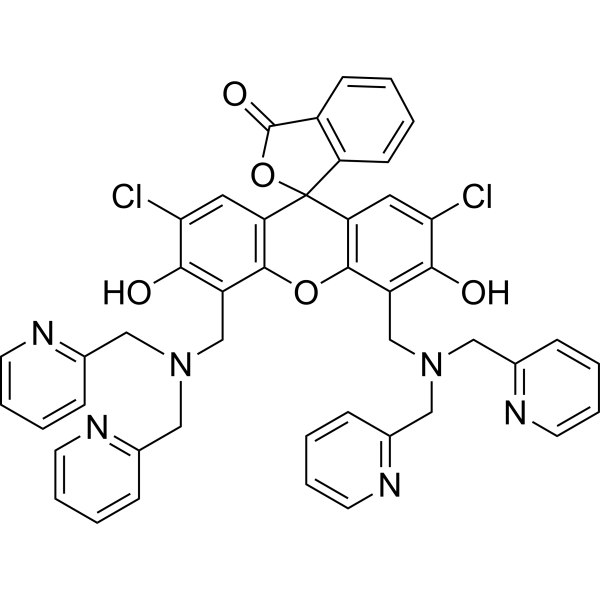
    Zinpyr-1 is a zinc-responsive fluorescent indicator and a membrane-permeable metal-binding probe. Zinpyr-1 forms a complex with Mn 2+ ions and generates a fluorescence turn-on signal. Zinpyr-1 binds to free zinc ions in serum, enabling quantitative detection of free zinc concentration. Zinpyr-1 produces fluorescence signals reflecting the relative zinc concentration in plant root cells, localizes to specific layers of plant root cells, and can be used to support analyses related to plant zinc transporter mutations and homeostasis .
    Zinpyr-1
  • HY-170316

    Ras Cancer
    Ibetazol is a Importin β1 (KPNB1) inhibitor and nucleocytoplasmic transport disruptor. Ibetazol binds covalently to Cys585 of Importin β1, blocks both Importin β1-mediated direct transport and Importin α-dependent nuclear import processes, without affecting transport mediated by other nucleocytoplasmic transport proteins. Ibetazol induces cytoplasmic accumulation of Importin α1, and inhibits nuclear import of substrates carrying nuclear localization signals (NLS), including the NLS-cMyc reporter gene, RelA/p65 and SREBP1. Ibetazol triggers spindle malformation and chromosome misalignment by disrupting the mitotic function of Importin β1. Ibetazol inhibits the proliferation of cells expressing wild-type Importin β1. Ibetazol has a high activity-cytotoxicity window, lacks intrinsic fluorescence, and acts rapidly on nucleocytoplasmic transport processes. Ibetazol serves as a tool compound for investigating nuclear import processes specifically mediated by Importin β1 .
    Ibetazol
  • HY-D1744
    ICG Maleimide
    1 Publications Verification

    Fluorescent Dye Others
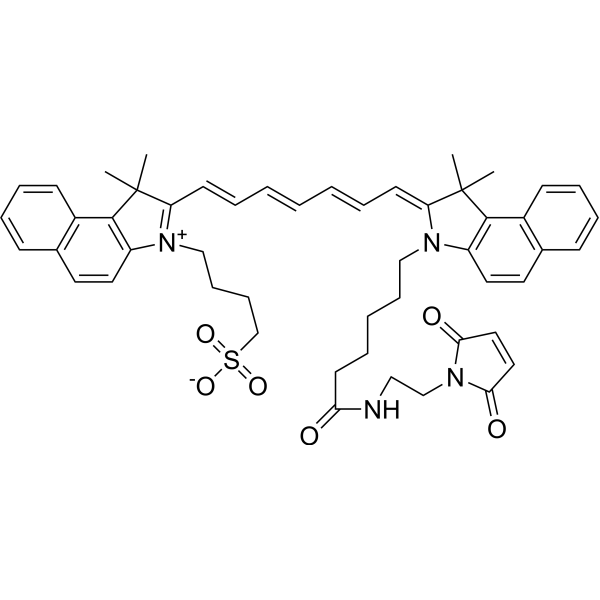
    ICG Maleimide is thiol reactive near infrared (NIR) fluorescent dye and used to generate a stable fluorescence signal in bioimaging (Ex/Em = 789/813 nm).
    ICG Maleimide
  • HY-D1244

    Fluorescent Dye Cardiovascular Disease Inflammation/Immunology
    CO probe 1 (probe 2) is a highly efficient fluorescent CO probe (Ex=493 nm) with an allyl ether reaction site. In the presence of PdCl₂, CO reduces Pd 2+ to Pd 0, triggering a Tsuji-Trost reaction that removes the allyl protecting group, releases fluorescein, and generates a significant fluorescence signal. CO probe 1 has high selectivity, rapid response (fluorescence enhancement of 150 times within 20 minutes), and low cytotoxicity, and can be used for real-time imaging of CO in living cells. CO probe 1 may be used to study pathological mechanisms involving CO signaling regulation, such as inflammation, vascular disease, or cancer .
    CO probe 1
  • HY-D2865

    Fluorescent Dye Others
    Celltrack Deep Red is a fluorescent dye with a fluorescence signal that can be maintained for at least 72 h and has good stability. Celltrack Deep Red can be used for cell tracing and multi-generation cell movement tracking. Within a cell population, Celltrack Deep Red is only transferred to daughter cells and not to neighboring cells (Ex/Em = 630/650 nm) .
    Celltrack Deep Red
  • HY-W250727
    TNS sodium
    1 Publications Verification

    6-(p-Tolylamino)naphthalene-2-sulfonate sodium

    Fluorescent Dye Others
    TNS (6-(p-Tolylamino) naphthalene-2-sulfonate) sodium is a fluorescent probe used to detect the conformational state of proteins. TNS sodium binds to the central hydrophobic calyx of β-lactoglobulin (β-LG) to form a 1:1 complex, which stabilizes the folded conformation of β-LG. TNS sodium shows weak fluorescent signals in aqueous solution, but its fluorescence intensity increases significantly upon binding to the hydrophobic domains of proteins, with the maximum excitation wavelength and maximum emission wavelength located at 321 nm and 446 nm, respectively .
    TNS sodium
  • HY-D1359
    Mito Red
    1 Publications Verification

    Fluorescent Dye Others
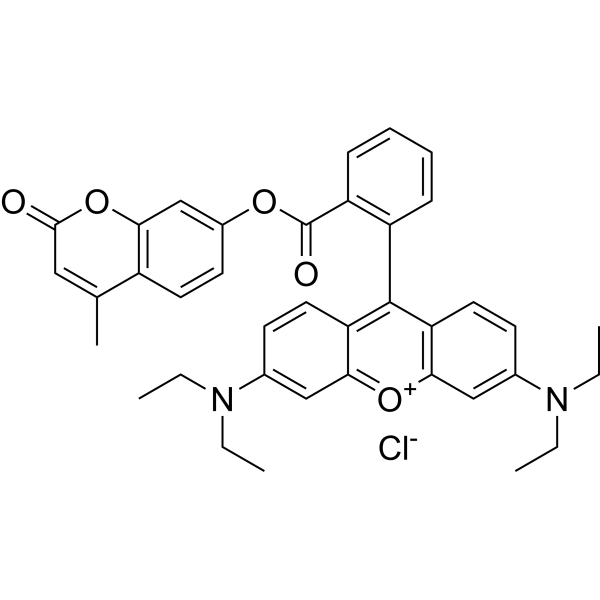
    Mito Red is a vital dye and mitochondrial stain that can be used to detect and evaluate mitochondrial function and status. Mito Red accumulates in mitochondria, and its fluorescence intensity is positively correlated with mitochondrial membrane potential. When the mitochondrial membrane potential increases, the fluorescence signal of Mito Red increases .
    Mito Red
  • HY-D0006

    Fluorescent Dye Others
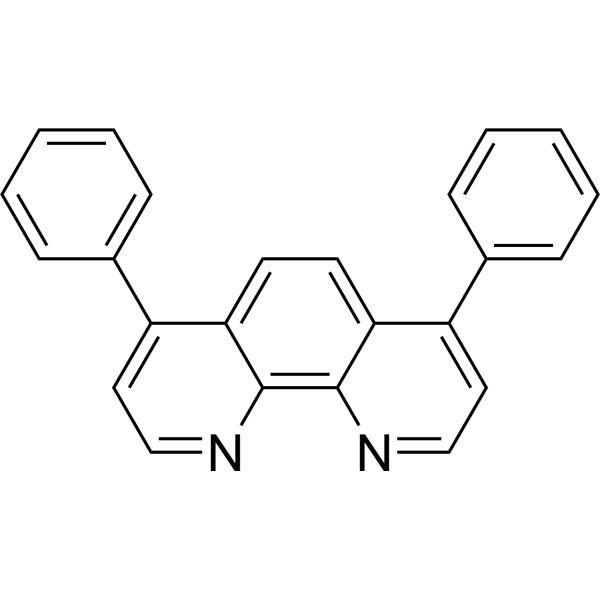
    Bathophenanthroline is a nitrogen-containing organic ligand that can form stable complexes with transition metal ions such as Ru 2+. In proteomics, Bathophenanthroline is often used for in-gel protein staining. The negatively charged sulfonic acid groups of Bathophenanthroline interact electrostatically with the positively charged amino acid residues of proteins, thereby achieving specific binding to proteins and enhancing the fluorescent signal of detection. Bathophenanthroline can be used for protein separation and detection in SDS-PAGE gels in the field of proteomics, as well as other fluorescence studies[1]. Ex/Em=532 nm/610 nm[1].
    Bathophenanthroline
  • HY-D1353

    Fluorescent Dye Others
    LipidGreen 2 is a second generation small molecule probe for lipid imaging. LipidGreen 2 has a better fluorescence signal compared with the previous LipidGreen, and selectively stains neutral lipids in cells and fat deposits in live zebrafish .
    LipidGreen 2
  • HY-D1590

    Fluorescent Dye Others
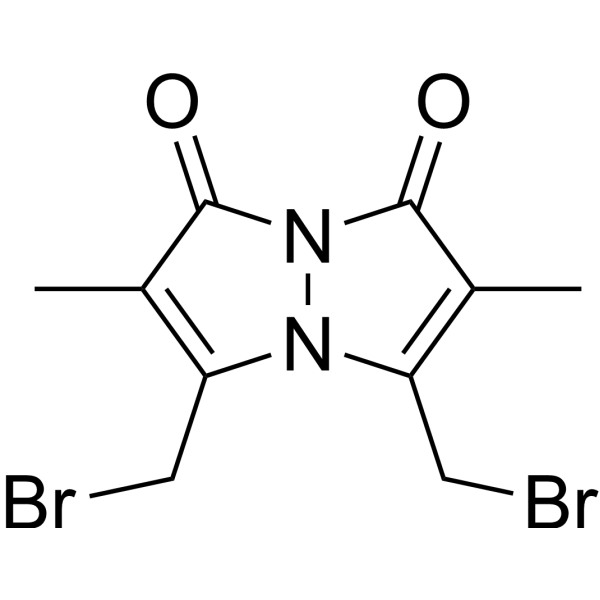
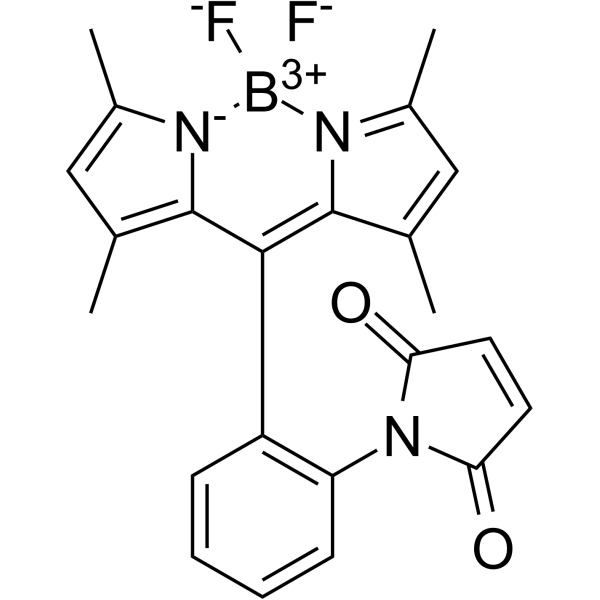
    ODIPY Green 8-P2M is a novel thiol-reactive fluorescence probe based on the BODIPY fluorophore, the fluorescence is strongly quenched by d-PeT and then can be restored after reaction with thiol, resulting in an extremely high signal-to-noise ratio. ODIPY Green 8-P2M can be useful for detecting extremely low concentrations of protein in the gel after SDS-PAGE .
    BODIPY Green 8-P2M
  • HY-D1555

    Cy7 DBCO

    Fluorescent Dye Others
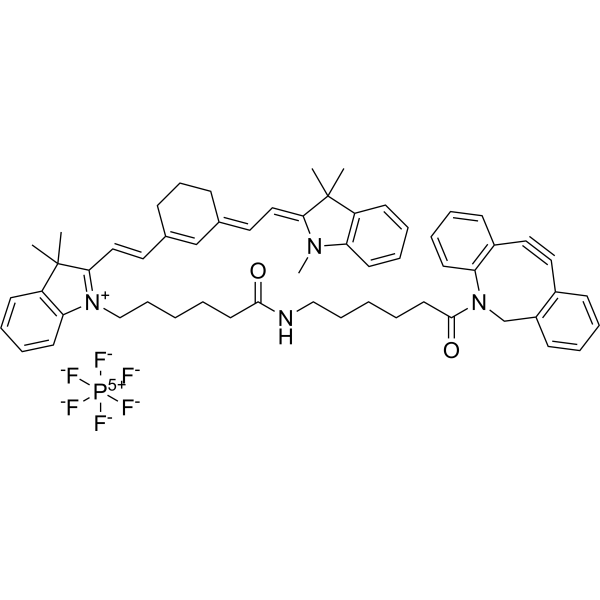
    Cyanine7 DBCO (Cy7 DBCO) is a near-infrared fluorescent dye and an efficient bio-orthogonal quencher. Cyanine7 DBCO is formed by covalent connection of the near-infrared fluorescent dye Cy7 and the dibenzocyclooctyne (DBCO) functional group. After reacting with N3-Cy5-COOH, the fluorescence of Cy5 decreases by 90% within 90 minutes, and rapid signal attenuation can be observed within 2-5 minutes. Cyanine7 DBCO can be used for the study of deep tissue imaging and receptor-targeted therapeutic strategies .
    Cyanine7 DBCO
  • HY-W008884

    Bacterial Others
    25-NBD Cholesterol is a fluorescently labeled form of cholesterol that facilitates the distinction between exogenous and endogenous cholesterol within bacterial cell membranes, emitting green fluorescence signals.
    25-NBD Cholesterol
  • HY-160062

    Mucin Cancer
    S2.2 aptamer sodium is a nucleic acid-based MUC1-binding aptamer with high affinity and low toxicity. Upon binding to its target, S2.2 aptamer sodium undergoes a conformational switch and restores fluorescence signal, serving as a targeted imaging agent for MUC1-positive cancer cells. S2.2 aptamer sodium enables targeted delivery to breast cancer cells with overexpressed MUC1. When formulated as the S2.2-PEG-MZF molecular probe, S2.2 aptamer sodium possesses the functions of T2 signal inhibition, magnetic field-induced hyperthermia and targeted magnetic resonance molecular imaging. In the S2.2-PEG-MZF/DOX nanoliposome, S2.2 aptamer sodium supports targeted thermochemotherapy, effectively inhibiting cancer cell proliferation and invasion as well as inducing apoptosis, and is widely used in studies related to breast cancer .
    S2.2 aptamer sodium
  • HY-D2062

    Fluorescent Dye Integrin Cancer
    ATTO 740 NHS ester is a near-infrared fluorescent dye and a multimodal fluorescence/photoacoustic contrast agent with excellent near-infrared emission properties and extremely high photostability. The photoacoustic signal of ATTO 740 NHS ester shows no significant decrease after continuous irradiation with a 750 nm laser for 30 min, making it suitable for in vivo fluorescence imaging and photoacoustic contrast imaging. When conjugated with the cystine knot peptide R01, ATTO 740 NHS ester enables precise detection of integrin αvβ6-positive cells and tumors in nude mouse xenograft models .
    ATTO 740 NHS ester
  • HY-168929

    SHP1 Fluorescent Dye Phosphatase STAT Apoptosis Cancer
    SHP1 activator 1 (Compound 3n) is an activator for src homology-2 domain-containing protein tyrosine phosphatase 1(SHP1) with an EC50 of 17.66 μM. SHP1 activator 1 inhibits the proliferation of ABC-DLBCL cells, induces apoptosis by inhibiting STAT3 signaling pathway. SHP1 activator 1 emitts blue and green fluorescence signalis in MDA-MB-231 cell, and can be used as a cell imaging agent .
    SHP1 activator 1
  • HY-P11302

    CHIKV Virus Protease Infection
    DABCYL-RAGGYIFS-(E-EDANS)-NH2, an octapeptide, is a FRET-based substrate peptide of CHIKV nsP2protease with highly sensitivity. DABCYL-RAGGYIFS-(E-EDANS)-NH2 can be cleaved by the active CHIKV nsP2protease, separating fluorophore and quencher and resulting in an increase of fluorescence signal. DABCYL-RAGGYIFS-(E-EDANS)-NH2 can used for the determination of CHIKV nsP2protease activity .
    DABCYL-RAGGYIFS-(E-EDANS)-NH2
  • HY-177906

    Fluorescent Dye Amyloid-β Neurological Disease
    h-FTAA is a luminescent conjugated oligothiophene (LCO) probe. h-FTAA can selectively bind to amyloid protein aggregates (such as plaques) and distinguish different conformations of the protein aggregates through changes in fluorescence signals. h-FTAA significantly reduces the neurotoxicity of Aβ1-42 and the Arctic mutant Aβ (AβArc), thereby protecting SH-SY5Y neuroblastoma cells. h-FTAA can be used to dynamically track the formation and maturation process of Aβ plaques .
    h-FTAA
  • HY-D1993

    Fluorescent Dye HIV Infection
    ATTO 647 NHS ester is a fluorescent label targeting free amino groups. ATTO 647 NHS ester can undergo a nucleophilic reaction with the free amino groups of EF-C peptide via its activated carboxylic acid group to form a stable covalent conjugate. ATTO 647 NHS ester-labeled nanofibers not only retain retroviral transduction-enhancing activity but also maintain stable fluorescent signals in both buffer and cell culture systems. ATTO 647 NHS ester is suitable for detection applications including fluorescence spectroscopy, microscopy and flow cytometry. ATTO 647 NHS ester has been used in studies related to HIV-1 infection .
    ATTO 647 NHS ester
  • HY-D2060

    Fluorescent Dye Others
    ATTO 740 is a near-infrared dye (Ex/Em: 740/764 nm). ATTO 740 can be conjugated with the Cetuximab antibody (HY-P9905) .
    ATTO 740
  • HY-143285

    Fluorescent Dye Infection
    AMC-GlcNAc (compound 1) is a potent fluorogenic probe for detection and characterization of β-hexosaminidase enzyme activity. AMC-GlcNAc enables continuous monitoring by turn-on fluorescence and fluorescence signal is constant over a wide pH range (Ex=325 nm, Em=390 nm). AMC-GlcNAc enables ratiometric fluorescence detection with high sensitivity and low background, which can be used to screen for recombinant dispersin B activity in E. coli cell lysate .
    AMC-GlcNAc
  • HY-172333

    Fluorescent Dye Others
    HCy-Lyso is a lysosome-targeting turn-on fluorescent probe based on hydrocyanine. HCy-Lyso integrates a hydrocyanine moiety for selective recognition of hydroxyl radicals (•OH) and a morpholine group for lysosome targeting. Upon reacting with •OH, HCy-Lyso undergoes an extension of its π-conjugation system, producing a strong fluorescence signal at 598 nm when excited at 510 nm .
    HCy-Lyso
  • HY-D3000

    Fluorescent Dye Metabolic Disease
    NIR-RED ROS-H2O2 Probe is a near-infrared fluorescent probe used for detecting hydrogen peroxide (H₂O₂) and featuring dual-modal fluorescence/photoacoustic imaging capabilities. NIR-RED ROS-H2O2 Probe successfully detects the upregulated fluorescence signal of H₂O₂ in HepG2 cells and a mouse liver injury model. NIR-RED ROS-H2O2 Probe can be used as a biomarker detection tool for drug-induced liver injury (DILI) .
    NIR-RED ROS-H2O2 Probe
  • HY-D2338

    Fluorescent Dye Others
    PMBD is a lysosome (Lyso)-targeting fluorescent probe. PMBD selectively and sensitively detects endogenous N-acylethanolamine amidase (NAAA), allowing real-time visual monitoring of endogenous NAAA in living cells. PMBD has a maximum absorption peak at 350 nm. After the metabolism of NAAA, the maximum absorption peak of the product AMBD shifts red to 450 nm, and a significant fluorescence emission signal appears at 550 nm .
    PMBD
  • HY-D3002

    Fluorescent Dye Metabolic Disease
    ONOO-/O2- tracker probe is a dual-responsive near-infrared fluorescent probe. ONOO-/O2- tracker probe will only emit a strong fluorescence signal when both peroxynitrite (ONOO⁻) and superoxide anion (O₂•⁻), the two key reactive oxygen/nitrogen species, are present simultaneously. ONOO-/O2- tracker probe can be used as a biomarker detection tool for drug-induced liver injury (DILI) .
    ONOO-/O2- tracker probe
  • HY-165424

    Fluorescent Dye Glycosidase Cardiovascular Disease Cancer
    NIR-BG2 is a near-infrared fluorescent probe targeting senescence-associated β-galactosidase (SA-β-Gal). NIR-BG2 is activated by SA-β-Gal and undergoes hydrolysis to release electrophilic quinone methide that covalently binds to surrounding proteins for in situ labeling, with a 16-fold enhancement of fluorescence signal at 709 nm . NIR-BG2 is promising for research of vivo imaging of cellular senescence .
    NIR-BG2
  • HY-D1065

    Fluorescent Dye Inflammation/Immunology
    NIR-H2O2 is a cell-permeable near-infrared (NIR) fluorescent turn-on sensor. NIR-H2O2 has both absorption and emission in the NIR region. NIR-H2O2 responds to H2O2 with a large turn-on NIR fluorescence signal upon excitation in the NIR region. NIR-H2O2 is capable of imaging endogenously produced H2O2 in living cells and mice .
    NIR-H2O2
  • HY-P5520

    Bombesin Receptor Radionuclide-Drug Conjugates (RDCs) Cancer
    GB-6 is a short linear peptide that targets the gastrin releasing peptide receptor (GRPR). GRPR is overexpressed in pancreatic cancer. Based on the tumor selectivity and tumor-specific accumulation properties of GB-6, GB-6 labeled with near infrared (NIR) fluorescent dyes or radionuclide netium-99m (99mTc) can be used as a high-contrast imaging probe. GB-6 has excellent in vivo stability, with tumor to pancreatic and intestinal fluorescence signal ratios of 5.2 and 6.3, respectively, in SW199 0 subcutaneous xenograft models. GB-6 can rapidly target tumors and accurately delineate tumor boundaries, which has broad application prospects .
    GB-6
  • HY-174322

    SHP2 ERK Fluorescent Dye Cancer
    SHP2-IN-38 is a novel green-fluorescent SHP2 inhibitor with IC50 values of 2.89 μM (SHP2), 8.73 μM (SHP1), 11.08 μM (PTP1B), 33.07 μM (TCPTP). SHP2-IN-38 blocks the SHP2-mediated ERK signaling pathway and inhibits MV4-11 cells proliferation in vitro with IC50 of 7.90 μM. SHP2-IN-38 has an excitation wavelength of 360 nm, with a maximum emission wavelength of 550 nm in DMSO and 540 nm in DMF. SHP2-IN-38 shows green fluorescence imaging in HeLa cells and zebrafish.
    SHP2-IN-38
  • HY-E70419

    Others Others
    PQQ-Dependent glucose dehydrogenase, microorganismyes PQQnovel nanostructure platform for fluorescence analysis of glucose dehydrogenase-dependent glycogenase. Fluorescence signals were generated under ultraviolet excitation at a wavelength (365 nm).
    PQQ-Dependent glucose dehydrogenase, microorganism
  • HY-D1066

    Fluorescent Dye Others
    NIR-Thiol dinitrobenzenesulfonate has both absorption and emission in the NIR region. NIR-Thiol dinitrobenzenesulfonate responds to thiol with a large turn-on NIR fluorescence signal upon excitation in the NIR region. NIR-Thiol dinitrobenzenesulfonate is capable of imaging endogenously produced thiol in living cells and mice .
    NIR-Thiol dinitrobenzenesulfonate
  • HY-151544

    Fluorescent Dye Others
    PNE-Lyso is a activatable fluorescent probe. PNE-Lyso can be used to detect intracellular pH and hexosaminidases with two kinds of fluorescence signals. PNE-Lyso can be used to distinguish apoptosis from necrosis through visualizing lysosome morphology. PNE-Lyso is capable of investigating the agent-induced cell death process .
    PNE-Lyso
  • HY-W112239

    Reactive Oxygen Species (ROS) Fluorescent Dye Cancer
    BDPI is the a BODIPY derivative. BDPI reveals a high O2 quantum yield and exhibits phototoxicity that inhibits HeLa with an IC50 of 0.6 µg/mL. BDPI nanoarticles can be taken up by HeLa, producing fluorescence signals in the cells, and can be used as cell imaging agent. BDPI nanoarticles exhibit antitumor efficacy in mouse models .
    BDPI
  • HY-D1259

    VDP-green (NEP)

    Fluorescent Dye Neurological Disease
    NEP (VDP-green (NEP)) is a turn-on fluorescent probe based on the intramolecular charge transfer (ICT) mechanism for sensing vicinal dithiol-containing proteins (VDPs). NEP exhibits high selectivity toward VDPs in live cells and in vivo and displays a strong green fluorescence signalexem=430/535 nm). NEP has the potential for parkinsonism .
    NEP
  • HY-W176465

    Amyloid-β Others
    BTA-2, a benzothiazole dye, is structurally similar to thioflavin T (ThT), which exhibits an enhanced fluorescence signal when bound to amyloid fibrils. BTA-2 has distinct absorption and emission characteristics in solution and when bound to amyloid fibrils, which makes it can used for identifying amyloid fibrils using spectroscopy .
    BTA-2
  • HY-170603

    Fluorescent Dye Histone Methyltransferase Apoptosis Cancer
    PRMT5-targeted fluorescent ligand-1 (Compound 7) is a PRMT5-targeted fluorescent ligand, that inhibits PRMT5 with an IC50 of 29.39 nM. PRMT5-targeted fluorescent ligand-1 exhibits cell imaging activity, that exhibits good fluorescence signal in MCF-7 with an IC50 of 29 nM. PRMT5-targeted fluorescent ligand-1 induces apoptosis. PRMT5-targeted fluorescent ligand-1 exhibits a maximal excitation wavelength of 438 nm and a maximal emission wavelength of 550 nm .
    PRMT5-targeted fluorescent ligand-1
  • HY-D2773

    Fluorescent Dye Others
    5-Carboxyrhodamine 110 NHS Ester is the nonsulfonated analog of the BP Fluor 488 dye. The amine-reactive 5(6)-Carboxyrhodamine 110 NHS Ester can be used to create bright and photostable green-fluorescent bioconjugates with excitation/emission maxima ~502/527 nm. For many applications, the dye is preferred over 5-(6)-carboxyfluorescein NHS ester or FITC because of its exceptional photostability and fluorescence insensitivity to pH (4-9). Although the mixed isomers of Carboxyrhodamine 110 NHS Ester preferred, routinely used fluorescent dye for labeling proteins, peptides and nucleotides, purification of peptide and nucleotides labeled with 5(6) isomers might be troublesome due to significant signal broadening in HPLC purification. Peptides and nucleotides labeled with a single isomer usually give better resolution in HPLC purification that is often required in the conjugation processes.
    5-Carboxyrhodamine 110 NHS ester
  • HY-111137

    XC-302 free base

    Akt Cancer
    Puquitinib (XC-302 free base) is a multi-target inhibitor with the activity of inducing autophagy in nasopharyngeal carcinoma cells by inhibiting the PI3K/AKT/mTOR signaling pathway. Puquitinib was able to inhibit the proliferation of CNE-2 cells, showing a dose-dependent antiproliferative effect. Puquitinib induced the formation of autophagosomes and autolysosomes in CNE-2 cells, which were observed by fluorescence microscopy and electron microscopy. Puquitinib promoted the formation of LC3-II and increased the expression of beclin 1, while reducing the level of p62. Puquitinib inhibited the PI3K/AKT/mTOR pathway by reducing the expression of p-AKT and p-mTOR. Puquitinib also induced apoptosis in CNE-2 cells, and when autophagy was inhibited, the apoptosis rate was reduced, which means that autophagy may interact with apoptosis to induce cell death .
    Puquitinib
  • HY-D3252

    Fluorescent Dye Others
    IR 650 maleimide is a near-infrared fluorescent dye. It should be noted that IR 650 maleimide‘s fluorescence stability is poor, with less than 16% of the fluorescence signal retained after the expansion microscopy experimental procedure .
    IR 650 maleimide
  • HY-D3244

    Fluorescent Dye Others
    RDDB is a rhodamine-based turn-on fluorescent and colorimetric chemosensor selective for Mn 2+, with a limit of detection of 5×10 -8 M (excitation wavelength: 480-550 nm; fluorescence signal collection range: >590 nm). In the presence of Mn 2+, RDDB undergoes a spirolactam ring-opening reaction of its rhodamine hydrazide moiety, resulting in turn-on fluorescence and a color change. RDDB can be used for intracellular Mn 2+ imaging .
    RDDB
  • HY-D3334

    Fluorescent Dye CD74 Others
    PE-CF594 is a labeled monoclonal antibody conjugate that specifically binds to HLA-DR on the surface of monocytes and B cells, while acting as a signal attenuator. Through steric hindrance and a possible fluorescence resonance energy transfer mechanism, PE-CF594 specifically reduces the fluorescence intensity of PE-CD124 staining, but does not interfere with the staining of other PE-labeled antibodies such as CD40, CD4 or CD14. PE-CF594 can also be used to detect the emission signal of mt-Keima after excitation with a 561-nm laser, thereby effectively evaluating mitophagy activity .
    PE-CF594
  • HY-D3209

    Fluorescent Dye Quinone Reductase Cancer
    NIR-ASM is a near-infrared fluorescent probe that can cross cell membranes and be activated by NQO1. NIR-ASM can distinguish NQO1-expressing cancer cells from normal cells via fluorescence microscopy and flow cytometry. NIR-ASM generates near-infrared fluorescence with a high signal-to-noise ratio in tumor models with NQO1 activity, enabling the detection of endogenous NQO1 activity in vivo. NIR-ASM is applicable to the research of lung cancer and breast cancer .
    NIR-ASM
  • HY-D3174

    Fluorescent Dye Metabolic Disease Inflammation/Immunology
    PiF is a fluorescent probe with high specificity for pancreatic β-cells (Ex/Em = 535 nm/565 nm), and its fluorescence signal increases significantly with elevated insulin concentrations in in vitro experiments. PiF enables visualization of rat and human islets transplanted via the portal vein in mouse livers with low liver background signals. The fluorine atom of PiF can be replaced by radioactive 18F to prepare a PET tracer. PiF can be used for research on type 1 diabetes .
    PiF
  • HY-D3170

    Fluorescent Dye γ-Glutamyl Transferase (GGT) Inflammation/Immunology
    C-HBrO-GGT is a sequence-activated two-photon fluorescent probe. C-HBrO-GGT exhibits sequential fluorescence activation properties: it generates fluorescence in response to hypobromous acid only after being hydrolytically activated by γ-glutamyl transpeptidase. C-HBrO-GGT enables verification of the voltage-gated chloride channel (CLC-1)-HBrO-catalase (CAT)-GGT signaling pathway at the cellular level. C-HBrO-GGT can serve as a tool to indicate the precise location of mature atherosclerotic plaques and provide early warning of plaque formation. C-HBrO-GGT is applicable to relevant research on atherosclerosis .
    C-HBrO-GGT
  • HY-D3141

    Cancer
    DR probe is a "dual-key-and-lock" fluorescent probe designed based on the Resorufin (HY-123533) scaffold (Ex/Em = 647 nm/663-738 nm). DR probe can be sequentially activated by hydrogen peroxide to form the intermediate SR, which acts as a tyrosinase substrate to trigger a fluorescence turn-on signal. DR probe can distinguish normal melanocytes from melanoma cells. DR probe supports cell imaging and can be applied to mouse melanoma models to achieve melanoma diagnosis with higher accuracy and lower false-positive rates. DR probe is applicable to relevant research on melanoma .
    DR probe
  • HY-172728

    Fluorescent Dye Others
    Difluorocarboxyfluorescein NHS Ester, 6-isomer is an amine-reactive fluorinated analog of fluorescein that overcomes some of the key limitations of fluorescein, including greater photostability and a lower pKa (pKa ~ 4.7 versus 6.4 for fluorescein), making its fluorescence essentially pH insensitive in the physiological pH range. Although the mixed isomers of Difluorocarboxyfluorescein NHS Ester, is a preferred, routinely used fluorescent dye for labeling proteins, peptides and nucleotides, purification of peptide and nucleotides labeled with 5(6) isomers might be troublesome due to significant signal broadening in HPLC purification. Peptides and nucleotides labeled with a single isomer usually give better resolution in HPLC purification that is often required in the conjugation processes.
    Difluorocarboxyfluorescein NHS Ester, 6-isomer
  • HY-D3191

    Fluorescent Dye Aminopeptidase Monoamine Oxidase Infection Metabolic Disease
    L&M-D-MR is a highly specific fluorescent "AND" logic probe with response moieties for leucine aminopeptidase (LAP) and monoamine oxidase (MAO). The coexistence of both LAP and MAO is required for L&M-D-MR to trigger intramolecular cyclization, release fluorophores and activate fluorescence. In the presence of only a single enzyme, L&M-D-MR generates only an extremely weak signal. L&M-D-MR enables bioimaging in living cells and mouse models, and can effectively distinguish different subtypes of liver diseases via blood samples or test strips. L&M-D-MR is widely used in studies related to liver cirrhosis, hepatitis B and drug-induced liver injury .
    L&M-D-MR
  • HY-D2763

    Fluorescent Dye Others
    BP Fluor 532 maleimide is a photostable, bright yellow-fluorescent dye with pH insensitive emission from pH 4 to pH 10. The excitation of BP Fluor 532 is ideally suited for the frequency-doubled Nd:YAG laser line. BP Fluor 532 dye can be conjugated to a variety of antibodies, peptides, proteins, tracers, and amplification substrates, and is often used for the generation of stable signals in imaging and flow cytometry. Maleimide is the most popular sulfhydryl-reactive group for conjugating the dye to a thiol group on a protein, oligonucleotide thiophosphate, or low molecular weight ligand. The maleimide group specifically and efficiently reacts with reduced thiols (sulfhydryl groups, –SH) at pH 6.5 to 7.5 to form a stable thioether bond. The resulting conjugates exhibit brighter fluorescence and greater photostability than the conjugates of many other spectrally similar fluorophores.
    BP Fluor 532 maleimide
  • HY-D3187

    Fluorescent Dye Glycosidase Infection Cancer
    HMRef-αMan is a substrate-based green fluorescent probe (Ex/Em=465 nm/515 nm) targeting MAN2C1 (α-mannosidase). HMRef-αMan can be specifically cleaved by MAN2C1 to generate a highly fluorescent product, which thus gets activated to produce green fluorescence in malignant breast tissues, benign lesions and living cancer cells. The signal intensity of HMRef-αMan is directly correlated with MAN2C1 activity, and it can effectively detect tiny breast cancer lesions with a diameter of less than 1 mm. When used in combination with the red-emitting γ-glutamyl transpeptidase (GGT) probe gGlu-2OMe SiR600 (HY-D3188), HMRef-αMan enables precise optical differentiation of breast tissue types via a dual-color imaging strategy. HMRef-αMan has been widely used in the research of breast diseases such as breast cancer, fibroadenoma, phyllodes tumor and various types of papilloma .
    HMRef-αMan

Inquiry Online

Your information is safe with us. * Required Fields.

Salutation


Country or Region *

Applicant Name *


Organization Name *

Department *


Email Address *


Product Name *

Cat. No.


Requested quantity *

Phone Number *


Remarks

Inquiry Online

Inquiry Information

Product Name:
Cat. No.:
Quantity:
MCE Japan Authorized Agent:

