Search Result
Results for "
Prostate+Hyperplasia
" in MedChemExpress (MCE) Product Catalog:
1
Biochemical Assay Reagents
13
Isotope-Labeled Compounds
| Cat. No. |
Product Name |
Target |
Research Areas |
Chemical Structure |
-
- HY-13635
-
|
MK-906
|
Environmental Pollutants
5 alpha Reductase
|
Cancer
|
|
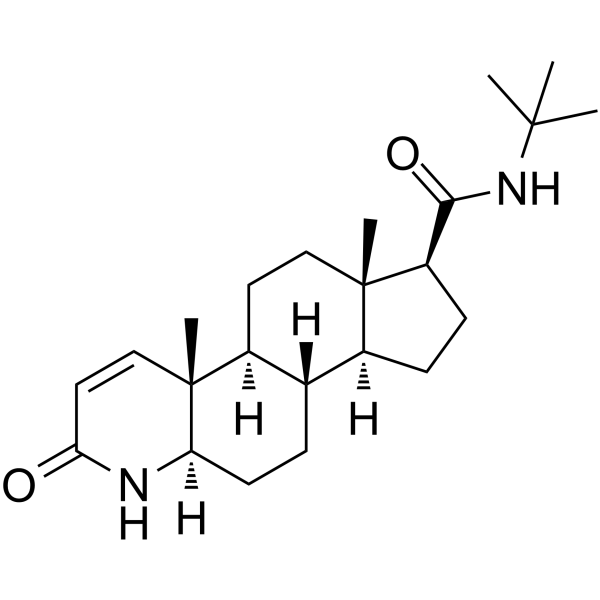
Finasteride (MK-906) is an orally active and competitive 5α-reductase inhibitor, with an IC50 of 4.2 nM for type II 5α-reductase. Finasteride has approximately a 100-fold greater affinity for type II 5α-reductase enzyme than for the type I enzyme. Finasteride can be used for the research of benign prostatic hyperplasia (BPH) and androgenic alopecia .
|
-
-
- HY-B0661
-
|
(R)-(-)-YM12617 free base; LY253351 free base
|
Adrenergic Receptor
Apoptosis
|
Neurological Disease
Endocrinology
Cancer
|
|
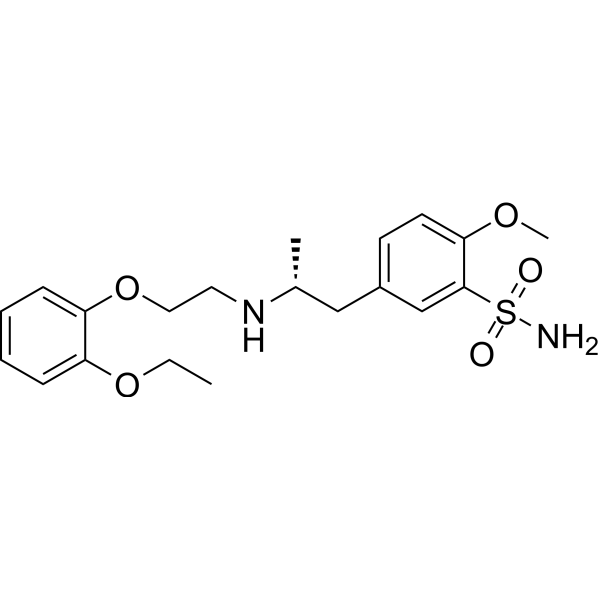
Tamsulosin ((R)-(-)-YM12617 free base) is an orally active antagonist of α1-adrenergic receptor. Tamsulosin induces Apoptosis. Tamsulosin is used for the research of prostatic hyperplasia. Tamsulosin attenuates abdominal aortic aneurysm growth and inhibits inflammation in animal models .
|
-
-
- HY-B0371F
-
|
|
Adrenergic Receptor
|
Cardiovascular Disease
Metabolic Disease
Endocrinology
|
|
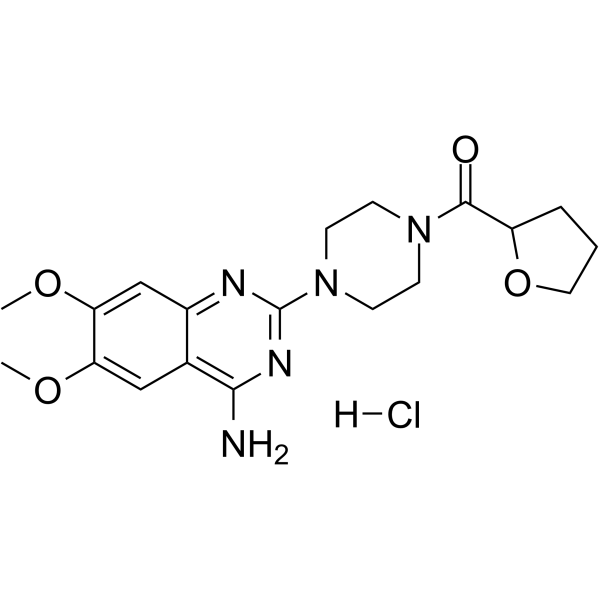
Terazosin hydrochloride is a quinazoline derivative and a competitive and orally active α1-adrenoceptor antagonist. Terazosin hydrochloride works by relaxing blood vessels and the opening of the bladder. Terazosin hydrochloride has the potential for benign prostatic hyperplasia (BPH) and high blood pressure treatment .
|
-
-
- HY-B0661A
-
|
(R)-(-)-YM12617; LY253351
|
Adrenergic Receptor
Apoptosis
|
Neurological Disease
Endocrinology
Cancer
|
|
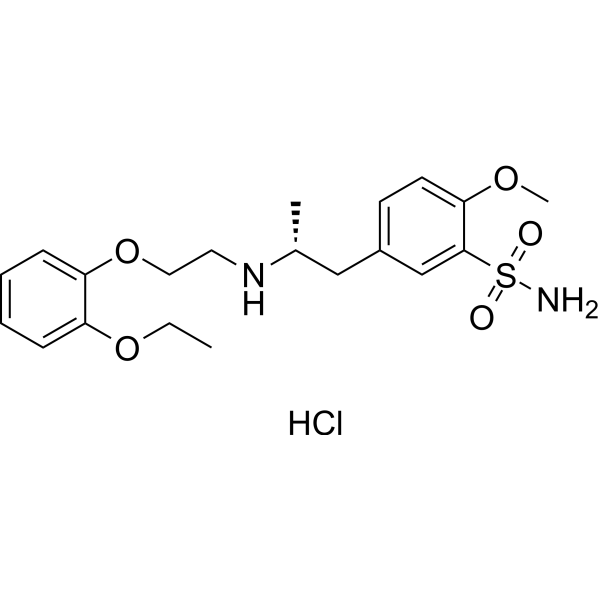
Tamsulosin hydrochloride ((R)-(-)-YM12617 free base) is an orally active antagonist of α1-adrenergic receptor. Tamsulosin hydrochloride induces Apoptosis. Tamsulosin hydrochloride is used for the research of prostatic hyperplasia. Tamsulosin hydrochloride attenuates abdominal aortic aneurysm growth and inhibits inflammation in animal models .
|
-
-
- HY-B0192
-
|
SL 77499
|
Adrenergic Receptor
|
Endocrinology
|
|
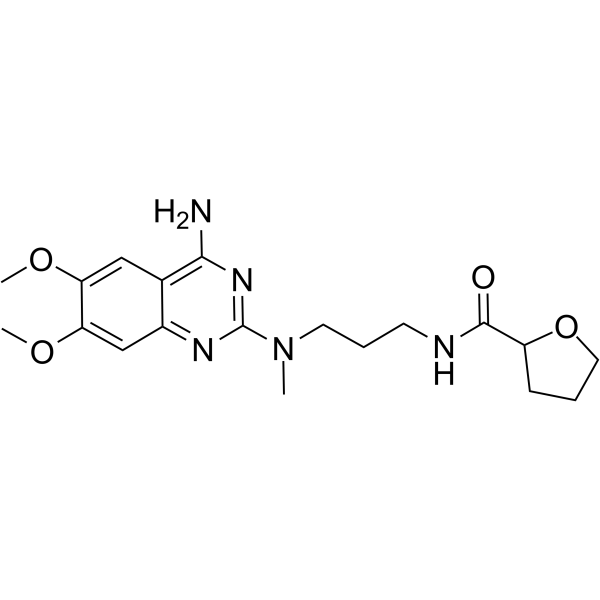
Alfuzosin (SL 77499-10) is an orally active, selective and competitive α1-adrenoceptor antagonist. Alfuzosin relaxes the muscles of the prostate and bladder neck, aiding in urination. Alfuzosin can be used in study of benign prostatic hyperplasia (BPH) .
|
-
-
- HY-B0371
-
Terazosin
Maximum Cited Publications
7 Publications Verification
|
Adrenergic Receptor
|
Cardiovascular Disease
Metabolic Disease
Endocrinology
|
|
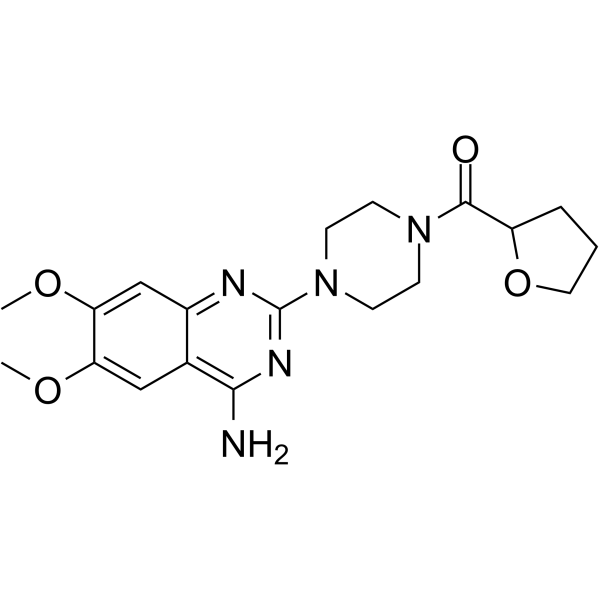
Terazosin is a quinazoline derivative and a competitive and orally active α1-adrenoceptor antagonist. Terazosin works by relaxing blood vessels and the opening of the bladder. Terazosin has the potential for benign prostatic hyperplasia (BPH) and high blood pressure treatment .
|
-
-
- HY-107385
-
|
ONO-9302; SKF105657
|
5 alpha Reductase
|
Cancer
|
|
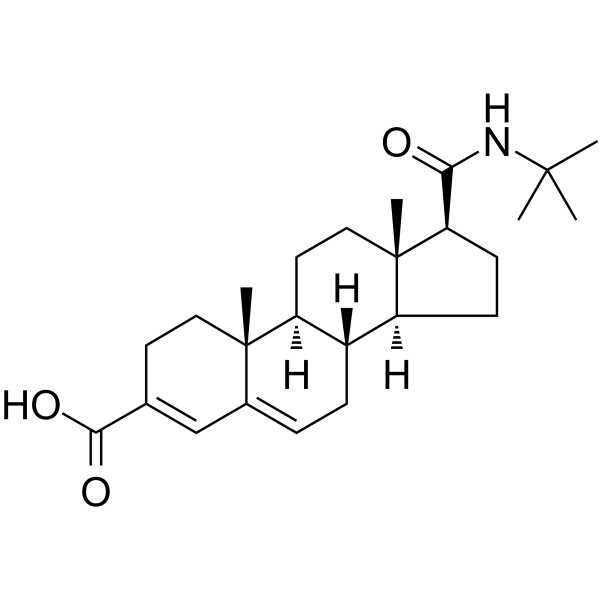
Epristeride (ONO-9302) is a selective, specific and orally active uncompetitive inhibitor of human steroid 5 alpha-reductase isoform 2. Epristeride has inhibitory effects for SR isoenzymes types 2 with Ki value of 0.7-2 nM. Epristeride can be used for the research of prostatic hyperplasia and acne .
|
-
-
- HY-B0371A
-
|
|
Adrenergic Receptor
|
Cardiovascular Disease
Metabolic Disease
Endocrinology
|
|
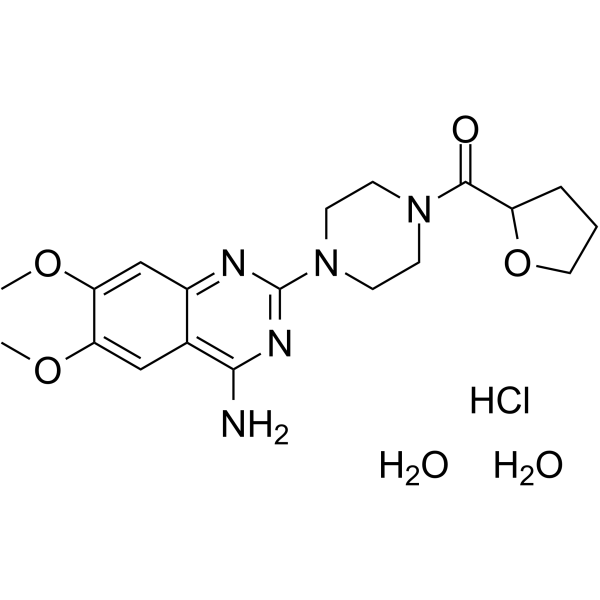
Terazosin hydrochloride dihydrate is a quinazoline derivative and a competitive and orally active α1-adrenoceptor antagonist. Terazosin hydrochloride dihydrate works by relaxing blood vessels and the opening of the bladder. Terazosin hydrochloride dihydrate has the potential for benign prostatic hyperplasia (BPH) and high blood pressure treatment .
|
-
-
- HY-B0391
-
|
KT-611; BM-15275
|
Adrenergic Receptor
|
Cardiovascular Disease
Endocrinology
|
|
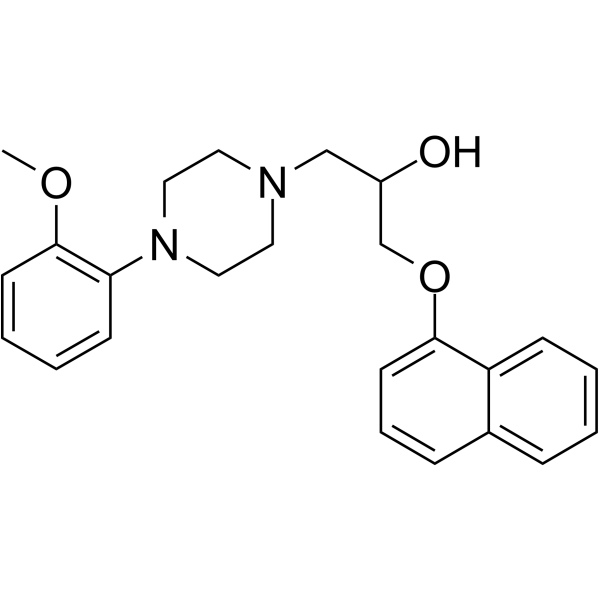
Naftopidil (KT-611) is is a selective alpha1-adrenoceptor antagonist, with Kis of 3.7 nM, 20 nM and 1.2 nM for the cloned human α1a-, α1b- and α1d-adrenoceptor subtypes, respectively. Naftopidil has antiproliferative effects. Naftopidil can be used for the research of prostate hyperplasia .
|
-
-
- HY-B0192A
-
|
SL 77499-10
|
Adrenergic Receptor
|
Endocrinology
|
|
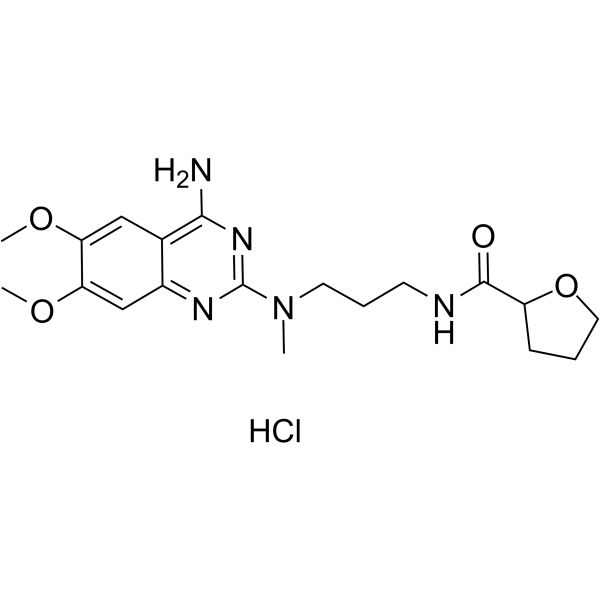
Alfuzosin (SL 77499-10) hydrochloride is an orally active, selective and competitive α1-adrenoceptor antagonist. Alfuzosin hydrochloride relaxes the muscles of the prostate and bladder neck, aiding in urination. Alfuzosin hydrochloride can be used in study of benign prostatic hyperplasia (BPH) .
|
-
-
- HY-115450
-
|
|
LPL Receptor
|
Endocrinology
Cancer
|
|
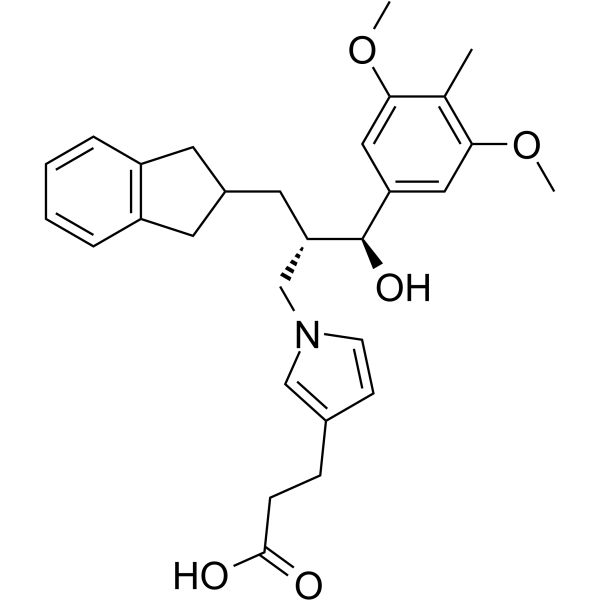
ONO-0300302 is an orally active and potent LPA1 (lysophosphatidic acid receptor 1) antagonist, with an IC50 of 0.086 μM. ONO-0300302 is a slow tight binding inhibitor, and its binding affinity increases with time, with Kd of 0.34 nM (37 °C, 2 h). ONO-0300302 can be used for benign prostatic hyperplasia (BPH) research .
|
-
-
- HY-P3501
-
|
NX-1207
|
Apoptosis
|
Cancer
|
|
Fexapotide (NX-1207) induces apoptosis selectively, reducing prostate volume at a cellular level. Fexapotide can be used in lower urinary tract symptoms (LUTS) and benign prostatic hyperplasia (BPH) research .
|
-

-
- HY-158498
-
|
FA2 N-linked oligosaccharide; F(6)A2 glycan
|
Biochemical Assay Reagents
|
Cancer
|
|
FA2 glycan (G0F) (FA2 N-linked oligosaccharide; F(6)A2 glycan) is a core-fucosylated biantennary N-linked oligosaccharide that serves as a prostate cancer biomarker. The level of FA2 glycan (G0F) is higher in prostate cancer than in benign prostatic hyperplasia, and it is further elevated in advanced prostate cancer with a Gleason score ≥8 compared with both benign prostatic hyperplasia and low-/intermediate-risk prostate cancer. FA2 glycan (G0F) can be used in prostate cancer research .
|
-

-
- HY-103204
-
|
|
Adrenergic Receptor
|
Endocrinology
|
|
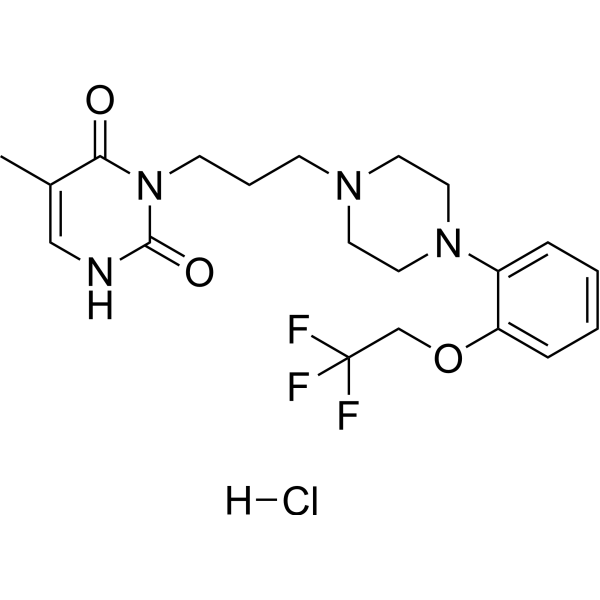
RS100329 hydrochloride is a potent and selective α1A-adrenoceptor antagonist with pKi values of 9.6, 7.9 and 7.5 for α1A, α1D, and α1B, respectively. RS100329 hydrochloride inhibits reflex urethral contractions. RS100329 hydrochloride can be used in research of benign prostatic hyperplasia .
|
-
-
- HY-N8850
-
|
|
Others
|
Cancer
|
|
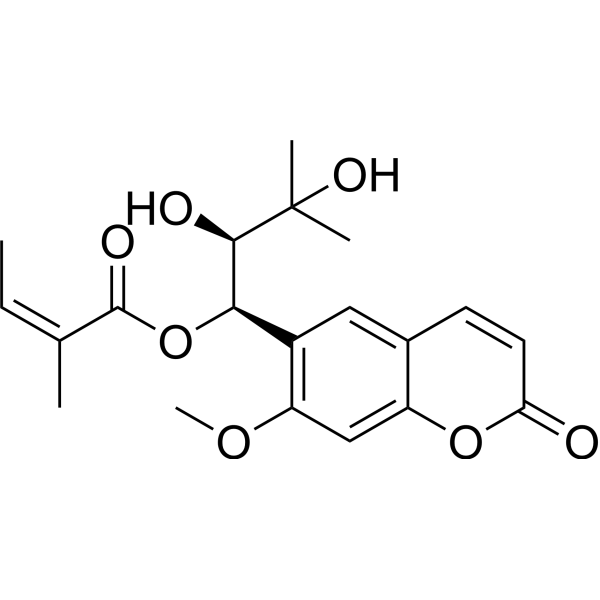
Angelol G, a coumarin, can be isolated from Campylotropis hirtella. Angelol G shows inhibitory activity for prostate specific antigen (PSA)IC50 value of 152.1μM. Angelol G can be used for the research of benign prostate hyperplasia (BPH) .
|
-
-
- HY-12718
-
|
|
Adrenergic Receptor
|
Cardiovascular Disease
|
|
(±)-WB 4101 is a highly selective α1-adrenergic receptor antagonist. (±)-WB 4101 blocks norepinephrine-induced vascular smooth muscle contraction to exert antihypertensive and benign prostatic hyperplasia (BPH)-relieving effects. (±)-WB 4101 is promising for research of hypertension and BPH .
|
-

-
- HY-B0371S
-
|
|
Isotope-Labeled Compounds
Adrenergic Receptor
|
Metabolic Disease
Endocrinology
|
|
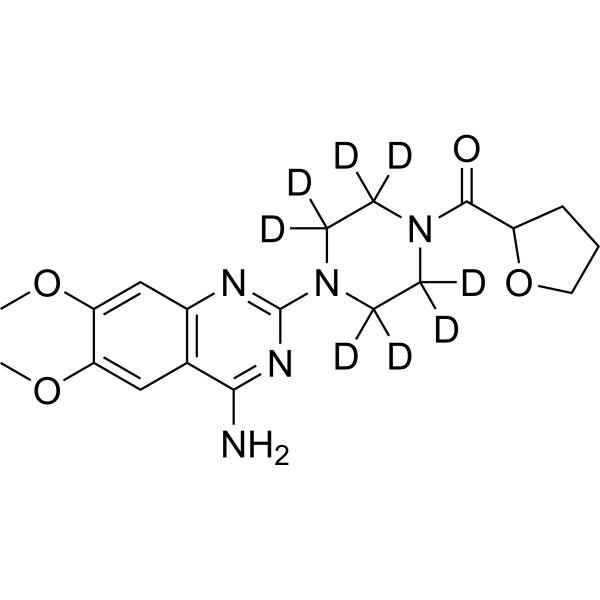
Terazosin-d8 is deuterium labeled Terazosin. Terazosin is a quinazoline derivative and a competitive and orally active α1-adrenoceptor antagonist. Terazosin works by relaxing blood vessels and the opening of the bladder. Terazosin has the potential for benign prostatic hyperplasia (BPH) and high blood pressure treatment .
|
-
-
- HY-13635A
-
|
MK-906 acetate
|
5 alpha Reductase
|
Cancer
|
|
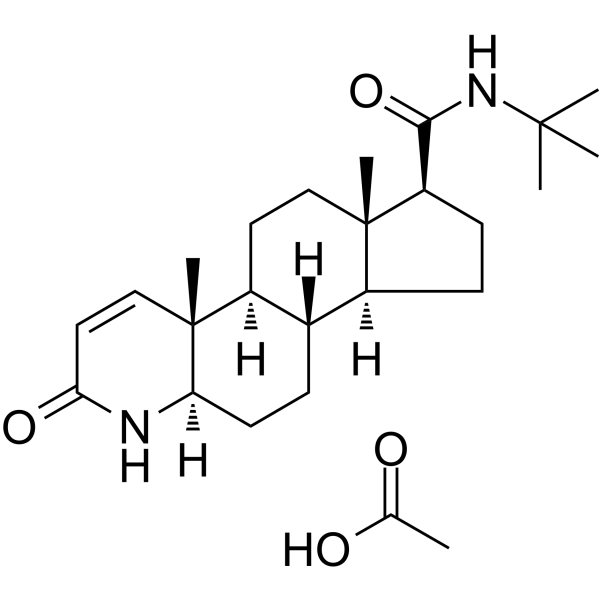
Finasteride (MK-906) acetate is a potent and competitive 5α-reductase inhibitor, with an IC50 of 4.2 nM for type II 5α-reductase. Finasteride acetate has approximately a 100-fold greater affinity for type II 5α-reductase enzyme than for the type I enzyme. Finasteride acetate can be used for the research of benign prostatic hyperplasia (BPH) and androgenic alopecia .
|
-
-
- HY-13635R
-
|
MK-906 (Standard)
|
Reference Standards
5 alpha Reductase
|
Cancer
|
|
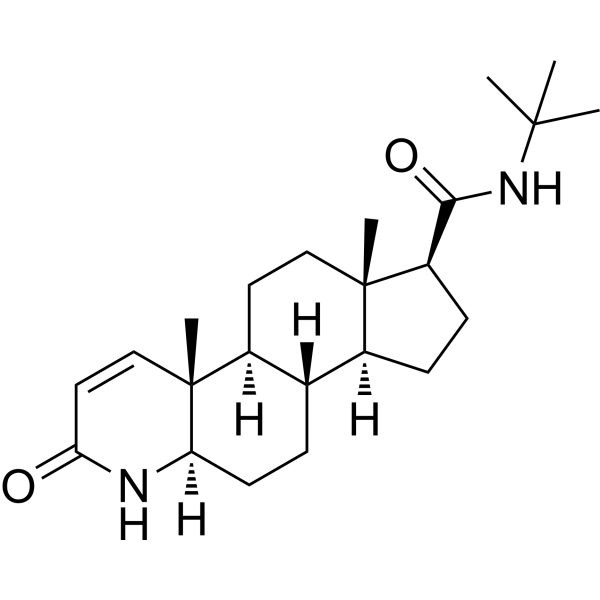
Finasteride (Standard) is the analytical standard of Finasteride. This product is intended for research and analytical applications. Finasteride (MK-906) is a potent and competitive 5α-reductase inhibitor, with an IC50 of 4.2 nM for type II 5α-reductase. Finasteride has approximately a 100-fold greater affinity for type II 5α-reductase enzyme than for the type I enzyme. Finasteride can be used for the research of benign prostatic hyperplasia (BPH) and androgenic alopecia .
|
-
-
- HY-19144
-
|
|
5 alpha Reductase
|
Others
|
|
ONO-3805 is an early lead compound of a non-steroidal 5α-reductase inhibitor, used to inhibit the conversion of testosterone to dihydrotestosterone, with potential effects in inhibiting benign prostatic hyperplasia.
|
-

-
- HY-105173
-
|
EP 24332
|
GnRH Receptor
Histamine Receptor
|
Endocrinology
Cancer
|
|
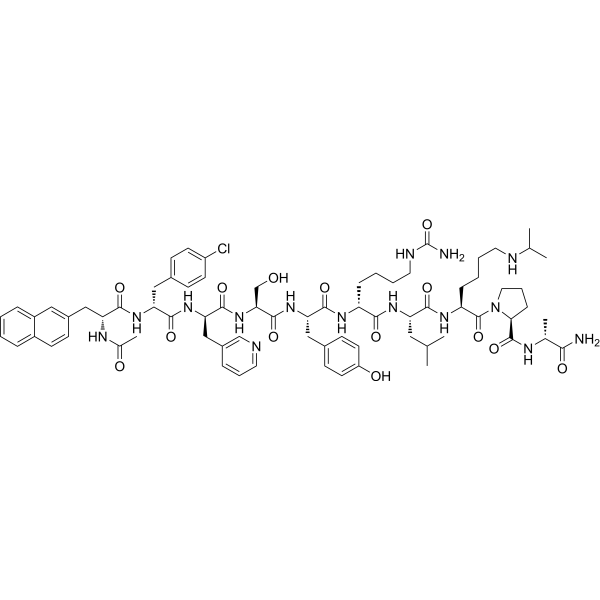
Teverelix (EP 24332) is a GnRH antagonist. Teverelix binds competitively and reversibly to GnRH receptors, thereby suppressing the release of LH and FSH. Teverelix can be used in the research of prostatic hyperplasia, endometriosis, and prostate cancer .
|
-
-
- HY-106174
-
|
CS 891
|
5 alpha Reductase
|
Endocrinology
|
|
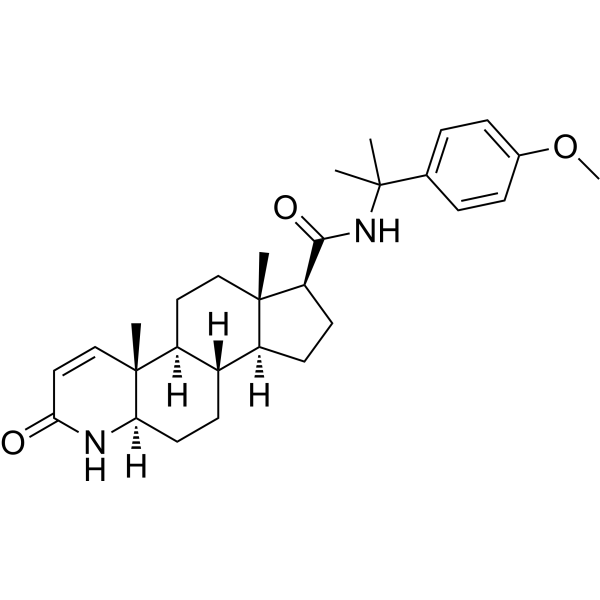
Lapisteride (CS 891) is an orally active 5α-reductase inhibitor. Lapisteride can inhibit 5α-reductaseactivity in the hair follicles (HF). Lapisteride can be used in prostatic hyperplasia and androgenic alopecia research .
|
-
-
- HY-106363
-
|
L 654066
|
5 alpha Reductase
|
Others
|
|
MK-0963 is a steroidal 5α-reductase inhibitor. MK-0963 reduces serum dihydrotestosterone (DHT) concentrations in a dose-dependent manner. MK-0963 can be used for the study of dihydrotestosterone-related diseases such as benign prostate hyperplasia (BPH) .
|
-

-
- HY-123323
-
|
|
5 alpha Reductase
|
Endocrinology
|
|
MK-0434 is an orally active steroid 5α-reductase inhibitor. MK-0434 specifically inhibits steroid 5α-reductase, thereby reducing the level of dihydrotestosterone (DHT) in the body. MK-0434 can be used in the study of benign prostatic hyperplasia .
|
-

-
- HY-B0661AS1
-
-
-
- HY-19268
-
|
GW 1818
|
Adrenergic Receptor
|
Metabolic Disease
|
|
GG-818 (GW 1818) is a potent and selective α1 adrenoceptor antagonist, with pKi values of 9.7 for α1a, 7.8 for α1b, and 7.6 for α1d. GG-818 (GW 1818) can be used for benign prostatic hyperplasia research .
|
-

-
- HY-17019
-
|
|
Adrenergic Receptor
|
Inflammation/Immunology
|
|
SL-89.0591 is a uroselective α1-adrenoceptor antagonist. SL-89.0591 exhibits a more potent blocking effect on urethral receptors than on vascular receptors in anesthetized rabbits, with a lower risk of orthostatic hypotension. SL-89.0591 can be used in research related to benign prostatic hyperplasia .
|
-

-
- HY-B0192AR
-
|
SL 77499-10 (Standard)
|
Reference Standards
Adrenergic Receptor
|
Endocrinology
|
|
Alfuzosin (hydrochloride) (Standard) is the analytical standard of Alfuzosin (hydrochloride). This product is intended for research and analytical applications. Alfuzosin (SL 77499-10) hydrochloride is an orally active, selective and competitive α1-adrenoceptor antagonist. Alfuzosin hydrochloride relaxes the muscles of the prostate and bladder neck, aiding in urination. Alfuzosin hydrochloride can be used in study of benign prostatic hyperplasia (BPH) .
|
-

-
- HY-106614
-
|
|
Androgen Receptor
5 alpha Reductase
|
Endocrinology
|
|
Osaterone acetate is an orally active steroid anti-androgen agent, mainly used for benign prostatic hyperplasia (BPH) in dogs. Osaterone acetate competitively antagonizes androgen receptor and inhibits 5α-reductase, reducing the concentration of dihydrotestosterone (DHT) while blocking the growth-stimulating effects of testosterone and DHT on prostate cells. Osaterone acetate can rapidly alleviate the symptoms of BPH in dogs without affecting the fertility of breeding dogs .
|
-

-
- HY-B0391A
-
|
KT-611 dihydrochloride; BM-15275 dihydrochloride
|
Adrenergic Receptor
|
Cancer
|
|
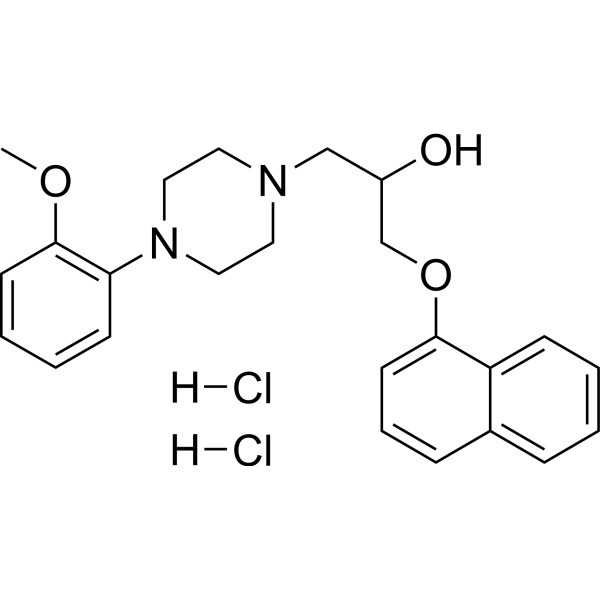
Naftopidil dihydrochloride (KT-611 dihydrochloride) is a selective alpha1-adrenoceptor antagonist, with Kis of 3.7 nM, 20 nM and 1.2 nM for the cloned human α1a-, α1b- and α1d-adrenoceptor subtypes, respectively. Naftopidil dihydrochloride has antiproliferative effects. Naftopidil dihydrochloride can be used for the research of prostate hyperplasia .
|
-
-
- HY-165478
-
|
|
5 alpha Reductase
|
Endocrinology
|
FCE 28260 is an orally active 4-azacyclic 5α-reductase (5αR) inhibitor. FCE 28260 exhibits IC₅₀ values for human 5αR type 1 and 5αR type 2 of 36 and 3.3 nM, respectively, and for human and rat prostates with IC₅₀ values of 16 and 15 nM, respectively. FCE 28260 simultaneously blocks the production of dihydrotestosterone (DHT) in the prostate and peripheral tissues. FCE 28260 can significantly inhibit the induction of prostatic and seminal vesicle hyperplasia by testosterone (T) in rat models, without inhibiting the growth of the prostate in DHT implantation models. FCE 28260 can be used for the studies DHT-dependent diseases such as benign prostatic hyperplasia (BPH) .
|
-

-
- HY-B0192AS
-
-

-
- HY-B0192AS1
-
-
-
- HY-103202
-
|
|
Adrenergic Receptor
|
Cardiovascular Disease
|
|
SNAP5089 (hydrochloride) is a selective α1A adrenergic receptor antagonist. SNAP5089 (hydrochloride) can be used in the research of hypertension and benign prostatic hyperplasia .
|
-

-
- HY-134632
-
|
KMD-3241
|
Adrenergic Receptor
|
Cancer
|
|
Dehydro silodosin (KMD-3241) is a selective α1A-adrenoceptor antagonist used in the study of benign prostatic hyperplasia .
|
-

-
- HY-123710
-
|
|
Endogenous Metabolite
|
Others
|
|
GYKI-16084 is a new compound that can be isolated from dog and rat urine. GYKI-16084 can be used in the research of benign prostatic hyperplasia .
|
-

-
- HY-P1442
-
|
|
Adrenergic Receptor
|
Cancer
|
|
AdTx1 is a selective α1A-adrenoceptor antagonist (Ki: 0.35 nM). AdTx1 can be used for research of benign prostatic hyperplasia .
|
-

-
- HY-135473
-
|
|
Androgen Receptor
|
Metabolic Disease
Endocrinology
Cancer
|
|
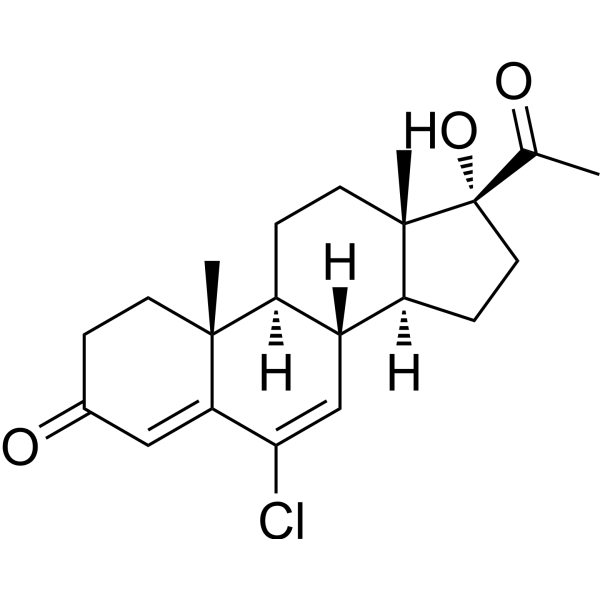
Chlormadinone is an orally active anti-androgen agent. Chlormadinone improves intermittency, terminal dribbling, and urinary stream size and force. Chlormadinone can be used for the research of benign prostatic hyperplasia .
|
-
-
- HY-105537
-
|
RS-100975
|
Adrenergic Receptor
|
Endocrinology
|
|
Ro 70-0004 (RS-100975) is a selective alpha1A-adrenoceptor antagonist with a pKi of 8.9. Ro 70‐0004 can be used in the study of prostatic hyperplasia .
|
-

-
- HY-P3501A
-
|
NX-1207 TFA
|
Apoptosis
|
Cancer
|
|
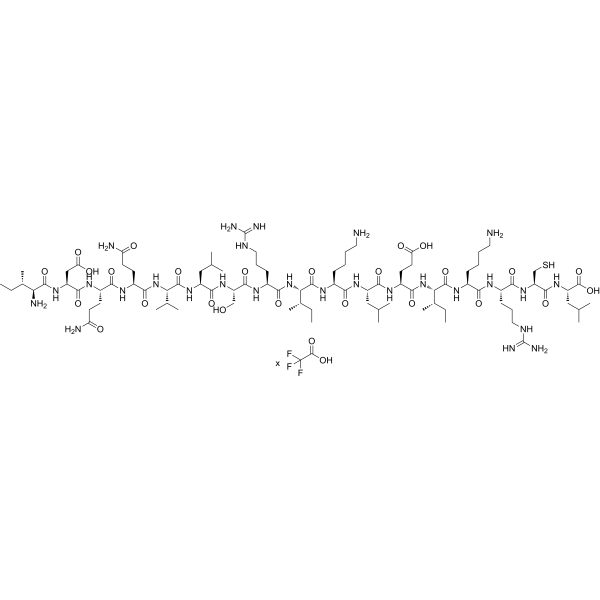
Fexapotide (NX-1207) TFA induces apoptosis selectively, reducing prostate volume at a cellular level. Fexapotide can be used in lower urinary tract symptoms (LUTS) and benign prostatic hyperplasia (BPH) research .
|
-
-
- HY-105122
-
|
WIN 49596
|
Androgen Receptor
|
Endocrinology
Cancer
|
|
Zanoterone is an orally active antagonist of the androgen receptor (AR) with a Ki of 2.2 μM. Zanoterone blocks the binding of androgens such as testosterone and dihydrotestosterone (DHT), inhibiting the androgen signaling pathway, thereby reducing androgen-dependent prostate hyperplasia and prostate cancer growth .
|
-

-
- HY-101826A
-
|
|
Phosphodiesterase (PDE)
|
Cancer
|
|
ER21355 hydrochloride is the hydrochloride form of ER21355 (HY-101826). ER21355 hydrochloride is an inhibitor for phosphodiesterase (PDE), which is potent for ameliorating benign prostatic hyperplasia (BPH) and prostatism through increasing levels of cAMP and cGMP, and resulting a relaxation of the smooth muscle cell .
|
-

-
- HY-Z12431
-
|
KMD-3293
|
Endogenous Metabolite
|
Metabolic Disease
|
|
Silodosin carboxylic acid impurity (KMD-3293) is an inactive silodosin metabolite. Silodosin carboxylic acid impurity is the major metabolite that can be generated via oxidation by alcohol and aldehyde dehydrogenase. Silodosin carboxylic acid impurity can be studied in research for benign prostatic hyperplasia .
|
-

-
- HY-135473S
-
|
|
Isotope-Labeled Compounds
Androgen Receptor
|
Metabolic Disease
|
|
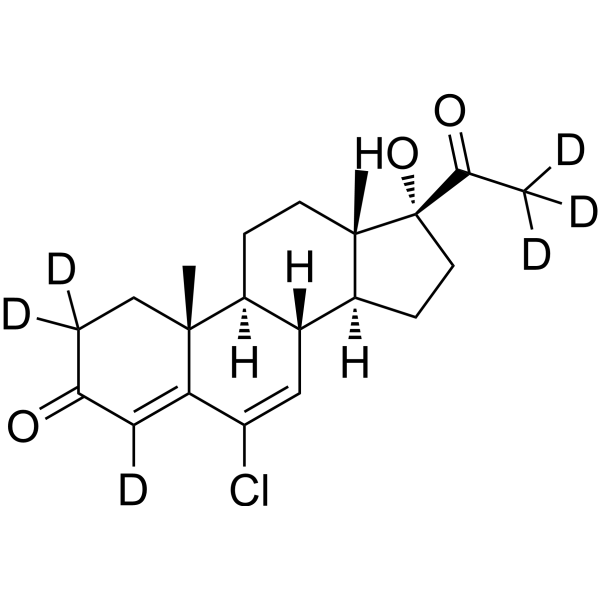
Chlormadinone-d6 is the deuterium labeled Chlormadinone (HY-135473). Chlormadinone is an orally active anti-androgen agent. Chlormadinone improves intermittency, terminal dribbling, and urinary stream size and force. Chlormadinone can be used for the research of benign prostatic hyperplasia .
|
-
-
- HY-B0661AS
-
-
-
- HY-135473R
-
|
|
Androgen Receptor
Reference Standards
|
Metabolic Disease
|
|
Chlormadinone (Standard) is the analytical standard of Chlormadinone (HY-135473). This product is intended for research and analytical applications. Chlormadinone is an orally active anti-androgen agent. Chlormadinone improves intermittency, terminal dribbling, and urinary stream size and force. Chlormadinone can be used for the research of benign prostatic hyperplasia .
|
-

-
- HY-B0661R
-
|
(R)-(-)-YM12617 free base (Standard); LY253351 free base (Standard)
|
Reference Standards
Adrenergic Receptor
Endogenous Metabolite
|
Neurological Disease
Endocrinology
Cancer
|
|
Tamsulosin (Standard) is the analytical standard of Tamsulosin. This product is intended for research and analytical applications. Tamsulosin ((R)-(-)-YM12617 free base) is an inhibitor of α1-adrenergic receptor. Tamsulosin is used for the research of prostatic hyperplasia. Tamsulosin attenuates abdominal aortic aneurysm growth in animal models .
|
-

-
- HY-B0192S
-
|
SL 77499-d7
|
Adrenergic Receptor
|
Endocrinology
|
|
Alfuzosin-d7 is the deuterium labeled Alfuzosin . Alfuzosin (SL 77499-10) is an orally active, selective and competitive α1-adrenoceptor antagonist. Alfuzosin relaxes the muscles of the prostate and bladder neck, aiding in urination. Alfuzosin can be used in study of benign prostatic hyperplasia (BPH) .
|
-
-
- HY-B0192R
-
|
SL 77499 (Standard)
|
Adrenergic Receptor
Reference Standards
|
Endocrinology
|
|
Alfuzosin (Standard) is the analytical standard of Alfuzosin. This product is intended for research and analytical applications. Alfuzosin (SL 77499-10) is an orally active, selective and competitive α1-adrenoceptor antagonist. Alfuzosin relaxes the muscles of the prostate and bladder neck, aiding in urination. Alfuzosin can be used in study of benign prostatic hyperplasia (BPH) .
|
-

-
- HY-B0371FR
-
|
|
Reference Standards
Adrenergic Receptor
|
Cardiovascular Disease
Metabolic Disease
Endocrinology
|
|
Terazosin (hydrochloride) (Standard) is the analytical standard of Terazosin (hydrochloride). This product is intended for research and analytical applications. Terazosin hydrochloride is a quinazoline derivative and a competitive and orally active α1-adrenoceptor antagonist. Terazosin hydrochloride works by relaxing blood vessels and the opening of the bladder. Terazosin hydrochloride has the potential for benign prostatic hyperplasia (BPH) and high blood pressure treatment .
|
-

- HY-107385R
-
|
ONO-9302 (Standard); SKF105657 (Standard)
|
Reference Standards
5 alpha Reductase
|
Cancer
|
|
Epristeride (Standard) is the analytical standard of Epristeride. This product is intended for research and analytical applications. Epristeride (ONO-9302) is a selective, specific and orally active uncompetitive inhibitor of human steroid 5 alpha-reductase isoform 2. Epristeride has inhibitory effects for SR isoenzymes types 2 with Ki value of 0.7-2 nM. Epristeride can be used for the research of prostatic hyperplasia and acne .
|
-

- HY-B0661S
-
-

- HY-B0391B
-
|
KT-611 hydrochloride; BM-15275 hydrochloride
|
Adrenergic Receptor
|
Cancer
|
|
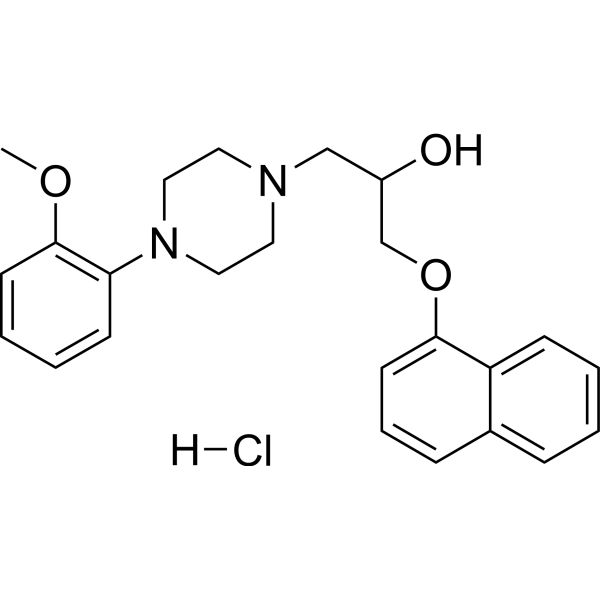
Naftopidil hydrochloride (KT-611 hydrochloride) is a selective alpha1-adrenoceptor antagonist, with Kis of 3.7 nM, 20 nM and 1.2 nM for the cloned human α1a-, α1b- and α1d-adrenoceptor subtypes, respectively. Naftopidil hydrochloride has antiproliferative effects. Naftopidil hydrochloride can be used for the research of prostate hyperplasia .
|
-
- HY-B0192S3
-
|
SL 77499-d6
|
Isotope-Labeled Compounds
Adrenergic Receptor
|
Endocrinology
|
|
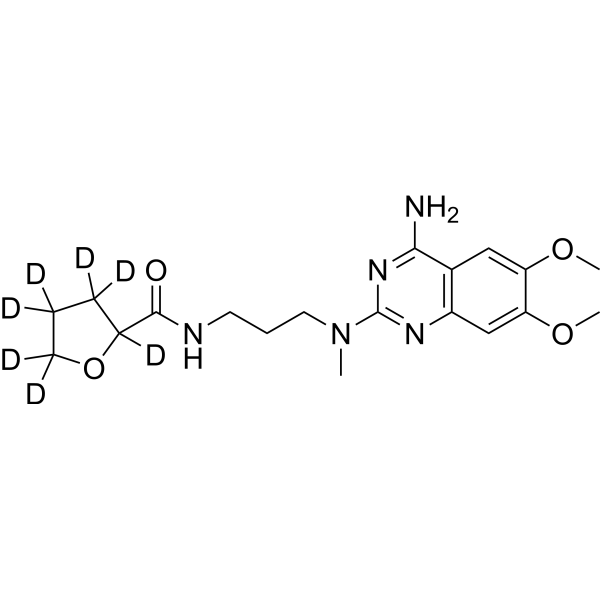
Alfuzosin-d6 (SL 77499-d6) is deuterium labeled Alfuzosin. Alfuzosin (SL 77499-10) is an orally active, selective and competitive α1-adrenoceptor antagonist. Alfuzosin relaxes the muscles of the prostate and bladder neck, aiding in urination. Alfuzosin can be used in study of benign prostatic hyperplasia (BPH) .
|
-

- HY-B0192S3A
-
|
SL 77499-10-d6
|
Isotope-Labeled Compounds
Adrenergic Receptor
|
Endocrinology
|
|
Alfuzosin (hydrochloride)-d6 (SL 77499-10-d6) is deuterium labeled Alfuzosin (hydrochloride). Alfuzosin (SL 77499-10) hydrochloride is an orally active, selective and competitive α1-adrenoceptor antagonist. Alfuzosin hydrochloride relaxes the muscles of the prostate and bladder neck, aiding in urination. Alfuzosin hydrochloride can be used in study of benign prostatic hyperplasia (BPH) .
|
-

- HY-116379
-
|
|
Adrenergic Receptor
|
Metabolic Disease
|
|
RS-100329 is an α1-adrenergic receptor (α1-AR) antagonist that effectively inhibits α1-adrenergic receptor-mediated contractions of lower urinary tract tissues in vitro and in vivo. RS-100329 can be used in the research of symptoms related to benign prostatic hyperplasia .
|
-

- HY-B0371AR
-
|
|
Reference Standards
Adrenergic Receptor
|
Metabolic Disease
Endocrinology
|
|
Terazosin (hydrochloride dihydrate) (Standard) is the analytical standard of Terazosin (hydrochloride dihydrate). This product is intended for research and analytical applications. Terazosin hydrochloride dihydrate is a quinazoline derivative and a competitive and orally active α1-adrenoceptor antagonist. Terazosin hydrochloride dihydrate works by relaxing blood vessels and the opening of the bladder. Terazosin hydrochloride dihydrate has the potential for benign prostatic hyperplasia (BPH) and high blood pressure treatment .
|
-

- HY-W724254
-
|
|
Adrenergic Receptor
|
Endocrinology
|
|
SNAP-6201 is a selective α1a adrenoceptor antagonist with a Ki of 0.2 nM. SNAP-6201 exhibits >1400-fold selectivity over α1b and α1d adrenoceptors. SNAP-6201 exhibits excellent selectively to inhibit intraurethral pressure (IUP) in the anesthetized dog model. SNAP-6201 can be used for benign prostatic hyperplasia (BPH) research .
|
-

- HY-B0661AR
-
|
(R)-(-)-YM12617 (Standard); LY253351 (Standard)
|
Reference Standards
Adrenergic Receptor
Apoptosis
|
Neurological Disease
Endocrinology
Cancer
|
|
Tamsulosin (hydrochloride) (Standard) is the analytical standard of Tamsulosin hydrochloride (HY-B0661A). Tamsulosin hydrochloride ((R)-(-)-YM12617 free base) is an orally active antagonist of α1-adrenergic receptor. Tamsulosin hydrochloride induces Apoptosis. Tamsulosin hydrochloride is used for the research of prostatic hyperplasia. Tamsulosin hydrochloride attenuates abdominal aortic aneurysm growth and inhibits inflammation in animal models .
|
-

- HY-13635S
-
|
MK-906-d9
|
Isotope-Labeled Compounds
5 alpha Reductase
|
Cancer
|
|
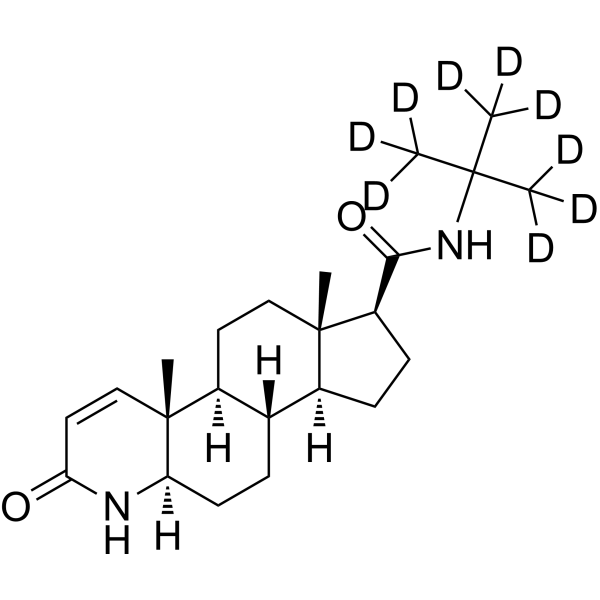
Finasteride-d9 is deuterium labeled Finasteride. Finasteride (MK-906) is a potent and competitive 5α-reductase inhibitor, with an IC50 of 4.2 nM for type II 5α-reductase. Finasteride has approximately a 100-fold greater affinity for type II 5α-reductase enzyme than for the type I enzyme. Finasteride can be used for the research of benign prostatic hyperplasia (BPH) and androgenic alopecia .
|
-
- HY-B0391S1
-
|
KT-611-d5; BM-15275-d5
|
Isotope-Labeled Compounds
Adrenergic Receptor
|
Cardiovascular Disease
Endocrinology
|
|
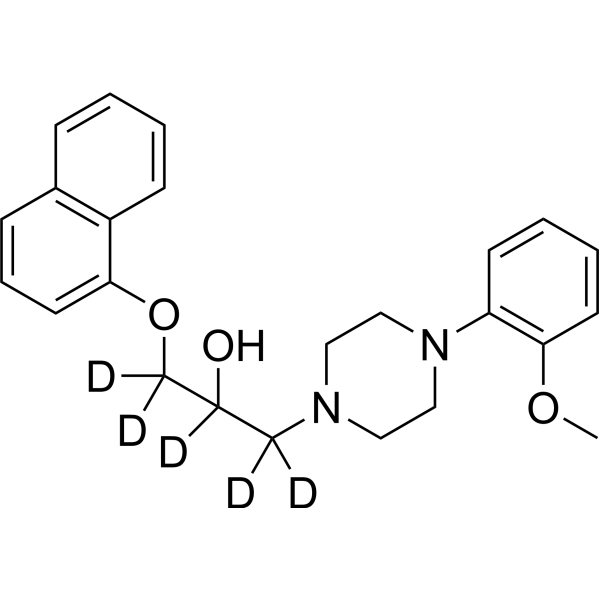
Naftopidil-d5 is deuterium labeled Naftopidil. Naftopidil (KT-611) is is a selective alpha1-adrenoceptor antagonist, with Kis of 3.7 nM, 20 nM and 1.2 nM for the cloned human α1a-, α1b- and α1d-adrenoceptor subtypes, respectively. Naftopidil has antiproliferative effects. Naftopidil can be used for the research of prostate hyperplasia .
|
-
- HY-B0391R
-
|
KT-611 (Standard); BM-15275 (Standard)
|
Reference Standards
Adrenergic Receptor
|
Cardiovascular Disease
Endocrinology
|
|
Naftopidil (Standard) is the analytical standard of Naftopidil. This product is intended for research and analytical applications. Naftopidil (KT-611) is is a selective alpha1-adrenoceptor antagonist, with Kis of 3.7 nM, 20 nM and 1.2 nM for the cloned human α1a-, α1b- and α1d-adrenoceptor subtypes, respectively. Naftopidil has antiproliferative effects. Naftopidil can be used for the research of prostate hyperplasia .
|
-

- HY-W357141
-
|
Methyl salicylate 2-O-β-D-glucopyranoside
|
Drug Derivative
|
Inflammation/Immunology
|
|
Methyl 2-O-β-D-glucopyranosylbenzoate (Methyl salicylate 2-O-β-D-glucopyranoside) (Compound 11) is a phenolic compound. Methyl 2-O-β-D-glucopyranosylbenzoate can be isolated from the leaves of Metapanax delavayi. Methyl 2-O-β-D-glucopyranosylbenzoate has anti-benign prostatic hyperplasia activities and significantly inhibits the proliferation of BPH-1 cells. β-Phenylethyl β-D-glucoside can be used for prostatitis research .
|
-

- HY-B0391S2
-
|
KT-611-d7; BM-15275-d7
|
Isotope-Labeled Compounds
Adrenergic Receptor
|
Cardiovascular Disease
Endocrinology
|
|
Naftopidil-d7 (KT-611-d7 ) is deuterium labeled Naftopidil. Naftopidil (KT-611) is is a selective alpha1-adrenoceptor antagonist, with Kis of 3.7 nM, 20 nM and 1.2 nM for the cloned human α1a-, α1b- and α1d-adrenoceptor subtypes, respectively. Naftopidil has antiproliferative effects. Naftopidil can be used for the research of prostate hyperplasia .
|
-

- HY-W753806
-
|
UK 33274 hydrochloride
|
Akt
|
Cardiovascular Disease
|
|
Doxazosin hydrochloride (UK 33274 hydrochloride) is a compound used to inhibit hypertension and prostate hyperplasia, with activity that inhibits postsynaptic α1-adrenoceptors on vascular smooth muscle. Doxazosin hydrochloride can cause vasodilation, thereby reducing peripheral vascular resistance. Doxazosin hydrochloride was found to inhibit the proliferation and migration of hepatic stellate cells in a mouse liver fibrosis model. Doxazosin hydrochloride regulates fibrosis, autophagy, and apoptosis of hepatic stellate cells by activating the PI3K/Akt/mTOR signaling pathway. Doxazosin hydrochloride also blocks autophagic flux and induces apoptosis of hepatic stellate cells .
|
-

- HY-N13195
-
|
|
5 alpha Reductase
|
Others
|
|
(15α)-15,26-Dihydroxylanosta-7,9(11),24-trien-3-one shows a 5a-reductase inhibitory activity with an IC50 value of 41.9 μM. (15α)-15,26-Dihydroxylanosta-7,9(11),24-trien-3-one inhibits the growth of the ventral prostate induced by testosterone in rat. (15α)-15,26-Dihydroxylanosta-7,9(11),24-trien-3-one is promising for research of benign prostatic hyperplasia (BPH) as well as other 5α-dihydrotestosterone (DHT)-related disorders, such as acne and male pattern baldness .
|
-

- HY-N18683
-
|
|
Others
|
Infection
|
|
Saw palmetto extract can be used to study lower urinary tract symptoms associated with benign prostatic hyperplasia (BPH).
|
-

- HY-183179
-
|
|
Adrenergic Receptor
|
Endocrinology
|
|
α1A Adrenoceptor antagonist-1 is a selective α1A adrenoceptor antagonist with a human Ki <20 nM. α1A Adrenoceptor antagonist-1 exhibits activity against benign prostatic hyperplasia (BPH) to enable less hindered urine flow. α1A Adrenoceptor antagonist-1 relaxes α1a receptor-enriched urethral smooth muscle tissue without inducing hypotension. α1A Adrenoceptor antagonist-1 can be used for the research of benign prostatic hyperplasia (BPH) .
|
-

- HY-103204R
-
|
|
Reference Standards
Adrenergic Receptor
|
Endocrinology
|
|
RS100329 hydrochloride (Standard) is the analytical standard of RS100329 hydrochloride (HY-103204). This product is intended for research and analytical applications. RS100329 hydrochloride is a potent and selective α1A-adrenoceptor antagonist with pKi values of 9.6, 7.9 and 7.5 for α1A, α1D, and α1B, respectively. RS100329 hydrochloride inhibits reflex urethral contractions. RS100329 hydrochloride can be used in research of benign prostatic hyperplasia .
|
-

- HY-19279A
-
|
|
Adrenergic Receptor
|
Endocrinology
|
|
JTH-601 Free base is a novel alpha1-adrenoceptor antagonist that exhibits potent activity in inhibiting phenylephrine-induced contractions in lower urinary tract tissues. JTH-601 Free base competitively antagonizes alpha1-adrenoceptor-mediated contractile responses, demonstrating greater potency than prazosin or tamsulosin. JTH-601 Free base is anticipated to be effective in treating urinary outlet obstruction associated with benign prostatic hyperplasia.
|
-

- HY-180815
-
|
|
Adrenergic Receptor
|
Endocrinology
|
|
α1A/1D-Adrenoceptor antagonist-1 (Compound 15) is a selective α1A/1D-adrenoceptor dual antagonist with IC50 values of 20.26 and 164.9 nM. α1A/1D-Adrenoceptor antagonist-1 shows an IC50 of 1912 nM for α1B-adrenoceptor.α1A/1D-Adrenoceptor antagonist-1 can be used for research of benign prostatic hyperplasia .
|
-

- HY-181774
-
|
|
Phosphodiesterase (PDE)
|
Endocrinology
|
|
PDE4/5-IN-1 is a selective phosphodiesterase 4/5 (PDE4/5) dual inhibitor. PDE4/5-IN-1 functionally inhibits PDE5, PDE4B2, and PDE4D2 activity. PDE4/5-IN-1 relaxes isolated rat prostate tissue, enhances nitric oxide-induced relaxation in isolated rat prostate tissue, and reduces alpha-1 adrenoceptor-mediated contractile responses in isolated rat prostate tissue. PDE4/5-IN-1 inhibits proliferation of human hyperplastic prostate cells. PDE4/5-IN-1 can be used for the research of benign prostatic hyperplasia .
|
-

| Cat. No. |
Product Name |
Type |
-
- HY-158498
-
|
FA2 N-linked oligosaccharide; F(6)A2 glycan
|
Biochemical Assay Reagents
|
|
FA2 glycan (G0F) (FA2 N-linked oligosaccharide; F(6)A2 glycan) is a core-fucosylated biantennary N-linked oligosaccharide that serves as a prostate cancer biomarker. The level of FA2 glycan (G0F) is higher in prostate cancer than in benign prostatic hyperplasia, and it is further elevated in advanced prostate cancer with a Gleason score ≥8 compared with both benign prostatic hyperplasia and low-/intermediate-risk prostate cancer. FA2 glycan (G0F) can be used in prostate cancer research .
|
| Cat. No. |
Product Name |
Target |
Research Area |
-
- HY-P3501
-
|
NX-1207
|
Apoptosis
|
Cancer
|
|
Fexapotide (NX-1207) induces apoptosis selectively, reducing prostate volume at a cellular level. Fexapotide can be used in lower urinary tract symptoms (LUTS) and benign prostatic hyperplasia (BPH) research .
|
-
- HY-105173
-
|
EP 24332
|
GnRH Receptor
Histamine Receptor
|
Endocrinology
Cancer
|
|
Teverelix (EP 24332) is a GnRH antagonist. Teverelix binds competitively and reversibly to GnRH receptors, thereby suppressing the release of LH and FSH. Teverelix can be used in the research of prostatic hyperplasia, endometriosis, and prostate cancer .
|
-
- HY-P1442
-
|
|
Adrenergic Receptor
|
Cancer
|
|
AdTx1 is a selective α1A-adrenoceptor antagonist (Ki: 0.35 nM). AdTx1 can be used for research of benign prostatic hyperplasia .
|
-
- HY-P3501A
-
|
NX-1207 TFA
|
Apoptosis
|
Cancer
|
|
Fexapotide (NX-1207) TFA induces apoptosis selectively, reducing prostate volume at a cellular level. Fexapotide can be used in lower urinary tract symptoms (LUTS) and benign prostatic hyperplasia (BPH) research .
|
| Cat. No. |
Product Name |
Category |
Target |
Chemical Structure |
-
- HY-B0661
-
-
-
- HY-B0661A
-
-
-
- HY-B0371
-
-
-
- HY-N8850
-
-
-
- HY-B0661R
-
-
-
- HY-B0661AR
-
-
-
- HY-W357141
-
-
-
- HY-N13195
-
|
|
Triterpenes
Microorganisms
Terpenoids
Source Classification
|
5 alpha Reductase
|
|
(15α)-15,26-Dihydroxylanosta-7,9(11),24-trien-3-one shows a 5a-reductase inhibitory activity with an IC50 value of 41.9 μM. (15α)-15,26-Dihydroxylanosta-7,9(11),24-trien-3-one inhibits the growth of the ventral prostate induced by testosterone in rat. (15α)-15,26-Dihydroxylanosta-7,9(11),24-trien-3-one is promising for research of benign prostatic hyperplasia (BPH) as well as other 5α-dihydrotestosterone (DHT)-related disorders, such as acne and male pattern baldness .
|
-
-
- HY-N18683
-
-
| Cat. No. |
Product Name |
Chemical Structure |
-
- HY-B0371S
-
|
|
|
Terazosin-d8 is deuterium labeled Terazosin. Terazosin is a quinazoline derivative and a competitive and orally active α1-adrenoceptor antagonist. Terazosin works by relaxing blood vessels and the opening of the bladder. Terazosin has the potential for benign prostatic hyperplasia (BPH) and high blood pressure treatment .
|
-
-
- HY-B0661AS1
-
|
|
|
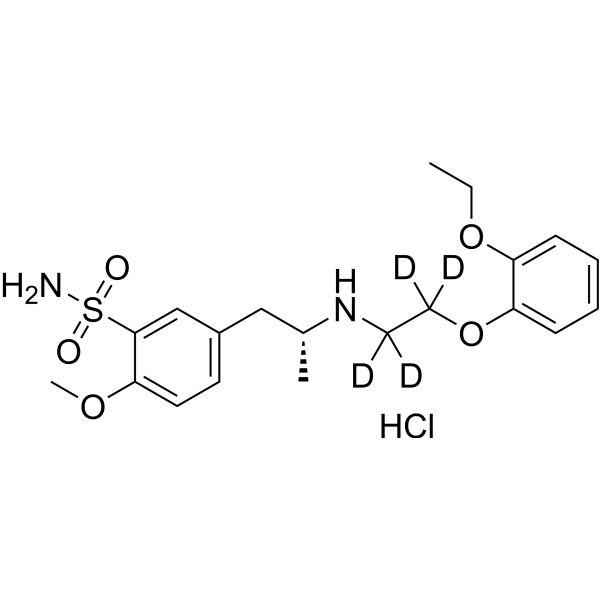
Tamsulosin-d4 (hydrochloride) is deuterium labeled Tamsulosin (hydrochloride). Tamsulosin hydrochloride ((R)-(-)-YM12617) is an inhibitor of α1-adrenergic receptor. Tamsulosin hydrochloride is used for the research of prostatic hyperplasia. Tamsulosin hydrochloride attenuates abdominal aortic aneurysm growth in animal models .
|
-
-
- HY-B0192AS
-
|
|
|
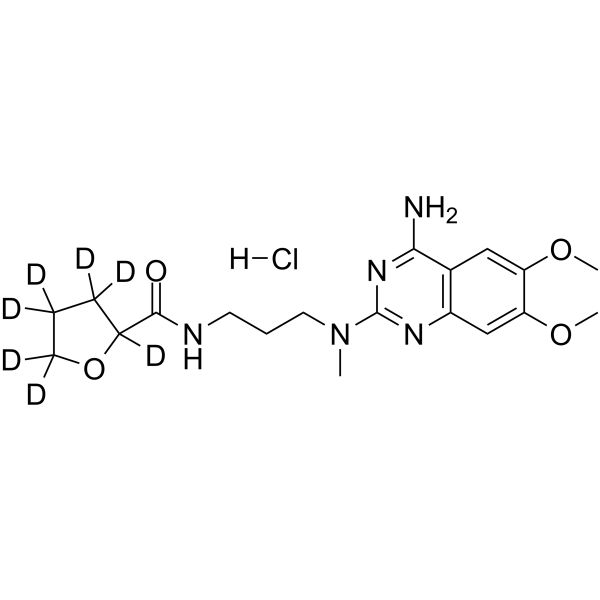
Alfuzosin-d3 hydrochloride is the deuterium labeled Alfuzosin hydrochloride. Alfuzosin hydrochloride is an α1 adrenergic receptor antagonist used to treat benign prostatic hyperplasia (BPH).
|
-
-
- HY-B0192AS1
-
|
|
|
Alfuzosin-d7 (hydrochloride) is the deuterium labeled Alfuzosin hydrochloride. Alfuzosin hydrochloride is an α1 adrenergic receptor antagonist used to treat benign prostatic hyperplasia (BPH).
|
-
-
- HY-135473S
-
|
|
|
Chlormadinone-d6 is the deuterium labeled Chlormadinone (HY-135473). Chlormadinone is an orally active anti-androgen agent. Chlormadinone improves intermittency, terminal dribbling, and urinary stream size and force. Chlormadinone can be used for the research of benign prostatic hyperplasia .
|
-
-
- HY-B0661AS
-
|
|
|
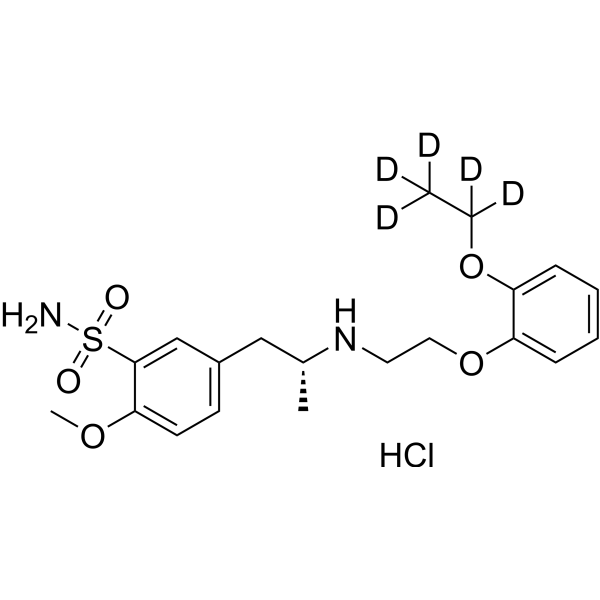
Tamsulosin-d5 (hydrochloride) is the deuterium labeled Tamsulosin hydrochloride. Tamsulosin hydrochloride ((R)-(-)-YM12617) is an inhibitor of α1-adrenergic receptor. Tamsulosin hydrochloride is used for the research of prostatic hyperplasia. Tamsulosin hydrochloride attenuates abdominal aortic aneurysm growth in animal models .
|
-
-
- HY-B0192S
-
|
|
|
Alfuzosin-d7 is the deuterium labeled Alfuzosin . Alfuzosin (SL 77499-10) is an orally active, selective and competitive α1-adrenoceptor antagonist. Alfuzosin relaxes the muscles of the prostate and bladder neck, aiding in urination. Alfuzosin can be used in study of benign prostatic hyperplasia (BPH) .
|
-
-
- HY-B0661S
-
|
|
|
Tamsulosin-d4 ((R)-(-)-YM12617 (free base)-d4) is deuterium labeled Tamsulosin. Tamsulosin ((R)-(-)-YM12617 free base) is an inhibitor of α1-adrenergic receptor. Tamsulosin is used for the research of prostatic hyperplasia. Tamsulosin attenuates abdominal aortic aneurysm growth in animal models .
|
-
-
- HY-B0192S3
-
|
|
|
Alfuzosin-d6 (SL 77499-d6) is deuterium labeled Alfuzosin. Alfuzosin (SL 77499-10) is an orally active, selective and competitive α1-adrenoceptor antagonist. Alfuzosin relaxes the muscles of the prostate and bladder neck, aiding in urination. Alfuzosin can be used in study of benign prostatic hyperplasia (BPH) .
|
-
-
- HY-B0192S3A
-
|
|
|
Alfuzosin (hydrochloride)-d6 (SL 77499-10-d6) is deuterium labeled Alfuzosin (hydrochloride). Alfuzosin (SL 77499-10) hydrochloride is an orally active, selective and competitive α1-adrenoceptor antagonist. Alfuzosin hydrochloride relaxes the muscles of the prostate and bladder neck, aiding in urination. Alfuzosin hydrochloride can be used in study of benign prostatic hyperplasia (BPH) .
|
-
-
- HY-13635S
-
|
|
|
Finasteride-d9 is deuterium labeled Finasteride. Finasteride (MK-906) is a potent and competitive 5α-reductase inhibitor, with an IC50 of 4.2 nM for type II 5α-reductase. Finasteride has approximately a 100-fold greater affinity for type II 5α-reductase enzyme than for the type I enzyme. Finasteride can be used for the research of benign prostatic hyperplasia (BPH) and androgenic alopecia .
|
-
-
- HY-B0391S1
-
|
|
|
Naftopidil-d5 is deuterium labeled Naftopidil. Naftopidil (KT-611) is is a selective alpha1-adrenoceptor antagonist, with Kis of 3.7 nM, 20 nM and 1.2 nM for the cloned human α1a-, α1b- and α1d-adrenoceptor subtypes, respectively. Naftopidil has antiproliferative effects. Naftopidil can be used for the research of prostate hyperplasia .
|
-
-
- HY-B0391S2
-
|
|
|
Naftopidil-d7 (KT-611-d7 ) is deuterium labeled Naftopidil. Naftopidil (KT-611) is is a selective alpha1-adrenoceptor antagonist, with Kis of 3.7 nM, 20 nM and 1.2 nM for the cloned human α1a-, α1b- and α1d-adrenoceptor subtypes, respectively. Naftopidil has antiproliferative effects. Naftopidil can be used for the research of prostate hyperplasia .
|
-
Your information is safe with us. * Required Fields.
Inquiry Information
- Product Name:
- Cat. No.:
- Quantity:
- MCE Japan Authorized Agent:








