Search Result
Results for "
carboxylic acid derivative
" in MedChemExpress (MCE) Product Catalog:
32
Biochemical Assay Reagents
6
Isotope-Labeled Compounds
| Cat. No. |
Product Name |
Target |
Research Areas |
Chemical Structure |
-
- HY-78695
-
-
-
- HY-148087
-
AZD5462
1 Publications Verification
|
RXFP Receptor
|
Cardiovascular Disease
|
|
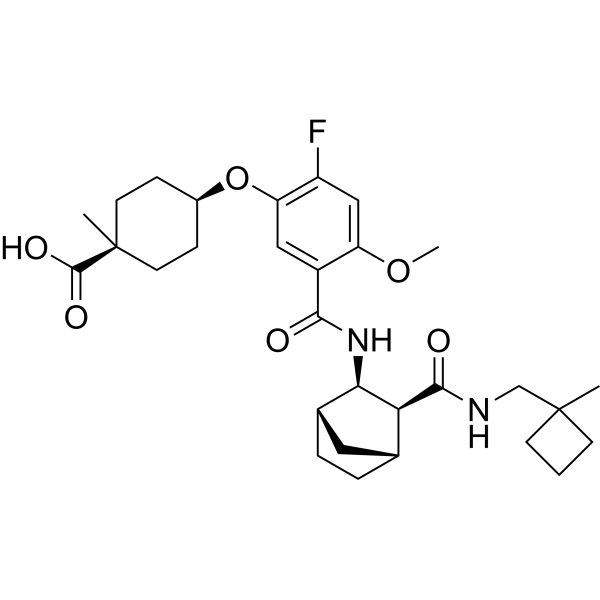
AZD5462 is a RXFP1 modulator, can be used for heart failure research. RXFP1 is the cognate receptor for human relaxin, belongs to GPCR family 1c number with anti-fibrotic and anti-inflammatory properties .
|
-
-
- HY-W018326
-
|
|
DNA/RNA Synthesis
|
Cancer
|
|
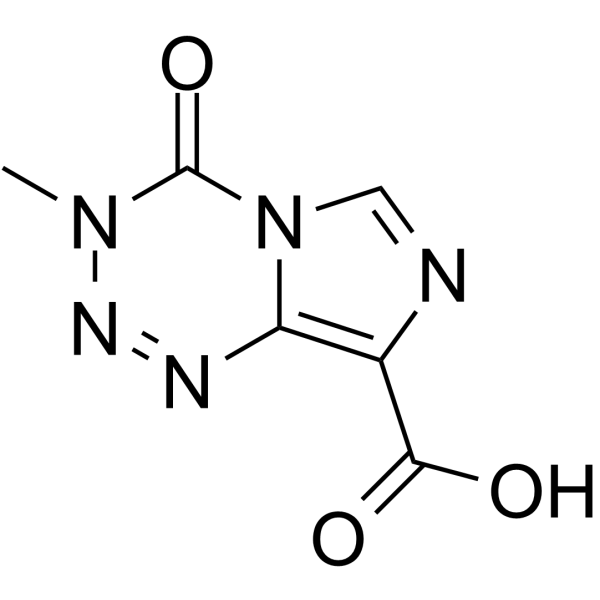
Temozolomide acid is a carboxylic acid derivative of Temozolomide (HY-17364) with anticancer activity. Temozolomide is a DNA alkylating agent, methylating the guanine and adenine bases of DNA, causing breaks in DNA double strand, cell cycle arrest, and eventually cell death. Temozolomide acid is promising for research of glioblastoma and brain cancer .
|
-
-
- HY-W001963
-
|
|
Endogenous Metabolite
|
Others
|
|
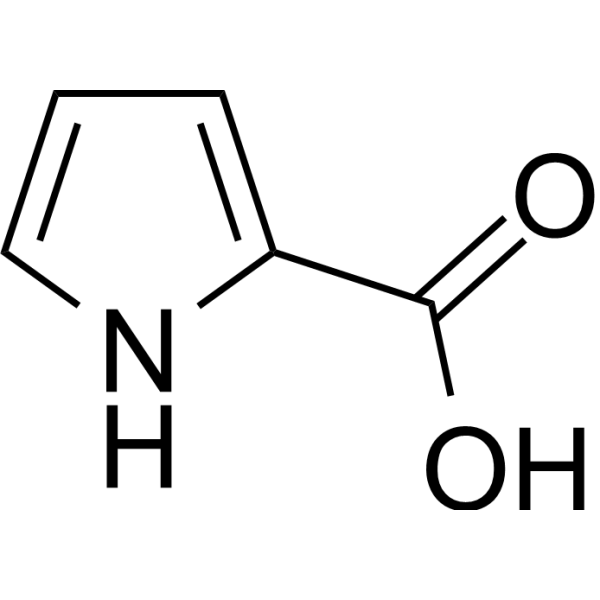
Pyrrole-2-carboxylic acid is a natural alkaloid from the marine bacterium Pelomonas puraquae sp. Nov. Pyrrole-2-carboxylic acid is a biological form of pyrrole that is often encountered in natural compounds. Pyrrole-2-carboxylic acid serves as a precursor for various pyrrole derivatives like clorobiocin, coumermycin A1, pyoluteorin, leupyrrins, and undecylprodigiosin in biosynthetic processes .
|
-
-
- HY-101329
-
|
9-Anthracenecarboxylic acid
|
MOFs
Chloride Channel
|
Others
|
|
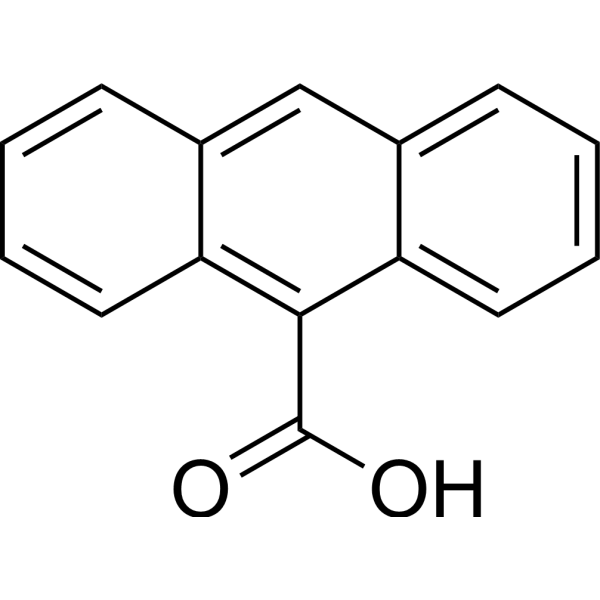
Anthracene-9-carboxylic acid (9-Anthracenecarboxylic acid) is an anthracene derivative traditionally used to block and identify Ca 2+-activated Cl - currents (CaCCs) in various cell types, like diverse smooth muscle cells, epithelial cells and salivary gland cells .
|
-
-
- HY-B0024
-
|
NM441
|
Bacterial
Antibiotic
|
Infection
|
|
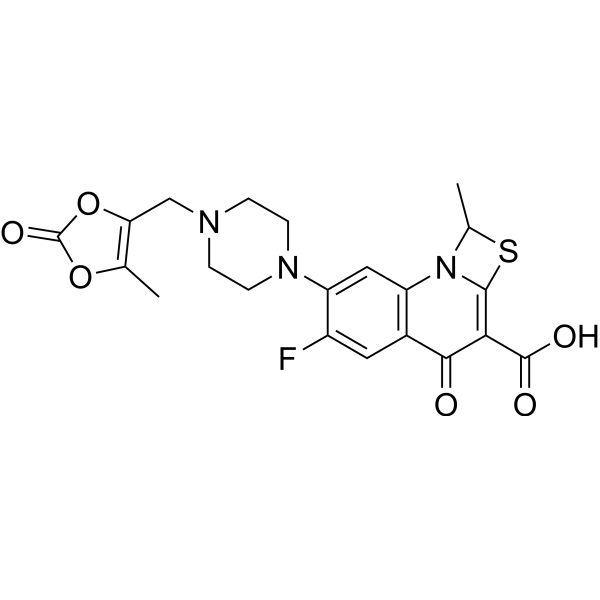
Prulifloxacin (NM441) is an orally active fluoroquinolone antibiotic with a broad spectrum of activity against Gram-positive and -negative bacteria. Prulifloxacin is a proagent of a thiazeto-quinoline carboxylic acid derivative Ulifloxacin (NM394). Prulifloxacin has the potential for lower urinary tract infections and exacerbations of chronic bronchitis .
|
-
-
- HY-W002304
-
|
|
Drug Derivative
|
Metabolic Disease
|
|
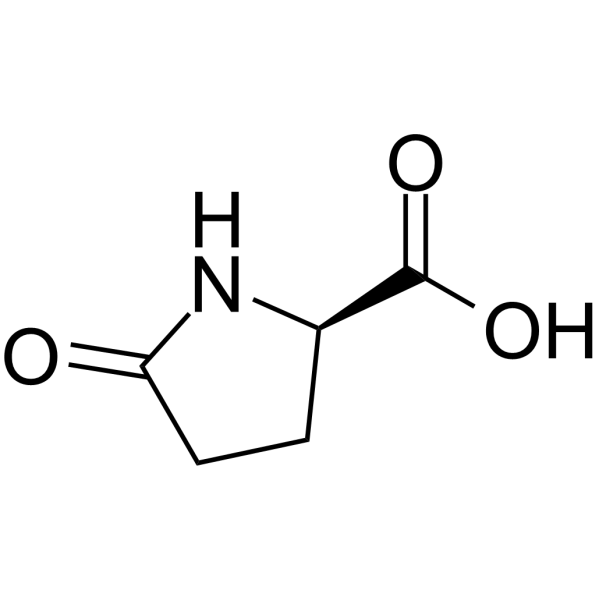
(R)-5-Oxopyrrolidine-2-carboxylic acid (D-Pyroglutamic acid) is a cyclic derivative of D-glutamate. (R)-5-Oxopyrrolidine-2-carboxylic acid can be used in the research of metabolic syndrome and end-stage renal disease .
|
-
-
- HY-151931
-
|
Jasmonyl-ACC
|
Phytohormone
|
Metabolic Disease
|
|
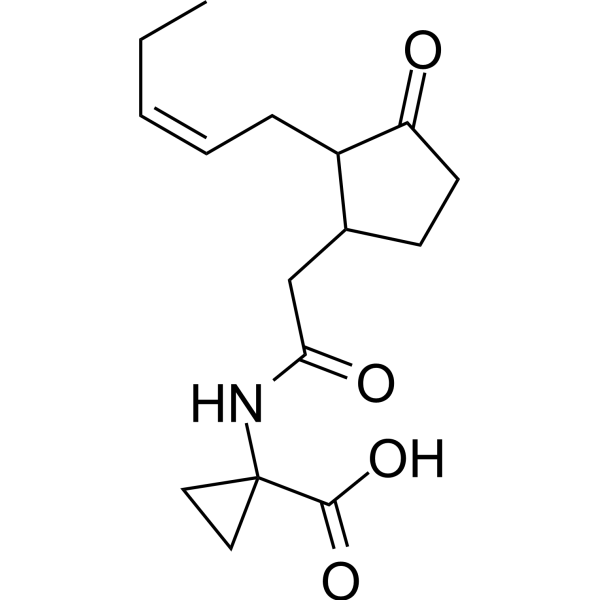
JA-ACC (Jasmonyl-ACC) is a derivative of 1-aminocyclopropane-1-carboxylic acid (ACC). ACC is the direct precursor of the plant hormone ethylene. JA-ACC inhibits root growth in Arabidopsis and the inhibition is independent of jasmonic acid (JA) signaling .
|
-
-
- HY-W002251
-
|
|
Biochemical Assay Reagents
|
Others
|
|
Benzo[b]thiophene-3-carbaldehyde is a 3-formyl-substituted benzo[b]thiophene derivative that acts as an oxidizable substrate to convert to benzo[b]thiophene-3-carboxylic acid under liquid-phase conditions. Compared with analogs such as benzaldehyde and thiophene-2-carbaldehyde, Benzo[b]thiophene-3-carbaldehyde has lower oxidation difficulty, and can significantly increase the reaction rate in the presence of initiators (such as Na +Br - or DBA). Benzo[b]thiophene-3-carbaldehyde also serves as a key starting material for the synthesis of compounds including heteroaryl chalcones .
|
-
-
- HY-W017831
-
|
|
Biochemical Assay Reagents
Drug Intermediate
|
Others
|
|
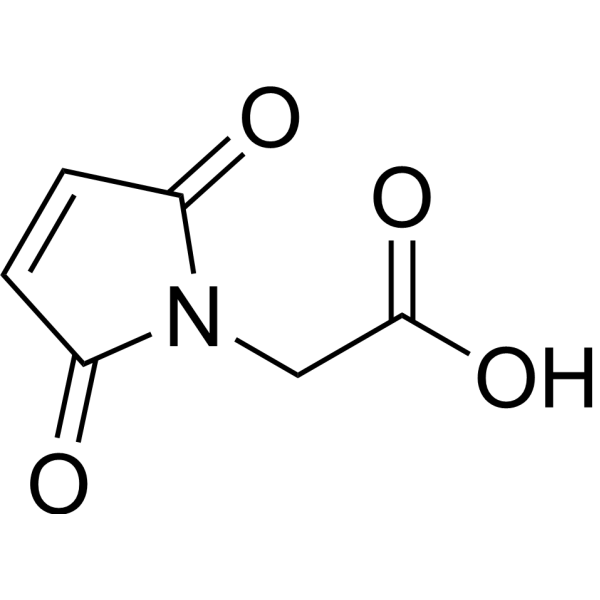
2-Maleimido acetic acid is a maleimide-containing carboxylic acid ligand used to prepare Pt(IV) complexes capable of undergoing Diels-Alder reaction with furan derivatives for drug targeting and delivery applications .
|
-
-
- HY-76962
-
-
-
- HY-D2493
-
|
Cy7 COOH
|
Fluorescent Dye
|
Others
|
|
Cyanine7 carboxylic acid (Cy7 COOH) is a derivative of Cy7 (HY-D0825) dye. Cyanine7 carboxylic acid contains carboxyl groups, which can condense ammonia to form covalent bonds .
|
-
-
- HY-W061650
-
-
-
- HY-W051093
-
-
-
- HY-D2250
-
|
|
Fluorescent Dye
|
Others
|
|
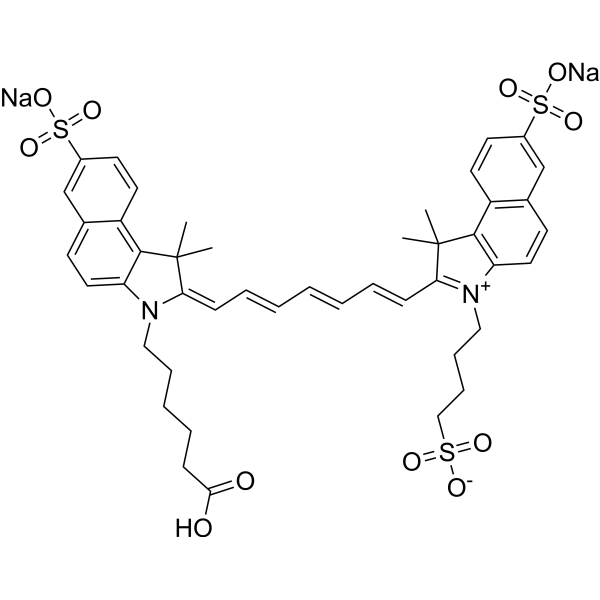
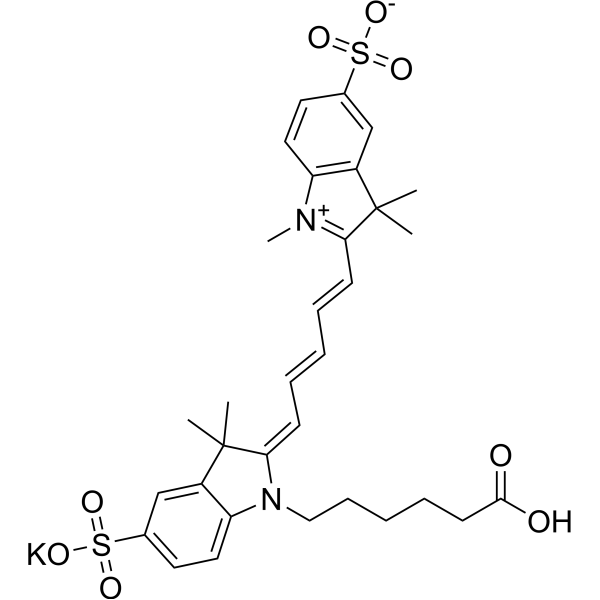
Disulfo-ICG carboxylic acid is a derivative of ICG dye. ICG (Indocyanine Green) is a NIR fluorescent dye .
|
-
-
- HY-D1305
-
|
|
Fluorescent Dye
|
Others
|
|
ATTO 488 carboxylic acid is a new fluorescent label based on the Rhodamine structure. It has strong absorption, high fluorescence quantum yield, high thermal stability and photochemical stability, and is suitable for single molecule detection and high-resolution microscopy. ATTO 488 carboxylic acid is a carboxylic acid derivative of ATTO 488, which can be used to label proteins or antibodies.
|
-
-
- HY-W008446
-
|
|
Amino Acid Derivatives
|
Others
|
|
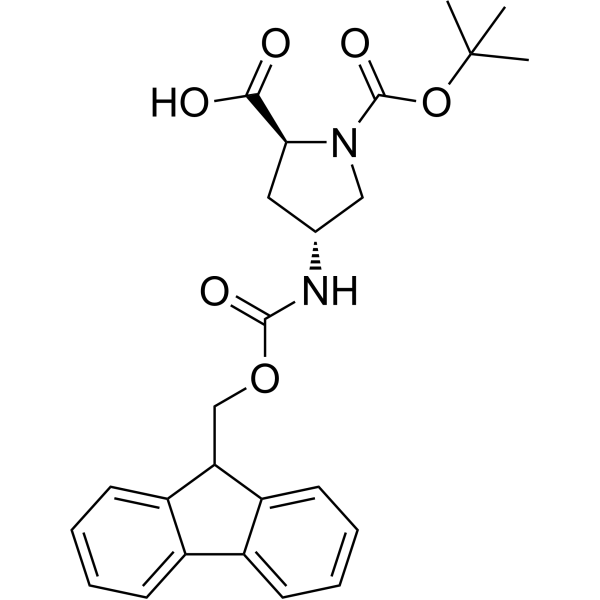
(2S,4R)-4-((((9H-Fluoren-9-yl)methoxy)carbonyl)amino)-1-(tert-butoxycarbonyl)pyrrolidine-2-carboxylic acid is a proline derivative .
|
-
-
- HY-128836
-
|
|
Ligands for E3 Ligase
|
Others
|
|
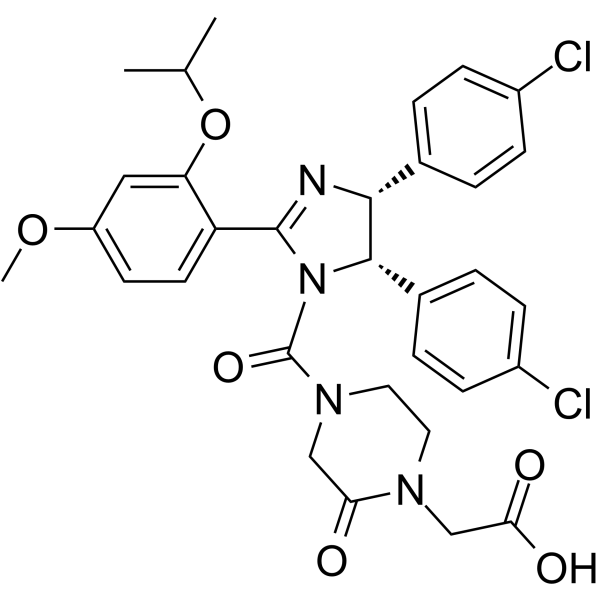
(4R,5S)-Nutlin carboxylic acid is a MDM2 ligand and also a nutlin-3 derivative. (4R,5S)-Nutlin carboxylic acid can be linked to target protein ligands via a linker to form a PROTAC that can be used for targeting PARP1 .
|
-
-
- HY-W021482
-
|
|
Amino Acid Derivatives
Drug Intermediate
|
Others
|
|
(4S)-1-Benzoylcarbonyl-4-fluorobutylproline ((2R,4R)-1-tert-butoxycarbonyl-4-fluoropyrrolidine-2-carboxylic acid) is a derivative of fluorinated proline and can be used as a pharmaceutical intermediate for the synthesis of various active compounds .
|
-
-
- HY-D1830
-
|
VF 680 carboxylic acid(free acid)
|
Fluorescent Dye
|
Others
|
|
Vari Fluor 680 Carboxylic acid (VF 680 Carboxylic acid) free acid is a carboxylic acid derivative of Vari Fluor. Vari Fluor carboxylic acid derivatives are unactivated labeled fluorescent dyes for protein, antibody, and polysaccharide labeling that require carboxylic acid activation for use .
|
-
-
- HY-W1048525
-
|
8-Arm PEG5000-Amine
|
Biochemical Assay Reagents
|
Others
|
|
8-Arm PEG5000-NH2 (8-Arm PEG5000-Amine) is a multi-arm PEG derivative with amino groups at each end of the eight arms. The reactive primary amine or NH2 groups can react rapidly with activated carboxylic acids such as NHS esters to form stable amide bonds .
|
-
-
- HY-W1048843A
-
|
4-Arm PEG5000-amine
|
Biochemical Assay Reagents
|
Others
|
|
4-Arm PEG5000-NH2 (4-Arm PEG5000-amine) is a multi-arm PEG derivative with amine groups at each end of four arms attached to a pentaerythritol core. The reactive primary amine or NH2 groups can react rapidly with activated carboxylic acids such as NHS esters to form stable amide bonds .
|
-
-
- HY-60256
-
-
-
- HY-W044620
-
-
-
- HY-W076900
-
|
|
Drug Intermediate
|
Others
|
|
5-Hexenoic acid is a carboxylic acid derivative and can be used as a drug intermediate in the production of various compounds.
|
-
-
- HY-W053705
-
-
-
- HY-W1048843B
-
|
4-Arm PEG10000-amine
|
Biochemical Assay Reagents
|
Others
|
|
4-Arm PEG10000-NH2 (4-Arm PEG10000-amine) is a multi-arm PEG derivative with amine groups at each end of four arms attached to a pentaerythritol core. The reactive primary amine or NH2 groups can react rapidly with activated carboxylic acids such as NHS esters to form stable amide bonds .
|
-
-
- HY-34887
-
|
|
Drug Derivative
|
Others
|
|
Acridone-4-carboxylic acid (ACA) (Compound 2c) is a heme-interacting acridone derivatives that prevents free heme-mediated protein oxidation and degradation. Acridone-4-carboxylic acid inhibits protein carbonyl formation with an IC50 of 43 μM .
|
-
-
- HY-W033815
-
|
|
HCV
HCV Protease
|
Infection
|
|
6-Chloroindole-2-carboxylic acid (Compound 10g) is a derivative of 2-carboxyindole. 6-Chloroindole-2-carboxylic acid can bind to the hepatitis C virus NS3 protease/NS4A cofactor complex, and its KD value for the ns4a-ns3p protein is 0.4 mM.
|
-
-
- HY-W013201
-
|
|
Amino Acid Derivatives
|
Others
|
|
(S)-1-((S)-2-Amino-4-methylpentanoyl)pyrrolidine-2-carboxylic acid compound with 2,2,2-trifluoroacetic acid (1:1) is a proline derivative .
|
-
-
- HY-133053
-
|
Hydroxy-PEG8-acid
|
Biochemical Assay Reagents
|
Others
|
|
HO-PEG8-CH2CH2COOH (Hydroxy-PEG8-acid) is a PEG derivative containing a hydroxyl group with a terminal carboxylic acid. The terminal carboxylic acid can be reacted with primary amine groups in the presence of activators to form a stable amide bond .
|
-
-
- HY-130695
-
|
|
ADC Linker
|
Cancer
|
|
N-(Amino-PEG5)-N-bis(PEG4-acid) is a PEG derivative containing an amino group with two terminal carboxylic acids. The amino group is reactive with carboxylic acids, activated NHS esters. The terminal carboxylic acids can react with primary amine groups in the presence of activators to form a stable amide bond. N-(Amino-PEG5)-N-bis(PEG4-acid) can be useful in the development of antibody drug conjugates (ADCs) .
|
-
-
- HY-59302
-
|
|
Biochemical Assay Reagents
|
Others
|
|
Indole-5-carboxylic acid, 98% is an indole derivative. Indole-5-carboxylic acid, 98% inhibits corrosion of low carbon steel in deoxygenated 0.5 M sulfuric acid solution .
|
-
-
- HY-W002328
-
|
|
Biochemical Assay Reagents
|
Others
|
|
Pyrazole-3-carboxylic acid is an alternative anchoring group to carboxylic acid in phthalocyanine dyes. Pyrazole-3-carboxylic acid shows flexible coordination modes when coordinates with metal ions. Pyrazole-3-carboxylic acid can chelate to metal ions and form very stable complexes through its N and O atoms. Pyrazole-3-carboxylic acid can be used to synthesize derivatives that possess antibacterial, anti-inflammatory, ulcerogenic liability and antiproliferative activities .
|
-
-
- HY-101329S
-
|
9-Anthracenecarboxylic acid-d9
|
Chloride Channel
|
Others
|
|
Anthracene-9-carboxylic acid-d9 is the deuterium labeled Anthracene-9-carboxylic acid . Anthracene-9-carboxylic acid (9-Anthracenecarboxylic acid) is an anthracene derivative traditionally used to block and identify Ca2+-activated Cl- currents (CaCCs) in various cell types, like diverse smooth muscle cells, epithelial cells and salivary gland cells .
|
-
-
- HY-D2154
-
|
|
Fluorescent Dye
|
Others
|
|
AF 430 carboxylic acid is a derivative of the yellow fluorescent dye AF 430. AF430 has an excitation wavelength of 425 nm and an emission wavelength of 542 nm. AF 430 carboxylic acid can form covalent bonds through a condensation reaction between carboxylic acid groups and molecules containing amino groups. To achieve specific coupling of dye labels and biomolecules .
|
-
-
- HY-D2160
-
|
|
Fluorescent Dye
|
Others
|
|
AF 647 carboxylic acid is a derivative of the far-infrared dye AF 647. AF 647 is often used as a replacement for Cy5 dye, with an excitation wavelength (λex) of 635 nm (conventional fluorescence detection)/620 nm (instantaneous detection). The maximum excitation wavelength is 647 nm and the maximum emission wavelength is 671 nm. AF 647 carboxylic acid has a carboxylic acid group and can be coupled to biomolecules with amino groups to achieve dye labeling .
|
-
-
- HY-D2176
-
|
|
Fluorescent Dye
|
Others
|
|
AF 555 carboxylic acid is a derivative of the orange fluorescent dye AF 555. AF 555 carboxylic acid is widely used in cell dyes, biological dyes, biomolecules and particle fluorescent labeling. AF 555 exhibits average excitation wavelengths under green laser and red laser of 510 nm and 610 nm, respectively .
|
-
-
- HY-D1825
-
|
VF 532 carboxylic acid(free acid)
|
Fluorescent Dye
|
Others
|
|
Vari Fluor 532 Carboxylic acid (VF 532 Carboxylic acid) free acid is a carboxylic acid derivative of Vari Fluor. Vari Fluor carboxylic acid derivatives are unactivated labeled fluorescent dyes for protein, antibody, and polysaccharide labeling that require carboxylic acid activation for use .
|
-
-
- HY-D1823
-
|
VF 647A carboxylic acid(free acid)
|
Fluorescent Dye
|
Others
|
|
Vari Fluor 647A Carboxylic acid (VF 647A Carboxylic acid) free acid is a carboxylic acid derivative of Vari Fluor. Vari Fluor carboxylic acid derivatives are unactivated labeled fluorescent dyes for protein, antibody, and polysaccharide labeling that require carboxylic acid activation for use .
|
-
-
- HY-D1824
-
|
VF 488 carboxylic acid(free acid)
|
Fluorescent Dye
|
Others
|
|
Vari Fluor 488 Carboxylic acid (VF 488 Carboxylic acid) free acid is a carboxylic acid derivative of Vari Fluor. Vari Fluor carboxylic acid derivatives are unactivated labeled fluorescent dyes for protein, antibody, and polysaccharide labeling that require carboxylic acid activation for use .
|
-
-
- HY-D1822
-
|
VF 555 carboxylic acid(free acid)
|
Fluorescent Dye
|
Others
|
|
Vari Fluor 555 Carboxylic acid (VF 555 Carboxylic acid) free acid is a carboxylic acid derivative of Vari Fluor. Vari Fluor carboxylic acid derivatives are unactivated labeled fluorescent dyes for protein, antibody, and polysaccharide labeling that require carboxylic acid activation for use .
|
-
-
- HY-D1821
-
|
VF 750 carboxylic acid(free acid)
|
Fluorescent Dye
|
Others
|
|
Vari Fluor 750 Carboxylic acid (VF 750 Carboxylic acid) free acid is a carboxylic acid derivative of Vari Fluor. Vari Fluor carboxylic acid derivatives are unactivated labeled fluorescent dyes for protein, antibody, and polysaccharide labeling that require carboxylic acid activation for use .
|
-
-
- HY-D1828
-
|
VF 640 carboxylic acid(free acid)
|
Fluorescent Dye
|
Others
|
|
Vari Fluor 640 Carboxylic acid (VF 640 Carboxylic acid) free acid is a carboxylic acid derivative of Vari Fluor. Vari Fluor carboxylic acid derivatives are unactivated labeled fluorescent dyes for protein, antibody, and polysaccharide labeling that require carboxylic acid activation for use .
|
-
-
- HY-D1829
-
|
VF 568 carboxylic acid(free acid)
|
Fluorescent Dye
|
Others
|
|
Vari Fluor 568 Carboxylic acid (VF 568 Carboxylic acid) free acid is a carboxylic acid derivative of Vari Fluor. Vari Fluor carboxylic acid derivatives are unactivated labeled fluorescent dyes for protein, antibody, and polysaccharide labeling that require carboxylic acid activation for use .
|
-
-
- HY-D1826
-
|
VF 594 carboxylic acid(free acid)
|
Fluorescent Dye
|
Others
|
|
Vari Fluor 594 Carboxylic acid (VF 594 Carboxylic acid) free acid is a carboxylic acid derivative of Vari Fluor. Vari Fluor carboxylic acid derivatives are unactivated labeled fluorescent dyes for protein, antibody, and polysaccharide labeling that require carboxylic acid activation for use .
|
-
-
- HY-D1827
-
|
VF 660 carboxylic acid(free acid)
|
Fluorescent Dye
|
Others
|
|
Vari Fluor 660 Carboxylic acid (VF 660 Carboxylic acid) free acid is a carboxylic acid derivative of Vari Fluor. Vari Fluor carboxylic acid derivatives are unactivated labeled fluorescent dyes for protein, antibody, and polysaccharide labeling that require carboxylic acid activation for use .
|
-
-
- HY-W879032
-
|
|
Biochemical Assay Reagents
|
Others
|
|
Endo-BCN-PEG4-Pomalidomide is a PEG derivative composed of BCN, PEG4 and Pomalidomide (HY-10984). The BCN groupis very reactive with azide-tagged molecules. The amino group is reactive with carboxylic acids, activated NHS esters, carbonyls (ketone, aldehyde) etc .
|
-
-
- HY-133883
-
|
|
Fluorescent Dye
|
Others
|
|
Cyanine7.5 amine is a near-infrared Cy7.5-based dye and also a substrate for amide bond coupling (Ex/Em = 788 nm/808 nm). Cyanine7.5 amine contains a free amino group and can be used for coupling with activated carboxylic acid derivatives .
|
-
-
- HY-140533
-
|
|
Biochemical Assay Reagents
|
Others
|
|
N-(Azido-PEG2)-N-biotin-PEG3-acid is a PEG derivative which contains biotin and carboxylic acid moieties. N-(Azido-PEG2)-N-biotin-PEG3-acid is a click chemistry reagent, it contains an Azide group and can undergo copper-catalyzed azide-alkyne cycloaddition reaction (CuAAc) with molecules containing Alkyne groups .
|
-
- HY-145243
-
|
|
Apoptosis
|
Others
|
|
PDPOB is a phenyl carboxylic acid derivative. PDPOB displays protective roles against OGD/R-evoked multiaspect neuronal deterioration in SH-SY5Y cells, as evidenced by alleviated mitochondrial dysfunction, oxidative stress, and apoptosis. PDPOB has the potential for the research of cerebral ischemia .
|
-
- HY-D1885
-
|
|
Fluorescent Dye
|
Others
|
|
Vari Fluor 647 Carboxylic acid free acid is a carboxylic acid derivative of Vari Fluor. Vari Fluor carboxylic acid derivative is an inactive labeled fluorescent dye, which can be used to label proteins, antibodies, polysaccharides. The use of Vari Fluor carboxylic acid derivatives requires carboxylic acid activation.
|
-
- HY-W001963R
-
|
|
Reference Standards
Bacterial
Drug Intermediate
|
Infection
|
|
Pyrrole-2-carboxylic acid (Standard) is the analytical standard of Pyrrole-2-carboxylic acid (HY-W001963). This product is intended for research and analytical applications. sp. Nov. Pyrrole-2-carboxylic acid shows antibacterial activity and inhibits biofilm formation. Pyrrole-2-carboxylic acid serves as a precursor for various pyrrole derivatives like Clorobiocin (HY-123515), Coumermycin A1 (HY-N7452) in biosynthetic processes .
|
-
- HY-101329R
-
|
9-Anthracenecarboxylic acid (Standard)
|
Reference Standards
Chloride Channel
|
Others
|
|
Anthracene-9-carboxylic acid (Standard) is the analytical standard of Anthracene-9-carboxylic acid. This product is intended for research and analytical applications. Anthracene-9-carboxylic acid (9-Anthracenecarboxylic acid) is an anthracene derivative traditionally used to block and identify Ca2+-activated Cl- currents (CaCCs) in various cell types, like diverse smooth muscle cells, epithelial cells and salivary gland cells .
|
-
- HY-141749AS
-
|
CLPM-d4; SR 26334-d4
|
Isotope-Labeled Compounds
|
Cardiovascular Disease
|
|
Clopidogrel carboxylic acid-d4 is a deuterated derivative of Clopidogrel carboxylic acid, which is an inactive metabolite of the antiplatelet agent Clopidogrel (HY-15283) in plasma. Clopidogrel carboxylic acid-d4 can be used to further explore the metabolic characteristics of Clopidogrel .
|
-
- HY-D2162
-
|
|
Fluorescent Dye
|
Others
|
|
AF 594 carboxylic acid is a carboxyl derivative of the red fluorescent dye AF 594, which has high fluorescence quantum yield and high photostability (Ex=594 nm, Em=615 nm). AF 594 carboxylic acid can form stable covalent bonds through the reaction of carboxylic acid groups with molecules with amino groups .
|
-
- HY-118456A
-
|
|
Bacterial
Drug Derivative
|
Infection
|
|
Talampicillin (hydrochloride) is a ampicillin derivative. Talampicillin (hydrochloride) is a thiazolide carboxylic ester of ampicillin. Talampicillin (hydrochloride) can be studied in research on urinary infection .
|
-
- HY-77584
-
|
|
Amino Acid Derivatives
|
Others
|
|
(2S,4R)-1-((S)-2-((tert-butoxycarbonyl)amino)non-8-enoyl)-4-hydroxypyrrolidine-2-carboxylic acid is a proline derivative .
|
-
- HY-103331
-
-
- HY-D1970
-
|
|
Fluorescent Dye
|
Others
|
|
ATTO 700 Cadaverin is a cadaverine derivative of ATTO 700 for reactions of carboxylic acids, aldehydes and ketones with maximum excitation/emission wavelengths: 700/716 nm.
|
-
- HY-D2070
-
|
|
Fluorescent Dye
|
Others
|
|
ATTO 680 cadaverin is a cadaverine derivative of ATTO 680, used for carboxylic acid, aldehyde and ketone reactions, maximum excitation/emission wavelength: 681/698 nm.
|
-
- HY-D2055
-
|
|
Fluorescent Dye
|
Others
|
|
ATTO 532 cadaverin is a cadaverine derivative of ATTO 532, used for carboxylic acid, aldehyde and ketone reactions, maximum excitation/emission wavelength: 532/552 nm.
|
-
- HY-D2039
-
|
|
Fluorescent Dye
|
Others
|
|
ATTO 550 cadaverin is a cadaverine derivative of ATTO 550, used for carboxylic acid, aldehyde and ketone reactions, maximum excitation/emission wavelength: 554/576 nm.
|
-
- HY-D1317A
-
|
|
Fluorescent Dye
|
Others
|
|
Cyanine7.5 carboxylic is a dye derivative of Cyanine 7.5 (Cy7.5) (HY-D0926) with carboxylic acid functional groups. Cy7.5 is a near-infrared fluorescent dye commonly used in biomedical research areas such as biomarkers and cell imaging. Cyanine7.5 carboxylic can be covalently bound to some biological molecules (especially antibodies, proteins, etc.) to track their location and dynamic changes in biological samples.
|
-
- HY-D1317
-
|
|
Fluorescent Dye
|
Others
|
|
Cyanine7.5 carboxylic acid chloride is a dye derivative of Cyanine 7.5 (Cy7.5) (HY-D0926) with carboxylic acid functional groups. Cy7.5 is a near-infrared fluorescent dye commonly used in biomedical research areas such as biomarkers and cell imaging. Cyanine7.5 carboxylic acid chloride can be covalently bound to some biological molecules (especially antibodies, proteins, etc.) to track their location and dynamic changes in biological samples.
|
-
- HY-D1853
-
|
|
Fluorescent Dye
|
Others
|
|
Sulfo-Cy5 carboxylic acid is a Cy5 derivative that can be used for chemical synthesis. Cy5 is a red fluorescent label dye for imaging (Ex/Em=642/670 nm) .
|
-
- HY-D1853A
-
|
|
Fluorescent Dye
|
Others
|
|
Sulfo-Cy5 carboxylic acid TEA is a Cy5 derivative that can be used for chemical synthesis. Cy5 is a red fluorescent label dye for imaging (Ex/Em=642/670 nm) .
|
-
- HY-140535
-
|
|
Biochemical Assay Reagents
|
Others
|
|
Boc-NH-Bis(acid-PEG1-m) is a PEG derivative contains carboxylic acid moieties. Boc-NH-Bis(acid-PEG1-m) can be conjugated with amine containing molecule .
|
-
- HY-D1866
-
|
|
Fluorescent Dye
|
Others
|
|
Sulfo-Cy7.5 carboxylic acid is a dye derivative of Cyanine 7.5 (Cy7.5) (HY-D0926) with carboxylic acid and sulfonate ion (sulfonate) functional groups. The sulfonate ion increases the water solubility of the compound, making it suitable for use in aqueous solutions. Cy7.5 is a near-infrared fluorescent dye commonly used in biomedical research areas such as biomarkers and cell imaging. Sulfo-Cy7.5 carboxylic acid can be covalently bound to some biomolecules (especially antibodies, proteins, etc.) to track their location and dynamic changes in biological samples.
|
-
- HY-170227
-
|
|
Phosphodiesterase (PDE)
TGF-β Receptor
|
Inflammation/Immunology
|
|
Autotaxin-IN-7 (45), a pyridine-2-carboxylic derivative, demonstrates subnanomolar ATX inhibition (IC50 = 0.086 nM), with a favorable heart safety profile (hERG > 30 μM) and minimal fibroblast toxicity. Autotaxin-IN-7 (45) suppresses the TGF-β/Smad signaling pathway, downregulating α-smooth muscle actin (α-SMA) and extracellular matrix components (ECM). Autotaxin-IN-7 (45) is used in the research for pulmonary fibrosis .
|
-
- HY-W1048574I
-
|
OHC-PEG3400-carboxyl
|
Biochemical Assay Reagents
|
Others
|
|
OHC-PEG3400-COOH (OHC-PEG3400-carboxyl) is a PEG derivative with a linear heteroterminal bifunctional structure of aldehyde and carboxylic acid groups. OHC-PEG3400-COOH can be used for drug delivery .
|
-
- HY-W1048574E
-
|
OHC-PEG20000-carboxyl
|
Biochemical Assay Reagents
|
Others
|
|
OHC-PEG20000-COOH (OHC-PEG20000-carboxyl) is a PEG derivative with a linear heteroterminal bifunctional structure of aldehyde and carboxylic acid groups. OHC-PEG20000-COOH can be used for drug delivery .
|
-
- HY-140020
-
|
|
Biochemical Assay Reagents
|
Others
|
|
Propargyl-PEG10-acid is a PEG derivative containing a propargyl group with a terminal carboxylic acid. Propargyl-PEG10-acid is a click chemistry reagent, it contains an Alkyne group and can undergo copper-catalyzed azide-alkyne cycloaddition (CuAAc) with molecules containing Azide groups.
|
-
- HY-141651
-
|
|
E3 Ligase Ligand-Linker Conjugates
|
Cancer
|
|
(S,R,S)-AHPC-C3-COOH (compound 28i) is a carboxylic acid derivative of the VHL E3 ubiquitin ligase ligand-Linker conjugate. (S,R,S)-AHPC-C3-COOH can be used to synthesize PROTACs .
|
-
- HY-W1048525B
-
|
8-Arm PEG40000-Amine
|
Biochemical Assay Reagents
|
Others
|
|
8-Arm PEG40000-NH2 (8-Arm PEG40000-Amine) is a multi-arm PEG derivative with amino groups at each end of the eight arms. The reactive primary amine or NH2 groups can react rapidly with activated carboxylic acids such as NHS esters to form stable amide bonds .
|
-
- HY-W1048526
-
|
8-Arm PEG5000-amine HCL salt
|
Biochemical Assay Reagents
|
Others
|
|
8-Arm PEG5000-NH2 (8-Arm PEG5000-amine) HCL is a multi-arm PEG derivative with amino groups at each end of the eight arms. The reactive primary amine or NH2 groups can react rapidly with activated carboxylic acids such as NHS esters to form stable amide bonds .
|
-
- HY-B0024R
-
|
NM441 (Standard)
|
Reference Standards
Bacterial
Antibiotic
|
Infection
|
|
Prulifloxacin (Standard) is the analytical standard of Prulifloxacin. This product is intended for research and analytical applications. Prulifloxacin (NM441) is an orally active fluoroquinolone antibiotic with a broad spectrum of activity against Gram-positive and -negative bacteria. Prulifloxacin is a proagent of a thiazeto-quinoline carboxylic acid derivative Ulifloxacin (NM394). Prulifloxacin has the potential for lower urinary tract infections and exacerbations of chronic bronchitis .
|
-
- HY-W1048526A
-
|
8-Arm PEG20000-amine HCL salt
|
Biochemical Assay Reagents
|
Others
|
|
8-Arm PEG20000-NH2 (8-Arm PEG20000-amine) HCL is a multi-arm PEG derivative with amino groups at each end of the eight arms. The reactive primary amine or NH2 groups can react rapidly with activated carboxylic acids such as NHS esters to form stable amide bonds .
|
-
- HY-W1048519B
-
|
4-Arm PEG20000-amine HCL salt
|
Biochemical Assay Reagents
|
Others
|
|
4-Arm PEG20000-NH2 (4-Arm PEG20000-amine) hydrochloride is a multi-arm PEG derivative with amine groups at each end of four arms attached to a pentaerythritol core. The reactive primary amine or NH2 groups can react rapidly with activated carboxylic acids such as NHS esters to form stable amide bonds .
|
-
- HY-Z3651
-
|
|
Influenza Virus
|
Infection
|
|
Oseltamivir impurity-1 (Page 2, Row 4, Column 3), a carboxylic acid derivative, is an impurity of Oseltamivir (HY-13317). Oseltamivir impurity-1 shows antiviral effect on multiple influenza virus strains .
|
-
- HY-W002304R
-
|
|
Reference Standards
Drug Derivative
|
Metabolic Disease
|
|
(R)-5-Oxopyrrolidine-2-carboxylic acid (Standard) is the analytical standard of (R)-5-Oxopyrrolidine-2-carboxylic acid (HY-W002304). This product is intended for research and analytical applications. (R)-5-Oxopyrrolidine-2-carboxylic acid (D-Pyroglutamic acid) is a cyclic derivative of D-glutamate. (R)-5-Oxopyrrolidine-2-carboxylic acid can be used in the research of metabolic syndrome and end-stage renal disease .
|
-
- HY-181847
-
|
|
Drug Derivative
|
Others
|
|
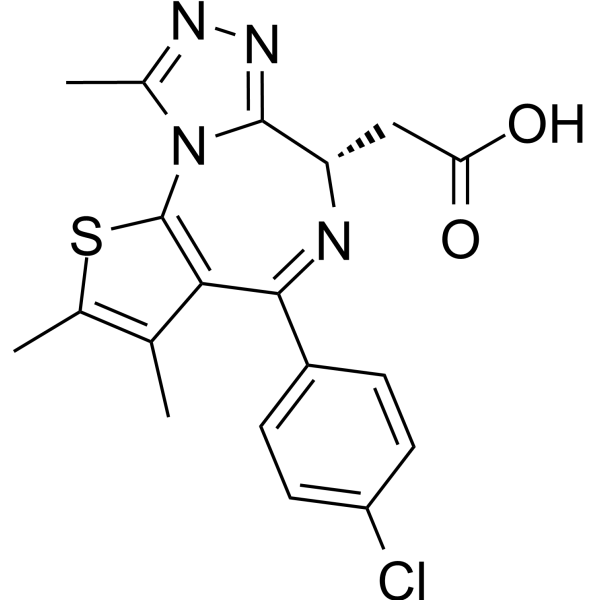
JQ-1 (carboxylic acid)-NHS is an ester derivative of (+)-JQ-1 (HY-13030). JQ-1 (carboxylic acid)-NHS serves as a negative control .
|
-
- HY-181441
-
|
|
Drug Derivative
|
Others
|
|
(+)-Cloprostenol methyl amide is a derivative analog of the carboxylic acid terminus of (+)-Cloprostenol (HY-107381).
|
-
- HY-W184363
-
|
|
Biochemical Assay Reagents
|
Others
|
|
4,5-Dibromo-1-methyl-1H-pyrrole-2-carboxylic acid (Compound 3a) is a brominated pyrrole derivative that can be isolated from the sponge A. linnaei .
|
-
- HY-W269285
-
|
D-1,2,3,4-Tetrahydronorharman-3-carboxylic acid
|
Drug Derivative
NO Synthase
Cytochrome P450
|
Cancer
|
H-D-Tpi-OH (D-1,2,3,4-Tetrahydronorharman-3-carboxylic acid) is a tetrahydro-β-carboline derivative. H-D-Tpi-OH only slightly upregulates QR1, mildly inhibits the aromatase and NO synthesis pathways, and shows no significant in vitro anti-breast tumor proliferation activity. H-D-Tpi-OH can be used in cancer-related research .
|
-
- HY-W721687
-
|
tert-Butylacetic acid-d9
|
Biochemical Assay Reagents
|
Others
|
|
3,3-Dimethylbutyric acid-d9 (tert-Butylacetic acid-d9) is a deuterated derivative of 3,3-Dimethylbutyric acid, which is a short-chain branched carboxylic acid and can be used in organic synthesis .
|
-
- HY-W1048574J
-
|
OHC-PEG40000-carboxyl
|
Biochemical Assay Reagents
|
Others
|
|
OHC-PEG40000-COOH (OHC-PEG40000-carboxyl) is a PEG derivative with a linear heteroterminal bifunctional structure of aldehyde and carboxylic acid groups. OHC-PEG40000-COOH can be used for drug delivery .
|
-
- HY-W1048574H
-
|
OHC-PEG1000-carboxyl
|
Biochemical Assay Reagents
|
Others
|
|
OHC-PEG1000-COOH (OHC-PEG1000-carboxyl) is a PEG derivative with a linear heteroterminal bifunctional structure of aldehyde and carboxylic acid groups. OHC-PEG1000-COOH can be used for drug delivery .
|
-
- HY-W1048574A
-
|
OHC-PEG2000-carboxyl
|
Biochemical Assay Reagents
|
Others
|
|
OHC-PEG2000-COOH (OHC-PEG2000-carboxyl) is a PEG derivative with a linear heteroterminal bifunctional structure of aldehyde and carboxylic acid groups. OHC-PEG2000-COOH can be used for drug delivery .
|
-
- HY-W1048574D
-
|
OHC-PEG10000-carboxyl
|
Biochemical Assay Reagents
|
Others
|
|
OHC-PEG10000-COOH (OHC-PEG10000-carboxyl) is a PEG derivative with a linear heteroterminal bifunctional structure of aldehyde and carboxylic acid groups. OHC-PEG10000-COOH can be used for drug delivery .
|
-
- HY-W1048574C
-
|
OHC-PEG5000-carboxyl
|
Biochemical Assay Reagents
|
Others
|
|
OHC-PEG5000-COOH (OHC-PEG5000-carboxyl) is a PEG derivative with a linear heteroterminal bifunctional structure of aldehyde and carboxylic acid groups. OHC-PEG5000-COOH can be used for drug delivery .
|
-
- HY-174906
-
|
|
Biochemical Assay Reagents
|
Others
|
|
Bis-PEG1000-COOH is a disubstituted PEG derivative with the same functional group. The carboxylic acid group in Bis-PEG1000-COOH can react with other compounds containing amino, hydroxyl and other functional groups to form stable chemical bonds, which can be used for drug delivery .
|
-
- HY-WAA0302
-
|
|
Biochemical Assay Reagents
|
Others
|
|
1,4-Bis-Boc-1,4,7-triazaheptane is a PEG derivative containing an amino group with two Boc-protected amino groups. The amino group is reactive with carboxylic acids, activated NHS esters, carbonyls (ketone, aldehyde) etc. The Boc group can be deprotected under mild acidic conditions to form the free amine.
|
-
- HY-W1048526C
-
|
8-Arm PEG10000-amine HCL salt
|
Biochemical Assay Reagents
|
Others
|
|
8-Arm PEG10000-NH2 (8-Arm PEG10000-amine) HCL is a multi-arm PEG derivative with amino groups at each end of the eight arms. The reactive primary amine or NH2 groups can react rapidly with activated carboxylic acids such as NHS esters to form stable amide bonds .
|
-
- HY-W1048525C
-
|
8-Arm PEG10000-Amine
|
Biochemical Assay Reagents
|
Others
|
|
8-Arm PEG10000-NH2 (8-Arm PEG10000-Amine) is a multi-arm PEG derivative with amino groups at each end of the eight arms. The reactive primary amine or NH2 groups can react rapidly with activated carboxylic acids such as NHS esters to form stable amide bonds .
|
-
- HY-W1048526B
-
|
8-Arm PEG40000-amine HCL salt
|
Biochemical Assay Reagents
|
Others
|
|
8-Arm PEG40000-NH2 (8-Arm PEG40000-amine) HCL is a multi-arm PEG derivative with amino groups at each end of the eight arms. The reactive primary amine or NH2 groups can react rapidly with activated carboxylic acids such as NHS esters to form stable amide bonds .
|
-
- HY-W1048525A
-
|
8-Arm PEG20000-Amine
|
Biochemical Assay Reagents
|
Others
|
|
8-Arm PEG20000-NH2 (8-Arm PEG20000-Amine) is a multi-arm PEG derivative with amino groups at each end of the eight arms. The reactive primary amine or NH2 groups can react rapidly with activated carboxylic acids such as NHS esters to form stable amide bonds .
|
-
- HY-167931
-
|
|
Drug Derivative
|
Metabolic Disease
|
|
Cinnamohydrazide, an unsaturated carboxylic acid derivative, serves as a precursor to aspartame through enzyme-mediated amination to phenylalanine. This compound may offer potential benefits in the prevention and treatment of diabetes by facilitating insulin secretion, enhancing pancreatic β-cell function, inhibiting hepatic gluconeogenesis, promoting glucose uptake, amplifying insulin signaling pathways, delaying carbohydrate digestion and glucose absorption, and reducing protein glycation and insulin fibrillation.
|
-
- HY-W1048843C
-
|
4-Arm PEG20000-amine
|
Biochemical Assay Reagents
|
Others
|
|
4-Arm PEG20000-NH2 (4-Arm PEG20000-amine) is a multi-arm PEG derivative with amine groups at each end of four arms attached to a pentaerythritol core. The reactive primary amine or NH2 groups can react rapidly with activated carboxylic acids such as NHS esters to form stable amide bonds .
|
-
- HY-W1048519C
-
|
4-Arm PEG40000-amine HCL salt
|
Biochemical Assay Reagents
|
Others
|
|
4-Arm PEG40000-NH2 (4-Arm PEG40000-amine) hydrochloride is a multi-arm PEG derivative with amine groups at each end of four arms attached to a pentaerythritol core. The reactive primary amine or NH2 groups can react rapidly with activated carboxylic acids such as NHS esters to form stable amide bonds .
|
-
- HY-W1048519
-
|
4-Arm PEG5000-amine HCL salt
|
Biochemical Assay Reagents
|
Others
|
|
4-Arm PEG5000-NH2 (4-Arm PEG5000-amine) hydrochloride is a multi-arm PEG derivative with amine groups at each end of four arms attached to a pentaerythritol core. The reactive primary amine or NH2 groups can react rapidly with activated carboxylic acids such as NHS esters to form stable amide bonds .
|
-
- HY-W1048843D
-
|
4-Arm PEG40000-amine
|
Biochemical Assay Reagents
|
Others
|
|
4-Arm PEG40000-NH2 (4-Arm PEG40000-amine) is a multi-arm PEG derivative with amine groups at each end of four arms attached to a pentaerythritol core. The reactive primary amine or NH2 groups can react rapidly with activated carboxylic acids such as NHS esters to form stable amide bonds .
|
-
- HY-W1048519A
-
|
4-Arm PEG10000-amine HCL salt
|
Biochemical Assay Reagents
|
Others
|
|
4-Arm PEG10000-NH2 (4-Arm PEG100000-amine) hydrochloride is a multi-arm PEG derivative with amine groups at each end of four arms attached to a pentaerythritol core. The reactive primary amine or NH2 groups can react rapidly with activated carboxylic acids such as NHS esters to form stable amide bonds .
|
-
- HY-W016825S1
-
|
|
Isotope-Labeled Compounds
Drug Intermediate
|
Others
|
|
2-(Pyridin-2-yl)acetic acid-d4 hydrochloride is the deuterated derivative of 2-(Pyridin-2-yl)acetic acid hydrochloride (HY-W016825). 2-(Pyridin-2-yl)acetic acid hydrochloride is a heterocyclic aromatic carboxylic acid compound. 2-(Pyridin-2-yl)acetic acid hydrochloride can be used as an organic synthesis intermediate or a metal complex.
|
-
- HY-115545
-
|
|
ADC Linker
|
Cancer
|
|
DBCO-NHS ester 3 (Compound 12) is a cleavable linker that is used for making antibody-drug conjugate (ADC). DBCO-NHS ester 3 is a derivative of Dibenzylcyclooctyne (DBCO) obtained by activation of N-hydroxysuccinimide by the carboxylic acid moiety of both methyl-oxanorbornadiene (MeOND) and dibenzoazacyclooctyne (DIBAC) . DBCO-NHS ester 3 is a click chemistry reagent, it contains a DBCO group that can undergo strain-promoted alkyne-azide cycloaddition (SPAAC) with molecules containing Azide groups.
|
-
- HY-W016825S
-
|
|
Isotope-Labeled Compounds
Drug Intermediate
|
Others
|
|
2-(Pyridin-2-yl)acetic acid-d6 hydrochloride is the deuterated derivative of 2-(Pyridin-2-yl)acetic acid hydrochloride (HY-W016825). 2-(Pyridin-2-yl)acetic acid hydrochloride is a heterocyclic aromatic carboxylic acid compound. 2-(Pyridin-2-yl)acetic acid hydrochloride can be used as an organic synthesis intermediate or a metal complex.
|
-
- HY-W016825S2
-
|
|
Isotope-Labeled Compounds
Drug Intermediate
|
Others
|
|
2-(Pyridin-2-yl)acetic acid-d2 hydrochloride is the deuterated derivative of 2-(Pyridin-2-yl)acetic acid hydrochloride (HY-W016825). 2-(Pyridin-2-yl)acetic acid hydrochloride is a heterocyclic aromatic carboxylic acid compound. 2-(Pyridin-2-yl)acetic acid hydrochloride can be used as an organic synthesis intermediate or a metal complex.
|
-
- HY-173308
-
|
|
Fluorescent Dye
|
Others
|
|
QSY-21 is a fluorescence quencher. QSY-21 possesses broad absorption in far red and NIR range, and can quench fluorescence of dyes that emit in this region. This is a carboxylic acid derivative. QSY-21 has intense absorption maximum at 661 nm, making it useful as an acceptor in fluorescence resonance energy transfer (FRET) applications. It is a common quencher for Cyanine5, Cyanine5.5, AF 647, or other spectrally similar fluorescent dyes.
|
-
- HY-W451406C
-
|
|
PROTAC Linkers
|
Others
|
|
NH2-PEG2000-NH2 is a polyethylene glycol derivative containing two primary amine groups. The amino group can react quickly with activated carboxylic acid or carboxyl groups such as NHS esters to form stable amide bonds. The PEGylation of NH2-PEG-NH2 can increase solubility and stability, and reduce the immunogenicity of peptides and proteins, so it is mostly used to modify proteins, peptides and other substances.
|
-
- HY-W451406D
-
|
|
PROTAC Linkers
|
Others
|
|
NH2-PEG10000-NH2 is a polyethylene glycol derivative containing two primary amine groups. The amino group can react quickly with activated carboxylic acid or carboxyl groups such as NHS esters to form stable amide bonds. The PEGylation of NH2-PEG-NH2 can increase solubility and stability, and reduce the immunogenicity of peptides and proteins, so it is mostly used to modify proteins, peptides and other substances.
|
-
- HY-W451406A
-
|
|
PROTAC Linkers
|
Others
|
|
NH2-PEG5000-NH2 is a polyethylene glycol derivative containing two primary amine groups. The amino group can react quickly with activated carboxylic acid or carboxyl groups such as NHS esters to form stable amide bonds. The PEGylation of NH2-PEG-NH2 can increase solubility and stability, and reduce the immunogenicity of peptides and proteins, so it is mostly used to modify proteins, peptides and other substances.
|
-
- HY-W016473
-
|
|
Bacterial
|
Infection
|
|
Adamantane-carboxylic acid is a compound with inhibitory activity against microorganisms. Although its specific target has not been clearly defined, it can inhibit Gram-positive bacteria and some Gram-negative bacteria. It forms a 1-monoacylglycerol derivative through a direct reaction with glycidol, and exerts its antibacterial effect by mechanisms such as altering the permeability of the bacterial cell membrane. This compound can be used in the research of antibacterial agents in the food and cosmetic industries to reduce harmful microbial flora and extend the shelf life of products .
|
-
- HY-117219
-
|
|
Cytochrome P450
HMG-CoA Reductase (HMGCR)
Endogenous Metabolite
|
Metabolic Disease
|
|
SKF 104976 is a 3,2-carboxylic acid derivative with potent 14-alpha-demethylase (14 alpha DM) inhibitory activity. SKF 104976 inhibited 14 alpha DM activity by 50% at 2 nM in Hep G2 cell extracts. SKF 104976 inhibited the incorporation of [14C]acetate into cholesterol in intact cells at similar concentrations, accompanied by accumulation of lanosterol, and resulted in a 40-70% decrease in 3-hydroxy-3-methylglutaryl-CoA reductase (HMGR) activity. SKF 104976 did not affect the uptake and degradation of low-density lipoprotein in Hep G2 cells, indicating that HMGR and low-density lipoprotein receptor activities are not coordinately regulated under these conditions. The inhibitory effect of SKF 104976 on HMGR activity remained unchanged even when the flux of carbon units in the sterol synthesis pathway was reduced by 80%. SKF 104976 did not inhibit HMGR activity under conditions where sterol synthesis was almost completely blocked by lovastatin .
|
-
- HY-D1864
-
|
|
Fluorescent Dye
|
Others
|
|
Sulfo-Cy7.5 dicarboxylic acid is a dye derivative of Cyanine 7.5 (Cy7.5) (HY-D0926) with carboxylic acid and sulfonate functional groups. The sulfonate ion increases the water solubility of the compound, making it suitable for use in aqueous solutions. Cy7.5 is a near-infrared fluorescent dye commonly used in biomedical research areas such as biomarkers and cell imaging. Sulfo-Cy7.5 dicarboxylic acid can be covalently bound to some biomolecules (especially antibodies, proteins, etc.) to track their location and dynamic changes in biological samples.
|
-
- HY-Y0549
-
|
Diphenylmethane-α-carboxylic acid
|
Biochemical Assay Reagents
|
Others
|
|
Diphenylacetic acid (Diphenylmethane-α-carboxylic Acid) is a biochemical reagent that can be used as a biological material or organic compound for life science related research. Diphenylacetic acid can be used as a reagent in the kinetic resolution of racemic 2-hydroxy-y-butyrolactones by asymmetric esterification in the presence of pivalic anhydride and chiral acyl-transfer catalyst. Diphenylacetic acid can act as a catalyst to synthesize 2-allyl-3-oxazolin-5-one derivatives via Rh-catalyzed coupling reaction of azlactones and alkynes followed by aza-Cope rearrangement .
|
-
- HY-146295
-
|
|
COX
|
Inflammation/Immunology
|
|
COX-2/5-LOX-IN-2 (5b) is a potent and dual inhibitor of COX-2/5-LOX. COX-2/5-LOX-IN-2 is a benzothiophen-2-yl pyrazole carboxylic acid derivative. COX-2/5-LOX-IN-2 shows the most potent analgesic and anti-inflammatory activities surpassing that of Celecoxib and Indomethacin. COX-2/5-LOX-IN-2 shows potent COX-1, COX-2 and 5-LOX inhibitory activity with IC50s of 5.40, 0.01 and 1.78 μM, respectively .
|
-
- HY-W1048843AG
-
|
4-Arm PEG5000-amine
|
Biochemical Assay Reagents
|
Others
|
|
4-Arm PEG5000-NH2 (GMP) (4-Arm PEG5000-amine (GMP)) is 4-Arm PEG-NH2 (HY-W1048843A) produced by using GMP guidelines. GMP small molecules works appropriately as an auxiliary reagent for cell therapy manufacture. 4-Arm PEG5000-NH2 is a multi-arm PEG derivative with amine groups at each end of four arms attached to a pentaerythritol core. The reactive primary amine or NH2 groups can react rapidly with activated carboxylic acids such as NHS esters to form stable amide bonds .
|
-
- HY-146294
-
|
|
COX
|
Inflammation/Immunology
|
|
COX-2/5-LOX-IN-1 (compound 3a) is a potent and dual inhibitor of COX-2/5-LOX. COX-2/5-LOX-IN-1 is a benzothiophen-2-yl pyrazole carboxylic acid derivative. COX-2/5-LOX-IN-1 shows the most potent analgesic and anti-inflammatory activities surpassing that of Celecoxib and Indomethacin. COX-2/5-LOX-IN-1 shows potent COX-1, COX-2 and 5-LOX inhibitory activity with IC50s of 12.13, 0.4 and 4.96 μM, respectively .
|
-
- HY-W1048843AGL
-
|
4-Arm PEG5000-amine (GMP Like)
|
Biochemical Assay Reagents
|
Others
|
|
4-Arm PEG5000-NH2 (GMP Like) (4-Arm PEG5000-amine (GMP Like)) is 4-Arm PEG-NH2 (HY-W1048843A) produced by using GMP like guidelines. GMP like small molecules works appropriately as an auxiliary reagent for cell therapy manufacture. 4-Arm PEG5000-NH2 is a multi-arm PEG derivative with amine groups at each end of four arms attached to a pentaerythritol core. The reactive primary amine or NH2 groups can react rapidly with activated carboxylic acids such as NHS esters to form stable amide bonds .
|
-
- HY-D2772
-
|
|
Biochemical Assay Reagents
|
Others
|
|
5-TAMRA cadaverine can used to modify carboxylic acid group in the presence of activators (e.g. EDC, or DCC) or activated esters (e.g. NHS esters) through a stable amide bond. It also can be reversibly coupled to aldehydes and ketones to form a Schiff base – which can be reduced to a generate stable amine derivative by sodium borohydride (NaBH4) or sodium cyanoborohydride (NaCNH3).
Although the mixed isomers of 5(6)-TAMRA cadaverine is a preferred, routinely used orange-fluorescent dye for staining proteins, it is rearly used for labeling peptides and nucleotides. Purification of 5(6)-TAMRA labeled peptide and nucleotides might be troublesome due to significant signal broadening in HPLC purification. Peptides and nucleotides labeled with a single isomer TAMRA usually give better resolution in HPLC purification that is often required in the conjugation processes.
|
-
- HY-151833
-
|
|
ADC Linker
|
Others
|
|
Methyltetrazine-amido-N-bis(PEG4-acid) is a click chemistry reagent containing an azide group. Methyltetrazine-amido-N-bis(PEG4-acid) is a PEG derivative that contains a methyltetrazine group and two acid groups. This reagent can react with TCO-containing compounds to form a stable covalent bond without the catalysis of Cu or elevated temperatures. The inverse-electron demand Diels-Alder cycloaddition reaction of TCO with tetrazines is the fastest bioorthogonal reaction with exceptional selectivity. The terminal carboxylic acid can react with primary amine groups in the presence of activators (e.g. EDC, or HATU) to form a stable amide bond. PEG linker increases the water solubility of the compound. Reagent grade, for research use only . Methyltetrazine-amido-N-bis(PEG4-acid) is a click chemistry reagent, it contains a Tetrazine group that can undergo an inverse electron demand Diels-Alder reaction (iEDDA) with molecules containing TCO groups.
|
-
| Cat. No. |
Product Name |
Type |
-
- HY-D2493
-
|
Cy7 COOH
|
Fluorescent Dyes
|
|
Cyanine7 carboxylic acid (Cy7 COOH) is a derivative of Cy7 (HY-D0825) dye. Cyanine7 carboxylic acid contains carboxyl groups, which can condense ammonia to form covalent bonds .
|
-
- HY-D2250
-
|
|
Fluorescent Dyes
|
|
Disulfo-ICG carboxylic acid is a derivative of ICG dye. ICG (Indocyanine Green) is a NIR fluorescent dye .
|
-
- HY-D1305
-
|
|
Fluorescent Dyes
|
|
ATTO 488 carboxylic acid is a new fluorescent label based on the Rhodamine structure. It has strong absorption, high fluorescence quantum yield, high thermal stability and photochemical stability, and is suitable for single molecule detection and high-resolution microscopy. ATTO 488 carboxylic acid is a carboxylic acid derivative of ATTO 488, which can be used to label proteins or antibodies.
|
-
- HY-D1830
-
|
VF 680 carboxylic acid(free acid)
|
Fluorescent Dyes
|
|
Vari Fluor 680 Carboxylic acid (VF 680 Carboxylic acid) free acid is a carboxylic acid derivative of Vari Fluor. Vari Fluor carboxylic acid derivatives are unactivated labeled fluorescent dyes for protein, antibody, and polysaccharide labeling that require carboxylic acid activation for use .
|
-
- HY-173308
-
|
|
Fluorescent Dyes
|
|
QSY-21 is a fluorescence quencher. QSY-21 possesses broad absorption in far red and NIR range, and can quench fluorescence of dyes that emit in this region. This is a carboxylic acid derivative. QSY-21 has intense absorption maximum at 661 nm, making it useful as an acceptor in fluorescence resonance energy transfer (FRET) applications. It is a common quencher for Cyanine5, Cyanine5.5, AF 647, or other spectrally similar fluorescent dyes.
|
-
- HY-D2154
-
|
|
Fluorescent Dyes
|
|
AF 430 carboxylic acid is a derivative of the yellow fluorescent dye AF 430. AF430 has an excitation wavelength of 425 nm and an emission wavelength of 542 nm. AF 430 carboxylic acid can form covalent bonds through a condensation reaction between carboxylic acid groups and molecules containing amino groups. To achieve specific coupling of dye labels and biomolecules .
|
-
- HY-D2160
-
|
|
Fluorescent Dyes
|
|
AF 647 carboxylic acid is a derivative of the far-infrared dye AF 647. AF 647 is often used as a replacement for Cy5 dye, with an excitation wavelength (λex) of 635 nm (conventional fluorescence detection)/620 nm (instantaneous detection). The maximum excitation wavelength is 647 nm and the maximum emission wavelength is 671 nm. AF 647 carboxylic acid has a carboxylic acid group and can be coupled to biomolecules with amino groups to achieve dye labeling .
|
-
- HY-D2176
-
|
|
Fluorescent Dyes
|
|
AF 555 carboxylic acid is a derivative of the orange fluorescent dye AF 555. AF 555 carboxylic acid is widely used in cell dyes, biological dyes, biomolecules and particle fluorescent labeling. AF 555 exhibits average excitation wavelengths under green laser and red laser of 510 nm and 610 nm, respectively .
|
-
- HY-D1825
-
|
VF 532 carboxylic acid(free acid)
|
Fluorescent Dyes
|
|
Vari Fluor 532 Carboxylic acid (VF 532 Carboxylic acid) free acid is a carboxylic acid derivative of Vari Fluor. Vari Fluor carboxylic acid derivatives are unactivated labeled fluorescent dyes for protein, antibody, and polysaccharide labeling that require carboxylic acid activation for use .
|
-
- HY-D1823
-
|
VF 647A carboxylic acid(free acid)
|
Fluorescent Dyes
|
|
Vari Fluor 647A Carboxylic acid (VF 647A Carboxylic acid) free acid is a carboxylic acid derivative of Vari Fluor. Vari Fluor carboxylic acid derivatives are unactivated labeled fluorescent dyes for protein, antibody, and polysaccharide labeling that require carboxylic acid activation for use .
|
-
- HY-D1824
-
|
VF 488 carboxylic acid(free acid)
|
Fluorescent Dyes
|
|
Vari Fluor 488 Carboxylic acid (VF 488 Carboxylic acid) free acid is a carboxylic acid derivative of Vari Fluor. Vari Fluor carboxylic acid derivatives are unactivated labeled fluorescent dyes for protein, antibody, and polysaccharide labeling that require carboxylic acid activation for use .
|
-
- HY-D1822
-
|
VF 555 carboxylic acid(free acid)
|
Fluorescent Dyes
|
|
Vari Fluor 555 Carboxylic acid (VF 555 Carboxylic acid) free acid is a carboxylic acid derivative of Vari Fluor. Vari Fluor carboxylic acid derivatives are unactivated labeled fluorescent dyes for protein, antibody, and polysaccharide labeling that require carboxylic acid activation for use .
|
-
- HY-D1821
-
|
VF 750 carboxylic acid(free acid)
|
Fluorescent Dyes
|
|
Vari Fluor 750 Carboxylic acid (VF 750 Carboxylic acid) free acid is a carboxylic acid derivative of Vari Fluor. Vari Fluor carboxylic acid derivatives are unactivated labeled fluorescent dyes for protein, antibody, and polysaccharide labeling that require carboxylic acid activation for use .
|
-
- HY-D1828
-
|
VF 640 carboxylic acid(free acid)
|
Fluorescent Dyes
|
|
Vari Fluor 640 Carboxylic acid (VF 640 Carboxylic acid) free acid is a carboxylic acid derivative of Vari Fluor. Vari Fluor carboxylic acid derivatives are unactivated labeled fluorescent dyes for protein, antibody, and polysaccharide labeling that require carboxylic acid activation for use .
|
-
- HY-D1829
-
|
VF 568 carboxylic acid(free acid)
|
Fluorescent Dyes
|
|
Vari Fluor 568 Carboxylic acid (VF 568 Carboxylic acid) free acid is a carboxylic acid derivative of Vari Fluor. Vari Fluor carboxylic acid derivatives are unactivated labeled fluorescent dyes for protein, antibody, and polysaccharide labeling that require carboxylic acid activation for use .
|
-
- HY-D1826
-
|
VF 594 carboxylic acid(free acid)
|
Fluorescent Dyes
|
|
Vari Fluor 594 Carboxylic acid (VF 594 Carboxylic acid) free acid is a carboxylic acid derivative of Vari Fluor. Vari Fluor carboxylic acid derivatives are unactivated labeled fluorescent dyes for protein, antibody, and polysaccharide labeling that require carboxylic acid activation for use .
|
-
- HY-D1827
-
|
VF 660 carboxylic acid(free acid)
|
Fluorescent Dyes
|
|
Vari Fluor 660 Carboxylic acid (VF 660 Carboxylic acid) free acid is a carboxylic acid derivative of Vari Fluor. Vari Fluor carboxylic acid derivatives are unactivated labeled fluorescent dyes for protein, antibody, and polysaccharide labeling that require carboxylic acid activation for use .
|
-
- HY-133883
-
|
|
Fluorescent Dyes
|
|
Cyanine7.5 amine is a near-infrared Cy7.5-based dye and also a substrate for amide bond coupling (Ex/Em = 788 nm/808 nm). Cyanine7.5 amine contains a free amino group and can be used for coupling with activated carboxylic acid derivatives .
|
-
- HY-W1048843AGL
-
|
4-Arm PEG5000-amine (GMP Like)
|
Fluorescent Dyes
|
|
4-Arm PEG5000-NH2 (GMP Like) (4-Arm PEG5000-amine (GMP Like)) is 4-Arm PEG-NH2 (HY-W1048843A) produced by using GMP like guidelines. GMP like small molecules works appropriately as an auxiliary reagent for cell therapy manufacture. 4-Arm PEG5000-NH2 is a multi-arm PEG derivative with amine groups at each end of four arms attached to a pentaerythritol core. The reactive primary amine or NH2 groups can react rapidly with activated carboxylic acids such as NHS esters to form stable amide bonds .
|
-
- HY-D2772
-
|
|
Fluorescent Dyes
|
|
5-TAMRA cadaverine can used to modify carboxylic acid group in the presence of activators (e.g. EDC, or DCC) or activated esters (e.g. NHS esters) through a stable amide bond. It also can be reversibly coupled to aldehydes and ketones to form a Schiff base – which can be reduced to a generate stable amine derivative by sodium borohydride (NaBH4) or sodium cyanoborohydride (NaCNH3).
Although the mixed isomers of 5(6)-TAMRA cadaverine is a preferred, routinely used orange-fluorescent dye for staining proteins, it is rearly used for labeling peptides and nucleotides. Purification of 5(6)-TAMRA labeled peptide and nucleotides might be troublesome due to significant signal broadening in HPLC purification. Peptides and nucleotides labeled with a single isomer TAMRA usually give better resolution in HPLC purification that is often required in the conjugation processes.
|
-
- HY-D1885
-
|
|
Fluorescent Dyes
|
|
Vari Fluor 647 Carboxylic acid free acid is a carboxylic acid derivative of Vari Fluor. Vari Fluor carboxylic acid derivative is an inactive labeled fluorescent dye, which can be used to label proteins, antibodies, polysaccharides. The use of Vari Fluor carboxylic acid derivatives requires carboxylic acid activation.
|
-
- HY-D2162
-
|
|
Fluorescent Dyes
|
|
AF 594 carboxylic acid is a carboxyl derivative of the red fluorescent dye AF 594, which has high fluorescence quantum yield and high photostability (Ex=594 nm, Em=615 nm). AF 594 carboxylic acid can form stable covalent bonds through the reaction of carboxylic acid groups with molecules with amino groups .
|
-
- HY-D1970
-
|
|
Fluorescent Dyes
|
|
ATTO 700 Cadaverin is a cadaverine derivative of ATTO 700 for reactions of carboxylic acids, aldehydes and ketones with maximum excitation/emission wavelengths: 700/716 nm.
|
-
- HY-D2070
-
|
|
Fluorescent Dyes
|
|
ATTO 680 cadaverin is a cadaverine derivative of ATTO 680, used for carboxylic acid, aldehyde and ketone reactions, maximum excitation/emission wavelength: 681/698 nm.
|
-
- HY-D2055
-
|
|
Fluorescent Dyes
|
|
ATTO 532 cadaverin is a cadaverine derivative of ATTO 532, used for carboxylic acid, aldehyde and ketone reactions, maximum excitation/emission wavelength: 532/552 nm.
|
-
- HY-D2039
-
|
|
Fluorescent Dyes
|
|
ATTO 550 cadaverin is a cadaverine derivative of ATTO 550, used for carboxylic acid, aldehyde and ketone reactions, maximum excitation/emission wavelength: 554/576 nm.
|
-
- HY-D1317A
-
|
|
Fluorescent Dyes
|
|
Cyanine7.5 carboxylic is a dye derivative of Cyanine 7.5 (Cy7.5) (HY-D0926) with carboxylic acid functional groups. Cy7.5 is a near-infrared fluorescent dye commonly used in biomedical research areas such as biomarkers and cell imaging. Cyanine7.5 carboxylic can be covalently bound to some biological molecules (especially antibodies, proteins, etc.) to track their location and dynamic changes in biological samples.
|
-
- HY-D1853
-
|
|
Fluorescent Dyes
|
|
Sulfo-Cy5 carboxylic acid is a Cy5 derivative that can be used for chemical synthesis. Cy5 is a red fluorescent label dye for imaging (Ex/Em=642/670 nm) .
|
-
- HY-D1853A
-
|
|
Fluorescent Dyes
|
|
Sulfo-Cy5 carboxylic acid TEA is a Cy5 derivative that can be used for chemical synthesis. Cy5 is a red fluorescent label dye for imaging (Ex/Em=642/670 nm) .
|
-
- HY-D1866
-
|
|
Fluorescent Dyes
|
|
Sulfo-Cy7.5 carboxylic acid is a dye derivative of Cyanine 7.5 (Cy7.5) (HY-D0926) with carboxylic acid and sulfonate ion (sulfonate) functional groups. The sulfonate ion increases the water solubility of the compound, making it suitable for use in aqueous solutions. Cy7.5 is a near-infrared fluorescent dye commonly used in biomedical research areas such as biomarkers and cell imaging. Sulfo-Cy7.5 carboxylic acid can be covalently bound to some biomolecules (especially antibodies, proteins, etc.) to track their location and dynamic changes in biological samples.
|
-
- HY-D1864
-
|
|
Fluorescent Dyes
|
|
Sulfo-Cy7.5 dicarboxylic acid is a dye derivative of Cyanine 7.5 (Cy7.5) (HY-D0926) with carboxylic acid and sulfonate functional groups. The sulfonate ion increases the water solubility of the compound, making it suitable for use in aqueous solutions. Cy7.5 is a near-infrared fluorescent dye commonly used in biomedical research areas such as biomarkers and cell imaging. Sulfo-Cy7.5 dicarboxylic acid can be covalently bound to some biomolecules (especially antibodies, proteins, etc.) to track their location and dynamic changes in biological samples.
|
-
- HY-W1048843AG
-
|
4-Arm PEG5000-amine
|
Fluorescent Dyes
|
|
4-Arm PEG5000-NH2 (GMP) (4-Arm PEG5000-amine (GMP)) is 4-Arm PEG-NH2 (HY-W1048843A) produced by using GMP guidelines. GMP small molecules works appropriately as an auxiliary reagent for cell therapy manufacture. 4-Arm PEG5000-NH2 is a multi-arm PEG derivative with amine groups at each end of four arms attached to a pentaerythritol core. The reactive primary amine or NH2 groups can react rapidly with activated carboxylic acids such as NHS esters to form stable amide bonds .
|
| Cat. No. |
Product Name |
Type |
-
- HY-W002251
-
|
|
Biochemical Assay Reagents
|
|
Benzo[b]thiophene-3-carbaldehyde is a 3-formyl-substituted benzo[b]thiophene derivative that acts as an oxidizable substrate to convert to benzo[b]thiophene-3-carboxylic acid under liquid-phase conditions. Compared with analogs such as benzaldehyde and thiophene-2-carbaldehyde, Benzo[b]thiophene-3-carbaldehyde has lower oxidation difficulty, and can significantly increase the reaction rate in the presence of initiators (such as Na +Br - or DBA). Benzo[b]thiophene-3-carbaldehyde also serves as a key starting material for the synthesis of compounds including heteroaryl chalcones .
|
-
- HY-W016473
-
|
|
Biochemical Assay Reagents
|
|
Adamantane-carboxylic acid is a compound with inhibitory activity against microorganisms. Although its specific target has not been clearly defined, it can inhibit Gram-positive bacteria and some Gram-negative bacteria. It forms a 1-monoacylglycerol derivative through a direct reaction with glycidol, and exerts its antibacterial effect by mechanisms such as altering the permeability of the bacterial cell membrane. This compound can be used in the research of antibacterial agents in the food and cosmetic industries to reduce harmful microbial flora and extend the shelf life of products .
|
-
- HY-Y0549
-
|
Diphenylmethane-α-carboxylic acid
|
Biochemical Assay Reagents
|
|
Diphenylacetic acid (Diphenylmethane-α-carboxylic Acid) is a biochemical reagent that can be used as a biological material or organic compound for life science related research. Diphenylacetic acid can be used as a reagent in the kinetic resolution of racemic 2-hydroxy-y-butyrolactones by asymmetric esterification in the presence of pivalic anhydride and chiral acyl-transfer catalyst. Diphenylacetic acid can act as a catalyst to synthesize 2-allyl-3-oxazolin-5-one derivatives via Rh-catalyzed coupling reaction of azlactones and alkynes followed by aza-Cope rearrangement .
|
-
- HY-W1048525
-
|
8-Arm PEG5000-Amine
|
Biochemical Assay Reagents
|
|
8-Arm PEG5000-NH2 (8-Arm PEG5000-Amine) is a multi-arm PEG derivative with amino groups at each end of the eight arms. The reactive primary amine or NH2 groups can react rapidly with activated carboxylic acids such as NHS esters to form stable amide bonds .
|
-
- HY-W1048843A
-
|
4-Arm PEG5000-amine
|
Biochemical Assay Reagents
|
|
4-Arm PEG5000-NH2 (4-Arm PEG5000-amine) is a multi-arm PEG derivative with amine groups at each end of four arms attached to a pentaerythritol core. The reactive primary amine or NH2 groups can react rapidly with activated carboxylic acids such as NHS esters to form stable amide bonds .
|
-
- HY-W1048843B
-
|
4-Arm PEG10000-amine
|
Biochemical Assay Reagents
|
|
4-Arm PEG10000-NH2 (4-Arm PEG10000-amine) is a multi-arm PEG derivative with amine groups at each end of four arms attached to a pentaerythritol core. The reactive primary amine or NH2 groups can react rapidly with activated carboxylic acids such as NHS esters to form stable amide bonds .
|
-
- HY-W1048519A
-
|
4-Arm PEG10000-amine HCL salt
|
Biochemical Assay Reagents
|
|
4-Arm PEG10000-NH2 (4-Arm PEG100000-amine) hydrochloride is a multi-arm PEG derivative with amine groups at each end of four arms attached to a pentaerythritol core. The reactive primary amine or NH2 groups can react rapidly with activated carboxylic acids such as NHS esters to form stable amide bonds .
|
-
- HY-59302
-
|
|
Biochemical Assay Reagents
|
|
Indole-5-carboxylic acid, 98% is an indole derivative. Indole-5-carboxylic acid, 98% inhibits corrosion of low carbon steel in deoxygenated 0.5 M sulfuric acid solution .
|
-
- HY-W002328
-
|
|
Biochemical Assay Reagents
|
|
Pyrazole-3-carboxylic acid is an alternative anchoring group to carboxylic acid in phthalocyanine dyes. Pyrazole-3-carboxylic acid shows flexible coordination modes when coordinates with metal ions. Pyrazole-3-carboxylic acid can chelate to metal ions and form very stable complexes through its N and O atoms. Pyrazole-3-carboxylic acid can be used to synthesize derivatives that possess antibacterial, anti-inflammatory, ulcerogenic liability and antiproliferative activities .
|
-
- HY-W879032
-
|
|
Biochemical Assay Reagents
|
|
Endo-BCN-PEG4-Pomalidomide is a PEG derivative composed of BCN, PEG4 and Pomalidomide (HY-10984). The BCN groupis very reactive with azide-tagged molecules. The amino group is reactive with carboxylic acids, activated NHS esters, carbonyls (ketone, aldehyde) etc .
|
-
- HY-W1048843AGL
-
|
4-Arm PEG5000-amine (GMP Like)
|
Biochemical Assay Reagents
|
|
4-Arm PEG5000-NH2 (GMP Like) (4-Arm PEG5000-amine (GMP Like)) is 4-Arm PEG-NH2 (HY-W1048843A) produced by using GMP like guidelines. GMP like small molecules works appropriately as an auxiliary reagent for cell therapy manufacture. 4-Arm PEG5000-NH2 is a multi-arm PEG derivative with amine groups at each end of four arms attached to a pentaerythritol core. The reactive primary amine or NH2 groups can react rapidly with activated carboxylic acids such as NHS esters to form stable amide bonds .
|
-
- HY-W1048574I
-
|
OHC-PEG3400-carboxyl
|
Biochemical Assay Reagents
|
|
OHC-PEG3400-COOH (OHC-PEG3400-carboxyl) is a PEG derivative with a linear heteroterminal bifunctional structure of aldehyde and carboxylic acid groups. OHC-PEG3400-COOH can be used for drug delivery .
|
-
- HY-W1048574E
-
|
OHC-PEG20000-carboxyl
|
Biochemical Assay Reagents
|
|
OHC-PEG20000-COOH (OHC-PEG20000-carboxyl) is a PEG derivative with a linear heteroterminal bifunctional structure of aldehyde and carboxylic acid groups. OHC-PEG20000-COOH can be used for drug delivery .
|
-
- HY-W1048525B
-
|
8-Arm PEG40000-Amine
|
Biochemical Assay Reagents
|
|
8-Arm PEG40000-NH2 (8-Arm PEG40000-Amine) is a multi-arm PEG derivative with amino groups at each end of the eight arms. The reactive primary amine or NH2 groups can react rapidly with activated carboxylic acids such as NHS esters to form stable amide bonds .
|
-
- HY-W1048526
-
|
8-Arm PEG5000-amine HCL salt
|
Biochemical Assay Reagents
|
|
8-Arm PEG5000-NH2 (8-Arm PEG5000-amine) HCL is a multi-arm PEG derivative with amino groups at each end of the eight arms. The reactive primary amine or NH2 groups can react rapidly with activated carboxylic acids such as NHS esters to form stable amide bonds .
|
-
- HY-W1048526A
-
|
8-Arm PEG20000-amine HCL salt
|
Biochemical Assay Reagents
|
|
8-Arm PEG20000-NH2 (8-Arm PEG20000-amine) HCL is a multi-arm PEG derivative with amino groups at each end of the eight arms. The reactive primary amine or NH2 groups can react rapidly with activated carboxylic acids such as NHS esters to form stable amide bonds .
|
-
- HY-W1048519B
-
|
4-Arm PEG20000-amine HCL salt
|
Biochemical Assay Reagents
|
|
4-Arm PEG20000-NH2 (4-Arm PEG20000-amine) hydrochloride is a multi-arm PEG derivative with amine groups at each end of four arms attached to a pentaerythritol core. The reactive primary amine or NH2 groups can react rapidly with activated carboxylic acids such as NHS esters to form stable amide bonds .
|
-
- HY-W1048519
-
|
4-Arm PEG5000-amine HCL salt
|
Biochemical Assay Reagents
|
|
4-Arm PEG5000-NH2 (4-Arm PEG5000-amine) hydrochloride is a multi-arm PEG derivative with amine groups at each end of four arms attached to a pentaerythritol core. The reactive primary amine or NH2 groups can react rapidly with activated carboxylic acids such as NHS esters to form stable amide bonds .
|
-
- HY-W1048574J
-
|
OHC-PEG40000-carboxyl
|
Biochemical Assay Reagents
|
|
OHC-PEG40000-COOH (OHC-PEG40000-carboxyl) is a PEG derivative with a linear heteroterminal bifunctional structure of aldehyde and carboxylic acid groups. OHC-PEG40000-COOH can be used for drug delivery .
|
-
- HY-W1048574H
-
|
OHC-PEG1000-carboxyl
|
Biochemical Assay Reagents
|
|
OHC-PEG1000-COOH (OHC-PEG1000-carboxyl) is a PEG derivative with a linear heteroterminal bifunctional structure of aldehyde and carboxylic acid groups. OHC-PEG1000-COOH can be used for drug delivery .
|
-
- HY-W1048574A
-
|
OHC-PEG2000-carboxyl
|
Biochemical Assay Reagents
|
|
OHC-PEG2000-COOH (OHC-PEG2000-carboxyl) is a PEG derivative with a linear heteroterminal bifunctional structure of aldehyde and carboxylic acid groups. OHC-PEG2000-COOH can be used for drug delivery .
|
-
- HY-W1048574D
-
|
OHC-PEG10000-carboxyl
|
Biochemical Assay Reagents
|
|
OHC-PEG10000-COOH (OHC-PEG10000-carboxyl) is a PEG derivative with a linear heteroterminal bifunctional structure of aldehyde and carboxylic acid groups. OHC-PEG10000-COOH can be used for drug delivery .
|
-
- HY-W1048574C
-
|
OHC-PEG5000-carboxyl
|
Biochemical Assay Reagents
|
|
OHC-PEG5000-COOH (OHC-PEG5000-carboxyl) is a PEG derivative with a linear heteroterminal bifunctional structure of aldehyde and carboxylic acid groups. OHC-PEG5000-COOH can be used for drug delivery .
|
-
- HY-174906
-
|
|
Biochemical Assay Reagents
|
|
Bis-PEG1000-COOH is a disubstituted PEG derivative with the same functional group. The carboxylic acid group in Bis-PEG1000-COOH can react with other compounds containing amino, hydroxyl and other functional groups to form stable chemical bonds, which can be used for drug delivery .
|
-
- HY-W1048526C
-
|
8-Arm PEG10000-amine HCL salt
|
Biochemical Assay Reagents
|
|
8-Arm PEG10000-NH2 (8-Arm PEG10000-amine) HCL is a multi-arm PEG derivative with amino groups at each end of the eight arms. The reactive primary amine or NH2 groups can react rapidly with activated carboxylic acids such as NHS esters to form stable amide bonds .
|
-
- HY-W1048525C
-
|
8-Arm PEG10000-Amine
|
Biochemical Assay Reagents
|
|
8-Arm PEG10000-NH2 (8-Arm PEG10000-Amine) is a multi-arm PEG derivative with amino groups at each end of the eight arms. The reactive primary amine or NH2 groups can react rapidly with activated carboxylic acids such as NHS esters to form stable amide bonds .
|
-
- HY-W1048526B
-
|
8-Arm PEG40000-amine HCL salt
|
Biochemical Assay Reagents
|
|
8-Arm PEG40000-NH2 (8-Arm PEG40000-amine) HCL is a multi-arm PEG derivative with amino groups at each end of the eight arms. The reactive primary amine or NH2 groups can react rapidly with activated carboxylic acids such as NHS esters to form stable amide bonds .
|
-
- HY-W1048525A
-
|
8-Arm PEG20000-Amine
|
Biochemical Assay Reagents
|
|
8-Arm PEG20000-NH2 (8-Arm PEG20000-Amine) is a multi-arm PEG derivative with amino groups at each end of the eight arms. The reactive primary amine or NH2 groups can react rapidly with activated carboxylic acids such as NHS esters to form stable amide bonds .
|
-
- HY-W1048843C
-
|
4-Arm PEG20000-amine
|
Biochemical Assay Reagents
|
|
4-Arm PEG20000-NH2 (4-Arm PEG20000-amine) is a multi-arm PEG derivative with amine groups at each end of four arms attached to a pentaerythritol core. The reactive primary amine or NH2 groups can react rapidly with activated carboxylic acids such as NHS esters to form stable amide bonds .
|
-
- HY-W1048519C
-
|
4-Arm PEG40000-amine HCL salt
|
Biochemical Assay Reagents
|
|
4-Arm PEG40000-NH2 (4-Arm PEG40000-amine) hydrochloride is a multi-arm PEG derivative with amine groups at each end of four arms attached to a pentaerythritol core. The reactive primary amine or NH2 groups can react rapidly with activated carboxylic acids such as NHS esters to form stable amide bonds .
|
-
- HY-W1048843D
-
|
4-Arm PEG40000-amine
|
Biochemical Assay Reagents
|
|
4-Arm PEG40000-NH2 (4-Arm PEG40000-amine) is a multi-arm PEG derivative with amine groups at each end of four arms attached to a pentaerythritol core. The reactive primary amine or NH2 groups can react rapidly with activated carboxylic acids such as NHS esters to form stable amide bonds .
|
-
- HY-W1048843AG
-
|
4-Arm PEG5000-amine
|
Biochemical Assay Reagents
|
|
4-Arm PEG5000-NH2 (GMP) (4-Arm PEG5000-amine (GMP)) is 4-Arm PEG-NH2 (HY-W1048843A) produced by using GMP guidelines. GMP small molecules works appropriately as an auxiliary reagent for cell therapy manufacture. 4-Arm PEG5000-NH2 is a multi-arm PEG derivative with amine groups at each end of four arms attached to a pentaerythritol core. The reactive primary amine or NH2 groups can react rapidly with activated carboxylic acids such as NHS esters to form stable amide bonds .
|
| Cat. No. |
Product Name |
Target |
Research Area |
| Cat. No. |
Product Name |
Category |
Target |
Chemical Structure |
| Cat. No. |
Product Name |
Chemical Structure |
-
- HY-101329S
-
|
|
|
Anthracene-9-carboxylic acid-d9 is the deuterium labeled Anthracene-9-carboxylic acid . Anthracene-9-carboxylic acid (9-Anthracenecarboxylic acid) is an anthracene derivative traditionally used to block and identify Ca2+-activated Cl- currents (CaCCs) in various cell types, like diverse smooth muscle cells, epithelial cells and salivary gland cells .
|
-
-
- HY-141749AS
-
|
|
|
Clopidogrel carboxylic acid-d4 is a deuterated derivative of Clopidogrel carboxylic acid, which is an inactive metabolite of the antiplatelet agent Clopidogrel (HY-15283) in plasma. Clopidogrel carboxylic acid-d4 can be used to further explore the metabolic characteristics of Clopidogrel .
|
-
-
- HY-W016825S1
-
|
|
|
2-(Pyridin-2-yl)acetic acid-d4 hydrochloride is the deuterated derivative of 2-(Pyridin-2-yl)acetic acid hydrochloride (HY-W016825). 2-(Pyridin-2-yl)acetic acid hydrochloride is a heterocyclic aromatic carboxylic acid compound. 2-(Pyridin-2-yl)acetic acid hydrochloride can be used as an organic synthesis intermediate or a metal complex.
|
-
-
- HY-W721687
-
|
|
|
3,3-Dimethylbutyric acid-d9 (tert-Butylacetic acid-d9) is a deuterated derivative of 3,3-Dimethylbutyric acid, which is a short-chain branched carboxylic acid and can be used in organic synthesis .
|
-
-
- HY-W016825S
-
|
|
|
2-(Pyridin-2-yl)acetic acid-d6 hydrochloride is the deuterated derivative of 2-(Pyridin-2-yl)acetic acid hydrochloride (HY-W016825). 2-(Pyridin-2-yl)acetic acid hydrochloride is a heterocyclic aromatic carboxylic acid compound. 2-(Pyridin-2-yl)acetic acid hydrochloride can be used as an organic synthesis intermediate or a metal complex.
|
-
-
- HY-W016825S2
-
|
|
|
2-(Pyridin-2-yl)acetic acid-d2 hydrochloride is the deuterated derivative of 2-(Pyridin-2-yl)acetic acid hydrochloride (HY-W016825). 2-(Pyridin-2-yl)acetic acid hydrochloride is a heterocyclic aromatic carboxylic acid compound. 2-(Pyridin-2-yl)acetic acid hydrochloride can be used as an organic synthesis intermediate or a metal complex.
|
-
| Cat. No. |
Product Name |
|
Classification |
-
- HY-115545
-
|
|
|
ADC Synthesis
DBCO
|
|
DBCO-NHS ester 3 (Compound 12) is a cleavable linker that is used for making antibody-drug conjugate (ADC). DBCO-NHS ester 3 is a derivative of Dibenzylcyclooctyne (DBCO) obtained by activation of N-hydroxysuccinimide by the carboxylic acid moiety of both methyl-oxanorbornadiene (MeOND) and dibenzoazacyclooctyne (DIBAC) . DBCO-NHS ester 3 is a click chemistry reagent, it contains a DBCO group that can undergo strain-promoted alkyne-azide cycloaddition (SPAAC) with molecules containing Azide groups.
|
-
- HY-W879032
-
|
|
|
BCN
|
|
Endo-BCN-PEG4-Pomalidomide is a PEG derivative composed of BCN, PEG4 and Pomalidomide (HY-10984). The BCN groupis very reactive with azide-tagged molecules. The amino group is reactive with carboxylic acids, activated NHS esters, carbonyls (ketone, aldehyde) etc .
|
-
- HY-140533
-
|
|
|
Azide
|
|
N-(Azido-PEG2)-N-biotin-PEG3-acid is a PEG derivative which contains biotin and carboxylic acid moieties. N-(Azido-PEG2)-N-biotin-PEG3-acid is a click chemistry reagent, it contains an Azide group and can undergo copper-catalyzed azide-alkyne cycloaddition reaction (CuAAc) with molecules containing Alkyne groups .
|
-
- HY-140020
-
|
|
|
PROTAC Synthesis
Alkynes
|
|
Propargyl-PEG10-acid is a PEG derivative containing a propargyl group with a terminal carboxylic acid. Propargyl-PEG10-acid is a click chemistry reagent, it contains an Alkyne group and can undergo copper-catalyzed azide-alkyne cycloaddition (CuAAc) with molecules containing Azide groups.
|
-
- HY-151833
-
|
|
|
Tetrazine
|
|
Methyltetrazine-amido-N-bis(PEG4-acid) is a click chemistry reagent containing an azide group. Methyltetrazine-amido-N-bis(PEG4-acid) is a PEG derivative that contains a methyltetrazine group and two acid groups. This reagent can react with TCO-containing compounds to form a stable covalent bond without the catalysis of Cu or elevated temperatures. The inverse-electron demand Diels-Alder cycloaddition reaction of TCO with tetrazines is the fastest bioorthogonal reaction with exceptional selectivity. The terminal carboxylic acid can react with primary amine groups in the presence of activators (e.g. EDC, or HATU) to form a stable amide bond. PEG linker increases the water solubility of the compound. Reagent grade, for research use only . Methyltetrazine-amido-N-bis(PEG4-acid) is a click chemistry reagent, it contains a Tetrazine group that can undergo an inverse electron demand Diels-Alder reaction (iEDDA) with molecules containing TCO groups.
|
| Cat. No. |
Product Name |
Target |
Research Areas |
Chemical Structure |
-
- HY-W1048843AG
-
|
4-Arm PEG5000-amine
|
Biochemical Assay Reagents
|
Others
|
|
4-Arm PEG5000-NH2 (GMP) (4-Arm PEG5000-amine (GMP)) is 4-Arm PEG-NH2 (HY-W1048843A) produced by using GMP guidelines. GMP small molecules works appropriately as an auxiliary reagent for cell therapy manufacture. 4-Arm PEG5000-NH2 is a multi-arm PEG derivative with amine groups at each end of four arms attached to a pentaerythritol core. The reactive primary amine or NH2 groups can react rapidly with activated carboxylic acids such as NHS esters to form stable amide bonds .
|
-
-
- HY-W1048843AGL
-
|
4-Arm PEG5000-amine (GMP Like)
|
Biochemical Assay Reagents
|
Others
|
|
4-Arm PEG5000-NH2 (GMP Like) (4-Arm PEG5000-amine (GMP Like)) is 4-Arm PEG-NH2 (HY-W1048843A) produced by using GMP like guidelines. GMP like small molecules works appropriately as an auxiliary reagent for cell therapy manufacture. 4-Arm PEG5000-NH2 is a multi-arm PEG derivative with amine groups at each end of four arms attached to a pentaerythritol core. The reactive primary amine or NH2 groups can react rapidly with activated carboxylic acids such as NHS esters to form stable amide bonds .
|
-
Your information is safe with us. * Required Fields.
Inquiry Information
- Product Name:
- Cat. No.:
- Quantity:
- MCE Japan Authorized Agent: