



COR170
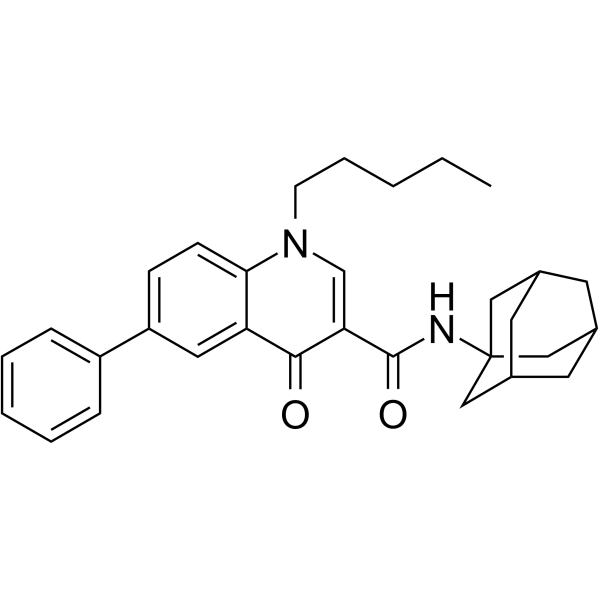
COR170 (11u) is a selective CB2 inverse-agonist which is a 4-quinolone-3-carboxylic acid derivative with a Ki value of 3.8 nM for CB2 receptor. COR170 can be used for the research of inflammation and neuroprotection.
For research use only. We do not sell to patients.
- CAS No.: 1048039-15-1
- Formula: C31H36N2O2
- Molecular Weight:468.63
-
Storage:
Please store the product under the recommended conditions in the Certificate of Analysis.

To place orders, for customer services and technical support, please contact: MedChemExpress USA
Tel: 609-228-6898 E-mail: [email protected] [email protected]


-
 Biological Activity
-
Chemical Information
- Protocols
- Purity & Documentation
- References
-
 Help & FAQs


-
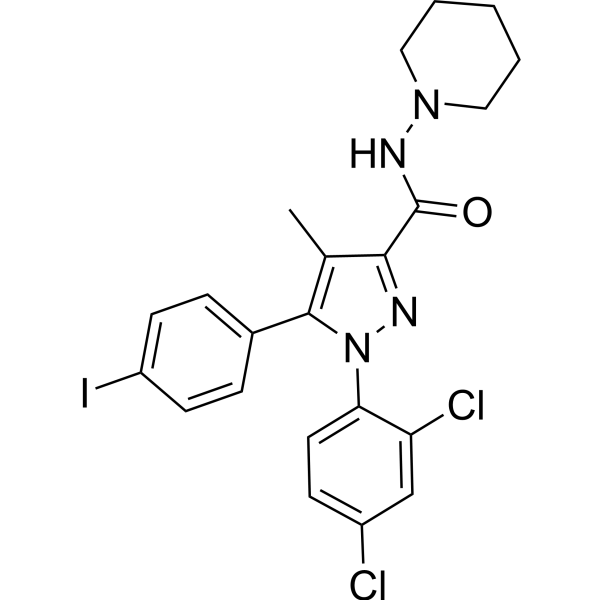
HY-15443
AM251CB1 Receptor Antagonist -
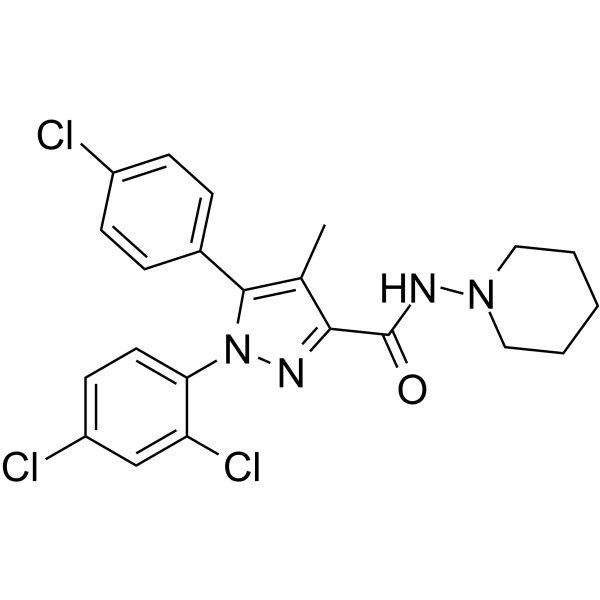
HY-14136
Rimonabant -
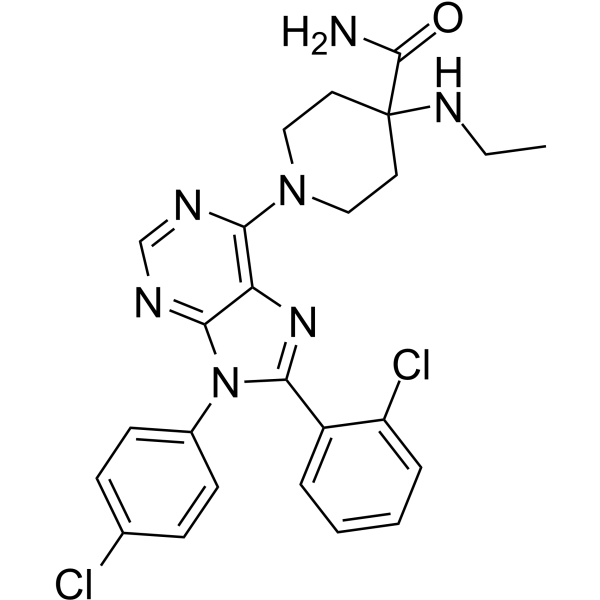
HY-10871
OtenabantCannabinoid Receptor Antagonist -
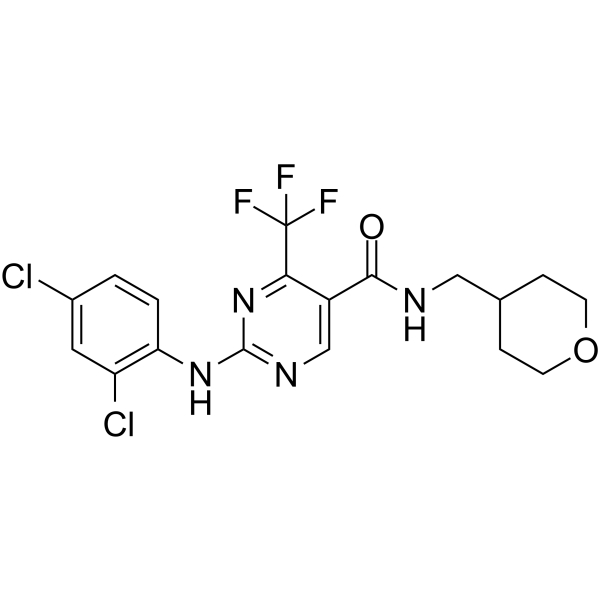
HY-14167
GW842166XCannabinoid Receptor Agonist -
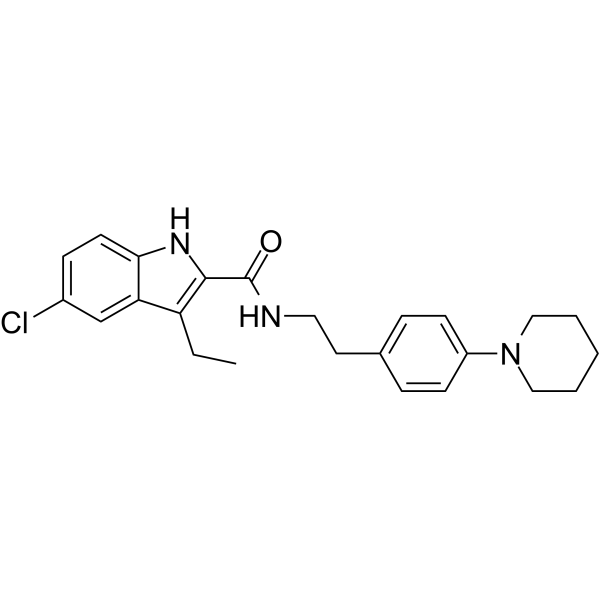
HY-13288
Org 27569Cannabinoid Receptor Modulator -
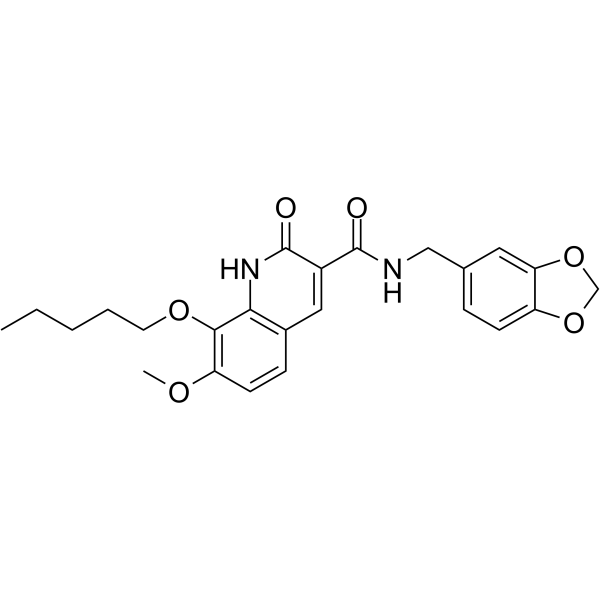
HY-103325
JTE-907Cannabinoid CB2 Receptor Inverse Agonist -
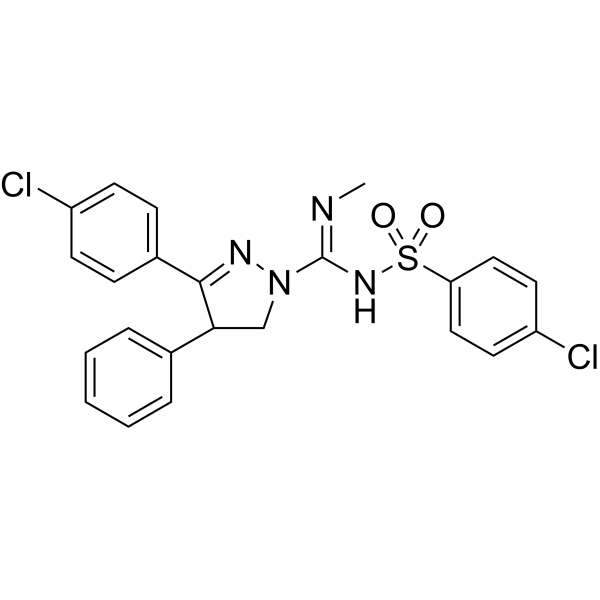
HY-14791A
(±)-IbipinabantCannabinoid Receptor Antagonist -
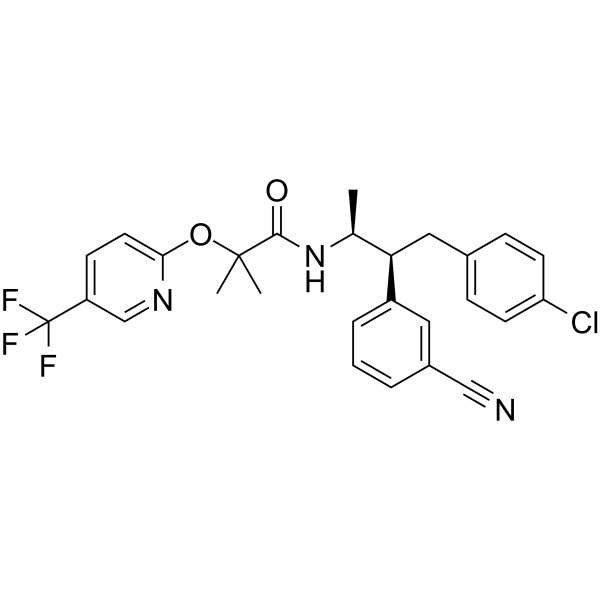
HY-10013
TaranabantCB1 Receptor Invert Agonist -
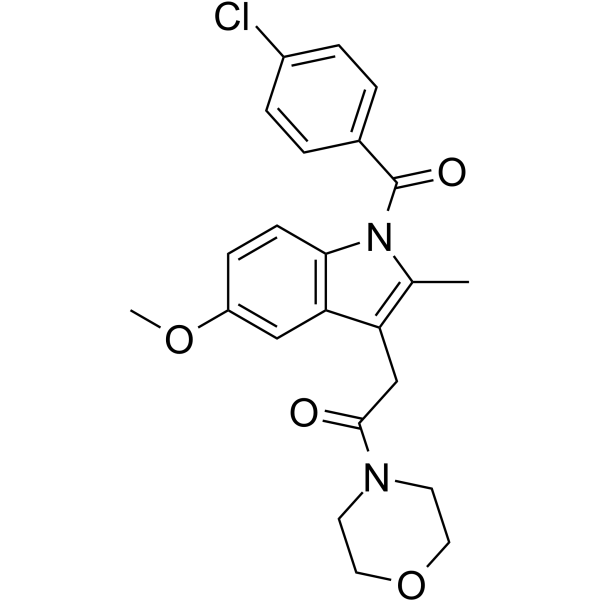
HY-15420
BML-190Cannabinoid Receptor Agonist -
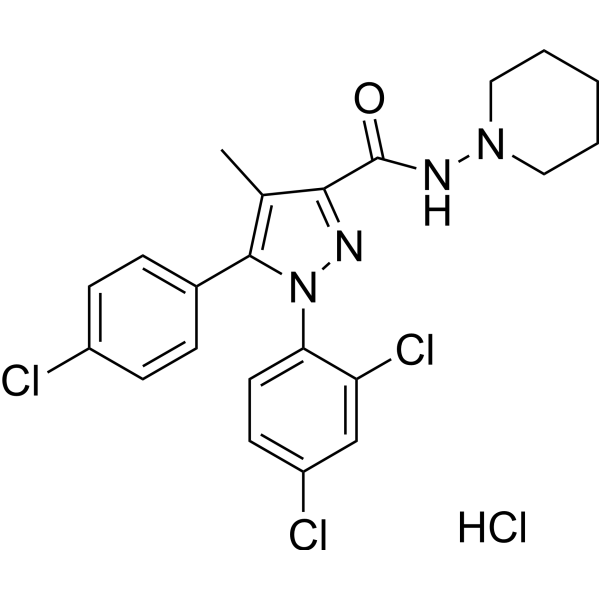
HY-14137
Rimonabant HydrochlorideCB1 Antagonist -
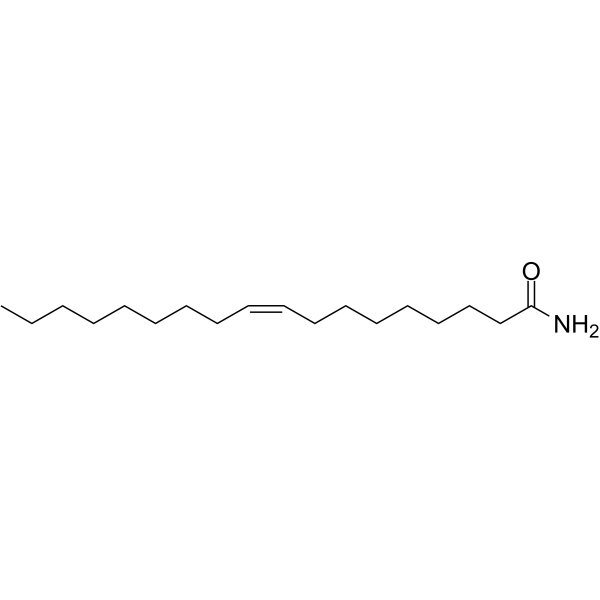
HY-N2327
OleamideEndogenous Metabolite -
HY-13505
AM281CB1 Antagonist


Biological Activity
Description
In Vitro
In Vivo
MedChemExpress (MCE) has not independently confirmed the accuracy of these methods. They are for reference only.
-
Animal Model:Mice with formalin (1.25%, 30 μL) injections[3]
-
Dosage:1.5, 3 and 6 mg/kg
-
Administration:Intraperitoneal injection; 1.5, 3 and 6 mg/kg for once
-
Result:Reduced the late phase nociceptive behaviour induced by formalin with a 6 mg/kg dose and 10 min before formalin and abolished the analgesic effect from GW405833 which is a CB2 receptor partial agonist.


Chemical Information
-
CAS No. 1048039-15-1
-
Molecular Weight 468.63
-
Formula C31H36N2O2
-
SMILES
O=C(C1=CN(CCCCC)C2=CC=C(C3=CC=CC=C3)C=C2C1=O)NC45C[C@H](C6)C[C@H](C[C@H]6C5)C4
-
Shipping
Room temperature in continental US; may vary elsewhere.
-
Storage
Please store the product under the recommended conditions in the Certificate of Analysis.

Protocols
-
Research Protocol for Inflammation-related Diseases
The NLRP3 inflammasome is a cytosolic innate immune signaling platform that integrates priming signals and danger-signal activation to promote caspase-1 activation, maturation of IL-1β and IL-18, and gasdermin D-mediated pyroptotic cell death. The core experimental logic is to determine whether inflammatory disease phenotypes are driven by increased NLRP3 expression, ASC-containing inflammasome assembly, caspase-1 cleavage, GSDMD cleavage, and extracellular release of IL-1β/IL-18 rather than by nonspecific cell injury alone. The pathway is strongly linked to inflammation-related disease phenotypes because monosodium urate crystals activate NALP3/NLRP3 inflammasome signaling in gout-like crystal inflammation, cholesterol crystals activate NLRP3 inflammasomes in atherogenesis models, and DSS-induced intestinal inflammation has been reported to involve NLRP3 inflammasome activity. However, experimental colitis studies also show context-dependent protective effects of NLRP3 inflammasome co


Purity & Documentation
References
[1]. Contartese A, et al. A novel CB2 agonist, COR167, potently protects rat brain cortical slices against OGD and reperfusion injury. Pharmacol Res. 2012 Dec;66(6):555-63. [Content Brief]
[2]. Pasquini S, et al. Investigations on the 4-quinolone-3-carboxylic acid motif. 2. Synthesis and structure-activity relationship of potent and selective cannabinoid-2 receptor agonists endowed with analgesic activity in vivo. J Med Chem. 2008 Aug 28;51(16): [Content Brief]
[3]. Cascio MG, et al. In vitro and in vivo pharmacological characterization of two novel selective cannabinoid CB(2) receptor inverse agonists. Pharmacol Res. 2010 Apr;61(4):349-54. [Content Brief]

Calculators
Concentration (start) × Volume (start) = Concentration (final) × Volume (final)


COR170 Related Classifications
HY-103331 Related Classifications
 Powered by Bioz