
1. Search Result
Search Result
Results for "

heme iron

" in MedChemExpress (MCE) Product Catalog:

35

Inhibitors & Agonists

8

Biochemical Assay Reagents

2

Peptides

9

Natural
Products

Cat. No. Product Name Target Research Areas Chemical Structure
  • HY-19424
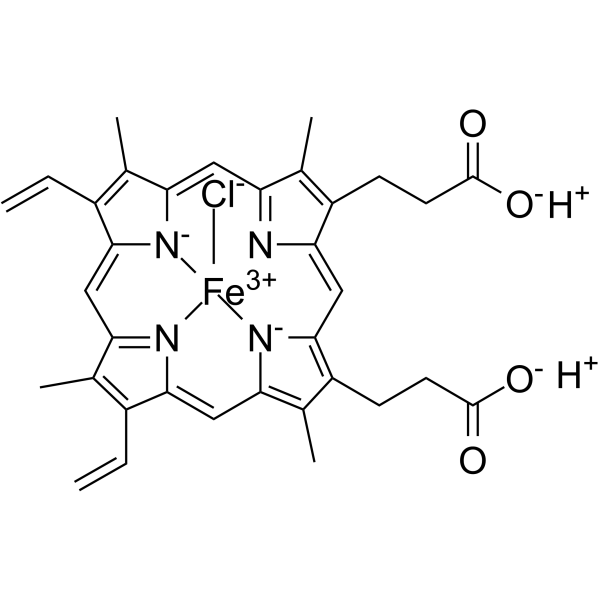
    Hemin
    Maximum Cited Publications
    85 Publications Verification

    Hemin chloride

    Autophagy Mitophagy Ferroptosis Cardiovascular Disease
    Hemin is an iron-containing porphyrin. Hemin is an Heme oxygenase (HO)-1 inducer.
    Hemin
  • HY-101193
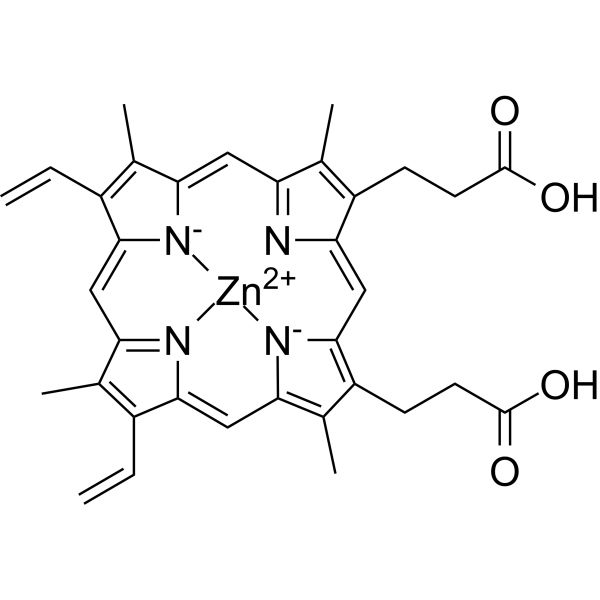
    Zinc Protoporphyrin
    65+ Cited Publications

    Zn(II)-protoporphyrin IX; ZnPP; Zinc Protoporphyrin-9

    Reactive Oxygen Species (ROS) Endogenous Metabolite Apoptosis Cardiovascular Disease Metabolic Disease Cancer
    Zinc Protoporphyrin (Zn(II)-protoporphyrin IX) is an orally active and competitive heme oxygenase-1 (HO-1) inhibitor. Zinc Protoporphyrin regulates expression of HO-1 at the transcriptional level. The effect of Zinc Protoporphyrin on HO-1 expression is controversial.  It was shown to induce HO-1 expression in some cells, but suppress it in others. Zinc Protoporphyrin is used as a screening marker of iron deficiency in vivo. Zinc Protoporphyrin has anti-cancer activity .
    Zinc Protoporphyrin
  • HY-P2995
    Hemoglobin
    4 Publications Verification

    Biochemical Assay Reagents Heme Oxygenase (HO) Others
    Hemoglobin is a iron-containing protein in red blood cells with oxygen binding properties. Hemoglobin is an inducer of HO-1. Hemoglobin consits of heme, which binds to oxygen. Hemoglobin also transports other gases, such as carbon dioxide, nitric oxide, hydrogen sulfide and sulfide. Hemoglobin absorbs unneeded oxygen in tissues, as an antioxidant .
    Hemoglobin
  • HY-135005A
    Biliverdin
    1 Publications Verification

    Endogenous Metabolite Inflammation/Immunology
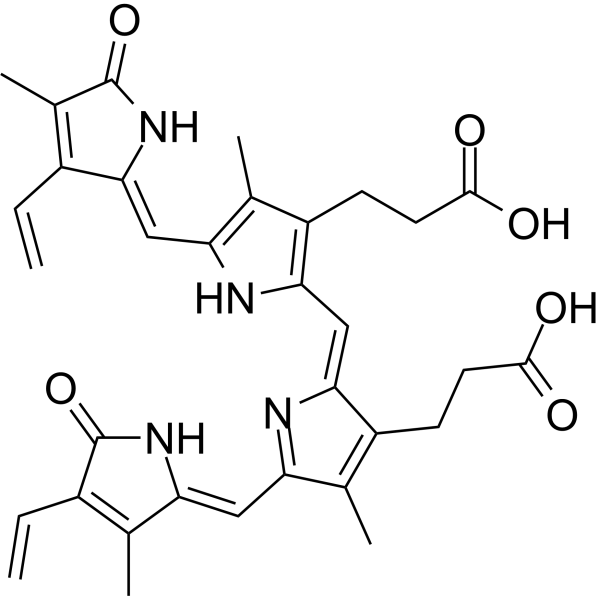
    Biliverdin, a tetrapyrrolic pigment, is a product of heme catabolism. Heme is broken down into Biliverdin and carbon monoxide and iron by heme oxidase. Biliverdin is then quickly broken down to bilirubin by Biliverdin reductase. Biliverdin can mediate the protective effects of HO-1 in many disease models including IRI and organ transplantation. Biliverdin exhibits anti-mutagenic, an antioxidant, anti-inflammatory, and immunosuppressant properties .
    Biliverdin
  • HY-111914A
    Ferroheme
    1 Publications Verification

    NO Synthase Fatty Acid Synthase (FASN) Cardiovascular Disease
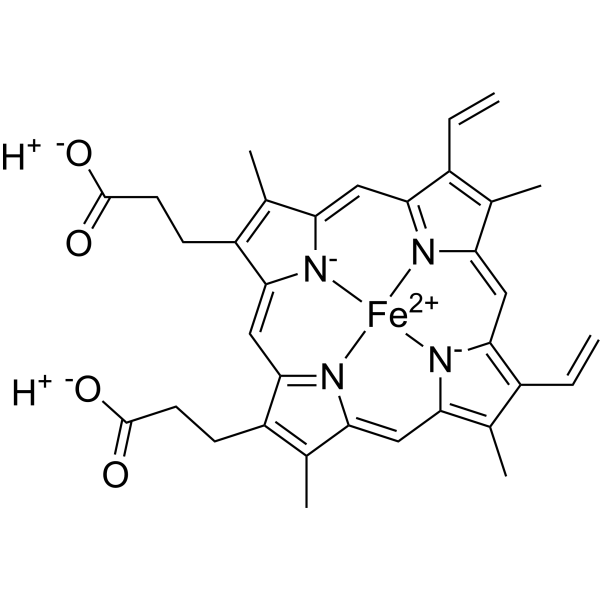
    Ferroheme is the ferrous form of heme in hemoglobin, reversibly binding oxygen as an oxygen carrier. Its free form induces oxidative stress and ferroptosis by releasing iron ions, which catalyze reactive oxygen species generation via Fenton reactions, leading to lipid peroxidation and cell death. This mechanism is critical in pathological contexts like intracerebral hemorrhage and neurodegenerative diseases, making it a target for studying iron-overload disorders and ferroptosis-related pathologies[1][2][3].
    Ferroheme
  • HY-135005
    Biliverdin hydrochloride
    1 Publications Verification

    Endogenous Metabolite Inflammation/Immunology
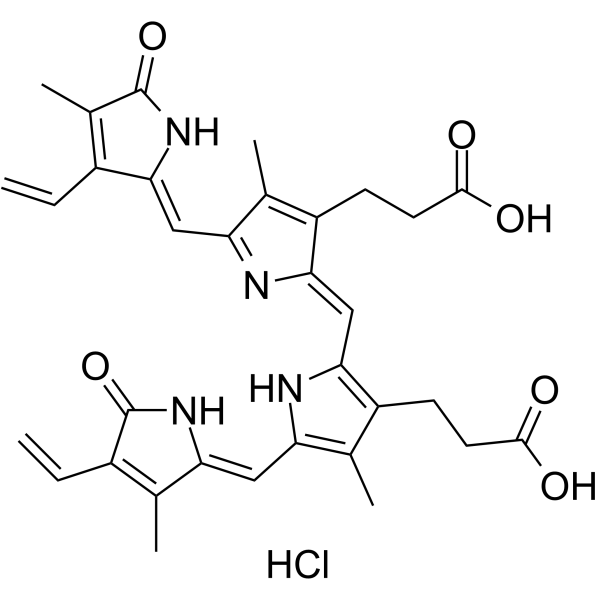
    Biliverdin hydrochloride, a tetrapyrrolic pigment, is a product of heme catabolism. Heme is broken down into Biliverdin and carbon monoxide and iron by heme oxidase. Biliverdin hydrochloride is then quickly broken down to bilirubin by Biliverdin reductase. Biliverdin hydrochloride is anti-mutagenic, an antioxidant, anti-inflammatory, and immunosuppressant .
    Biliverdin hydrochloride
  • HY-W698249

    Ferroptosis Bacterial Cardiovascular Disease Infection
    Ferrous gluconate is a highly water-soluble iron-containing agent with high bioavailability and bactericidal activity. As a non-heme iron, Ferrous gluconate is used for meat product fortification and improvement of iron deficiency anemia. Ferrous gluconate induces ferroptosis in E. coli through Fe 2+ infiltration, reactive oxygen species burst, lipid peroxidation and direct interaction with DNA. Ferrous gluconate also downregulates the SOS responsive transcriptional repressor LexA. In addition, Ferrous gluconate regulates multiple key pathways in E. coli such as fatty acid metabolism, iron-sulfur cluster assembly and pyruvate metabolism, and is applied in studies related to *E. coli* infection and iron deficiency anemia .
    Ferrous gluconate
  • HY-114758
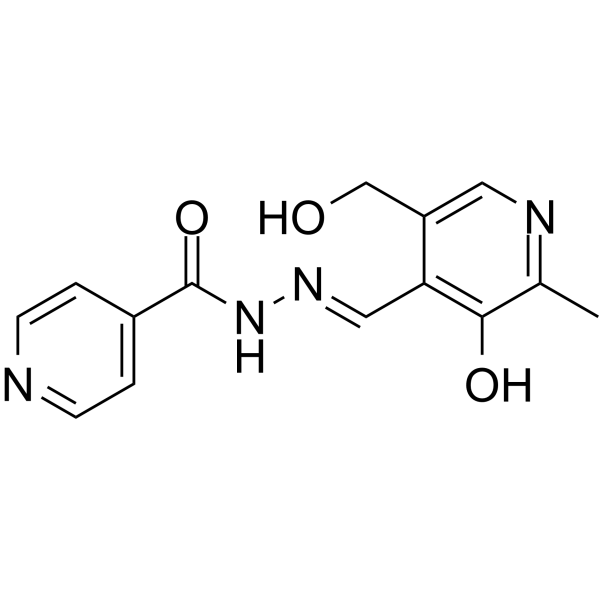
    Pyridoxal isonicotinoyl hydrazone
    4 Publications Verification

    Biochemical Assay Reagents Ferrochelatase Cardiovascular Disease
    Pyridoxal isonicotinoyl hydrazone is an orally active and lipophilic iron-specific chelator that acts as a non-competitive inhibitor of ferrochelatase (FECH) by binding iron ions. Pyridoxal isonicotinoyl hydrazone disrupts heme biosynthesis, leading to reduced FECH stability and increased protoporphyrin IX (PPIX) accumulation. Pyridoxal isonicotinoyl hydrazone is promising for research of iron-overload diseases (e.g., β-thalassemia) .
    Pyridoxal isonicotinoyl hydrazone
  • HY-W073080

    MOFs Others
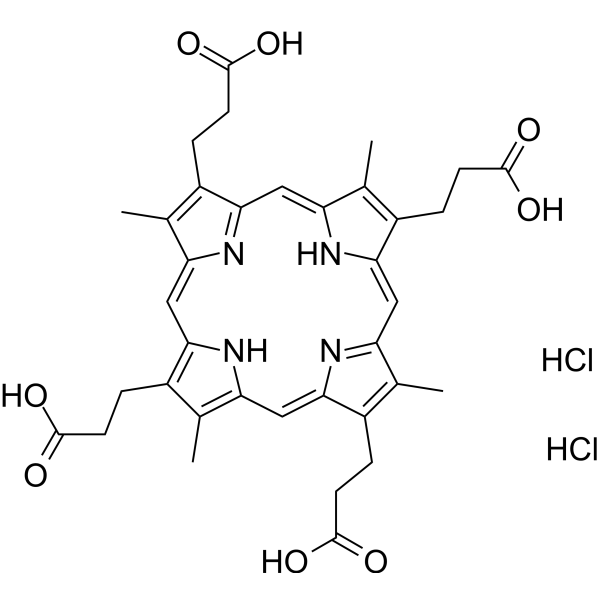
    Coproporphyrin I dihydrochlorideIt is an organic compound belonging to the class of porphyrins. It is a derivative of heme, an iron-containing molecule found in hemoglobin and other proteins. Coproporphyrin I dihydrochlorideOften used as a biomarker in the assessment of certain liver and metabolic diseases, especially those related to bile synthesis and transport. It can also be used as a reference standard for analytical chemistry and pharmacological research.
    Coproporphyrin I dihydrochloride
  • HY-17500
    Ataciguat
    1 Publications Verification

    HMR-1766

    Guanylate Cyclase Cardiovascular Disease
    Ataciguat (HMR-1766) is a nitric oxide-independent soluble guanylate cyclase (sGC) activator. Ataciguat is able to activate the ferric heme-iron redox form of sGC that stimulate the production of cyclic GMP (cGMP). Ataciguat exhibits vasodilator effects .
    Ataciguat
  • HY-P2915
    Protocatechuate 3,4-dioxygenase
    1 Publications Verification

    Biochemical Assay Reagents Bacterial Infection
    Protocatechuate 3,4-dioxygenase is a dioxygenase. Protocatechuate 3,4-dioxygenase belongs to the non-heme iron dioxygenase class. Protocatechuate 3,4-dioxygenase catalyzes the cleavage of the aromatic ring of 3,4-dihydroxybenzoate, attaching two atoms of molecular oxygen to the compound to generate β-carboxy-cis,cis-muconate. Protocatechuate 3,4-dioxygenase is a key enzyme in the β-ketoadipic acid pathway. It is found in marine bacteria associated with Roseobacter. Protocatechuate 3,4-dioxygenase can be isolated from Pseudomonas aeruginosa .
    Protocatechuate 3,4-dioxygenase
  • HY-126301
    DMT1 blocker 1
    3 Publications Verification

    Ferroportin Metabolic Disease
    DMT1 blocker 1 is an orally active blocker of divalent metal transporter 1 (DMT1) with an IC50 of 0.64 μM. DMT1 blocker 1 inhibits intestinal cell absorption of non-heme iron, thereby alleviating iron overload by blocking the DMT1 transporter. DMT1 blocker 1 demonstrates significant efficacy in rodent models of acute iron hyperabsorption. DMT1 blocker 1 is useful for studying iron overload disorders such as hereditary hemochromatosis and thalassemia .
    DMT1 blocker 1
  • HY-W041193

    MMP Lipoxygenase Tyrosinase Infection Inflammation/Immunology Cancer
    3-Hydroxy-2-pyrone (Compound 12d) is a metalloenzyme inhibitor. 3-Hydroxy-2-pyrone shows an inhibition rate of approximately 50% for matrix metalloproteinases (MMP) and the inhibition rate for non-heme iron enzyme 5-lipoxygenase (5-LOX) was over 70% at 1 mM. 3-Hydroxy-2-pyrone also has certain inhibitory activity against copper-dependent enzyme tyrosinase. 3-Hydroxy-2-pyrone can be used for the research of cancer, infection and inflammation .
    3-Hydroxy-2-pyrone
  • HY-P1997

    Desferrichrome; DFC; N-Desferriferrichrome

    Biochemical Assay Reagents Others
    Ferrichrome is a hydroxamate siderophore produced by various fungi, including U. sphaerogena, that facilitates iron chelation and uptake by these organisms. It can be used as a heterosiderophore by bacteria, including Pseudomonas aeruginosa and Vibrio parahaemolyticus. Ferrichrome (0.8 μM) inhibits concanavalin A-induced proliferation of mouse spleen monocytes and reduces the number of concanavalin A-stimulated CD4+ T cells expressing IL-2 receptor. It also inhibits the heme-catalyzed oxidation of LDL by hydrogen peroxide in a concentration-dependent manner.
    Ferrichrome Iron-free
  • HY-101193R

    Zn(II)-protoporphyrin IX (Standard); ZnPP (Standard); Zinc Protoporphyrin-9 (Standard)

    Reference Standards Reactive Oxygen Species (ROS) Endogenous Metabolite Apoptosis Cardiovascular Disease Metabolic Disease Cancer
    Zinc Protoporphyrin (Standard) is the analytical standard of Zinc Protoporphyrin. This product is intended for research and analytical applications. Zinc Protoporphyrin (Zn(II)-protoporphyrin IX) is an orally active and competitive heme oxygenase-1 (HO-1) inhibitor and markedly attenuates the protective effects of Phloroglucinol (PG) against H2O2 . Zinc Protoporphyrin is used as a screening marker of iron deficiency in individual pregnant women and children, but also to assess population iron status in combination with haemoglobin concentration . Zinc Protoporphyrin has anti-cancer activity .
    Zinc Protoporphyrin (Standard)
  • HY-P2995B

    Biochemical Assay Reagents Heme Oxygenase (HO) Others
    Mouse Hemoglobin is a hemoglobin derived from mouse. Hemoglobin is a iron-containing protein in red blood cells with oxygen binding properties. Hemoglobin is an inducer of HO-1. Hemoglobin consits of heme, which binds to oxygen. Hemoglobin also transports other gases, such as carbon dioxide, nitric oxide, hydrogen sulfide and sulfide. Hemoglobin absorbs unneeded oxygen in tissues, as an antioxidant .
    Mouse Hemoglobin
  • HY-B1610K

    Biochemical Assay Reagents Others
    Sodium Citrate Buffer, 0.5M, pH 5.5 is a metal chelator and buffering agent. Sodium Citrate Buffer, 0.5M, pH 5.5 requires oxygen to participate in the oxidation process to reduce pink defects in cooked ground turkey, and it does not function via heme iron chelation or iron complex interaction. When mixed with 50% (by vol.) 1,3-dimethylimidazolium methyl sulfate, Sodium Citrate Buffer, 0.5M, pH 5.5 can serve as an aqueous buffering medium to maintain the catalytic efficiency of the hyperthermophilic β-glycosidase CelB for lactose hydrolysis at 80°C, while also acting as a reaction medium for CelB-catalyzed lactose hydrolysis and galactosyltransferase assays .
    Sodium Citrate Buffer, 0.5M, pH 5.5
  • HY-W354203

    1,2-Diisonicotinoylhydrazine

    MOFs Reactive Oxygen Species (ROS) Bacterial Infection
    N'-Isonicotinoylisonicotinohydrazide (Compound 7, 1,2-Diisonicotinoylhydrazine) is a competitive inhibitor (IC50=5-30 μM) of bacterial heme oxygenase (HO). N'-Isonicotinoylisonicotinohydrazide inhibits iron release and bacterial iron acquisition. N'-Isonicotinoylisonicotinohydrazide exhibits selective activity against HO enzymes from Pseudomonas aeruginosa and Neisseria meningitidis. N'-Isonicotinoylisonicotinohydrazide is promising for research of multidrug-resistant Gram-negative bacterial infections .
    N'-Isonicotinoylisonicotinohydrazide
  • HY-N12196

    Cytochrome P450 Infection
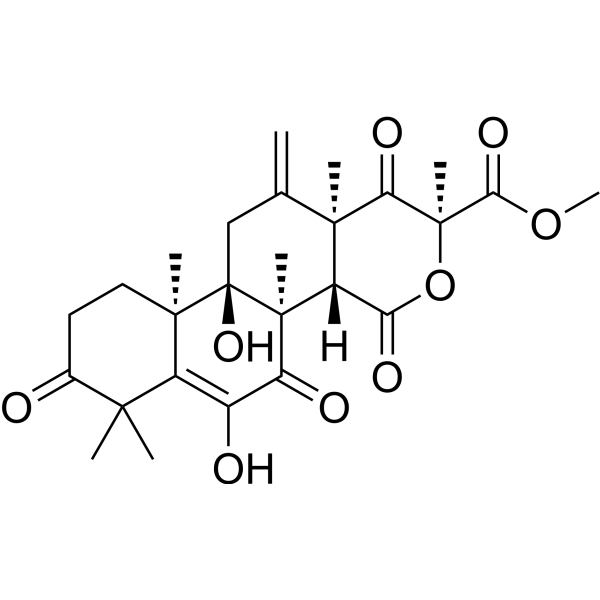
    Terretonin is a fungal terpenoid isolated from Aspergillus terreus. The complete biosynthetic pathway of terretonin includes: cytochrome P450 Trt6 catalyzes the oxidation of terrenoid to obtain an unstable intermediate; then it is catalyzed by isomerase Trt14 and processed by non-heme iron-dependent dioxygenase Trt7 to complete the biosynthesis of terretonin .
    Terretonin
  • HY-136973

    Biochemical Assay Reagents Inflammation/Immunology
    Biliverdin dihydrochloride, a tetrapyrrolic pigment, is a product of heme catabolism. Heme is broken down into Biliverdin dihydrochloride and carbon monoxide and iron by heme oxidase. Biliverdin dihydrochloride is then quickly broken down to bilirubin by Biliverdin hydrochloride reductase. Biliverdin hydrochloride is anti-mutagenic, an antioxidant, anti-inflammatory, and immunosuppressant .
    Biliverdin dihydrochloride
  • HY-135005R

    Endogenous Metabolite Inflammation/Immunology
    Biliverdin (hydrochloride) (Standard) is the analytical standard of Biliverdin (hydrochloride). This product is intended for research and analytical applications. Biliverdin hydrochloride, a tetrapyrrolic pigment, is a product of heme catabolism. Heme is broken down into Biliverdin and carbon monoxide and iron by heme oxidase. Biliverdin hydrochloride is then quickly broken down to bilirubin by Biliverdin reductase. Biliverdin hydrochloride is anti-mutagenic, an antioxidant, anti-inflammatory, and immunosuppressant .
    Biliverdin hydrochloride (Standard)
  • HY-W698249R

    Reference Standards Ferroptosis Bacterial
    Ferrous gluconate (Standard) is the analytical standard of Ferrous gluconate. This product is intended for research and analytical applications. Ferrous gluconate is a highly water-soluble iron-containing agent with high bioavailability and bactericidal activity. As a non-heme iron, Ferrous gluconate is used for meat product fortification and improvement of iron deficiency anemia. Ferrous gluconate induces ferroptosis in E. coli through Fe 2+ infiltration, reactive oxygen species burst, lipid peroxidation and direct interaction with DNA. Ferrous gluconate also downregulates the SOS responsive transcriptional repressor LexA. In addition, Ferrous gluconate regulates multiple key pathways in E. coli such as fatty acid metabolism, iron-sulfur cluster assembly and pyruvate metabolism, and is applied in studies related to *E. coli* infection and iron deficiency anemia .
    Ferrous gluconate (Standard)
  • HY-P2995C

    Biochemical Assay Reagents Heme Oxygenase (HO) Others
    Rabbit Hemoglobin is a hemoglobin derived from rabbit. Hemoglobin is a iron-containing protein in red blood cells with oxygen binding properties. Hemoglobin is an inducer of HO-1. Hemoglobin consits of heme, which binds to oxygen. Hemoglobin also transports other gases, such as carbon dioxide, nitric oxide, hydrogen sulfide and sulfide. Hemoglobin absorbs unneeded oxygen in tissues, as an antioxidant .
    Rabbit Hemoglobin
  • HY-P2995E

    Biochemical Assay Reagents Heme Oxygenase (HO) Others
    Guinea Pig Hemoglobin is a hemoglobin derived from guinea pigs. Hemoglobin is a iron-containing protein in red blood cells with oxygen binding properties. Hemoglobin is an inducer of HO-1. Hemoglobin consits of heme, which binds to oxygen. Hemoglobin also transports other gases, such as carbon dioxide, nitric oxide, hydrogen sulfide and sulfide. Hemoglobin absorbs unneeded oxygen in tissues, as an antioxidant .
    Guinea Pig Hemoglobin
  • HY-136745

    Cytochrome P450 Cancer
    Aromatase-IN-1 is a competitive aromatase (P450arom) inhibitor with a human IC50 of 40 nM and a Ki of 1.05 nM. Aromatase-IN-1 binds via coordination of imidazole nitrogen to the heme iron of aromatase. Aromatase-IN-1 can be used for the research of breast cancer .
    Aromatase-IN-1
  • HY-183711

    Bacterial Heme Oxygenase (HO) Infection
    Antibacterial agent 344 is an antibacterial agent with potent biofilm inhibition (IC50 = 0.27 μM). Antibacterial agent 344 inhibits heme oxygenase (HemO), impairs iron homeostasis, virulence factor production, and motility. Antibacterial agent 344 synergizes with Ciprofloxacin (HY-B0356) and Tobramycin (HY-B0441), enhancing their efficacy and delaying the development of resistance. Antibacterial agent 344 improves bacterial-infected Galleria mellonella survival, and reduces bacterial load in mice wounds. Antibacterial agent 344 can be used for the research of Pseudomonas aeruginosa infections .
    Antibacterial agent 344
  • HY-E71170

    Biochemical Assay Reagents Others
    1,8-Cineole 2-endo-monooxygenase (EC 1.14.13.156) is a heme-thiolate protein (P-450) which uses a flavodoxin-like redox partner to reduce the heme iron.
    1,8-Cineole 2-endo-monooxygenase
  • HY-NP0232

    Biochemical Assay Reagents Inflammation/Immunology
    Rat hemopexin binds heme and transports it to the liver for breakdown and iron recovery, after which the free hemopexin returns to the circulation .
    Rat hemopexin
  • HY-E71109

    Biochemical Assay Reagents Others
    (S)-2-Hydroxypropylphosphonic acid epoxidase (EC 1.11.1.23) is the last enzyme in the biosynthetic pathway of fosfomycin, a broad-spectrum antibiotic produced by certain Streptomyces species. Contains non heme iron that forms a iron (IV)-oxo (ferryl) complex with hydrogen peroxide, which functions as a proton abstractor from the substrate.
    (S)-2-Hydroxypropylphosphonic acid epoxidase
  • HY-P11767

    Ferroptosis Parasite Infection
    NCR247 is a defensin-like nodule cysteine-rich (NCR) peptide and heme chelator. NCR247 induces iron starvation responses in Sinorhizobium meliloti and Medicago truncatula, and supports nitrogenase activity. NCR247 can be used in research related to periodontal disease and toxoplasmosis .
    NCR247
  • HY-182604

    Heme Oxygenase (HO) Cancer
    QC-308 is a HO-1/HO-2 inhibitor with an HO-1 IC50 of 0.27 μM and an HO-2 IC50 of 0.46 μM. QC-308 coordinates heme iron(II) to disrupt catalysis. QC-308 can be used for research of HO-1 inhibition mechanisms in cancer .
    QC-308
  • HY-184104

    Indoleamine 2,3-Dioxygenase (IDO) Cancer
    IDO1/TDO-IN-17 is an IDO1/TDO inhibitor with human IDO1 IC50 ~280 μmol/L and human TDO IC50 204 μmol/L. IDO1/TDO-IN-17 binds to the heme-iron of IDO1. IDO1/TDO-IN-17 can be used for the research of cancer .
    IDO1/TDO-IN-17
  • HY-174332

    Cytochrome P450 Neurological Disease
    Cholesterol 24-hydroxylase-IN-3 is an orally active, selective, and blood-brain barrier-penetrant CH24H inhibitor (IC50 = 23 nM) belonging to 1,3-oxazole derivatives. Cholesterol 24-hydroxylase-IN-3 competitively inhibits CH24H enzyme activity by using the 1,3-oxazole nitrogen atom to coordinate the heme iron and the cyclopropyl group occupying the hydrophobic pocket. Cholesterol 24-hydroxylase-IN-3 can be used for research on epilepsy and other neurological diseases.
    Cholesterol 24-hydroxylase-IN-3
  • HY-P2915A

    Biochemical Assay Reagents Bacterial Infection
    Protocatechuate 3,4-Dioxygenase, Bacteria is a dioxygenase. Protocatechuate 3,4-Dioxygenase, Bacteria belongs to the non-heme iron dioxygenase class. Protocatechuate 3,4-Dioxygenase, Bacteria catalyzes the cleavage of the aromatic ring of 3,4-dihydroxybenzoate, attaching two atoms of molecular oxygen to the compound to generate β-carboxy-cis,cis-muconate. Protocatechuate 3,4-Dioxygenase, Bacteria is a key enzyme in the β-ketoadipic acid pathway. Protocatechuate 3,4-Dioxygenase, Bacteria is found in marine bacteria associated with Roseobacter. Protocatechuate 3,4-Dioxygenase, Bacteria can be isolated from Pseudomonas aeruginosa .
    Protocatechuate 3,4-Dioxygenase, Bacteria
  • HY-136753

    Fungal Infection
    Antifungal agent-162 (Compound 1c) is an Antifungal agent. Antifungal agent-162 exhibits potent in vitro antifungal activity against Candida albicans, Cryptococcus neoformans, Candida parapsilosis, Candida tropicalis, Candida krusei, and Microsporum gypseum (with MIC80 values ranging from 0.0156 to 0.25 μg/mL), while shows no activity against Aspergillus fumigatus .
    Antifungal agent-162

Inquiry Online

Your information is safe with us. * Required Fields.

Salutation


Country or Region *

Applicant Name *


Organization Name *

Department *


Email Address *


Product Name *

Cat. No.


Requested quantity *

Phone Number *


Remarks

Inquiry Online

Inquiry Information

Product Name:
Cat. No.:
Quantity:
MCE Japan Authorized Agent:

