1. Search Result
Search Result
Results for "

phosphatidylinositol-4

" in MedChemExpress (MCE) Product Catalog:

28

Inhibitors & Agonists

1

Fluorescent Dyes

1

Biochemical Assay Reagents

2

Peptides

3

Natural
Products

11

Recombinant Proteins

2

Isotope-Labeled Compounds

12

Antibodies

Targets Recommended:
Cat. No. Product Name Target Research Areas Chemical Structure
  • HY-103489
    PI-273
    Maximum Cited Publications
    9 Publications Verification

    PI4K Apoptosis Cancer
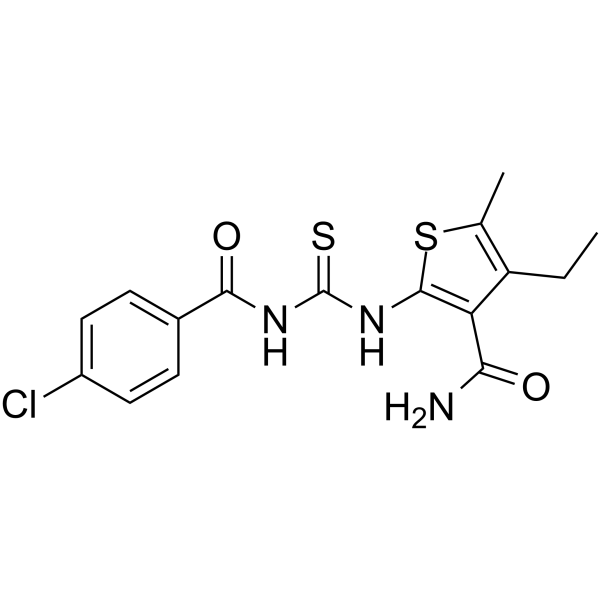
    PI-273 is a first reversibly and specific phosphatidylinositol 4-kinase (PI4KIIα) inhibitor with an IC50 of 0.47 μM. PI-273 can inhibit breast cancer cell proliferation, block the cell cycle and induce cell apoptosis .
    PI-273
  • HY-125118
    GSK-A1
    2 Publications Verification

    PI4K HCV Infection
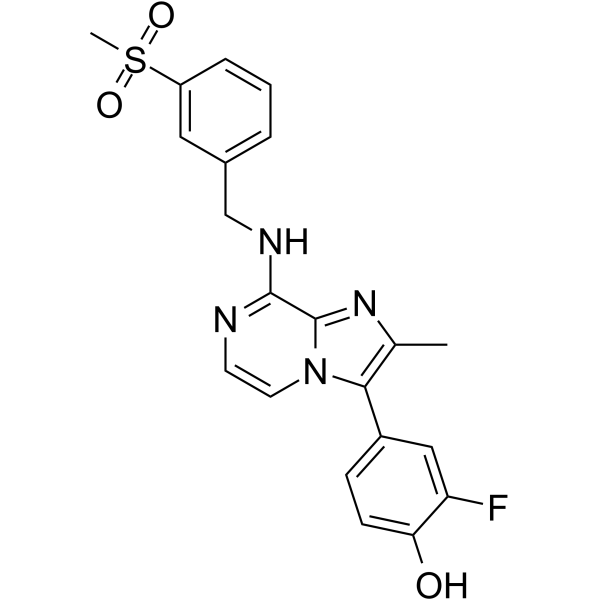
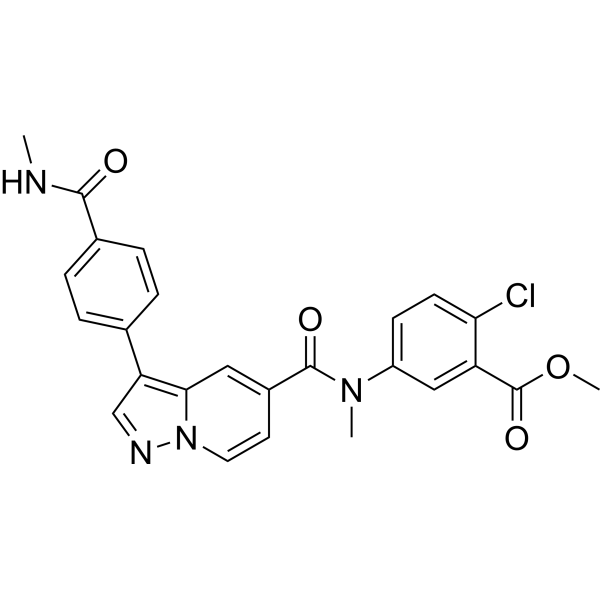
    GSK-A1 is a selective type III phosphatidylinositol 4-kinase PI4KA (PI4KIIIα) inhibitor with a pIC50 of 8.5-9.8. GSK-A1 inhibits PtdIns(4,5)P2 resynthesis with an IC50 of about 3 nM. GSK-A1 potently decreases the levels of PtdIns(4)P with a negligible effect on PtdIns(4,5)P2. GSK-A1 has the potential for anti-hepatitis C virus (HCV) research .
    GSK-A1
  • HY-P1116
    PBP10
    1 Publications Verification

    Bacterial Reactive Oxygen Species (ROS) Interleukin Related Infection Inflammation/Immunology
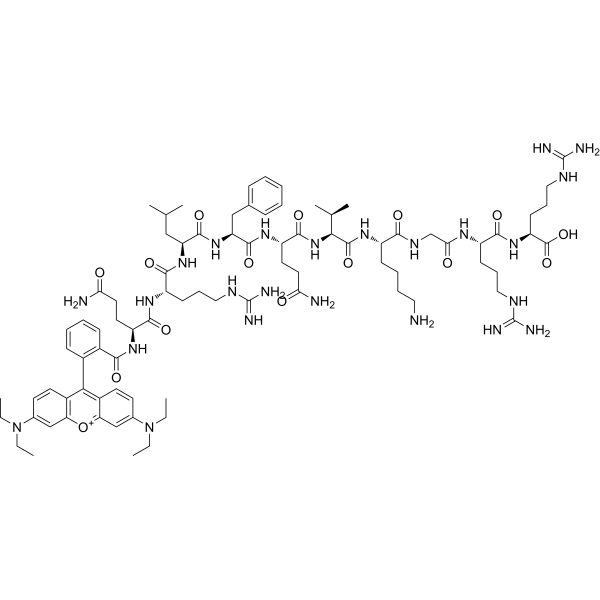
    PBP10 is a decapeptide. PBP10 selectively binds to lipoteichoic acid (LTA), lipopolysaccharide (LPS) and phosphatidylinositol-4,5-bisphosphate (PIP2). PBP10 penetrates cell membranes and possesses bactericidal, anti-inflammatory, cell motility-inhibiting and actin assembly-regulating activities. PBP10 is applicable to relevant research on bacterial infections, microbe-induced inflammation, skin and soft tissue infections, as well as sepsis .
    PBP10
  • HY-U00426
    BF738735
    5 Publications Verification

    PI4K Reverse Transcriptase Infection
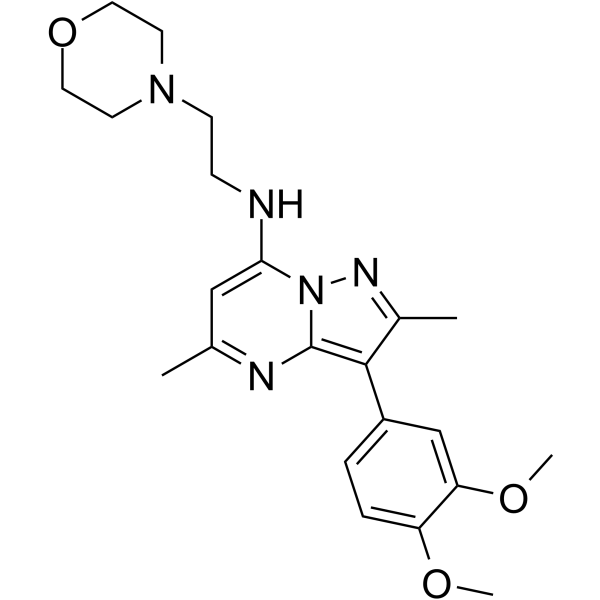
    BF738735 is a phosphatidylinositol 4-kinase III beta (PI4KIIIβ) inhibitor with an IC50 of 5.7 nM.
    BF738735
  • HY-108313
    T-00127_HEV1
    4 Publications Verification

    PI4K Infection
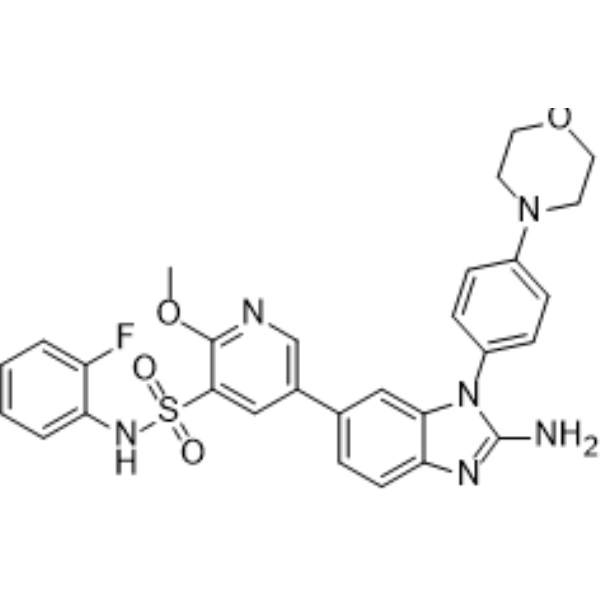
    T-00127_HEV1 is a phosphatidylinositol 4-kinase III beta (PI4KB) inhibitor with an IC50 of 60 nM.
    T-00127_HEV1
  • HY-114457

    L-alpha-phosphatidylinositol-4,5-bisphosphate; (PtdIns)-(4,5)-P2

    Phospholipase Inflammation/Immunology
    Phosphatidylinositol 4,5-bisphosphate (L-alpha-Phosphatidylinositol-4,5-bisphosphate) is a plasma membrane lipid that is enriched in the cytoplasmic leaflet of the plasma membrane. Phosphatidylinositol 4,5-bisphosphate serves as a substrate for phospholipase C and class I PI3K, generating diacylglycerol, inositol (1,4,5)-trisphosphate, and phosphatidylinositol (3,4,5)-trisphosphate. Phosphatidylinositol 4,5-bisphosphate contributes to lamellipodial protrusion, directional cell migration, focal adhesion lipid generation, and trafficking of the GABAA receptor. Phosphatidylinositol 4,5-bisphosphate can be used in research related to acute lung injury and pulmonary edema .
    Phosphatidylinositol 4,5-bisphosphate
  • HY-156685

    PI4K Parasite Infection Metabolic Disease Cancer
    EDI048 is an orally active, gut-restricted parasiticidal agent. EDI048 specifically binds to the ATP-binding site of Cryptosporidium phosphatidylinositol 4-kinase (CpPI (4) K), blocks parasite membrane biogenesis, arrests the pathogen at the schizont stage, and thus irreversibly clears the infection. EDI048 is rapidly converted to an inactive carboxylic acid metabolite via hepatic first-pass metabolism, with extremely low systemic exposure, good safety profile, and no cardiotoxicity, genotoxicity or off-target effects. EDI048 is used in studies of intestinal cryptosporidiosis in children .
    EDI048
  • HY-131648
    1-Oleoyl-2-acetyl-sn-glycerol
    1 Publications Verification

    Drug Derivative PKC TRP Channel Cardiovascular Disease Metabolic Disease Inflammation/Immunology Cancer
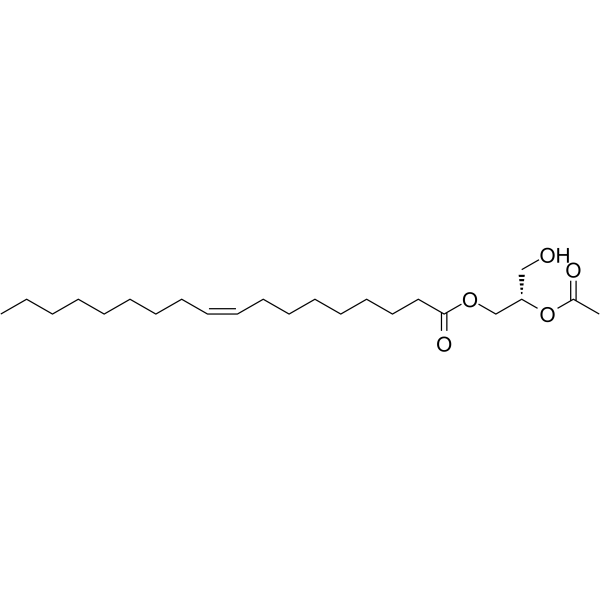
    1-Oleoyl-2-acetyl-sn-glycerol is a cell-permeable analog of diacylglycerol (DAG) and can activate Protein kinase C (PKC). 1-Oleoyl-2-acetyl-sn-glycerol can activate the TRPC channels-mediated specific Ca 2+ influx. 1-Oleoyl-2-acetyl-sn-glycerol can stimulate superoxide-generation from human neutrophils. 1-Oleoyl-2-acetyl-sn-glycerol stimulates the formation of phosphatidylinositol 4-phosphate in intact human platelets. 1-Oleoyl-2-acetyl-sn-glycerol can stimulate ascites tumor cell proliferation [4].
    1-Oleoyl-2-acetyl-sn-glycerol
  • HY-167548

    PKC Potassium Channel Others
    L-α-Phosphatidylinositol-4,5-bisphosphate ammonium is a key signaling lipid. L-α-Phosphatidylinositol-4,5-bisphosphate ammonium is an activator of PKC in the presence of calcium ions and phospholipid serine. L-α-Phosphatidylinositol-4,5-bisphosphate ammonium is also an antagonist of the KIR3.4 (ATP-sensitive potassium, KATP) channel. L-α-Phosphatidylinositol-4,5-bisphosphate ammonium can be used in research related to signal transduction, ion channel regulation, and membrane transport.
    L-α-Phosphatidylinositol-4,5-bisphosphate ammonium
  • HY-163572

    PI4P5K Cancer
    PIP5K1α-IN-1 (Compound 3e) is an inhibitor for phosphatidylinositol 4-phosphate 5-kinase type I α (PIP5K1α) with an IC50 of 0.46 μM .
    PIP5K1α-IN-1
  • HY-P1116A
    PBP10 TFA
    1 Publications Verification

    Bacterial Infection Inflammation/Immunology
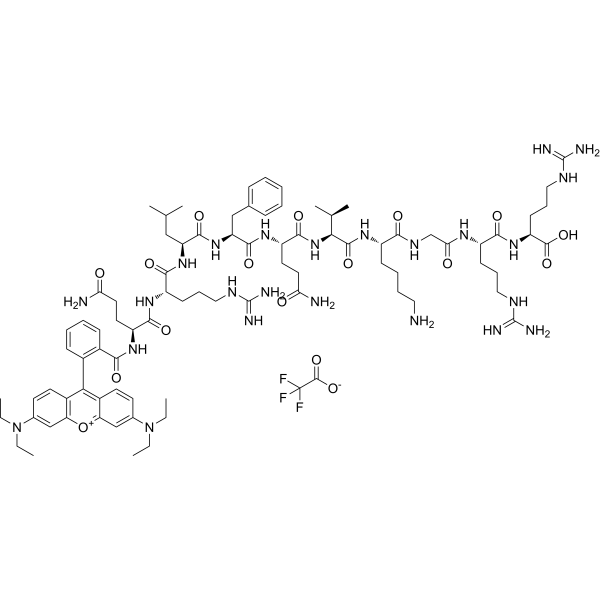
    PBP10 TFA is a decapeptide. PBP10 TFA selectively binds to lipoteichoic acid (LTA), lipopolysaccharide (LPS) and phosphatidylinositol-4,5-bisphosphate (PIP2). PBP10 TFA penetrates cell membranes and possesses bactericidal, anti-inflammatory, cell motility-inhibiting and actin assembly-regulating activities. PBP10 TFA is applicable to relevant research on bacterial infections, microbe-induced inflammation, skin and soft tissue infections, as well as sepsis .
    PBP10 TFA
  • HY-100603A

    PI3K PI4K Infection
    (S)-GSK-F1 (Compound 28) is an inhibitor for type III phosphatidylinositol 4-kinase α (PI4KIIIα). (S)-GSK-F1 inhibits PI4Kα, PI4Kβ, PI4Kγ, PI3Kα, PI3Kβ and PI3Kδ with pIC50 of 8.3, 6.0, 5.6, 5.6, 5.1 and 5.6, respectively. (S)-GSK-F1 exhibits anti-hepatitis C virus (HCV) activity through inhibition of HCV replication. (S)-GSK-F1 exhibits moderate pharmacokinetic characters in rat model .
    (S)-GSK-F1
  • HY-174134

    PI4K PKG Parasite Infection
    PI4Kβ/PKG-IN-2 (Compound 20) is an orally active dual inhibitor of Plasmodium phosphatidylinositol 4-kinase beta (PI4Kβ) and cGMP-dependent protein kinase (PKG). PI4Kβ/PKG-IN-2 has potent inhibitory effects on Plasmodium. PI4Kβ/PKG-IN-2 is promising for research of malaria .
    PI4Kβ/PKG-IN-2
  • HY-175557

    PI4K Enterovirus Infection
    PI4K-IN-2 (Compound 30) is a highly selective type III phosphatidylinositol 4-kinase β (PI4KB) inhibitor (IC50=0.015 μM). PI4K-IN-2 is promising for research of human rhinovirus (HRV) .
    PI4K-IN-2
  • HY-146947S

    Isotope-Labeled Compounds Others
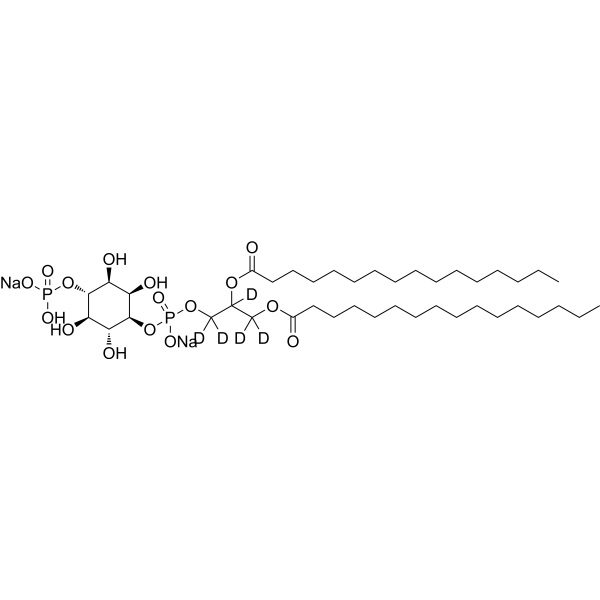
    D-Myo-phosphatidylinositol 4-phosphate diC16-d5 is deuterium labeled D-Myo-phosphatidylinositol 4-phosphate diC16.
    D-Myo-phosphatidylinositol 4-phosphate diC16-d5
  • HY-165977

    Biochemical Assay Reagents Metabolic Disease
    Phosphatidylinositol 4-phosphate, 1,2-dipalmitoyl (ammonium) is an ester product.
    Phosphatidylinositol 4-phosphate, 1,2-dipalmitoyl ammonium
  • HY-146948S

    Isotope-Labeled Compounds Others
    D-Myo-phosphatidylinositol 4,5-bisphosphate diC16-d5 is deuterium labeled D-Myo-phosphatidylinositol 4,5-bisphosphate diC16.
    D-Myo-phosphatidylinositol 4,5-bisphosphate diC16-d5
  • HY-163765

    PI4K Potassium Channel Infection
    Antimalarial agent 41 (Compound 17) exhibits antimalarial activity, which inhibits Plasmodium falciparum with an IC50 of 40 nM (NF54 strain) and 76 nM (K1 strain). Antimalarial agent 41 is an inhibitor for P. falciparum phosphatidylinositol-4-kinase β (Pf PI4K) and hERG channel, with an IC50 of 53 nM and 3 μM. Antimalarial agent 41 exhibits cytotoxicity to CHO cells with an IC50 of 34 μM. Antimalarial agent 41 ameliorates the malaria infection and exhibits good pharmacokinetic characters in mouse models .
    Antimalarial agent 41
  • HY-E70633

    PI4P5K Neurological Disease
    PIP5K1C Recombinant Human Active Lipid Kinase is a phosphatidylinositol 4-phosphate 5-kinase (PIP5K) with nociceptive sensitization. PIP5K1C Recombinant Human Active Lipid Kinase can be used to study the role of PIP5K1C in nociceptive signaling and sensitization .
    PIP5K1C Recombinant Human Active Lipid Kinase
  • HY-174130

    Parasite PI4K PKG Infection
    PI4Kβ/PKG-IN-1 (Compound 19) is an orally active dual inhibitor targeting Plasmodium phosphatidylinositol 4-kinase beta (PI4Kβ) and cGMP-dependent protein kinase (PKG). PI4Kβ/PKG-IN-1 exhibits potent antiplasmodial activity. PI4Kβ/PKG-IN-1 is promising for research of malaria .
    PI4Kβ/PKG-IN-1
  • HY-175070

    Ins(2,4,5)P3 sodium salt; 2,4,5-IP3 sodium salt

    Calcium Channel Metabolic Disease
    D-myo-Inositol-2,4,5-triphosphate (Ins(2,4,5)P3) (sodium salt) is a second messenger produced in cells by phospholipase C-mediated hydrolysis of phosphatidylinositol-4,5-biphosphate. D-myo-Inositol-2,4,5-triphosphate (sodium salt) can open calcium channels and increase intracellular calcium upon binding to its receptors on the endoplasmic reticulum. D-myo-Inositol-2,4,5-triphosphate (sodium salt) also acts as a partial agonist at rat hepatic IP3 receptors. D-myo-Inositol-2,4,5-triphosphate (sodium salt) can be studied in research on calcium ions signaling pathway [4].
    D-myo-Inositol-2,4,5-triphosphate sodium salt
  • HY-N19295

    PI4K Cancer
    Echiguanine A is a phosphatidylinositol 4-kinase (PI4KIIα) inhibitor with an IC50 of 0.04 μg/mL. Echiguanine A inhibits phosphatidylinositol 4-kinase activity in cell membrane extracts. Echiguanine A is applicable for cancer research .
    Echiguanine A
  • HY-N19037

    PI4P5K Others
    1,2-Dilinoleoyl phosphatidylinositol is a phosphatidylinositol. 1,2-Dilinoleoyl phosphatidylinositol acts as a substrate for phosphorylation by Phosphatidylinositol-4-phosphate 5-kinase (PI4P5K) isoforms α, β, and γ in in vitro assays .
    1,2-Dilinoleoyl phosphatidylinositol
  • HY-179554

    PI(4,5)P2-fluorescein triethylammonium

    Fluorescent Dye Others
    PtdIns-(4,5)-P2-fluorescein (PI(4,5)P2-fluorescein) triethylammonium is a fluorescently labeled phosphatidylinositol-4,5-bisphosphate, which is a marked form of an important phospholipid signaling molecule (PIP2) on the cell membrane. PtdIns-(4,5)-P2-fluorescein triethylammonium can be used to detect proteins that interact with phosphatidylinositol-4,5-bisphosphate, such as PI3K, PTEN, and PH domain proteins, etc .
    PtdIns-(4,5)-P2-fluorescein triethylammonium
  • HY-108313R

    Reference Standards PI4K Infection
    T-00127_HEV1 (Standard) is the analytical standard of T-00127_HEV1 (HY-108313). This product is intended for research and analytical applications. T-00127_HEV1 is a phosphatidylinositol 4-Kinase III beta (PI4KB) inhibitor with an IC50 of 60 nM.
    T-00127_HEV1 (Standard)
  • HY-182721

    PI4K Hedgehog Cancer
    Pipinib is an ATP-competitive and selective phosphatidylinositol 4-kinase IIIb (PI4KB) inhibitor with an IC50 of 2.2 μM. Pipinib reduces intracellular PI4P levels. Pipinib inhibits GLI-mediated transcription, the expression of Hedgehog target genes, and blocks the trafficking of Smoothened to cilia. Pipinib can be used in the research of basal cell carcinoma and medulloblastoma .
    Pipinib
  • HY-103489R

    Reference Standards PI4K Apoptosis Cancer
    PI-273 (Standard) is the analytical standard of PI-273 (HY-103489). This product is intended for research and analytical applications. PI-273 is a first reversibly and specific phosphatidylinositol 4-kinase (PI4KIIα) inhibitor with an IC50 of 0.47 μM. PI-273 can inhibit breast cancer cell proliferation, block the cell cycle and induce cell apoptosis .
    PI-273 (Standard)
  • HY-D3302

    DOPI-4,5-P2-biotin sodium; phosphatidylinositol-4,5-diphosphate C-8-biotin sodium; PI(4,5)P2-biotin sodium

    Biochemical Assay Reagents Others
    PtdIns-(4,5)-P2-biotin (DOPI-4,5-P2-biotin) sodium is a biotin-labeled phosphatidylinositol 4,5-bisphosphate (PIP2) derivative. PtdIns-(4,5)-P2-biotin sodium uses a biotin tag to capture and purify natural PIP2 molecules and their interacting proteins.
    PtdIns-(4,5)-P2-biotin sodium

Inquiry Online

Your information is safe with us. * Required Fields.

Salutation


Country or Region *

Applicant Name *


Organization Name *

Department *


Email Address *


Product Name *

Cat. No.


Requested quantity *

Phone Number *


Remarks

Inquiry Online

Inquiry Information

Product Name:
Cat. No.:
Quantity:
MCE Japan Authorized Agent:

