Search Result
Results for "
protein+purification
" in MedChemExpress (MCE) Product Catalog:
12
Biochemical Assay Reagents
3
Isotope-Labeled Compounds
| Cat. No. |
Product Name |
Target |
Research Areas |
Chemical Structure |
-
- HY-Y0682
-
|
EDTA
|
Environmental Pollutants
Biochemical Assay Reagents
Bacterial
SOD
|
Cardiovascular Disease
Neurological Disease
Cancer
|
|
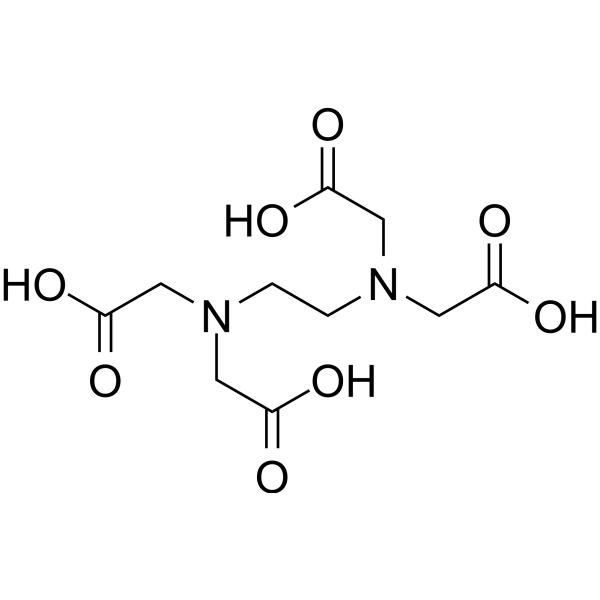
Ethylenediaminetetraacetic acid (EDTA) is a kind of metal chelating agent (binds to bivalent and trivalent metal cations, including calcium). Ethylenediaminetetraacetic acid has antibacterial, anti-inflammatory, antioxidant, anti-hypercalcemia and anticoagulant activities. Ethylenediaminetetraacetic acid decreases the metal ion-catalyzed oxidative damage to proteins, and allows maintenance of reducing environment during protein purification. Ethylenediaminetetraacetic acid can alleviate the liver fibrosis. Ethylenediaminetetraacetic acid can be used for coronary artery disease and neural system disease research .
|
-
-
- HY-Y0682A
-
|
EDTA disodium dihydrate
|
Environmental Pollutants
Biochemical Assay Reagents
Bacterial
SOD
|
Cardiovascular Disease
Neurological Disease
Cancer
|
|
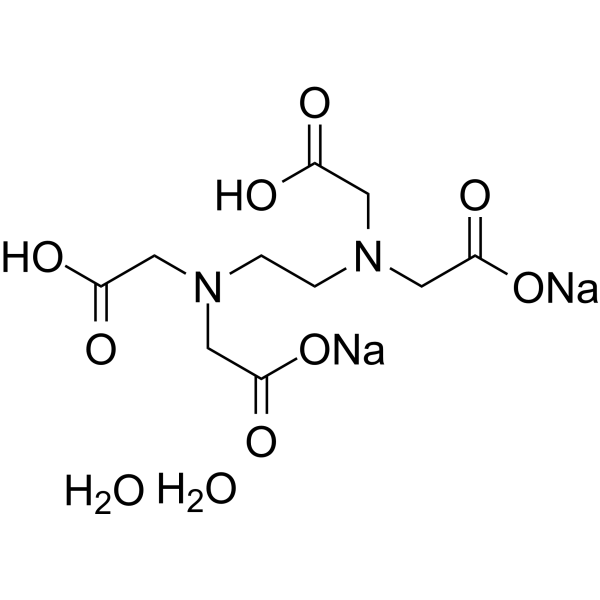
Ethylenediaminetetraacetic acid (EDTA) disodium dehydrate is a kind of metal chelating agent (binds to bivalent and trivalent metal cations, including calcium). Ethylenediaminetetraacetic acid disodium dehydrate has antibacterial, anti-inflammatory, antioxidant, anti-hypercalcemia and anticoagulant activities. Ethylenediaminetetraacetic acid disodium dehydrate decreases the metal ion-catalyzed oxidative damage to proteins, and allows maintenance of reducing environment during protein purification. Ethylenediaminetetraacetic acid disodium dehydrate can alleviate the liver fibrosis. Ethylenediaminetetraacetic acid disodium dehydrate can be used for coronary artery disease and neural system disease research .
|
-
-
- HY-D0227F
-
|
Tris HCl (≥99%, reagent grade); Tris hydrochloride (≥99%, reagent grade)
|
Biochemical Assay Reagents
|
Others
|
|
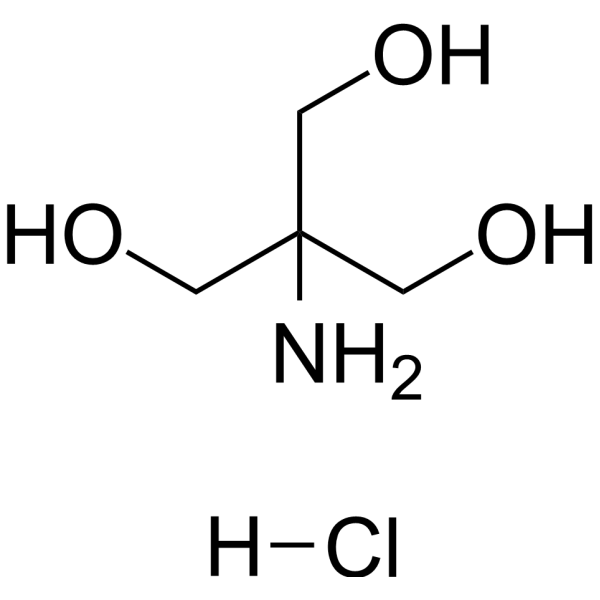
THAM hydrochloride (≥99%, reagent grade), also known as Tris-HCl, is a buffer commonly used in various biochemical and molecular biology applications to maintain a stable pH environment. Tris-HCl has unique chemical properties that allow it to resist changes in pH when acidic or basic substances are added, which makes it useful for stabilizing biological samples or reagents. It is commonly used in electrophoresis and protein purification procedures.
|
-
-
- HY-P0294
-
|
6X His Tag
|
Biochemical Assay Reagents
|
Others
|
|
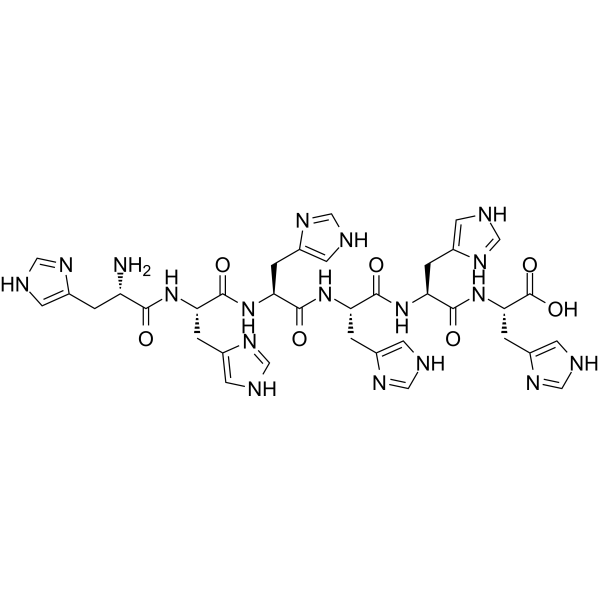
Hexa-His (6X His Tag) is a commonly used affinity tag made up of six histidine residues. HEXA-HIS can bind to affinity chromatography media containing transition metal ions like nickel (Ni 2+) or cobalt (Co 2+), making it useful for protein purification .
|
-
-
- HY-15917A
-
|
|
Biochemical Assay Reagents
|
Others
|
|
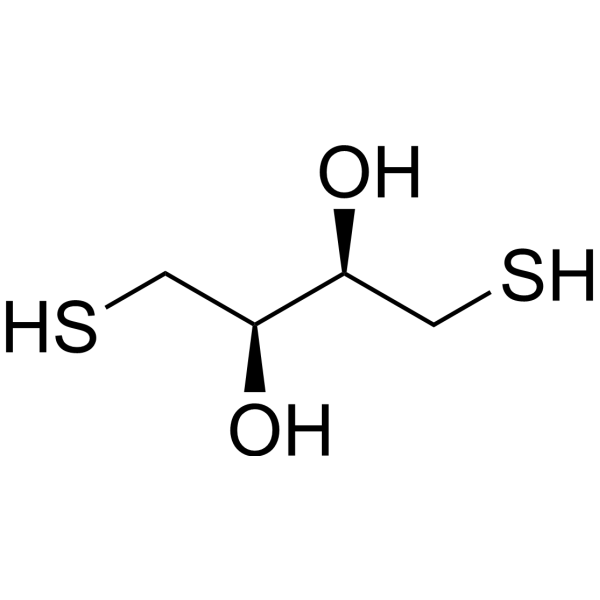
L-Dithiothreitol (DTT) is a reducing agent commonly used in various biochemical applications to break disulfide bonds in proteins, thereby denaturing proteins or preventing the formation of unwanted aggregates. DTT has a unique chemical property that cleaves the sulfur-sulfur bond in the disulfide bond to form a sulfhydryl group. This makes it a useful tool for protein purification, enzyme assays, and protein structure studies.
|
-
-
- HY-Y0319B
-
|
Potassium acetate
|
Environmental Pollutants
Biochemical Assay Reagents
|
Infection
Cancer
|
|
Acetic acid potassium 99% (Potassium acetate) is a potassium salt employed to replenish electrolytes, for restoration of water-electrolyte balance. Acetic acid potassium 99% can employ in DNA and protein purification. Acetic acid potassium 99% has been used to prepare neutralizing solution for alkaline lysis of bacteria and activated carbon .
|
-

-
- HY-Y0682S
-
|
EDTA-d12
|
Isotope-Labeled Compounds
|
Neurological Disease
|
|
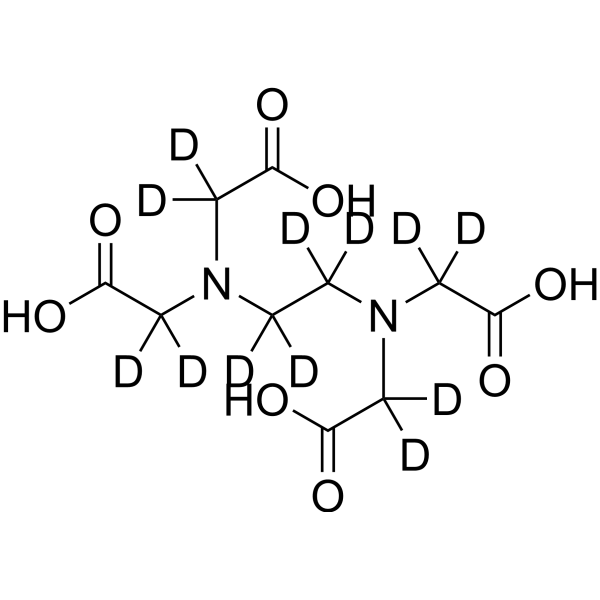
Ethylenediaminetetraacetic acid-d12 is the deuterium labeled Ethylenediaminetetraacetic acid . Ethylenediaminetetraacetic acid (EDTA) is a metal chelators (binds to metal divalent and trivalent cations including calcium), which shows activities of anticoagulant and anti-hypercalcemic. Ethylenediaminetetraacetic acid decreases the metal ion-catalyzed oxidative damage to proteins, and allows maintenance of reducing environment during protein purification. Ethylenediaminetetraacetic acid can also decrease the formation of disulfide bonds .
|
-
-
- HY-B1009
-
|
EDTA trisodium salt; Trisodium EDTA
|
Environmental Pollutants
Bacterial
SOD
Ferroptosis
|
Cardiovascular Disease
Neurological Disease
Cancer
|
|
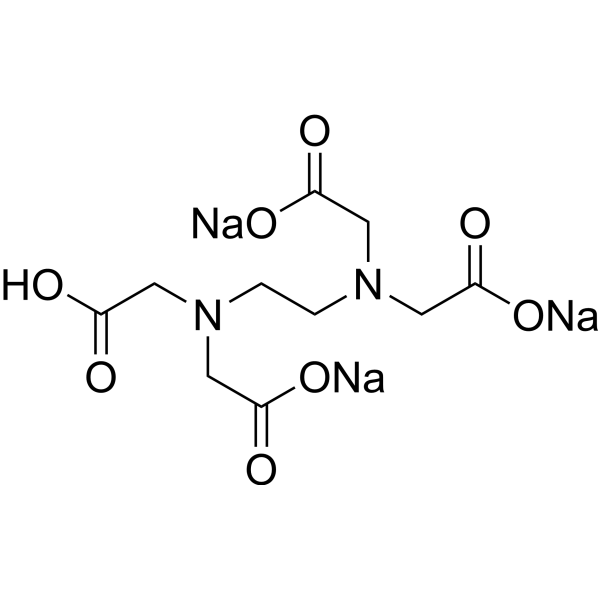
Ethylenediaminetetraacetic acid trisodium salt (EDTA trisodium salt; Trisodium EDTA) is a kind of metal chelating agent (binds to bivalent and trivalent metal cations, including calcium). Ethylenediaminetetraacetic acid trisodium salt has antibacterial, anti-inflammatory, antioxidant, anti-hypercalcemia and anticoagulant activities. Ethylenediaminetetraacetic acid trisodium salt decreases the metal ion-catalyzed oxidative damage to proteins, and allows maintenance of reducing environment during protein purification. Ethylenediaminetetraacetic acid trisodium salt can alleviate the liver fibrosis. Ethylenediaminetetraacetic acid can be used for coronary artery disease and neural system disease research .
|
-
-
- HY-141522
-
|
|
Biochemical Assay Reagents
|
Others
|
|
Cross-linked dextran G 100 is a gel filtration medium that can be used for protein purification (Sphere protein separation range: 4K-150K Da; Polysaccharide separation range: 1K-100K Da) .
|
-
-
- HY-W127774
-
|
Ethylenediaminetetraacetic acid hydrate sodium
|
Biochemical Assay Reagents
Bacterial
SOD
|
Cardiovascular Disease
Neurological Disease
Cancer
|
|
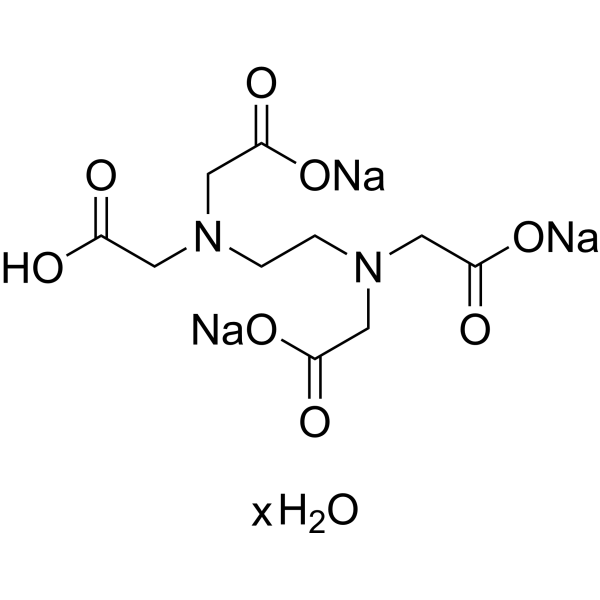
EDTA (Ethylenediaminetetraacetic acid) hydrate sodium is a kind of metal chelating agent (binds to bivalent and trivalent metal cations, including calcium). EDTA hydrate sodium has antibacterial, anti-inflammatory, antioxidant, anti-hypercalcemia and anticoagulant activities. EDTA hydrate sodium decreases the metal ion-catalyzed oxidative damage to proteins, and allows maintenance of reducing environment during protein purification. EDTA hydrate sodium can alleviate the liver fibrosis. Ethylenediaminetetraacetic acid can be used for coronary artery disease and neural system disease research .
|
-
-
- HY-W099575
-
|
|
Biochemical Assay Reagents
|
Others
|
|
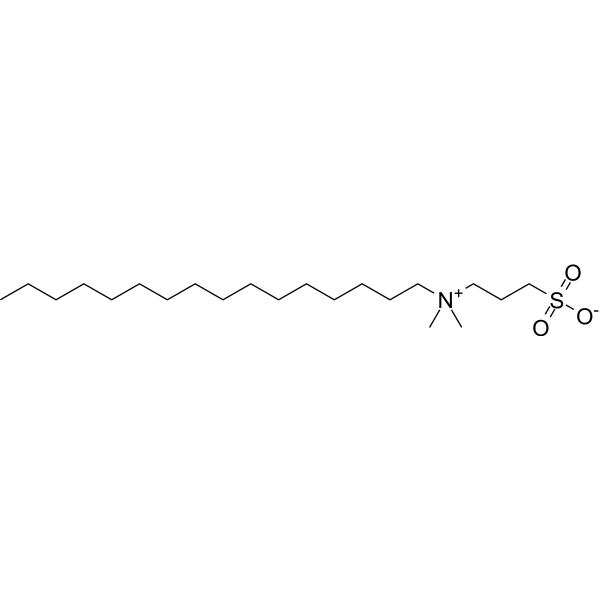
3-(Hexadecyldimethylammonio)propane-1-sulfonate is an organic compound belonging to the class of sulfonates. It is a quaternary ammonium surfactant commonly used in various industrial and laboratory applications such as the production of detergents, personal care products and pharmaceuticals. 3-(Hexadecyldimethylammonio)propane-1-sulfonate is surface active and can be used as an emulsifier, foaming agent and wetting agent. In addition, it is used as a solubilizer in protein purification and as a surfactant in chromatography.
|
-
-
- HY-Y0682B
-
|
EDTA tetrasodium
|
Environmental Pollutants
Biochemical Assay Reagents
Bacterial
SOD
|
Cardiovascular Disease
Neurological Disease
Cancer
|
|
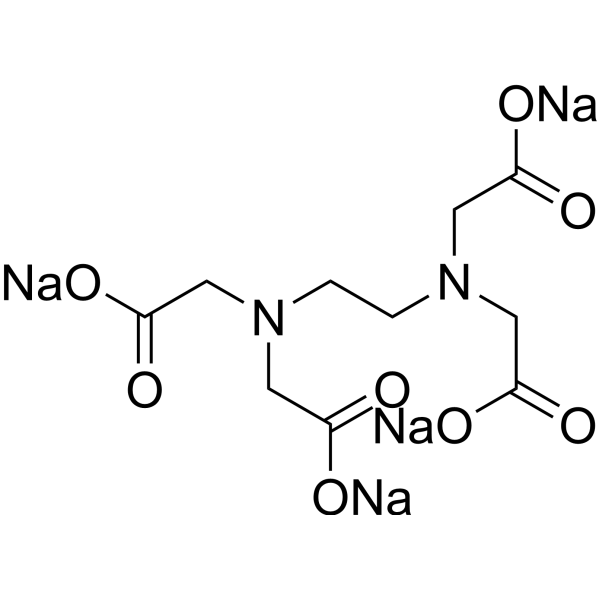
Ethylenediaminetetraacetic acid (EDTA) tetrasodium is a kind of metal chelating agent (binds to bivalent and trivalent metal cations, including calcium). Ethylenediaminetetraacetic acid tetrasodium has antibacterial, anti-inflammatory, antioxidant, anti-hypercalcemia and anticoagulant activities. Ethylenediaminetetraacetic acid tetrasodium decreases the metal ion-catalyzed oxidative damage to proteins, and allows maintenance of reducing environment during protein purification. Ethylenediaminetetraacetic acid tetrasodium can alleviate the liver fibrosis. Ethylenediaminetetraacetic acid tetrasodium can be used for coronary artery disease and neural system disease research .
|
-
-
- HY-W105699
-
|
Ethylenediaminetetraacetic acid tetrasodium tetrahydrate
|
Environmental Pollutants
Biochemical Assay Reagents
|
Others
|
|
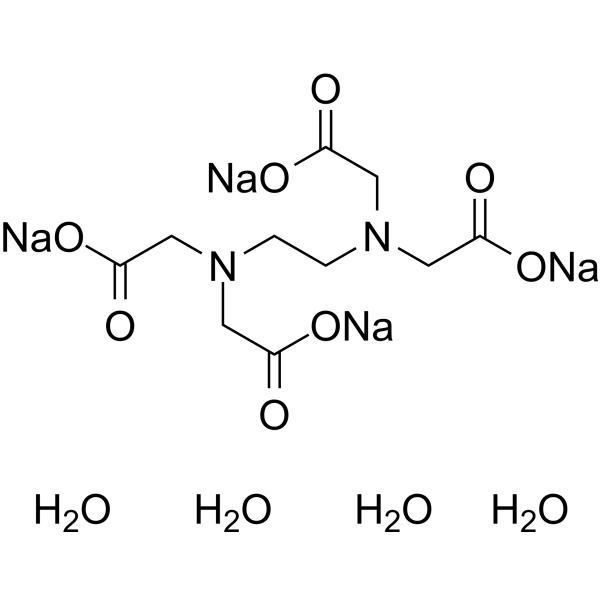
EDTA tetrasodium tetrahydrate is a metal chelator (binds to metal divalent and trivalent cations including calcium), which shows activities of anticoagulant and anti-hypercalcemic. EDTA tetrasodium tetrahydrate decreases the metal ion-catalyzed oxidative damage to proteins, and allows maintenance of reducing environment during protein purification. EDTA tetrasodium tetrahydrate can also decrease the formation of disulfide bonds .
|
-
-
- HY-Y0682S1
-
|
EDTA-d16
|
Isotope-Labeled Compounds
|
Neurological Disease
|
|
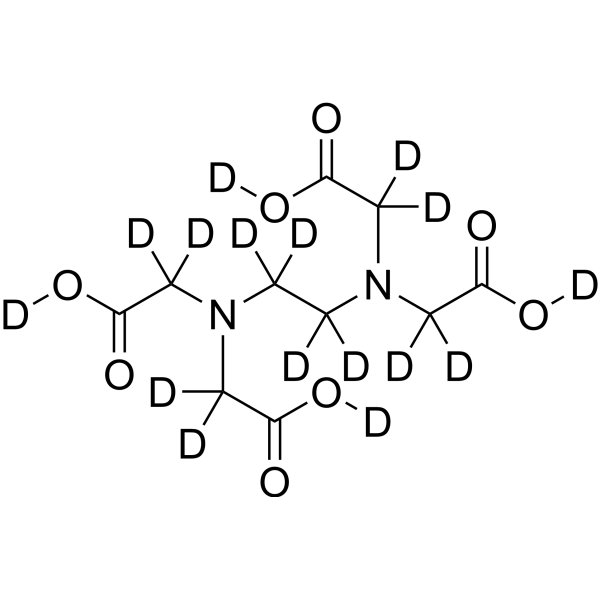
Ethylenediaminetetraacetic acid-d16 is the deuterium labeled Ethylenediaminetetraacetic acid . Ethylenediaminetetraacetic acid (EDTA) is a metal chelators (binds to metal divalent and trivalent cations including calcium), which shows activities of anticoagulant and anti-hypercalcemic. Ethylenediaminetetraacetic acid decreases the metal ion-catalyzed oxidative damage to proteins, and allows maintenance of reducing environment during protein purification. Ethylenediaminetetraacetic acid can also decrease the formation of disulfide bonds .
|
-
-
- HY-W105700
-
|
EDTA sodium hydrate
|
Biochemical Assay Reagents
Bacterial
SOD
|
Cardiovascular Disease
Neurological Disease
Cancer
|
|
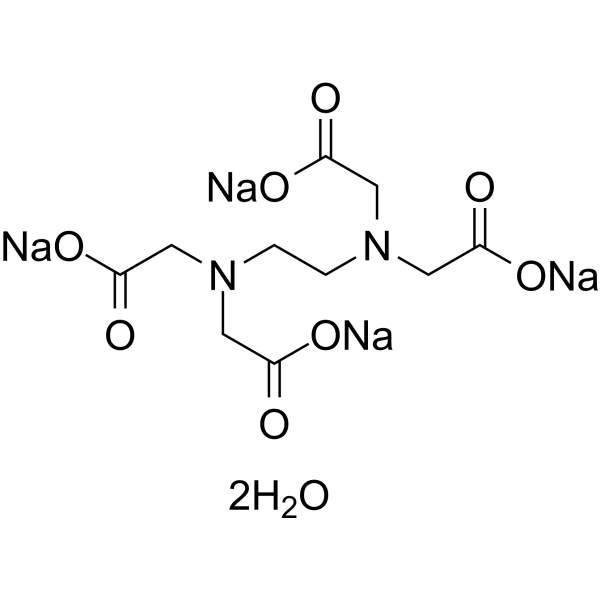
Ethylenediaminetetraacetic acid (EDTA) sodium hydrate is a kind of metal chelating agent (binds to bivalent and trivalent metal cations, including calcium). Ethylenediaminetetraacetic acid sodium hydrate has antibacterial, anti-inflammatory, antioxidant, anti-hypercalcemia and anticoagulant activities. Ethylenediaminetetraacetic acid sodium hydrate decreases the metal ion-catalyzed oxidative damage to proteins, and allows maintenance of reducing environment during protein purification. Ethylenediaminetetraacetic acid sodium hydrate can alleviate the liver fibrosis. Ethylenediaminetetraacetic acid sodium hydrate can be used for coronary artery disease and neural system disease research .
|
-
-
- HY-W087947
-
|
Ethylenediaminetetraacetic acid dihydrate tripotassium
|
Bacterial
SOD
|
Cardiovascular Disease
Neurological Disease
Cancer
|
|
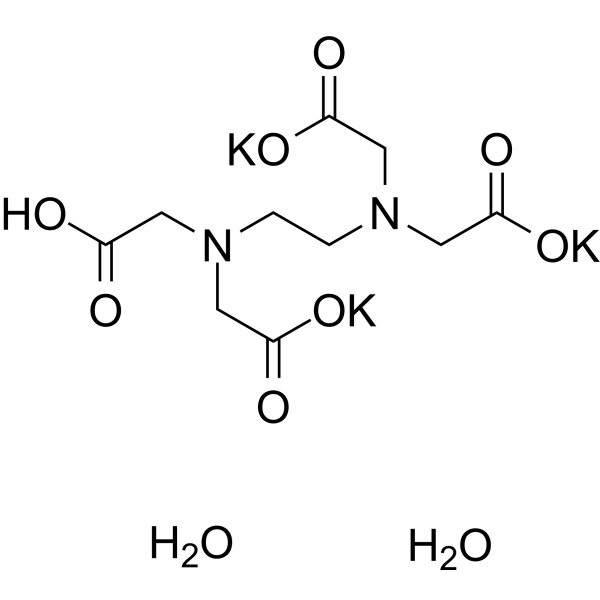
EDTA dihydrate tripotassium (Ethylenediaminetetraacetic acid dihydrate tripotassium) is a kind of metal chelating agent (binds to bivalent and trivalent metal cations, including calcium). EDTA dihydrate tripotassium has antibacterial, anti-inflammatory, antioxidant, anti-hypercalcemia and anticoagulant activities. EDTA dihydrate tripotassium decreases the metal ion-catalyzed oxidative damage to proteins, and allows maintenance of reducing environment during protein purification. EDTA dihydrate tripotassium can alleviate the liver fibrosis. EDTA dihydrate tripotassium can be used for coronary artery disease and neural system disease research .
|
-
-
- HY-B1009R
-
|
EDTA trisodium salt (Standard); Trisodium EDTA (Standard)
|
Ferroptosis
Bacterial
SOD
Reference Standards
|
Cardiovascular Disease
Neurological Disease
Cancer
|
|
Ethylenediaminetetraacetic acid (trisodium salt) (Standard) is the analytical standard of Ethylenediaminetetraacetic acid (trisodium salt). This product is intended for research and analytical applications. Ethylenediaminetetraacetic acid trisodium salt (EDTA trisodium salt; Trisodium EDTA) is a kind of metal chelating agent (binds to bivalent and trivalent metal cations, including calcium). Ethylenediaminetetraacetic acid trisodium salt has antibacterial, anti-inflammatory, antioxidant, anti-hypercalcemia and anticoagulant activities. Ethylenediaminetetraacetic acid trisodium salt decreases the metal ion-catalyzed oxidative damage to proteins, and allows maintenance of reducing environment during protein purification. Ethylenediaminetetraacetic acid trisodium salt can alleviate the liver fibrosis. Ethylenediaminetetraacetic acid can be used for coronary artery disease and neural system disease research .
|
-

-
- HY-Y0682R
-
|
EDTA (Standard)
|
Biochemical Assay Reagents
Reference Standards
Bacterial
SOD
|
Cardiovascular Disease
Neurological Disease
Cancer
|
|
Ethylenediaminetetraacetic acid (Standard) is the analytical standard of Ethylenediaminetetraacetic acid. This product is intended for research and analytical applications. Ethylenediaminetetraacetic acid (EDTA) is a kind of metal chelating agent (binds to bivalent and trivalent metal cations, including calcium). Ethylenediaminetetraacetic acid has antibacterial, anti-inflammatory, antioxidant, anti-hypercalcemia and anticoagulant activities. Ethylenediaminetetraacetic acid decreases the metal ion-catalyzed oxidative damage to proteins, and allows maintenance of reducing environment during protein purification. Ethylenediaminetetraacetic acid can alleviate the liver fibrosis. Ethylenediaminetetraacetic acid can be used for coronary artery disease and neural system disease research [4] .
|
-

-
- HY-W777365
-
|
EDTA-13C4
|
Isotope-Labeled Compounds
Bacterial
SOD
Biochemical Assay Reagents
|
Cardiovascular Disease
Neurological Disease
Cancer
|
|
Ethylenediaminetetraacetic acid- 13C4 (EDTA- 13C4) is the 13C-labeled Ethylenediaminetetraacetic acid (HY-Y0682). Ethylenediaminetetraacetic acid (EDTA) is a kind of metal chelating agent (binds to bivalent and trivalent metal cations, including calcium). Ethylenediaminetetraacetic acid has antibacterial, anti-inflammatory, antioxidant, anti-hypercalcemia and anticoagulant activities. Ethylenediaminetetraacetic acid decreases the metal ion-catalyzed oxidative damage to proteins, and allows maintenance of reducing environment during protein purification. Ethylenediaminetetraacetic acid can alleviate the liver fibrosis. Ethylenediaminetetraacetic acid can be used for coronary artery disease and neural system disease research .
|
-

-
- HY-Y0682AR
-
|
EDTA disodium dihydrate (Standard)
|
Biochemical Assay Reagents
Reference Standards
Bacterial
SOD
|
Cardiovascular Disease
Neurological Disease
Cancer
|
|
Ethylenediaminetetraacetic acid (disodium dihydrate) (Standard) is the analytical standard of Ethylenediaminetetraacetic acid (disodium dihydrate). This product is intended for research and analytical applications. Ethylenediaminetetraacetic acid (EDTA) disodium dehydrate is a kind of metal chelating agent (binds to bivalent and trivalent metal cations, including calcium). Ethylenediaminetetraacetic acid disodium dehydrate has antibacterial, anti-inflammatory, antioxidant, anti-hypercalcemia and anticoagulant activities. Ethylenediaminetetraacetic acid disodium dehydrate decreases the metal ion-catalyzed oxidative damage to proteins, and allows maintenance of reducing environment during protein purification. Ethylenediaminetetraacetic acid disodium dehydrate can alleviate the liver fibrosis. Ethylenediaminetetraacetic acid disodium dehydrate can be used for coronary artery disease and neural system disease research [4] .
|
-

| Cat. No. |
Product Name |
Type |
-
- HY-Y0682
-
|
EDTA
|
Biochemical Assay Reagents
|
|
Ethylenediaminetetraacetic acid (EDTA) is a kind of metal chelating agent (binds to bivalent and trivalent metal cations, including calcium). Ethylenediaminetetraacetic acid has antibacterial, anti-inflammatory, antioxidant, anti-hypercalcemia and anticoagulant activities. Ethylenediaminetetraacetic acid decreases the metal ion-catalyzed oxidative damage to proteins, and allows maintenance of reducing environment during protein purification. Ethylenediaminetetraacetic acid can alleviate the liver fibrosis. Ethylenediaminetetraacetic acid can be used for coronary artery disease and neural system disease research .
|
-
- HY-Y0682A
-
|
EDTA disodium dihydrate
|
Biochemical Assay Reagents
|
|
Ethylenediaminetetraacetic acid (EDTA) disodium dehydrate is a kind of metal chelating agent (binds to bivalent and trivalent metal cations, including calcium). Ethylenediaminetetraacetic acid disodium dehydrate has antibacterial, anti-inflammatory, antioxidant, anti-hypercalcemia and anticoagulant activities. Ethylenediaminetetraacetic acid disodium dehydrate decreases the metal ion-catalyzed oxidative damage to proteins, and allows maintenance of reducing environment during protein purification. Ethylenediaminetetraacetic acid disodium dehydrate can alleviate the liver fibrosis. Ethylenediaminetetraacetic acid disodium dehydrate can be used for coronary artery disease and neural system disease research .
|
-
- HY-D0227F
-
|
Tris HCl (≥99%, reagent grade); Tris hydrochloride (≥99%, reagent grade)
|
Biochemical Assay Reagents
|
|
THAM hydrochloride (≥99%, reagent grade), also known as Tris-HCl, is a buffer commonly used in various biochemical and molecular biology applications to maintain a stable pH environment. Tris-HCl has unique chemical properties that allow it to resist changes in pH when acidic or basic substances are added, which makes it useful for stabilizing biological samples or reagents. It is commonly used in electrophoresis and protein purification procedures.
|
-
- HY-15917A
-
|
|
Biochemical Assay Reagents
|
|
L-Dithiothreitol (DTT) is a reducing agent commonly used in various biochemical applications to break disulfide bonds in proteins, thereby denaturing proteins or preventing the formation of unwanted aggregates. DTT has a unique chemical property that cleaves the sulfur-sulfur bond in the disulfide bond to form a sulfhydryl group. This makes it a useful tool for protein purification, enzyme assays, and protein structure studies.
|
-
- HY-Y0319B
-
|
Potassium acetate
|
Biochemical Assay Reagents
|
|
Acetic acid potassium 99% (Potassium acetate) is a potassium salt employed to replenish electrolytes, for restoration of water-electrolyte balance. Acetic acid potassium 99% can employ in DNA and protein purification. Acetic acid potassium 99% has been used to prepare neutralizing solution for alkaline lysis of bacteria and activated carbon .
|
-
- HY-141522
-
|
|
Biochemical Assay Reagents
|
|
Cross-linked dextran G 100 is a gel filtration medium that can be used for protein purification (Sphere protein separation range: 4K-150K Da; Polysaccharide separation range: 1K-100K Da) .
|
-
- HY-W127774
-
|
Ethylenediaminetetraacetic acid hydrate sodium
|
Biochemical Assay Reagents
|
|
EDTA (Ethylenediaminetetraacetic acid) hydrate sodium is a kind of metal chelating agent (binds to bivalent and trivalent metal cations, including calcium). EDTA hydrate sodium has antibacterial, anti-inflammatory, antioxidant, anti-hypercalcemia and anticoagulant activities. EDTA hydrate sodium decreases the metal ion-catalyzed oxidative damage to proteins, and allows maintenance of reducing environment during protein purification. EDTA hydrate sodium can alleviate the liver fibrosis. Ethylenediaminetetraacetic acid can be used for coronary artery disease and neural system disease research .
|
-
- HY-W099575
-
|
|
Biochemical Assay Reagents
|
|
3-(Hexadecyldimethylammonio)propane-1-sulfonate is an organic compound belonging to the class of sulfonates. It is a quaternary ammonium surfactant commonly used in various industrial and laboratory applications such as the production of detergents, personal care products and pharmaceuticals. 3-(Hexadecyldimethylammonio)propane-1-sulfonate is surface active and can be used as an emulsifier, foaming agent and wetting agent. In addition, it is used as a solubilizer in protein purification and as a surfactant in chromatography.
|
-
- HY-W105700
-
|
EDTA sodium hydrate
|
Biochemical Assay Reagents
|
|
Ethylenediaminetetraacetic acid (EDTA) sodium hydrate is a kind of metal chelating agent (binds to bivalent and trivalent metal cations, including calcium). Ethylenediaminetetraacetic acid sodium hydrate has antibacterial, anti-inflammatory, antioxidant, anti-hypercalcemia and anticoagulant activities. Ethylenediaminetetraacetic acid sodium hydrate decreases the metal ion-catalyzed oxidative damage to proteins, and allows maintenance of reducing environment during protein purification. Ethylenediaminetetraacetic acid sodium hydrate can alleviate the liver fibrosis. Ethylenediaminetetraacetic acid sodium hydrate can be used for coronary artery disease and neural system disease research .
|
-
- HY-W087947
-
|
Ethylenediaminetetraacetic acid dihydrate tripotassium
|
Biochemical Assay Reagents
|
|
EDTA dihydrate tripotassium (Ethylenediaminetetraacetic acid dihydrate tripotassium) is a kind of metal chelating agent (binds to bivalent and trivalent metal cations, including calcium). EDTA dihydrate tripotassium has antibacterial, anti-inflammatory, antioxidant, anti-hypercalcemia and anticoagulant activities. EDTA dihydrate tripotassium decreases the metal ion-catalyzed oxidative damage to proteins, and allows maintenance of reducing environment during protein purification. EDTA dihydrate tripotassium can alleviate the liver fibrosis. EDTA dihydrate tripotassium can be used for coronary artery disease and neural system disease research .
|
-
- HY-Y0682R
-
|
EDTA (Standard)
|
Biochemical Assay Reagents
|
|
Ethylenediaminetetraacetic acid (Standard) is the analytical standard of Ethylenediaminetetraacetic acid. This product is intended for research and analytical applications. Ethylenediaminetetraacetic acid (EDTA) is a kind of metal chelating agent (binds to bivalent and trivalent metal cations, including calcium). Ethylenediaminetetraacetic acid has antibacterial, anti-inflammatory, antioxidant, anti-hypercalcemia and anticoagulant activities. Ethylenediaminetetraacetic acid decreases the metal ion-catalyzed oxidative damage to proteins, and allows maintenance of reducing environment during protein purification. Ethylenediaminetetraacetic acid can alleviate the liver fibrosis. Ethylenediaminetetraacetic acid can be used for coronary artery disease and neural system disease research [4] .
|
-
- HY-Y0682AR
-
|
EDTA disodium dihydrate (Standard)
|
Biochemical Assay Reagents
|
|
Ethylenediaminetetraacetic acid (disodium dihydrate) (Standard) is the analytical standard of Ethylenediaminetetraacetic acid (disodium dihydrate). This product is intended for research and analytical applications. Ethylenediaminetetraacetic acid (EDTA) disodium dehydrate is a kind of metal chelating agent (binds to bivalent and trivalent metal cations, including calcium). Ethylenediaminetetraacetic acid disodium dehydrate has antibacterial, anti-inflammatory, antioxidant, anti-hypercalcemia and anticoagulant activities. Ethylenediaminetetraacetic acid disodium dehydrate decreases the metal ion-catalyzed oxidative damage to proteins, and allows maintenance of reducing environment during protein purification. Ethylenediaminetetraacetic acid disodium dehydrate can alleviate the liver fibrosis. Ethylenediaminetetraacetic acid disodium dehydrate can be used for coronary artery disease and neural system disease research [4] .
|
| Cat. No. |
Product Name |
Target |
Research Area |
-
- HY-P0294
-
|
6X His Tag
|
Biochemical Assay Reagents
|
Others
|
|
Hexa-His (6X His Tag) is a commonly used affinity tag made up of six histidine residues. HEXA-HIS can bind to affinity chromatography media containing transition metal ions like nickel (Ni 2+) or cobalt (Co 2+), making it useful for protein purification .
|
-
- HY-P0329
-
|
|
Peptides
|
Others
|
|
X-press Tag Peptide is a tag peptide used for protein purification. X-press Tag is also an N-terminal leader peptide; this N-terminal peptide contains a polyhistidine sequence, the Xpress epitope (part of bacteriophage T7 gene 10 protein) and an enterokinase cleavage site. Anti-Xpress antibodies recognize the Xpress epitope sequence found in this leader peptide.
|
-
- HY-P11414
-
|
|
Peptides
|
Neurological Disease
|
|
Cys-flag peptide (CDYKDDDDK) is a FLAG tag peptide containing cysteine. Cys-flag peptide has a targeted interaction for protein purification and detection. Cys-flag peptide can be used for the research of neurological disease, such as Alzheimer’s disease .
|
-
- HY-K0217
-
5 Publications Verification
|
|
MCE Anti-Flag Affinity Gel is used for immunoprecipitation (IP) or protein purification of specific Flag-tagged (DYKDDDDK) proteins expressed in bacterial and mammalian cells and in vitro expression systems.
|
-
- HY-K0202K
-
3 Publications Verification
|
|
MCE IP/Co-IP Kit (Protein A/G Magnetic Beads) can be used for protein purification, IP, Co-IP of target proteins or their protein complexes.
|
-
- HY-K0234
-
2 Publications Verification
|
|
MCE Glutathione Magnetic Agarose Beads have high protein-binding capacity and stability, making it ideal for high performance purification of GST-tagged fusion proteins expressed in E. coli, yeast, insect and mammalian expression systems.
|
-
- HY-K0254
-
|
|
|
MCE Blue Agarose 6FF can be used for the purification of biological macromolecules such as albumin, interferons, nucleotide-dependent enzymes (e.g., kinases, dehydrogenases), α2-macroglobulin, and coagulation factors.
|
-
- HY-K0220
-
1 Publications Verification
|
|
MCE Ni-NTA 6FF Prepacked Column is ideal for high performance purification of polyhistidine-tagged proteins expressed in E.coli, yeast, insect and mammalian expression systems.
|
-
- HY-K0262
-
|
|
|
MCE DEAE Agarose HP is a high-resolution weak anion exchanger formed by covalently coupling diethylaminoethyl (DEAE) groups to agarose. This medium offers high binding capacity, high specificity, and excellent ligand stability, making it suitable for both laboratory-scale and large-scale industrial purification applications.
|
-
- HY-K0266
-
|
|
|
MCE Octyl Agarose 6FF is a hydrophobic chromatography medium formed by covalently coupling butyl ligands to agarose. It is suitable for both laboratory use and large-scale industrial purification.
|
-
- HY-K0267
-
|
|
|
MCE Octyl Agarose HP is a high-resolution hydrophobic chromatography medium formed by covalently coupling octyl ligands to agarose. It is suitable for both laboratory use and large-scale industrial purification.
|
-
- HY-K0268
-
|
|
|
MCE Phenyl Agarose (Low Sub) 6FF is a low-substitution hydrophobic chromatography medium formed by covalently coupling phenyl ligands to agarose. It is suitable for laboratory-scale and industrial-scale purification of biomolecules with relatively weak hydrophobicity.
|
-
- HY-K0256
-
|
|
|
MCE Chelating Agarose (IDA) 6FF allows flexible chelation with metal ions such as Zn2+, Ni2+, or Cu2+, and is suitable for the purification of His-tagged recombinant proteins expressed in bacterial, mammalian, insect, and baculovirus systems.
|
-
- HY-K0259
-
|
|
|
MCE DEAE Agarose 6FF is a weak cation exchanger formed by covalently coupling diethylaminoethyl (DEAE) groups to agarose microspheres. It is suitable for both laboratory research and large-scale industrial purification processes.
|
-
- HY-K0265
-
|
|
|
MCE Butyl Agarose HP is a high-resolution hydrophobic chromatography medium formed by covalently coupling butyl ligands to agarose. It is suitable for both laboratory use and large-scale industrial purification.
|
-
- HY-K0253
-
|
|
|
MCE Heparin Agarose 6FF is suitable for the separation and purification of heparin-binding biomolecules, including antithrombin III, coagulation factors, other plasma proteins, DNA-binding proteins, lipoproteins, protein synthesis factors, nucleic acid-related enzymes, and steroid receptors.
|
-
- HY-K0255
-
|
|
|
MCE IMAC Agarose (NTA) 6FF is prepared by covalently coupling tetradentate nitrilotriacetic acid (NTA) to an agarose matrix. It features high binding capacity, excellent specificity, and superior ligand stability. The resin allows flexible chelation with metal ions such as Zn2+, Ni2+, or Cu2+, and is suitable for the purification of His-tagged recombinant proteins expressed in bacterial, mammalian, insect, and baculovirus systems.
|
-
- HY-K0257
-
|
|
|
MCE CM Agarose 6FF is a weak cation exchanger formed by covalently coupling carboxymethyl (CM) groups to agarose microspheres. It is suitable for both laboratory research and large-scale industrial purification processes.
|
-
- HY-K0264
-
|
|
|
MCE Butyl Agarose 4FF is a hydrophobic chromatography medium formed by covalently coupling butyl ligands to agarose. It is suitable for both laboratory use and large-scale industrial purification.
|
-
- HY-K0269
-
|
|
|
MCE Phenyl Agarose (High Sub) 6FF is a high-substitution hydrophobic chromatography medium formed by covalently coupling phenyl ligands to agarose. It is suitable for laboratory-scale and industrial-scale purification of biomolecules with relatively weak hydrophobicity.
|
-
- HY-K0258
-
|
|
|
MCE SP Agarose 6FF is a strong cation exchanger formed by covalently coupling sulfopropyl (SP) groups to agarose microspheres. It is suitable for both laboratory research and large-scale industrial purification processes.
|
-
- HY-K0263
-
|
|
|
MCE Q Agarose HP is a high-resolution strong anion exchanger formed by covalently coupling quaternary ammonium (Q) groups to agarose. This medium offers high binding capacity, high specificity, and excellent ligand stability, making it suitable for both laboratory-scale and large-scale industrial purification applications.
|
-
- HY-K0270
-
|
|
|
MCE Phenyl Agarose HP is a high-resolution hydrophobic chromatography medium formed by covalently coupling phenyl ligands to agarose. It is suitable for laboratory-scale and industrial-scale purification of biomolecules.
|
-
- HY-K0215
-
1 Publications Verification
|
|
MCE Protein L Agarose, a 4% highly cross-linked agarose reagent coupled with recombinant Protein L, effectively purifies mammalian monoclonal and polyclonal antibodies which have kappa light chain.
|
-
- HY-K0229
-
|
|
|
MCE Anti-GFP Affinity Gel can be used for the detection and purification of GFP, EGFP, their fusion-expressed proteins and IP assays.
|
-
- HY-K0260
-
|
|
|
MCE Q Agarose 6FF is a strong cation exchanger formed by covalently coupling quarternary ammonium (Q) groups to agarose. It is suitable for both laboratory research and large-scale industrial purification processes.
|
-
- HY-K0261
-
|
|
|
MCE SP Agarose HP is a high-resolution strong cation exchanger formed by covalently coupling sulfopropyl (SP) groups to agarose. This medium offers high binding capacity, high specificity, and excellent ligand stability, making it suitable for both laboratory-scale and large-scale industrial purification applications.
|
-
- HY-K0235
-
|
|
|
MCE Anti-YFP Affinity Gel can be used for the detection and purification of proteins tagged with GFP and EGFP and IP assays.
|
-
- HY-K0238
-
|
|
|
MCE Ni-IDA Agarose can be used for the detection and purification of His-tag proteins.
|
-
- HY-K0246
-
3 Publications Verification
|
|
MCE Anti-GFP Magnetic Agarose Beads can be used for the detection and purification of GFP, EGFP, and their fusion-expressed proteins and IP assays.
|
-
- HY-K0237
-
2 Publications Verification
|
|
MCE Anti-HA Magnetic Agarose Beads can be used for the detection and purification of HA fusion-expressed proteins and IP assays.
|
-
- HY-K0233
-
|
|
|
MCE Anti-RFP Affinity Gel can be used for the detection and purification of native RFP, RFP mutants, and IP assays.
|
-
- HY-K0209
-
|
|
|
MCE Anti-His Magnetic Beads are used for immunoprecipitation (IP) of specific His-tagged proteins expressed in bacterial and mammalian cells and in vitro expression systems. The 1 mL is defined as the base specification. All larger sizes correspond to incremental volumes of this base.
|
-
- HY-K0205
-
|
|
|
Protein L Magnetic Beads provide a fast and convenient method for Immunuoprecipitaion, Co-Immunoprecipitation and Chromatin Immunoprecipitation. The 1 mL is defined as the base specification. All larger sizes correspond to incremental volumes of this base.
|
-
- HY-K0231
-
|
|
|
MCE Anti-c-Myc Affinity Gel can be used for the detection and purification of c-Myc fusion expressed proteins, and immunoprecipitation (IP) experiments to detect the expression of recombinant proteins in target cells.
|
-
- HY-K0251
-
|
|
|
MCE Protein A Agarose (Alkali-Tolerant) 4FF can efficiently binds IgG from serum, ascites, culture supernatants, and other antibody-containing samples, enabling high-performance antibody purification.
|
-
- HY-K0218A
-
|
|
|
MCE Streptavidin Agarose 6FF, a 6% highly cross-linked agarose reagent coupled with recombinant streptavidin, is an affinity chromatography medium for separation and purification of biotinylated peptides, antibodies, lectins, etc. The total binding capacity of Streptavidin Agarose 6FF is more than 200 nmol of D-Biotin/mL settled resin.
|
-
- HY-K0243
-
3 Publications Verification
|
|
MCE Protein G Plus Magnetic Agarose Beads can be used for the detection and purification of IgG from serum, ascites fluid, cell culture supernatant and other antibody samples.
|
-
- HY-K0236
-
|
|
|
MCE Anti-GFP Magnetic Agarose Beads can be used for the detection and purification of Flag (DYKDDDDK) fusion-expressed proteins and IP assays.
|
-
- HY-K0201
-
Maximum Cited Publications
150 Publications Verification
|
|
MCE Anti-HA Magnetic Beads are used for immunoprecipitation (IP) of specific HA-tagged proteins expressed in bacterial and mammalian cells and in vitro expression systems.The 1 mL volume is defined as the base specification. All larger sizes correspond to incremental volumes of this base.
|
-
- HY-K0206
-
|
|
|
MCE Anti-c-Myc Magnetic Beads are used for immunoprecipitation (IP) of specific c-Myc-tagged proteins expressed in bacterial and mammalian cells and in vitro expression systems. The 1 mL is defined as the base specification. All larger sizes correspond to incremental volumes of this base.
|
-
- HY-K0232
-
|
|
|
MCE Anti-HA Affinity Gel can be employed for the detection and purification of HA fusion expressed proteins, and can also be used in immunoprecipitation (IP) experiments to detect the expression of recombinant proteins in target cells.
|
-
- HY-K0230
-
|
|
|
MCE Protein A/G Agarose is an affinity chromatography medium for separation and purification of immunoglobulins.
|
-
- HY-K0211
-
|
|
|
MCE Glutathione Agarose, a 4% highly cross-linked agarose reagent, enables high-yield, high-purity purification of GST-tagged proteins.
|
-
- HY-K0250
-
|
|
|
Anti-MBP Magnetic Beads are suitable for the detection and purification of MBP-tagged fusion proteins, as well as for immunoprecipitation (IP) and co-immunoprecipitation (Co-IP) applications. The 1 mL is defined as the base specification. All larger sizes correspond to incremental volumes of this base.
|
-
- HY-K0204
-
|
|
|
Protein G Magnetic Beads provide a fast and convenient method for Immunoprecipitation and Co-Immunoprecipitation and Chromatin Immunoprecipitation. The 1 mL is defined as the base specification. All larger sizes correspond to incremental volumes of this base.
|
-
- HY-K0240
-
|
|
|
MCE Ni-IDA Magnetic Agarose Beads can be used for the detection and purification of His-tag proteins from various expression sources.
|
-
- HY-K0210
-
|
|
|
MCE Ni-NTA His-Tag Purification Agarose, a 6% highly cross-linked agarose reagent, enables high-yield, high-purity purification of his-tagged proteins.
|
-
- HY-K0203
-
|
|
|
Protein A Magnetic Beads provide a fast and convenient method for Immunoprecipitation and Co-Immunoprecipitation and Chromatin Immunoprecipitation.The 1 mL volume is defined as the base specification. All larger sizes correspond to incremental volumes of this base.
|
-
- HY-K0249
-
|
|
|
MCE Anti-V5 Magnetic Beads are well suited for the detection and purification of V5-tagged fusion proteins, as well as for applications such as immunoprecipitation (IP) and co-immunoprecipitation (Co-IP). The 1 mL is defined as the base specification. All larger sizes correspond to incremental volumes of this base.
|
| Cat. No. |
Product Name |
Chemical Structure |
-
- HY-Y0682S
-
|
|
|
Ethylenediaminetetraacetic acid-d12 is the deuterium labeled Ethylenediaminetetraacetic acid . Ethylenediaminetetraacetic acid (EDTA) is a metal chelators (binds to metal divalent and trivalent cations including calcium), which shows activities of anticoagulant and anti-hypercalcemic. Ethylenediaminetetraacetic acid decreases the metal ion-catalyzed oxidative damage to proteins, and allows maintenance of reducing environment during protein purification. Ethylenediaminetetraacetic acid can also decrease the formation of disulfide bonds .
|
-
-
- HY-Y0682S1
-
|
|
|
Ethylenediaminetetraacetic acid-d16 is the deuterium labeled Ethylenediaminetetraacetic acid . Ethylenediaminetetraacetic acid (EDTA) is a metal chelators (binds to metal divalent and trivalent cations including calcium), which shows activities of anticoagulant and anti-hypercalcemic. Ethylenediaminetetraacetic acid decreases the metal ion-catalyzed oxidative damage to proteins, and allows maintenance of reducing environment during protein purification. Ethylenediaminetetraacetic acid can also decrease the formation of disulfide bonds .
|
-
-
- HY-W777365
-
|
|
|
Ethylenediaminetetraacetic acid- 13C4 (EDTA- 13C4) is the 13C-labeled Ethylenediaminetetraacetic acid (HY-Y0682). Ethylenediaminetetraacetic acid (EDTA) is a kind of metal chelating agent (binds to bivalent and trivalent metal cations, including calcium). Ethylenediaminetetraacetic acid has antibacterial, anti-inflammatory, antioxidant, anti-hypercalcemia and anticoagulant activities. Ethylenediaminetetraacetic acid decreases the metal ion-catalyzed oxidative damage to proteins, and allows maintenance of reducing environment during protein purification. Ethylenediaminetetraacetic acid can alleviate the liver fibrosis. Ethylenediaminetetraacetic acid can be used for coronary artery disease and neural system disease research .
|
-
| Cat. No. |
Product Name |
|
Classification |
-
- HY-Y0682A
-
|
EDTA disodium dihydrate
|
|
Antioxidants
Chelating Agents
|
|
Ethylenediaminetetraacetic acid (EDTA) disodium dehydrate is a kind of metal chelating agent (binds to bivalent and trivalent metal cations, including calcium). Ethylenediaminetetraacetic acid disodium dehydrate has antibacterial, anti-inflammatory, antioxidant, anti-hypercalcemia and anticoagulant activities. Ethylenediaminetetraacetic acid disodium dehydrate decreases the metal ion-catalyzed oxidative damage to proteins, and allows maintenance of reducing environment during protein purification. Ethylenediaminetetraacetic acid disodium dehydrate can alleviate the liver fibrosis. Ethylenediaminetetraacetic acid disodium dehydrate can be used for coronary artery disease and neural system disease research .
|
Your information is safe with us. * Required Fields.
Inquiry Information
- Product Name:
- Cat. No.:
- Quantity:
- MCE Japan Authorized Agent:








