



EDTA hydrate sodium
Based on 30 publication(s) in Google Scholar
EDTA (Ethylenediaminetetraacetic acid) hydrate sodium is a kind of metal chelating agent (binds to bivalent and trivalent metal cations, including calcium). EDTA hydrate sodium has antibacterial, anti-inflammatory, antioxidant, anti-hypercalcemia and anticoagulant activities. EDTA hydrate sodium decreases the metal ion-catalyzed oxidative damage to proteins, and allows maintenance of reducing environment during protein purification. EDTA hydrate sodium can alleviate the liver fibrosis. Ethylenediaminetetraacetic acid can be used for coronary artery disease and neural system disease research.
For research use only. We do not sell to patients.
- Purity : 97.0%
- CAS No.: 85715-60-2
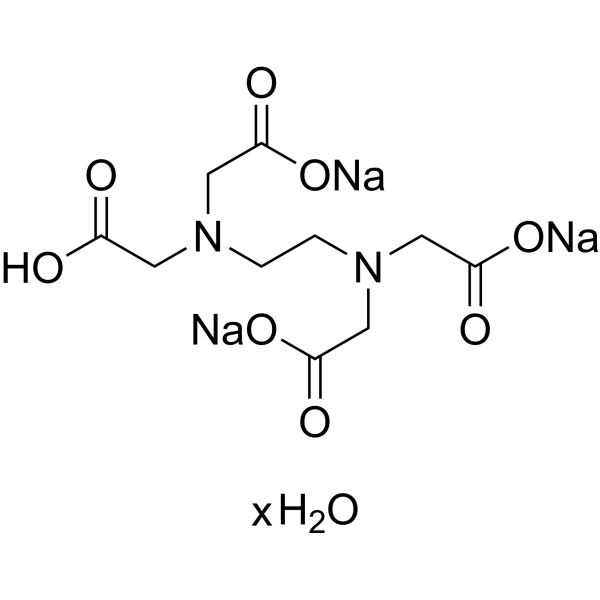
- Formula: C10H13N2Na3O8 · xH2O
- Molecular Weight:376.20
-
Storage:
Store at room temperature, keep dry and cool.
In solvent -80°C, 1 year , -20°C, 6 months

To place orders, for customer services and technical support, please contact: MedChemExpress USA
Tel: 609-228-6898 E-mail: [email protected] [email protected]


-
 Biological Activity
-
Chemical Information
-
Solvent & Solubility
- Protocols
- Purity & Documentation
- References
-
 Help & FAQs


-
HY-D0861
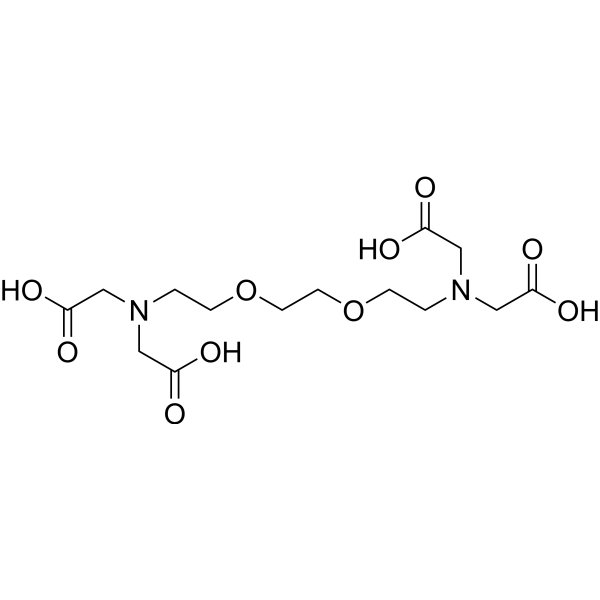
EGTACalcium Ion Chelator -
HY-Y0682
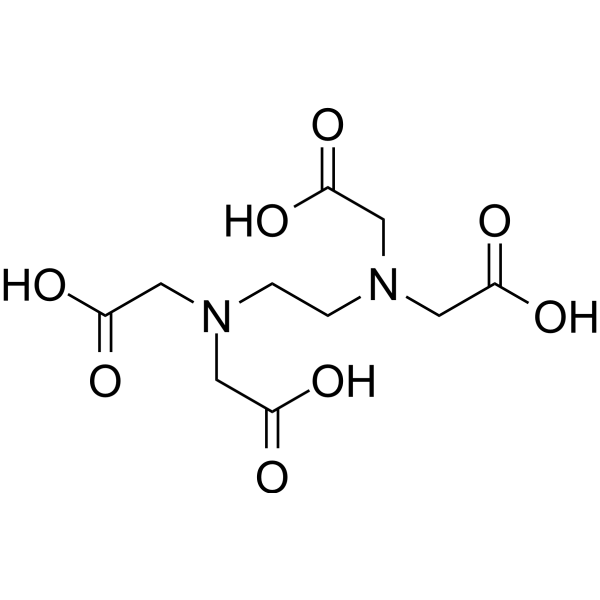
Ethylenediaminetetraacetic acidMetal Chelator -
HY-D0836
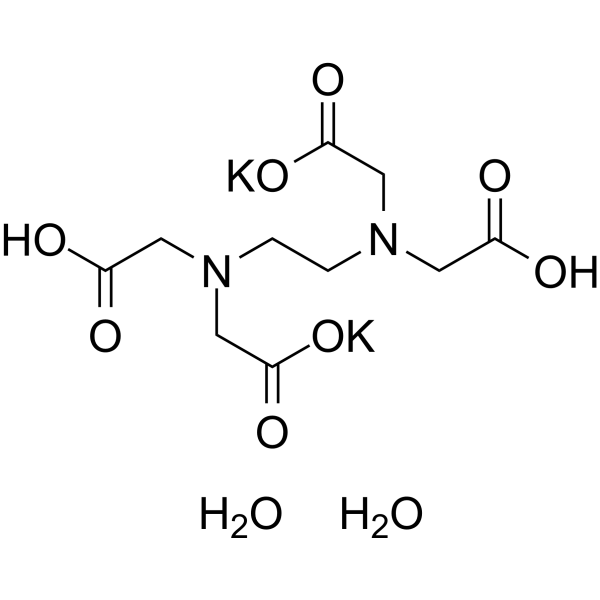
EDTA dipotassium dihydrateMetal Chelators -
HY-Y0682A
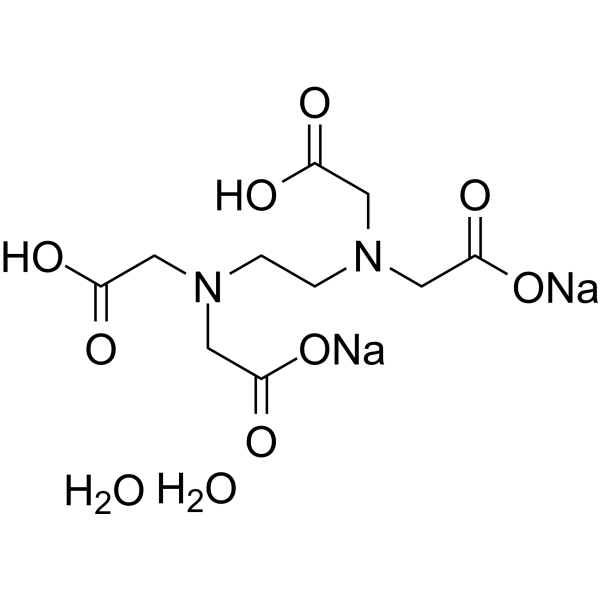
Ethylenediaminetetraacetic acid disodium dihydrateMetal Chelators -

HY-Y0682I
0.5M Ethylenediaminetetraacetic acid Solution, pH 8.0EDTA Solution -
HY-B0988
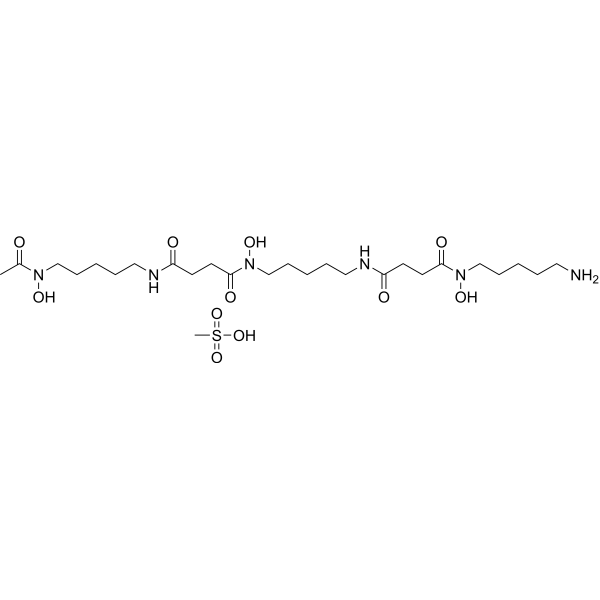
Deferoxamine mesylateIron Chelator -
HY-W011500
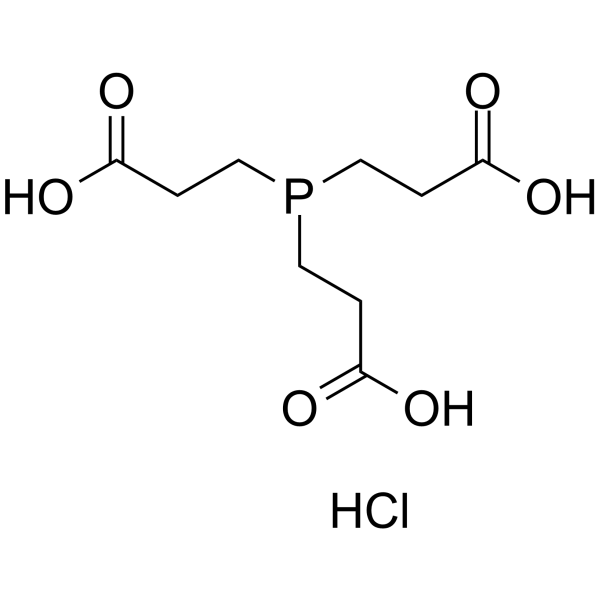
TCEP hydrochlorideNon-Thiol Reducing Agent -

HY-B0988R
Deferoxamine mesylate (Standard)Iron Chelator -
HY-131926
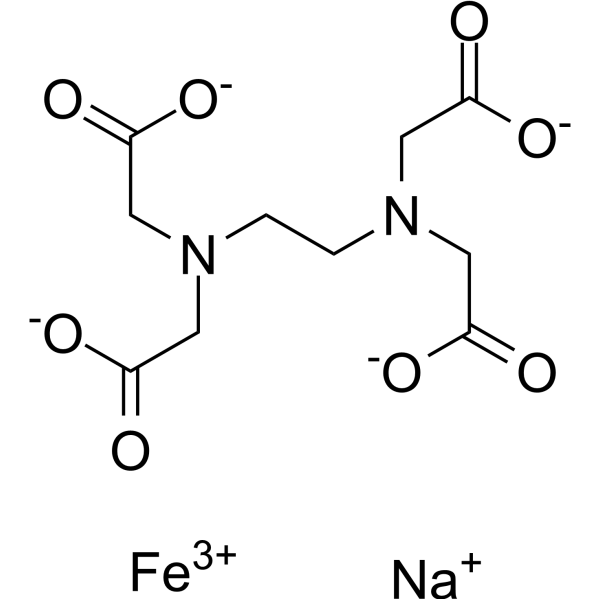
EDTA (iron sodium)Iron Supplement -

HY-Y0682R
Ethylenediaminetetraacetic acid (Standard)Metal Chelators -

HY-Y0682AR
Ethylenediaminetetraacetic acid disodium dihydrate (Standard)Metal Chelators -

HY-W243460
EDTA copper(II) disodium salt, 97%Chelating Agent
Publications Citing Use of MedChemExpress (MCE) EDTA hydrate sodium
More- Nat Immunol. 2025 Oct;26(10):1660-1672. [Abstract]
- J Extracell Vesicles. 2025 Sep;14(9):e70162. [Abstract]
- Bone Res. 2025 Mar 3;13(1):30. [Abstract]
- Neuron. 2025 Jul 29:S0896-6273(25)00509-4. [Abstract]
- J Nanobiotechnology. 2025 Mar 6;23(1):175. [Abstract]
- Nucleic Acids Res. 2024 Dec 11;52(22):14112-14132. [Abstract]
- Adv Sci (Weinh). 2026 May;13(25):e15362. [Abstract]
- Adv Sci (Weinh). 2025 Apr;12(13):e2415229. [Abstract]
- Adv Sci (Weinh). 2025 Feb;12(6):e2411261. [Abstract]
- Adv Sci (Weinh). 2023 Feb;10(4):e2204998. [Abstract]
- Cell Death Dis. 2026 Jun 30.
- Int J Biol Macromol. 2026 Jan;335(Pt 2):149182. [Abstract]
- Int J Biol Macromol. 2025 Jun;311(Pt 3):144068. [Abstract]
- Int J Biol Macromol. 2023 Jan 15:225:1182-1192. [Abstract]
- EMBO Mol Med. 2025 Oct 15. [Abstract]
- Colloids Surf B Biointerfaces. 2024 Feb:234:113680. [Abstract]
- Molecules. 2024 Jul 30;29(15):3590. [Abstract]
- Biochim Biophys Acta Mol Basis Dis. 2026 Jan 24;1872(4):168169. [Abstract]
- Ann Med. 2025 Dec;57(1):2548045. [Abstract]
- Food Qual Saf. 2025 Aug 4.
- iScience. 2026 Jun 1;29(6):116200. [Abstract]
- J Orthop Surg Res. 2025 Apr 22;20(1):403. [Abstract]
- J Diabetes Investig. 2026 Jun 8. [Abstract]
- Breast Cancer (Dove Med Press). 2025 Dec 20:17:1265-1278. [Abstract]
- Cell Immunol. 2024 Jan-Feb:395-396:104781. [Abstract]
- Dermatol Sin. 2026 Jul-Sep;44(3):267-278.
- Opt Mater Express. 2026 Jun 23;16(7):2151-2163.
- BMC Med Genomics. 2025 Aug 9;18(1):128. [Abstract]
- Biosci Biotechnol Biochem. 2026 Jun 23;90(7):877-885. [Abstract]
- bioRxiv. 2023 Sep 8.
 Customer Validation & Images

-
IHC


Biological Activity
Description
In Vitro
EDTA hydrate sodium has a strong bactericidal effect on the cell wall of P. aeruginosa and a. faecalis[4].
EDTA (0.005-0.01 M) hydrate sodium has good heavy metal extraction in contaminated silty-clay-loam soil columns, can extract Pb, Cd and Zn in a concentration-dependent way with an extraction efficiency sequence of Pb > Cd > Zn[6].
EDTA (1.2 mM) hydrate sodium enhances the activity of the CRE driving promoter by activating T-cell death-associated gene 8 (TDAG8) in HEK293T cells, thereby enhancing the production of cAMP in the cells[7].
When EDTA hydrate sodium is prepared, NaOH is needed to adjust it in order to dissolve it. A relatively large amount of NaOH is required, and the dissolution is instantaneous, so NaOH needs to be added slowly, little by little.
MedChemExpress (MCE) has not independently confirmed the accuracy of these methods. They are for reference only.
In Vivo
MedChemExpress (MCE) has not independently confirmed the accuracy of these methods. They are for reference only.
-
Animal Model:Male Wistar rat model of cirrhosis induced by CCl4[5]
-
Dosage:60 mg/kg, 120 mg/kg, 240 mg/kg
-
Administration:Intraperitoneal injection (i.p.); Three times per week for 3 weeks (during this period, CCl4 administration continued). After CCl4 and mineral oil mixture treatment (200 μL/mouse; i.p.; Three times per week for eight weeks).
-
Result:Kept kept all the rats alive at the 60 mg/kg dose, but died at 120 and 240 mg/kg.
Reduced fibrosis of the liver in surviving rats (20%).
-
Animal Model:Male Wistar rat model of cirrhosis induced by CCl[5]
-
Dosage:60 mg/kg
-
Administration:Intraperitoneal injection (i.p.); Three times per week for 11 weeks. (Preventive Ethylenediaminetetraacetic acid (EDTA) group: EDTA and CCl4 were administered during 11 weeks, three times per week on alternate days).
Intraperitoneal injection (i.p.); Three times per week. After CCl4 treatment (i.p.; Three times per week for eight weeks) (Therapeutic EDTA group: EDTA and CCl4 were administered for 3 weeks, three times per week on alternate days). -
Result:Increased sod activity by 50% in the preventive EDTA group. (Compared with untreated EDTA group)
Increased Cp activity in the preventive EDTA (30%) and therapeutic EDTA (20%) groups. (Compared with the fibrotic group)
Decreased mRNA expression of the pro-inflammatory molecule (TNF-α and LI-6) and the profibrogenic molecules (TGF-β and αCOLI) in both the prevention and treatment groups.
- Fibrosis/Collagen Morphometry
- Research Protocol for Infectious Diseases
- Collagen: Sirius Red Staining
- Baculovirus-insect cell protein expression and purification
- ROS/oxidative-stress fluorescent staining
- Connective Tissue: Masson's Trichrome/Collagen Trichrome Staining
- Research Protocol for Inflammation-related Diseases
- Inclusion-body expression, solubilization, refolding and purification
- Protocol For Protein Expression And Purification
- Mammalian transient protein expression and purification
- Liver Histomorphometry
Clinical Trial
| NCT Number | Sponsor | Condition | Start Date |
Phase

|
|---|---|---|---|---|
| NCT01329991 | Plexxikon| | 2011-05 | PHASE1 |


Chemical Information
-
CAS No. 85715-60-2
-
Appearance Solid
-
Molecular Weight 376.20
-
Formula C10H13N2Na3O8 · xH2O
-
Color White to off-white
-
SMILES
O=C(O[Na])CN(CC(O[Na])=O)CCN(CC(O[Na])=O)CC(O)=O.O.[x]
-
Synonyms
Ethylenediaminetetraacetic acid hydrate sodium
-
Shipping
Room temperature in continental US; may vary elsewhere.
-
Storage
Store at room temperature, keep dry and cool
In solvent -80°C 1 year -20°C 6 months


Publications (30)
-
Journal Impact Factor
-
Most Recent
-
Nat Immunol
Delaying pyroptosis with an AI-screened gasdermin D pore blocker mitigates inflammatory response. [Abstract]2025 Oct;26(10):1660-1672. PMID: 40954252
EDTA hydrate sodium purchased from MedChemExpress. Usage Cited in: Nat Immunol. 2025 Oct;26(10):1660-1672. [Abstract]
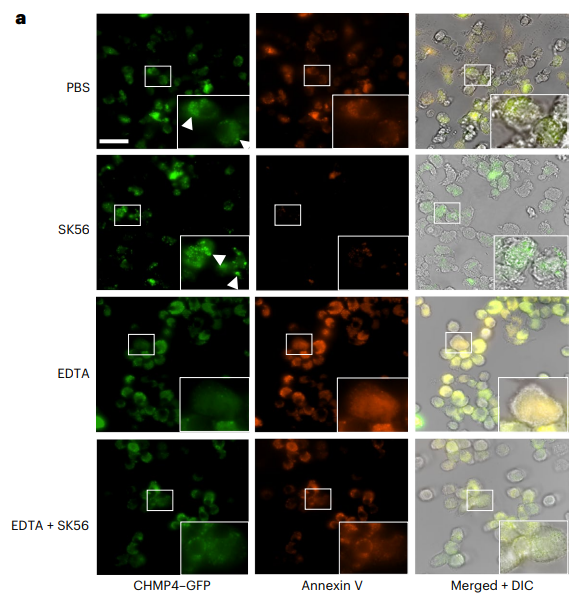
Representative images of CHMP4–GFP puncta (arrowheads; left) and percentage of CHMP4 speckle+ (top right) or Annexin V+ (bottom right) cells in BMDMs incubated with PBS, 15 µM SK56, 2 mM EDTA or EDTA + SK56 at 2 h after the addition of 1 μg/ml LPS + 10 μM nigericin; scale bar, 50 µm; n = 5 repeats
-
J Extracell Vesicles
Targeted Blockage of Pathological Extracellular Vesicles and Particles From Fibroblast-Like Synoviocytes for Osteoarthritis Relief: Proteomic Analysis and Cellular Effect. [Abstract]2025 Sep;14(9):e70162. PMID: 40919882 -
Bone Res
Enhanced SIRT3 expression restores mitochondrial quality control mechanism to reverse osteogenic impairment in type 2 diabetes mellitus. [Abstract]2025 Mar 3;13(1):30. PMID: 40025004 -
Neuron
Social interaction in mice suppresses breast cancer progression via a corticoamygdala neural circuit. [Abstract]2025 Jul 29:S0896-6273(25)00509-4. PMID: 40752486 -
J Nanobiotechnology
2025 Mar 6;23(1):175. PMID: 40050923 -
Nucleic Acids Res
2024 Dec 11;52(22):14112-14132. PMID: 39673265 -
Adv Sci (Weinh)
Atrophic Skeletal Muscle-Derived Extracellular Vesicles Transfer miR-125a-5p to Inhibit Bone Formation in Osteoporosis during Aging. [Abstract]2026 May;13(25):e15362. PMID: 41747076 -
Adv Sci (Weinh)
A Novel tRF, HCETSR, Derived From tRNA-Glu/TTC, Inhibits HCC Malignancy by Regulating the SPBTN1-catenin Complex Axis. [Abstract]2025 Apr;12(13):e2415229. PMID: 39921434 -
Adv Sci (Weinh)
Hybrid Cell Membrane-Engineered Nanocarrier for Triple-Action Strategy to Address Pseudomonas aeruginosa Infection. [Abstract]2025 Feb;12(6):e2411261. PMID: 39721013 -
Adv Sci (Weinh)
Regulatory Fibroblast-Like Synoviocytes Cell Membrane Coated Nanoparticles: A Novel Targeted Therapy for Rheumatoid Arthritis. [Abstract]2023 Feb;10(4):e2204998. PMID: 36509660 -
-
Int J Biol Macromol
Targeting glutaryl-CoA dehydrogenase-driven acetyl coenzyme A acetyltransferase 2 crotonylation dysregulates cholesterol metabolism in pancreatic cancer cells. [Abstract]2026 Jan;335(Pt 2):149182. PMID: 41285334 -
Int J Biol Macromol
FKBP5 inhibitor suppresses platelet activation and thrombosis by inhibiting IKBKE/PI3K/Rap1 pathway. [Abstract]2025 Jun;311(Pt 3):144068. PMID: 40345291 -
Int J Biol Macromol
pH-responsive magnetic Fe3O4/carboxymethyl chitosan/aminated lignosulfonate nanoparticles with uniform size for targeted drug loading. [Abstract]2023 Jan 15:225:1182-1192. PMID: 36423809 -
EMBO Mol Med
Isoginkgetin antagonizes ALS pathologies in its animal and patient iPSC models via PINK1-Parkin-dependent mitophagy. [Abstract]2025 Oct 15. PMID: 41094045 -
Colloids Surf B Biointerfaces
Platelet membrane-derived biomimetic microbubbles with enhanced targeting ability for the early detection of myocardial ischemia-reperfusion injury. [Abstract]2024 Feb:234:113680. PMID: 38101143 -
Molecules
Enhancing Functional Properties and Protein Structure of Almond Protein Isolate Using High-Power Ultrasound Treatment. [Abstract]2024 Jul 30;29(15):3590. PMID: 39124994 -
Biochim Biophys Acta Mol Basis Dis
Goosecoid promotes hepatic stellate cell epithelial-mesenchymal transition via transcriptional activation of serum- and glucocorticoid-induced protein kinase 1 in liver fibrosis. [Abstract]2026 Jan 24;1872(4):168169. PMID: 41581345 -
Ann Med
Multi-omics analysis and validation of autophagy-related diagnostic biomarker in osteoarthritis. [Abstract]2025 Dec;57(1):2548045. PMID: 40828304 -
-
iScience
Inhibition of soluble epoxide hydrolase ameliorates renal injury in IgA nephropathy by restoring epoxyeicosatrienoic acids. [Abstract]2026 Jun 1;29(6):116200. PMID: 42256278 -
J Orthop Surg Res
Epimedin B protects against bone loss and inflammation in diabetic osteoporosis rats by regulating OPG/RANKL pathway. [Abstract]2025 Apr 22;20(1):403. PMID: 40264188 -
J Diabetes Investig
Hypoxia-preconditioned adipose-derived mesenchymal stem cells-derived exosomes transferring H19 obstruct neutrophil extracellular traps formation via HOXA5-mediated inactivation of TLR4/NF-κB/NLRP3 inflammatory signaling. [Abstract]2026 Jun 8. PMID: 42257551 -
Breast Cancer (Dove Med Press)
Dexmedetomidine Suppresses Mitochondrial Autophagy and Apoptosis While Promoting Proliferation in Breast Cancer Cells in vitro via PI3K/AKT Signaling. [Abstract]2025 Dec 20:17:1265-1278. PMID: 41466772 -
Cell Immunol
Dexamethasone alleviates pulmonary sarcoidosis by regulating the TGF-β/Smad3 signaling to promote Th17/Treg cell rebalance. [Abstract]2024 Jan-Feb:395-396:104781. PMID: 38159414 -
-
-
BMC Med Genomics
Arsenic sulfide alleviates the progression of liver cancer malignancy by inhibiting the expression of TLCD1 in mice. [Abstract]2025 Aug 9;18(1):128. PMID: 40783540 -
Biosci Biotechnol Biochem
Effect of pirfenidone on the regulation of lymph angiogenesis by PLK1 signaling to inhibit metastasis of lung cancer in vivo. [Abstract]2026 Jun 23;90(7):877-885. PMID: 42012458 -


Solvent & Solubility
In Vitro:
H2O : 16.67 mg/mL (44.31 mM; Need ultrasonic)
Please refer to the solubility information to select the appropriate solvent. Once prepared, please aliquot and store the solution to prevent product inactivation from repeated freeze-thaw cycles.
Storage method and period of stock solution: -80°C, 1 year; -20°C, 6 months. When stored at -80°C, please use it within 1 year. When stored at -20°C, please use it within 6 months.
* Note: If you choose water as the stock solution, please dilute it to the working solution, then filter and sterilize it with a 0.22 μm filter before use.
Please refer to the solubility information to select the appropriate solvent. Once prepared, please aliquot and store the solution to prevent product inactivation from repeated freeze-thaw cycles.
Storage method and period of stock solution: -80°C, 1 year; -20°C, 6 months. When stored at -80°C, please use it within 1 year. When stored at -20°C, please use it within 6 months.
* Note: If you choose water as the stock solution, please dilute it to the working solution, then filter and sterilize it with a 0.22 μm filter before use.
Concentration (start) × Volume (start) = Concentration (final) × Volume (final)


Purity & Documentation
-
Data Sheet (282 KB)
-
SDS (393 KB)
- English - EN (393 KB)
- Français - FR (393 KB)
- Deutsch - DE (393 KB)
- Norwegian - NO (393 KB)
- Español - ES (393 KB)
- Swedish - SV (393 KB)
- Italian - IT (393 KB)
- Korean - KR (393 KB)
- Portuguese - PT (393 KB)
-
Handling Instructions (2659 KB)
References
[1]. Chumanov RS, et al. Artifact-inducing enrichment of ethylenediaminetetraacetic acid and ethyleneglycoltetraacetic acid on anion exchange resins. Anal Biochem. 2011 May 1;412(1):34-9. [Content Brief]
[2]. Banfi G, et al. The role of ethylenediamine tetraacetic acid (EDTA) as in vitro anticoagulant for diagnostic purposes. Clin Chem Lab Med. 2007;45(5):565-76. [Content Brief]
[3]. Ibad A, et al. Chelation therapy in the treatment of cardiovascular diseases. J Clin Lipidol. 2016 Jan-Feb;10(1):58-62. [Content Brief]
[4]. Gray GW, et al. The effect of ethylenediaminetetra-acetic acid on the cell walls of some gram-negative bacteria. J Gen Microbiol. 1965 Jun;39(3):385-99. [Content Brief]
[5]. González-Cuevas J, et al. Ethylenediaminetetraacetic acid induces antioxidant and anti-inflammatory activities in experimental liver fibrosis. Redox Rep. 2011;16(2):62-70. [Content Brief]
[7]. Deai M, et al. Ethylenediaminetetraacetic acid (EDTA) enhances cAMP production in human TDAG8-expressing cells. Biochem Biophys Res Commun. 2022 Oct 20;626:15-20. [Content Brief]


Complete Stock Solution Preparation Table
Please refer to the solubility information to select the appropriate solvent. Once prepared, please aliquot and store the solution to prevent product inactivation from repeated freeze-thaw cycles.
Storage method and period of stock solution: -80°C, 1 year; -20°C, 6 months. When stored at -80°C, please use it within 1 year. When stored at -20°C, please use it within 6 months.
| Optional Solvent | Concentration Solvent Mass | 1 mg | 5 mg | 10 mg | 25 mg |
|---|---|---|---|---|---|
| H2O | 1 mM | 2.6582 mL | 13.2908 mL | 26.5816 mL | 66.4540 mL |
| 5 mM | 0.5316 mL | 2.6582 mL | 5.3163 mL | 13.2908 mL | |
| 10 mM | 0.2658 mL | 1.3291 mL | 2.6582 mL | 6.6454 mL | |
| 15 mM | 0.1772 mL | 0.8861 mL | 1.7721 mL | 4.4303 mL | |
| 20 mM | 0.1329 mL | 0.6645 mL | 1.3291 mL | 3.3227 mL | |
| 25 mM | 0.1063 mL | 0.5316 mL | 1.0633 mL | 2.6582 mL | |
| 30 mM | 0.0886 mL | 0.4430 mL | 0.8861 mL | 2.2151 mL | |
| 40 mM | 0.0665 mL | 0.3323 mL | 0.6645 mL | 1.6614 mL |
* Note: If you choose water as the stock solution, please dilute it to the working solution, then filter and sterilize it with a 0.22 μm filter before use.


EDTA hydrate sodium Related Classifications
HY-W127774 Related Classifications
 Powered by Bioz