From 11:00 pm to 12:00 pm EST ( 8:00 pm to 9:00 pm PST ) on January 6th, the website will be under maintenance. We are sorry for the inconvenience. Please arrange your schedule properly.
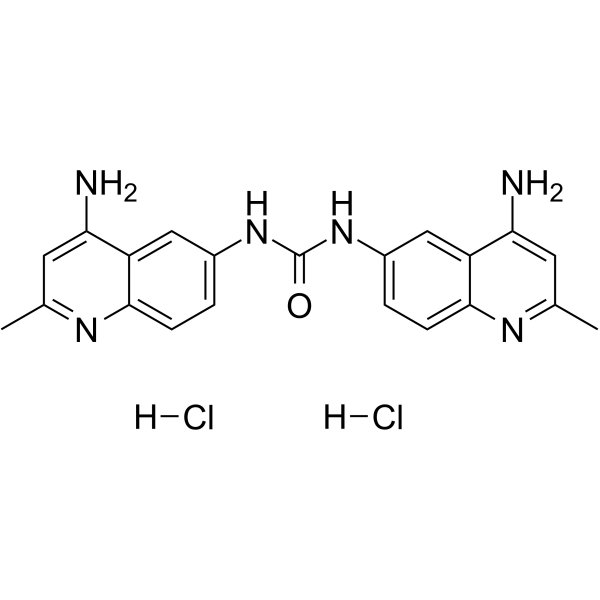
Surfen dihydrochloride is a potent heparan sulfate antagonist. Surfen inhibits FGF2 binding and signal transduction. Surfen binds to glycosaminoglycans and reduces tau hyperphosphorylation. Surfen dihydrochloride inhibits the activity of recombinant uronyl 2-O-sulfotransferase with an IC50 of approximately 2 μM. Surfen dihydrochloride inhibits HSV-1 viral infection. Surfen dihydrochloride inhibits neural differentiation, delays remyelination, and alleviates EAE .
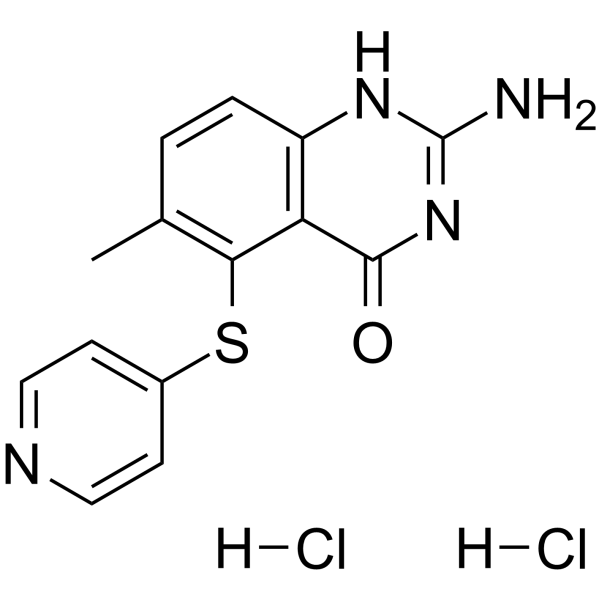
Nolatrexed dihydrochloride (AG 337) is an orally active and non-competitive lipophilic inhibitor of thymidylate synthase with a Ki of 11 nM for human thymidylate synthase. Nolatrexed dihydrochloride interacts at the folate cofactor binding site of the enzyme. Nolatrexed dihydrochloride increases sulfotransferases. Nolatrexed dihydrochloride induces cell cycle arrest in S phase of cancer cells. Nolatrexed dihydrochloride exhibits anticancer activity against cervical cancer.
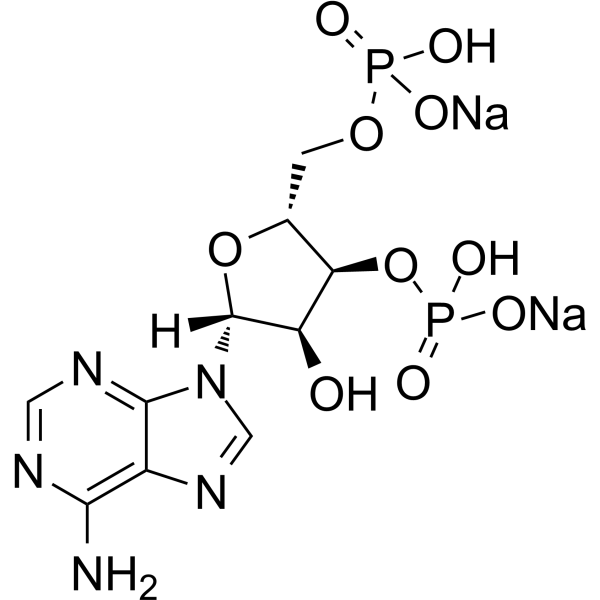
Adenosine 3',5'-diphosphate disodium is an endogenous purine nucleotide. Adenosine 3',5'-diphosphate disodium acts as an inhibitor of bovine adrenal estrogen sulfotransferase (EST) with a Ki value of 7.0 μM. It also serves as an indispensable specific cofactor for the pregnenolone-binding protein (PBP) steroid-binding complex, with an EC50 value of 1.5 μM in guinea pigs .
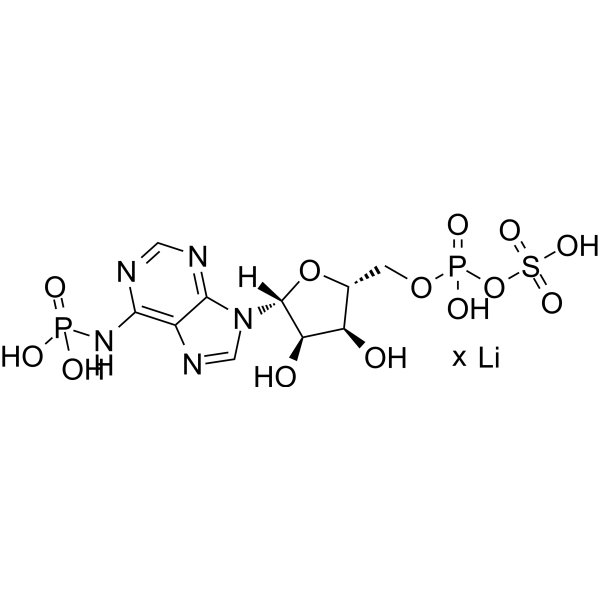
Adenosine 3'-phosphate 5'-phosphosulfate lithium, an adenine nucleotide derivative, is a selective P2Y1 antagonist with no effect on P2Y2, P2Y4, or P2Y6 receptors. Adenosine 3'-phosphate 5'-phosphosulfate lithium can competitive inhibit ADP-induced platelet aggregation, as well as the ability of ADP to cause shape change and increases in Ca 2+ in platelets, but had no effect on the inhibition of stimulated adenylate cyclase by ADP. Adenosine 3'-phosphate 5'-phosphosulfate lithium is a co-substrate used for the sulfonation of glycans. Adenosine 3'-phosphate 5'-phosphosulfate lithium can be used for Golgi-resident PAP-specific 3'-phosphatase-coupled sulfotransferase assays, which as donor substrate to transfer a sulfonate group .
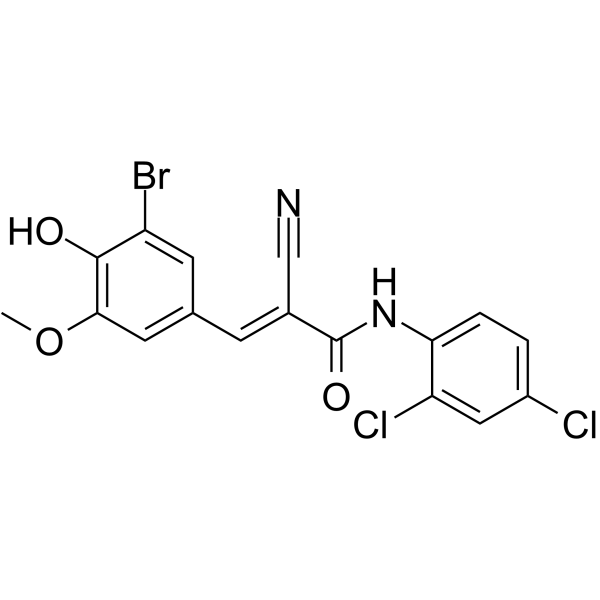
Chst15-IN-1 is a potent reversible covalent Chst15 inhibitor. Chst15-IN-1 effectively inhibits chondroitin sulfate-E (CS-E) sulfation levels and other closely related glycosaminoglycans (GAG) sulfotransferases. Chst15-IN-1, as a selective sulfotransferase inhibitor, can diminish the inhibitory effects of chondroitin sulfate proteoglycans (CSPGs), and can be used for the stimulation of neuronal repair .
Dopamine 4-sulfate (DA-4S) is an inactive metabolite of the catecholamine dopamine. It is formed from dopamine by the sulfotransferase (SULT) isoform SULT1A3. Dopamine 4-O-sulfate is found at lower levels in the brain and circulation than dopamine 3-O-sulfate.
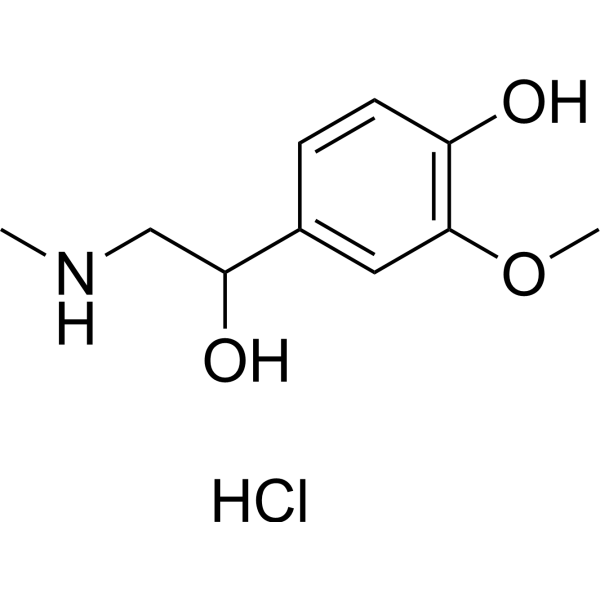
(Rac)-Metanephrine hydrochloride is a metabolite of epinephrine and a substrate of the sulfotransferaseSULT1A3. (Rac)-Metanephrine hydrochloride undergoes sulfonation at its p-hydroxyl group via a reaction catalyzed by SULT1A3. (Rac)-Metanephrine hydrochloride is an isomer of Metanephrine (HY-113299) hydrochloride, and it is applicable to the research of pheochromocytoma .
Adenosine 3'-phosphate 5'-phosphosulfate, an adenine nucleotide derivative, is a selective P2Y1 antagonist with no effect on P2Y2, P2Y4, or P2Y6 receptors. Adenosine 3'-phosphate 5'-phosphosulfate can competitive inhibit ADP-induced platelet aggregation, as well as the ability of ADP to cause shape change and increases in Ca 2+ in platelets, but had no effect on the inhibition of stimulated adenylate cyclase by ADP. Adenosine 3'-phosphate 5'-phosphosulfate is a co-substrate used for the sulfonation of glycans. Adenosine 3'-phosphate 5'-phosphosulfate can be used for Golgi-resident PAP-specific 3'-phosphatase-coupled sulfotransferase assays, which as donor substrate to transfer a sulfonate group .
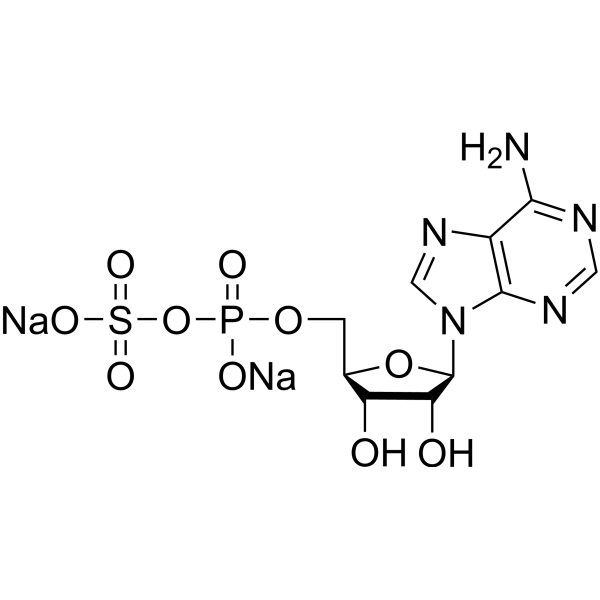
Adenosine 5'-phosphosulfate disodium is a metabolism intermediates of sulfur. Adenosine 5'-phosphosulfate disodium can used in study sulfotransferases and sulforeductases in various organisms .
Surfen is a potent heparan sulfate antagonist. Surfen inhibits FGF2 binding and signal transduction. Surfen binds to glycosaminoglycans and reduces tau hyperphosphorylation. Surfen inhibits the activity of recombinant uronyl 2-O-sulfotransferase with an IC50 of approximately 2 μM. Surfen inhibits HSV-1 viral infection. Surfen inhibits neural differentiation, delays remyelination, and alleviates EAE .
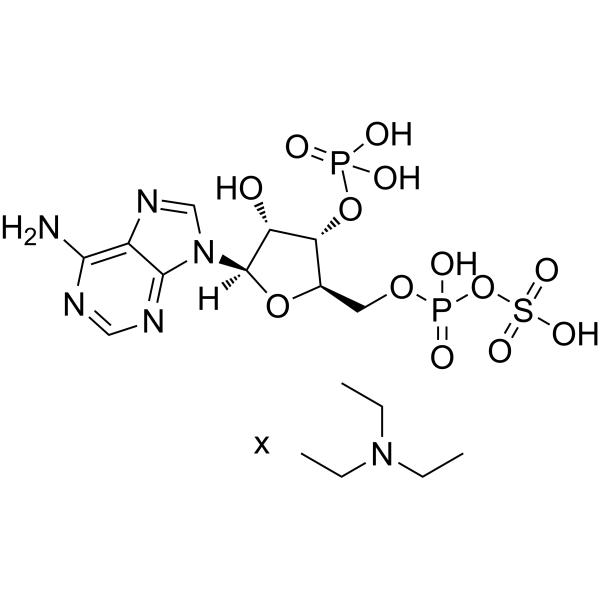
Adenosine 3'-phosphate 5'-phosphosulfate triethylamine, an adenine nucleotide derivative, is a selective P2Y1 antagonist with no effect on P2Y2, P2Y4, or P2Y6 receptors. Adenosine 3'-phosphate 5'-phosphosulfate triethylamine can competitive inhibit ADP-induced platelet aggregation, as well as the ability of ADP to cause shape change and increases in Ca 2+ in platelets, but had no effect on the inhibition of stimulated adenylate cyclase by ADP. Adenosine 3'-phosphate 5'-phosphosulfate triethylamine is a co-substrate used for the sulfonation of glycans. Adenosine 3'-phosphate 5'-phosphosulfate triethylamine can be used for Golgi-resident PAP-specific 3'-phosphatase-coupled sulfotransferase assays, which as donor substrate to transfer a sulfonate group .
Heparan Sulfate 3-O-Sulfotransferase 1 is a sulfotransferase. Heparan Sulfate 3-O-Sulfotransferase controls cellular production of the anticoagulant heparan sulfate related structure .
Cholic acid 3-sulfate is the sulfated metabolite of Cholic acid (HY-N0324), produced by liver enzyme sulfotransferase-2A1. Cholic acid 3-sulfate is less toxic than the parent compound, thus serving as a detoxification pathway for bile acids. Cholic acid 3-sulfate does not have the effect of stimulating intestinal secretion .
1-Methylpyrene is a ubiquitous environmental pollutant and rodent carcinogen. Its mutagenic activity depends on sequential activation by various CYP and sulfotransferase (SULT) enzymes. 1-Methylpyrene induces chromosome loss and mitotic disturbance, proba
Adenosine 3'-phosphate 5'-phosphosulfate lithium hydrate, an adenine nucleotide derivative, is a selective P2Y1 antagonist with no effect on P2Y2, P2Y4, or P2Y6 receptors. Adenosine 3'-phosphate 5'-phosphosulfate lithium hydrate can competitive inhibit ADP-induced platelet aggregation, as well as the ability of ADP to cause shape change and increases in Ca 2+ in platelets, but had no effect on the inhibition of stimulated adenylate cyclase by ADP. Adenosine 3'-phosphate 5'-phosphosulfate lithium hydrate is a co-substrate used for the sulfonation of glycans. Adenosine 3'-phosphate 5'-phosphosulfate lithium hydrate can be used for Golgi-resident PAP-specific 3'-phosphatase-coupled sulfotransferase assays, which as donor substrate to transfer a sulfonate group .
Tyrosylprotein Sulfotransferase 2 (TPST-2) is a subtype of TPST. Tyrosylprotein Sulfotransferase is a 54- to 50-kDa integral membrane glycoprotein of the trans-Golgi network found in essentially all tissues investigated, catalyzing the tyrosine O-sulfation of soluble and membrane proteins passing through this compartment .
Carbohydrate Sulfotransferase 4 (EC:2.8.2.-) can catalyze sulphate transfer to the hydroxyl group at C-6 position of the non-reducing GlcNAc residue within O-linked mucin-type glycans .
Sulfatase, Abalone (EC 3.1.6.1) is an esterase that catalyzes the hydrolysis of sulfate esters. Sulfatase, together with sulfotransferases, constitutes the main catalytic mechanism for the synthesis and hydrolysis of sulfate esters.
Sulfatase, Aerobacter aerogenes (EC 3.1.6.1) is an esterase that catalyzes the hydrolysis of sulfate esters. Sulfatase, together with sulfotransferases, constitutes the main catalytic mechanism for the synthesis and hydrolysis of sulfate esters.
Sulfatase, Patella vulgata (keyhole limpet) (EC 3.1.6.1) is an esterase that catalyzes the hydrolysis of sulfate esters. Sulfatase, together with sulfotransferases, constitutes the main catalytic mechanism for the synthesis and hydrolysis of sulfate esters.
Norethisterone caproate is an impurity of norethisterone that exhibits inhibitory activity against cytosolic sulfotransferase (SULT). Norethisterone caproate inhibits estrus in sexually mature rats during the estrous cycle, displaying long-acting progestogenic activity. Norethisterone caproate can be used in the research of reproductive system diseases .
1-Methylpyrene is a ubiquitous environmental pollutant and rodent carcinogen. Its mutagenic activity depends on sequential activation by various CYP and sulfotransferase (SULT) enzymes. 1-Methylpyrene induces chromosome loss and mitotic disturbance, proba
Adenosine 3'-phosphate 5'-phosphosulfate lithium, an adenine nucleotide derivative, is a selective P2Y1 antagonist with no effect on P2Y2, P2Y4, or P2Y6 receptors. Adenosine 3'-phosphate 5'-phosphosulfate lithium can competitive inhibit ADP-induced platelet aggregation, as well as the ability of ADP to cause shape change and increases in Ca 2+ in platelets, but had no effect on the inhibition of stimulated adenylate cyclase by ADP. Adenosine 3'-phosphate 5'-phosphosulfate lithium is a co-substrate used for the sulfonation of glycans. Adenosine 3'-phosphate 5'-phosphosulfate lithium can be used for Golgi-resident PAP-specific 3'-phosphatase-coupled sulfotransferase assays, which as donor substrate to transfer a sulfonate group .
(Rac)-Metanephrine hydrochloride is a metabolite of epinephrine and a substrate of the sulfotransferaseSULT1A3. (Rac)-Metanephrine hydrochloride undergoes sulfonation at its p-hydroxyl group via a reaction catalyzed by SULT1A3. (Rac)-Metanephrine hydrochloride is an isomer of Metanephrine (HY-113299) hydrochloride, and it is applicable to the research of pheochromocytoma .
Heparan Sulfate 3-O-Sulfotransferase 1 is a sulfotransferase. Heparan Sulfate 3-O-Sulfotransferase controls cellular production of the anticoagulant heparan sulfate related structure .
Heparan Sulfate Glucosamine 3-O-Sulfotransferase 3 is a sulfotransferase. Heparan Sulfate Glucosamine 3-O-Sulfotransferase 3 is important in heparan sulfate biosynthesis .
Adenosine 3'-phosphate 5'-phosphosulfate lithium hydrate, an adenine nucleotide derivative, is a selective P2Y1 antagonist with no effect on P2Y2, P2Y4, or P2Y6 receptors. Adenosine 3'-phosphate 5'-phosphosulfate lithium hydrate can competitive inhibit ADP-induced platelet aggregation, as well as the ability of ADP to cause shape change and increases in Ca 2+ in platelets, but had no effect on the inhibition of stimulated adenylate cyclase by ADP. Adenosine 3'-phosphate 5'-phosphosulfate lithium hydrate is a co-substrate used for the sulfonation of glycans. Adenosine 3'-phosphate 5'-phosphosulfate lithium hydrate can be used for Golgi-resident PAP-specific 3'-phosphatase-coupled sulfotransferase assays, which as donor substrate to transfer a sulfonate group .
N-Deacetylase/N-Sulfotransferase 2 is a sulfotransferase. N-Deacetylase/N-Sulfotransferase 2 synthesizes serglycin-bound heparin chains in mast cells .
Tyrosylprotein Sulfotransferase 2 (TPST-2) is a subtype of TPST. Tyrosylprotein Sulfotransferase is a 54- to 50-kDa integral membrane glycoprotein of the trans-Golgi network found in essentially all tissues investigated, catalyzing the tyrosine O-sulfation of soluble and membrane proteins passing through this compartment .
Carbohydrate Sulfotransferase 10 (EC:2.8.2.-) can catalyze sulphate transfer to position 3 of terminal glucuronic acid of both protein- and lipid-linked oligosaccharides .
Carbohydrate Sulfotransferase 5 (EC:2.8.2.-) can catalyze sulphate transfer to position 6 of non- GlcNAc residues and O-linked sugars of mucin-type acceptors .
Carbohydrate Sulfotransferase 7 (EC:2.8.2.17) can catalyze sulphate transfer to position 6 of non- GlcNAc residues and to position 6 of the GalNAc residue of chondroitin .
Carbohydrate Sulfotransferase 2 (EC:2.8.2.-) can catalyze sulphate transfer to position 6 of non-reducing GlcNAc residues within keratan-like structures on N-linked glycans and within mucin-associated glycans .
Carbohydrate Sulfotransferase 4 (EC:2.8.2.-) can catalyze sulphate transfer to the hydroxyl group at C-6 position of the non-reducing GlcNAc residue within O-linked mucin-type glycans .
Cholic acid 3-sulfate is the sulfated metabolite of Cholic acid (HY-N0324), produced by liver enzyme sulfotransferase-2A1. Cholic acid 3-sulfate is less toxic than the parent compound, thus serving as a detoxification pathway for bile acids. Cholic acid 3-sulfate does not have the effect of stimulating intestinal secretion .
The SULT1C4 protein is an important member of the sulfotransferase 1 family and plays a crucial role in phase II drug metabolism and binding of endogenous compounds.Its research enhances the understanding of xenobiotic metabolism and has potential applications in pharmacology.SULT1C4 Protein, Human (His) is the recombinant human-derived SULT1C4 protein, expressed by E.coli , with N-6*His labeled tag.
TPST1 (tyrosyl protein sulfotransferase 1) catalyzes the O-sulfation of tyrosine residues located within the acidic motifs of polypeptides, utilizing 3'-phosphoadenylate sulfate (PAPS) as a co-substrate. This enzymatic activity plays a crucial role in post-translational modification processes, especially sulfation, which contributes to the structural and functional diversity of proteins. TPST1 Protein, Human (HEK293, His) is the recombinant human-derived TPST1, expressed by HEK293, with N-His labeled tag.
CHST11 Protein catalyzes sulfate transfer to position 4 of the GalNAc residue in chondroitin, the main proteoglycan in cartilage and cell surfaces. It can sulfate Gal residues in desulfated dermatan sulfate, with a preference for GlcA->GalNAc units over IdoA->GalNAc units, and does not form 4,6-di-O-sulfated GalNAc when chondroitin sulfate C is the acceptor. CHST11 Protein, Human (sf9, His) is the recombinant human-derived CHST11 protein, expressed by Sf9 insect cells , with C-His labeled tag.
Sulfotransferase 1A2 (SULT1A2) is a phenol sulfotransferase with thermostable enzyme activity. SULT1A2 utilizes 3'-phospho-5'-adenylyl sulfate (PAPS) as sulfonate donor to catalyze the sulfate conjugation of catecholamines, phenolic drugs and neurotransmitters. SULT1A2 is also responsible for the sulfonation and activation of minoxidil. SULT1A2 induces the mutagenicity and carcinogenicity of certain substrates by influencing DNA adduct formation. SULT1A2 Protein, Human (His) is the recombinant human-derived SULT1A2 protein, expressed by E. coli , with N-6*His labeled tag.
The CHST3 protein utilizes PAPS to keyly catalyze the transfer of sulfate to position 6 of GalNAc in chondroitin, the major proteoglycan in cartilage. CHST3 also sulfonates Gal residues in keratan sulfate and sialic acid LacNAc oligosaccharides with less efficiency. CHST3 Protein, Mouse (HEK293, His) is the recombinant mouse-derived CHST3 protein, expressed by HEK293 , with N-His labeled tag.
Heparan Sulfate-6-O-Sulfotransferase-3 (HS6ST3) is an enzyme involved in modifying heparan sulfate proteoglycan biosynthesis. It is predicted to be a membrane-bound integral component. HS6ST3 shows specific expression in the adult cortex (RPKM 1.3) and frontal lobe (RPKM 0.8), implying its potential role in determining the sulfation patterns of heparan sulfate in these contexts. Heparan Sulfate-6-O-Sulfotransferase-3 Protein, Mouse (HEK293, His) is the recombinant mouse-derived Heparan Sulfate-6-O-Sulfotransferase-3 protein, expressed by HEK293 , with N-His labeled tag.
The SULT2B1 protein uses PAPS to catalyze sulfate conjugation, mainly sulfating cholesterol, and shows significant activity on steroids such as pregnenolone and DHEA.It plays a crucial role in epidermal cholesterol metabolism, regulating epidermal proliferation and differentiation.SULT2B1 Protein, Human (C-His) is the recombinant human-derived SULT2B1 protein, expressed by E.coli , with C-6*His labeled tag.
SULT1A3 protein, a sulfotransferase utilizing PAPS, catalyzes the sulfate conjugation of phenolic monoamines, including neurotransmitters (dopamine, norepinephrine, serotonin) and drugs. This activity contributes significantly to inactivation and elimination, emphasizing SULT1A3's crucial role in regulating neurotransmitter and drug levels, maintaining homeostasis, and ensuring proper biological system functioning. SULT1A3 Protein, Human (His, solution) is the recombinant human-derived SULT1A3 protein, expressed by E. coli , with N-6*His labeled tag.
SULT1A3 protein, a sulfotransferase utilizing PAPS, catalyzes the sulfate conjugation of phenolic monoamines, including neurotransmitters (dopamine, norepinephrine, serotonin) and drugs. This activity contributes significantly to inactivation and elimination, emphasizing SULT1A3's crucial role in regulating neurotransmitter and drug levels, maintaining homeostasis, and ensuring proper biological system functioning. SULT1A3 Protein, Human (N-His) is the recombinant human-derived SULT1A3, expressed by E. coli, with N-6*His labeled tag.
The SULT2A1 protein utilizes PAPS for critical sulfonation of steroids and bile acids in the liver and adrenal glands. Its multifunctional activity extends to a variety of compounds, enhancing its water solubility to facilitate renal excretion. SULT2A1 Protein, Human (His) is the recombinant human-derived SULT2A1 protein, expressed by E. coli , with N-6*His labeled tag.
The SULT2B1 protein uses PAPS to catalyze sulfate conjugation, mainly sulfating cholesterol, and shows significant activity on steroids such as pregnenolone and DHEA. It plays a crucial role in epidermal cholesterol metabolism, regulating epidermal proliferation and differentiation. SULT2B1 Protein, Human (His) is the recombinant human-derived SULT2B1 protein, expressed by E. coli , with N-His labeled tag.
The CHST15 protein is a sulfotransferase that catalyzes the transfer of sulfate to GalNAc 4-sulfate in chondroitin sulfate A to form chondroitin sulfate E with GlcA-GalNAc(4,6-SO(4)) units. It also sulfates the unique non-reducing terminal sequence GalNAc(4SO4)-GlcA(2SO4)-GalNAc(6SO4), similar to thrombomodulin chondroitin sulfate. CHST15 Protein, Human (HEK293, His) is the recombinant human-derived CHST15 protein, expressed by HEK293 , with N-His labeled tag.
SULT4A1 Protein, an atypical sulfotransferase, shows low PAPS affinity and minimal catalytic activity toward substrates like L-triiodothyronine and estrone.Despite limited efficiency, SULT4A1 may impact drug and neurotransmitter metabolism in the central nervous system (CNS).SULT4A1 Protein, Human is the recombinant human-derived SULT4A1 protein, expressed by E.coli , with tag free.
Sulfotransferase 1B1 (SULT1B1) is a sulfotransferase that utilizes 3'-phospho-5'-adenylyl sulfate (PAPS) as sulfonate donor to catalyze the sulfate conjugation of dopamine, small phenols such as 1-naphthol and p-nitrophenol, thyroid hormones and many xenobiotic compounds.SULT1B1 may play a role in gut microbiota-host metabolic interaction.SULT1B1 Protein, Human (His) is the recombinant human-derived SULT1B1 protein, expressed by E.coli , with N-6*His labeled tag.
The SULT1E1 protein is a sulfotransferase that critically regulates estrogen homeostasis by sulfating estradiol and estrone, resulting in hormone inactivation. Its versatility extends to sulfated DHEA, pregnenolone, and xenobiotics such as ethinyl estradiol. SULT1E1 Protein, Human (His, solution) is the recombinant human-derived SULT1E1 protein, expressed by E. coli , with N-His labeled tag.
The SULT1E1 protein is a sulfotransferase that critically regulates estrogen homeostasis by sulfating estradiol and estrone, resulting in hormone inactivation. Its versatility extends to sulfated DHEA, pregnenolone, and xenobiotics such as ethinyl estradiol. SULT1E1 Protein, Human (N-His) is the recombinant human-derived SULT1E1 protein, expressed by E. coli , with N-His labeled tag.
CHST5 protein, utilizing PAPS, catalyzes sulfate transfer to position 6 of non-reducing GlcNAc residues in keratan, particularly in the cornea. This sulfonation is crucial for mediating keratan sulfate sulfation, a key process in maintaining corneal transparency. CHST5 acts on short and long carbohydrate substrates, emphasizing its role in corneal function and contribution to maintaining corneal transparency through keratan sulfate sulfation. CHST5 Protein, Mouse (HEK293, Fc) is the recombinant mouse-derived CHST5 protein, expressed by HEK293 , with N-hFc labeled tag.
The HS3ST1 protein utilizes PAPS to crucially catalyze the transfer of sulfate to position 3 of the glucosamine residue in heparan sulfate (HS), representing the rate-limiting step in HS biosynthesis. This activity is essential for the formation of the anticoagulant heparan sulfate and completion of the antithrombin pentasaccharide binding site. HS3ST1 Protein, Human (sf9, His) is the recombinant human-derived HS3ST1 protein, expressed by Sf9 insect cells , with N-His labeled tag.
The SULT1C2 protein utilizes PAPS to catalyze sulfate conjugation and has specific affinity for sulfonated p-nitrophenol. It selectively avoids sulfonated steroids, dopamine, acetaminophen or alpha-naphthol. SULT1C2 Protein, Human (His) is the recombinant human-derived SULT1C2 protein, expressed by E. coli , with N-6*His labeled tag.
Adenosine 3',5'-diphosphate disodium is an endogenous purine nucleotide. Adenosine 3',5'-diphosphate disodium acts as an inhibitor of bovine adrenal estrogen sulfotransferase (EST) with a Ki value of 7.0 μM. It also serves as an indispensable specific cofactor for the pregnenolone-binding protein (PBP) steroid-binding complex, with an EC50 value of 1.5 μM in guinea pigs .
Adenosine 3'-phosphate 5'-phosphosulfate lithium, an adenine nucleotide derivative, is a selective P2Y1 antagonist with no effect on P2Y2, P2Y4, or P2Y6 receptors. Adenosine 3'-phosphate 5'-phosphosulfate lithium can competitive inhibit ADP-induced platelet aggregation, as well as the ability of ADP to cause shape change and increases in Ca 2+ in platelets, but had no effect on the inhibition of stimulated adenylate cyclase by ADP. Adenosine 3'-phosphate 5'-phosphosulfate lithium is a co-substrate used for the sulfonation of glycans. Adenosine 3'-phosphate 5'-phosphosulfate lithium can be used for Golgi-resident PAP-specific 3'-phosphatase-coupled sulfotransferase assays, which as donor substrate to transfer a sulfonate group .
Adenosine 3'-phosphate 5'-phosphosulfate, an adenine nucleotide derivative, is a selective P2Y1 antagonist with no effect on P2Y2, P2Y4, or P2Y6 receptors. Adenosine 3'-phosphate 5'-phosphosulfate can competitive inhibit ADP-induced platelet aggregation, as well as the ability of ADP to cause shape change and increases in Ca 2+ in platelets, but had no effect on the inhibition of stimulated adenylate cyclase by ADP. Adenosine 3'-phosphate 5'-phosphosulfate is a co-substrate used for the sulfonation of glycans. Adenosine 3'-phosphate 5'-phosphosulfate can be used for Golgi-resident PAP-specific 3'-phosphatase-coupled sulfotransferase assays, which as donor substrate to transfer a sulfonate group .
Adenosine 5'-phosphosulfate disodium is a metabolism intermediates of sulfur. Adenosine 5'-phosphosulfate disodium can used in study sulfotransferases and sulforeductases in various organisms .
Adenosine 3'-phosphate 5'-phosphosulfate lithium hydrate, an adenine nucleotide derivative, is a selective P2Y1 antagonist with no effect on P2Y2, P2Y4, or P2Y6 receptors. Adenosine 3'-phosphate 5'-phosphosulfate lithium hydrate can competitive inhibit ADP-induced platelet aggregation, as well as the ability of ADP to cause shape change and increases in Ca 2+ in platelets, but had no effect on the inhibition of stimulated adenylate cyclase by ADP. Adenosine 3'-phosphate 5'-phosphosulfate lithium hydrate is a co-substrate used for the sulfonation of glycans. Adenosine 3'-phosphate 5'-phosphosulfate lithium hydrate can be used for Golgi-resident PAP-specific 3'-phosphatase-coupled sulfotransferase assays, which as donor substrate to transfer a sulfonate group .
Inquiry Online
Your information is safe with us. * Required Fields.
Western blot analysis of extracts from THP-1(lane 2(20μg), Jurkat (lane 3(20μg) and NIH3T3(lane 4(20μg) using FOXO1A (HY-P80132) Rabbit mAb. Proteins were transferred
to a PVDF membrane and blocked with 5% non-fat milk in TBST for 2 hour at room temperature. The primary antibody (1/1000) and Loading control antibody (Beta Actin, HY-P80438, 1/10000) was
used in 5% non-fat milk in TBST at 4°C overnight. Goat Anti-Mouse/Rabbit IgG-HRP Secondary Antibody (1/10000) was used for 1 hour at room temperature.
Western blot analysis of extracts from THP-1(lane 2(20μg), Jurkat (lane 3(20μg) and NIH3T3(lane 4(20μg) using FOXO1A (HY-P80132) Rabbit mAb. Proteins were transferred
to a PVDF membrane and blocked with 5% non-fat milk in TBST for 2 hour at room temperature. The primary antibody (1/1000) and Loading control antibody (Beta Actin, HY-P80438, 1/10000) was
used in 5% non-fat milk in TBST at 4°C overnight. Goat Anti-Mouse/Rabbit IgG-HRP Secondary Antibody (1/10000) was used for 1 hour at room temperature.
Western blot analysis of extracts from THP-1(lane 2(20μg), Jurkat (lane 3(20μg) and NIH3T3(lane 4(20μg) using FOXO1A (HY-P80132) Rabbit mAb. Proteins were transferred
to a PVDF membrane and blocked with 5% non-fat milk in TBST for 2 hour at room temperature. The primary antibody (1/1000) and Loading control antibody (Beta Actin, HY-P80438, 1/10000) was
used in 5% non-fat milk in TBST at 4°C overnight. Goat Anti-Mouse/Rabbit IgG-HRP Secondary Antibody (1/10000) was used for 1 hour at room temperature.
Western blot analysis of extracts from THP-1(lane 2(20μg), Jurkat (lane 3(20μg) and NIH3T3(lane 4(20μg) using FOXO1A (HY-P80132) Rabbit mAb. Proteins were transferred
to a PVDF membrane and blocked with 5% non-fat milk in TBST for 2 hour at room temperature. The primary antibody (1/1000) and Loading control antibody (Beta Actin, HY-P80438, 1/10000) was
MedchemExpress Validation 03
Western blot analysis of extracts from THP-1(lane 2(20μg), Jurkat (lane 3(20μg) and NIH3T3(lane 4(20μg) using FOXO1A (HY-P80132) Rabbit mAb. Proteins were transferred
MedchemExpress Validation 04
Western blot analysis of extracts from THP-1(lane 2(20μg), Jurkat (lane 3(20μg) and NIH3T3(lane 4(20μg) using FOXO1A (HY-P80132) Rabbit mAb. Proteins were transferred
to a PVDF membrane and blocked with 5% non-fat milk in TBST for 2 hour at room temperature. The primary antibody (1/1000) and Loading control antibody (Beta Actin, HY-P80438, 1/10000) was
used in 5% non-fat milk in TBST at 4°C overnight. Goat Anti-Mouse/Rabbit IgG-HRP Secondary Antibody (1/10000) was used for 1 hour at room temperature.
MedchemExpress Validation
Western blot analysis of extracts from THP-1(lane 2(20μg), Jurkat (lane 3(20μg) and NIH3T3(lane 4(20μg) using FOXO1A (HY-P80132) Rabbit mAb. Proteins were transferred
to a PVDF membrane and blocked with 5% non-fat milk in TBST for 2 hour at room temperature. The primary antibody (1/1000) and Loading control antibody (Beta Actin, HY-P80438, 1/10000) was
used in 5% non-fat milk in TBST at 4°C overnight. Goat Anti-Mouse/Rabbit IgG-HRP Secondary Antibody (1/10000) was used for 1 hour at room temperature.
Western blot analysis of extracts from THP-1(lane 2(20μg), Jurkat (lane 3(20μg) and NIH3T3(lane 4(20μg) using FOXO1A (HY-P80132) Rabbit mAb. Proteins were transferred
to a PVDF membrane and blocked with 5% non-fat milk in TBST for 2 hour at room temperature. The primary antibody (1/1000) and Loading control antibody (Beta Actin, HY-P80438, 1/10000) was
used in 5% non-fat milk in TBST at 4°C overnight. Goat Anti-Mouse/Rabbit IgG-HRP Secondary Antibody (1/10000) was used for 1 hour at room temperature.
MedchemExpress Validation
Western blot analysis of extracts from THP-1(lane 2(20μg), Jurkat (lane 3(20μg) and NIH3T3(lane 4(20μg) using FOXO1A (HY-P80132) Rabbit mAb. Proteins were transferred
to a PVDF membrane and blocked with 5% non-fat milk in TBST for 2 hour at room temperature. The primary antibody (1/1000) and Loading control antibody (Beta Actin, HY-P80438, 1/10000) was
used in 5% non-fat milk in TBST at 4°C overnight. Goat Anti-Mouse/Rabbit IgG-HRP Secondary Antibody (1/10000) was used for 1 hour at room temperature.
MedchemExpress Validation
Western blot analysis of extracts from THP-1(lane 2(20μg), Jurkat (lane 3(20μg) and NIH3T3(lane 4(20μg) using FOXO1A (HY-P80132) Rabbit mAb. Proteins were transferred
to a PVDF membrane and blocked with 5% non-fat milk in TBST for 2 hour at room temperature. The primary antibody (1/1000) and Loading control antibody (Beta Actin, HY-P80438, 1/10000) was
used in 5% non-fat milk in TBST at 4°C overnight. Goat Anti-Mouse/Rabbit IgG-HRP Secondary Antibody (1/10000) was used for 1 hour at room temperature.
MedchemExpress Validation
Western blot analysis of extracts from THP-1(lane 2(20μg), Jurkat (lane 3(20μg) and NIH3T3(lane 4(20μg) using FOXO1A (HY-P80132) Rabbit mAb. Proteins were transferred
to a PVDF membrane and blocked with 5% non-fat milk in TBST for 2 hour at room temperature. The primary antibody (1/1000) and Loading control antibody (Beta Actin, HY-P80438, 1/10000) was
used in 5% non-fat milk in TBST at 4°C overnight. Goat Anti-Mouse/Rabbit IgG-HRP Secondary Antibody (1/10000) was used for 1 hour at room temperature.
MedchemExpress Validation
Western blot analysis of extracts from THP-1(lane 2(20μg), Jurkat (lane 3(20μg) and NIH3T3(lane 4(20μg) using FOXO1A (HY-P80132) Rabbit mAb. Proteins were transferred
to a PVDF membrane and blocked with 5% non-fat milk in TBST for 2 hour at room temperature. The primary antibody (1/1000) and Loading control antibody (Beta Actin, HY-P80438, 1/10000) was
used in 5% non-fat milk in TBST at 4°C overnight. Goat Anti-Mouse/Rabbit IgG-HRP Secondary Antibody (1/10000) was used for 1 hour at room temperature.
MedchemExpress Validation
Western blot analysis of extracts from THP-1(lane 2(20μg), Jurkat (lane 3(20μg) and NIH3T3(lane 4(20μg) using FOXO1A (HY-P80132) Rabbit mAb. Proteins were transferred
to a PVDF membrane and blocked with 5% non-fat milk in TBST for 2 hour at room temperature. The primary antibody (1/1000) and Loading control antibody (Beta Actin, HY-P80438, 1/10000) was
used in 5% non-fat milk in TBST at 4°C overnight. Goat Anti-Mouse/Rabbit IgG-HRP Secondary Antibody (1/10000) was used for 1 hour at room temperature.
MedchemExpress Validation
Western blot analysis of extracts from THP-1(lane 2(20μg), Jurkat (lane 3(20μg) and NIH3T3(lane 4(20μg) using FOXO1A (HY-P80132) Rabbit mAb. Proteins were transferred
to a PVDF membrane and blocked with 5% non-fat milk in TBST for 2 hour at room temperature. The primary antibody (1/1000) and Loading control antibody (Beta Actin, HY-P80438, 1/10000) was
used in 5% non-fat milk in TBST at 4°C overnight. Goat Anti-Mouse/Rabbit IgG-HRP Secondary Antibody (1/10000) was used for 1 hour at room temperature.
MedChemExpress values your privacy and your trust is important to us. We use cookies to enhance your website experience. Some cookies are necessary to run the website.
Privacy and Cookie Policy

