1. GPCR/G Protein Cytoskeleton Cell Cycle/DNA Damage
  2. LPL Receptor PAK
  3. Fingolimod hydrochloride

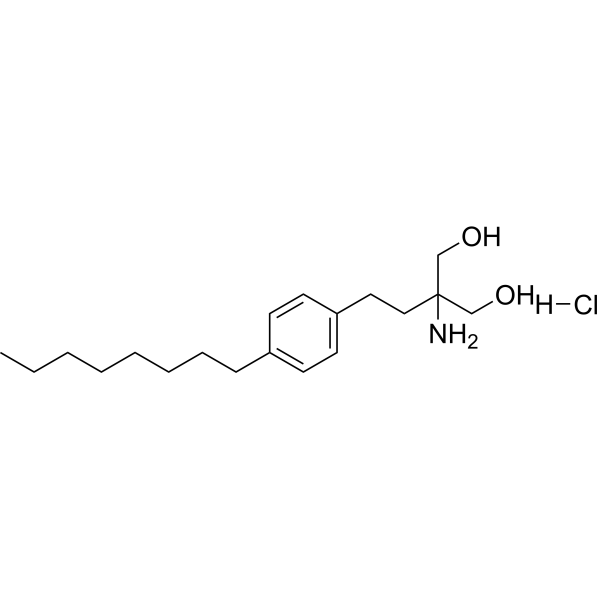
Fingolimod hydrochloride  (Synonyms: FTY720)

Cat. No.: HY-12005 Pureza: 99.94%
Instrucciones de manejo Technical Support

Fingolimod (FTY720) hydrochloride is a sphingosine 1-phosphate (S1P) antagonist with IC50 of 0.033 nM in K562 and NK cells. Fingolimod hydrochloride is also a pak1 activator and immunosuppressant.

Para uso exclusivo en investigación. No vendemos a pacientes.

No. CAS : 162359-56-0

Tamaño Precio Stock Cantidad
Solid + Solvent (Highly Recommended)
10 mM * 1 mL in DMSO
ready for reconstitution
En stock
Solution
10 mM * 1 mL in DMSO En stock
Solid
100 mg En stock
200 mg En stock
500 mg En stock
1 g En stock
5 g En stock
10 g   Obtener un presupuesto  
50 g   Obtener un presupuesto  

* Seleccione Cantidad antes de agregar artículos.

This product is a controlled substance and not for sale in your territory.

Revisión del cliente

Based on 76 publication(s) in Google Scholar

Other Forms of Fingolimod hydrochloride:

Top Publications Citing Use of Products

76 Publications Citing Use of MCE Fingolimod hydrochloride

Cell Proliferation/Viability Assay
Histological Imaging/Staining
Flow Cytometry
In Vivo Efficacy Study
WB
IHC

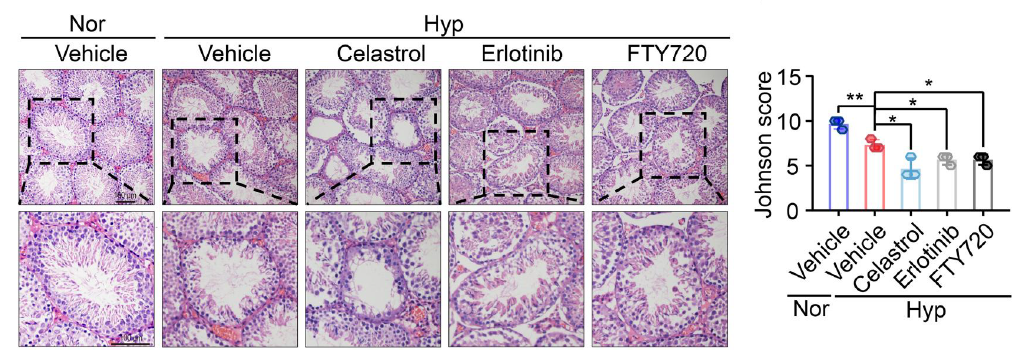
    Fingolimod hydrochloride purchased from MedChemExpress. Usage Cited in: Hum Reprod Open. 2025 May 14;2025(3):hoaf027.  [Abstract]

    Treatment with Fingolimod (FTY720) (2 mg/kg;i.p.; once daily for 35 days) exacerbated the negative impact of hypoxia on fertility in male mice, as evidenced by worsened seminiferous epithelium.

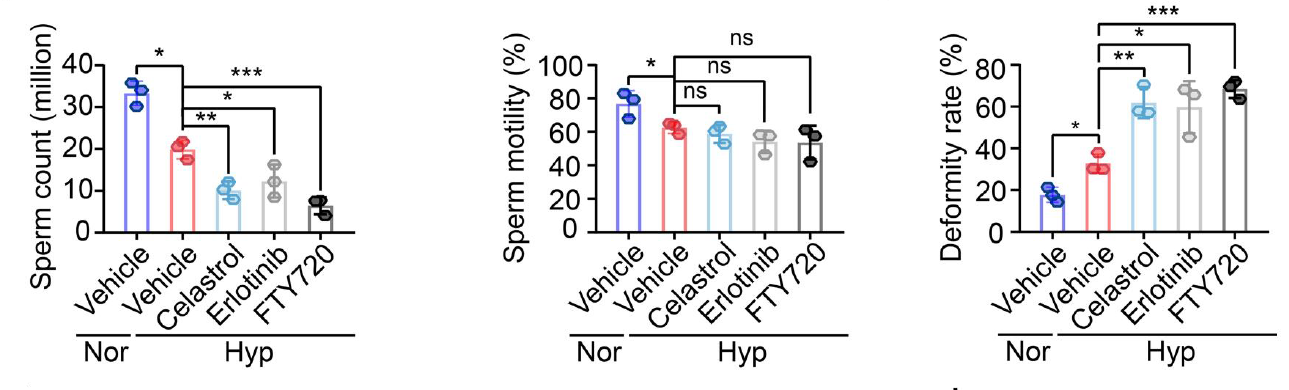
    Fingolimod hydrochloride purchased from MedChemExpress. Usage Cited in: Hum Reprod Open. 2025 May 14;2025(3):hoaf027.  [Abstract]

    Fingolimod (FTY720) (2 mg/kg;i.p.; once daily for 35 days) significantly reduced sperm count and motility and increased sperm deformity rate in hypoxic mice.

    Fingolimod hydrochloride purchased from MedChemExpress. Usage Cited in: Research (Wash D C). 2025 Apr 15:8:0662.  [Abstract]

    Fingolimod (FTY-720) (1 mg/kg) apparently elevated the ratio of CD4+Egr-1+ cells in lymph nodes of EAE mice.

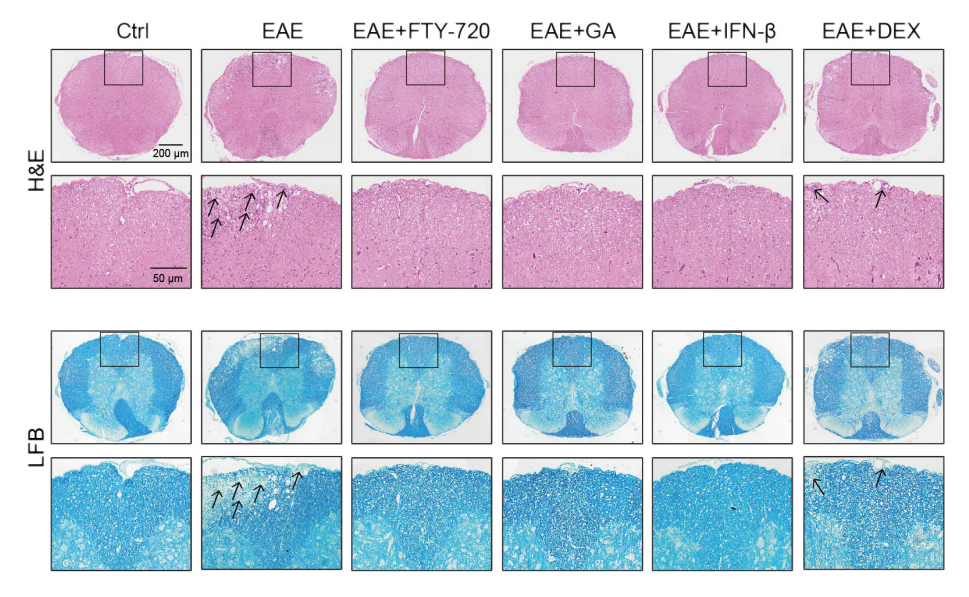
    Fingolimod hydrochloride purchased from MedChemExpress. Usage Cited in: Research (Wash D C). 2025 Apr 15:8:0662.  [Abstract]

    H&E and LFB staining showed inflammatory infiltration in the spinal cord. Fingolimod (FTY-720) (1 mg/kg) alleviated spinal cord inflammatory infiltration and demyelination in ERE-EGFP mice with EAE.

    Fingolimod hydrochloride purchased from MedChemExpress. Usage Cited in: Immunity. 2024 Feb 13;57(2):364-378.e9.  [Abstract]

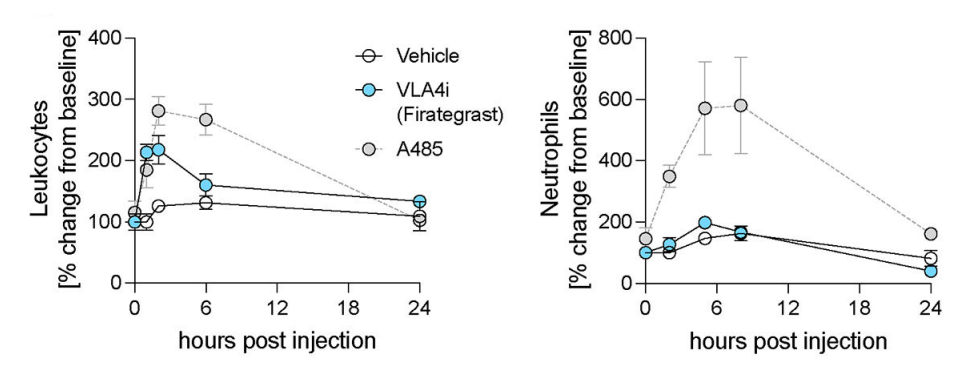
    Dynamic changes in blood leukocytes and neutrophils upon Firategrast (0.2 mg/kg; i.p.) or vehicle treatment expressed as percentage of the mean cell count at baseline.

    Fingolimod hydrochloride purchased from MedChemExpress. Usage Cited in: Cancer Lett. 2018 Nov 1:436:75-86.  [Abstract]

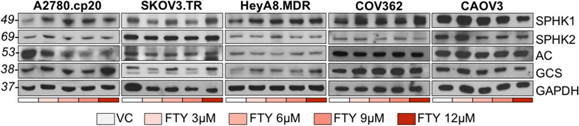
    Immunoblotsof sphingolipid metabolizing enzymes SPHK1, SPHK2, acid ceramidase (AC), and glucosylceramide synthase (GCS) in A2780. cp20, SKOV3. TR, HeyA8. MDR, COV362, and CAOV3 cell lines exposed to the indicated concentrations of FTY720 (FTY) or DMSO (VC) for 24 h.

    Fingolimod hydrochloride purchased from MedChemExpress. Usage Cited in: Cancer Lett. 2018 Nov 1:436:75-86.  [Abstract]

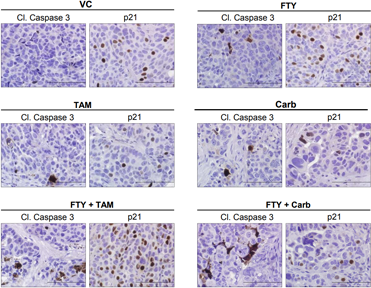
    FTY720+ICI 47699 and FTY720+NSC 241240 increase apoptosis marker, cleaved caspase 3 in a PDX model of EOC. IHC of tumor sections is used to detect the apoptosis marker cleaved caspase 3 and the cell cycle inhibitor p21.

    Fingolimod hydrochloride purchased from MedChemExpress. Usage Cited in: Breast Cancer Res. 2017 Aug 4;19(1):90.  [Abstract]

    The effect of ZD1839-FTY720 treatment on CD44 expression in TNBC cell lines. HCC1806, Hs578T, and MDA-MB-468 TNBC cell lines at ~40% confluence in 12-well plates are exposed for 24 h to ZD1839 (Gef: 0.1 to 10 μM), with or without the addition of 1.5 μM FTY720.

    Ver todos los productos específicos de isoformas LPL Receptor:

    Ver todos los productos específicos de isoformas PAK:

    • Actividad biológica

    • Protocolo

    • Pureza y Documentación

    • Referencias

    • Revisión del cliente

    Descripciòn

    Fingolimod (FTY720) hydrochloride is a sphingosine 1-phosphate (S1P) antagonist with IC50 of 0.033 nM in K562 and NK cells. Fingolimod hydrochloride is also a pak1 activator and immunosuppressant[1][2][3][4].

    IC50 & Target[1]

    S1P

    0.033 nM (IC50, in K562 and NK cells)

    PAK1


    In Vitro

    Fingolimod hydrochloride (FTY720) is a S1P antagonist with an IC50 of 0.033 nM in K562 and NK cells[1].
    The monocyte-derived immature dendritic cells (iDCs) are pretreated with various concentrations of S1P for various periods of time prior to their incubation with NK cells. Four hours incubation of autologous or allogeneic iDCs with 0.2-20 μM of S1P significantly protectes these cells from NK cell lysis. The IC50 values of S1P are calculated at 160 nM for autologous iDCs, and 34 nM for allogeneic iDCs. Next, the inhibitory effect of S1P is revered by various concentrations of Fingolimod hydrochloride (FTY720) or SEW2871, with an IC50 effect of 173 or 15 nM, respectively[1].
    FTY720 enhances serum S1P levels by inhibiting S1P lyase activity[2].
    The number of Iba1+ cells in ipsilateral CA3 is counted, and the corresponding graph shows a significantly lower number of Iba1+ cells in CA3 of the Kainic acid (KA)+FTY720 group than in CA3 of KA group[3].

    MedChemExpress (MCE) has not independently confirmed the accuracy of these methods. They are for reference only.

    In Vivo

    Administration of the immunomodulator Fingolimod hydrochloride (0.1 mg/kg i.v.) increases serum S1P, improves impaired systolic contractility and activates the PI3K-pathway in the heart. Administration of Fingolimod hydrochloride (FTY720) causes a significant rise in serum S1P levels in both sham-operated animals and animals challenged with LPS/PepG (P<0.0001)[2].
    FTY720 attenuates microgliosis, modulates the microglia inflammatory phenotype by reducing LPS-mediated activation of p38 MAPK signalling pathway. Thus, FTY720 shares both direct neuroprotective and anti-inflammatory properties that can contribute to overall neuroprotection. In particular, the potential of FTY720 to switch microglia phenotype from a detrimental to a protective one represents a therapeutic mechanism for attenuating acute and chronic CNS damage[3].

    MedChemExpress (MCE) has not independently confirmed the accuracy of these methods. They are for reference only.

    Peso molecular

    343.93

    Fòrmula

    C19H34ClNO2

    No. CAS
    Appearance

    Solid

    Color

    White to off-white

    SMILES

    OCC(N)(CO)CCC1=CC=C(C=C1)CCCCCCCC.[H]Cl

    Envío

    Room temperature in continental US; may vary elsewhere.

    Almacenamiento

    4°C, sealed storage, away from moisture

    *In solvent : -80°C, 6 months; -20°C, 1 month (sealed storage, away from moisture)

    Solvente y solubilidad
    In Vitro: 

    DMSO : ≥ 100 mg/mL (290.76 mM; Hygroscopic DMSO has a significant impact on the solubility of product, please use newly opened DMSO)

    Ethanol : 100 mg/mL (290.76 mM; Need ultrasonic)

    H2O : 50 mg/mL (145.38 mM; Need ultrasonic)

    *"≥" means soluble, but saturation unknown.

    Preparing
    Stock Solutions
    Concentration Solvent Mass 1 mg 5 mg 10 mg
    1 mM 2.9076 mL 14.5378 mL 29.0757 mL
    5 mM 0.5815 mL 2.9076 mL 5.8151 mL
    View the Complete Stock Solution Preparation Table

    * Please refer to the solubility information to select the appropriate solvent. Once prepared, please aliquot and store the solution to prevent product inactivation from repeated freeze-thaw cycles.
    Storage method and period of stock solution: -80°C, 6 months; -20°C, 1 month (sealed storage, away from moisture). When stored at -80°C, please use it within 6 months. When stored at -20°C, please use it within 1 month.

    * Note: If you choose water as the stock solution, please dilute it to the working solution, then filter and sterilize it with a 0.22 μm filter before use.

    • Calculadora de molaridad

    • Calculadora de dilución

    Mass (g) = Concentration (mol/L) × Volume (L) × Molecular Weight (g/mol)

    Mass
    =
    Concentration
    ×
    Volume
    ×
    Molecular Weight *

    Concentration (start) × Volume (start) = Concentration (final) × Volume (final)

    This equation is commonly abbreviated as: C1V1 = C2V2

    Concentration (start)

    C1

    ×
    Volume (start)

    V1

    =
    Concentration (final)

    C2

    ×
    Volume (final)

    V2

    In Vivo:

    Select the appropriate dissolution method based on your experimental animal and administration route.

    For the following dissolution methods, please ensure to first prepare a clear stock solution using an In Vitro approach and then sequentially add co-solvents:
    To ensure reliable experimental results, the clarified stock solution can be appropriately stored based on storage conditions. As for the working solution for in vivo experiments, it is recommended to prepare freshly and use it on the same day.
    The percentages shown for the solvents indicate their volumetric ratio in the final prepared solution. If precipitation or phase separation occurs during preparation, heat and/or sonication can be used to aid dissolution.

    • Protocol 1

      Add each solvent one by one:  10% DMSO    40% PEG300    5% Tween-80    45% Saline

      Solubility: ≥ 2.08 mg/mL (6.05 mM); Clear solution

      This protocol yields a clear solution of ≥ 2.08 mg/mL (saturation unknown).

      Taking 1 mL working solution as an example, add 100 μL DMSO stock solution (20.8 mg/mL) to 400 μL PEG300, and mix evenly; then add 50 μL Tween-80 and mix evenly; then add 450 μL Saline to adjust the volume to 1 mL.

      Preparation of Saline: Dissolve 0.9 g sodium chloride in ddH₂O and dilute to 100 mL to obtain a clear Saline solution.
    • Protocol 2

      Add each solvent one by one:  10% DMSO    90% (20% SBE-β-CD in Saline)

      Solubility: ≥ 2.08 mg/mL (6.05 mM); Clear solution

      This protocol yields a clear solution of ≥ 2.08 mg/mL (saturation unknown).

      Taking 1 mL working solution as an example, add 100 μL DMSO stock solution (20.8 mg/mL) to 900 μL 20% SBE-β-CD in Saline, and mix evenly.

      Preparation of 20% SBE-β-CD in Saline (4°C, storage for one week): 2 g SBE-β-CD powder is dissolved in 10 mL Saline, completely dissolve until clear.
    In Vivo Dissolution Calculator
    Please enter the basic information of animal experiments:

    Dosage

    mg/kg

    Animal weight
    (per animal)

    g

    Dosing volume
    (per animal)

    μL

    Number of animals

    Recommended: Prepare an additional quantity of animals to account for potential losses during experiments.
    Calculation results:
    Working solution concentration: mg/mL
    This product has good water solubility, please refer to the measured solubility data in water/PBS/Saline for details.
    The concentration of the stock solution you require exceeds the measured solubility. The following solution is for reference only.If necessary, please contact MedChemExpress (MCE).
    Pureza y Documentación

    Purity: 99.94%

    Referencias
    Ensayo celular
    [1]

    Immature dendritic cells (DCs) are left intact or are incubated with 2 μM S1P, 10 nM Fingolimod hydrochloride, 10 nM SEW2871 or the combinations of S1P with these drugs for 4 h. As a control 1 μg/mL LPS is used. The cells are washed and incubated in a 96-well plate (v-bottom, 2×10⁵ cells per well), washed again and resuspended in PBS buffer containing 0.1% sodium azide. They are labeled with 1 μg/mL FITC-conjugated mouse anti-human CD80, 1 μg/mL FITC-conjugated mouse anti-human CD83, 1 μg/mL FITC-conjugated mouse anti-human CD86, 1 μg/mL FITC-conjugated mouse anti-human HLA-class I, 1 μg/mL FITC-conjugated mouse anti-human HLA-DR, 1 μg/mL FITC-conjugated mouse anti-human HLA-E, or 1 μg/mL FITC-conjugated mouse IgG as a control. The cells are washed twice, and examined in the flow cytometer. Markers are set according to the isotype control FITC-conjugated mouse IgG[1].

    MCE no ha confirmado la precisión de estos métodos independientemente. Son solo para referencia.

    Administraciòn de animales
    [2][3]

    Mice[2]
    This study is carried out on 2-month-old male C57BL/6J mice or sphingosine kinase-2 deficient (SPHK-2-/-) mice weighing 25-30 g, receiving a standard diet and water ad libitum. C57BL/6J wild-type or SPHK-2-/- mice receives i.p.-injections of LPS (9 mg/kg)/PepG (1 mg/kg) or its vehicle (0.9% saline). Sham mice are not subjected to LPS/PepG, but are otherwise treated in the same way. At 1 h after LPS/PepG challenge, mice are treated with Fingolimod hydrochloride (0.1 mg/kg i.v.) or its vehicle (10% DMSO). To elucidate the role of different S1P receptors in the observed effects of Fingolimod hydrochloride, mice receive (45 min after LPS/PepG and 15 min prior to Fingolimod hydrochloride) the selective PI3K inhibitor LY294002 (0.3 mg/kg i.v.) or the selective S1P2 receptor antagonist JTE 013 (1 mg/kg i.v.) or (1 h after LPS/PepG) the selective S1P1 receptor agonist SEW2871 (1 mg/kg i.v.) or vehicle (10% DMSO).
    Rat[3]
    The Sprague-Dawley rats (200 to 250 g) are used. Fingolimod hydrochloride is applied icv (1 μg/2 μL), together with Kainic acid (KA), plus intraperitoneally (ip; 1 mg/kg) 24 h before, and daily, until sacrifice 3 days aftericv. Rats are evaluated for neurological score, neuronal loss in CA3 hippocampal region and activation of microglia at the lesion site.

    MCE no ha confirmado la precisión de estos métodos independientemente. Son solo para referencia.

    Referencias

    Complete Stock Solution Preparation Table

    * Please refer to the solubility information to select the appropriate solvent. Once prepared, please aliquot and store the solution to prevent product inactivation from repeated freeze-thaw cycles.
    Storage method and period of stock solution: -80°C, 6 months; -20°C, 1 month (sealed storage, away from moisture). When stored at -80°C, please use it within 6 months. When stored at -20°C, please use it within 1 month.

    Optional Solvent Concentration Solvent Mass 1 mg 5 mg 10 mg 25 mg
    H2O / DMSO / Ethanol 1 mM 2.9076 mL 14.5378 mL 29.0757 mL 72.6892 mL
    5 mM 0.5815 mL 2.9076 mL 5.8151 mL 14.5378 mL
    10 mM 0.2908 mL 1.4538 mL 2.9076 mL 7.2689 mL
    15 mM 0.1938 mL 0.9692 mL 1.9384 mL 4.8459 mL
    20 mM 0.1454 mL 0.7269 mL 1.4538 mL 3.6345 mL
    25 mM 0.1163 mL 0.5815 mL 1.1630 mL 2.9076 mL
    30 mM 0.0969 mL 0.4846 mL 0.9692 mL 2.4230 mL
    40 mM 0.0727 mL 0.3634 mL 0.7269 mL 1.8172 mL
    50 mM 0.0582 mL 0.2908 mL 0.5815 mL 1.4538 mL
    60 mM 0.0485 mL 0.2423 mL 0.4846 mL 1.2115 mL
    80 mM 0.0363 mL 0.1817 mL 0.3634 mL 0.9086 mL
    100 mM 0.0291 mL 0.1454 mL 0.2908 mL 0.7269 mL

    * Note: If you choose water as the stock solution, please dilute it to the working solution, then filter and sterilize it with a 0.22 μm filter before use.

    • No file chosen (Maximum size is: 1024 Kb)
    • If you have published this work, please enter the PubMed ID.
    • Your name will appear on the site.
    Help & FAQs
    • Do most proteins show cross-species activity?

      Species cross-reactivity must be investigated individually for each product. Many human cytokines will produce a nice response in mouse cell lines, and many mouse proteins will show activity on human cells. Other proteins may have a lower specific activity when used in the opposite species.

    Productos vistos recientemente:

    Consulta en línea

    Your information is safe with us. * Required Fields.

    Nombre del producto


    Requested Quantity *

    Nombre del solicitante *


    Saludo

    Direcciòn del E-mail *


    Número de teléfono *

    Department


    Nombre de la Organizaciòn *

    City

    Provincia

    Country or Region *


    Observaciones

    Consulta para venta a granel

    Inquiry Information

    Nombre del producto:
    Fingolimod hydrochloride
    Cat. No.:
    HY-12005
    Cantidad:
    MCE Japan Authorized Agent: