



PAK5
PAK5 (PAK7) is a serine/threonine p21-activated kinase and a downstream effector of Rac/Cdc42 signaling, linking small GTPase inputs to cytoskeletal dynamics, cell survival, and proliferation[1]. Mechanistically, PAK5 localizes constitutively to mitochondria, phosphorylates BAD at Ser112, blocks BAD mitochondrial localization, and inhibits apoptosis induced by camptothecin or C2-ceramide[2]. This mitochondrial survival axis also extends to breast cancer models, where PAK5 phosphorylates AIF at Thr281, reduces AIF nuclear translocation, and promotes breast cancer cell proliferation and tumor growth[3]. In clinical cancer specimens, high PAK5 expression associates with tumor invasion, lymph node metastasis, advanced stage, recurrence or distant metastasis, and worse disease-specific survival in gastric cancer[4]. Compared with related PAK isoforms, PAK5 shows distinctive biology because Cdc42 and Rac bind PAK5 but do not regulate its constitutive kinase activity, and mitochondrial localization does not require kinase activity or Cdc42 binding[2].
Références:
- [1]. Dummler B, et al. Pak protein kinases and their role in cancer. Cancer Metastasis Rev. 2009 Jun;28(1-2):51-63. [Content Brief]
- [2]. Cotteret S, et al. p21-Activated kinase 5 (Pak5) localizes to mitochondria and inhibits apoptosis by phosphorylating BAD. Mol Cell Biol. 2003 Aug;23(16):5526-39. [Content Brief]
- [3]. Xing Y, et al. PAK5-mediated AIF phosphorylation inhibits its nuclear translocation and promotes breast cancer tumorigenesis. Int J Biol Sci. 2021 Mar 27;17(5):1315-1327. [Content Brief]
- [4]. Aburatani T, et al. High expression of P21-activated kinase 5 protein is associated with poor survival in gastric cancer. Oncol Lett. 2017 Jul;14(1):404-410. [Content Brief]
All Product Categories
-
PAK5 Produits associés (5)
Produits associés (5)

-
PF-3758309
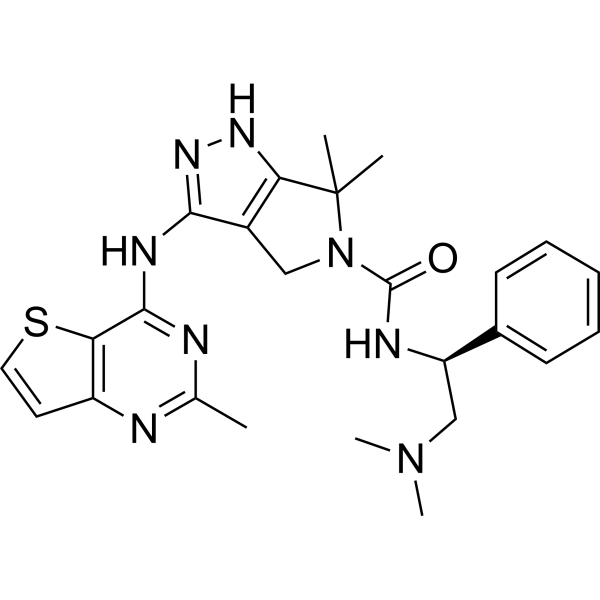 0 ImagesSynonyms: PF-03758309PF-3758309 (PF-03758309) is a potent, orally available, and reversible ATP-competitive inhibitor of PAK4 (Kd= 2.7 nM; Ki=18.7 nM). PF-3758309 has the expected cellular functions of a PAK4 inhibitor: inhibition of anchorage-independent growth, induction of apoptosis, cytoskeletal remodeling, and inhibition of proliferation.
-
PRT062607 Hydrochloride
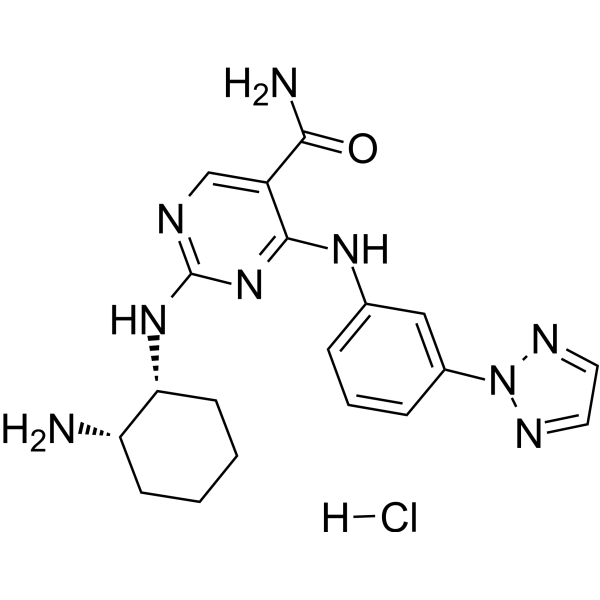 0 ImagesSynonyms: P505-15 Hydrochloride
-
PRT062607 acetate
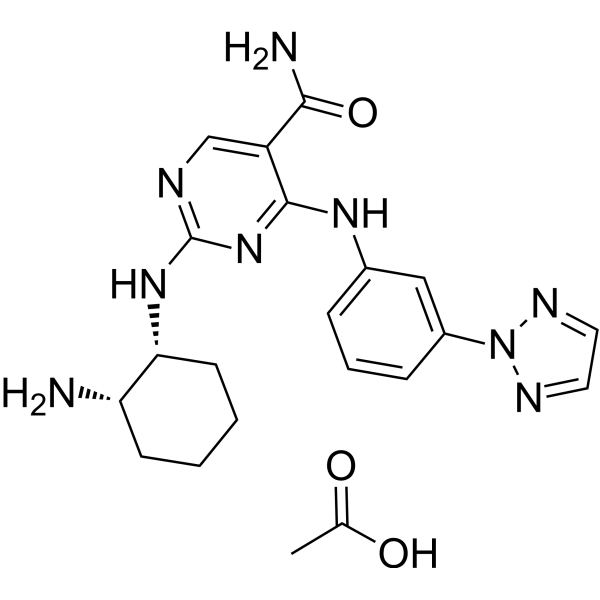 0 ImagesSynonyms: P505-15 acetate; PRT-2607 acetate; BIIB-057 acetate
-
PF-3758309 hydrochloride
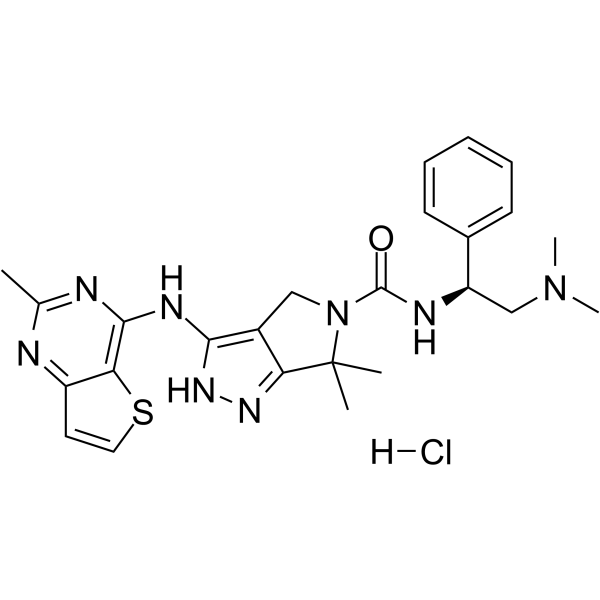 0 ImagesCat. No.: HY-13007ACAS No.: 1279034-84-2Synonyms: PF-03758309 hydrochloridePF-3758309 (PF-03758309) hydrochloride is a potent, orally available, and reversible ATP-competitive inhibitor of PAK4 (Kd= 2.7 nM; Ki=18.7 nM). PF-3758309 hydrochloride has the expected cellular functions of a PAK4 inhibitor: inhibition of anchorage-independent growth, induction of apoptosis, cytoskeletal remodeling, and inhibition of proliferation.
-
PF-3758309 dihydrochloride
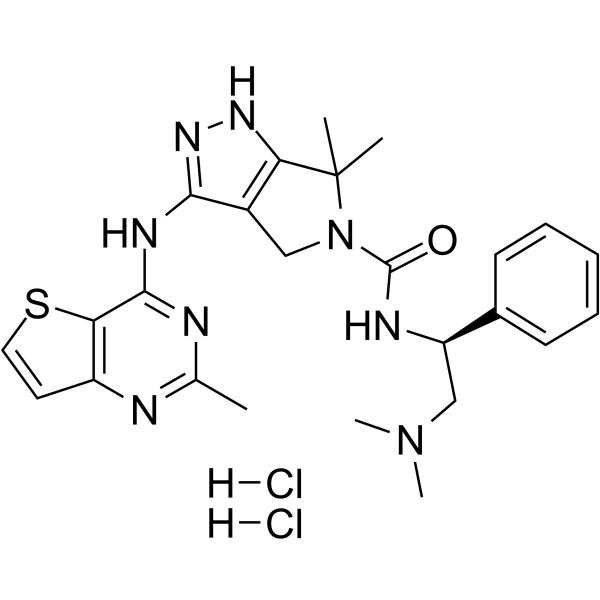 0 ImagesCat. No.: HY-13007BSynonyms: PF-03758309 dihydrochloridePF-3758309 (PF-03758309) dihydrochloride is a potent, orally available, and reversible ATP-competitive inhibitor of PAK4 (Kd= 2.7 nM; Ki=18.7 nM). PF-3758309 dihydrochloride has the expected cellular functions of a PAK4 inhibitor: inhibition of anchorage-independent growth, induction of apoptosis, cytoskeletal remodeling, and inhibition of proliferation.



